
Aberdeenshire
Crathes Castle
Introduction
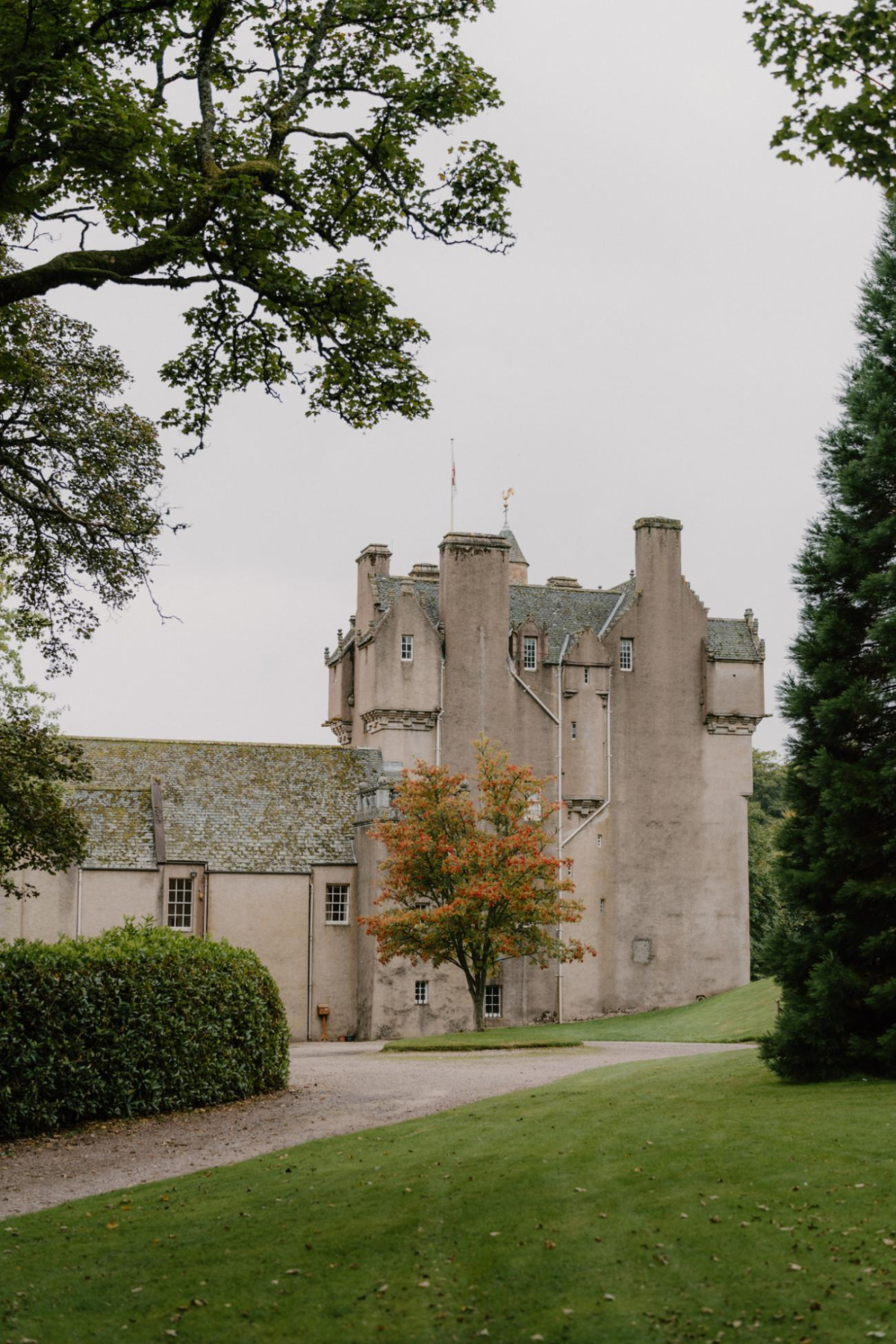
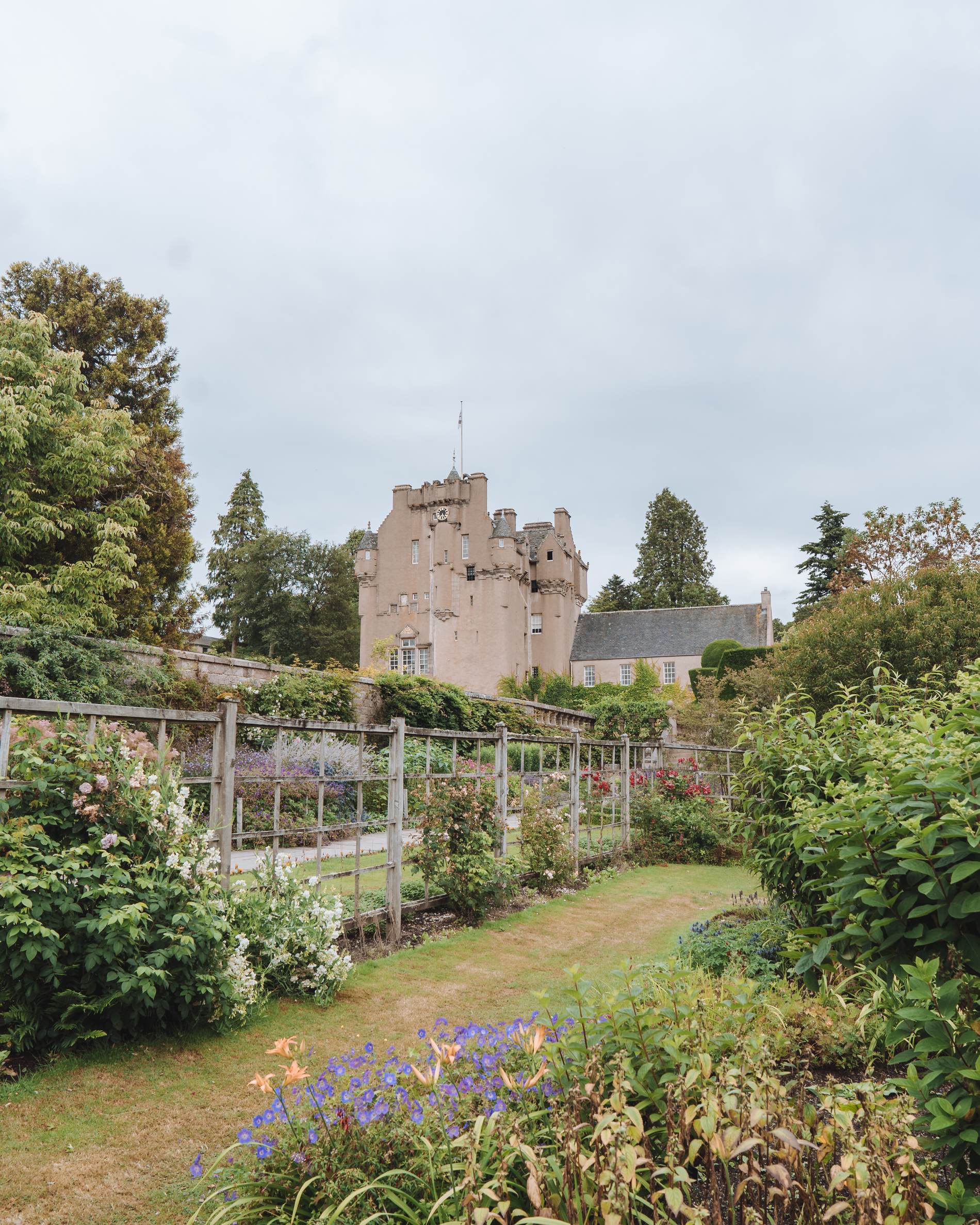
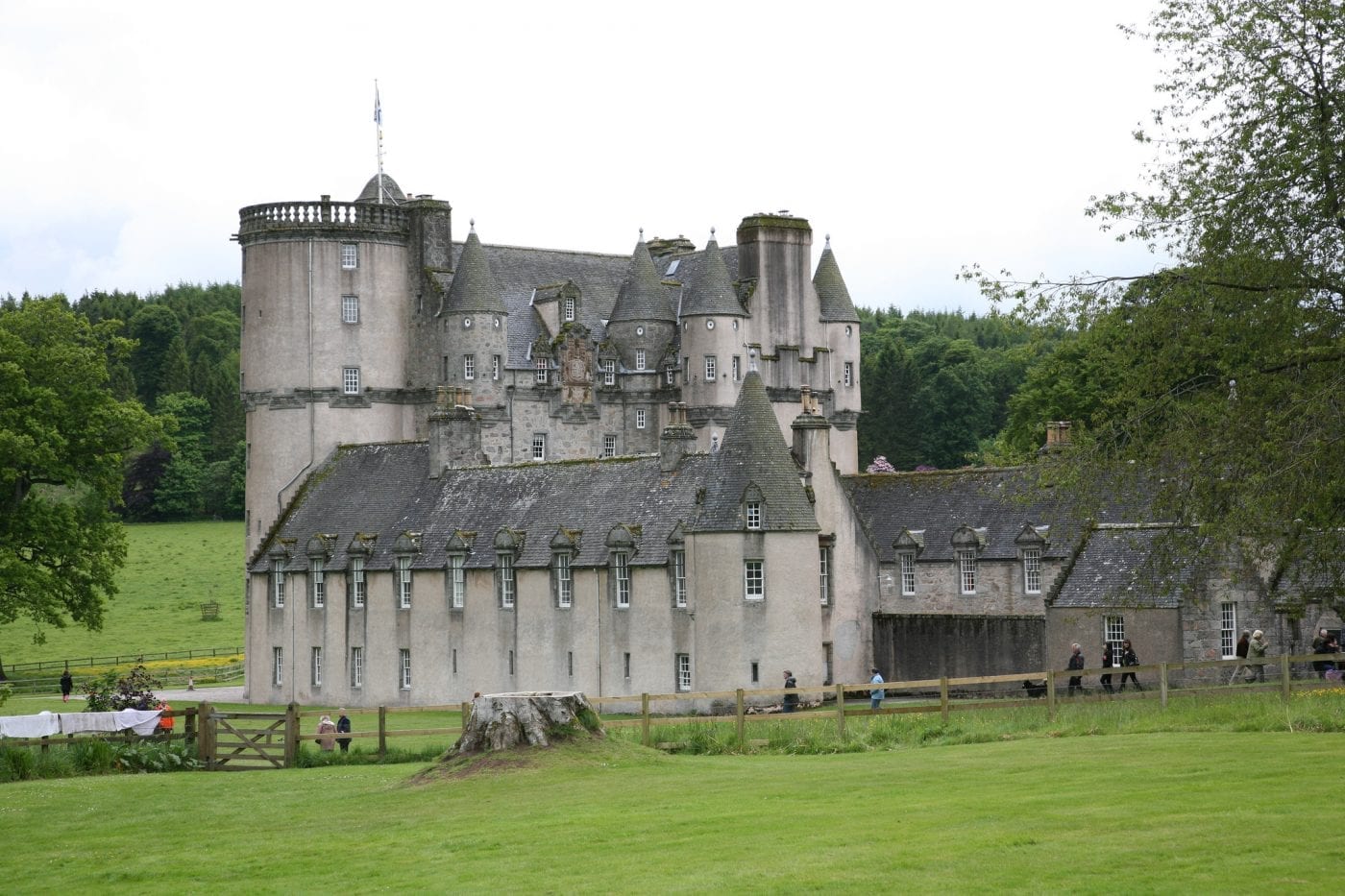
Crathes Castle lies in the heart of Aberdeenshire, around fifteen miles west of Aberdeen, and remains one of the finest surviving examples of a Scottish tower house. The land was granted to the Burnett family by Robert the Bruce in 1323, but construction of the present building began much later, completed in 1596 after more than forty years of work. Its pink-harled walls, turrets and crow-stepped gables typify the baronial style of the period, and its position above the River Dee gives wide views over the surrounding countryside.
Inside, the castle preserves a remarkable collection of original features and furnishings. The rooms are arranged vertically, linked by narrow spiral staircases, each level revealing a different period of domestic life. The Great Hall contains fine oak panelling, carved fireplaces and portraits of the Burnett lairds, while the smaller chambers display ornate painted ceilings depicting mythological and biblical scenes. Among the most talked-about spaces is the Green Lady’s Room, said to be haunted by a ghostly figure whose legend has been passed down through generations.
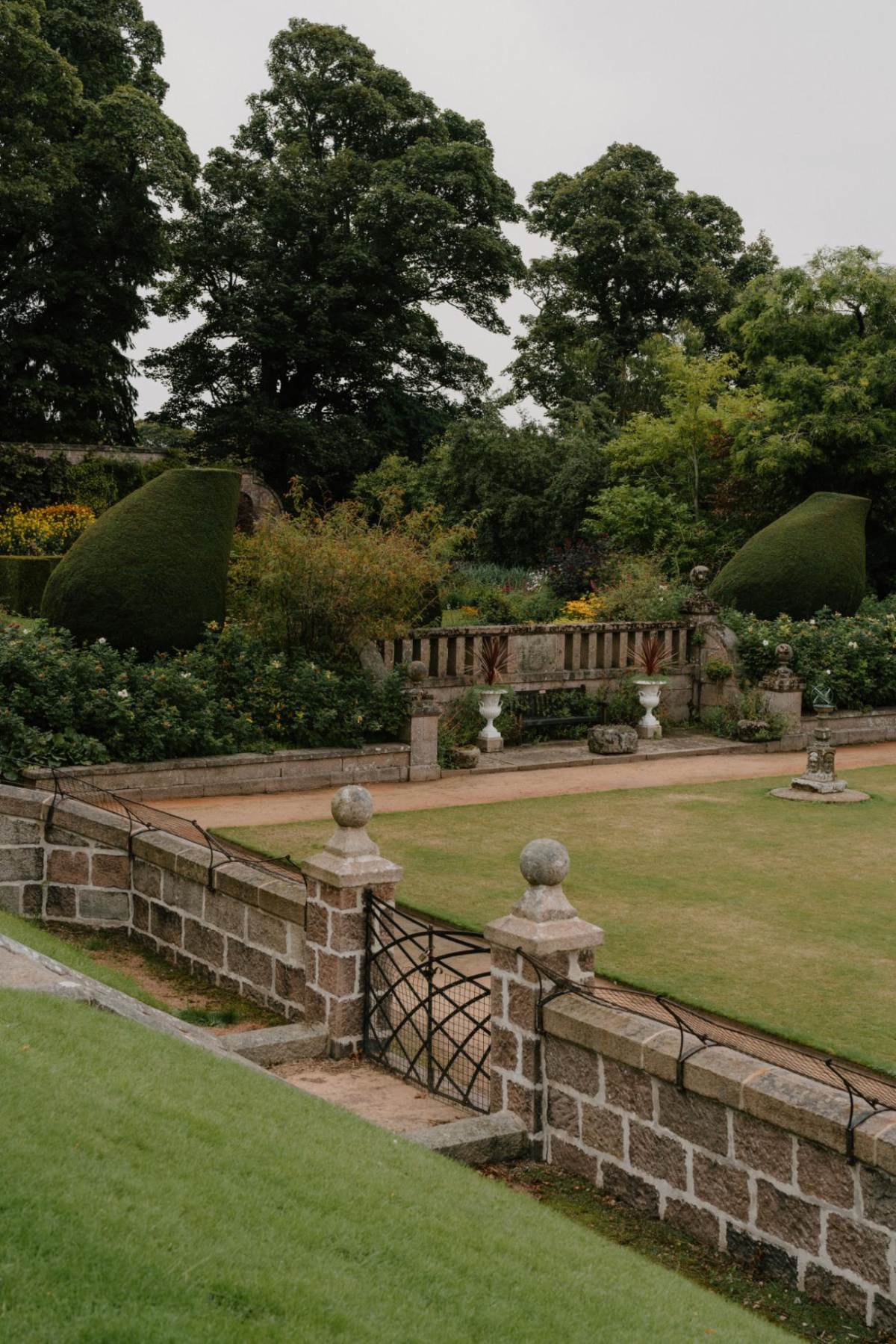
Beyond the castle walls lies a 500-acre estate now cared for by the National Trust for Scotland. The formal walled garden, first laid out in the early eighteenth century, is divided into colour-themed sections separated by century-old yew hedges. Its lawns, topiary and herbaceous borders make it one of the most admired gardens in the northeast. Walking trails extend from the grounds into the wider estate, leading through ancient woodland where roe deer, red squirrels and woodpeckers are often seen.
Today, Crathes Castle remains both a historical monument and a living estate. Visitors can tour the interiors, explore the gardens, and learn about the Burnett family’s long stewardship of the land. It stands as one of Aberdeenshire’s most complete and atmospheric castles, combining architectural beauty, folklore and natural surroundings in a single visit.
The History of Crathes Castle
Crathes Castle was begun during a quieter spell in the sixteenth century, when Scottish families of standing began to replace their defensive towers with more comfortable, decorative homes. The Burnetts of Leys had held this land since 1323, when Robert the Bruce granted it to them for loyal service, but the house that survives today took shape much later. Work started in the 1550s and continued over several decades, delayed by political unrest and shifting fortunes. By the time it was completed in 1596, Crathes stood as one of the finest examples of a tower house of its day, its walls thick, its gables steep, and its harled exterior glowing faintly pink in the Aberdeenshire light.
The man responsible for much of its design was Alexander Burnett, whose initials are carved in the stone above the entrance. His family would live here for more than three hundred years, adapting the castle to the times but never losing sight of its origins. Inside, the layout remains much as it was intended: narrow stairs linking a series of rooms that range from the panelled Great Hall to private chambers lined with portraits and tapestries. The ceilings, painted with scenes of mythology and devotion, are among the best preserved in Scotland from the period.
The Burnetts held firm through civil war, religious turmoil and rebellion. Unlike many estates that fell into ruin, Crathes stayed lived in, cared for and quietly altered to meet each new century. By the eighteenth century the family turned its attention to the grounds, creating the walled garden that is still among the most admired in the northeast. Paths were laid through the surrounding woodland, the same trees that now form part of the National Trust for Scotland’s estate.
When the castle passed to the Trust in 1951, it did so with its interiors largely untouched. Restoration has been careful rather than intrusive, keeping the carved fireplaces, painted ceilings and original furniture in place. The result is a house that still carries the imprint of the people who built it, lived in it and handed it on – a rare survival that tells the long, quiet story of one Scottish family’s home.
Location
What's nearby

















Where to stay nearby






 Sign in with Google
 Sign in with Email