
20 Must-Visit Places in the Scottish Borders
Discover 20 of the most rewarding places to visit in the Scottish Borders—from abbey ruins and cliffside walks to quiet beaches, historic towers, and hidden corners full of character.

Written by Hidden Scotland
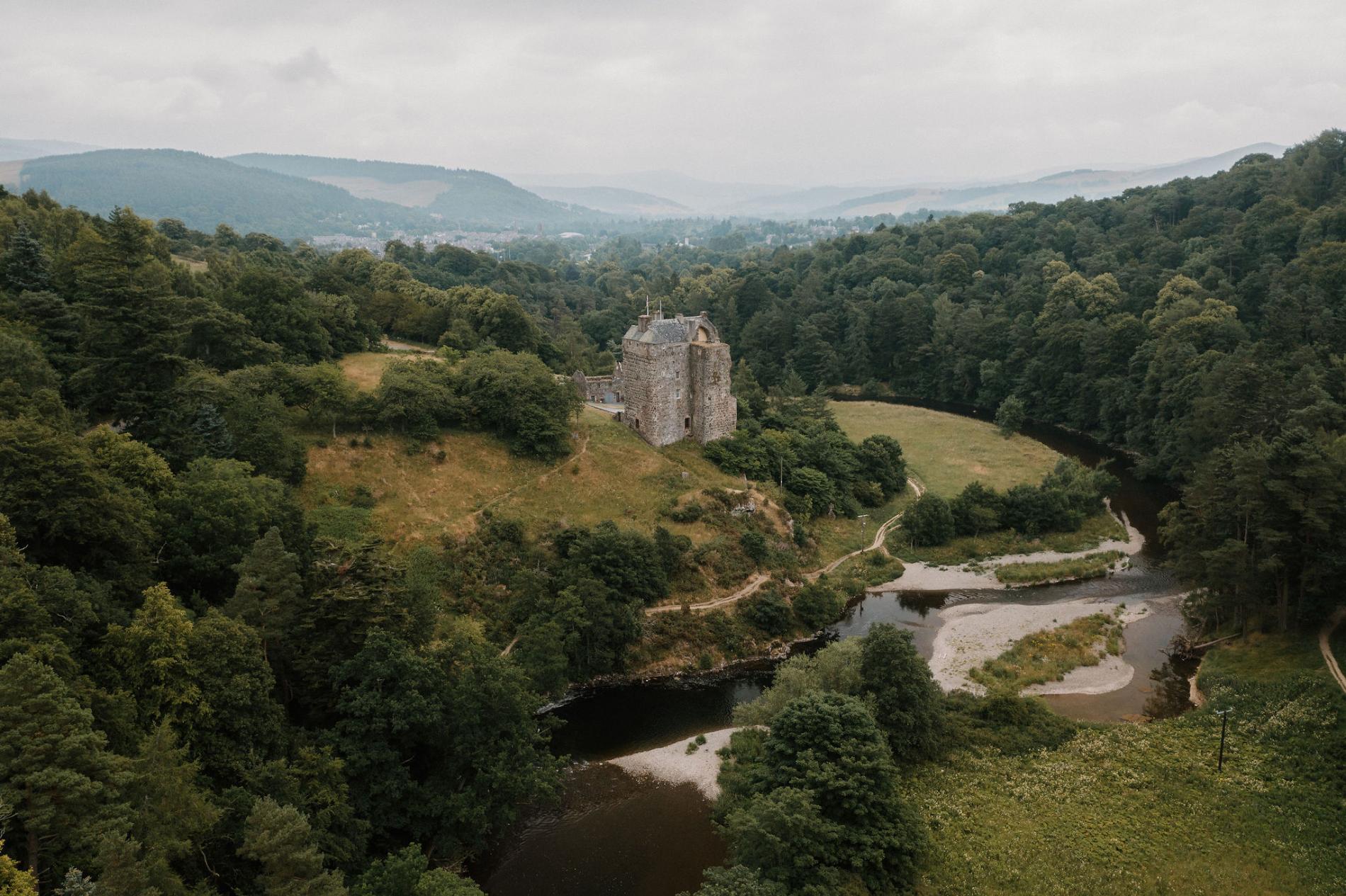
The Scottish Borders sits just above the line—close enough to feel connected, far enough to be overlooked. It doesn’t push for attention. Towns keep their scale. Roads follow the rivers. And if you’re not in a rush, it’s one of the most rewarding regions in the country to explore.
This is where you’ll find four of Scotland’s great medieval abbeys, each within easy reach of the next. It’s where the River Tweed carves a route through working towns like Kelso, Jedburgh, and Hawick, and where the remnants of older lives—castles, towers, viaducts—still hold their shape in the fields. You’ll pass signposts for poets, ruins tied to the Reformation, and houses built by men like Sir Walter Scott, who helped shape the stories people tell about this place.
But there’s more than just history. The coast pulls you east, toward cliff walks, clean beaches, and fishing towns like Eyemouth that still feel lived-in. Gardens open up in sheltered valleys. Quiet cafés and shops appear where you don’t expect them. And across the region, you’ll find locals still working with textiles, books, food, and drink—each shaped by where they’re from, but not stuck in it.
This guide pulls together twenty places that reflect that variety. Some are big names, like Melrose Abbey or Scott’s View. Others are easier to miss: a ruined tower beside a sheep field, a restored walled garden behind a Georgian villa, a concrete map tucked into hotel grounds. All are worth the stop. None of them are far apart.
Whether you’re planning a route through the Borders or just passing through for the day, these places offer a useful cross-section—places that stay with you, not because they demand it, but because they do their work quietly.
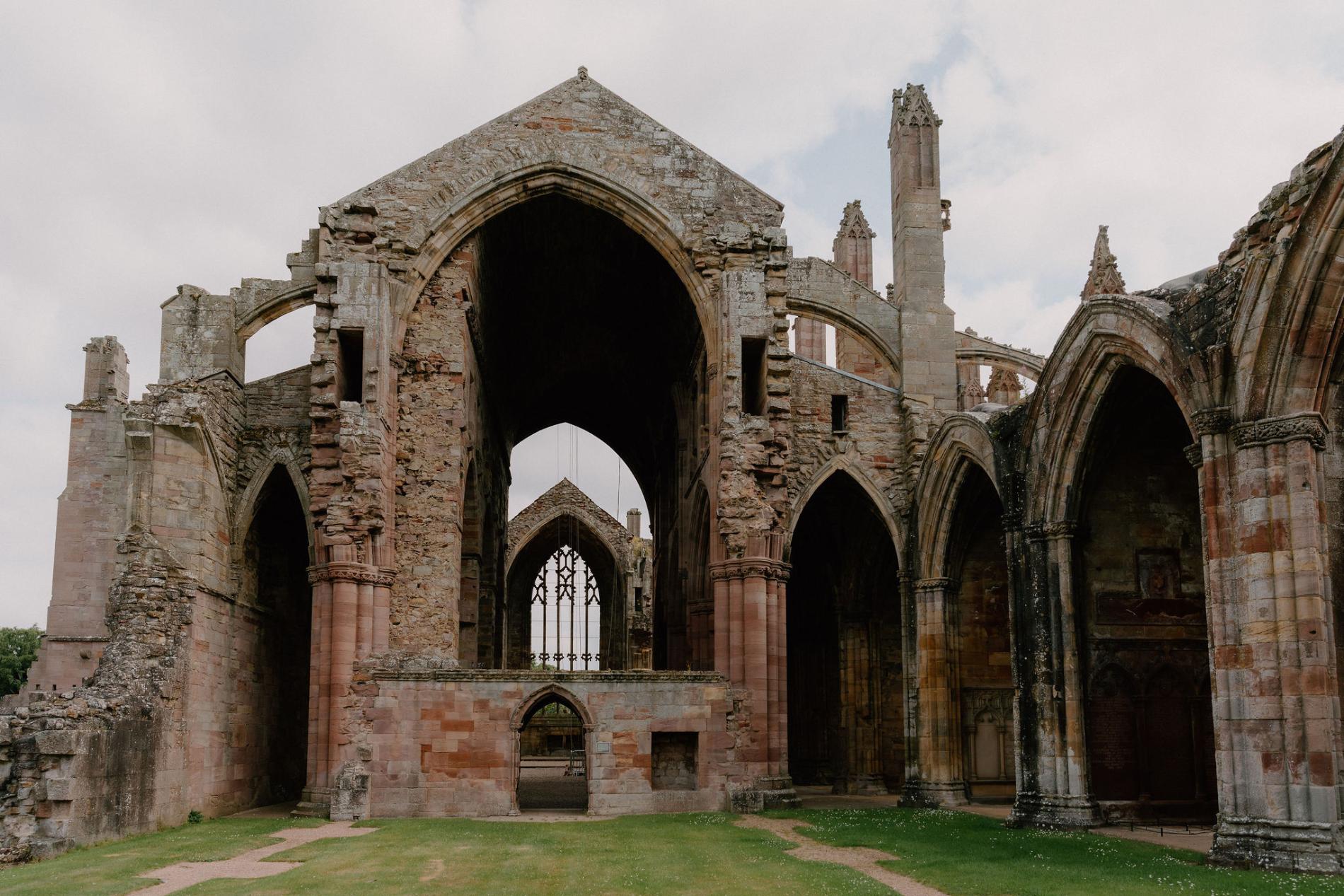
Melrose Abbey
Scottish Borders
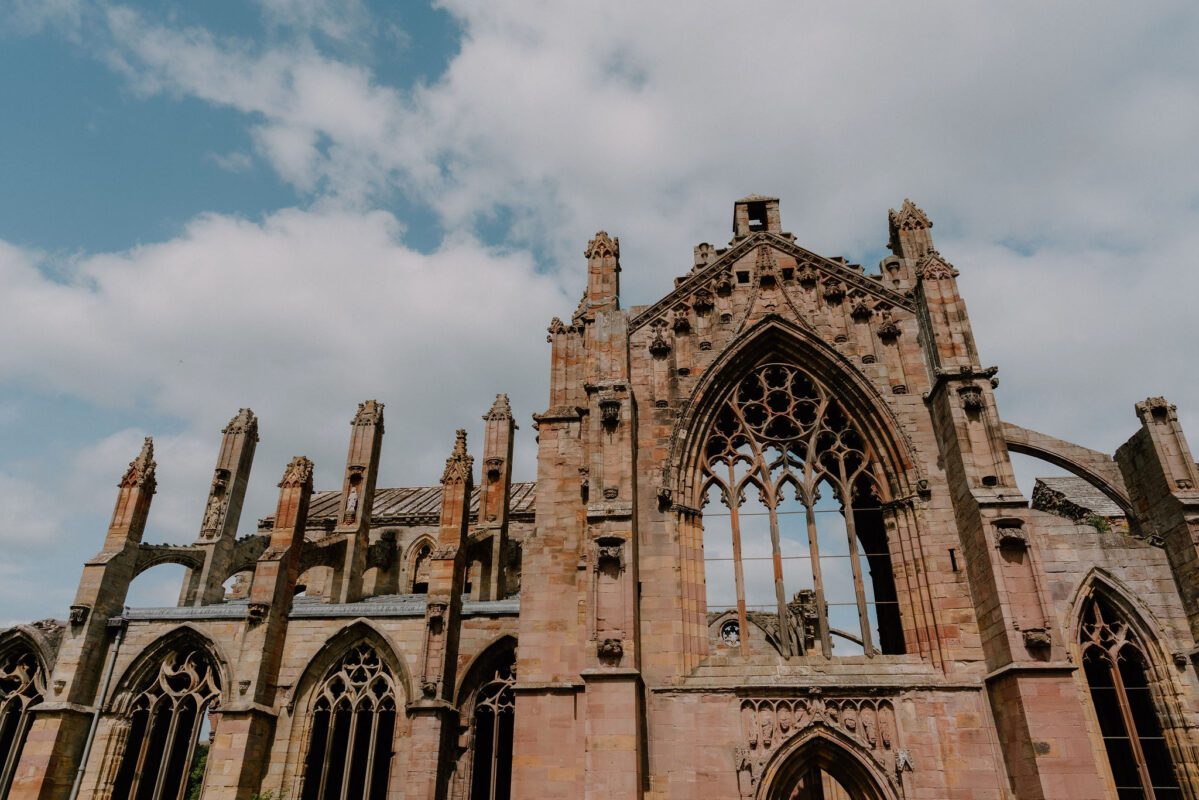
Melrose Abbey is one of the most well-known historic sites in the Scottish Borders. Founded in 1136 by Cistercian monks under the order of David I, the abbey grew into one of the wealthiest religious houses in medieval Scotland. The remains you see today are mostly from the 14th century, after the original building was damaged during English invasions.
The site is managed by Historic Environment Scotland and is open for visitors, with a small museum, interpretive signage, and an option to climb a narrow staircase for a clearer view of the grounds. One of the more notable features is a sealed casket buried within the abbey grounds, believed to contain the heart of Robert the Bruce. Look for the carved bagpiping angel on the exterior—it’s often mentioned, and easy to spot if you know where to look.
The abbey sits just off the main square in Melrose, close to cafés and shops, and works well as part of a half-day visit to the town. Parking is nearby, and the whole site is walkable. Even in partial ruin, it remains architecturally impressive and historically significant, with enough detail left to make a visit worthwhile.
Scott’s View
Near St Boswells, Roxburghshire
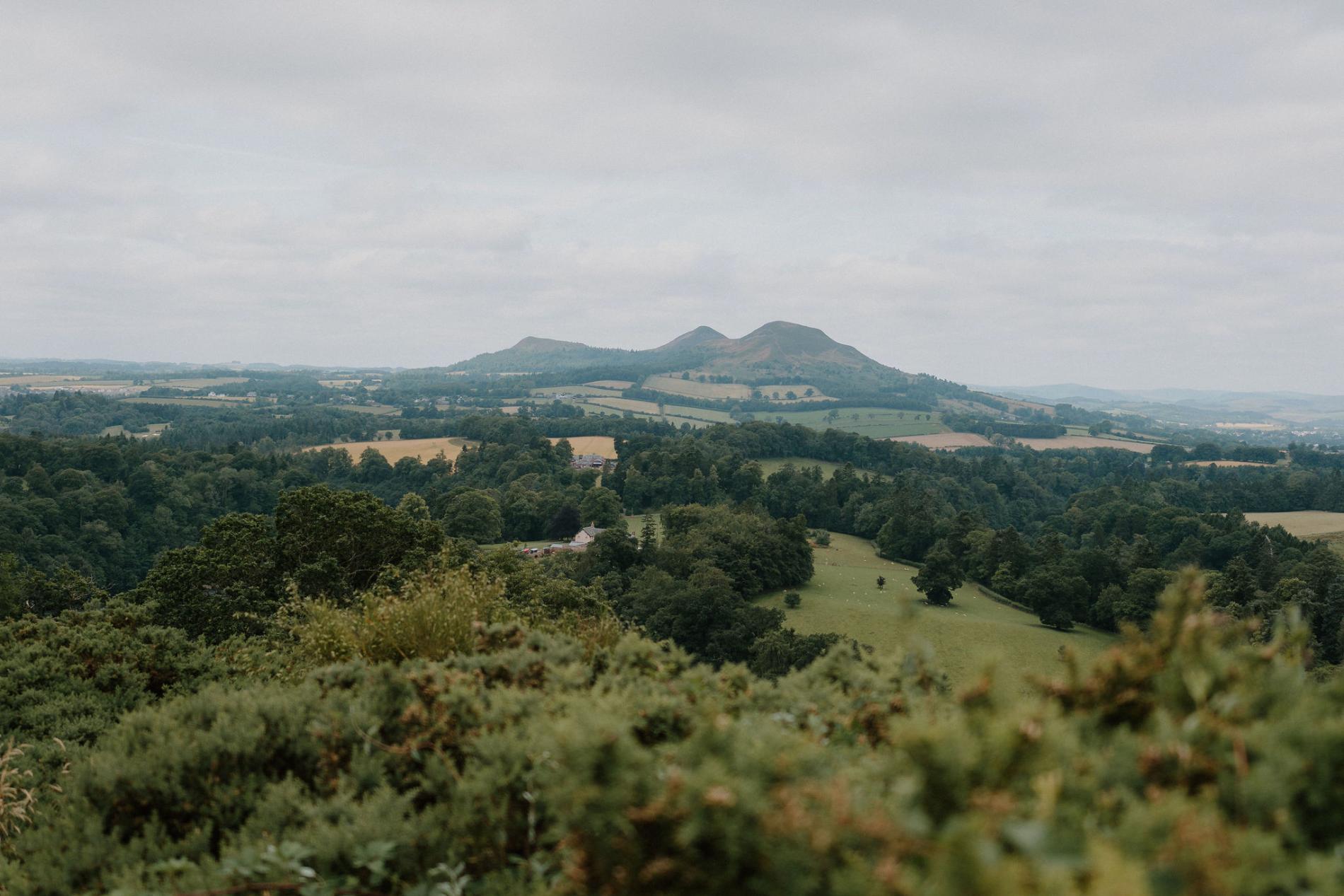
A short drive east of Melrose, Scott’s View offers one of the most recognisable panoramas in the Borders. The layby sits just above the bend of the River Tweed, looking out across patchwork fields to the Eildon Hills. On a clear day, it’s easy to see why Sir Walter Scott stopped here so often. Local tradition says his horses even paused here automatically on the way to Abbotsford.
There’s no visitor centre or marked trail—just a viewpoint with an information panel and enough space to pull in and take a photo. But the location is well chosen. The Tweed curves gently through the valley below, with wooded banks and farmland spreading out to the horizon. The scene has barely changed in generations.
It’s best seen early or late in the day, when the light drops across the hills. Though it doesn’t take long to visit, it pairs easily with a trip to Abbotsford or a walk along the nearby river paths. If you’re travelling through the area, this is the kind of stop that helps place the rest of the Borders in context—quiet, open, and grounded in a long, continuous connection to land and story.
Jedburgh Abbey
Jedburgh, Roxburghshire
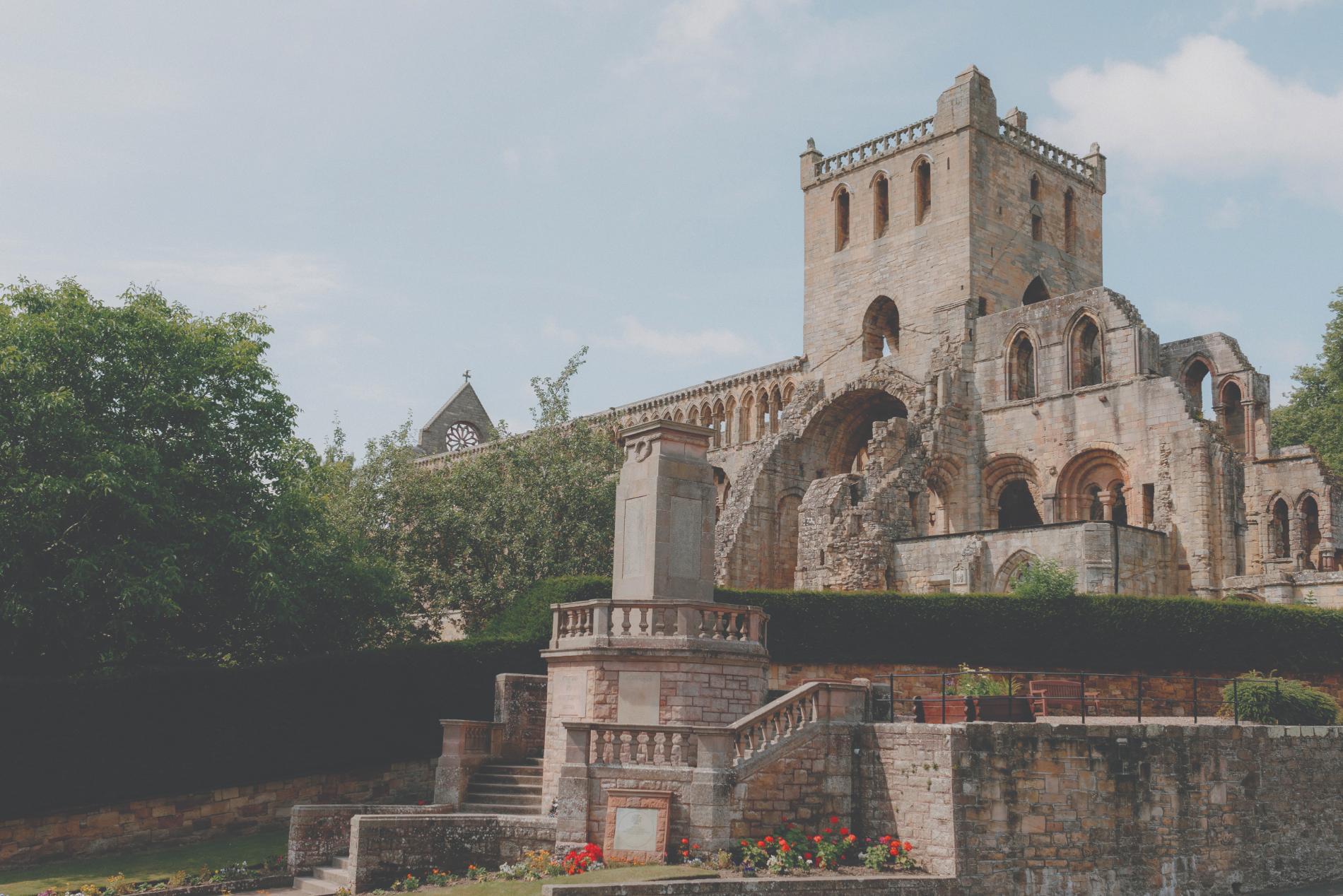
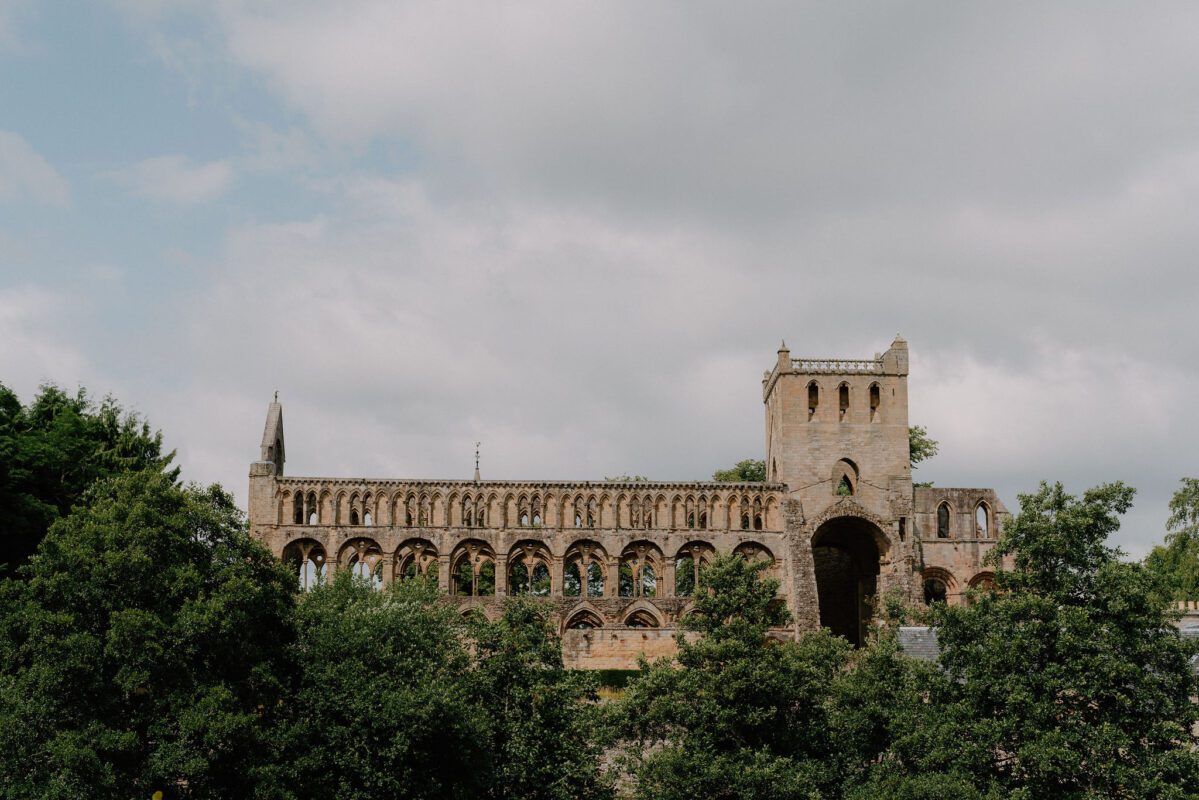
Jedburgh Abbey rises just behind the High Street, separated from passing traffic by little more than a low wall and a strip of grass. From the pavement, you can see the main nave almost in full—tall, pale, and open to the sky. But it’s worth going in. The ticket office sits just off to the side, in what was once the abbot’s house, and leads through to a tidy modern exhibition before you reach the cloister.
One detail often missed: the cloister is unusually complete for a site of this age. You can still walk the full square. The low stone benches are original, and if you step into the chapter house, there’s a clear acoustic pocket where the prior would’ve spoken. Upstairs, you’ll find narrow stone steps that lead to the walkways above the nave—more intact than you’d expect. From up there, you can look down across the old monks' cemetery and pick out carved detail in the capitals that’s not visible from below.
Jedburgh itself feels close to the abbey—physically and in character. The spire of the parish church, the rooftops of the town, and the bustle of the main road all sit just beyond the railings. But inside the walls, the abbey still holds its shape. Quiet, and surprisingly well preserved, especially when seen from the upper level.
Abbotsford - The Home of Sir Walter Scott
Near Tweedbank, Roxburghshire
Abbotsford was built by Sir Walter Scott not as a retreat, but as a statement. Every corner of the house, from the medieval-style turrets to the imported stained glass and salvaged stonework, reflects Scott’s interest in Scotland’s past—his version of it, at least. It’s part country house, part stage set, and unlike anything else in the region.
Visitors enter through a modern visitor centre before following a short path to the house. One of the more memorable parts of the tour is the library—still set up as it was in Scott’s time, with a circular gallery, a view over the Tweed, and walls lined with thousands of books. The study next door is left untouched. His chair, desk, and inkwell are still in place. It’s where he dictated his final novels after suffering a stroke.
The gardens are compact but well maintained, with terraces stepping down toward the river. There’s a kitchen garden, a glasshouse, and a walking trail that follows the Tweed for those wanting to extend the visit. If you look closely at the house exterior, you’ll spot carved panels and stones built into the walls—bits of castles, churches, and abbeys Scott collected during his travels and had set in place here. It’s more than a house—it’s a carefully built world.
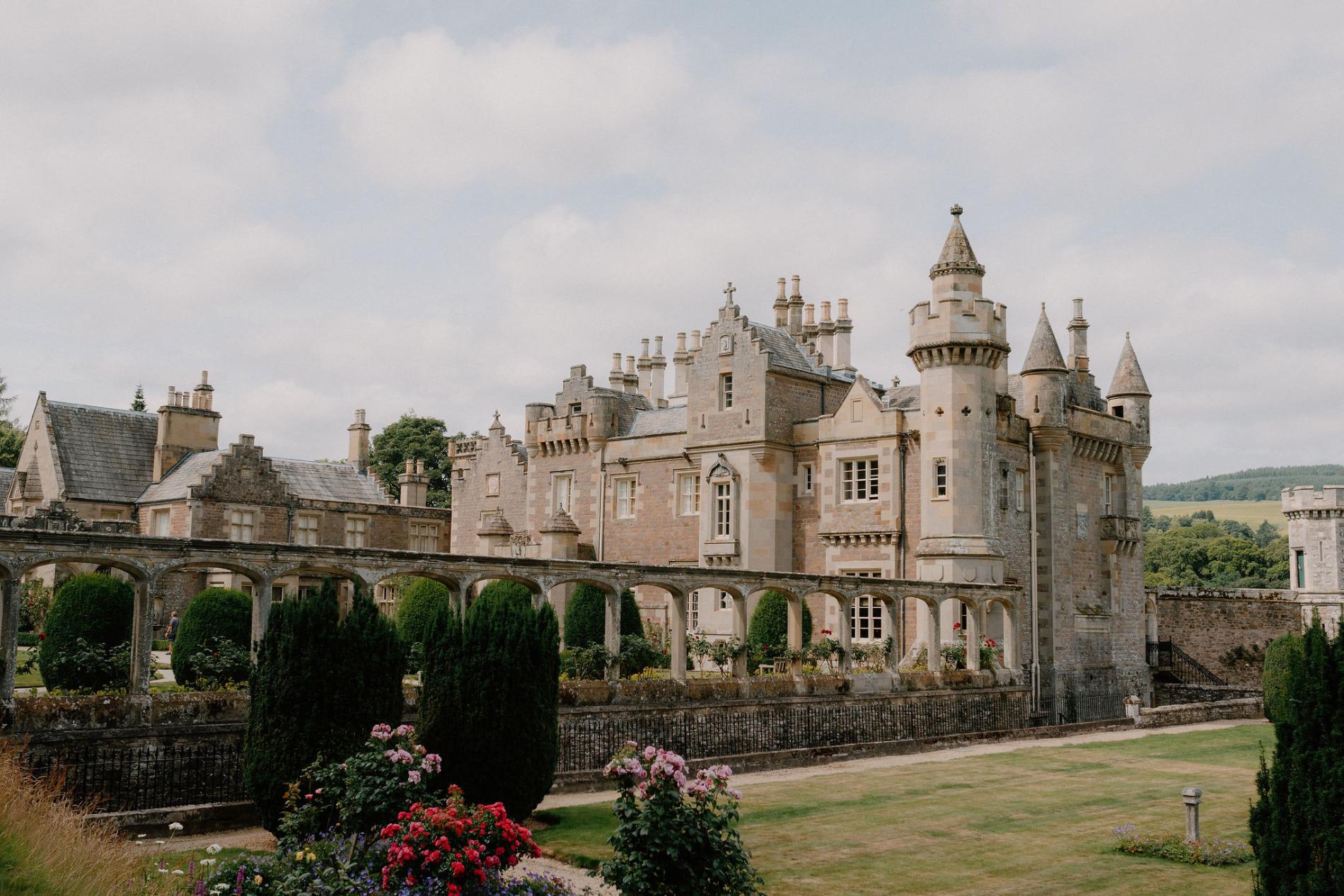
St Abb’s Head National Nature Reserve
Near St Abbs, Berwickshire
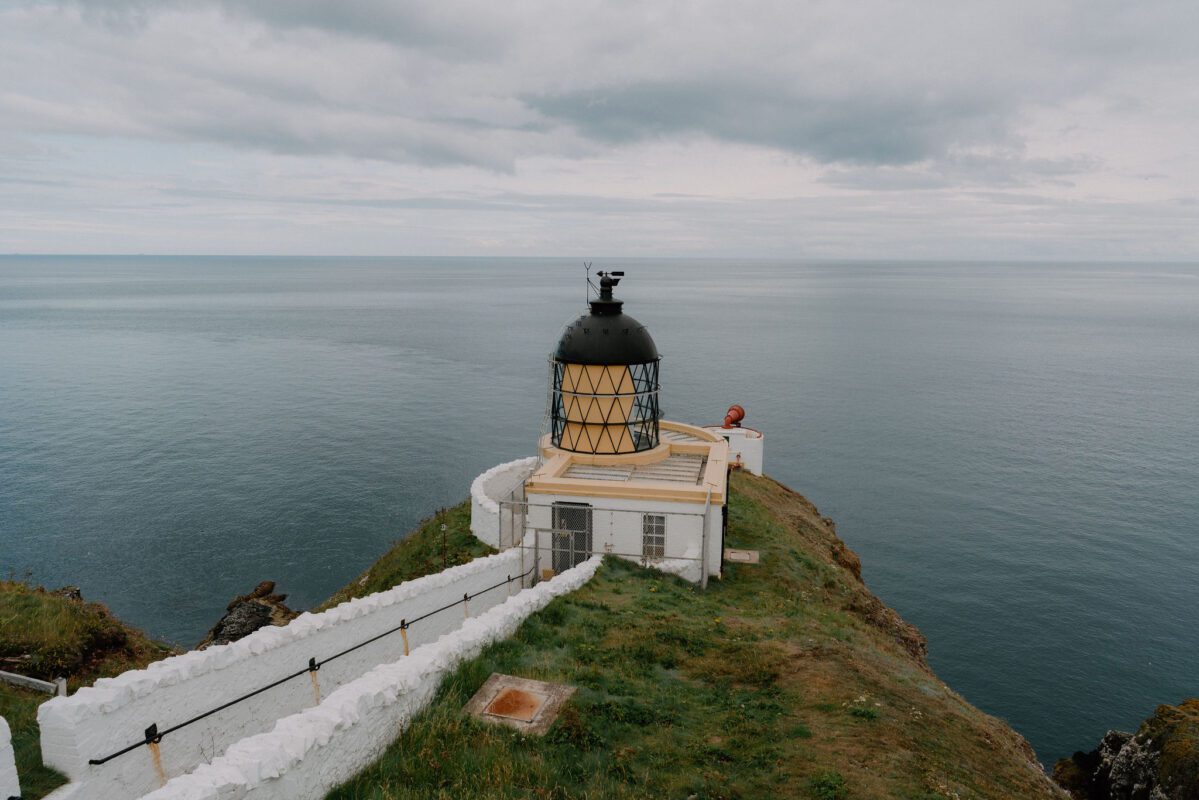
The walk out to St Abb’s Head starts just above the village, where a single-track road leads past the loch and on toward the cliffs. There’s a car park run by the National Trust for Scotland, and from there, well-marked paths take you up and along the headland. It’s not far—just under four miles round trip if you loop it—but the footing can be uneven and windy near the edges.
This is one of the best coastal walks in the region. Sheer cliffs drop straight to the sea, seabirds nest in the crags, and on a good day you can see all the way to Bass Rock and the Firth of Forth. In spring and early summer, the noise and movement from guillemots, razorbills, and kittiwakes is constant. You can sometimes catch sight of a peregrine or gannet offshore, and if you stop near the lighthouse and wait, it’s not unusual to spot dolphins or porpoises in the deeper water.
The lighthouse itself is off-limits but still worth walking to. It’s automated now, and fenced, but makes a good turning point before heading back along the upper path. If you're visiting midweek, especially outside school holidays, it's still possible to get stretches of the route entirely to yourself. Bring layers—it’s always colder than you think up top.
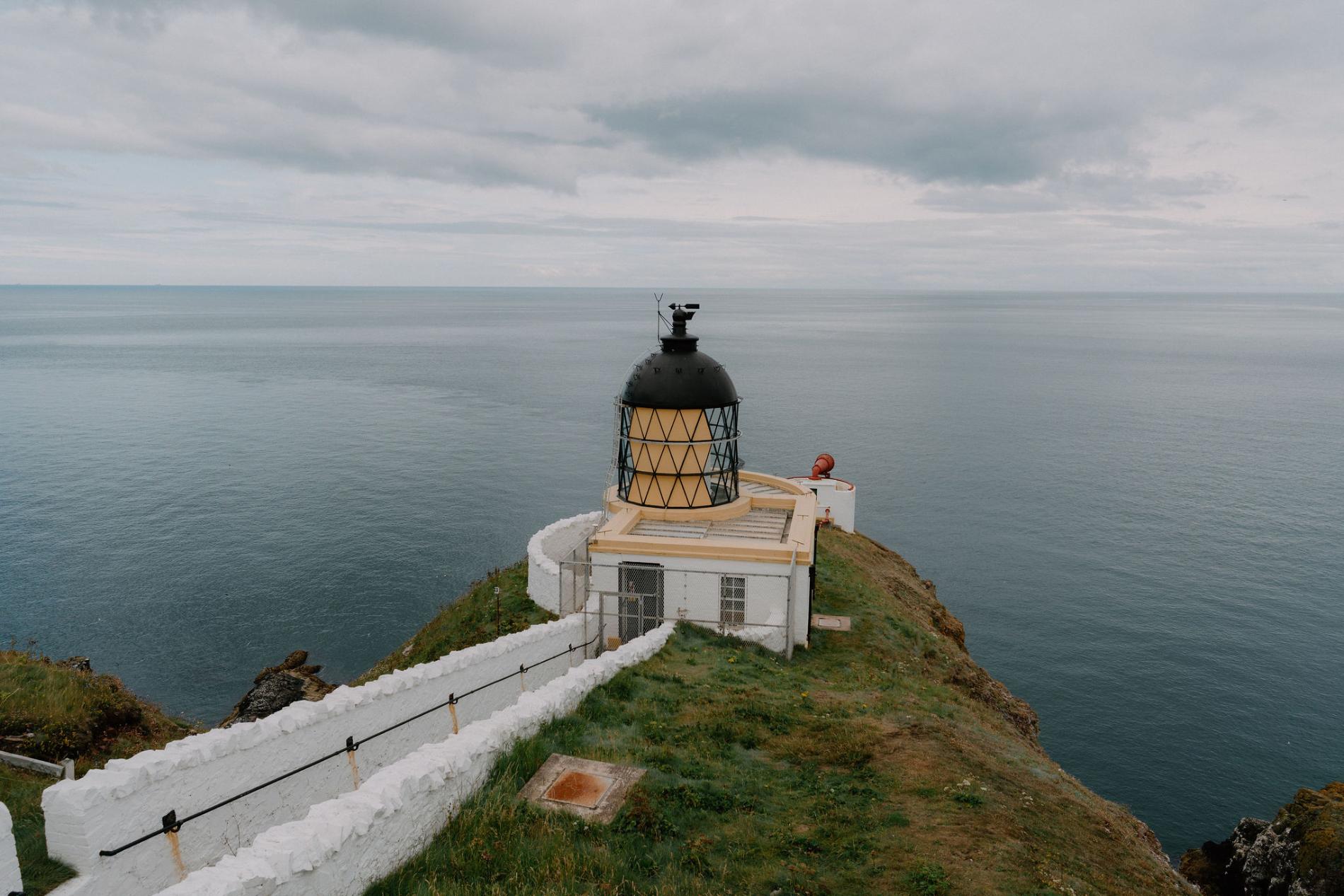
Dryburgh Abbey
Near St Boswells, Roxburghshire
Dryburgh Abbey feels quieter than the others—tucked away beyond a stone bridge and sheltered by trees. There’s less passing footfall here, and often more time to take it in without interruption. The setting helps. It sits in a bend of the River Tweed, surrounded by yew and beech, with the sound of the water never far off.
Founded in the 12th century by Premonstratensian canons, the abbey was damaged and rebuilt several times during the centuries of conflict with England. What stands now is partial but dignified—arches, doorways, a chapter house, and a long central green flanked by red sandstone walls. The most well-known burial is Sir Walter Scott, whose grave sits in the north transept beside family members. Earl Haig, the First World War commander, is buried here too.
What stands out when you’re there are the details that haven’t been over-restored. The clustered columns, worn but intact. The ivy-covered sections left to blend into the woods. A single window frame still holding its shape against the sky. And just outside the boundary wall, there’s a seat where you can rest and look across the water to where anglers still wade out into the Tweed, casting in the same pools as generations before.
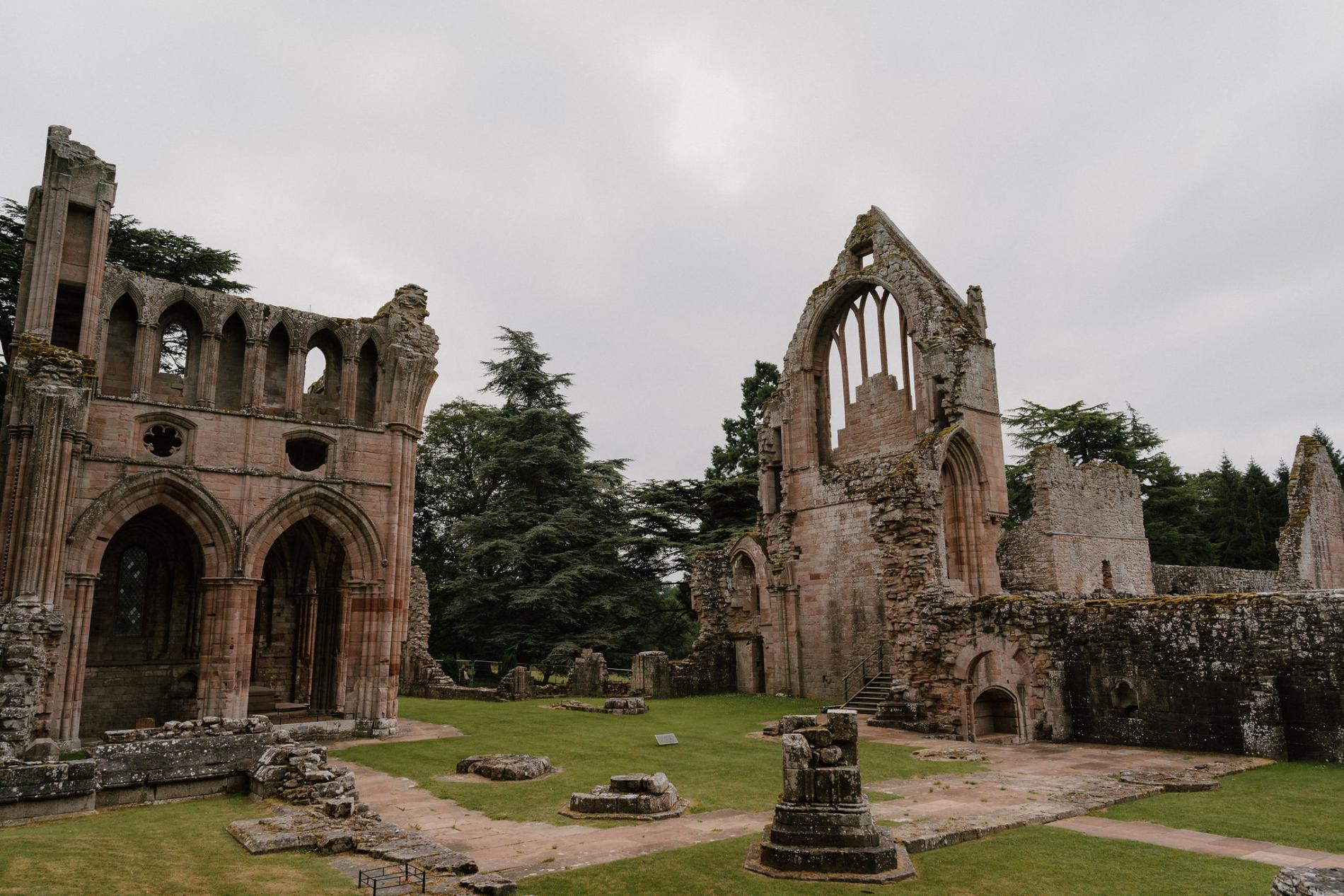
Kelso Abbey
Kelso, Roxburghshire
Kelso Abbey sits close to the centre of town, set back slightly from the road and surrounded by railings. It doesn’t announce itself in the same way as Melrose or Jedburgh, but it’s older—and at one time, more powerful. Founded in the early 1100s by Tironensian monks, the abbey once controlled vast lands across the Borders. Today, only parts of the structure remain, with the central tower and portions of the transepts still standing.
What’s left gives a strong sense of proportion. The crossing tower is tall and thick-walled, with narrow arched openings and weathered stonework that’s been left largely untouched. There’s no entrance desk or visitor centre—you can walk straight in. Interpretation boards help orient things, but it’s the setting that holds attention: open ground, quiet surroundings, and the feeling of something significant that’s been absorbed into the town rather than fenced off from it.
Look closely and you’ll see carved detail still in place—stone capitals, column fragments, and even small sections of patterned moulding. It’s also one of the few abbey sites where you can sit within the footprint of the building without much distraction. Locals pass through daily. Some stop. Most don’t. But it’s still one of the oldest parts of the town.
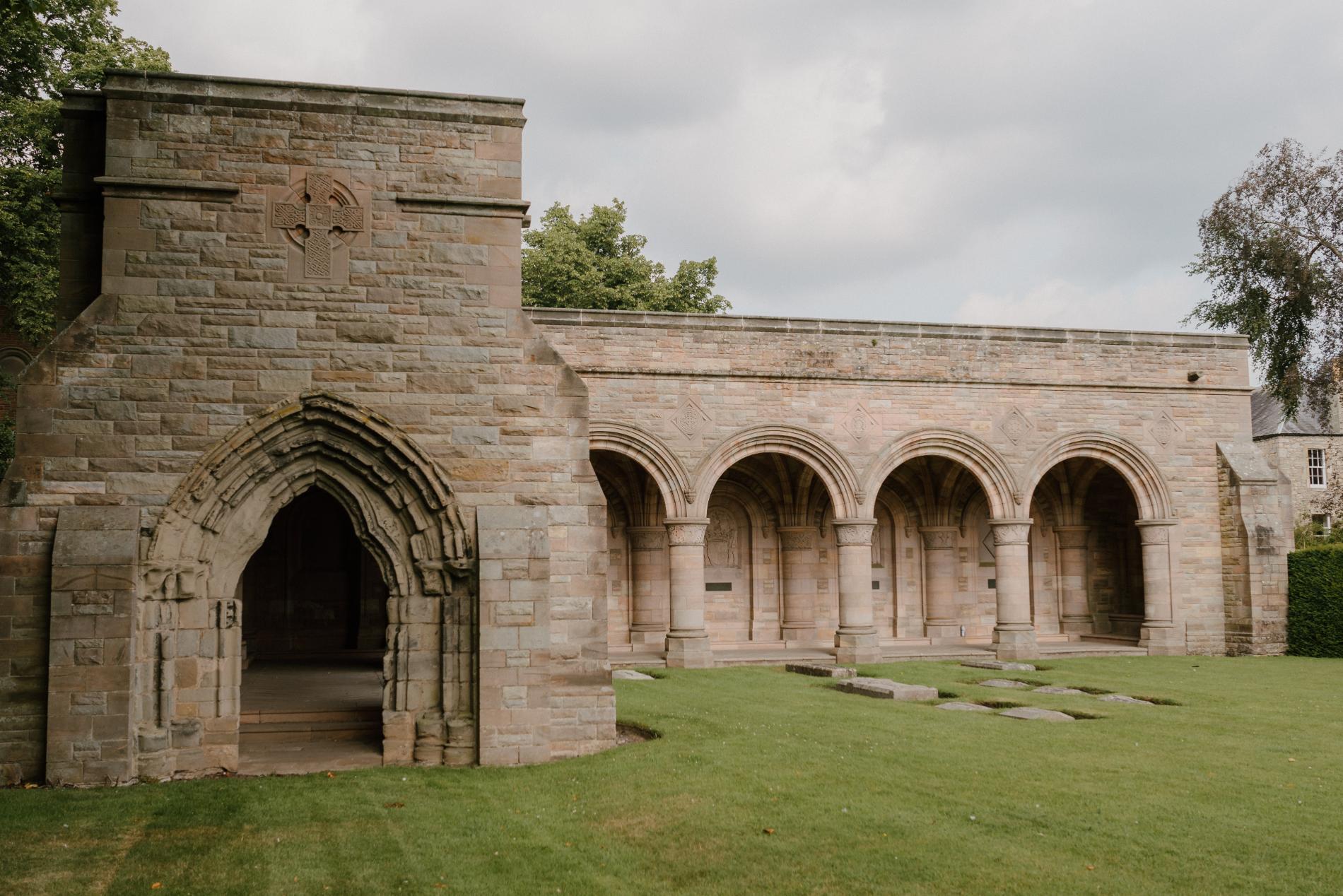
Eyemouth Harbour
Eyemouth, Berwickshire
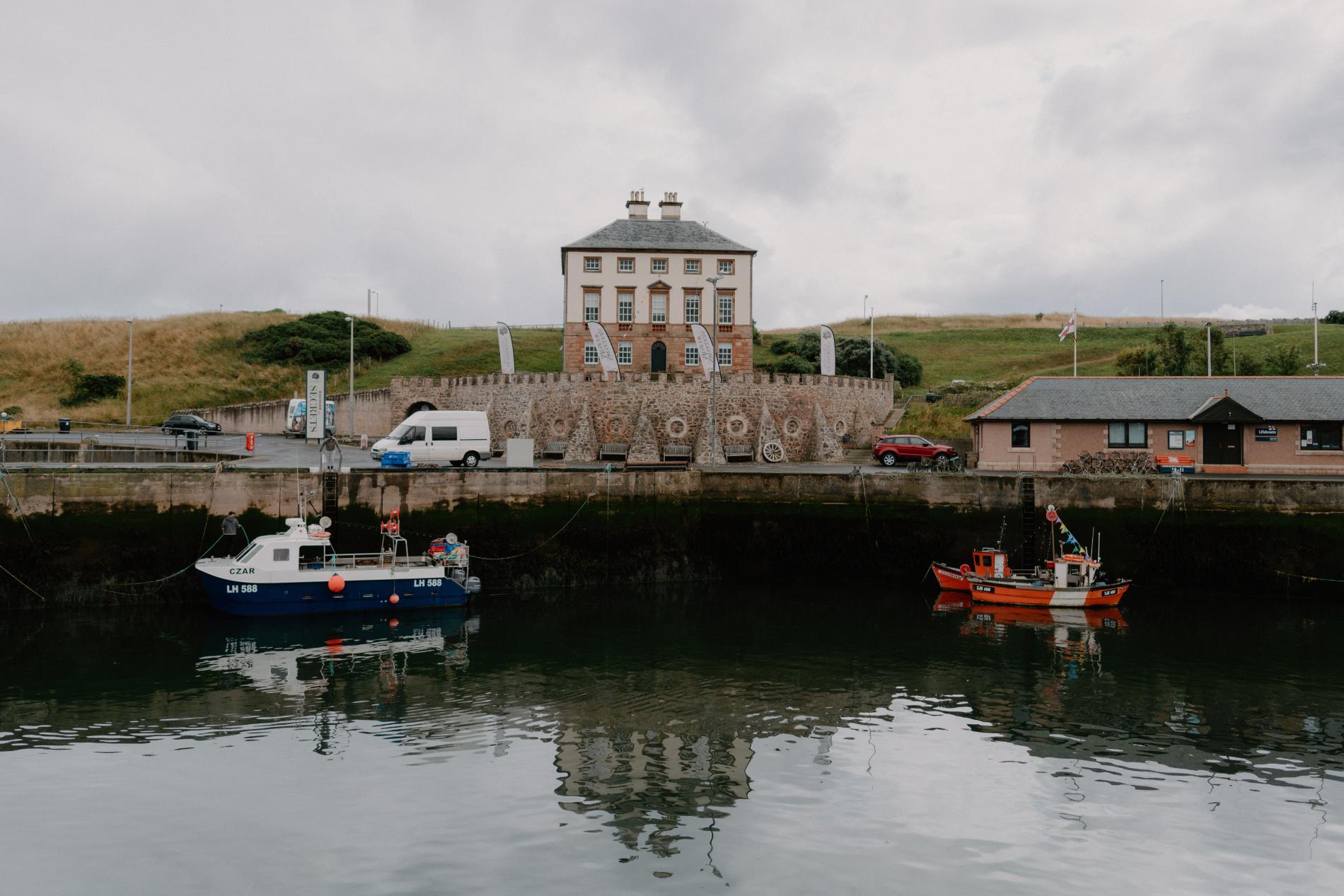
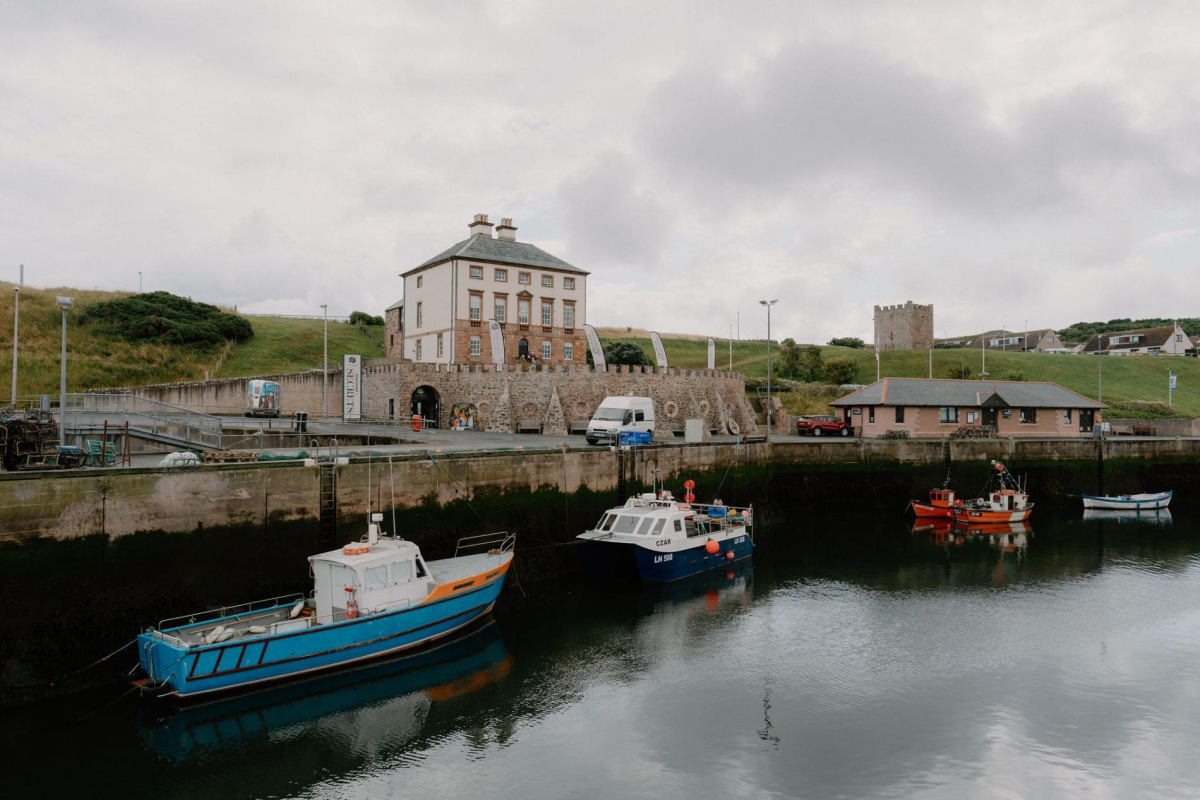
Eyemouth is still a working fishing town, and the harbour remains its centre. Boats come and go throughout the day—mainly shellfish and prawn trawlers now—with creels stacked along the quayside and gulls circling constantly overhead. It’s one of the few places in the Borders where the connection to the sea still feels active, not staged.
You can walk the full length of the harbour, from the lifeboat station to the beach. At the far end, just beyond the sea wall, is the small Eyemouth Museum, which gives context to the town’s maritime history—including the 1881 fishing disaster that claimed 189 local lives. Inside, there’s a large painted ceiling rescued from a merchant’s house and a collection of tools, photos, and objects tied to fishing life over the past two centuries.
There’s a fish bar on the harbour that serves straight from the day’s catch, and depending on the time of year, seals often loiter near the slipway hoping for scraps. The town centre is just a couple of streets, but it includes cafés, galleries, and a few independent shops. Eyemouth isn’t polished, but that’s part of the point—it’s direct, coastal, and still doing what it’s done for generations.
Coldingham Bay
Coldingham, Berwickshire
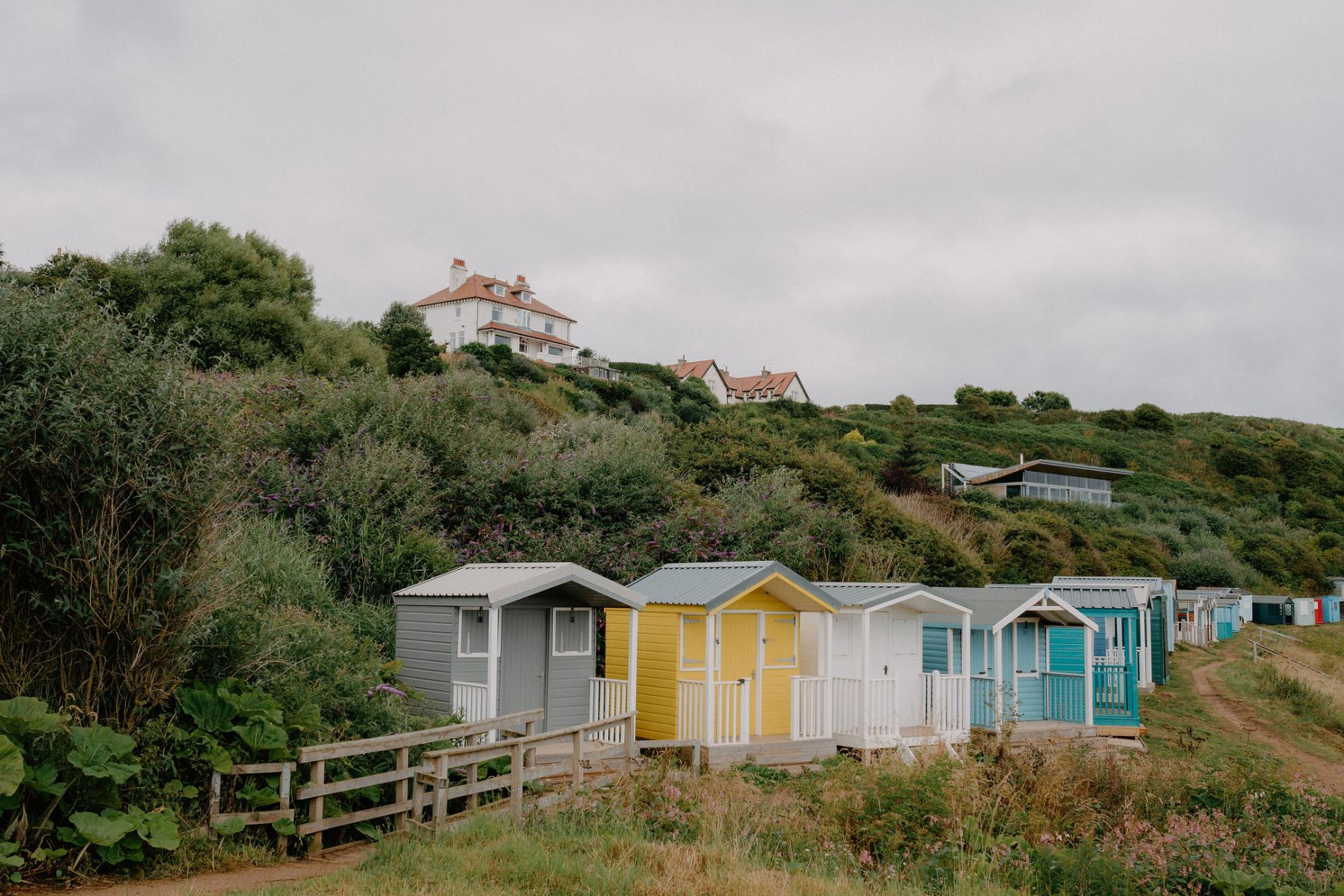
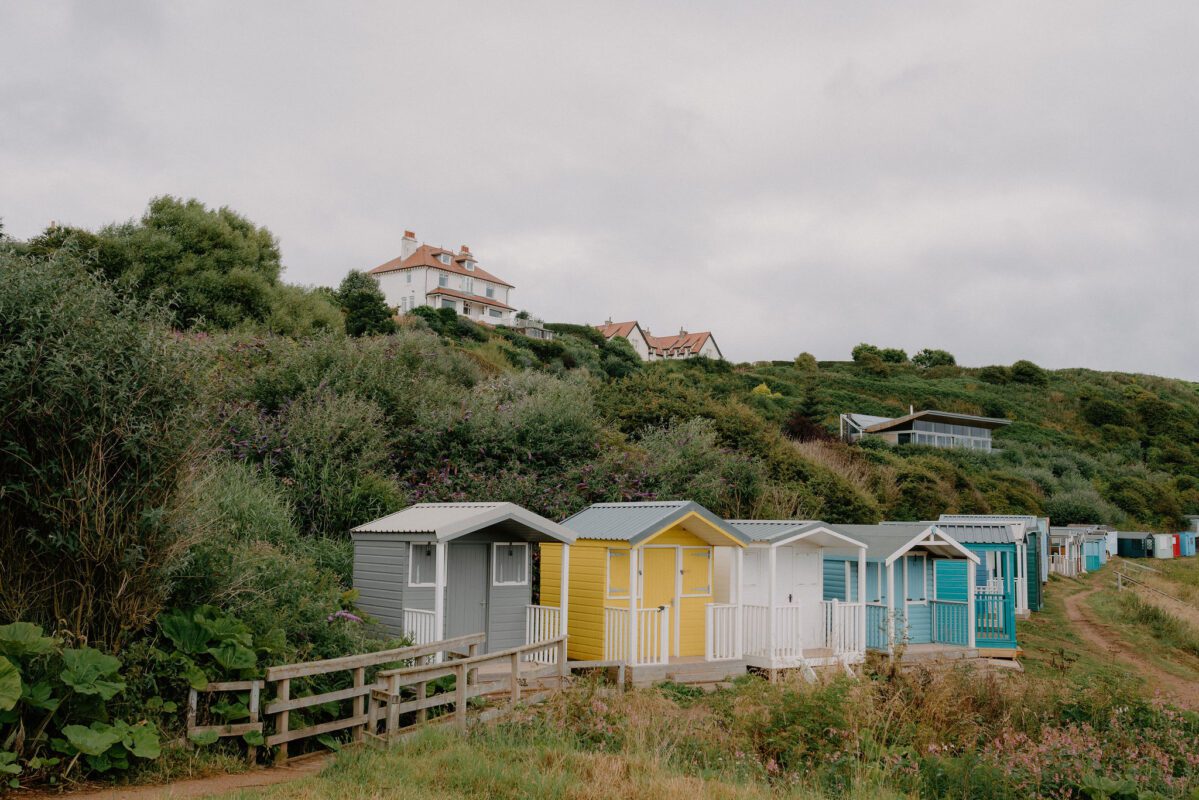
Coldingham Bay sits just below the village, reached by a narrow road that winds past fields and stone cottages before dropping down to the sand. The beach itself is a broad, gently curving bay, framed by low cliffs and grassy banks. It’s one of the most accessible and well-kept beaches on the Berwickshire coast—regularly cleaned, with facilities including a small café, toilets, and lifeguard cover in summer.
At low tide, there’s plenty of room to walk the full length, with firm sand underfoot and rock pools at either end. The beach is popular with families, dog walkers, and cold-water swimmers, but it rarely feels overcrowded. On calmer days, paddleboarders and kayakers launch from the shallows. The water quality here is usually high, and the beach holds a Seaside Award flag most years.
Up the slope from the beach, a signed path leads to St Abbs—a scenic route along the clifftops that offers some of the best views on this stretch of coast. Coldingham itself is small but has a handful of useful stops: a village shop, a pub, and the remains of Coldingham Priory, once a major religious centre. But it’s the bay that draws people back. Clean, simple, and reliable in all seasons.
Leaderfoot Viaduct
Near Melrose, Roxburghshire
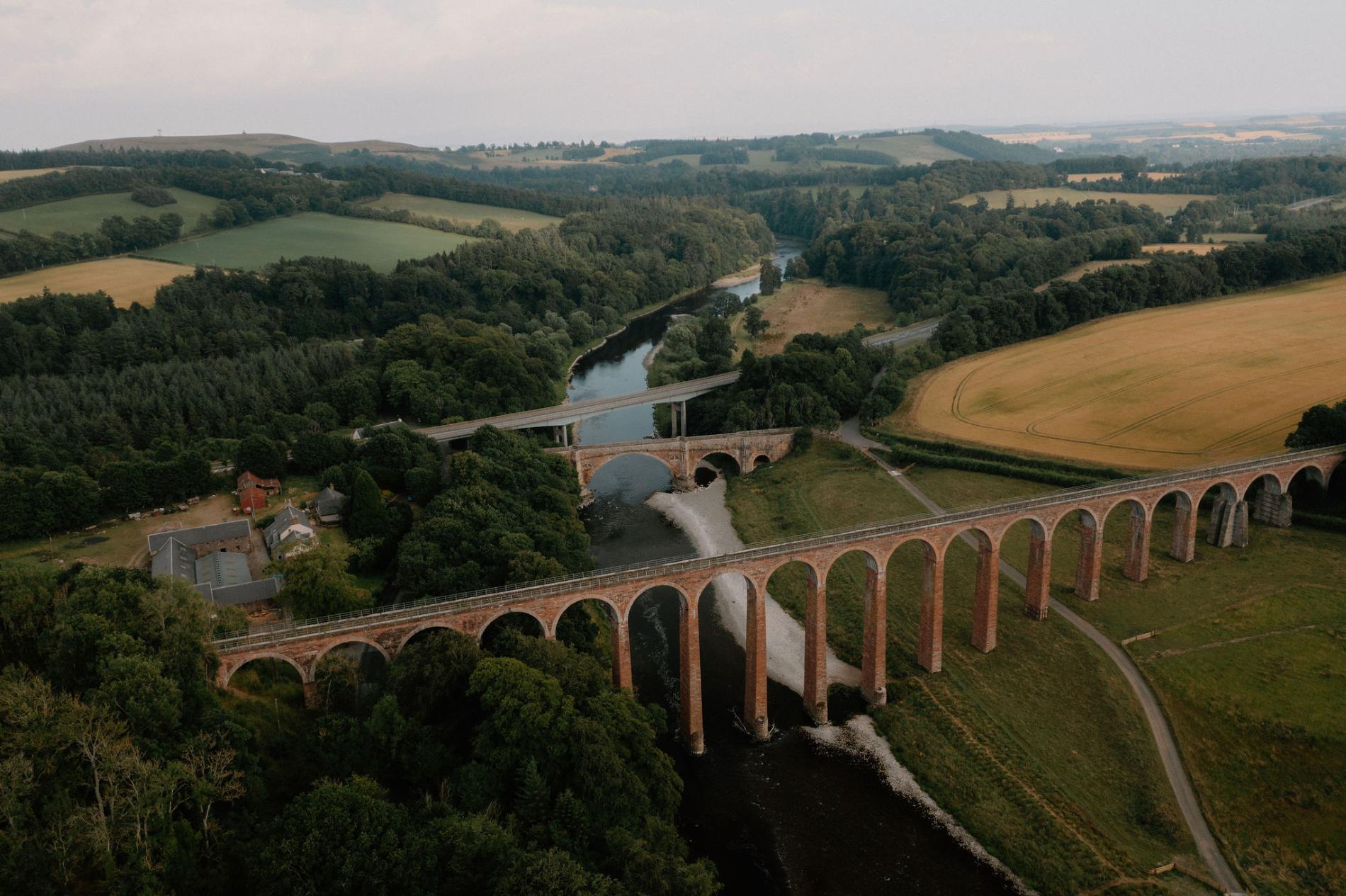
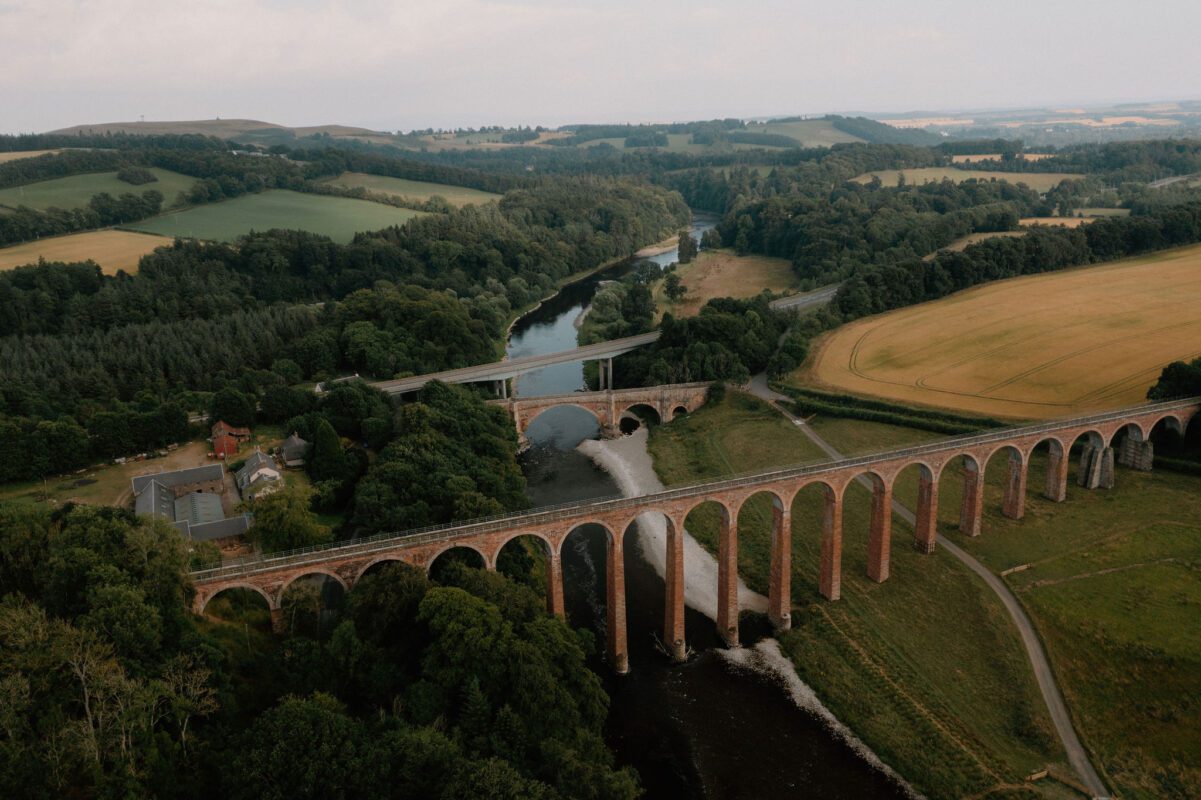
Leaderfoot Viaduct crosses the River Tweed just east of Melrose, a striking 19th-century railway bridge with 19 tall arches built from red sandstone. It hasn’t carried trains since the 1960s, but it’s still intact and easily viewed from a layby on the A68 or from footpaths nearby. The setting is what makes it stand out—rolling hills, the river below, and the ruins of Drygrange Old Bridge just upstream.
There’s a small parking area by the roadside, from which you can walk down under the viaduct or up the hill opposite for the classic wide-angle view. Early or late in the day, the light catches the arches and casts long reflections in the river, especially when the water is low. It’s one of those places where you can stop for five minutes or stay for an hour with a camera and not get bored.
Although closed to the public, the viaduct remains structurally sound and is maintained as a listed structure. Just beyond the far bank, you’ll see the turn-off to Scott’s View and the road leading towards Dryburgh. The site is often quiet—even in summer—and is one of the best roadside photo stops in the Borders.
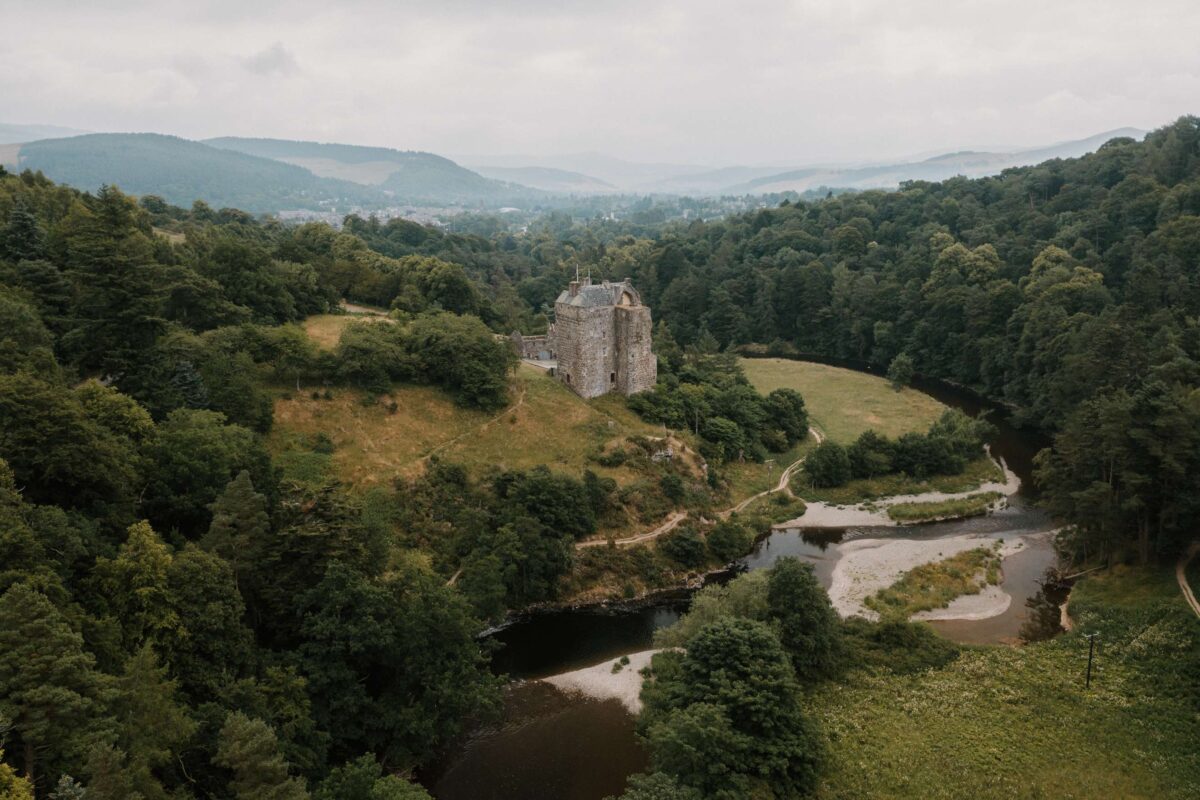
Neidpath Castle
Near Peebles, Peeblesshire
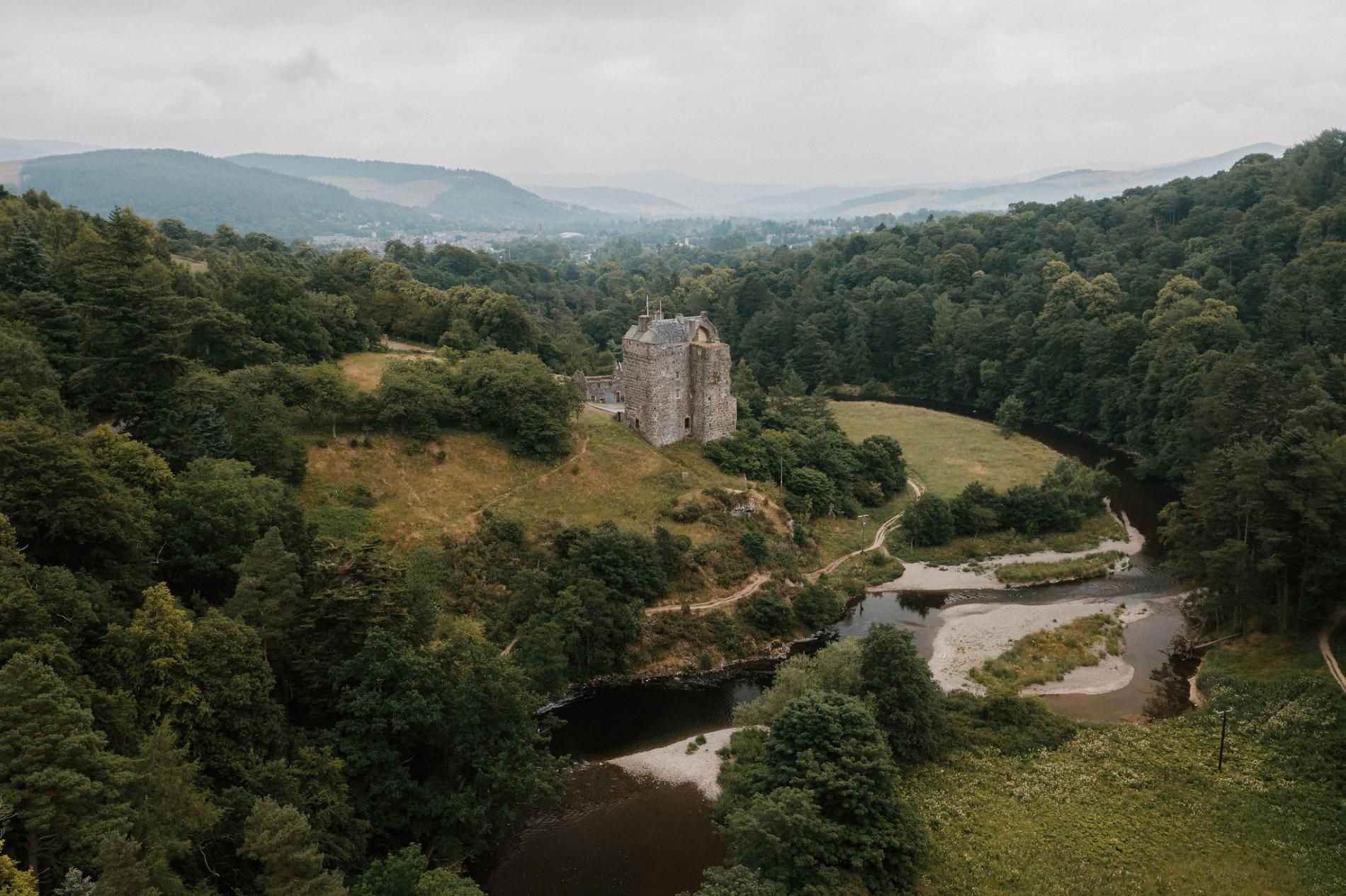
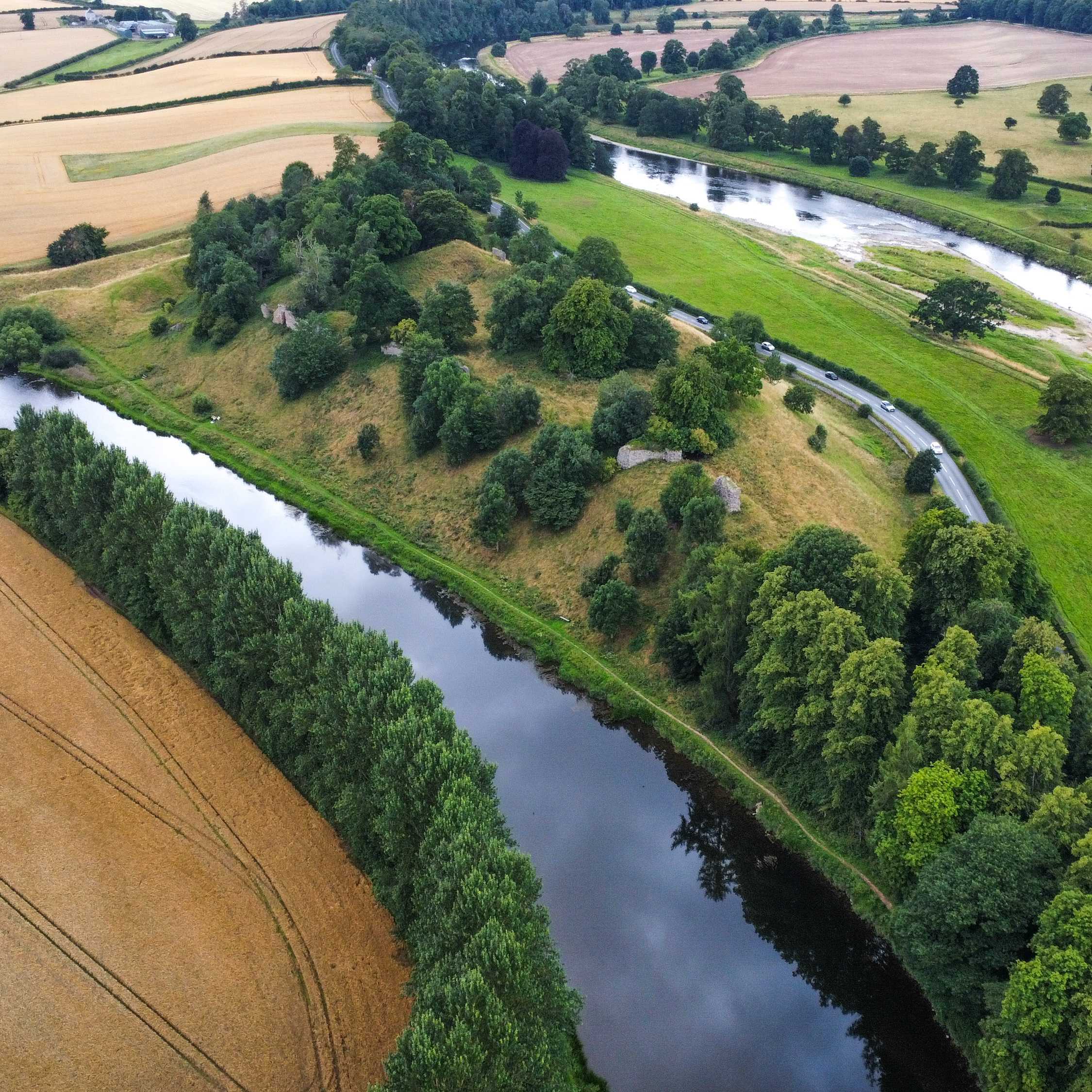
Neidpath Castle stands just west of Peebles on a bend in the River Tweed, its thick stone walls rising directly from a wooded slope above the water. It’s a 14th-century tower house, privately owned but visible from nearby footpaths. The best view is from the riverside trail heading out of town—flat, easy walking, with the castle appearing slowly through the trees as you follow the bend upstream.
The structure itself is well preserved from the outside. A tall central tower, battered walls, and narrow slit windows give it a defensive look, and its position above the river would have been easy to defend. Though not open for casual visits (access is by private arrangement or for events), it still gives a clear sense of Borders fortification—compact, tough, and built for endurance rather than display.
It’s been home to several noble families over the centuries, including the Hays and the Douglases, and Mary Queen of Scots is said to have stayed here in 1563. There’s a small sign by the path, but no ticket booth, no crowd. Just the river, the woods, and the castle watching quietly from above. If you’re nearby, it’s worth the short detour for the setting alone.
St Mary’s Loch
Yarrow Valley, Selkirkshire
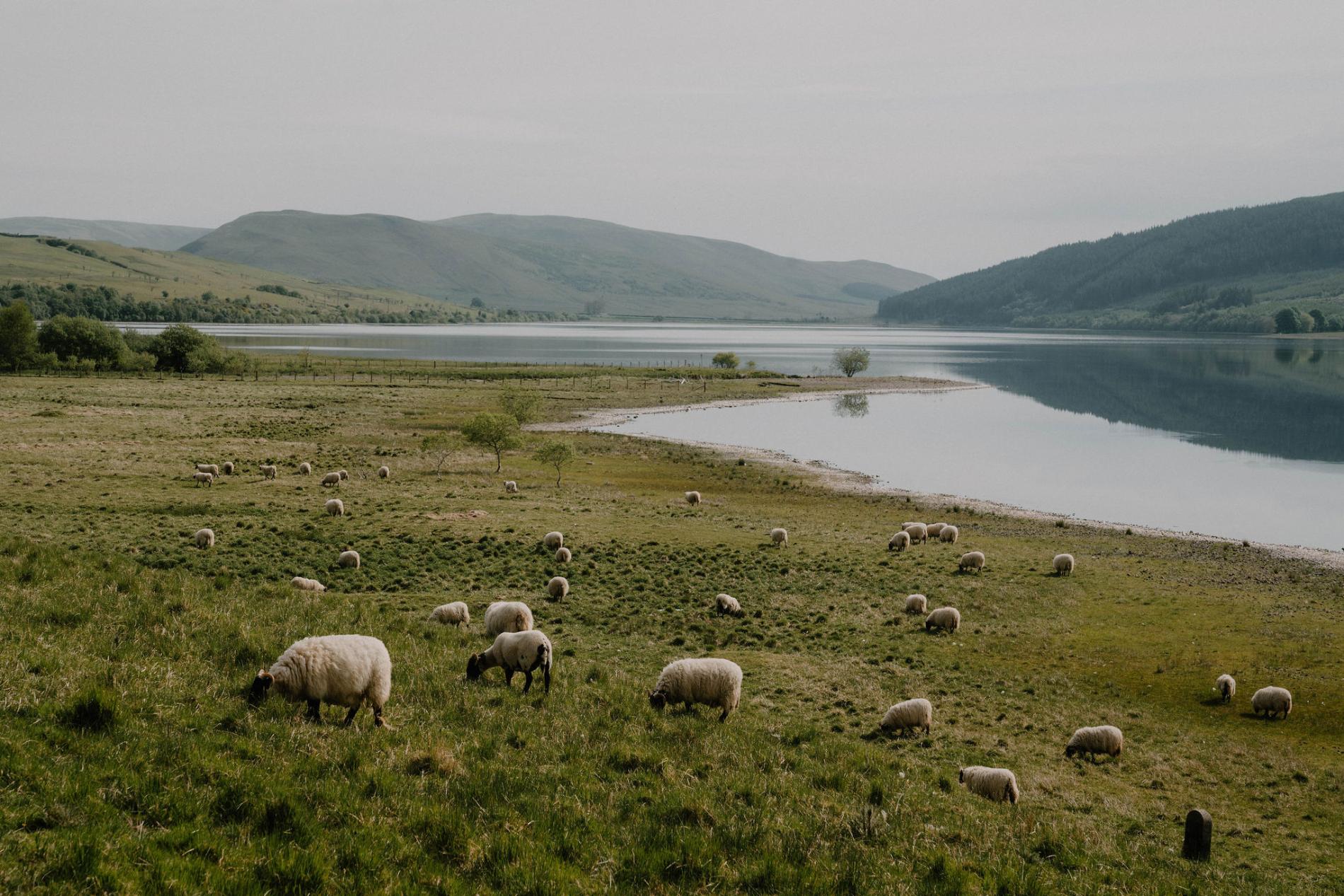
No signs point you toward it until you’re nearly there. Just the road narrowing a little, the trees thinning, and then the water appears—long, still, and edged by quiet slopes. St Mary’s Loch doesn’t need much introduction. It’s the largest natural loch in the Scottish Borders, but it doesn’t act like it. There’s no visitor centre, no café, no curated experience—just a car park, a line of benches, and a shoreline path that follows the curve of the water.
On clear days, the loch reflects the hills with barely a break. Paddleboarders sometimes launch from the south end near what remains of Tibbie Shiel’s Inn, while anglers stand waist-deep in the shallows or row slowly through the middle. If the weather turns, the mood shifts fast—low clouds hugging the ridge, wind cutting across the surface.
A monument to James Hogg stands not far from the road, looking out over the water. He was born nearby and wrote about this place often. It’s easy to see why. There’s a rhythm to the land here—long views, no sudden turns, nothing competing for attention.
It doesn’t require a full itinerary. You stop, stretch your legs, and stay longer than planned.
Paxton House
Near Berwick-upon-Tweed, Berwickshire
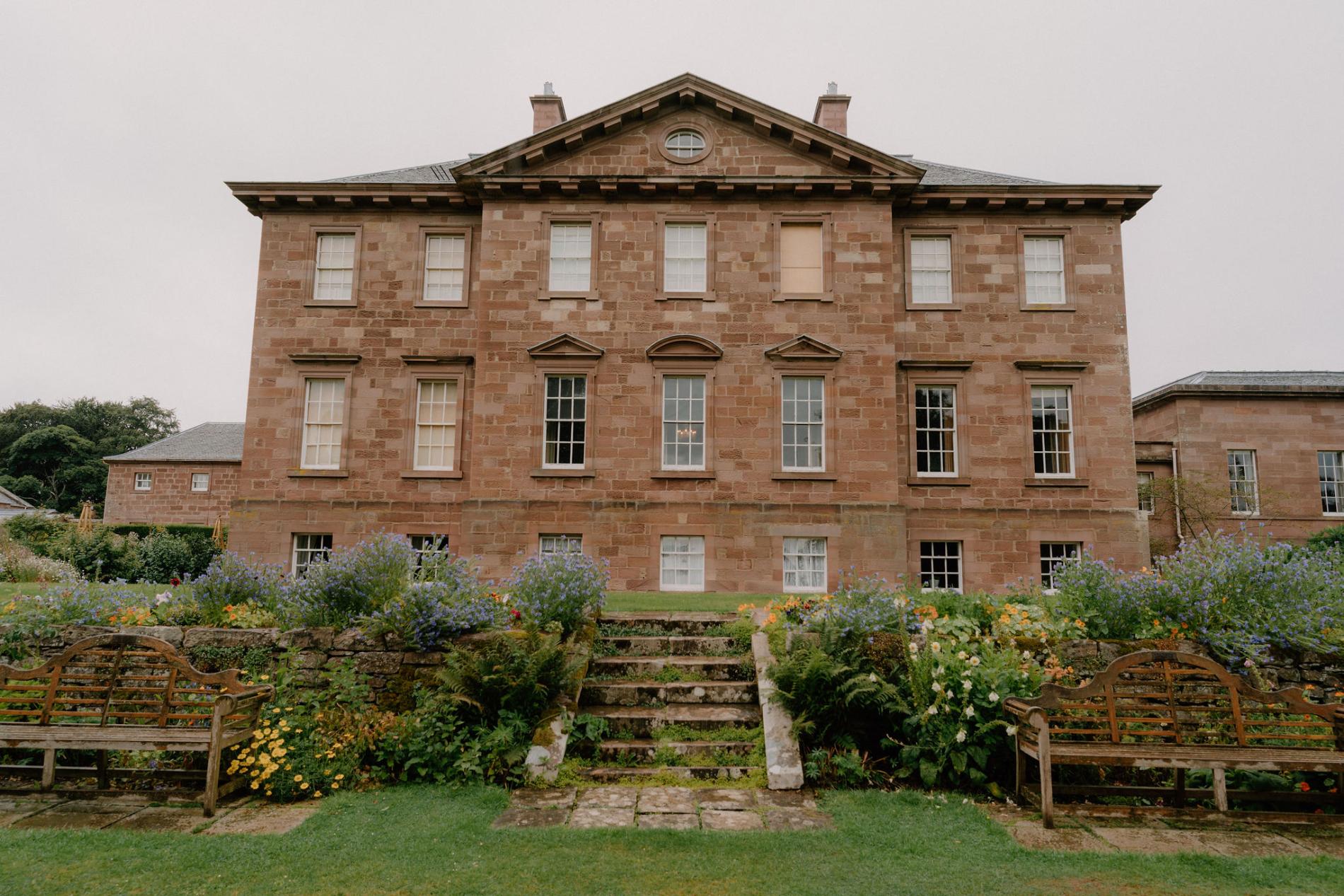
Just west of Berwick, a quiet stretch of the River Tweed runs past open parkland and the long east-facing façade of Paxton House. Built in the 1760s for Patrick Home, it’s one of the clearest examples of Palladian architecture in the Borders, laid out with symmetry, scale, and social status in mind.
Access is by guided tour, which moves through a series of rooms still furnished with original Chippendale pieces and paintings by the likes of Raeburn and Reynolds. The Picture Gallery, added later, holds works from the National Galleries on long-term loan. Interiors are smart but not overpolished—no ropes, no dramatic lighting, just solid design and careful upkeep. It still feels like a lived-in house, not a set piece.
The surrounding grounds include riverside walks, wide lawns, and a walled garden. You can follow a marked trail past the boathouse and down to the Tweed, or stay close to the house where picnic tables and a small play area sit near the café in the old stables.
It’s well-run without being overdeveloped, and the setting alone makes it easy to recommend—especially if you’re already in the eastern Borders or travelling between Edinburgh and Northumberland. It doesn’t need more than half a day, but everything you see is well looked after and in its right place.
Greenknowe Tower
Near Gordon, Berwickshire
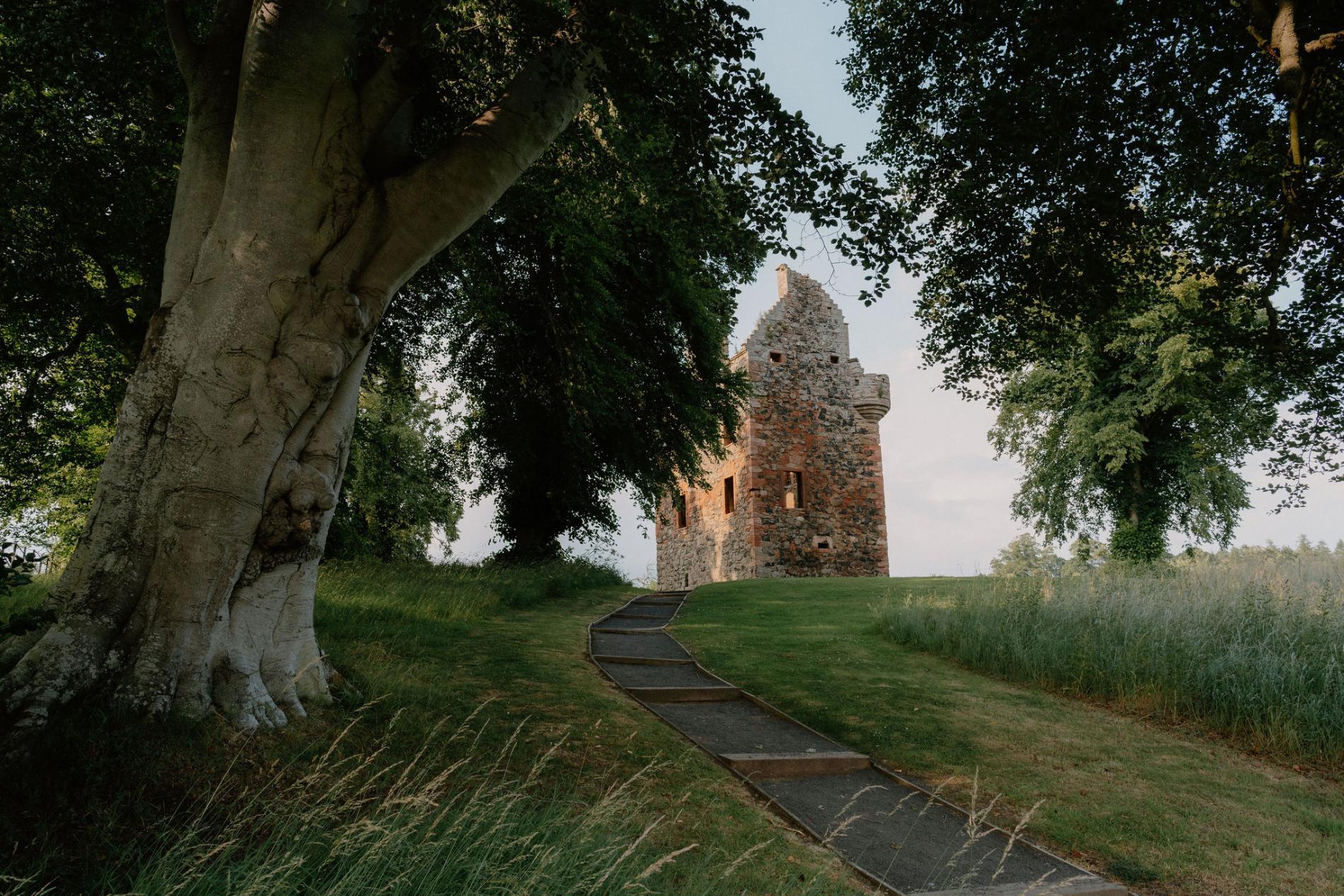
Just beyond the village of Gordon, a narrow road skirts the edge of pasture before a sudden rise of stone catches your eye. There’s no signpost until you’re nearly there—just a layby, a short path through the grass, and the remains of Greenknowe Tower standing quietly on its own.
Built in the 1580s by James Seton and Janet Edmonstone, it’s a compact L-plan tower house with thick walls, tight stairwells, and traces of domestic life still visible in the stone: fireplace recesses, window seats, and a carved doorway bearing the initials of its original owners. Though the roof is long gone, the structure remains sturdy and accessible. You can still climb the spiral stair to reach the upper floors and look out over the surrounding farmland—open country now, but once part of a broader estate.
There’s no admission fee, no ticket desk, and rarely anyone else around. It’s not dressed up as a major attraction, but that’s part of its strength. Everything that’s there has simply survived: the iron gate, the weathered lintels, the sense of a building made to last without ceremony.
Hume Castle
Near Kelso, Roxburghshire
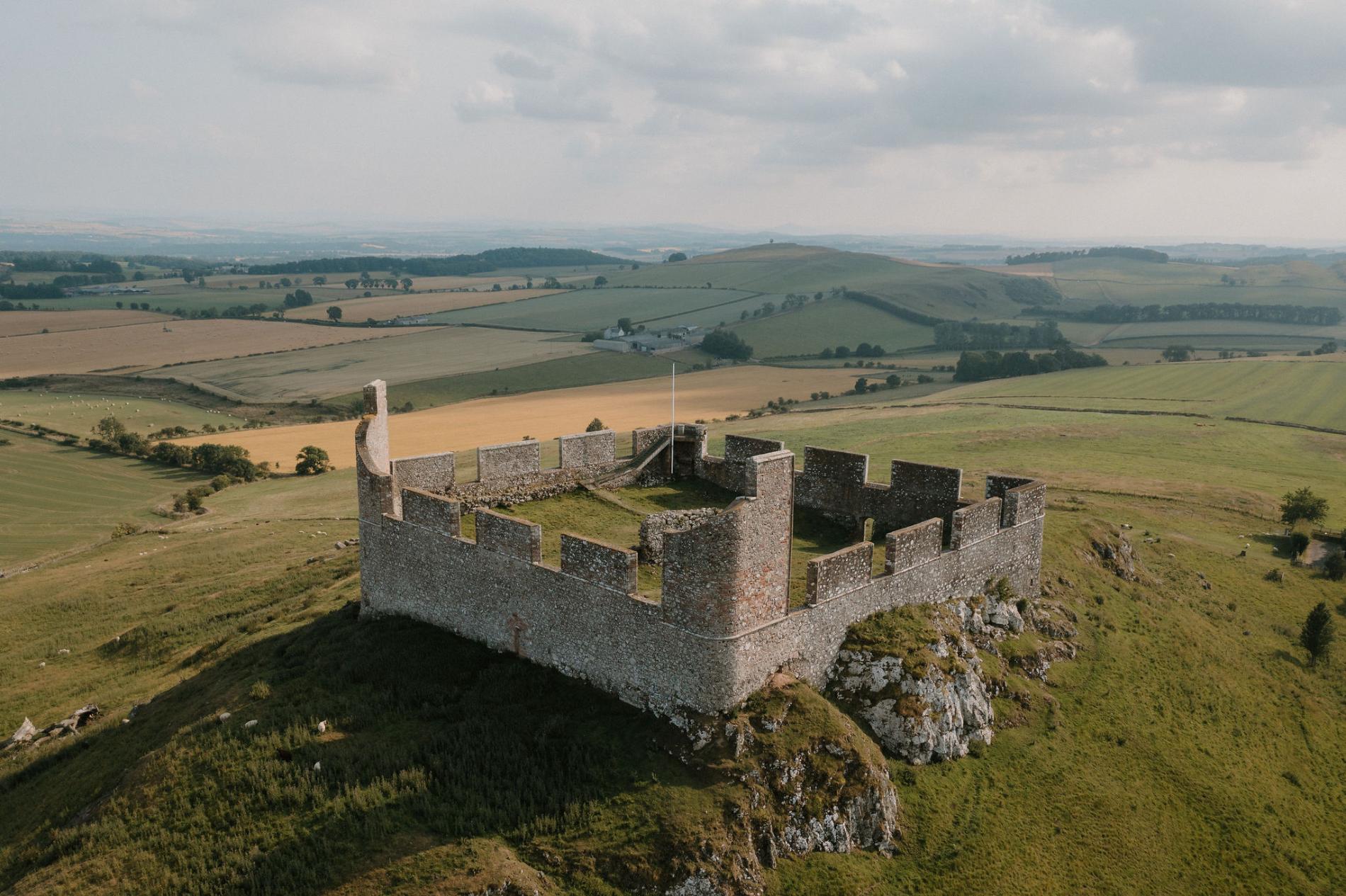
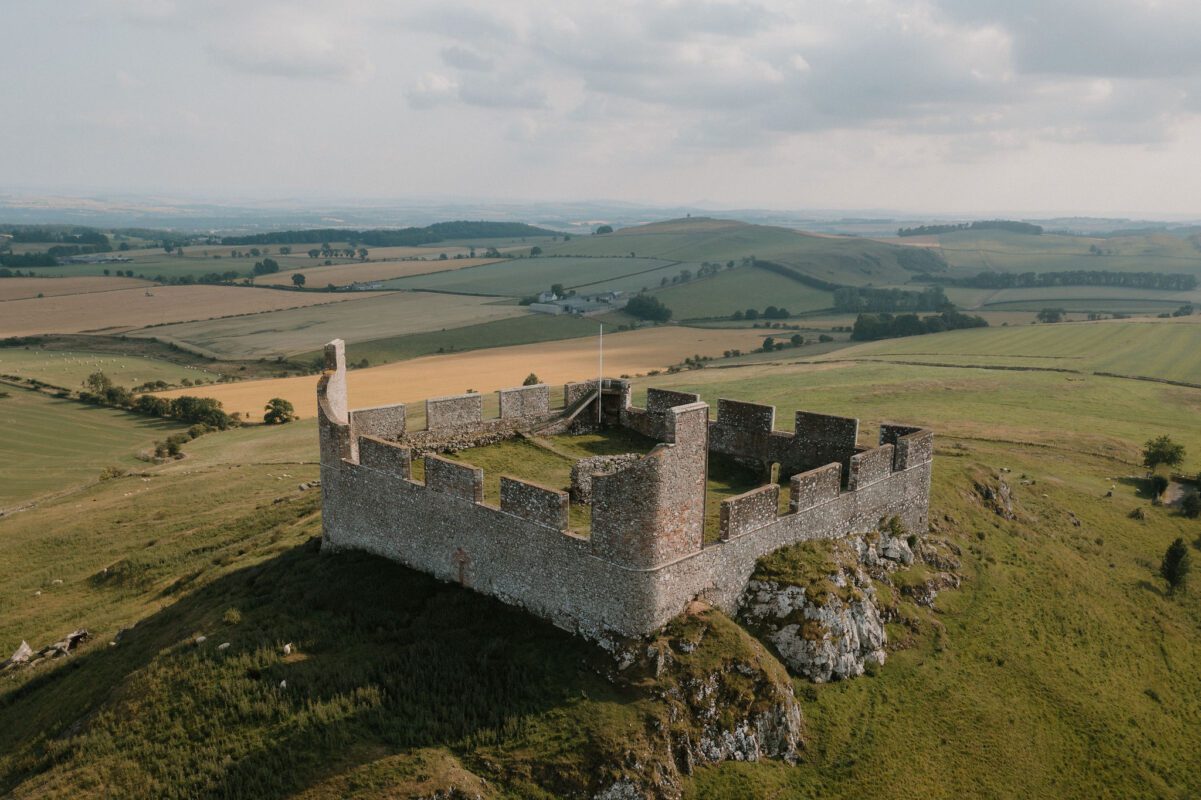
Hume Castle stands high on a ridge above the village of Hume, its curtain walls visible for miles across the Merse. What looks like a medieval fortress from a distance is, in fact, a reconstruction—built in the late 18th century on the site of the original castle, using some of the surviving stone. The result is a striking outline: thick walls, rounded turrets, and a commanding position, even though little of the internal structure remains.
Access is free, with a small gate leading into the interior. The ground is open and uneven, with grass underfoot and panoramic views from almost every corner. On a clear day, you can see across the Borders to the Cheviots, the Eildon Hills, and the Lammermuirs. Information boards explain the history, including the role of the original Hume Castle during the Rough Wooing and its demolition by Cromwell’s forces.
Though the interior is bare, the scale and position make it memorable. If you’re nearby in the evening, it’s a good spot for a sunset, and the site is often empty even at peak times. No charge, no facilities, but a solid piece of Borders history with one of the best views in the region.
Mary Queen of Scots Visitor Centre
Jedburgh, Roxburghshire
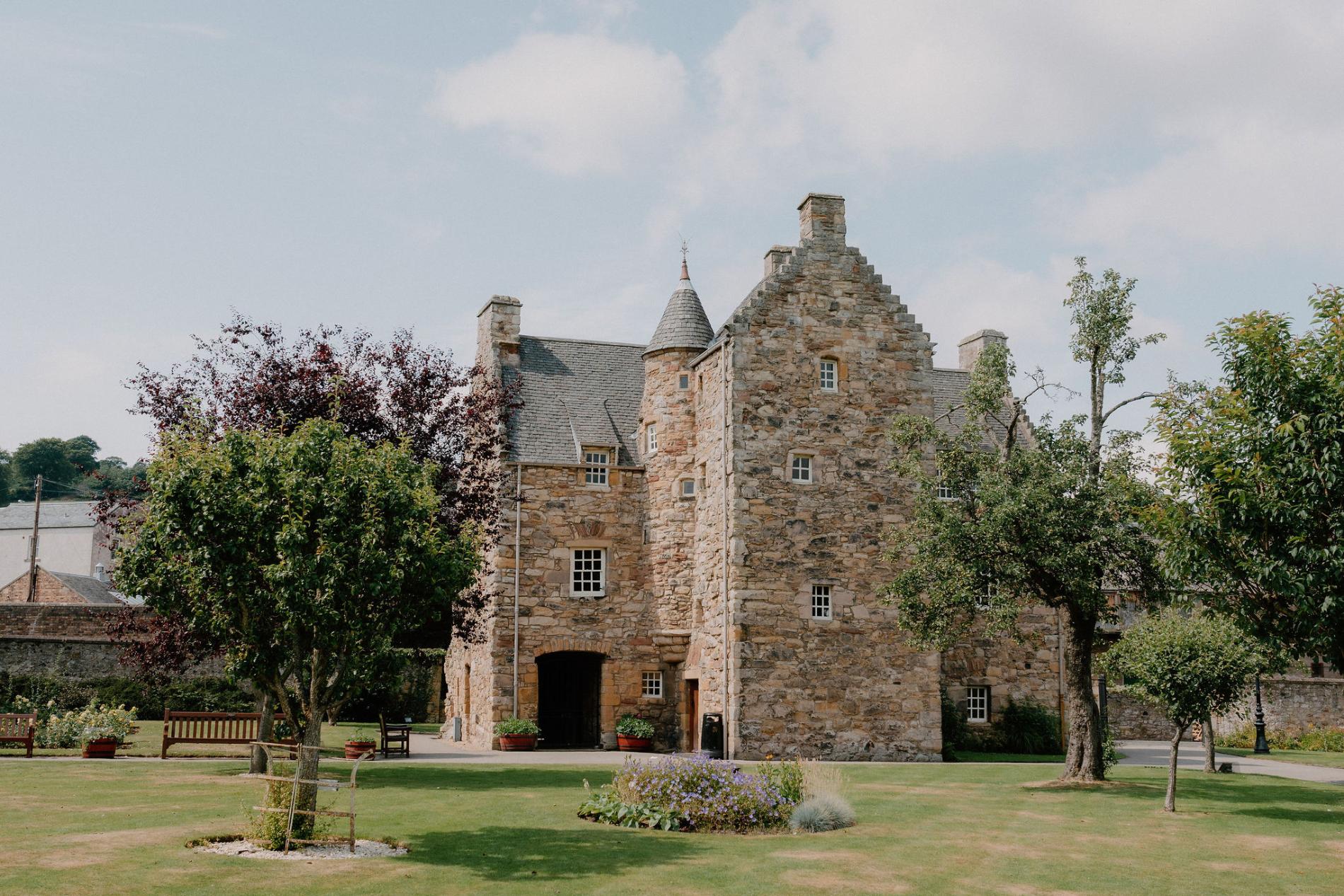
Tucked just behind the main street in Jedburgh, this 16th-century tower house holds the story of one of the most turbulent episodes in Mary Stuart’s life. She stayed here in 1566, recovering from a near-fatal ride to visit the wounded Earl of Bothwell at Hermitage Castle. The visit—and her choice to see Bothwell—sparked public criticism and fed the political unraveling that followed.
The house itself is free to enter and easy to miss from the road. Inside, it’s a mix of period rooms and exhibition space, with portraits, documents, and objects connected to Mary’s reign. One floor focuses on her time in Scotland, another on her downfall and execution. The audio-visual displays are dated but informative, and the staff are usually happy to answer questions or point out details that aren’t on the signs.
The most atmospheric part is the top-floor bedroom—furnished sparsely, with low light and a sense of stillness that fits the story. Outside, the garden includes plants associated with Mary’s era, and a sculpture of the queen stands in the courtyard.
It doesn’t take long to visit, but it adds another layer to Jedburgh—and brings a bit more depth to a figure so often reduced to myth.
Lochcarron of Scotland Visitor Gallery
Hawick, Roxburghshire
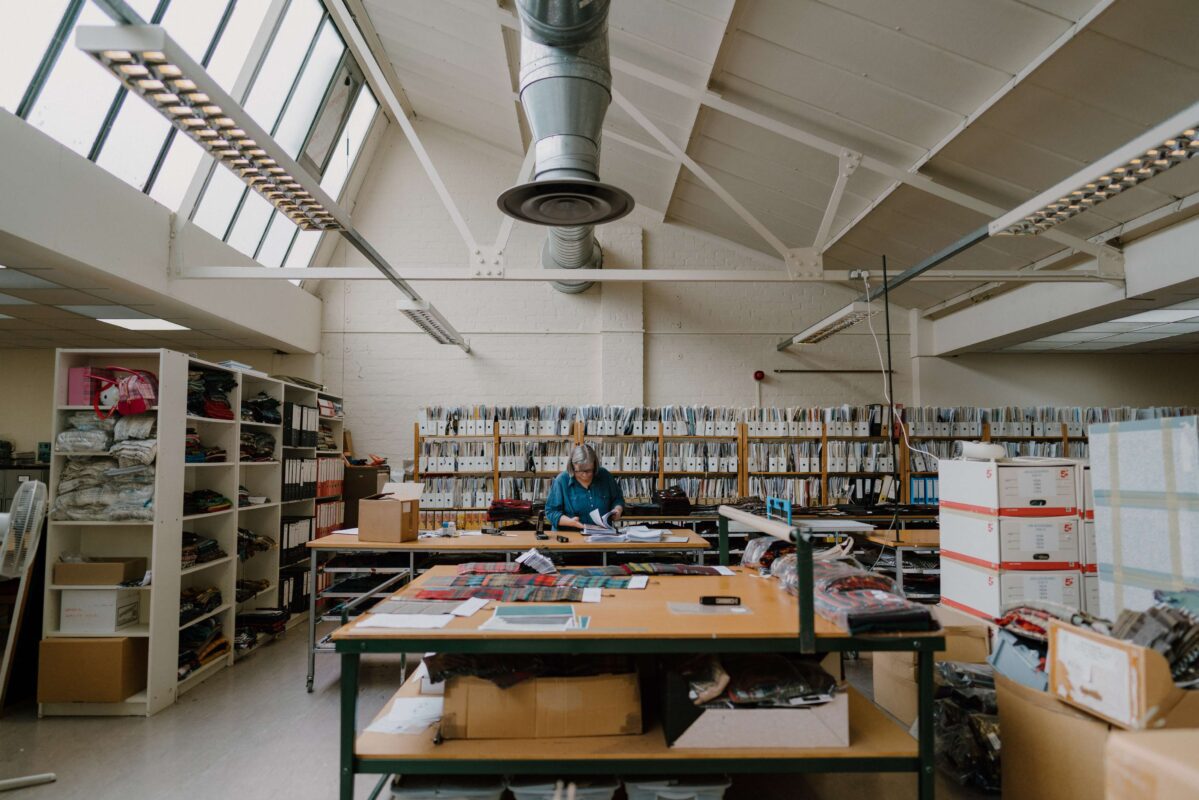
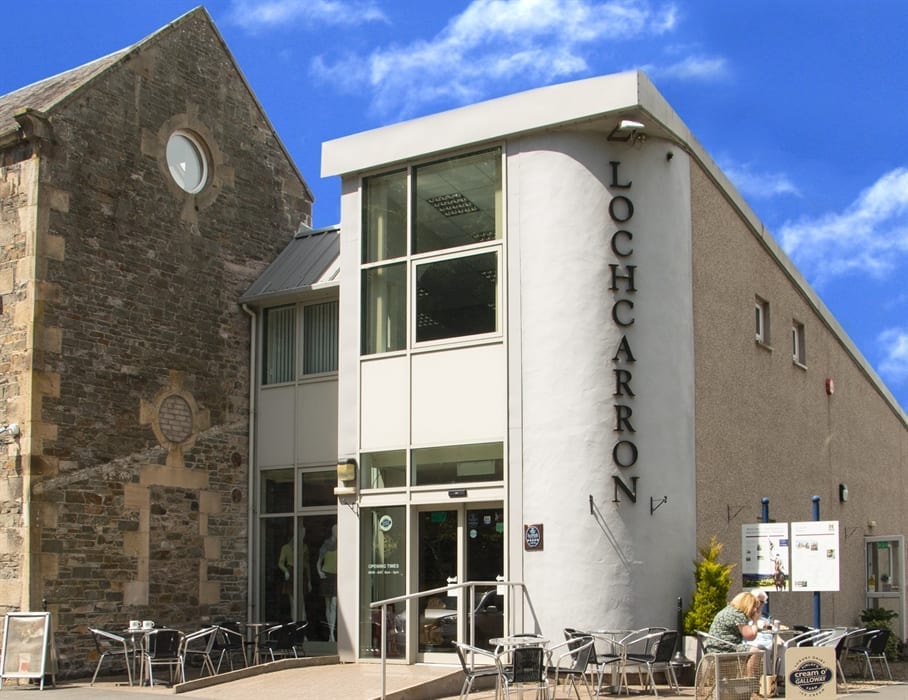
The Lochcarron of Scotland visitor gallery in Hawick sits within the mills where traditional tartan weaves continue to be produced. The main entrance leads into a compact, well-lit space showcasing tartan samples, panels on weaving techniques, and looms in motion. It’s a working environment—visitors can watch the weavers at their machines through glass partitions, hear the rhythmic clack of looms, and occasionally catch the scent of freshly dyed wool.
A highlight is the large display of tartan patterns, including rare and vintage designs, with information on how each one was developed and registered. Staff are often on hand to explain the difference between warp and weft tension, or how thread count affects the drape of a fabric. You won’t find polished exhibits or dramatization—what you get is a direct, understated insight into how tartan is made today.
There's also a small retail area, offering scarves, blankets, accessories, and yardage by the metre—all woven on site. Prices are clearly marked, and cutting to order is done while you wait. For anyone interested in textiles, design, or Scottish heritage in practical form, this gallery offers a behind-the-scenes look that few other shops manage.

Harmony Garden
Melrose, Roxburghshire
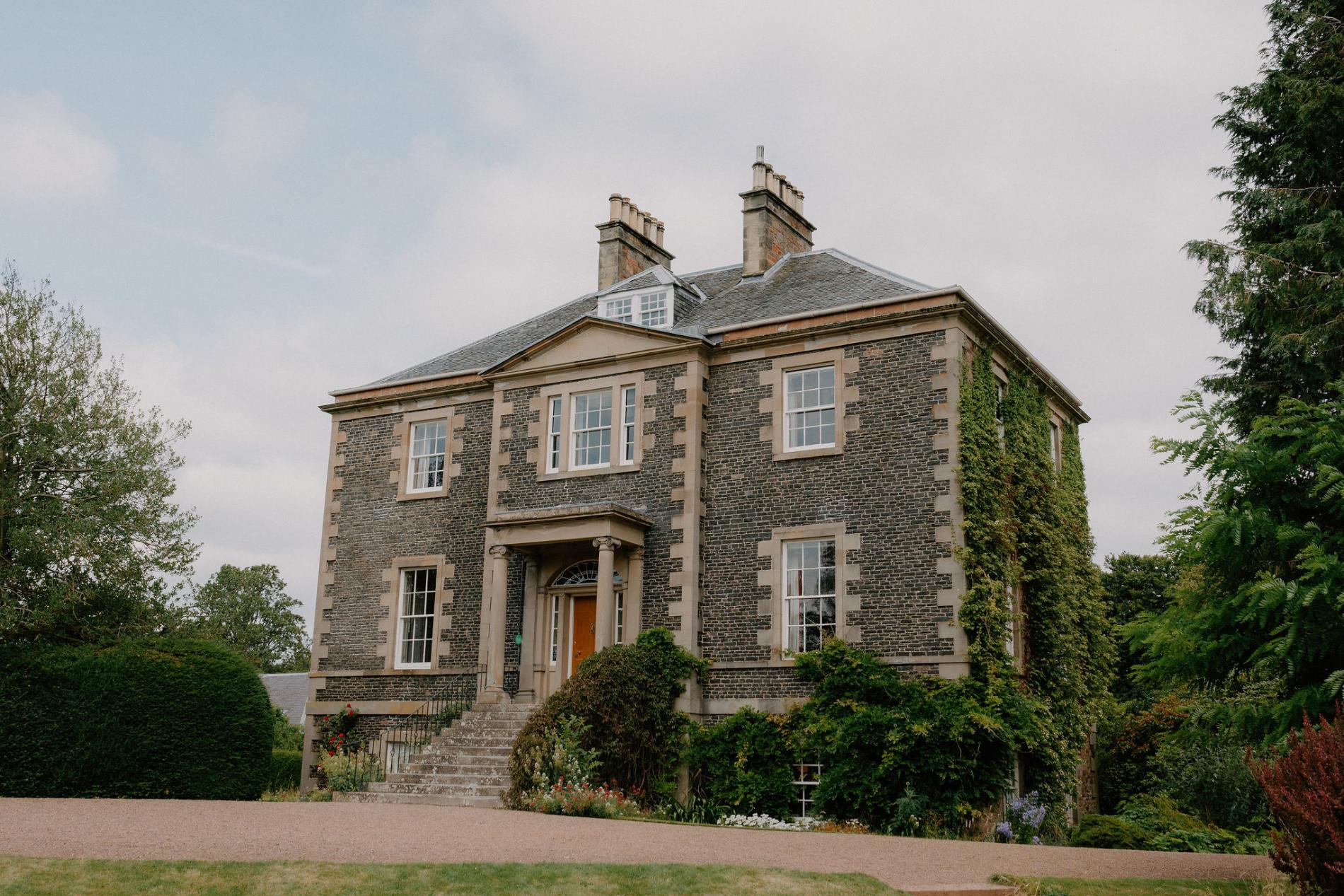
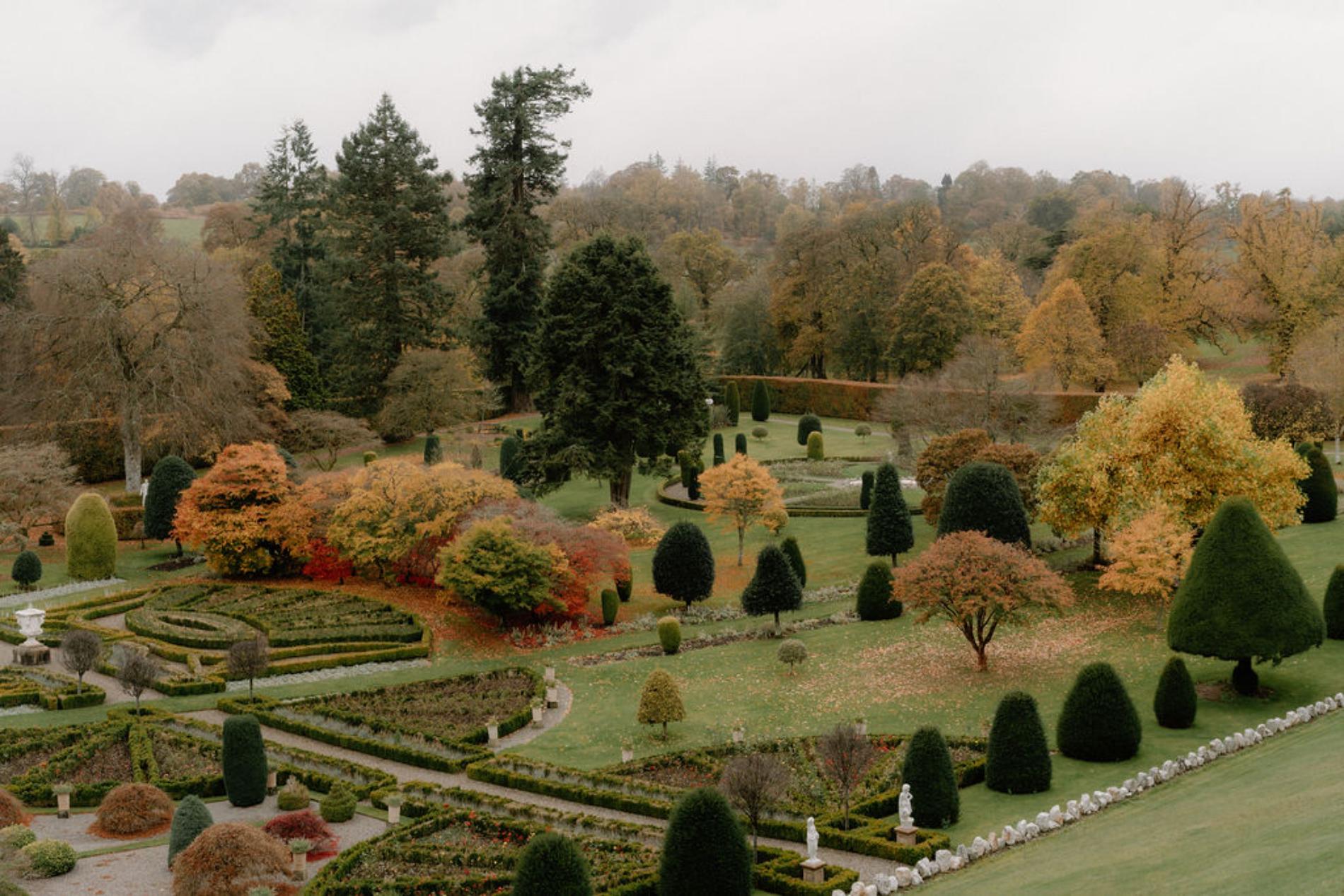
Harmony Garden sits just above Melrose Abbey, behind a row of old stone walls that block the view until you're inside. Managed by the National Trust for Scotland, it’s not large, but it’s one of the better-kept walled gardens in the Borders—geometrically laid out, neatly maintained, and often quiet even during peak season.
At its centre is Harmony House, an 1807 Georgian villa used for holiday lets and events, but the garden is open to the public most of the year. There are formal beds filled with seasonal planting, wide lawns, and a small orchard at the far end. Bees work the borders in spring and summer, and swallows skim low over the grass from May onwards. Benches are placed with care—not just for rest, but to give different views of the abbey ruins, the Eildon Hills, or the surrounding rooftops of Melrose.
It’s also the home of the annual Borders Book Festival each June, when the lawn is covered in tents and the garden fills with visitors. Outside of that, though, it’s a place for quieter afternoons. Entry is free, and the gate is often left open even when no staff are visible. If you’ve just come from the abbey, it’s a good follow-up: calmer, greener, and just as rooted in the town.
Kailzie Gardens
Near Peebles, Peeblesshire
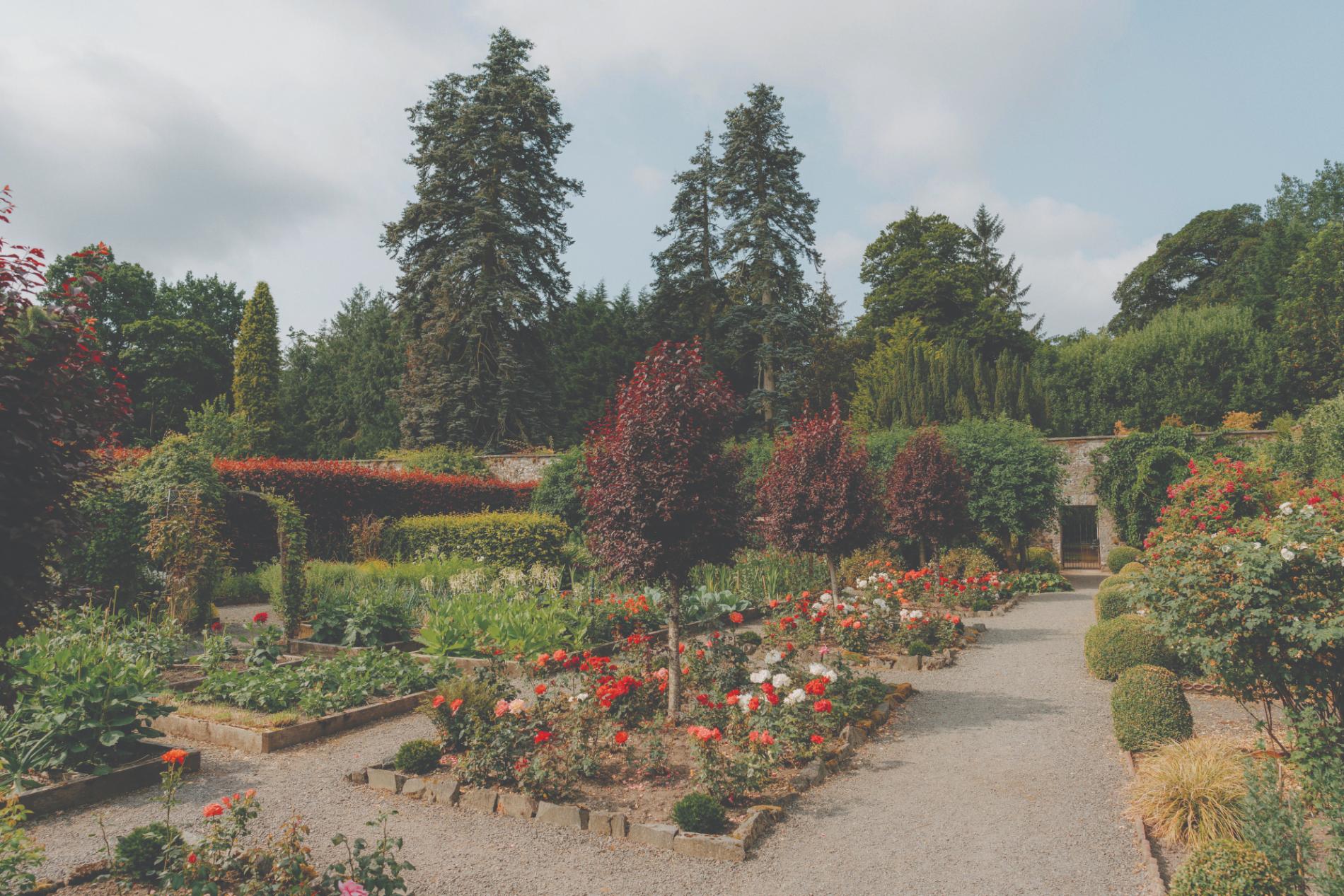
Kailzie Gardens lies just off the A72 a few miles east of Peebles, nestled between trees and the River Tweed. It’s an independently run garden on the grounds of an early 19th-century country house, laid out over roughly 10 acres. The entrance leads you through formal rose beds into wilder sections, then toward riverside walks and woodland glades.
What stands out here are the senses: colour, scent, and texture blend across the seasons. Early summer brings a riot of roses and peonies under the old bee hive stand, followed later by herbaceous borders buzzing with bees. A riverbank path leads to a private swing seat set near the water—a favourite among visitors. The planting is a mix of traditional cottage-garden style and more structured avenues.
Tea, coffee, and light lunches are served in the original Victorian glasshouse café, with tables set among hanging ferns and clematis. It feels more like visiting a grand garden than a small café—clear windows track the seasons across the river and woodland beyond. The team maintains a note board near the entrance that records what’s in bloom that week—helpful for photographing and pacing your visit.
Between planting beds, riverside views, and woodland meanders, Kailzie offers a layered experience. It’s both sheltered and open to the wider landscape—neat where it matters, rustic where it doesn’t. A good stop for anyone spending the day around Peebles.
The Borders Distillery
Hawick, Roxburghshire
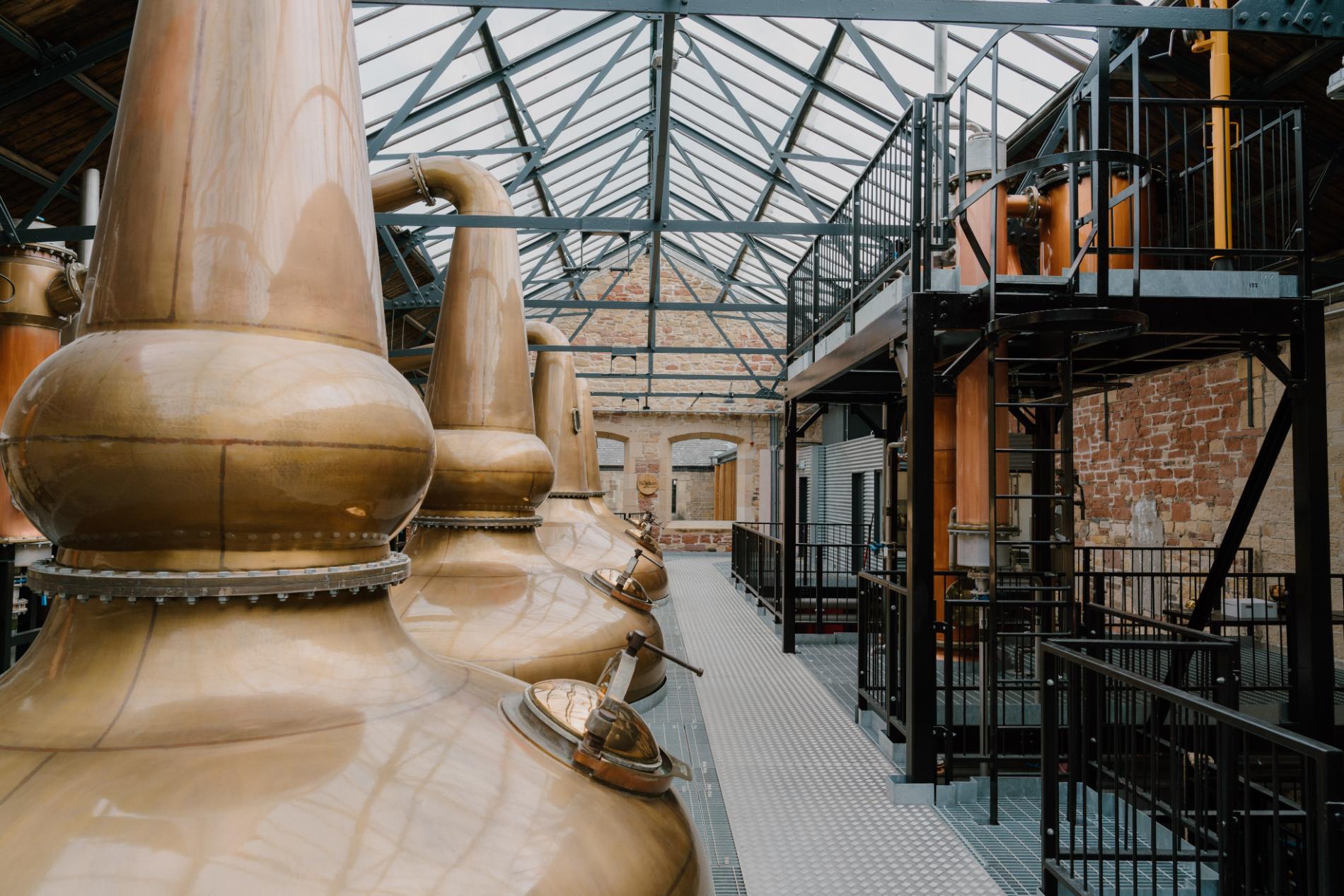
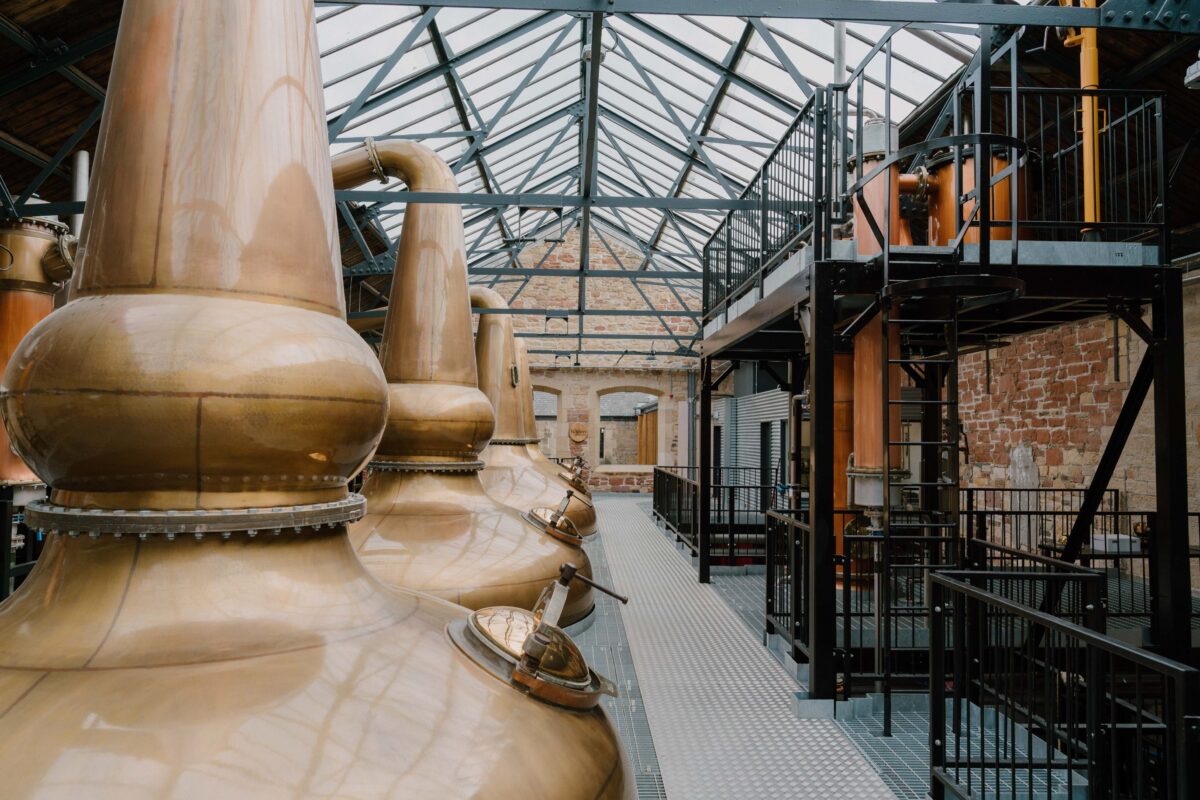
Just off Hawick’s Riverside Road, The Borders Distillery opened its doors in 2018, reviving whisky-making in the town for the first time in nearly 150 years. The modern warehouse buildings stand adjacent to the river—steel, brick, and glass overlooking steep spruce boskets on the valley side.
A standard tour guides visitors from mash tun to maturation — stills, fermenters, warehouses — with explanations of the decision to produce a lightly peated single malt. You’ll hear about the local water source and see American oak casks arriving for filling. Tastings follow in a small bar area, usually featuring samples of new-make spirit and, when available, early expressions of their first whisky release.
What sets this distillery apart is the blend of old and new: poured concrete floors next to copper stills shaped locally; digital thermometers beside hand-sanded bar counters. The café serves coffee, snacks, and Borders-made truffles. Many visitors pause here either coming into town or on the way to explore nearby river paths—it’s a modern site with heritage credentials, looking forward rather than only back.
Photography: Simon Hird
Promoted Post
Eagle Brae
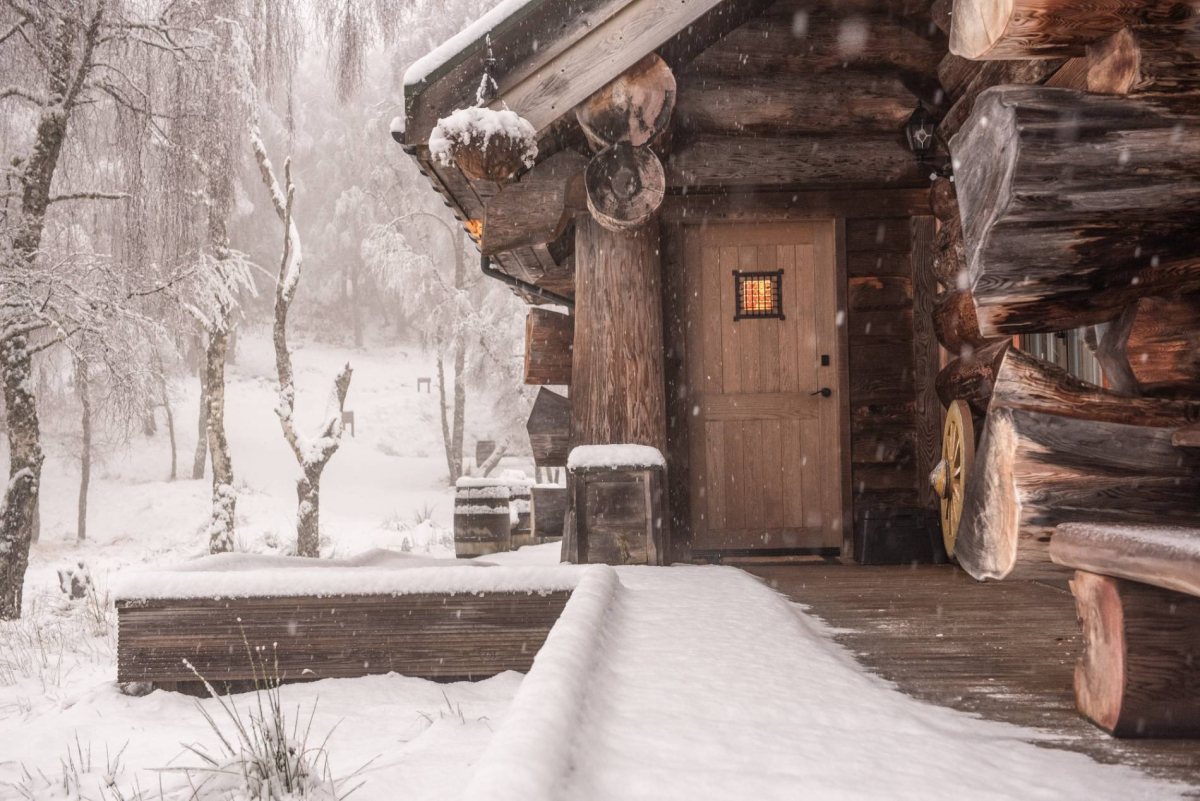
Escape to Eagle Brae, a secluded collection of Highland log cabins near Beauly. Handcrafted cedar, big skies, and deer on the hillside, with a fireside welcome that makes it easy to slow down.
-full-1748988291.jpg)
-full-1744927319.jpg)
-full-1746434816.jpg)
-full-1741009545.jpg)






 Sign in with Google
 Sign in with Email