
9 Gardens in Scotland Worth Planning a Trip Around
Scotland’s public gardens include working plots, walled enclosures, and estate grounds. Some focus on conservation, others on community, but all are maintained with care and open for quiet exploration.

Written by Hidden Scotland
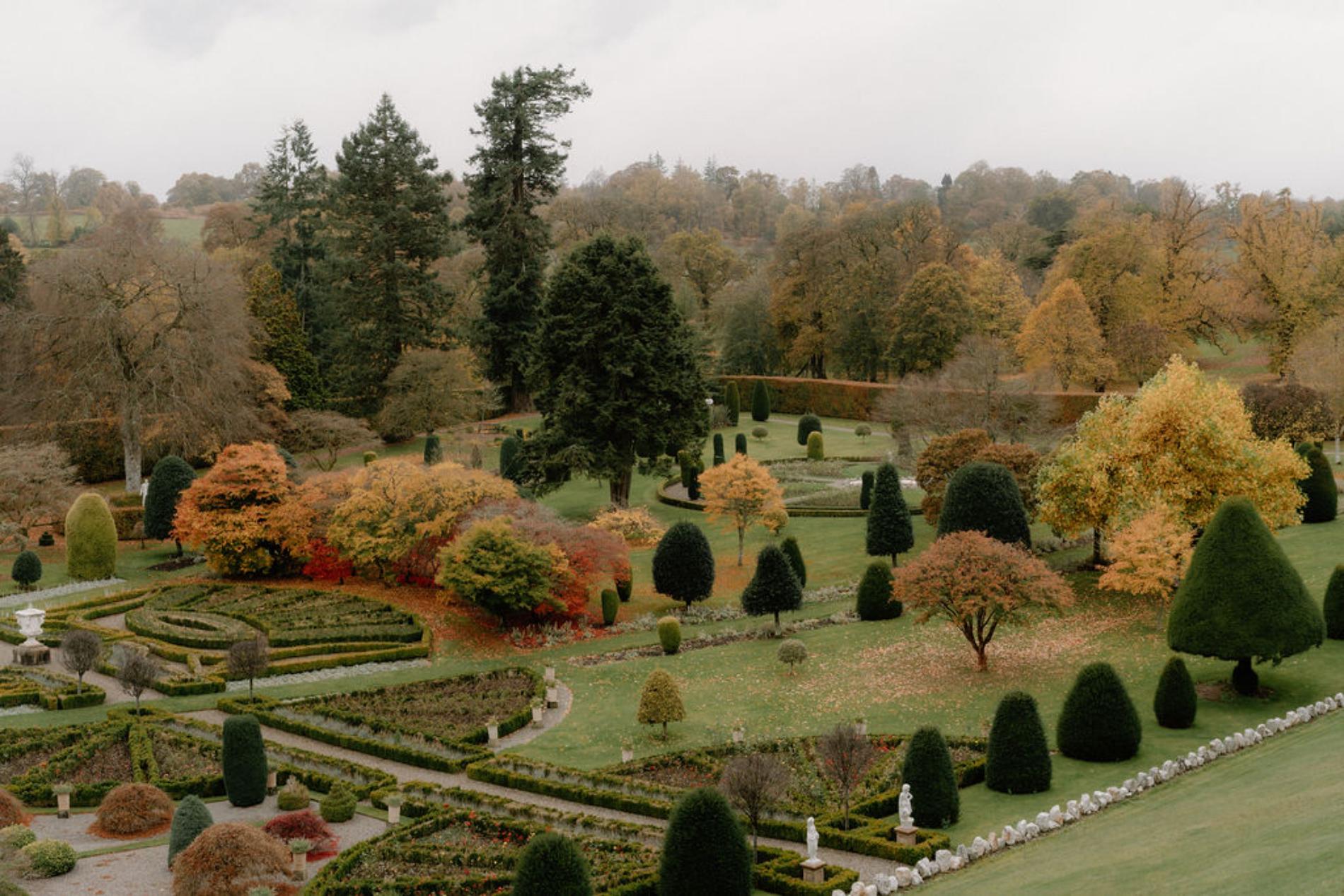
Some gardens were built for study. Others were added to family homes or estate grounds, shaped around local needs. Most have changed over time. Paths have shifted. Borders have moved. But the pattern of care tends to remain. Beds are weeded, walls repaired, and planting decisions are still made season by season.
This list includes public gardens across Scotland. A few are well-known, including the Royal Botanic Garden Edinburgh and Dawyck in the Borders. Others are harder to spot unless you’re looking for them. Harmony Garden in Melrose and the walled garden at Kellie Castle both fall into that category. Their layout reflects earlier versions, but they’re still used today.
Skye’s gardens are shaped by climate. Wind, salt, and rainfall influence what survives. At Dunvegan or Armadale, shelter planting is just as important as aesthetics. The designs are practical, with paths that follow the terrain and planting suited to the exposure.
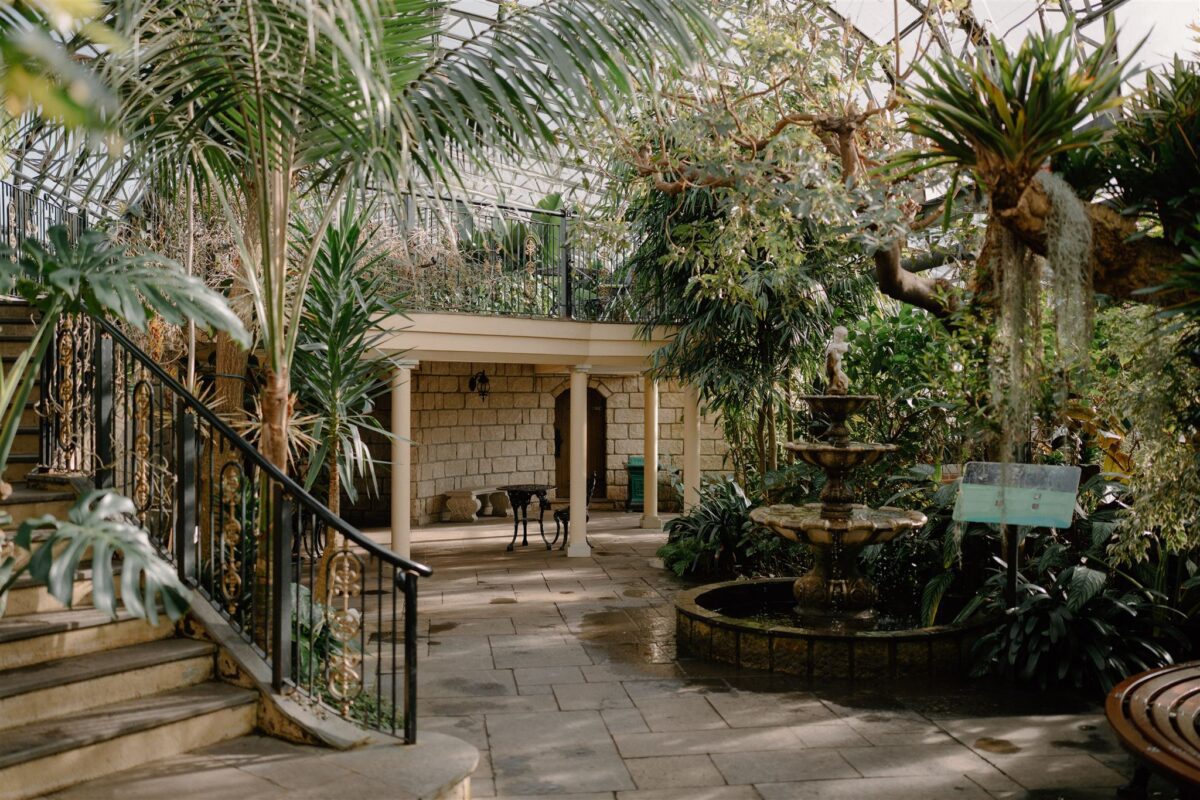
Other sites are more personal. Kailzie, near Peebles, is run privately and includes older trees and a working glasshouse. At Broughton House in Kirkcudbright, the planting reflects the tastes of the artist who once lived there.
Most of the gardens listed here are open seasonally. Some include cafés or nurseries. A few are free to visit. For travellers, they offer steady ground — somewhere quiet, maintained, and still in use.
Royal Botanic Garden Edinburgh
Edinburgh
You could walk past the entrance without thinking much of it. But step through the gates and the scale of the Royal Botanic Garden Edinburgh quickly becomes clear. It stretches over 70 acres, and once inside, the sounds of the city fall away. You’ll find wide lawns, shaded paths, and corners that feel almost hidden despite being minutes from the centre.
The planting shifts as you go. One part might be dense with Himalayan birch, another open with neatly clipped grass and long herbaceous borders. The alpine garden rises in tiers, while the Chinese hillside has a cooler feel, with pines and ferns between stone steps. What’s growing changes with the months. Early in the year it’s snowdrops and witch hazel. Spring brings blossom. In summer the colours deepen, and by autumn the air smells faintly sweet under the katsura trees. Even in winter, the structure holds up. You start noticing bark, lichen, and the outlines of plants waiting to restart.
The garden still does serious work. Researchers and students come and go from the quieter areas, but you’ll also see parents with prams, runners, and older couples using it as their daily walk. It’s free to enter, and that seems to keep the atmosphere grounded. People are there to enjoy it, not just look at it.
The glasshouses are closed at the moment. Renovation work is ongoing, part of a long-term plan to support the living collection. But even without them, there’s more than enough to explore. You won’t see it all in one visit. Most don’t try.
Inverness Botanic Gardens
Inverness
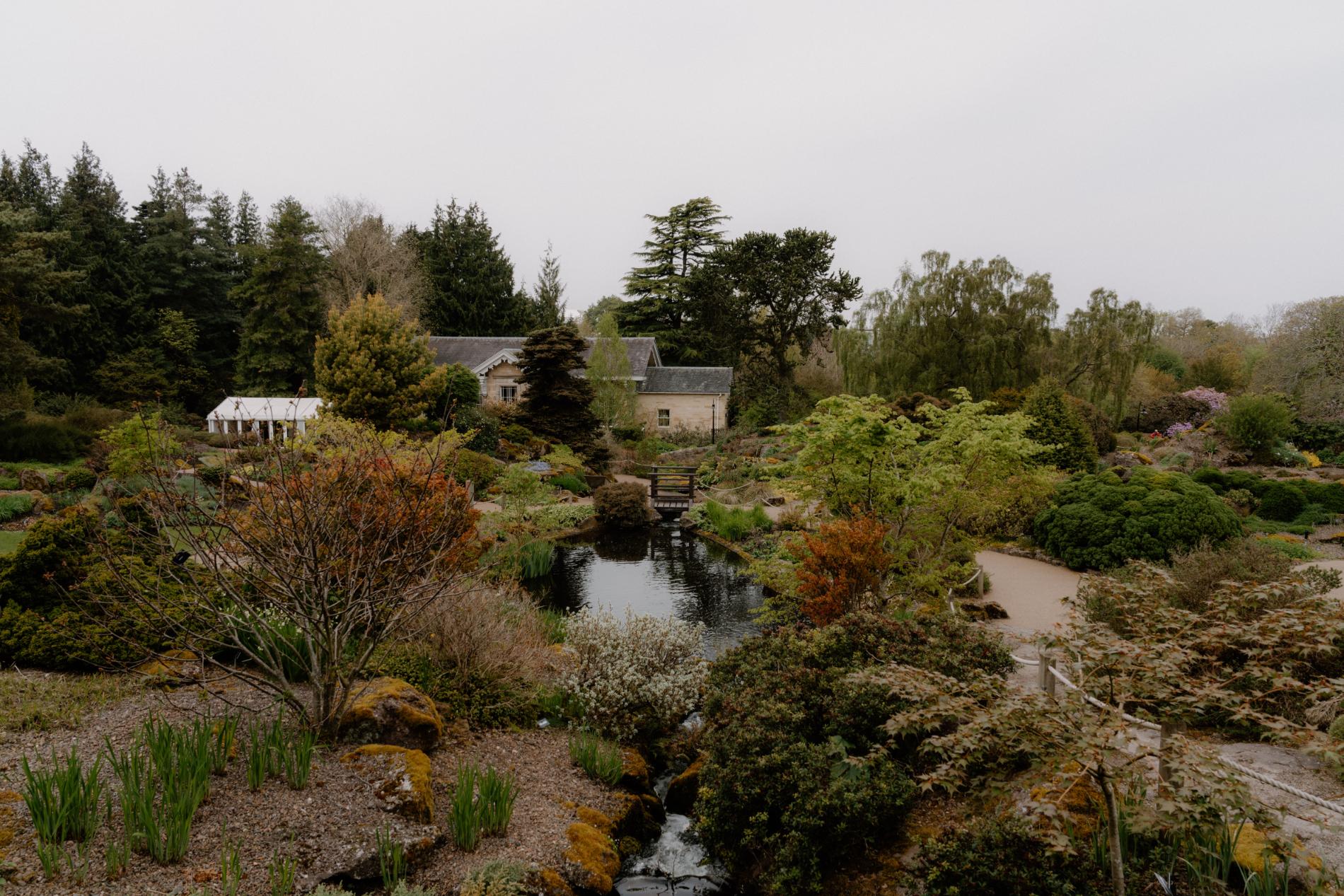
It’s not in a scenic spot. You walk past a gym, then a stretch of golf course, and then—just before you think you’ve gone the wrong way—a small wooden sign points to the entrance. It’s quieter than most city gardens and smaller too, but that works in its favour.
Inside, the layout’s straightforward. There’s a lawn in the centre, with borders set low and tidy, and a rockery climbing slightly at the back. It’s not the kind of place where you follow long winding trails. Instead, there are short loops and clear lines of sight. A few benches, some well-used planters, and volunteers watering the beds during weekday mornings.
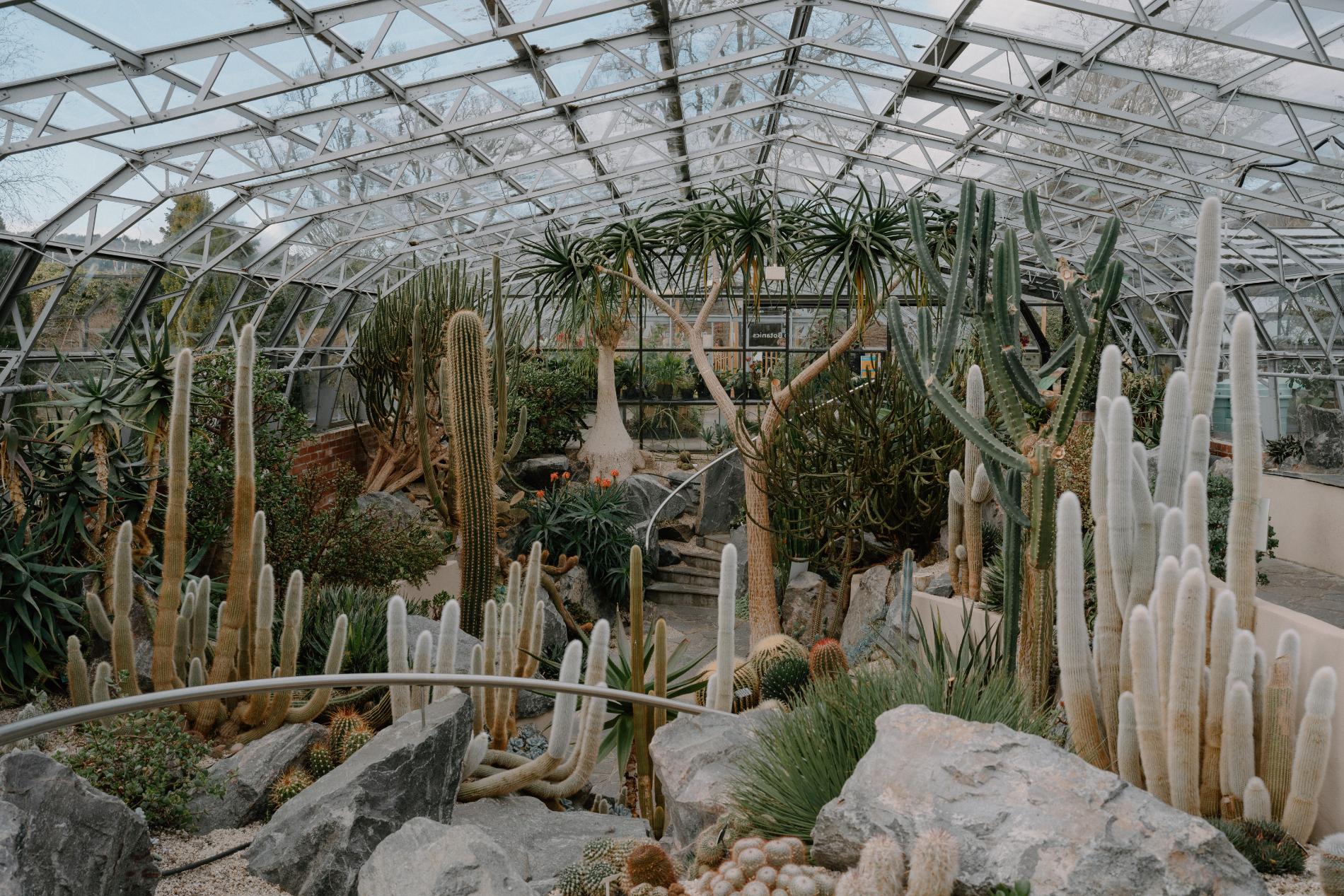
The tropical glasshouse is the unexpected part. You step through and feel the change instantly—warm, damp air and that dense green smell. Bananas hang overhead, koi glide under stepping stones, and everything feels too lush to belong this far north. The second glasshouse is drier, more angular, with cacti and succulents laid out like a study display.
Outside again, there’s more detail than you’d think. Fruit trees, a patch of wildflowers, and a kitchen garden space used by the G.R.O.W. Project. No long signs or QR codes—just handwritten labels and small paths between the rows.
There’s no entry fee. The café does soup, coffee, traybakes. Locals tend to linger. Visitors mostly don’t know it’s here. If you’re passing through Inverness and want twenty minutes away from the main road, it’s worth turning in.
Dunrobin Castle Gardens
Sutherland
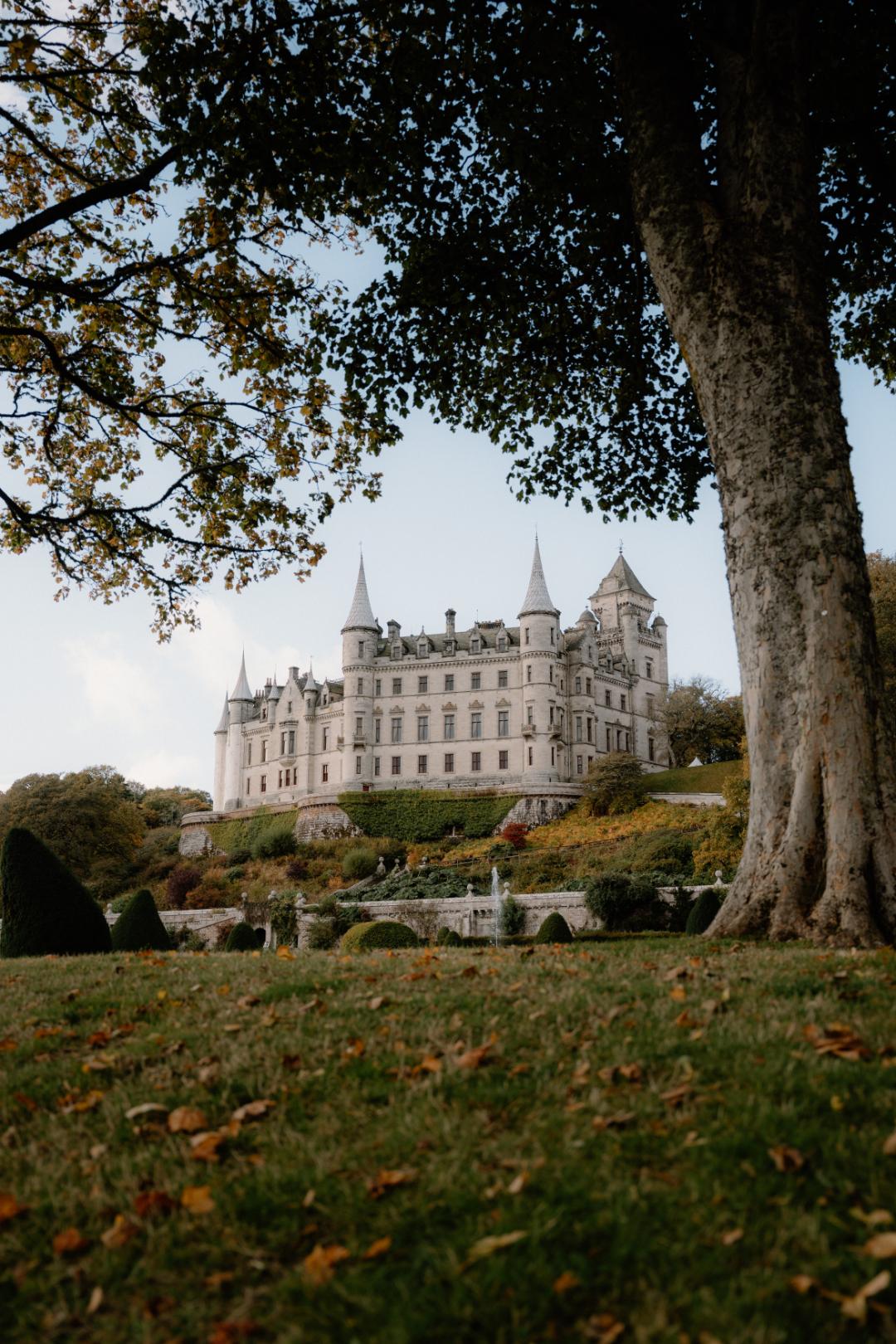
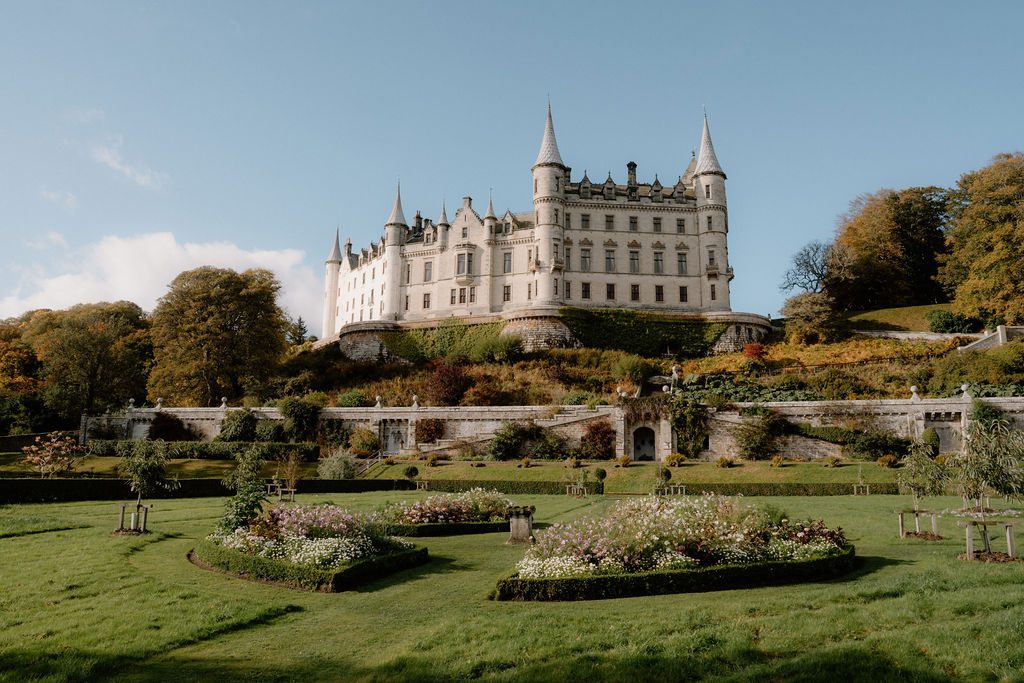
Dunrobin Castle faces the coast just north of Golspie, and the gardens are laid out directly below the south terrace. From the steps, you look down onto two formal parterres separated by a broad lawn. Designed in the 1850s by Sir Charles Barry, the layout follows a symmetrical plan with gravel paths, clipped box hedges, and central fountains. The influence is French and Italian, but the setting is shaped by the Highlands. The sea is close and the trees along the edges show signs of salt and wind.
In summer, the planting softens the formality. Borders are filled with colour, and some of the raised beds near the walls are used for vegetables, herbs, and seasonal flowers. At the far end, glasshouses are still in use. Paths extend around the outer edges of the garden and into woodland that leads towards the shoreline.
The falconry display takes place on a lawn within the garden area and draws regular crowds during the summer season. It runs at set times and is included in the ticket price. Outside those hours, the gardens are quiet. Most visitors focus on the castle, but the grounds are worth setting time aside for, especially if you follow the outer paths.
Entry to the gardens is included with a castle ticket. There is also a café and shop nearby. Access is by steps or sloped paths from the house, and the layout is easy to navigate on foot. Maintenance is consistent and the views are open.
Drummond Castle Gardens
Perthshire
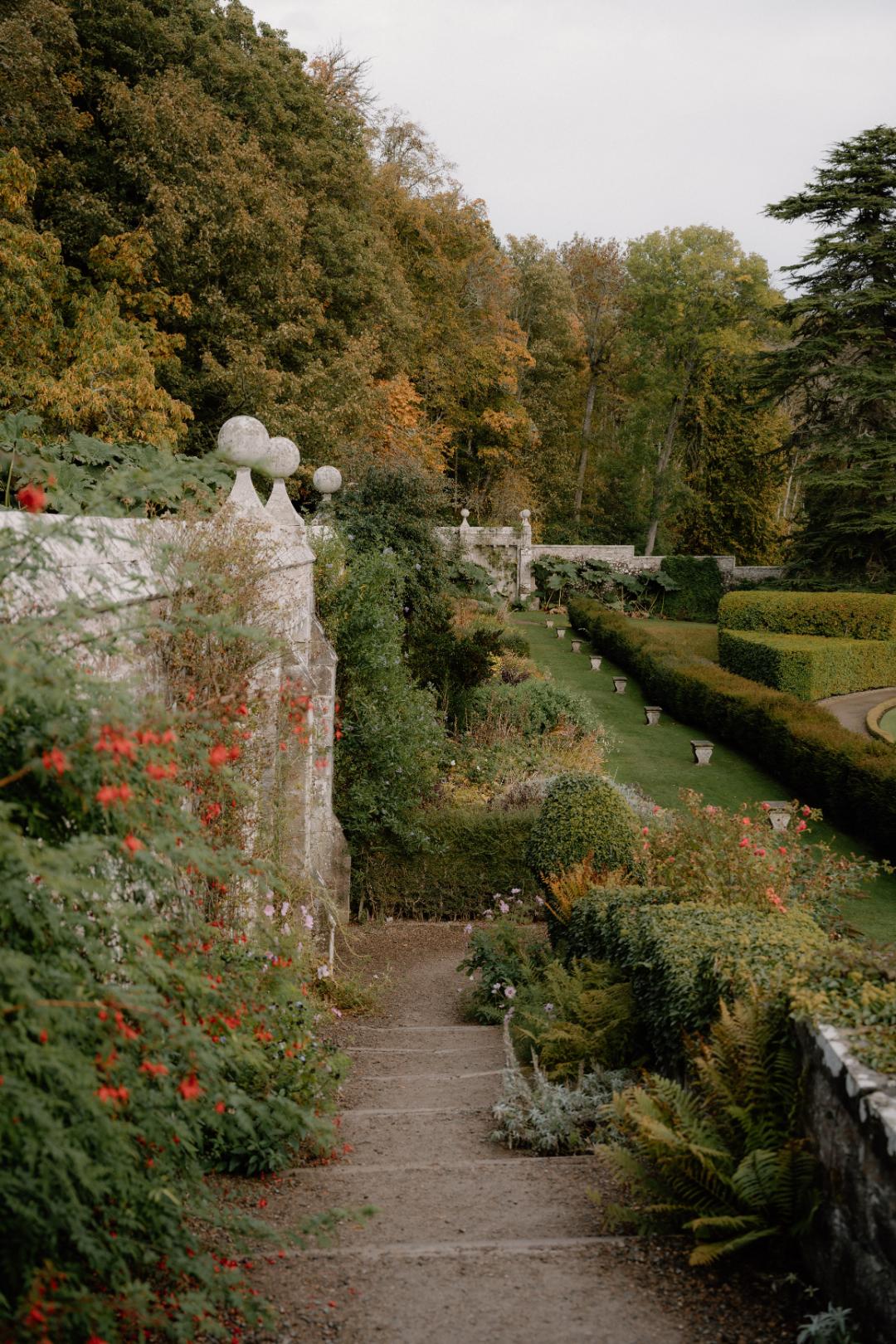
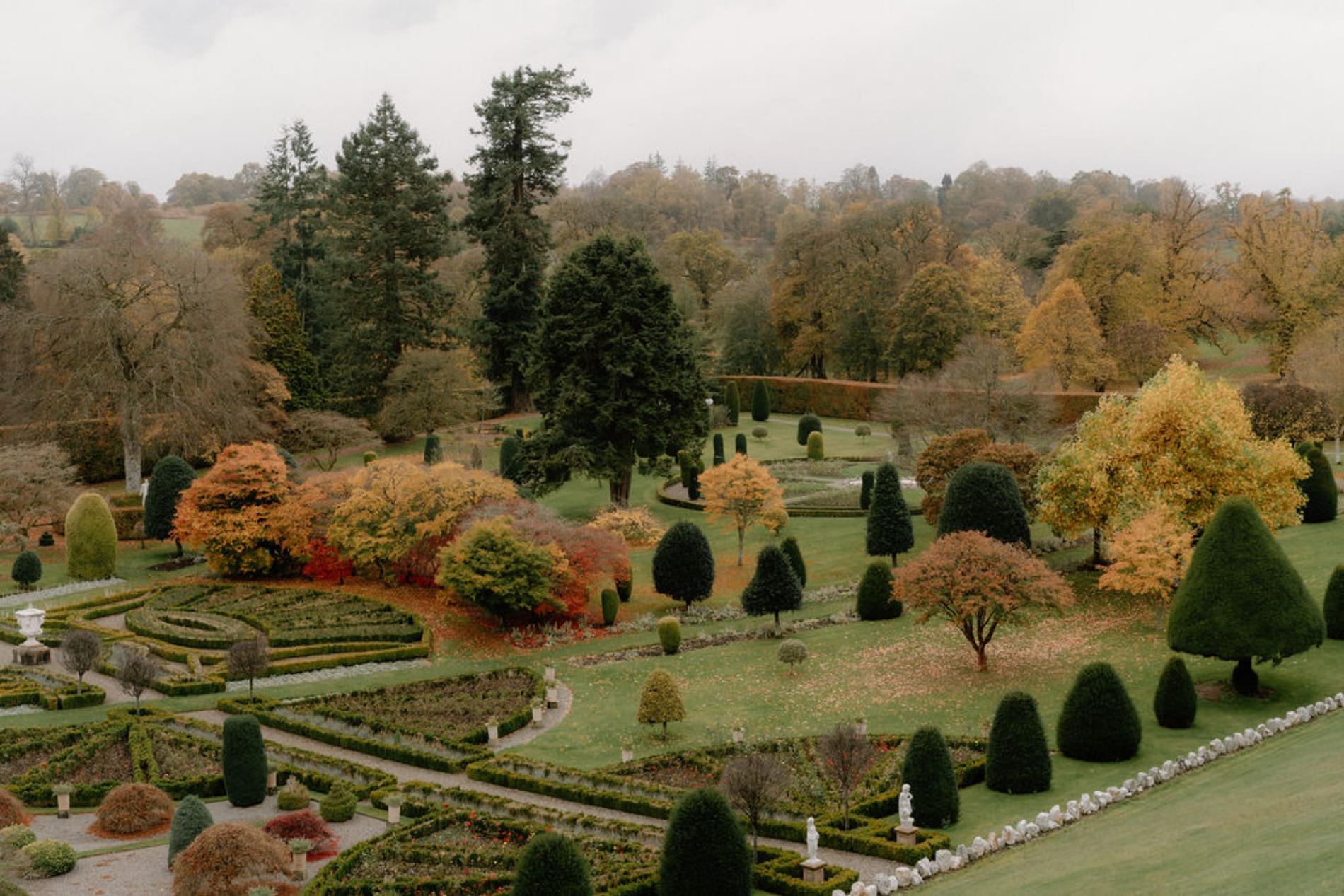
There’s a view from the upper terrace where everything feels arranged — not just planted, but planned. The hedges are clipped tight. Gravel lines the paths. Statues mark the central axis. It’s precise, but not lifeless. From above, the layout is obvious. On the ground, it takes a few minutes to adjust.
The garden follows a 17th-century design, reshaped in the 1800s. A wide parterre stretches out below the castle, cut into geometric beds with box hedging and seasonal colour. It’s formal, but never static. Some corners are brighter than others. The yew is shaped, but not all the same height. The outer trees rise well beyond the patterns below.
The house itself isn’t open, but the terrace serves its purpose — it was always meant to look down from here. You can trace the line from the old gates to the fountain, then back again. That line has been filmed before, but in person, the scale feels more subtle. The planting is dense in places. Some beds are quiet, especially in early spring.
Drummond is only open in season. April to October, usually. On dry days, you’ll hear the crunch of gravel before you see anyone else. Most visitors move slowly. There’s plenty of space, and few distractions. It’s not the kind of place where you rush from one end to the other. You walk the centre line, stop, and look back. And then you notice something you missed the first time.
Armadale Castle and Gardens
Isle of Skye
Armadale sits at the southern end of Skye, overlooking the Sound of Sleat. The ruins of the 19th-century mansion remain at the centre, but the focus today is the garden and museum. The 40-acre estate includes parkland, woodland walks, specimen trees, and a walled garden originally laid out in the early 1800s.
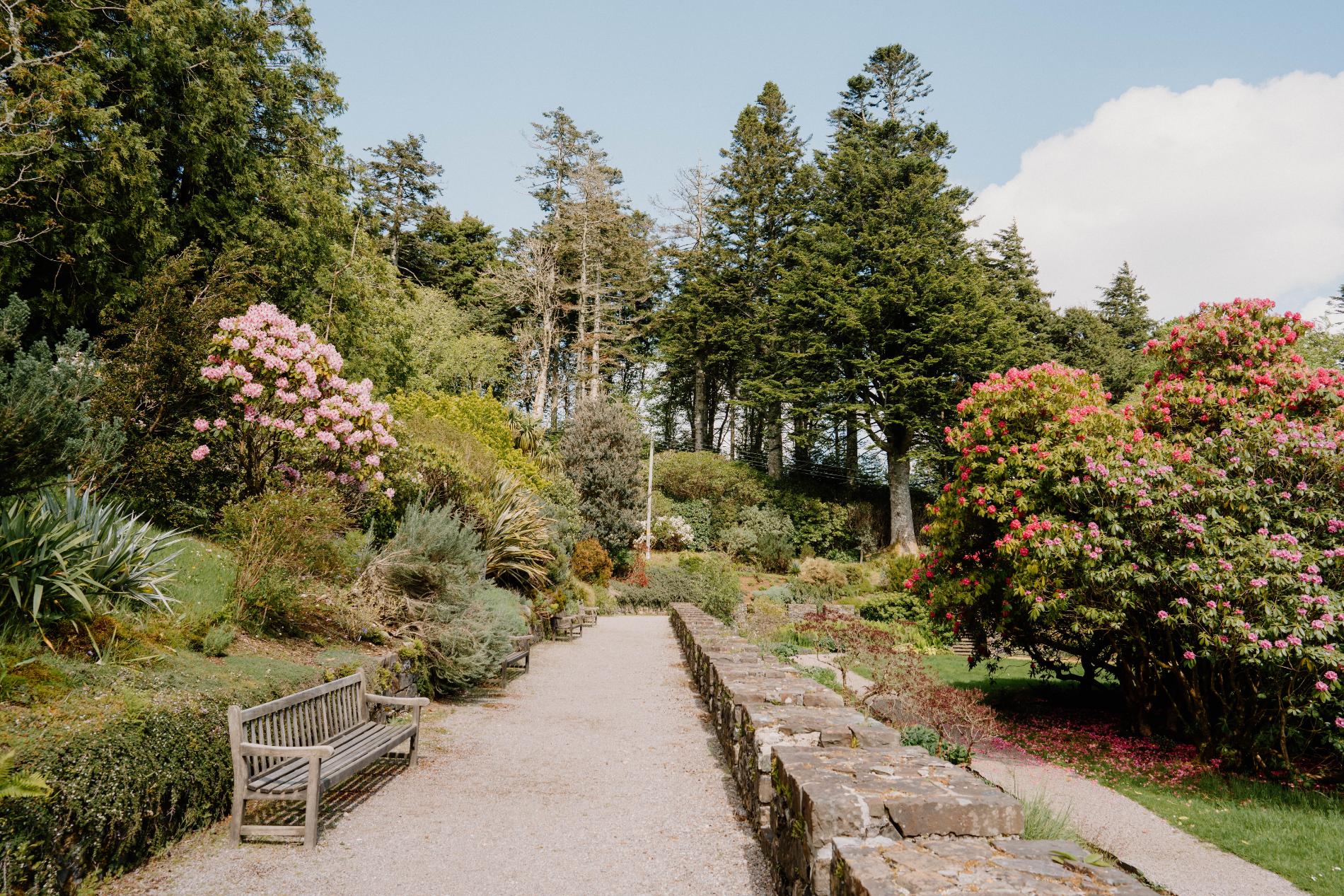
Shelterbelts and careful planting create pockets of protection from wind and salt air. Trees include larch, beech, and conifers, with some reaching full height thanks to the milder climate of the south end of the island. There are open lawns, gravel paths, and low walls that divide the garden into manageable areas. Spring brings rhododendrons and bulbs, while in summer the herbaceous borders and roses near the museum building are in full bloom.
One of the most established sections is the arboretum, where trees from North America and Asia have been planted over the past 150 years. There is also a viewpoint above the museum with a wide view across to the mainland.
The Museum of the Isles is located within the grounds and tells the story of Clan Donald and the wider history of the Hebrides. There’s a café on site and a small shop. The gardens are open seasonally, with tickets available separately or as part of museum admission.
Paths are mostly gravel or grass, and while some areas are uneven, most are accessible with care. Visitors typically spend one to two hours here, combining the museum and garden in the same visit.
Broughton House and Garden
Kirkcudbright, Dumfries and Galloway
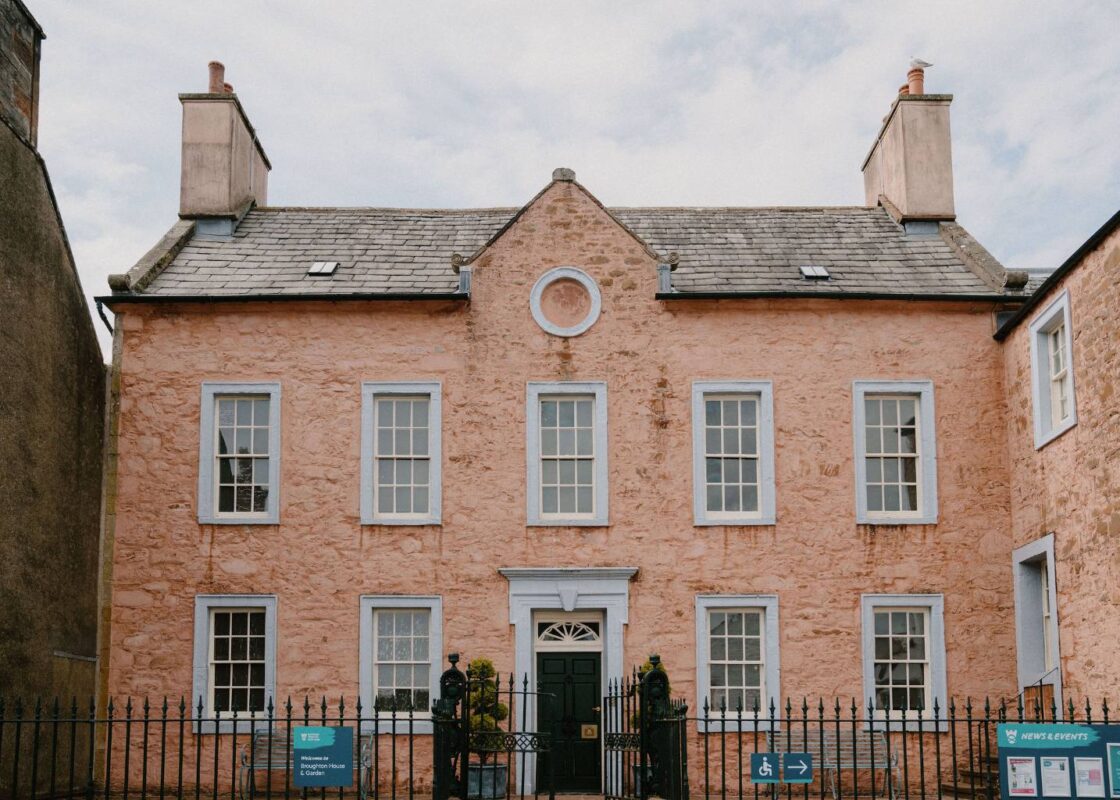
Broughton House sits just off the high street in Kirkcudbright, a short walk from the harbour. Once home to the artist E. A. Hornel, the property is now managed by the National Trust for Scotland. The house contains Hornel’s original library and art collection, while the garden, which he helped design, remains closely tied to its early 20th-century layout.
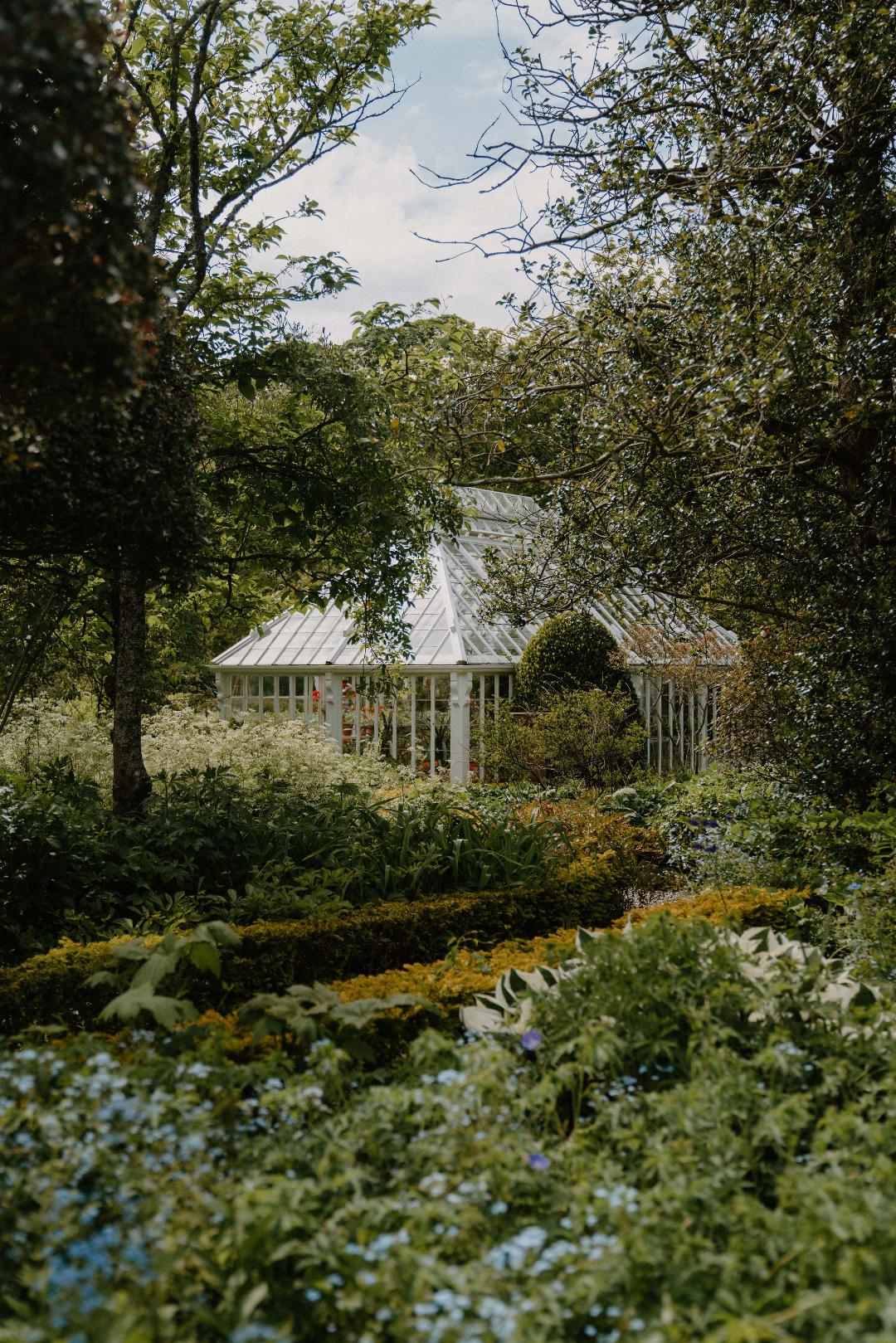
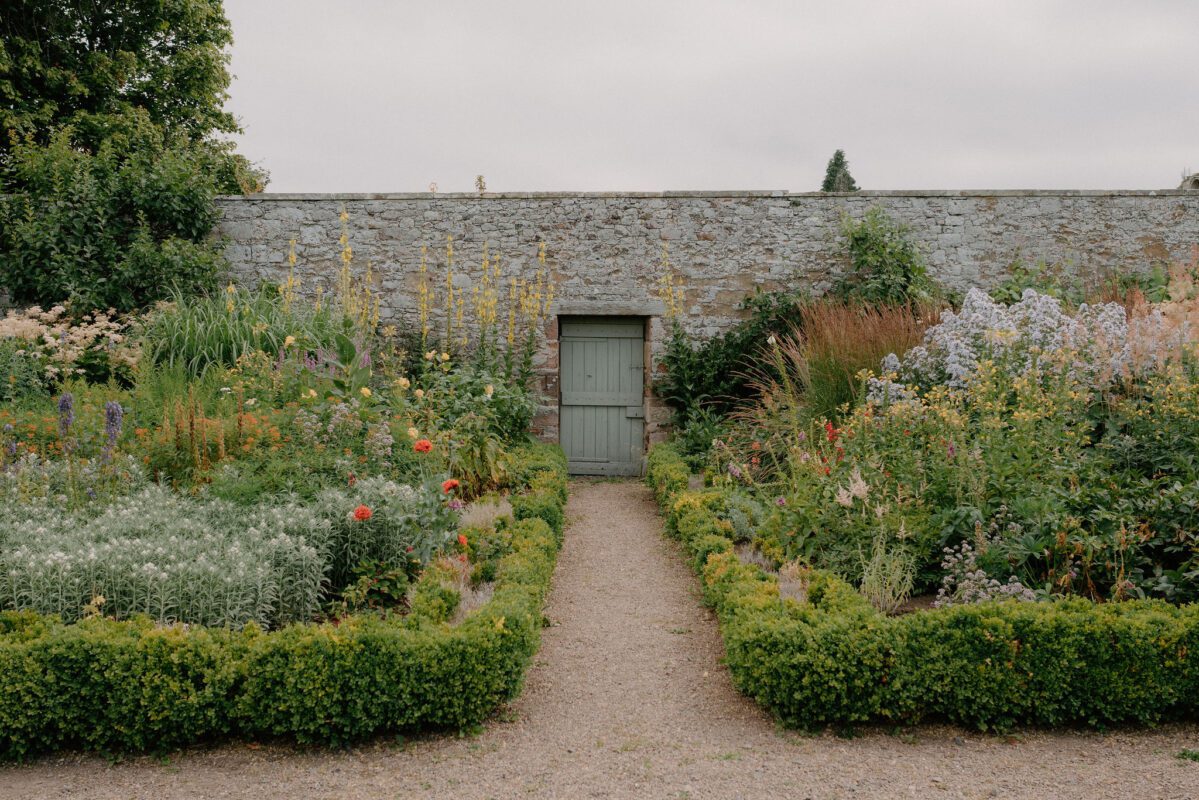
At the back of the house, a formal lawn runs down towards the River Dee. On either side are herbaceous borders, small trees, and stone paths leading through compartments framed by hedges and low walls. The planting mixes native and imported species, with some influence from Hornel’s time in Japan. Look closely and you’ll see clipped azaleas, maples, and ornamental features placed for visual balance.
Because of the town’s location and microclimate, the garden is often ahead of the season. In early spring, bulbs appear along the walls and borders, followed by flowering shrubs and perennials. Later in the year, fruit trees and climbing plants fill the more sheltered corners.
The garden isn’t large, but it’s well kept and thoughtfully structured. From the lower path, there’s a clear view back up to the house and its red sandstone façade. Entry is included with a ticket to the house, though the garden can also be viewed separately. It’s open seasonally and tends to be quiet outside of local holiday times. There’s no café on site, but Kirkcudbright has several options nearby.
Burns Monument and Gardens
Alloway, South Ayrshire
The garden sits just a few minutes' walk from the cottage where Robert Burns was born. It’s not large, and you’ll likely see the whole of it in under half an hour, but it’s part of a much wider landscape. The Burns Monument stands at one end, the Brig o’ Doon at the other, with footpaths and signage connecting everything in between.
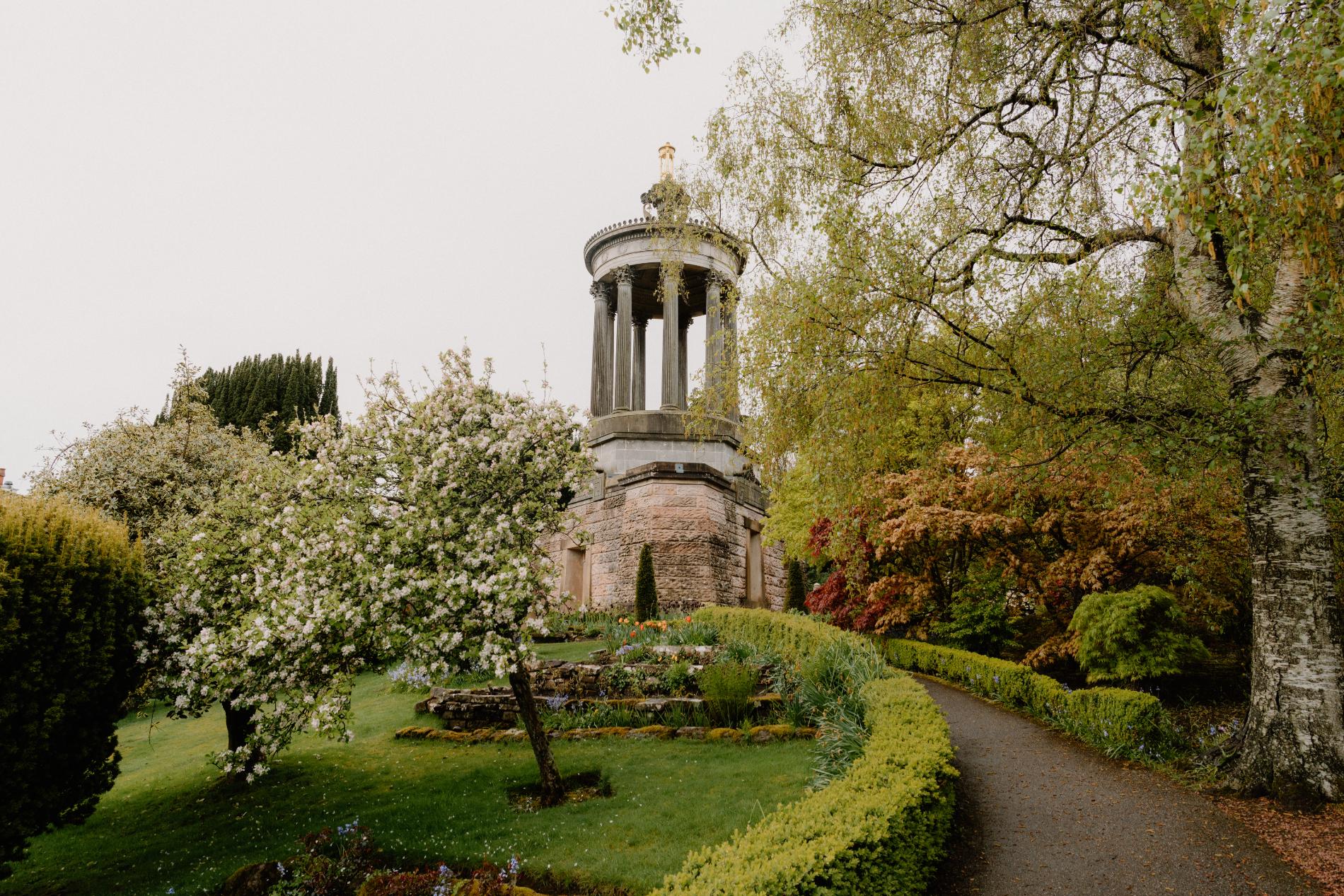
Flowerbeds are planted in a traditional style, with low hedges and symmetrical borders. A few benches sit under the trees, placed with a view of the monument. The design isn’t especially elaborate, but it’s well maintained. In spring, there’s structure to the planting — tulips, wallflowers, and bluebells — with neat gravel paths in between.
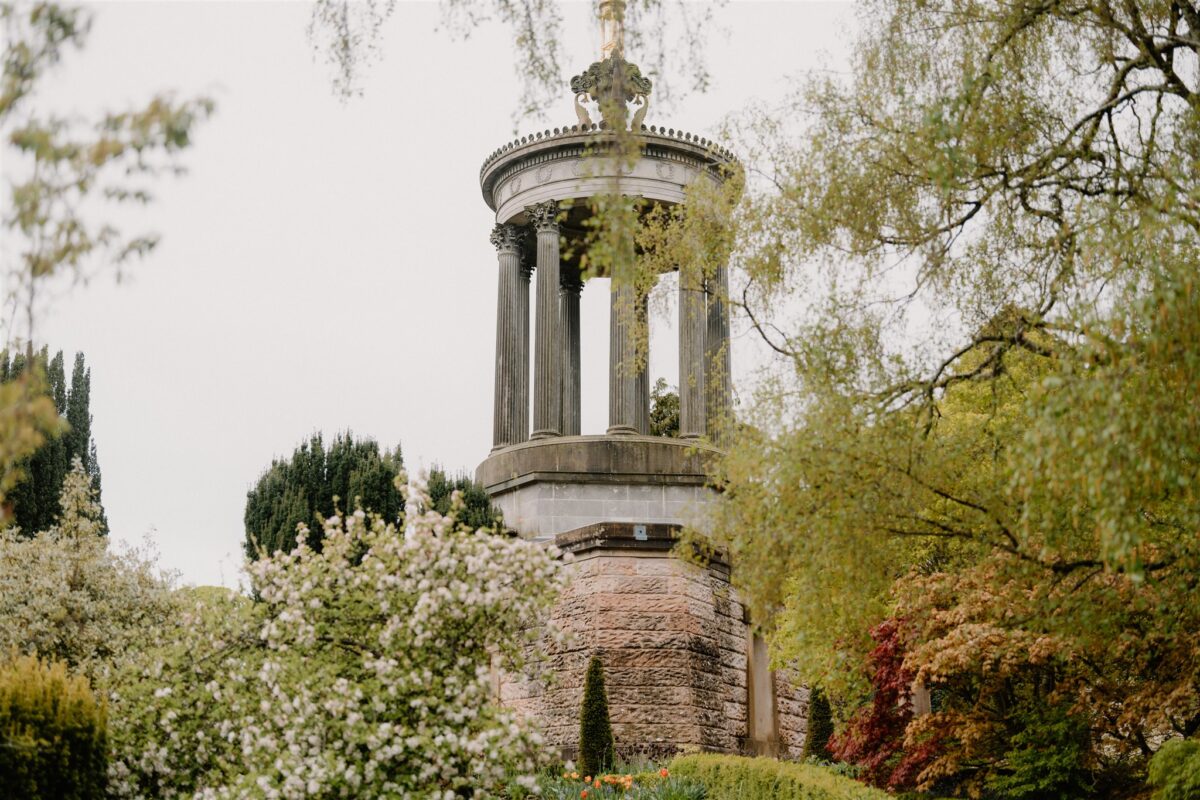
The monument itself was built in the 1820s. It’s classical in style, with open columns and a domed top. From the garden, you can walk around the base or follow the path down to the riverside. There’s a steady stream of visitors, but it’s rarely busy.
The full site, including the museum and Burns Cottage, is managed by the National Trust for Scotland. Entry to the garden is free. Even if you don’t go inside the museum, it’s worth stopping to walk the route from cottage to monument. The whole area feels deliberate — not staged exactly, but curated — and still holds enough detail for people who know Burns’ work well.
Physic Garden
Edinburgh
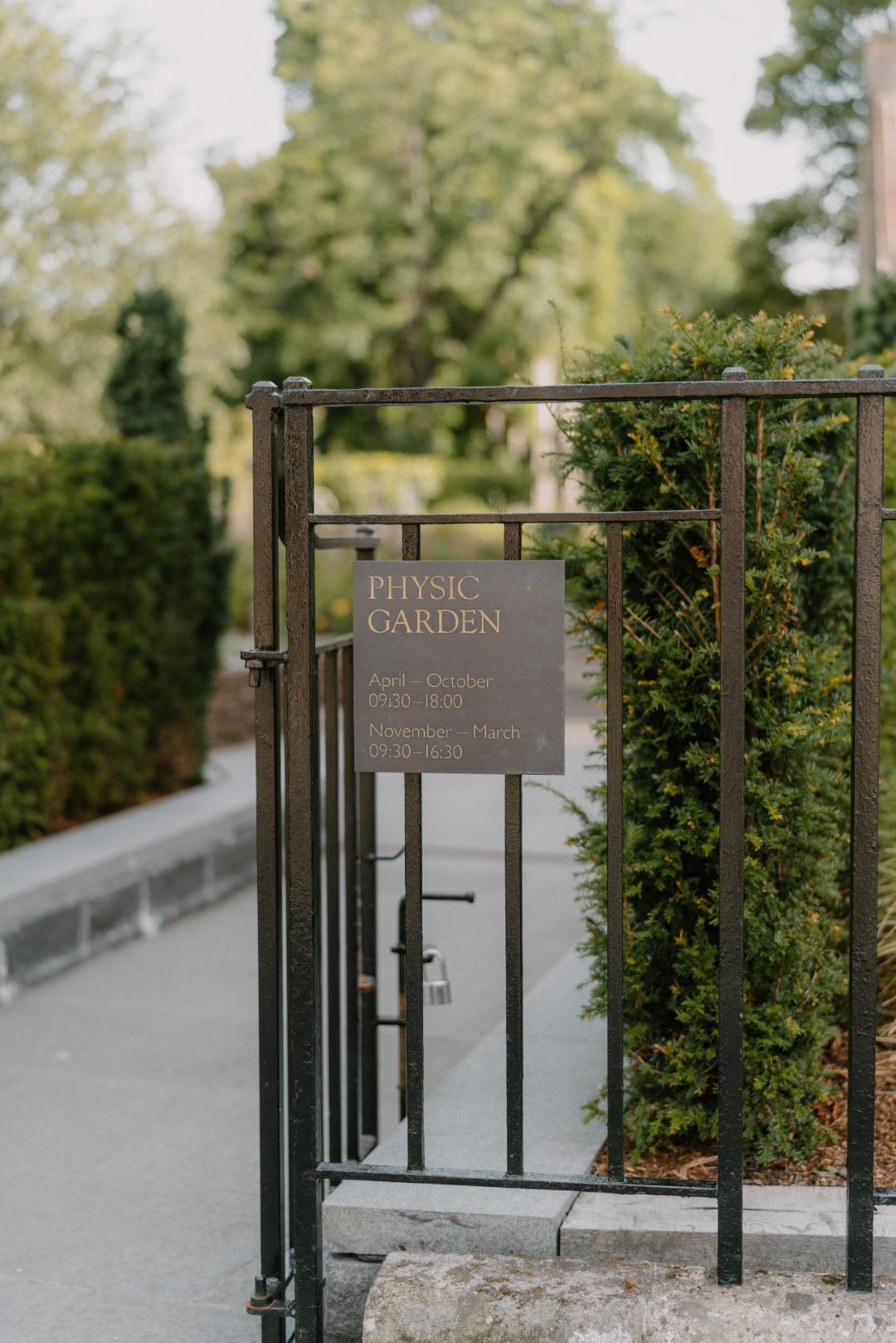
The Physic Garden at the Royal College of Physicians of Edinburgh is a compact but carefully curated space, tucked behind the college buildings on Queen Street. It was established in 2006 as a tribute to Scotland’s original physic garden, founded nearby in 1670 by Robert Sibbald and Andrew Balfour, both physicians and early botanists.
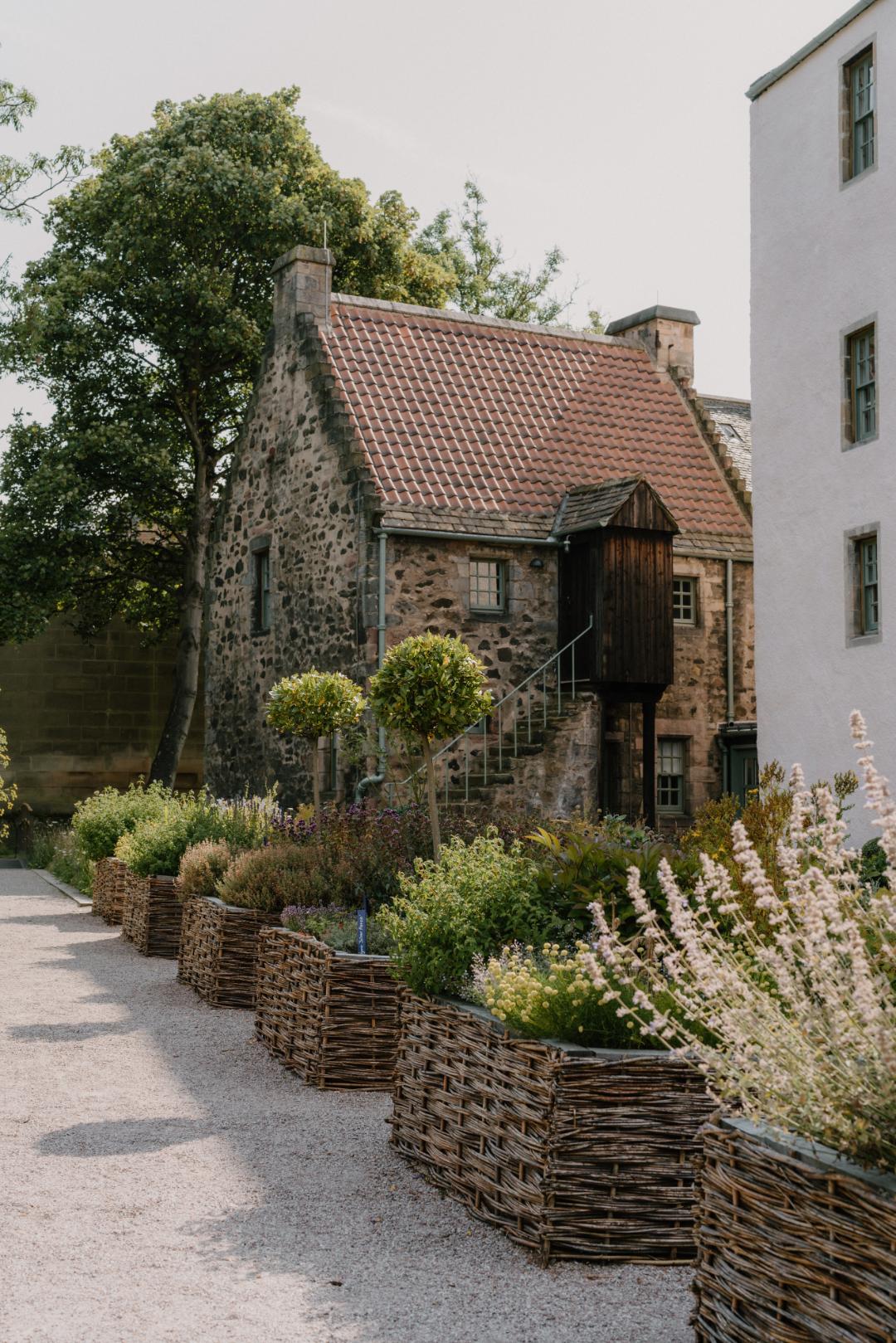
The design is structured around raised beds, each containing medicinal plants grouped by their traditional uses—fever, digestion, pain relief, and more. Species include digitalis, lavender, chamomile, and yarrow, with interpretive panels explaining the historical role of each. This is not a decorative garden in the usual sense. The focus here is knowledge, not display.
Although it sits just off one of Edinburgh’s busiest streets, the garden is quiet. You enter through the College’s reception, and once outside, the city noise softens. The layout is linear and symmetrical, framed by a stone wall and simple seating. Nothing about it feels over-designed.
What makes it unusual is its direct educational purpose. This is a working record of plant-based medicine as it was practised for centuries. It’s also a reminder of Edinburgh’s long history as a centre of medical learning.
Open on weekdays, the garden is rarely crowded. It’s easy to miss, even for locals, but well worth seeking out if you’re visiting the New Town. It doesn’t take long to walk through, but it holds your attention. The plants are real examples of historical practice, still growing where that practice began.
Kailzie Gardens
Scoittish Borders
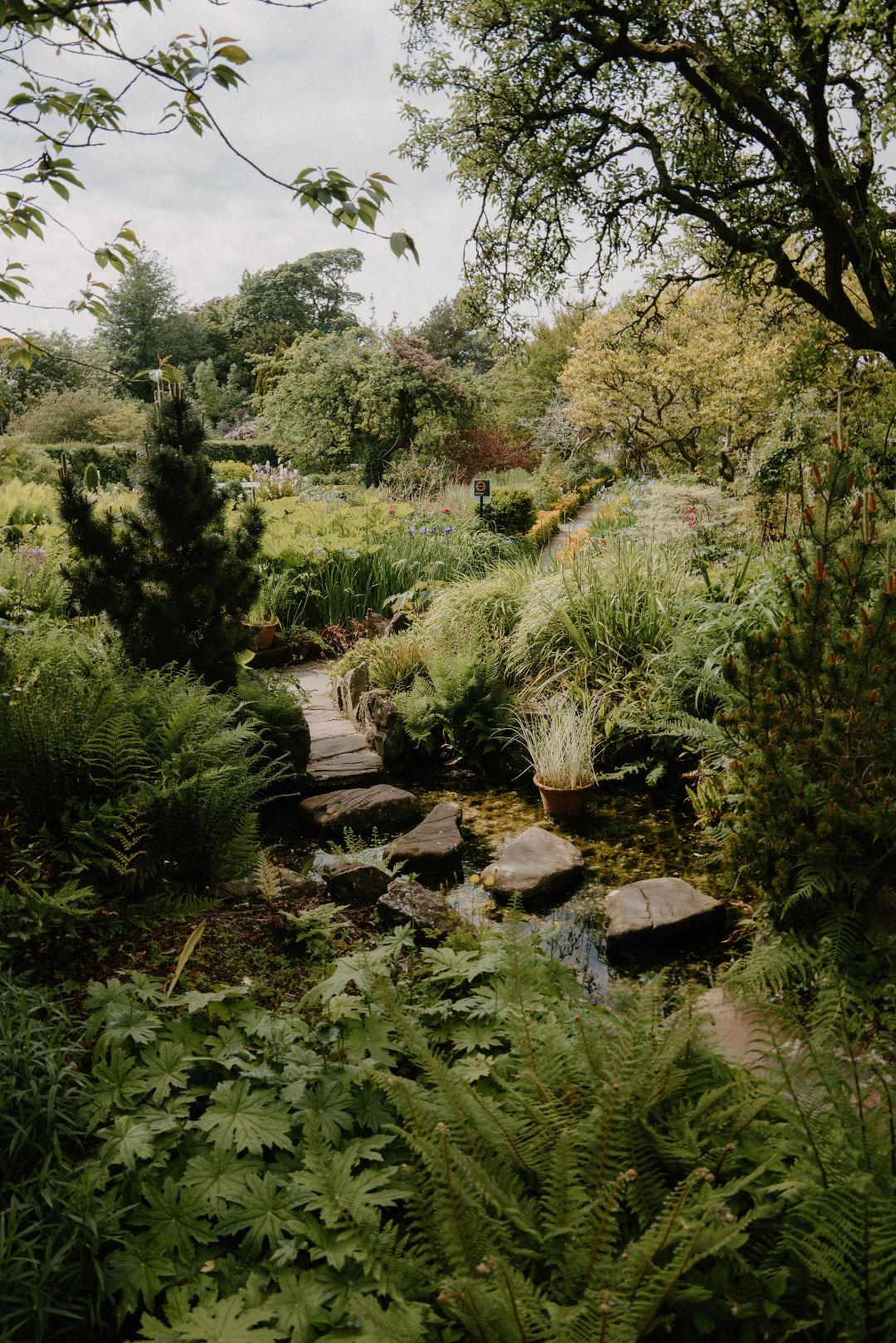
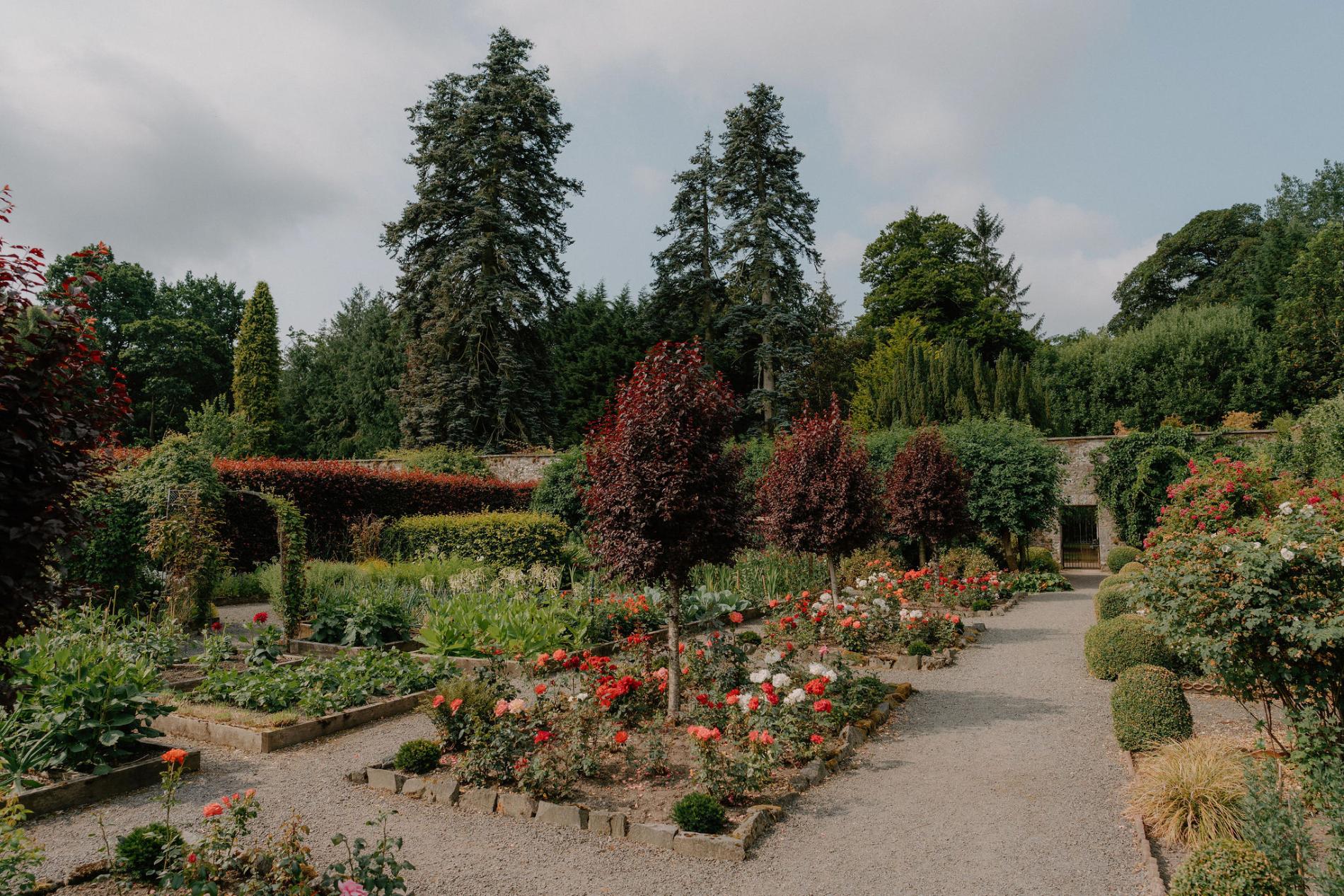
Not every Scottish garden was created to impress. Some began as working plots, shaped by what the land could support. Others were tied to institutions, used for science, medicine, or teaching. A few came later, designed for pleasure but still grounded in function. What connects them isn’t just planting — it’s care. The act of deciding what stays, what’s cut back, and what grows next.
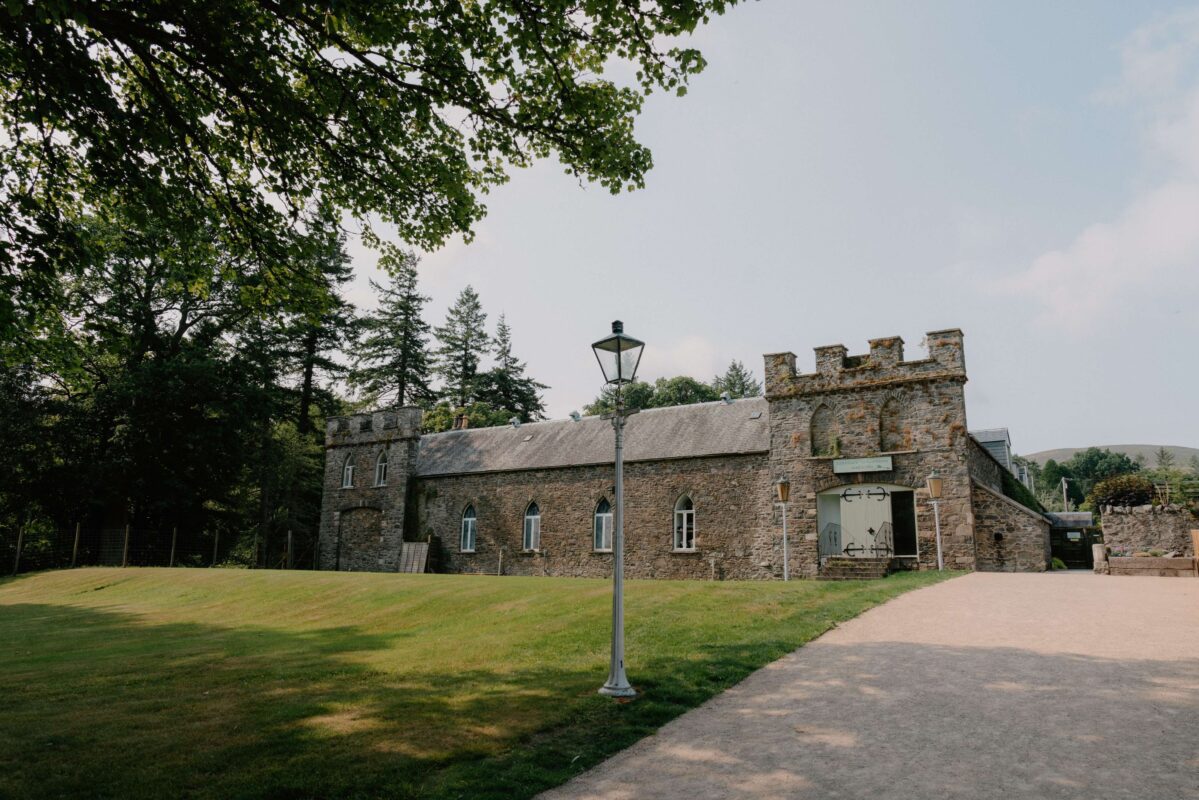
These gardens don’t always announce themselves. Many sit behind stone walls or down unsigned paths. Some are linked to castles or museums, while others stand alone, run by small teams or local volunteers. Their sizes vary, but most are modest enough to walk in under an hour. And yet each holds enough interest to make you slow down — even if you weren’t planning to.
There’s no single style to expect. One might follow a formal layout with clipped hedges and gravel paths. Another uses woodland planting or open lawns, shaped more by exposure than design. Many shift through the seasons. Early bulbs appear before spring. Summer brings height and colour. By late autumn, what’s left is texture — stems, bark, seedheads, and silence.
None of these gardens are fixed in time. They’ve been rebuilt, restored, sometimes neglected and brought back again. But most have kept their purpose: to offer somewhere to walk, somewhere to notice the detail, and somewhere that feels kept rather than staged. If you’re nearby, it’s often worth stepping inside — even just for ten minutes. Sometimes that’s all it takes.
Promoted Post
Issue 12 is now shipping worldwide from Scotland.
Issue 12 is now shipping worldwide from Scotland.













 Sign in with Google
 Sign in with Email