
A Pillgrimage to the Borders Abbeys
Pilgrimage: a journey made to a sacred place. This would be the best description of the Borders Abbeys Way, a 68-mile circular route encompassing the beautiful countryside, meandering rivers, and still forests of the Scottish Borders. This is a land alive with natural beauty and dramatic history.
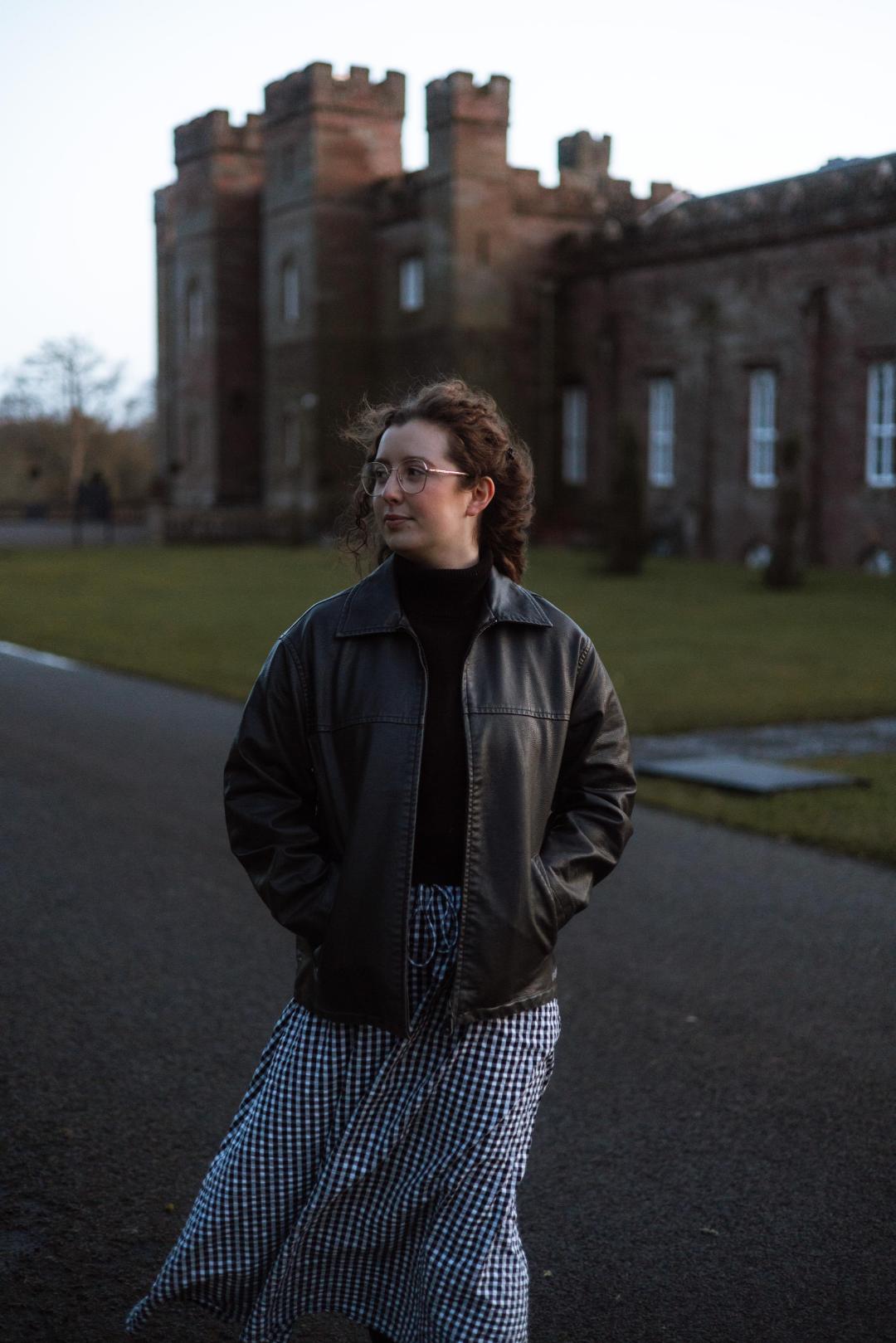
Written by Beth Reid
-full-1748988291.jpg)
The Borders Abbeys Way passes through the historic towns of Melrose, St Boswells, Kelso, Jedburgh, Denholm, Hawick and Selkirk. Each town offers a welcome respite from walking, and presents the traveller with an opportunity to explore the region’s history, in addition to its countryside. From Selkirk, where Sir William Wallace was made Guardian of Scotland in 1297, to Drumlanrig’s Tower in Hawick, there is no shortage of Scottish history to enjoy whilst making the journey.
As you travel the old drove roads that have served the land for centuries, you could almost imagine that you have travelled back in time to hear the sounds of a fought-over land: the marching of Scottish and English armies in their struggle for control of the region; the border reivers conducting their bloodthirsty feuds; the welcoming bells of the old abbeys ringing across the fields and meadows. The Border Abbeys – Melrose, Dryburgh, Kelso and Jedburgh – encompass the turbulent nature of the history of the Scottish Borders. This was a hotly contested land ravaged by centuries of bitter warfare and untameable lawlessness. Moreover, the abbeys have strikingly similar histories, from their beginnings under David I of Scotland to their demise as a result of years of warfare and the dramatic religious change of the 16th century.
Despite it all, the abbeys retain their sense of majesty and power, remaining steadfast symbols of the powerful institutions that were once central in Scottish society.
David I and the Border Abbeys
David I was King of Scots from 1124 to 1153 and is often hailed as being one of the most progressive Scottish monarchs for the sweeping changes he brought to Scotland’s economy, government, and law. David was also a great patron of the Church, establishing many a religious house across the kingdom. The Border Abbeys are particularly connected to this powerful King of Scots and were crucial institutions throughout his long career.
Why is David so closely associated with these four spectacular abbeys? Before his ascension to the throne in 1124, David was Prince of the Cumbrians from 1113, commanding great swathes of southern Scotland and northern England. Founding religious houses in this region created spiritual and financial hubs that bolstered his authority by association with him. When he became King of Scots, David was able to use these impressive abbeys to make a deliberate statement of Scottish authority in the hotly contested Borderlands.
Melrose Abbey
The town of Melrose is a true gem of the Scottish borders. Its statement piece is the incredible Melrose Abbey, the crowning glory of David I’s religious exploits in the Borders. The picturesque abbey is a peaceful place to visit today; so much so, that it is difficult to imagine that it was once directly in the crossfire of the relentless border warfare that consumed the region for centuries.
Melrose Abbey was founded in 1136 when David I invited the Cistercian monks of Rievaulx Abbey in North Yorkshire to establish a religious community, making this the first Cistercian abbey in Scotland. The Melrose region had been a centre of Christian religious activity since the 7th-century when an earlier monastery was established by St Aidan. In order to support their venture, the Cistercians relocated to the current site due to the richer farmland offered than that of St Aidan’s monastery. This was a wise decision on their part, as it allowed Melrose Abbey to quickly gather wealth, particularly through the production and sale of Melrose wool. Over the years, Melrose Abbey became a favourite religious site of many kings and elite nobility, making it an incredibly wealthy and successful institution. This wealth, and its location between the Anglo-Scottish border and Edinburgh, made the abbey a key target when the Scottish Wars of Independence erupted at the turn of the 14th century.
The abbey was viciously attacked in 1322 by the forces of King Edward II of England. Much of the building was destroyed and its Cistercian inhabitants killed. Robert I of Scotland was financially instrumental in the rebuilding of the abbey under the watchful eye of Sir James ‘the Black’ Douglas, beginning a close relationship between the mighty House of Douglas and Melrose. The abbey continued to be a target; it was destroyed again in 1385 by Richard II of England, in the ‘Rough Wooing’ of 1544 by Henry VIII, and during the 17th-century Wars of the Three Kingdoms under Cromwellian forces. The Scottish Reformation of 1560 was the final nail in the coffin for Melrose Abbey, after which it largely fell into neglect and disrepair.
Of its grand and tumultuous history, Melrose Abbey’s greatest claim is that it is allegedly the home of the heart of Robert I – better known as Robert the Bruce. King Robert had often expressed a desire to go on crusade, but the unstable years of his reign during the Scottish Wars of Independence meant that he never made the journey. Upon his death in 1329, Robert’s heart was removed from his body and entrusted to his loyal supporter, Sir James Douglas. Douglas took the heart on crusade, apparently wearing it in a casket on a chain around his neck, thus fulfilling the late king’s lifelong wish. When Douglas met his grisly end at the Battle of Teba in 1330, both his body and Robert’s heart were returned to Scotland, with the heart allegedly being buried at Melrose Abbey. An excavation in 1996 did indeed recover a lead casket containing the remains of a human heart, but whether this belonged to Robert remains a mystery.
-full-1748988291.jpg)
Dryburgh Abbey
The elegant ruins of Dryburgh Abbey can be found next to the town of St Boswells. While not directly founded by David himself, Dryburgh was included in his religious network in the Borders and was established by his ally, Hugh de Moreville, Constable of Scotland. The abbey was the result of an agreement in 1150 between Hugh and the Premonstratensions of Alnwick Abbey in Northumberland, demonstrating the close links between religious houses across the Anglo-Scottish border. Hugh was a deeply religious man from a Norman family who came north to support David as King of Scots in 1124. Although Dryburgh Abbey was an extension of David’s royal authority and vision for the Borders, Moreville’s foundation was not merely lip-service, but was an act of piety on a genuinely personal level. This is evident when, as an older man, Moreville retired from his prestigious political role to join the ranks of the monks at Dryburgh, dying there in 1162.
As with Melrose, Dryburgh was sorely affected by the Scottish Wars of Independence which ravaged the Borders in the 14th-century. In 1322, Edward II of England set out on an expensive and ambitious invasion of Scotland in an effort to crush Robert I, whilst proving his capability as King of England to his own nobility. This invasion went horribly wrong for Edward when Robert reverted to ‘scorched earth tactics’ to avoid the English army; evacuating the population and livestock north of the River Forth before destroying the Scottish crops that would have fed the invading English army. Edward spent weeks roving around southern and central Scotland desperately trying to draw the Scots out for confrontation, but was left with a starving and exhausted army. Robert’s actions had humiliated the English king, and he was forced to return to England with his royal tail between his legs, to face his furious nobility. While travelling south through the Borderlands, Dryburgh Abbey rang its bells to announce the departure and ‘defeat’ of Edward’s unsuccessful invasion. Upon hearing the bells, and in an act of blind fury, Edward ordered the destruction of the abbey and the slaughter of its monks. The abbey’s suffering continued through Henry VIII’s ‘Rough Wooing’, the might of Cromwell’s forces, and the sweeping change of the Scottish Reformation; an all too familiar tale for the Border Abbeys.
-full-1748988291.jpg)
Kelso Abbey
Kelso Abbey was founded in 1128 by Tironesian monks already associated with the patronage of David I. He had initially invited the Tironesians to establish a religious site near Selkirk, but this was abandoned by the monks in 1128 in favour of Kelso Abbey, near Roxburgh. This was likely at the behest of David, who was focusing on elevating Roxburgh into a powerful royal burgh and financial hub. As well as Kelso Abbey becoming a lucrative asset for the king, it was also a place of personal significance to him. David’s son and heir, Henry Earl of Northumbria, was interred at Kelso in 1152 after his unexpected death, making this a religious site of great importance for the King of Scots.
Much like Melrose Abbey, Kelso’s wealth made it a mouthwatering target in the Anglo-Scottish warfare that dominated the Borders. Its close position to the stronghold of Roxburgh Castle also made it particularly vulnerable to military activity and witness to some of the most dramatic events of the 14th and 15th centuries. During the Scottish Wars of Independence, Roxburgh Castle was a strategic fortress fought over by the Scots and the English. In 1314, Sir James Douglas seized the castle in dramatic and creative style; by disguising himself and his troops as cattle to stealthily attack the castle in the dead of night! The successful capture of Roxburgh and subsequent control of its surroundings was an important event in the climactic build-up to the Battle of Bannockburn in June 1314, demonstrating just how important this area of Scotland was.
Kelso and Roxburgh’s importance continued into the 15th century. In August 1460, whilst besieging Roxburgh Castle, King James II of Scotland was killed when a faulty cannon exploded beside him. In the confusing aftermath of the king’s untimely and shocking death, Kelso Abbey hosted the royal coronation of his son and heir - King James III. This was a quickly arranged coronation by the new king’s mother – Mary of Guelders – in order to secure her son’s royal authority in the face of sudden political instability. Despite Kelso’s significance as an institution, it too was destroyed in the violence of the 16th and 17th centuries, with its religious community finished off in the Scottish Reformation of 1560.
-full-1748988292.jpg)
Jedburgh Abbey
What remains of Jedburgh Abbey today is arguably the most magnificent of the Border Abbeys. Established first as an Augustinian Priory in 1128, it was elevated to monastery status in 1154 and dedicated to the Virgin Mary. Jedburgh may not have dripped in the same levels of wealth as Melrose and Kelso, but its very existence was based on displaying the grandeur of Scottish religious architecture to the English neighbours a mere ten miles away at the border. You need only look at the intricate stonework and marvellous arches of the nave to appreciate just how well Jedburgh fulfilled this role and imagine how impressive the building would have been at completed scale and glory. Such glory would have been on full display in 1285 at the marriage of Alexander III of Scotland and Yolande of Dreux.
Jedburgh’s history takes the same unfortunate turn as its Border neighbours, especially considering just how close the abbey was to the Anglo-Scottish border. The abbey was heavily involved in the Scottish Wars of Independence, acting as lodgings for Edward I of England in 1296 while on his first attempt to bring Scotland under the English Crown. In 1305, the abbey was stripped of its lead in order to build Edward’s massive siege engines, an act which many religious sites in Scotland suffered. The ravaging of war, and the subsequent lawlessness of the Borders, became too much for the community at Jedburgh to bear, and sometime around 1315 the Augustinians evacuated and abandoned their beloved abbey altogether. Religious practice resumed at Jedburgh later in the 14th century but, again, the violence and dramatic changes of the 16th-century saw this beautiful institution heave its last breaths.
(1)-full-1748988357.jpg)
words // Beth Reid - photography // Simon Hird
Promoted Post
Issue 12 is now shipping worldwide from Scotland.
Issue 12 is now shipping worldwide from Scotland.
-full-1744927319.jpg)
-full-1746434816.jpg)
-full-1741009545.jpg)






 Sign in with Google
 Sign in with Email