Did you know
The first burial was a Jewish jeweller.
The first person laid to rest in the Necropolis, in 1832, was Joseph Levi, a Jewish jeweller. The Friends of Glasgow Necropolis say the burial ground was always meant to be interdenominational.
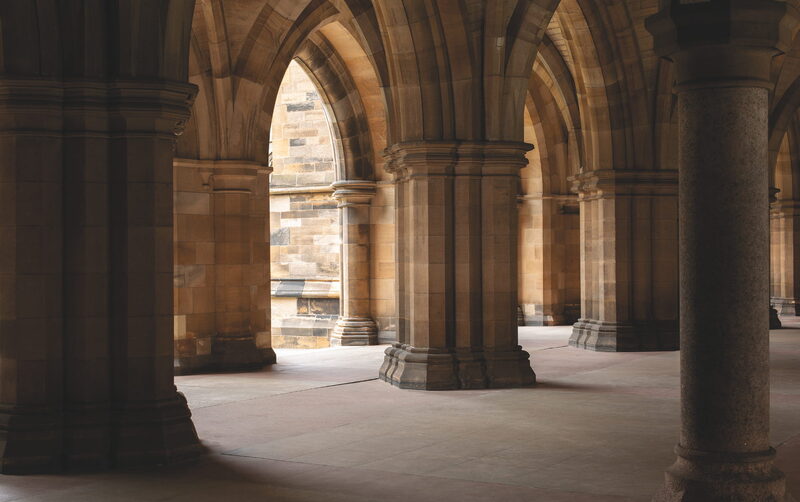
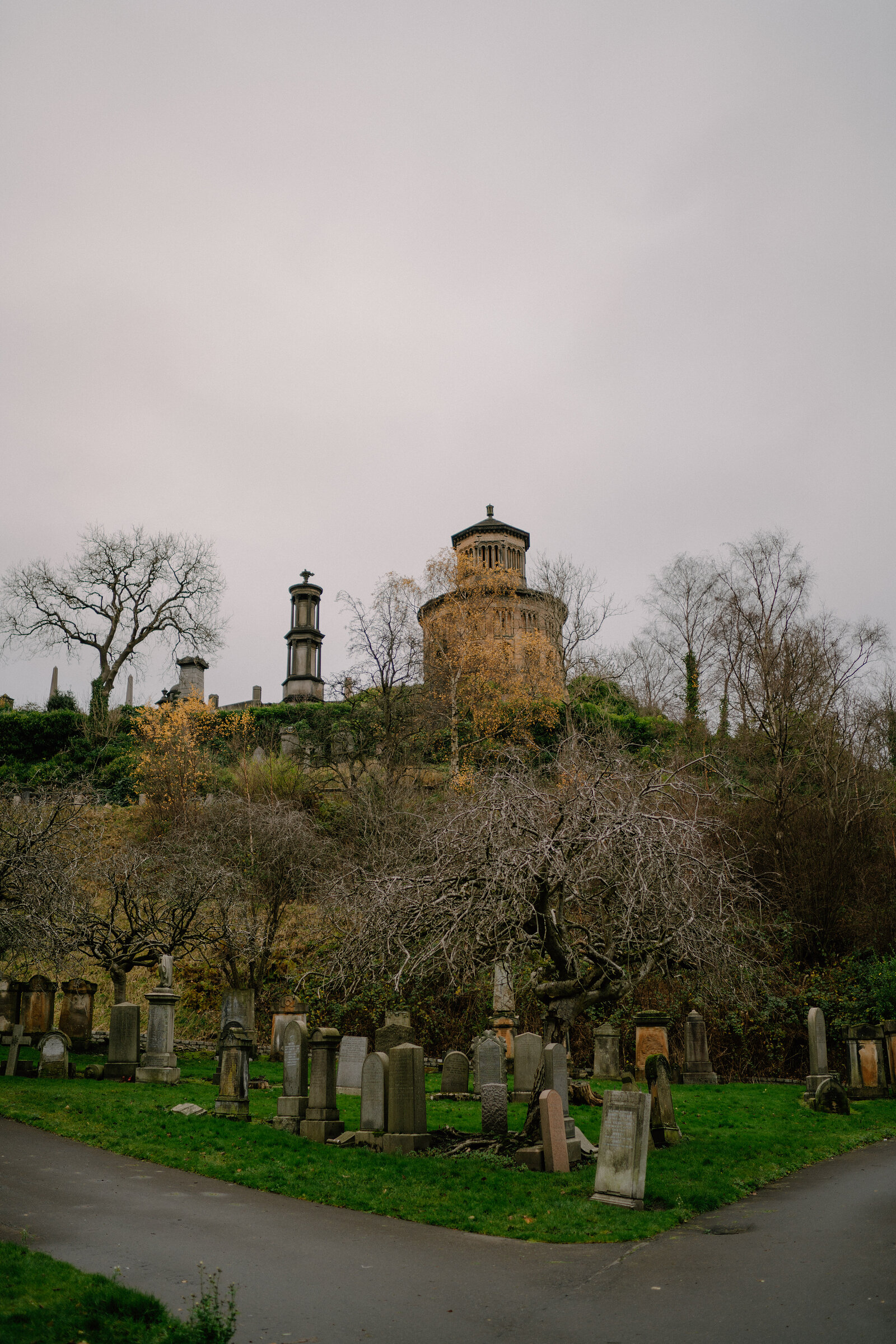
The Victorian garden cemetery on the hill beside Glasgow Cathedral, 37 acres of monuments by Thomson and Mackintosh, with views over the city.
The Glasgow Necropolis is a Victorian garden cemetery on the hill beside Glasgow Cathedral, on the eastern edge of the city centre.
Visited and photographed by Simon Hird
The Merchants' House bought the land in 1650, and it became known as Fir Park. In 1831 John Strang, the House's Chamberlain, wrote that Fir Park looked well suited to a Père Lachaise. The first burial, in 1832, was of Joseph Levi, a Jewish jeweller, in a burial ground always intended to be interdenominational.
Today it covers 37 acres, with some 50,000 burials and 3,500 tombs. Monuments here were designed by Alexander 'Greek' Thomson, Charles Rennie Mackintosh and J.T. Rochead. The foundation stone of the John Knox monument, at the highest point, was laid in 1825, before the first burial. The hill gives views over the city, with cobblestones in some areas, and in spring drifts of bluebells grow on its slopes.
The Daily
Arrives at 5am every day.
A free morning email to see what’s on this week, catch up on what’s happening in Scotland and find somewhere new to go.
Open every day from 7am to 4.30pm.
The Friends of Glasgow Necropolis run guided walks, and booking is essential.
Opening hours
Been here? Tell others what you know, and the best go on this page with your name.
Add your reviewThe first person laid to rest in the Necropolis, in 1832, was Joseph Levi, a Jewish jeweller. The Friends of Glasgow Necropolis say the burial ground was always meant to be interdenominational.
In 1831 John Strang, Chamberlain at the Merchants' House, wrote that the old Fir Park would suit a cemetery on the model of Père Lachaise in Paris. The Necropolis followed.
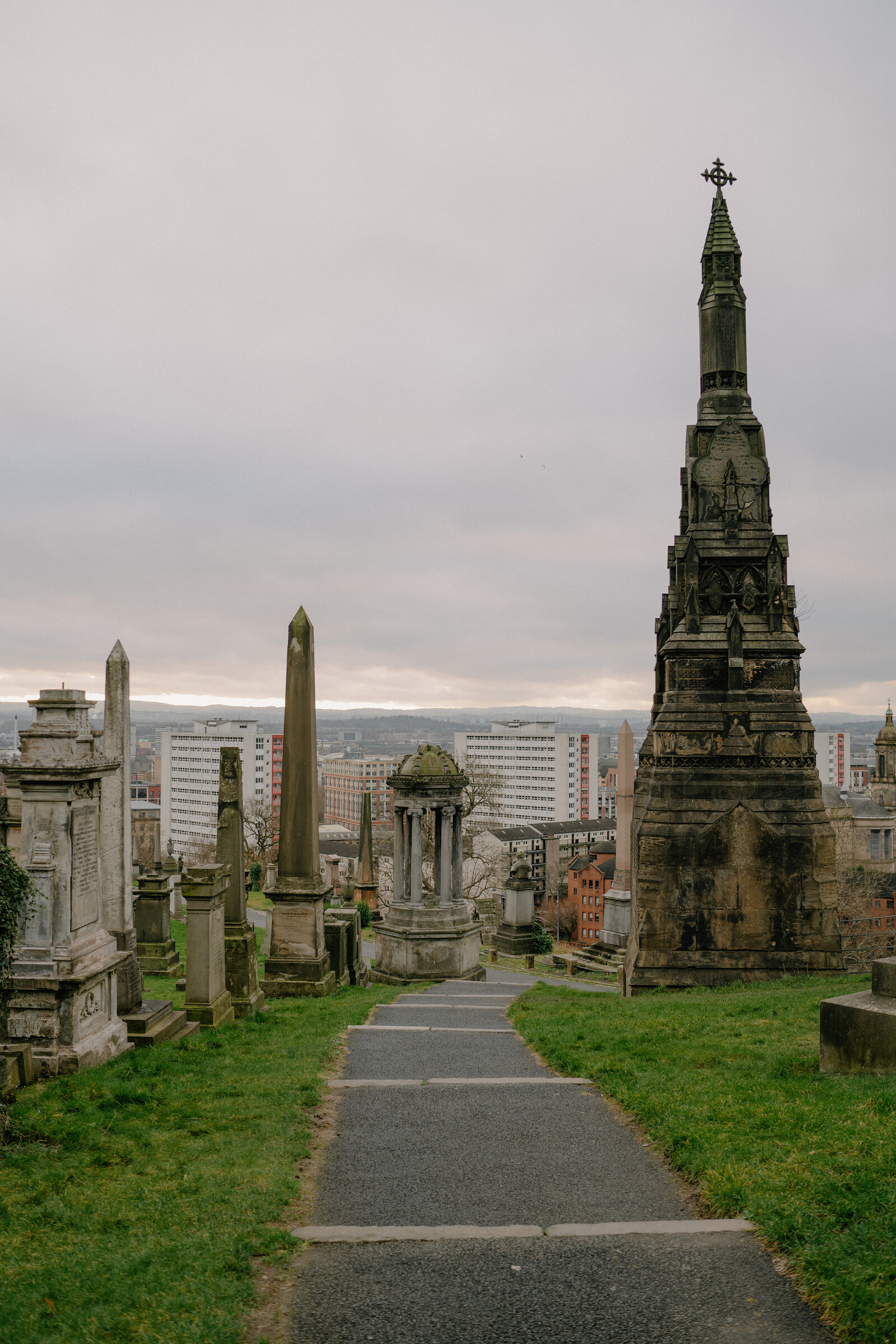
The foundation stone of the John Knox monument on the summit was laid in 1825, seven years before the first burial in 1832.
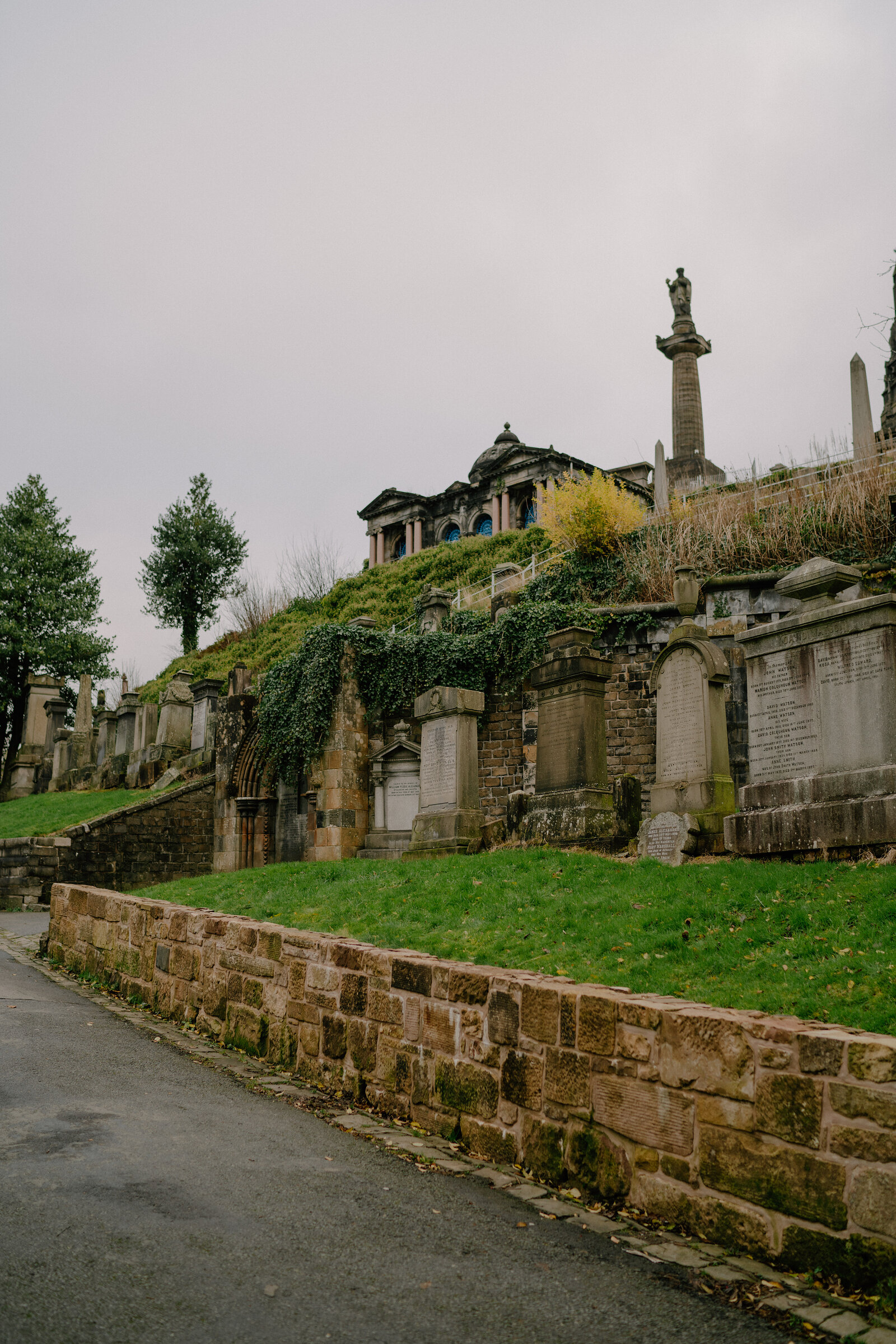
There have been some 50,000 burials in the Necropolis, and most of its 3,500 tombs were built up to fourteen feet deep, with stone walls and brick partitions. At the top, tombs were blasted out of the rock face.
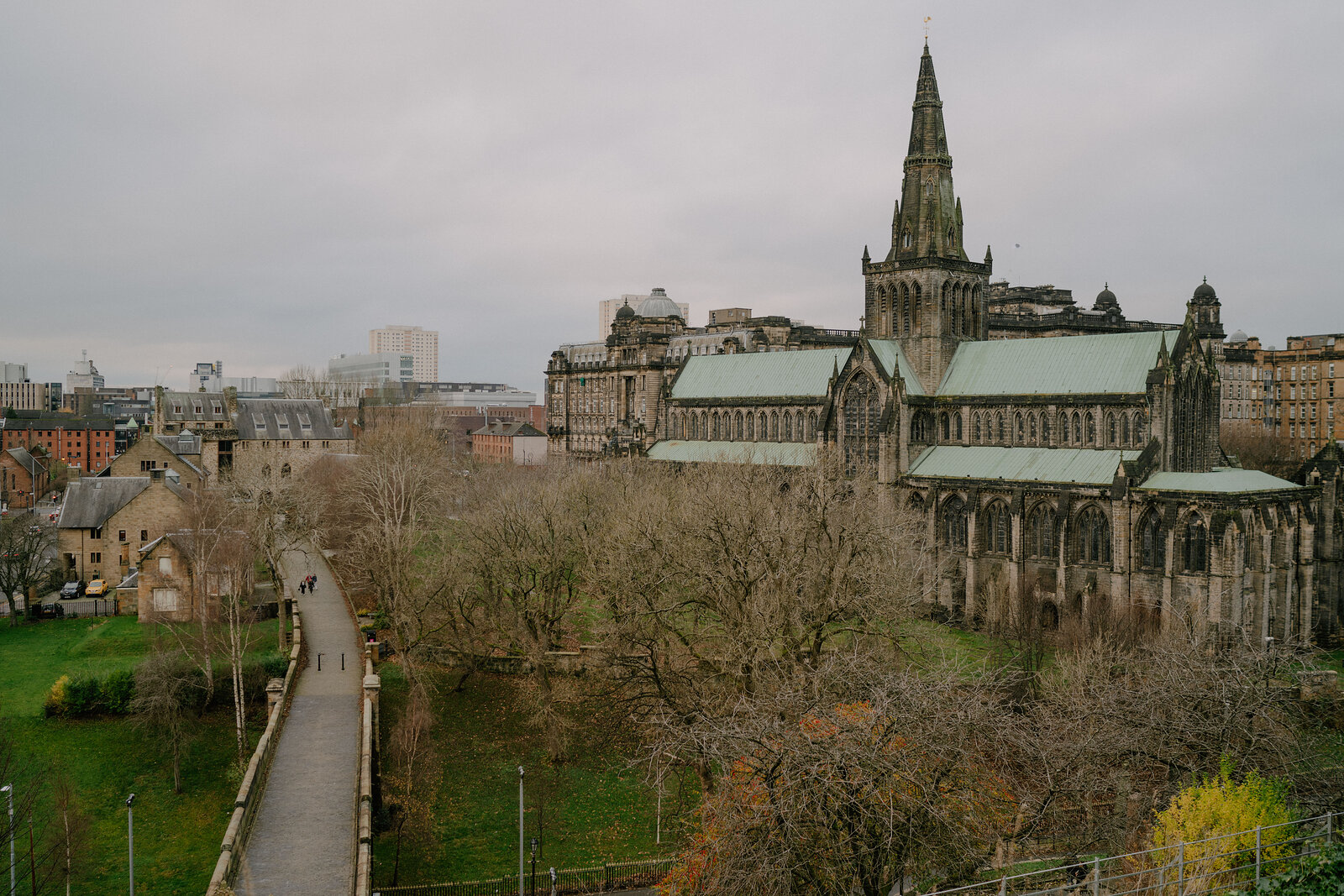
The Molendinar Burn, in which St Mungo was said to have fished for salmon, runs underground beneath the Bridge of Sighs. It was culverted in 1877 and carries on to the Clyde.
This Victorian cemetery has become a Glasgow landmark since burials began here in 1832, and its grand tombs contain some of the wealthiest city residents of the day, including no less than eight Lords Provost. The 37-acre site holds some 3,500 tombs, and offers guided walking tours.
Read more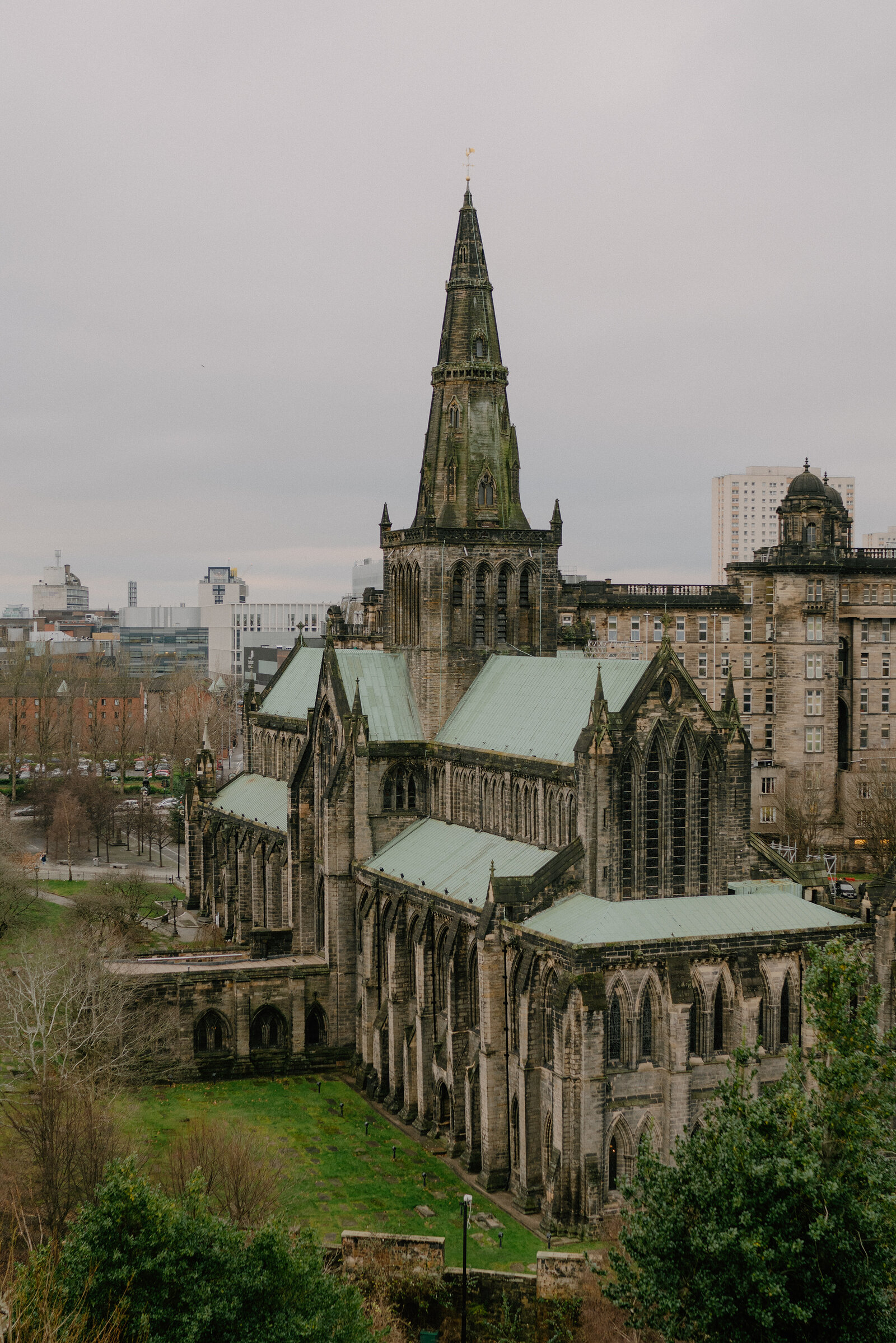
New places, news and stories, as we find them.
What is on in GlasgowOn the hill beside Glasgow Cathedral and St Mungo's Museum of Religious Life and Art, on the eastern edge of the city centre.
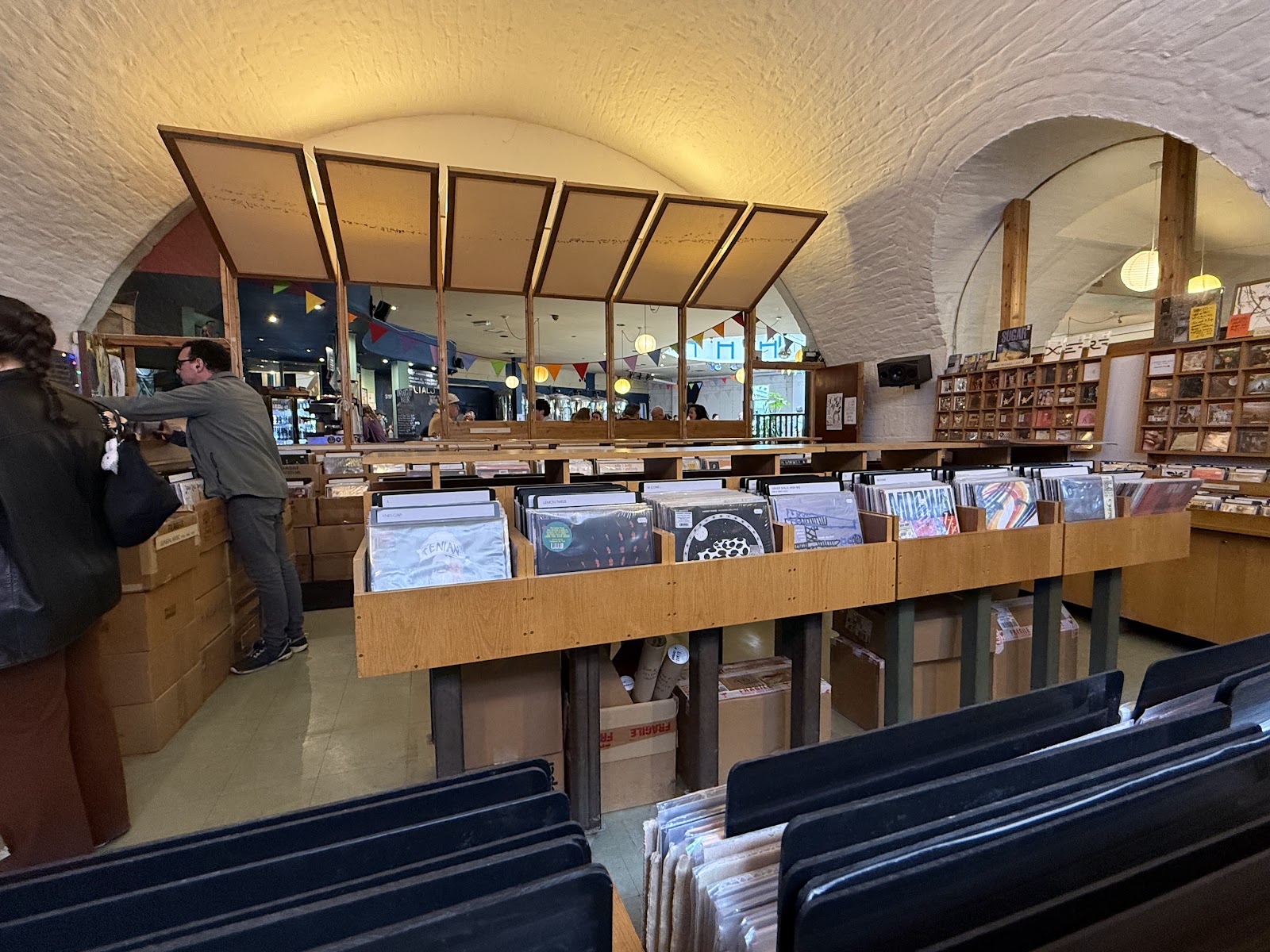
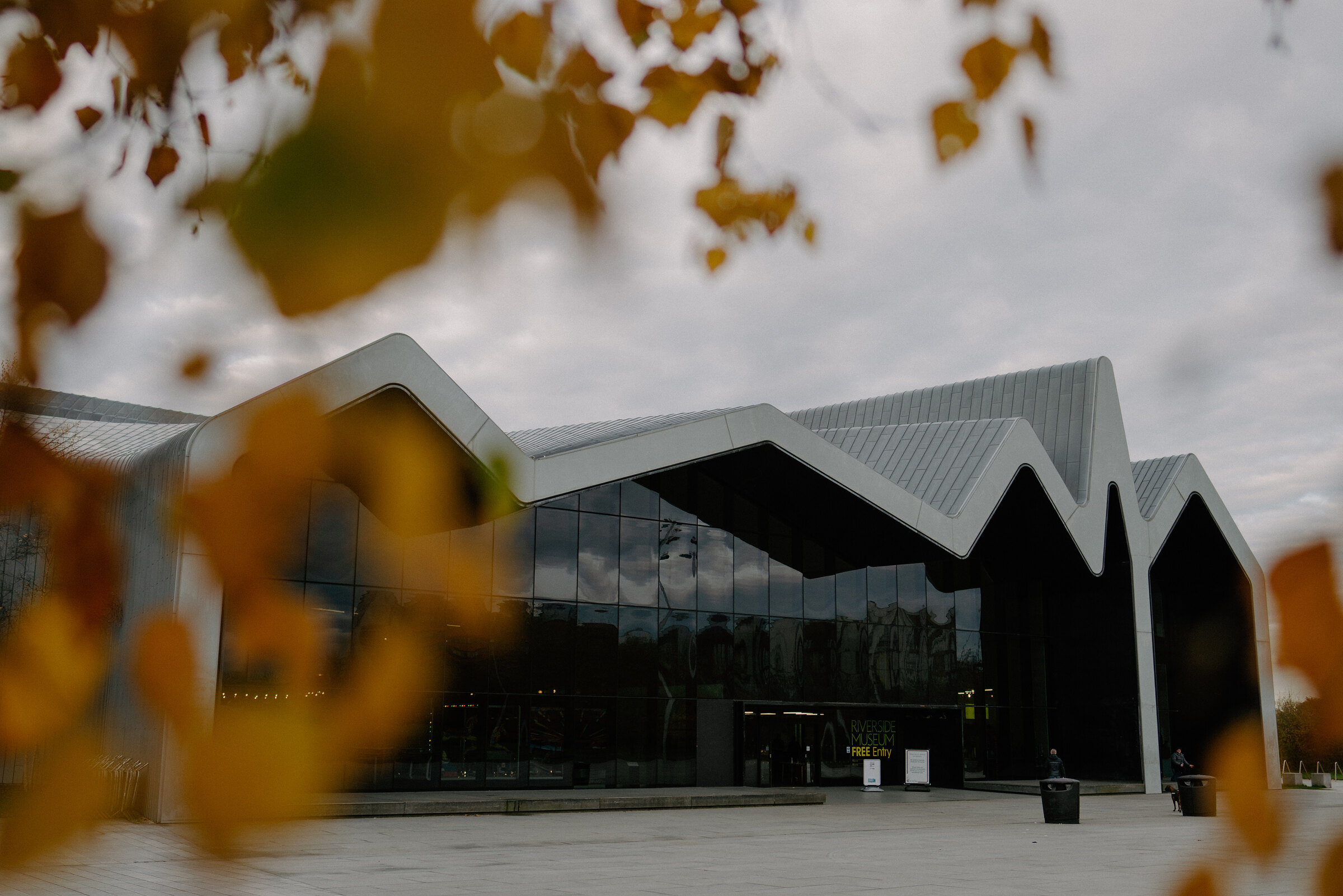
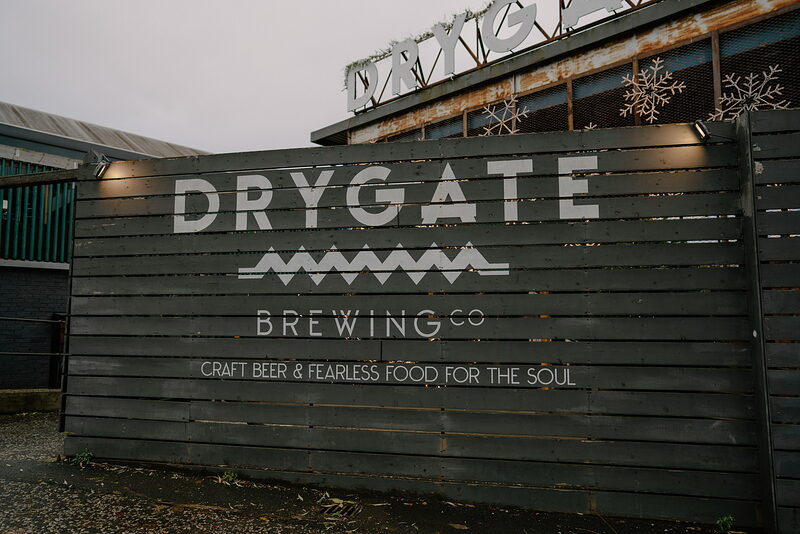 Drygate BreweryA craft brewery, bar and kitchen in a 1964 box factory with a sawtooth roof of seven peaks, below the Necropolis, with tours behind the glass.Under a mile 1 min by road
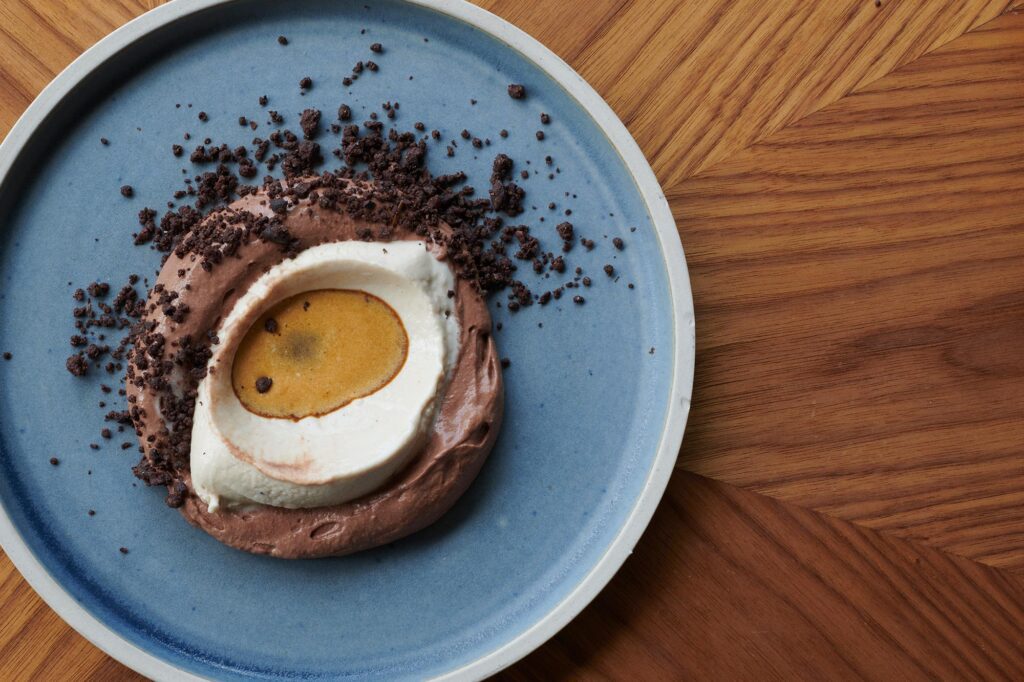 Celentano'sUnder a mile 1 min by road
 St Mungo Museum of Religious Life and ArtA free museum of the world's religions beside Glasgow Cathedral, built in the style of the old Bishop's Castle, with the first Zen garden in Britain.Under a mile 1 min by road
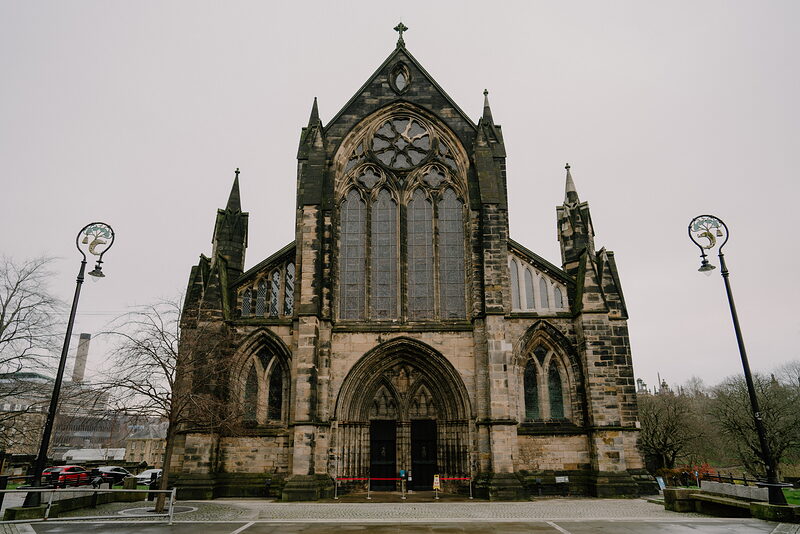 Glasgow CathedralScotland's finest surviving medieval cathedral, begun in 1181, with St Mungo's tomb in the vaulted Lower Church and free entry.Under a mile 2 min by road
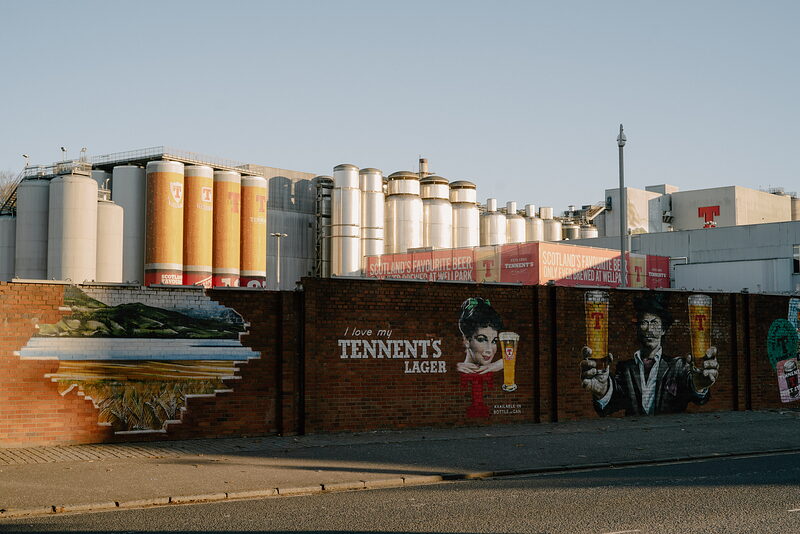 Tennent's Story Heritage CentreWellpark on Duke Street, where brewing goes back to 1556 and Tennent's brewed Britain's first lager in 1885, with tours and a bar at the end.Under a mile 1 min by road
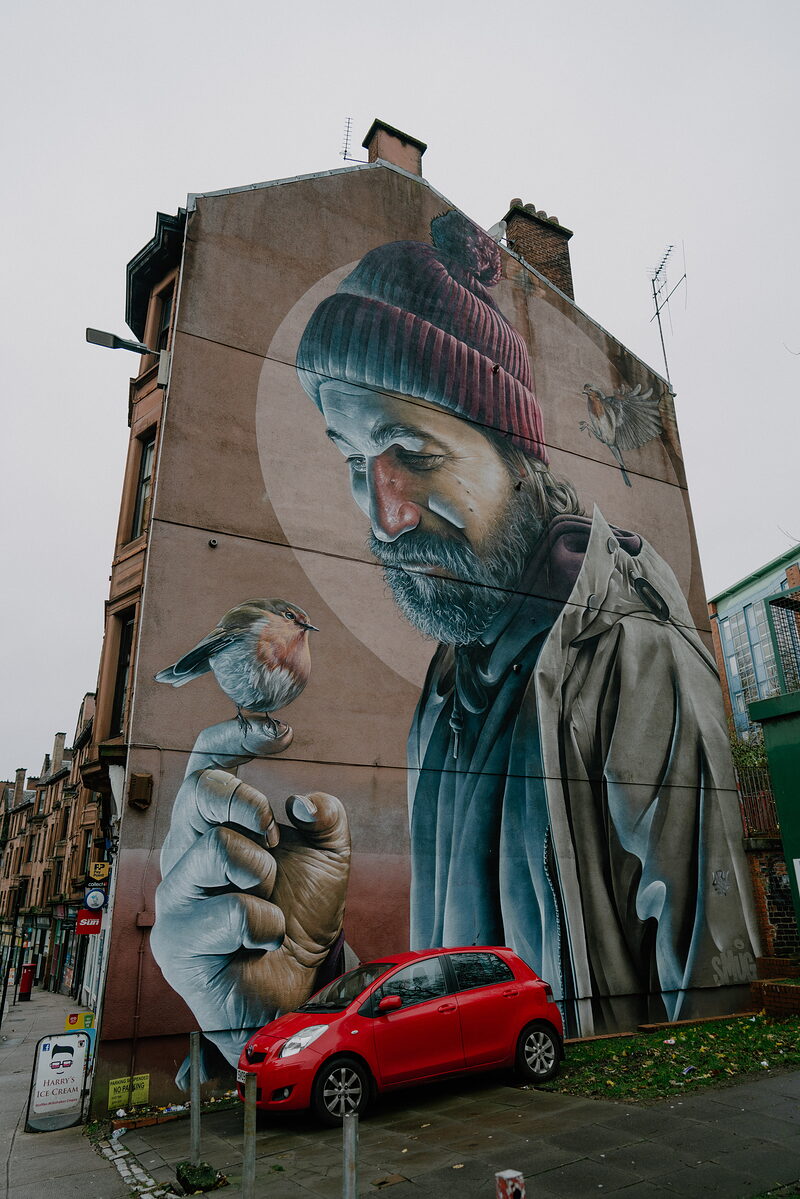 Murals of St Mungo & St EnochSmug's giant murals at the top of the High Street: St Mungo with his robin, painted in 2016, and his mother St Enoch, newly repainted, a short walk from the cathedral.Under a mile 1 min by road
Places to stay near the Necropolis, and when each is next free.
We want to show you the best that Scotland has to offer. The makers and the creatives, the enduring experiences, the evocative tales, the concealed corners. The roads less travelled that take you to places that matter. The adventures that gather you up and sweep you away. The blend of the wild and the artistic that makes Scotland what it is. We’d love for you to join us.
What we have written about it and more in Glasgow.
For further reading, before you go. The details on this page were checked on .