
Isle of Iona
Iona Abbey
Overview
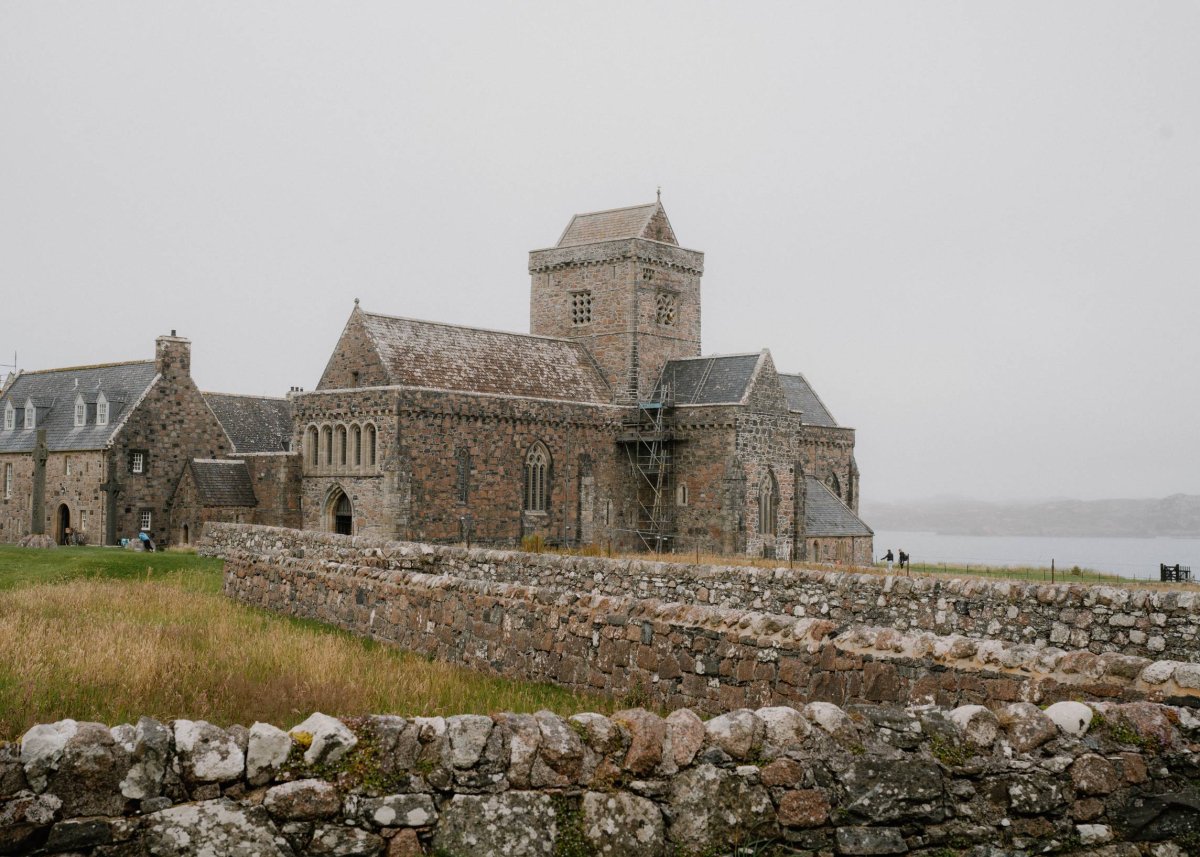
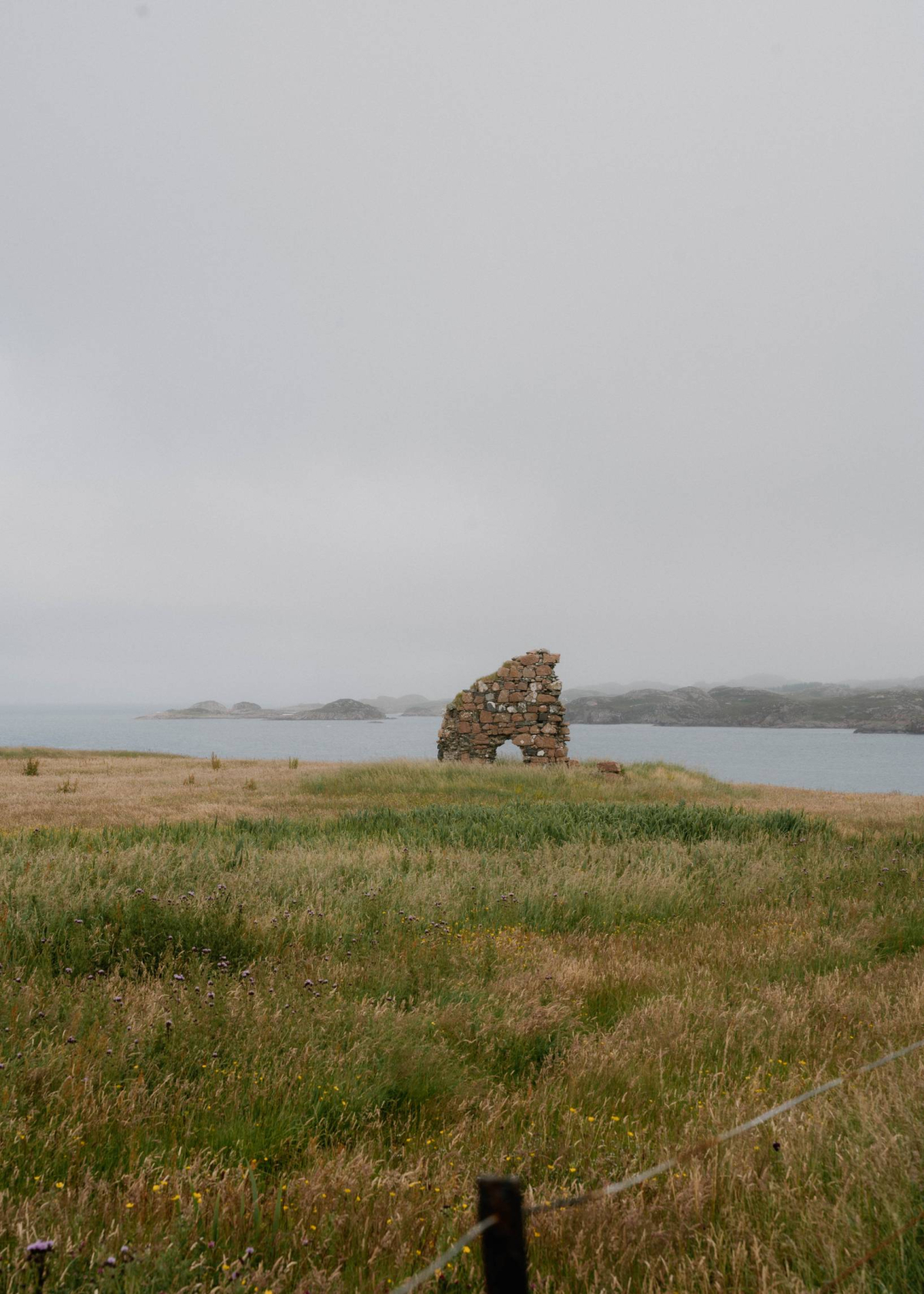
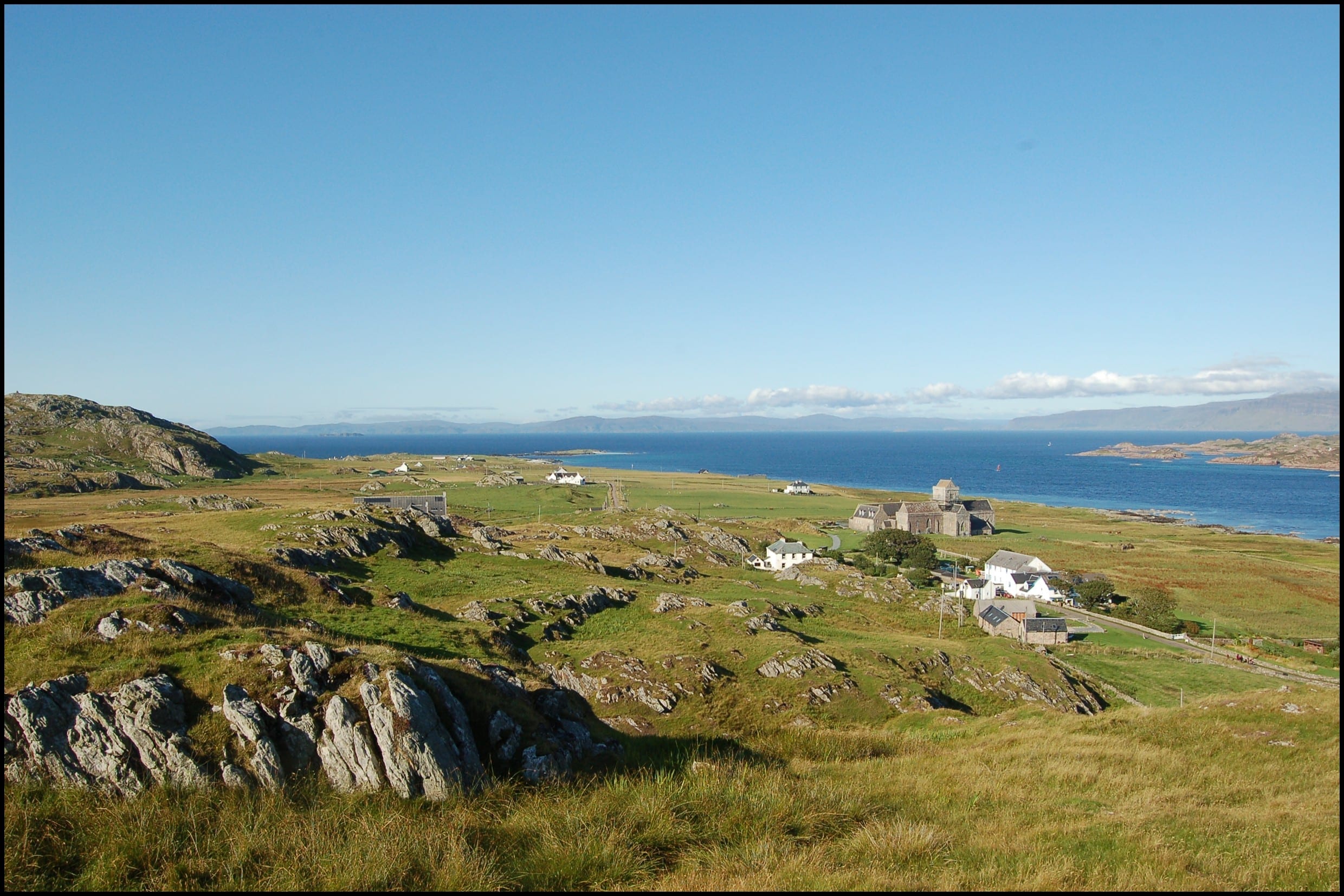
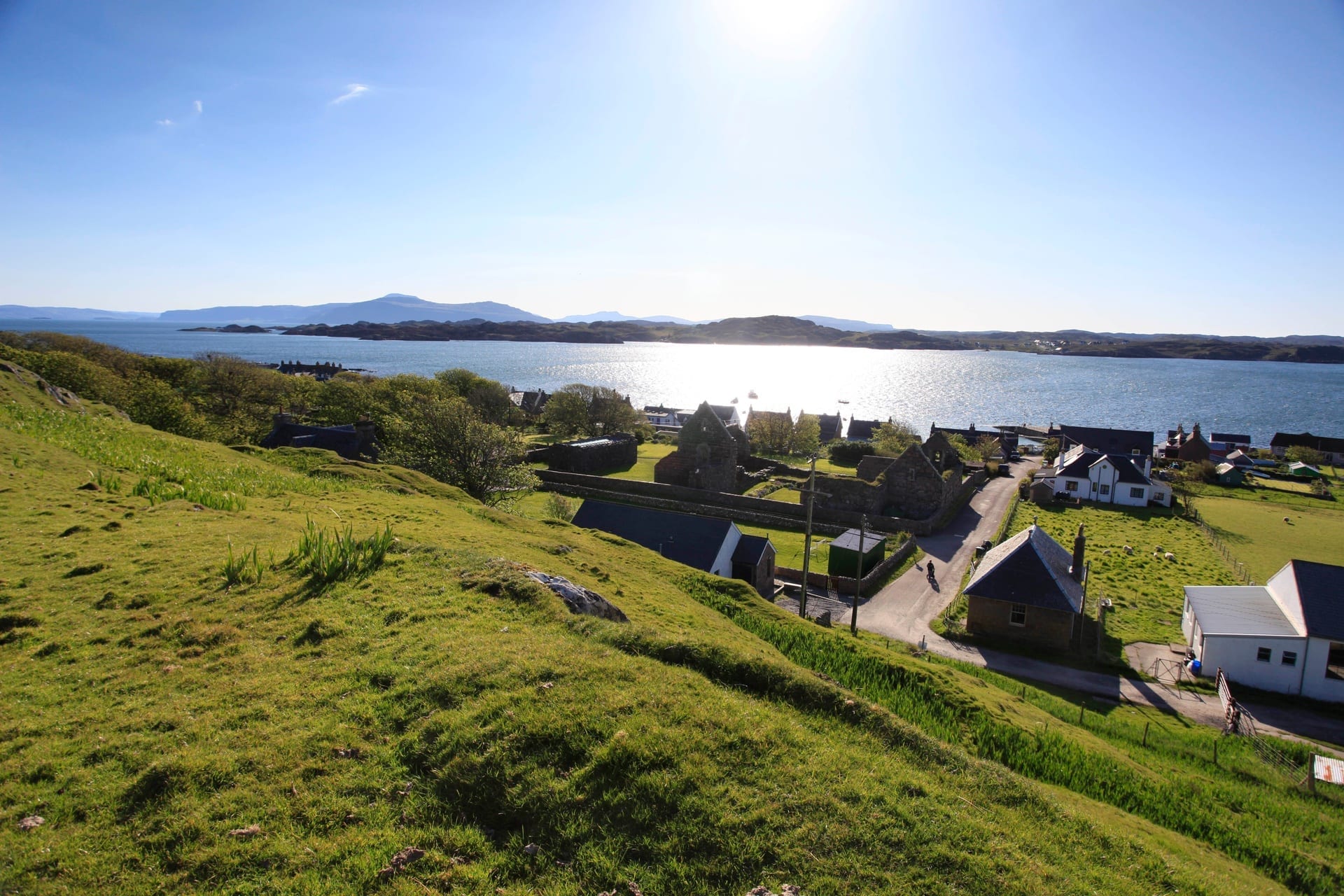
From the ferry, follow the road north through the village. After ten minutes on foot, the Abbey comes into view. It rises beyond the houses, behind low stone walls and uneven pasture. Before you reach it, look to the left. MacLean’s Cross stands in the grass, carved in the late medieval period and worn smooth with time.
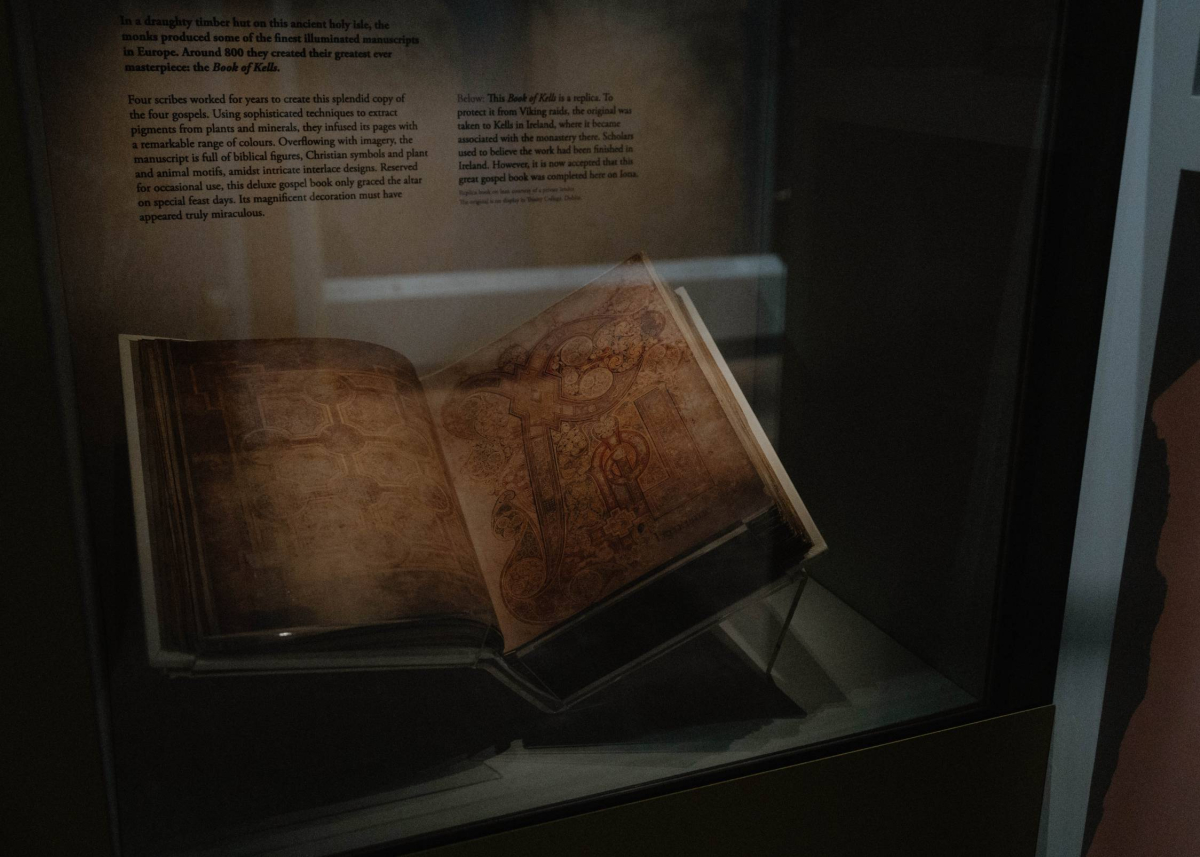
Columba arrived in 563, landing with a small group of monks from what is now Derry. The monastery they founded here was made of timber and built on a much smaller scale than what followed, but its influence grew quickly. Iona became a place of learning, religious leadership, and connection across the Irish Sea.
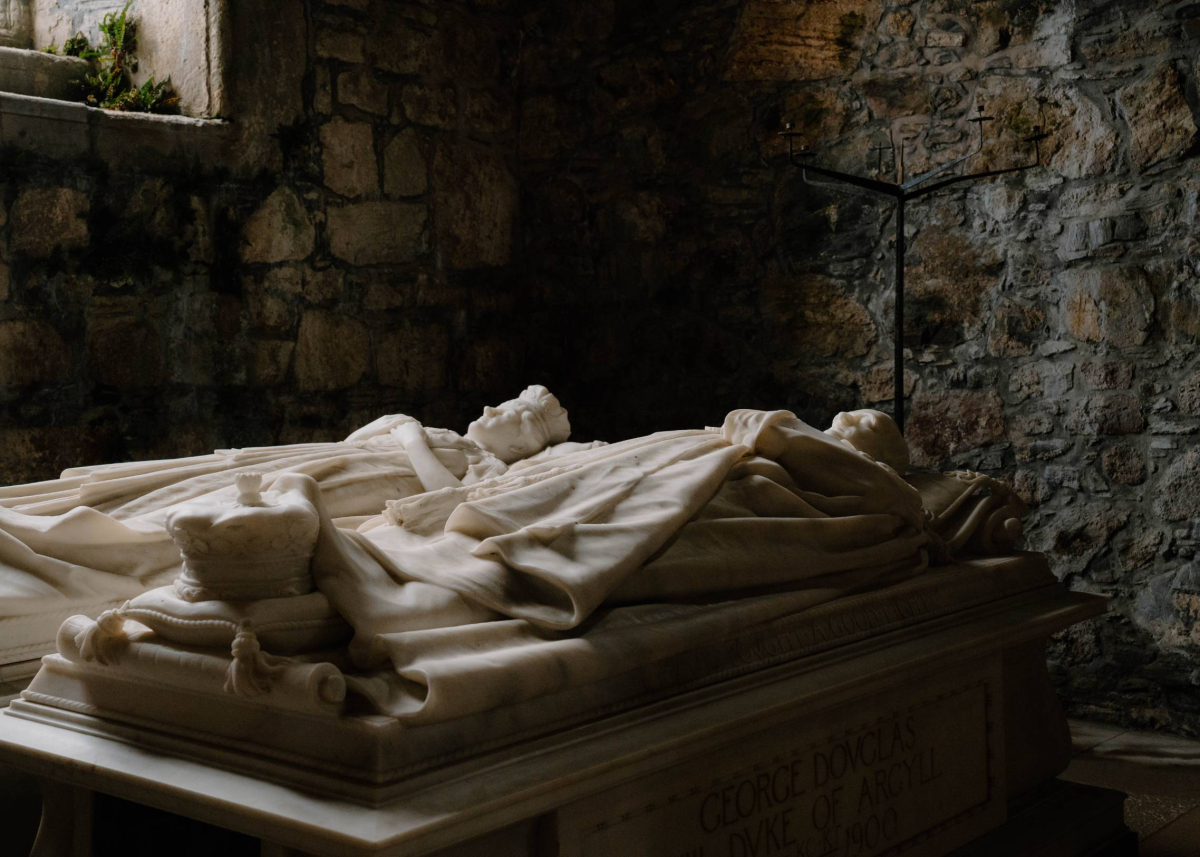
The buildings that stand today date from the 1200s, when the monastery was rebuilt in stone by Benedictine monks. It fell into decline after the Reformation and was gradually restored during the 20th century. The restoration was led by the Iona Cathedral Trust, with later work supported by the Iona Community, who still worship and work here.
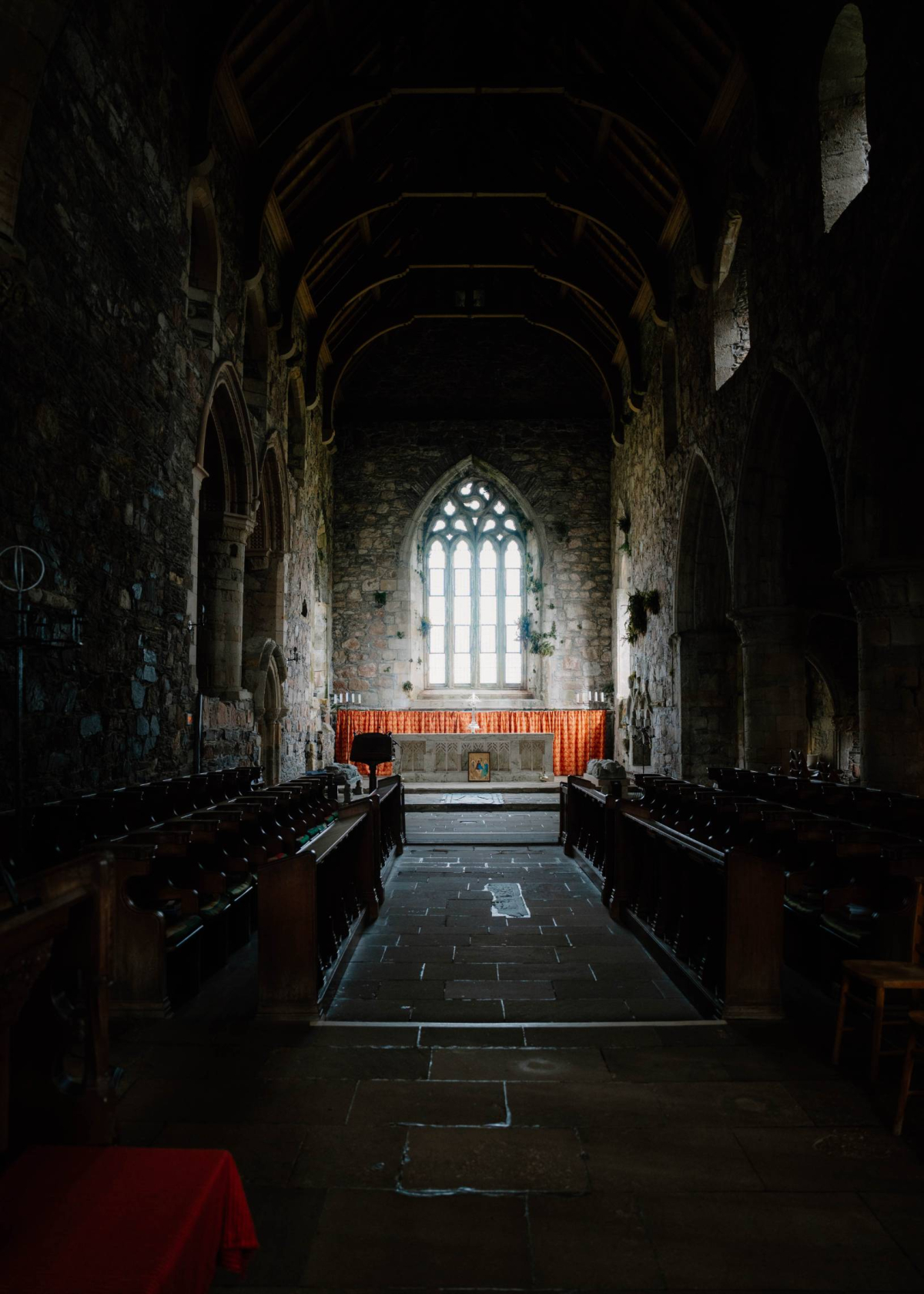
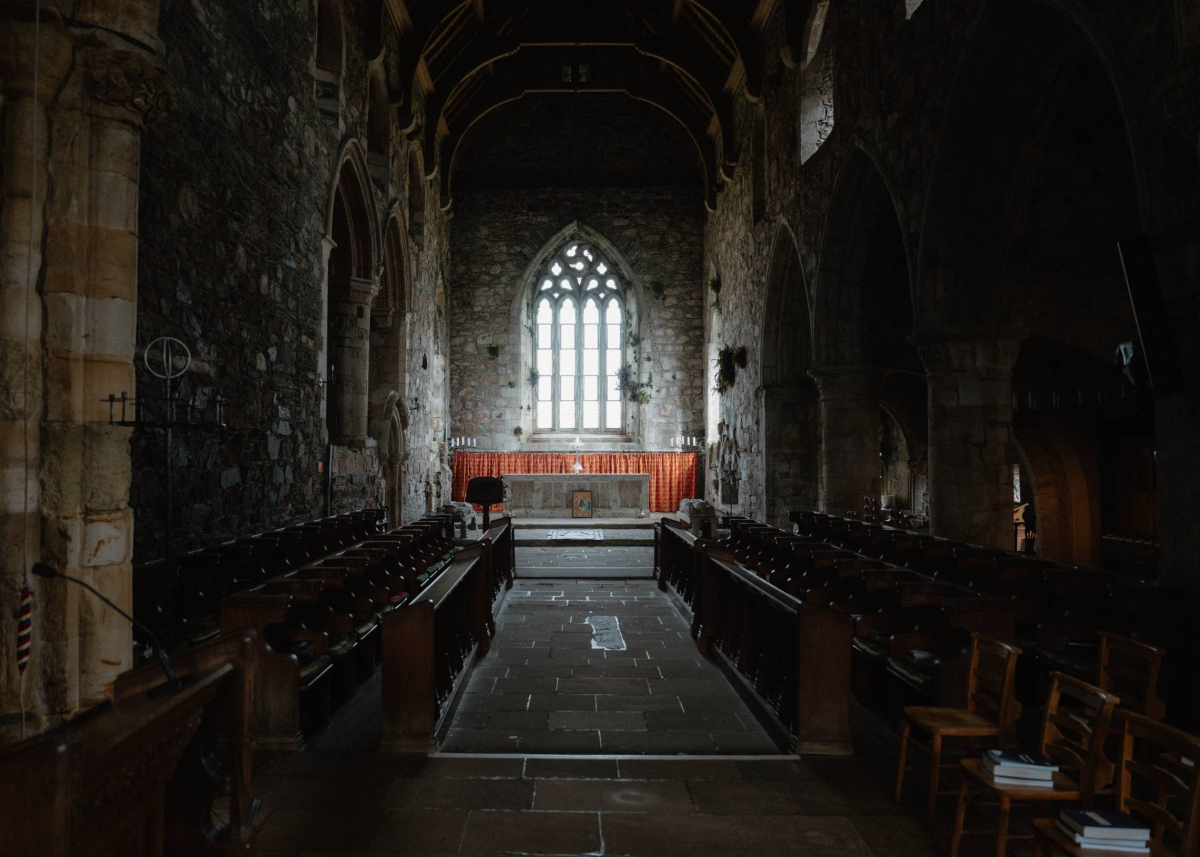
The church is open to visitors. Inside, you’ll find thick stone columns, stained glass, and timber beams. It’s a simple, spacious interior with little ornament. Services take place regularly, and visitors are welcome when space allows. During worship, photography may be limited.
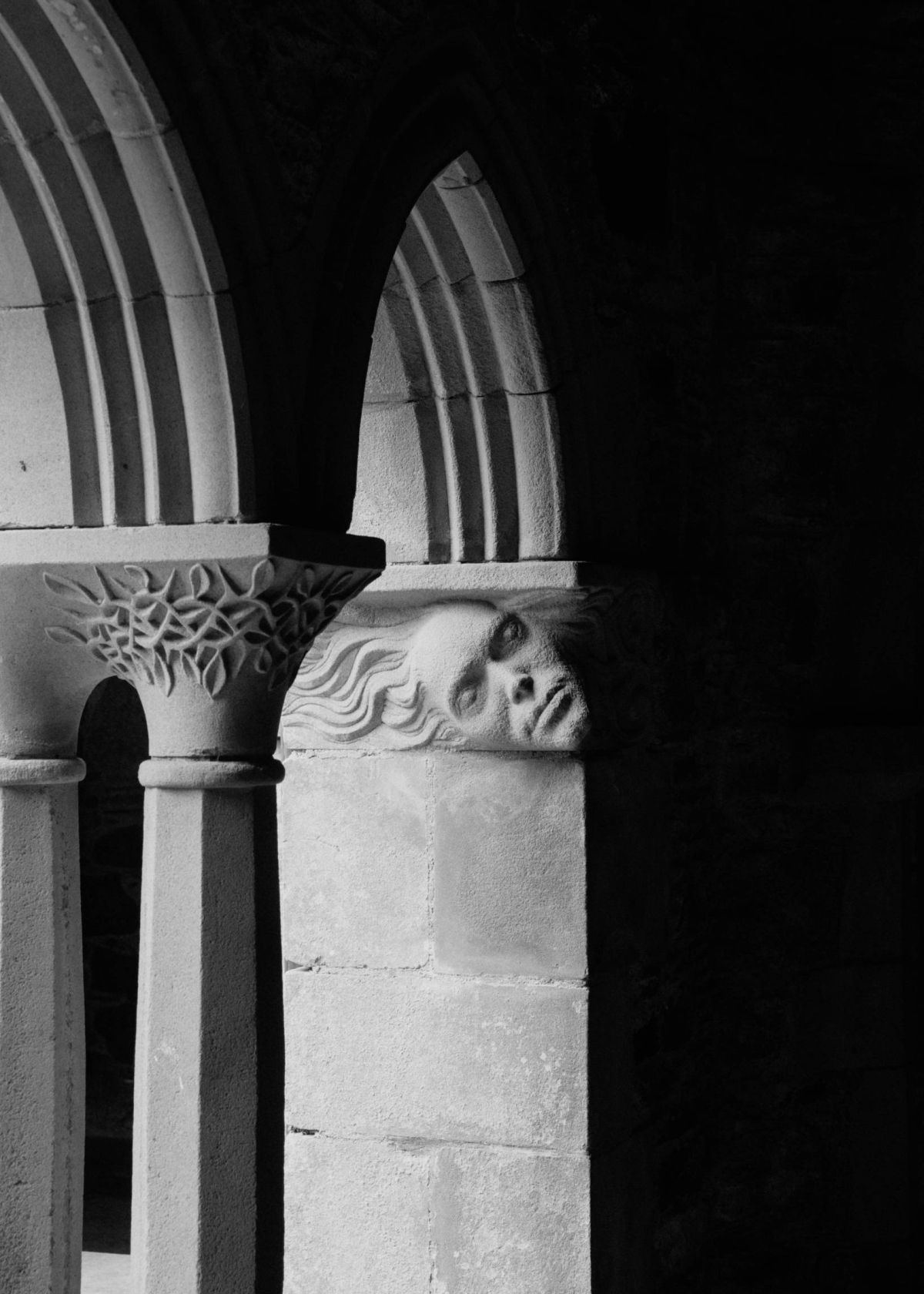
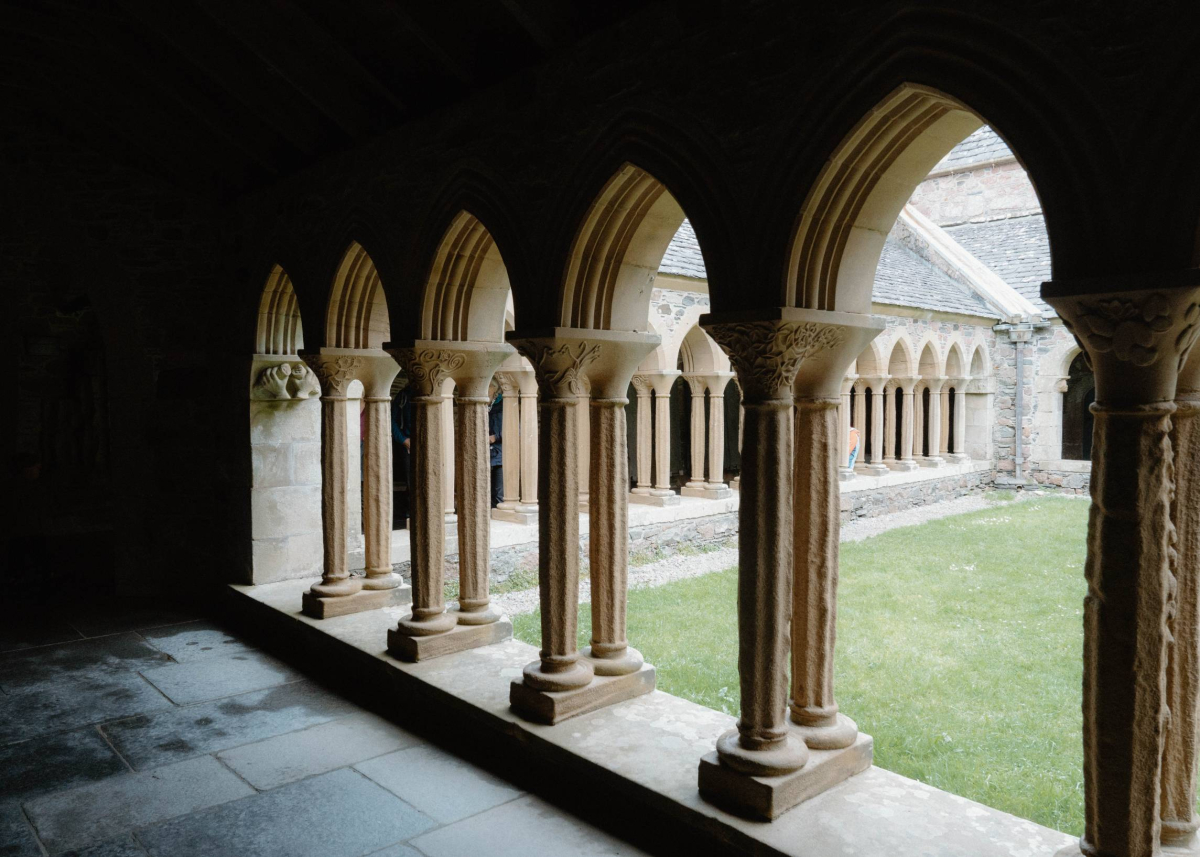
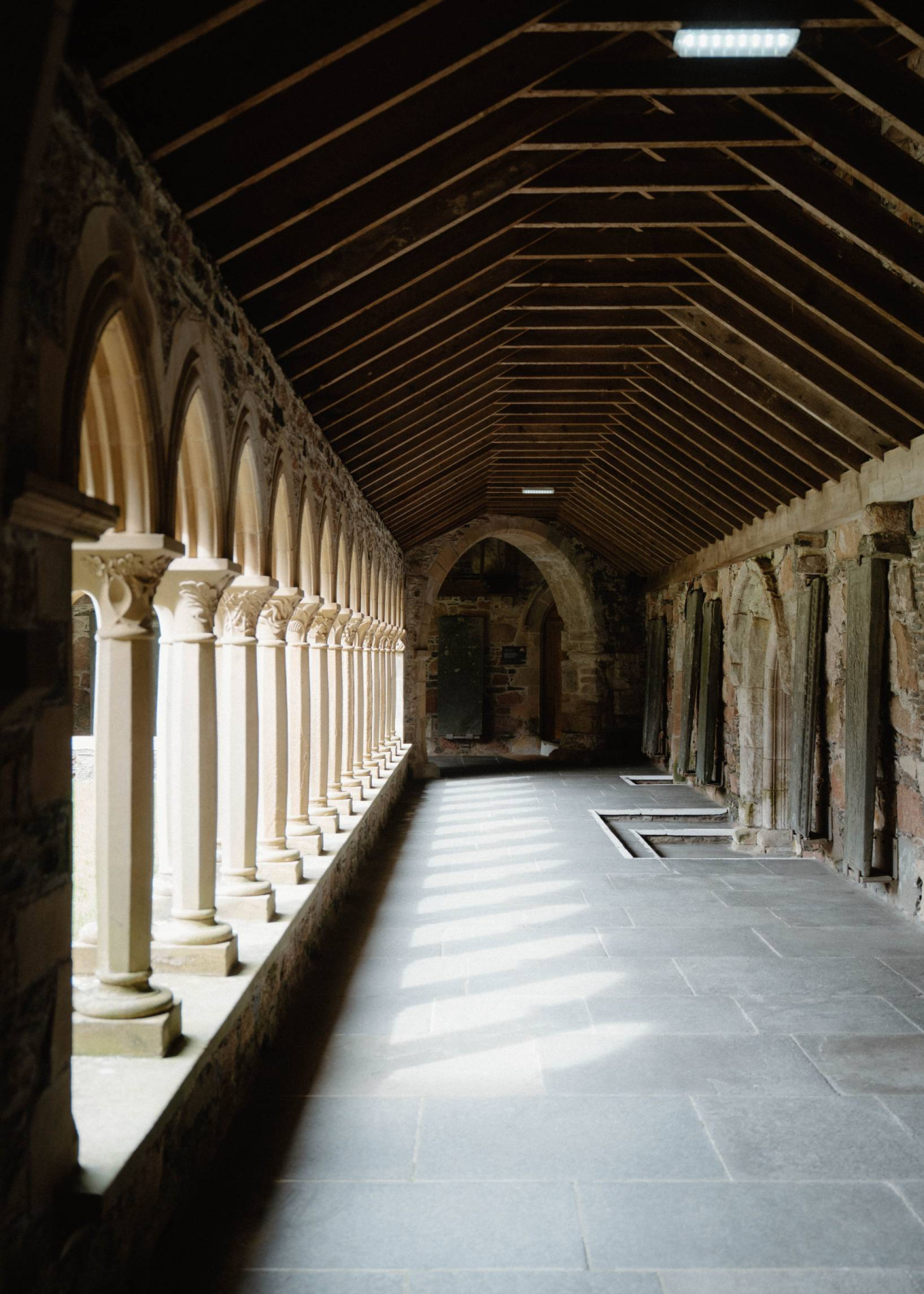
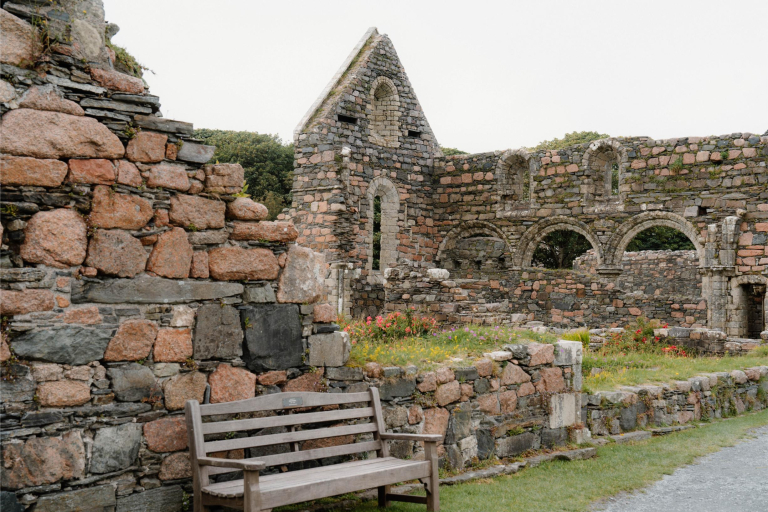
Beside the church is the cloister. It’s a quiet square lined with carved columns, open to the sky, with benches if you want to pause. The layout gives a sense of the original monastery and how it once functioned as a working religious community.
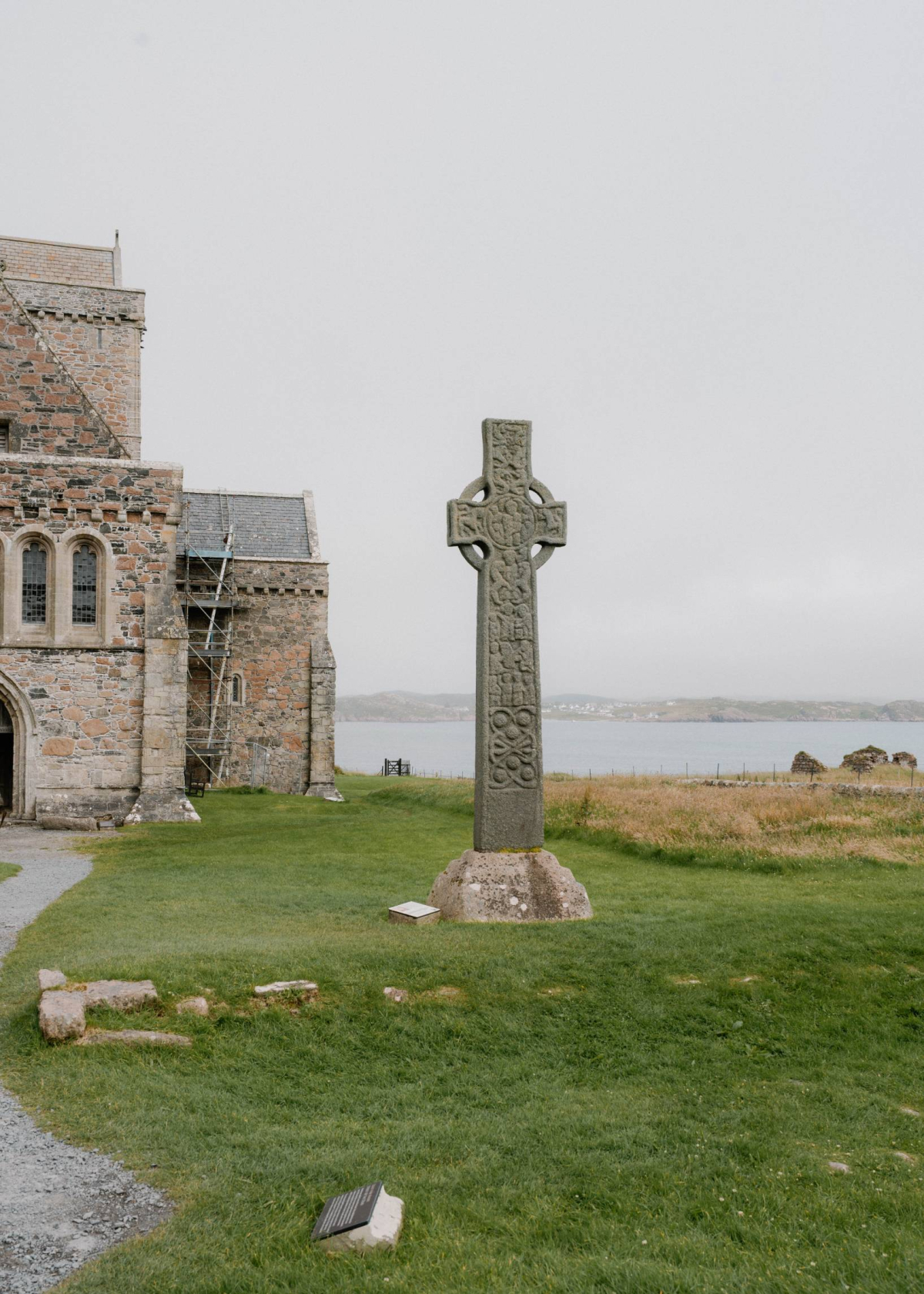
St Martin’s Cross stands just beyond the main doorway. It’s over four metres tall and dates from the 700s, still upright in its original position after more than twelve centuries. The interlace designs and carved figures are still visible in the stone, especially in low light.
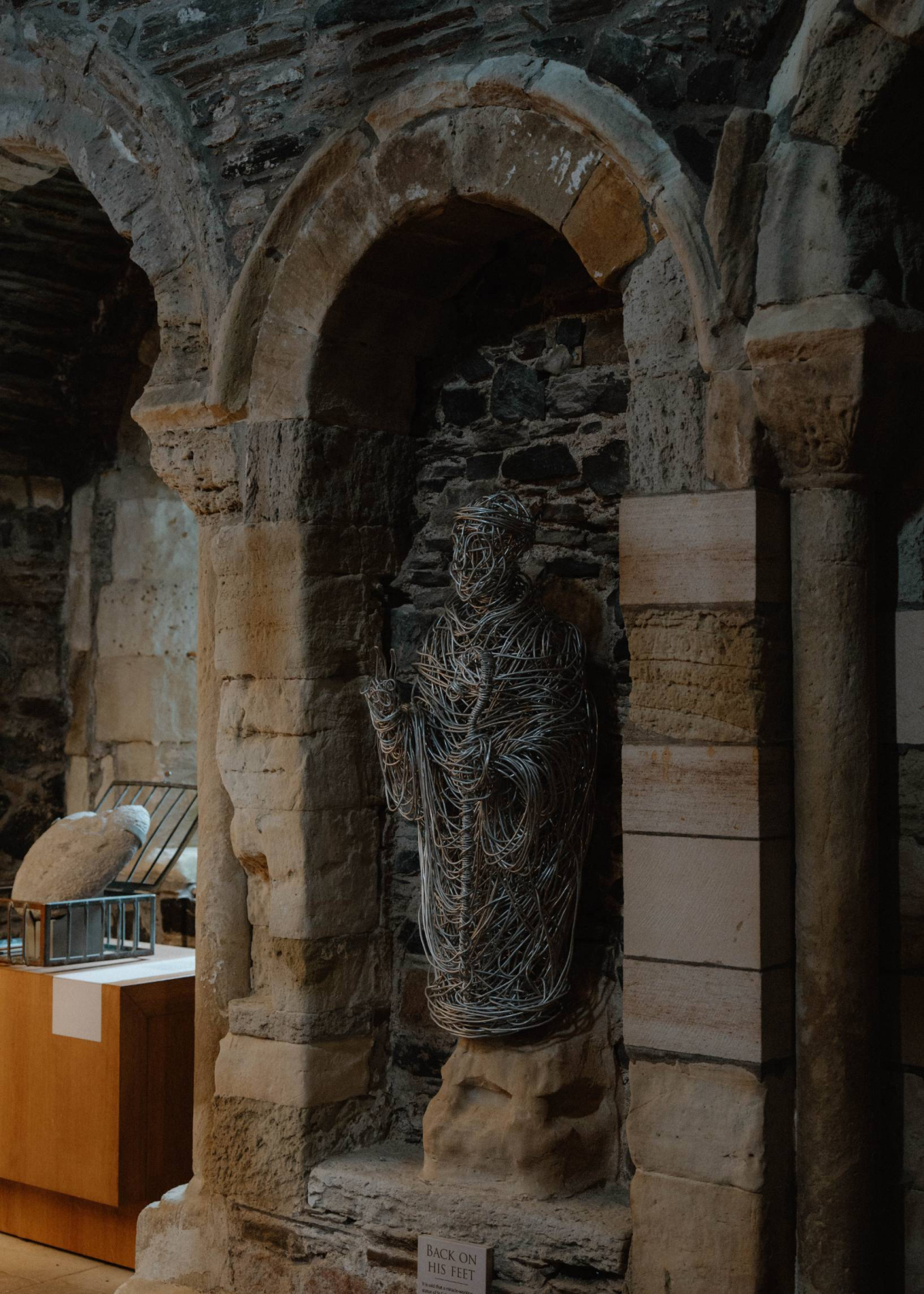
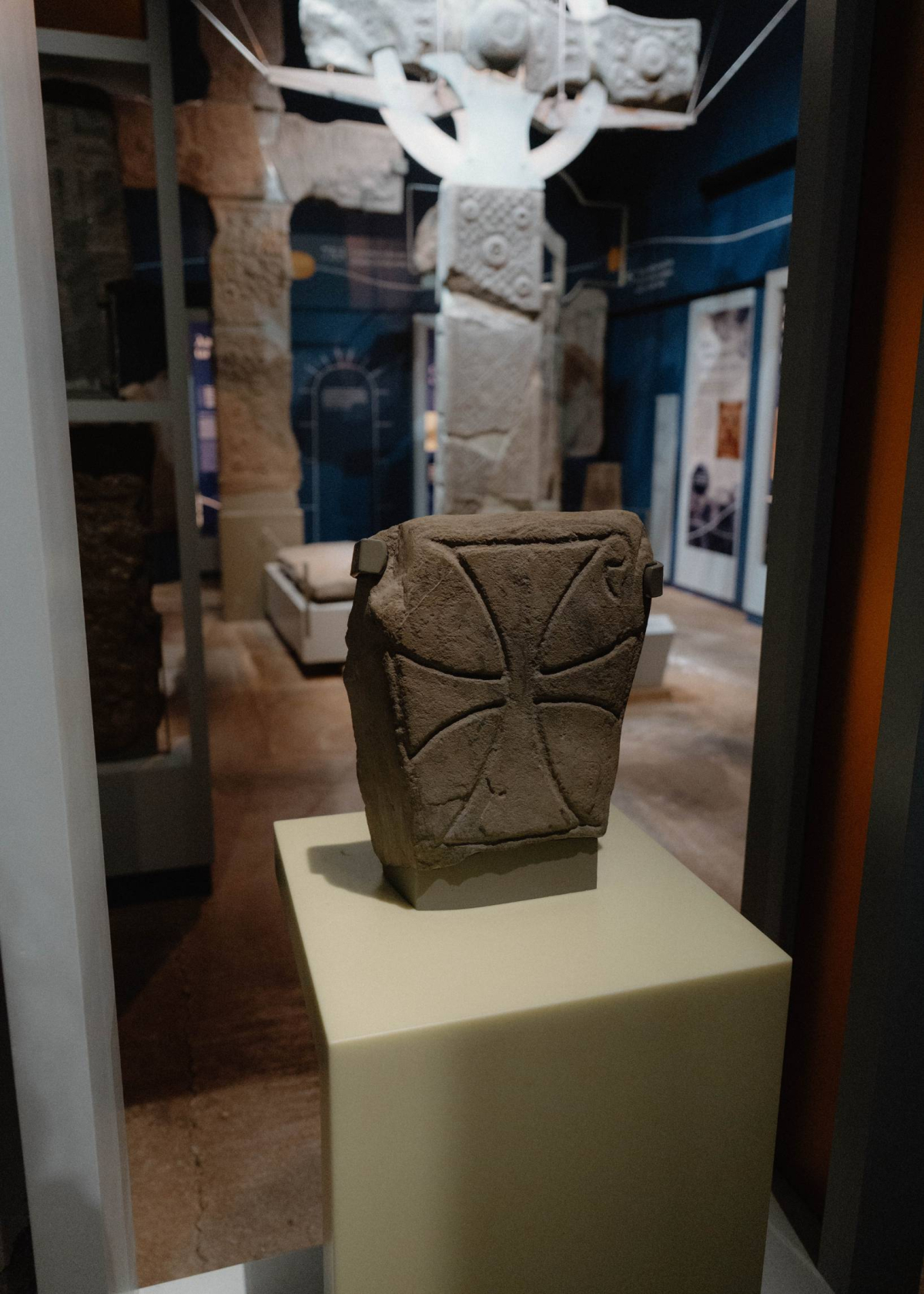
The museum on site includes carved grave slabs and stonework recovered from the Abbey and the surrounding area. Some bear swords, others feature knotwork or inscriptions in Latin. They span a long stretch of time, from early medieval burials to Norse-Gaelic markers.
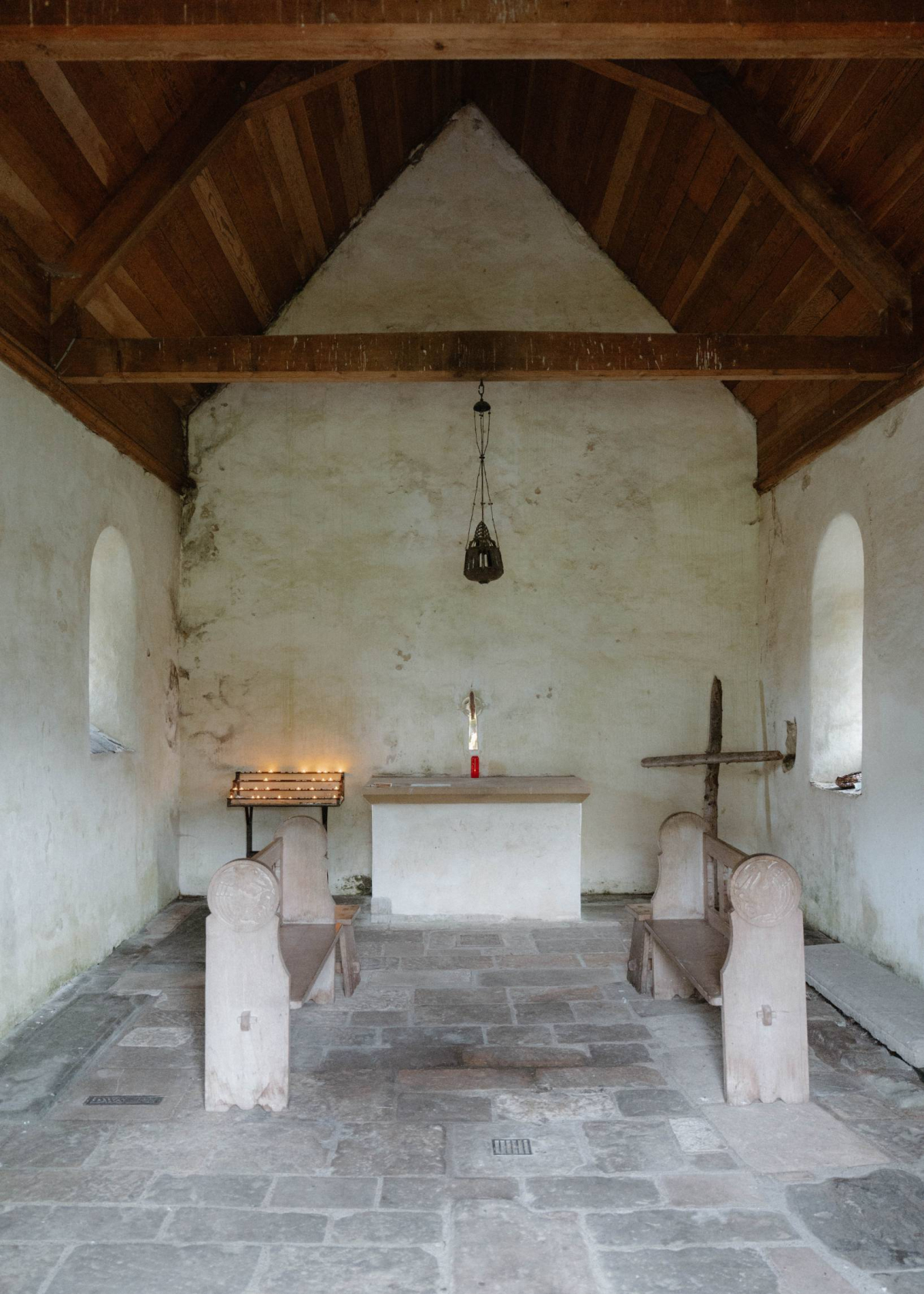
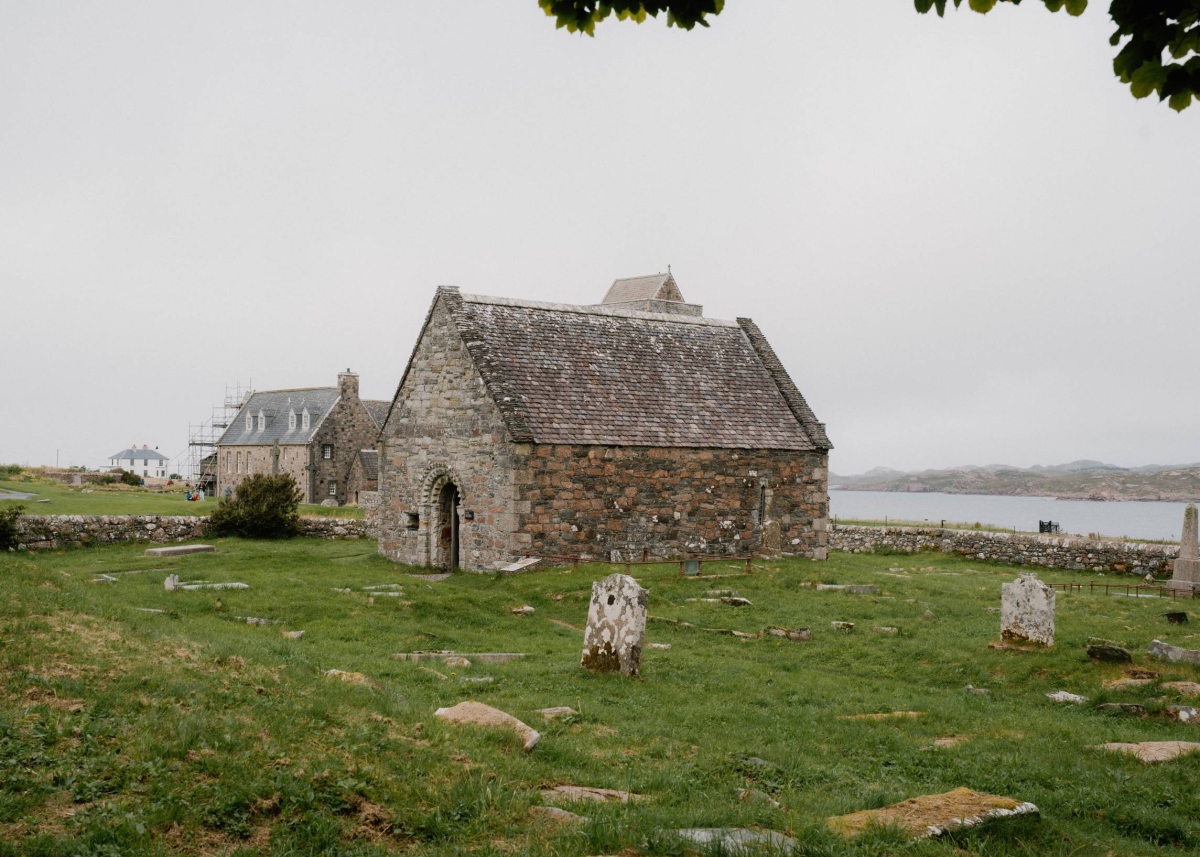
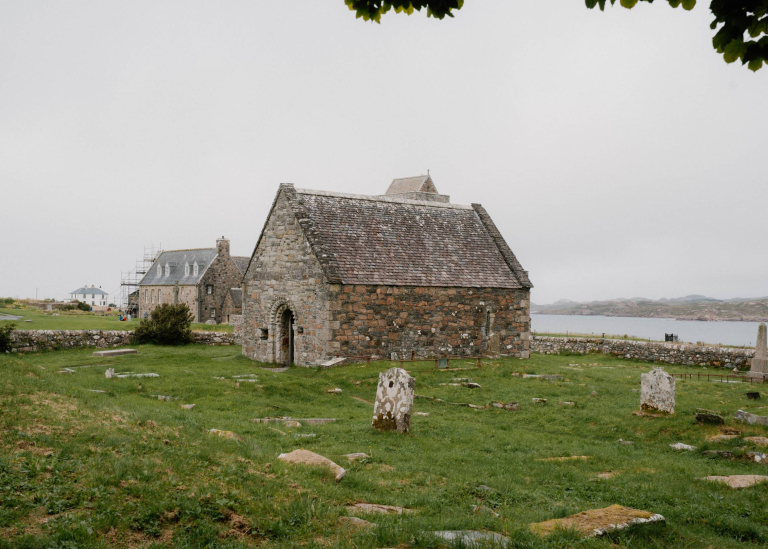
To the rear of the complex is Reilig Odhráin, Iona’s oldest graveyard. Many early Scottish kings are said to be buried here, though most graves are unmarked. In the centre stands St Oran’s Chapel, built in the 1100s and still largely intact. The burial ground is open to visitors and worth seeing in context with the rest of the Abbey.
Allow an hour for a typical visit, or longer if you want to explore slowly. The site is managed by Historic Environment Scotland and open daily during the main season.
Location: North end of the village, 10 minutes on foot from the ferry
Open: April to October, daily, 9:30am to 5:30pm (check for winter hours)
Admission: Paid entry, free for Historic Scotland members
Time to allow: 60–90 minutes
Location
What's nearby



Where to stay nearby







 Sign in with Google
 Sign in with Email