
Hidden Kingdom of Fife Part 1 - The witch, the Saint, the Admiral
Writer Louis D. Hall sets out across Fife on foot, uncovering layers of history, folklore and memory along the way. From saints and shipbuilders to accused witches and forgotten ruins, he reveals a place still quietly changing — and still worth walking for. This is Fife, rediscovered.
Written by Louis D. Hall
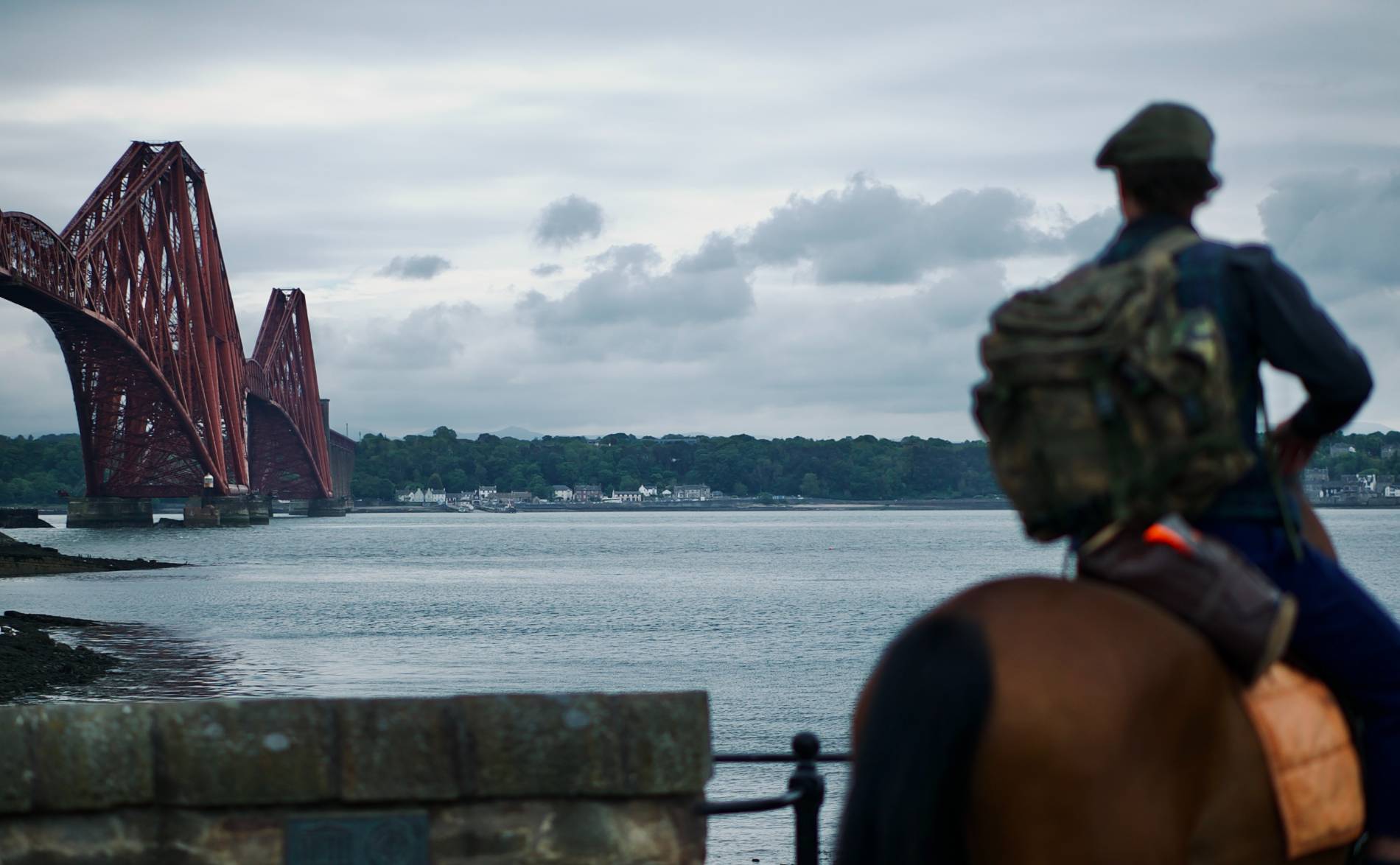
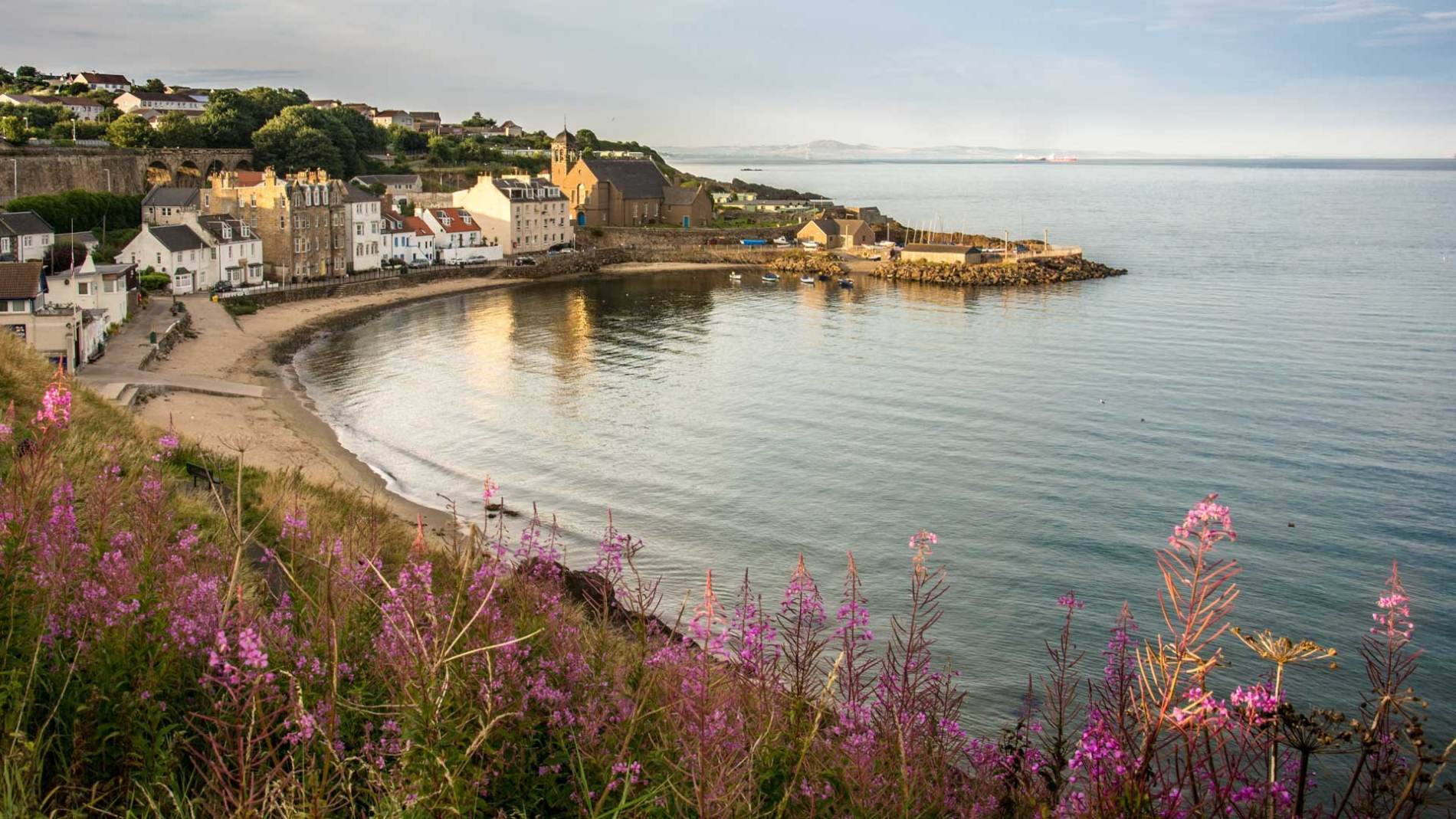
Someone said that when you go away for a long time you never truly come all the way back. To me, this means that when you do return, you bring something new with you: a fresh perspective on the places and people you’ve known forever. After two years, I found myself returning home to Fife. Sure enough, the things I took for granted began to appear differently; the scenes I had stored up for comfort, lodged in memory since childhood. The way the river forth stretches into nothing as you look east and west - this felt new to me. The shape of the Ochil Hills in the north; the sense of incomparable calm felt in the harbour of Crail; the colour of the incoming tide on Elie beach. Yes, there was far more hidden magic than I had remembered. But there was something else too - destruction, cement, and urbanisation. My home was being altered beyond recognition, the green spaces upturned for housing and roads. It dawned on me then how little I actually know of Fife’s long and living history. How much I assumed or didn't fully understand. And so, travelling west to east, I set out to rediscover Fife, terrified of it being lost on me forever. I opened my eyes, looked ahead and sought the signs that might help illustrate the past, hoping I wasn’t too late. ‘Fareweel, Bonny Scotland, I'm awa' tae Fife! '
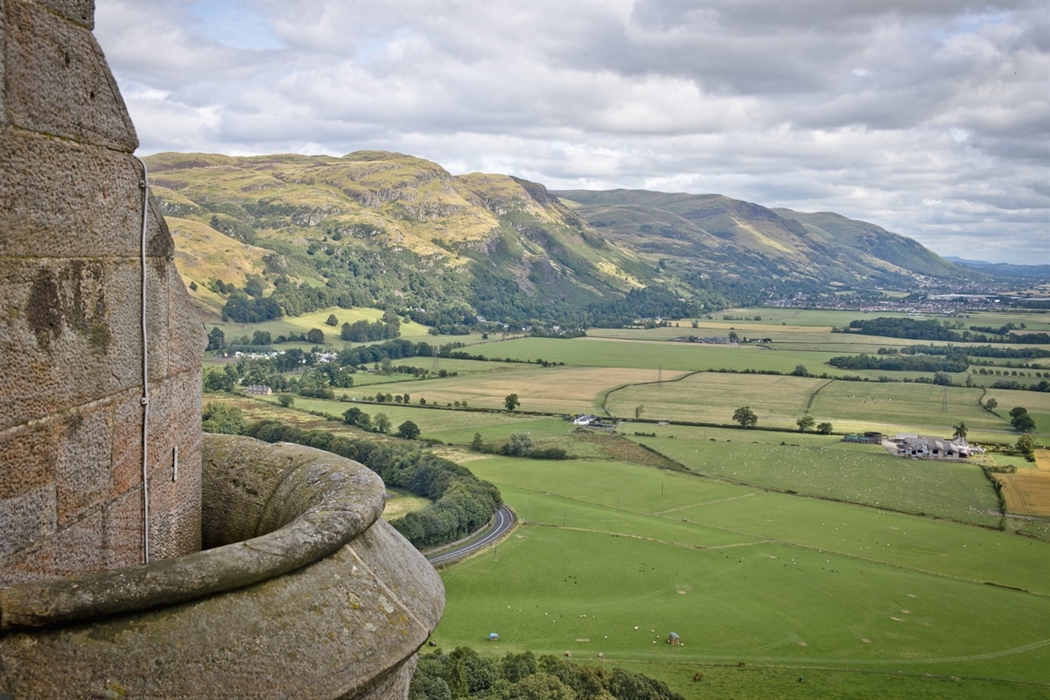
Ochil Hills
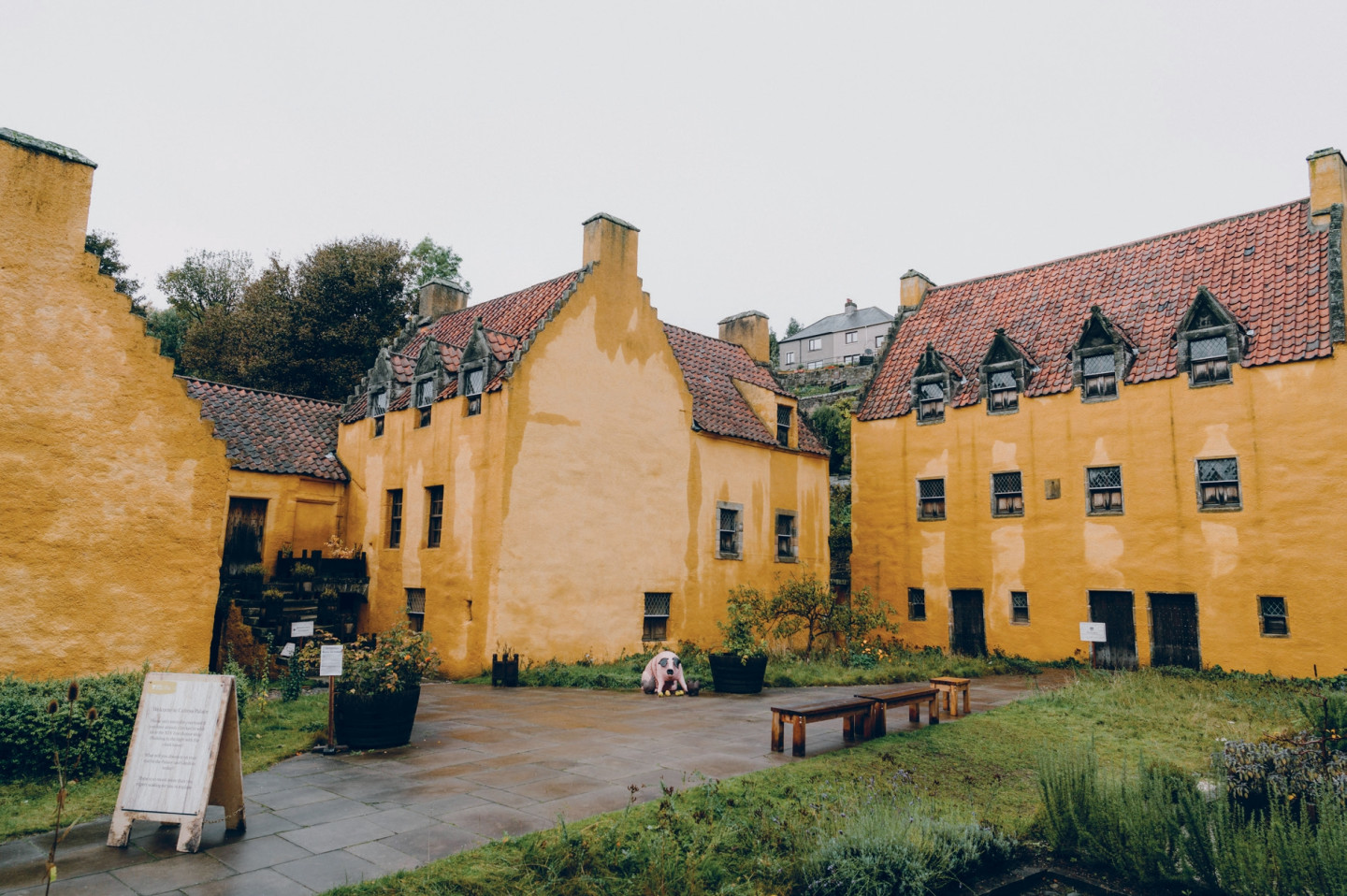
A coracle, a witch and an admiral.; as I was quick to discover, my journey on foot became shaped by physical clues and old tales. Piecing them together has since been the challenge. Less than five miles from Kincardine (on the far west point of Fife), there is a beautiful village called Culross. Built up from the sixteenth century onwards, identifiable by its ochre-coloured palace and cobbled streets, I have known it primarily for the wonderful Red Lion Pub and the wide reaching views of the River Forth. Others may know it as the star of ‘Outlander.’ But there is far more than what initially meets the eye. First to the coracle. At the edge of the village there’s a little ruin. Easy to miss, it juts out from the hill next to Low Causeway road, opposite the football park: the humble remains of St Mungo’s Chapel. It is from these ancient stones that Fife, Glasgow, and much of Scotland owes its genesis. Culross was founded in the sixth century by Christian missionary Saint Serf. The story goes that, adrift on a coracle after being sentenced to death by her father, a Britonic princess arrived onto the quiet shores of Culross, exhausted, pregnant and wrongly accused of infidelity - she was raped. Teneu, later to be canonised as a saint, was promptly welcomed by Saint Serf and invited to live in the community. In 518, Saint Teneu gave birth to Kentigern, later nicknamed as Mungo, meaning ‘dear one.’ Under the care and tuition of Saint Serf, Mungo soon became a favourite student. Outgrowing his jealous peers, he left the monastery and sought out a friend of Saint Serf’s who lived near Sterling, a holy man named Fergus. The pair became close and, on his deathbed, Fergus told Mungo his dying wish: to have his body placed upon a cart and pulled by two oxen. Wherever the oxen stopped, this was to be his burial place. Mungo carried out Fergus’ wish and travelled with the oxen pair until they finally came to a halt, close to the waters of Molendinar burn. Mungo named this area Glas Ghu (Glasgow), meaning ‘dear green place’ and it was here that he would start the first Christian community in Glasgow, later to become the site of Glasgow Cathedral. For years I had walked past the final stones of St Mungo’s chapel, and had only ever seen them as a decaying structure, sure to be lost.
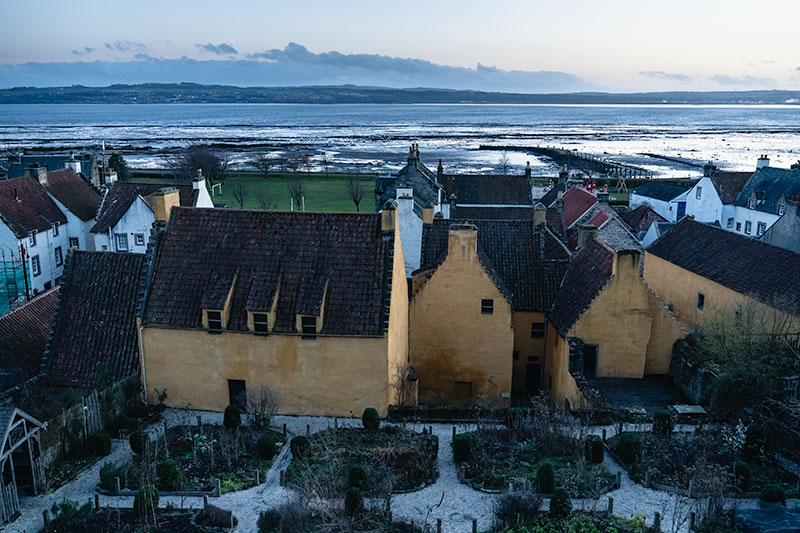
Culross
For Saint Teneu, the waters of the Firth of the Forth embodied a path to a new home. Some 800 years later, a boy was born in Culross who came to see the blue expanse before him as a gateway to the world. Beyond Saint Mungo’s chapel, the market square opens up into Culross proper. Here, opposite the sixteenth century palace, there is a tired looking Chilean flag beating in the wind next to the statue of Lord Cochrane. Born in 1775 to an inventor father who died impoverished, the young Thomas Cochrane went to sea to regain his family’s fortune. Leaving Britain in 1818, he was recruited by the Chilean Navy and took command in their war of independence against the Spanish Colonists. His efforts became legendary. Not only did he play a vital role in the Chilean success, but he helped achieve Peru’s freedom in the process. Soon after, in 1823, he was invited to command the Brazilian Navy in their fight against the Portuguese. He promptly accepted. Cochrane's feared reputation and use of audacious tactics led to the Portuguese abandoning the fight. He went on to liberate other Iberian-held ports along the Brazilian coast, effectively securing the nation's independence. Lord Cochrane was buried in Westminster Abbey in 1860, with the Brazilian minister offering these words: ‘We place these flowers on Lord Cochrane's grave in the name of the Brazilian Navy, which he created, and of the Brazilian nation, to whose independence and unity he rendered incomparable services.’
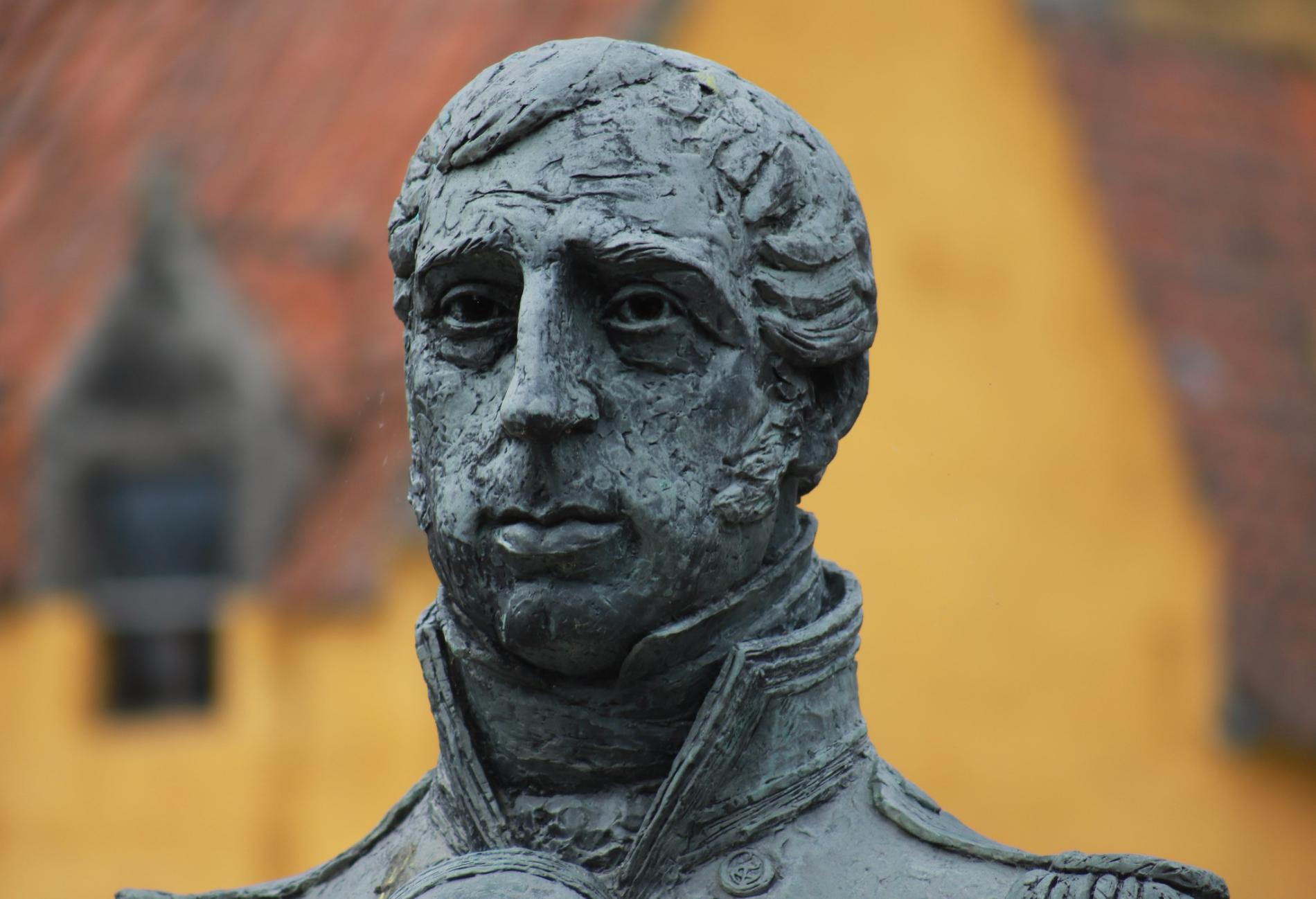
Admiral Lord Thomas Alexander Cochrane
But Fife’s western shores have not only hosted saints and seafarers. They also triggered one of Scotland’s greatest atrocities. Little did I know it took place just beyond my doorstep. With the shoreline now behind me, I walked up the hill and found the sleepy ruin of West Kirk. From here I could see the Ochil Hills rising in the north (the borderline to neighbouring Perthshire) and the behemoth Grangemouth Refinery Spanning the view to the south. In 1675, however, events were directed in a more disquieting direction. It was alleged that in the grounds of the cemetery, right where I stood, four local women would regularly meet and seek out the devil. Between the sixteenth and eighteenth century an estimated 380 ‘witches’ were tortured and executed in Scotland - most by burning. Accelerated by his own disfiguring diseases and religious extremism, King James VI grew convinced that the devil’s secret agents were at work. As there was no law against confession by torture in Scotland, Fife played host to the cruellest of these deaths. In 2020, the Fife Witches Trail was forged to remember some of those women who died, ‘Innocent victims of unenlightened times.’ In nearby Torryburn, an ex-mining village three miles further along the Coastal Path from Curloss, the most notorious victim of Fife’s Witch Trials is commemorated: The Torryburn Witch. Lillias Adie, a young woman accused of having sex with the devil on cloudless nights, was tortured until she confessed. She died while awaiting trial. Adie was buried in 1704 on the mudflats of Torryburn beach under a sandstone slab, preventing the devil reanimating her for their nighttime meetings. The only known grave of a witch in Scotland, the slab was discovered in 2014.
I had gone less than ten miles on my journey across Fife. More than any place I have encountered, this extraordinary country, this kingdom has secrets buried - waiting to be uncovered and restored.
Promoted Post
Stormhouse
Escape to the wild, rugged landscape of Scotland’s west coast, perfectly located between mountain and sea

-full-1741009545.jpg)






 Sign in with Google
 Sign in with Email