
Discovering the nooks and crannies of Fife
History hangs like a sea mist over this green, salty-aired slab of landbetween the Firth of Forth and the Firth of Tay. The so-called Kingdomof Fife – often known simply as ‘The Kingdom’ – spent around half amillennium as the home patch of the Scottish monarchy, and the peninsulastill has a unique character. A place of mellow fishing villages and rollingfarmland, of age-old abbeys and booming coastal views, the region isalso famed worldwide as the home of golf. Mark Twain, who memorablydescribed the sport as a ‘good walk spoiled’, clearly never visited Fife.
Introduction to Fife
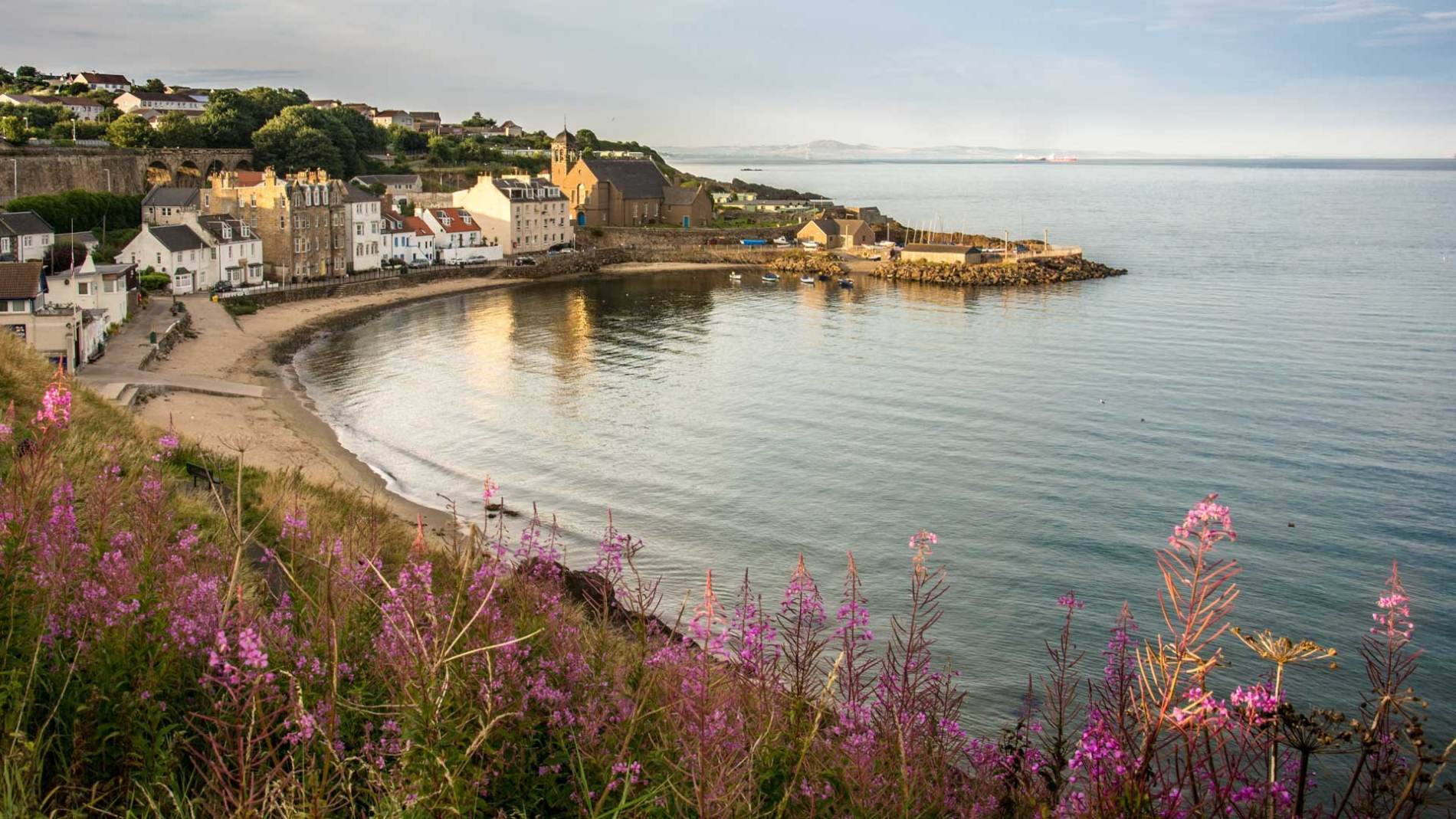
Visitors dreaming of striding along the fairways invariably focus their sights on the historical coastal town of St Andrews, where you’ll also find the third oldest university in the English-speaking world, various medieval remains, and windswept lengths of white sand. But while St Andrews is, without doubt, a first- rate charmer, it’s far from being the only Fife town worthy of your time. Culross, Aberdour, Dunfermline and Kirkcaldy – now there’s a varied bunch – are among those that all offer gems of their own. And then, of course, there’s the East Neuk, a glorious stretch of coastline dotted with little red- roofed hamlets, cloaked in tales of the past, and laced together by the most scenic parts of the Fife Coastal Path. ‘Neuk’, incidentally, is an old word that translates as ‘corner’, and when seen on the map, the headland still juts into the North Sea as if determined to retain its old-world individuality. Venturing further inland, you’ll also discover that this is a part of the country with ample outdoor riches. A particular highlight comes in the form of the volcanic Lomond Hills – also known as the Paps of Fife – which loom above a 25-square-mile spread of lochs, moors and farmland, offering some spectacular day-walks and cycle routes. And, this being Fife, you’ll find plenty of places across the region to indulge in some seriously restorative food and drink.
History
The emerald-green natural peninsula of Fife has always been a place apart. Once an independent Pictish kingdom, it went on to become one of the leading provinces of medieval Scotland, thanks in large part to its prime, sea- facing Lowland location. King Malcolm III, who reigned in the 11th century, chose to settle here in Dunfermline, allowing Fife’s reputation as a royal and political centre to take hold.
Despite its modest size, the region at one point contained almost a quarter of Scotland’s 66 royal burghs, with Dunfermline Abbey providing the final resting place of some of the most important monarchs of the Middle Ages, including Robert the Bruce himself. The country’s first university was founded here in St Andrews, in the 15th century, and both the town itself and the university were subsequently involved in the events of the Scottish reformation. St Andrews also witnessed an occasion of quite different importance in 1754, with the opening of one of the world’s oldest golf clubs, The Royal & Ancient. The region is still generously endowed with remnants of its illustrious past – from monasteries to mansions – and although the fishing trade of past centuries is less prominent than it once was, agriculture and industry remain as mainstays of the local economy.
What it’s best known for
Think Fife, think countryside, coast, history and golf. The region’s craggy, harbour-studded shoreline is to many minds its greatest asset (if you’re walking the Fife Coastal Path, and/or happen to be a seafood-lover, you’re in for a treat), whereas others come for the heritage sites, and perhaps the chance to whack a ball along hallowed fairways. Or, indeed, all of the above.
See & Do
Towns & Villages
St Andrews is the biggest visitor magnet in the region, thanks to its heritage buildings and golfing importance, but Fife as a whole offers much to explore, from history-rich Dunfermline to stuck-in-time East Neuk fishing villages.
Pittenweem
East Neuk
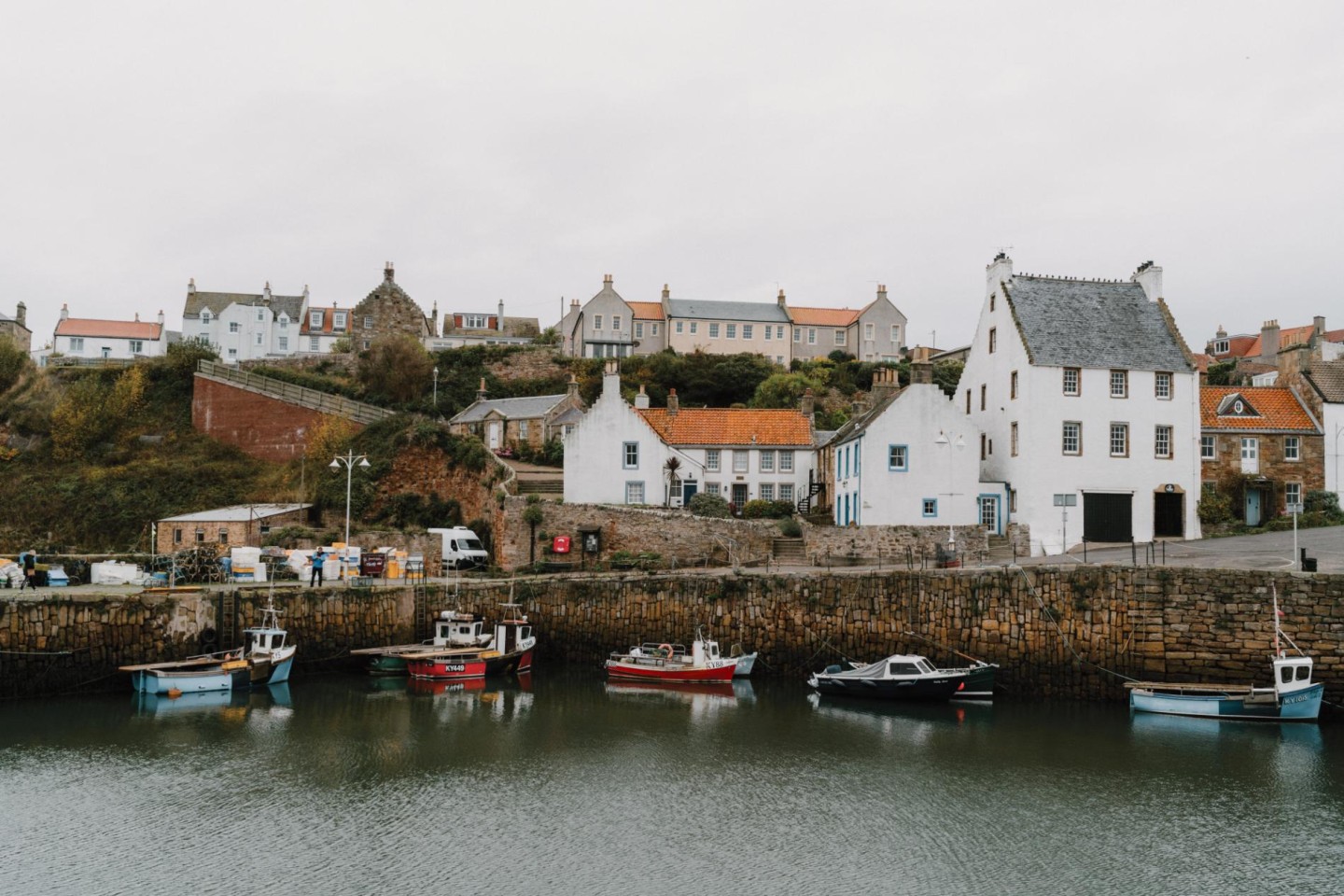
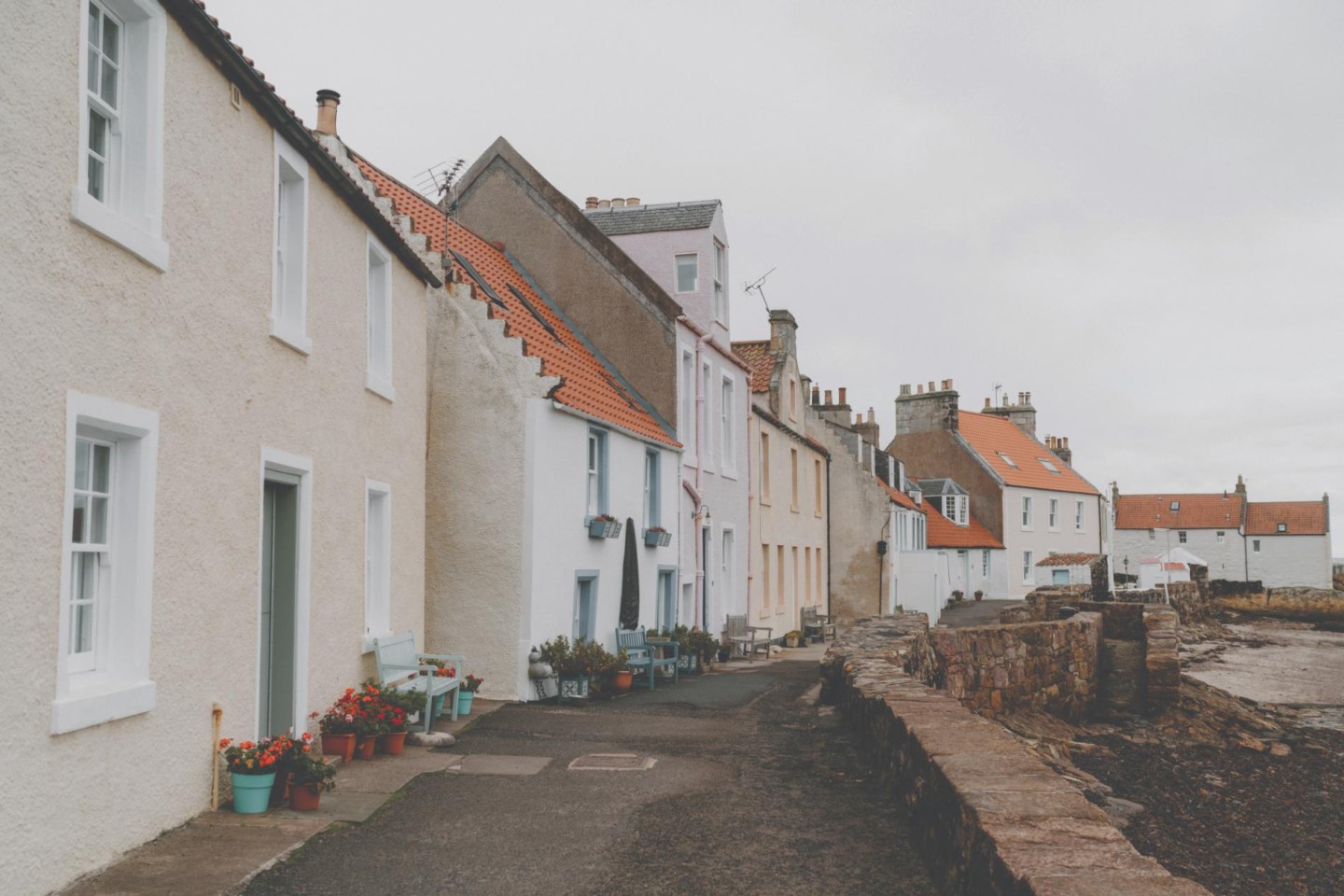
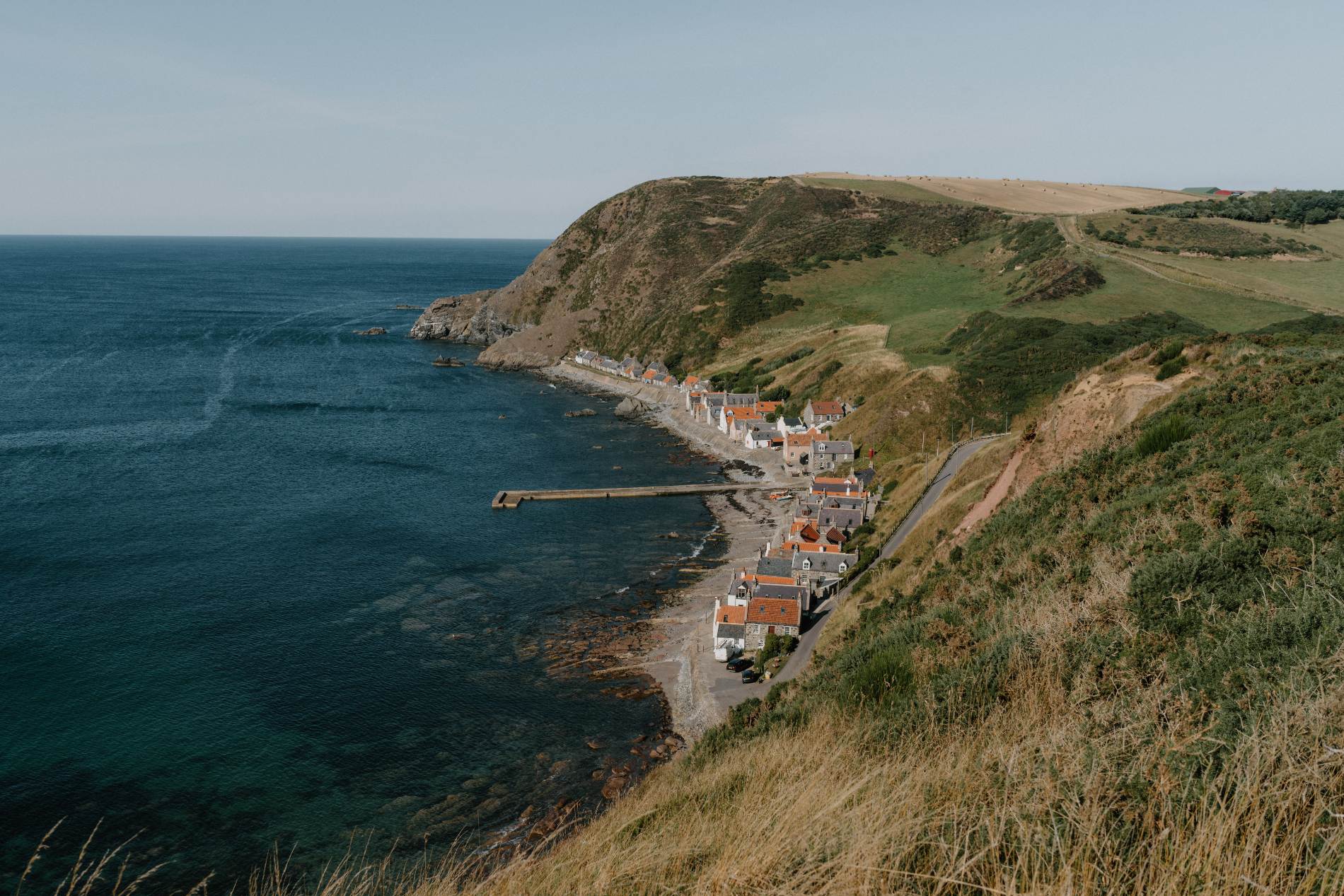
A vision of pantile roofs and fishermen’s cottages, thelittle East Neuk community of Pittenweem is a shiningexample of the handsome harbour villages that dot thelocal coastline. With many resident artists of its own, it’sperhaps best known for its annual summer arts festival, alively event which has been running for some four decades.
Crail
East Neuk
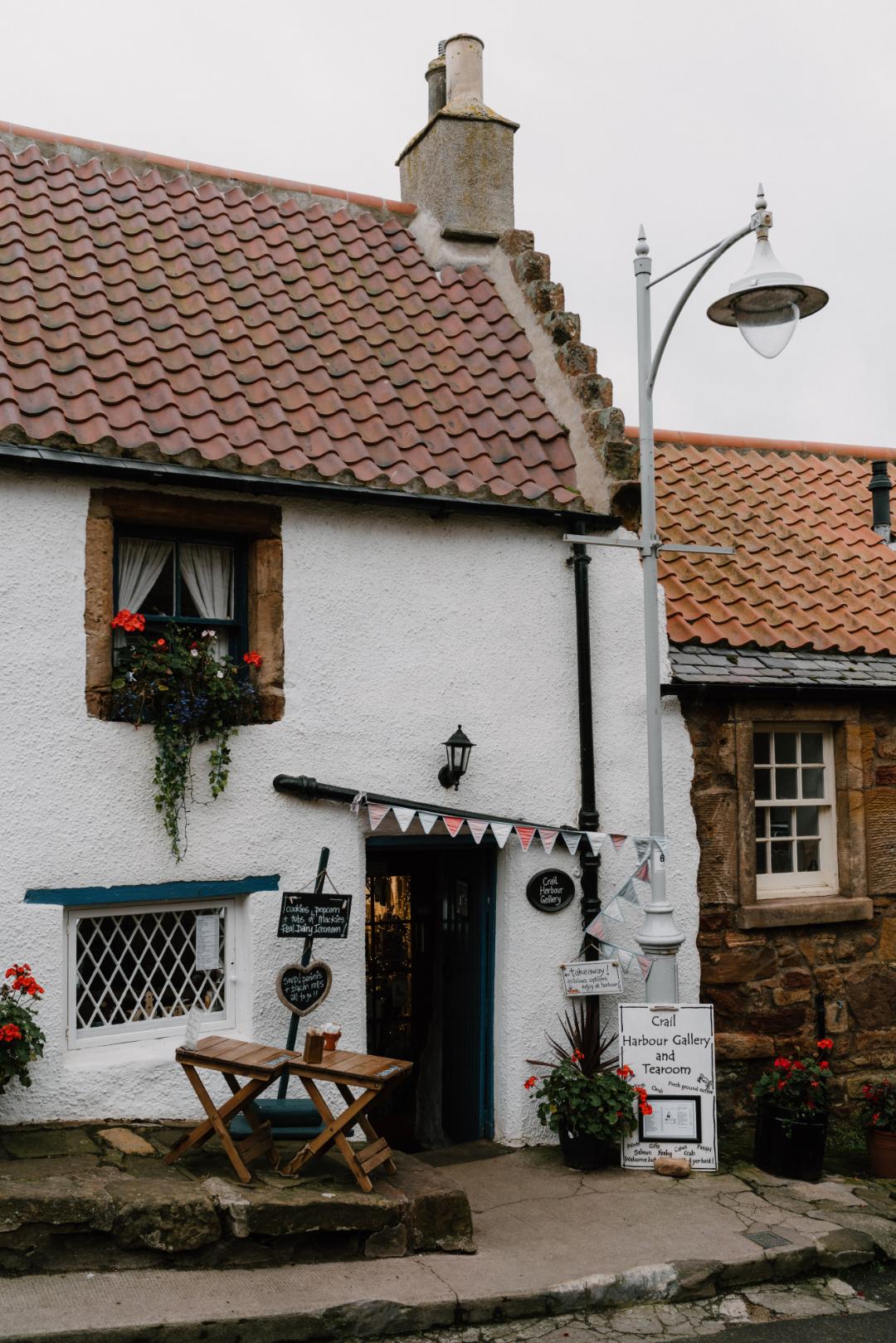
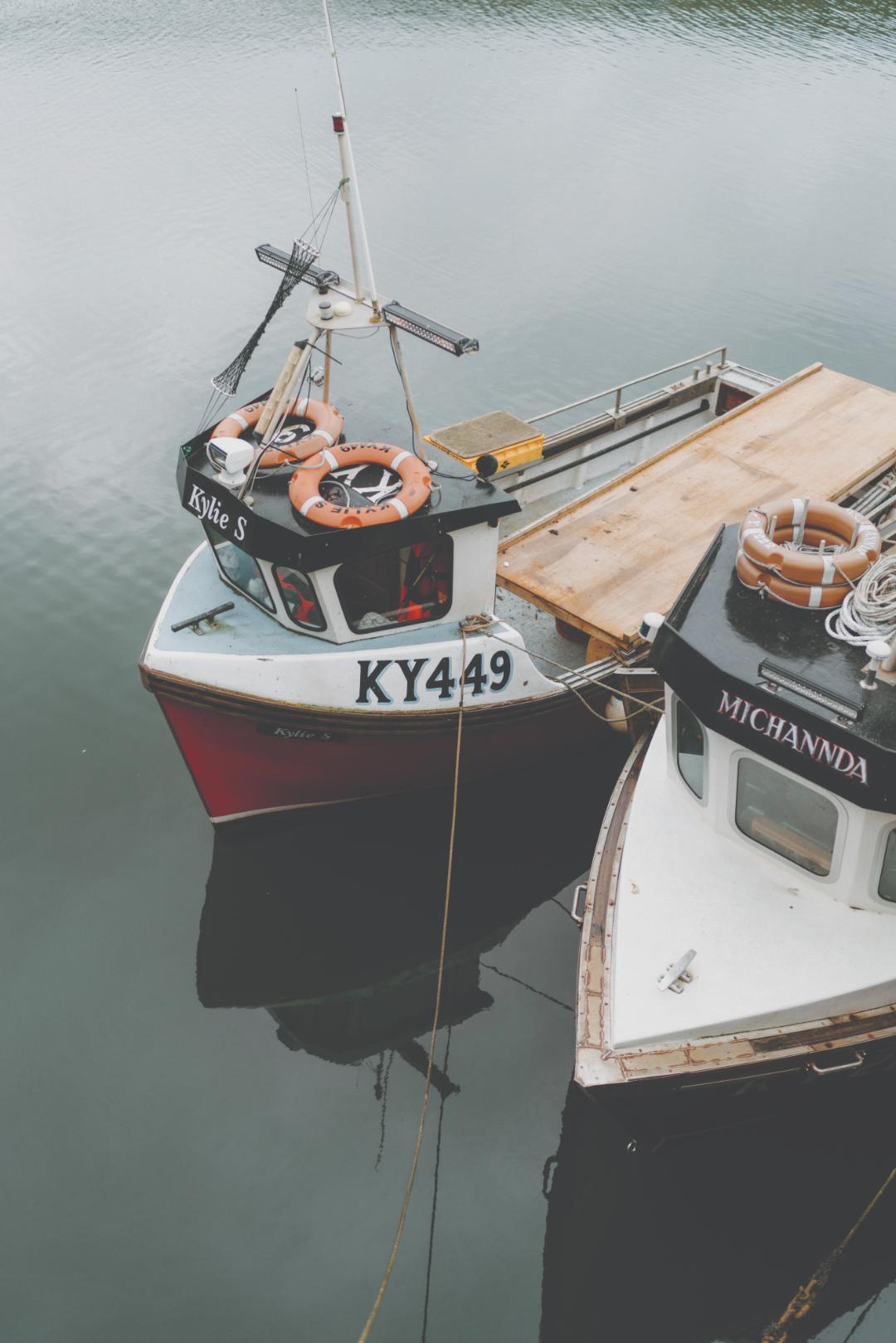
A visit to this historic fishing village and former royal burgh is like an East Neuk checklist. Sloping cobbled streets? Check. Charming little harbour? Check. Top-notch seafood? Naturally. And if you’re a war buff, there’s a deserted airfield- cum-military-academy on the village outskirts, where – improbably – English writers Alan Bennett, Michael Frayn and Dennis Potter were all once stationed.
Anstruther
East Neuk
The largest of the pretty East Neuk fishing villages is visitor-friendly Anstruther, known among other things for its colourful harbour facades, its bobbing masts, and its award-winning fish and chips. Take time too to visit the Scottish Fisheries Museum, home to an extensive collection of historic boats and seafaring paraphernalia, and which has garnered multiple awards of its own.
Culross
Crail
St Monans
East Neuk
Looking out across the Firth of Forth – and mercifully bypassed by the A917 – the age-old fishing settlement of St Monans (occasionally St Monance) is still huddled around a small port, where 17th-century pantiled houses and long piers tell their own stories of the past. Salt production was once a key industry in the village, and the salt pans can still be seen.
St Andrews
As the medieval centre of the Scottish church as well as the home of golf, St Andrews packs a lot of history into one small town. Explore historic ruins, play a round of golf, visit the beach or browse dozens of independent stores. There’s something here for everyone!
Culross
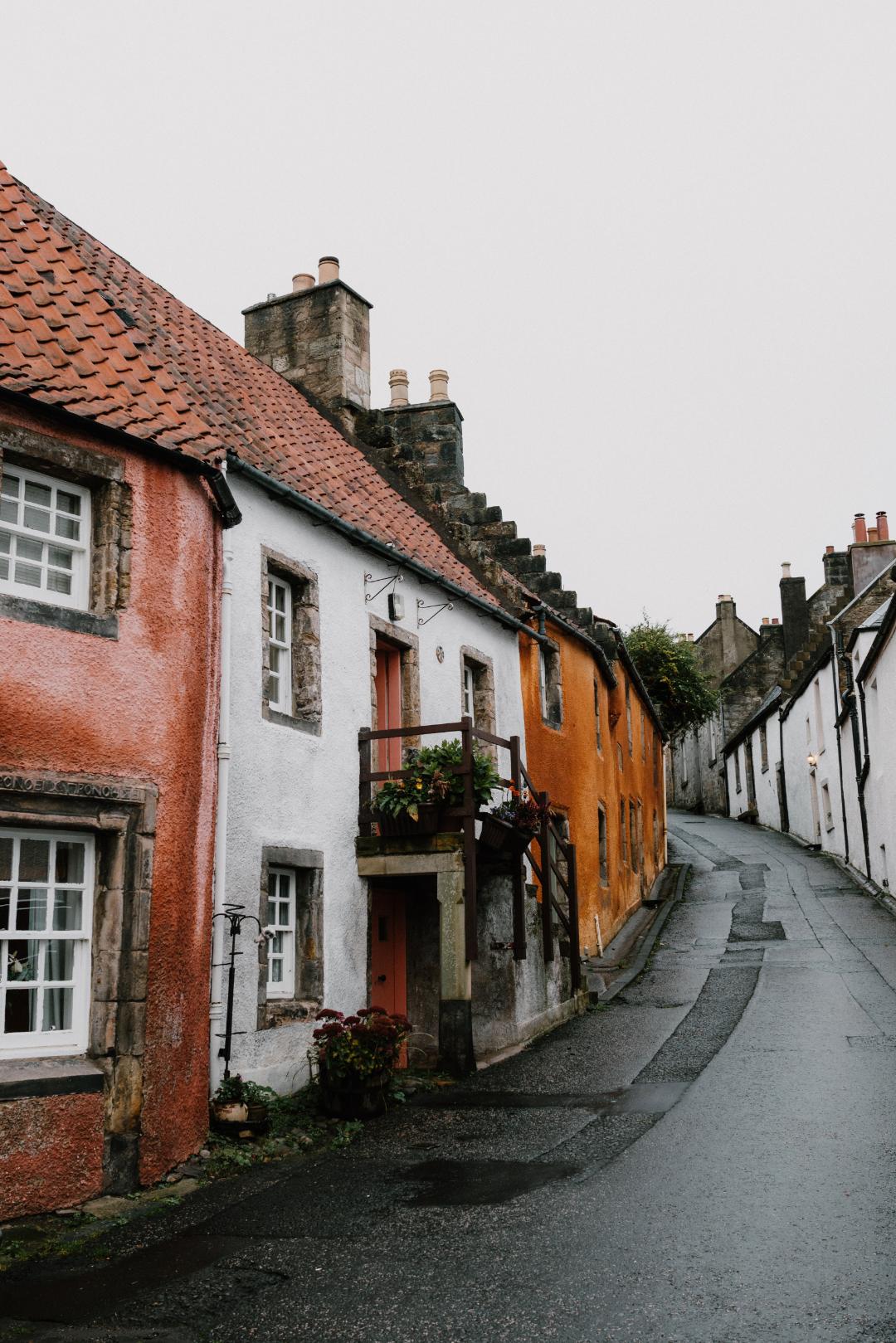
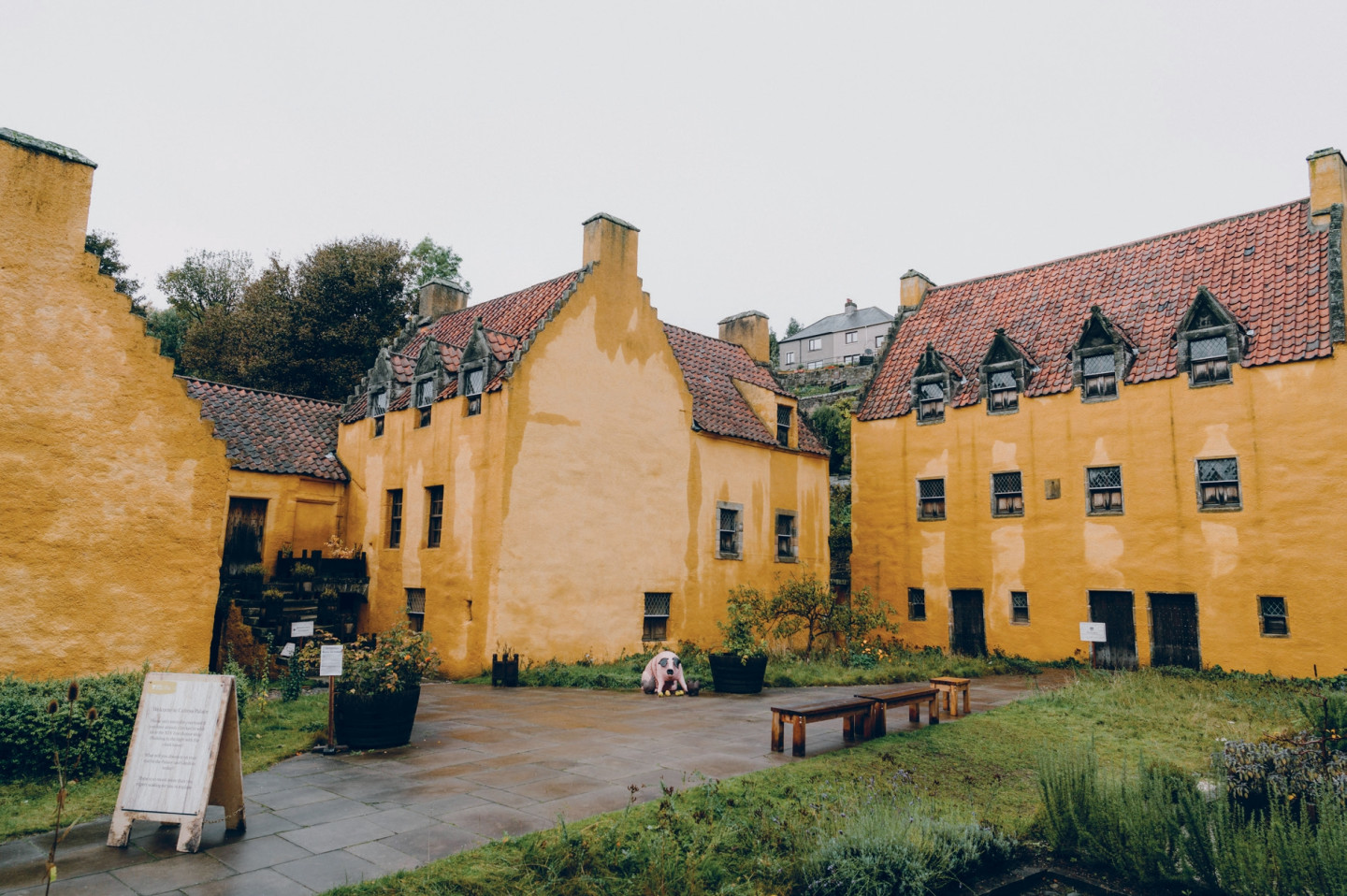
Walking the cobbled streets of the royal burgh of Culross transports you straight back to the 17th century, with only occasional parked cars to break the illusion. Visit Culross Palace, the medieval abbey or just explore the colourful streets, taking in curious details of the historic houses.
Ceres
The beautiful village of Ceres is one of Fife’s most historic settlements. An important stop on the Fife Pilgrim Way, it’s home to the Fife Folk Museum and boasts the oldest free Highland Games, dating back to the Battle of Bannockburn in 1314.
Elie Ness
Crail
Walks, Nature & Wildlife
Cambo Gardens
East Neuk
A grand country estate with a Georgian walled garden and burn-threaded woodland, Cambo sits some eight miles east of St Andrews. It’s particularly renowned for its snowdrops, with more than 350 varieties, but it’s a fine place to explore at any time of year – and the Lost Elf Village play area caters for little ones.
Maspie Den
Falkland
Add together a beautiful glen, a storybook waterfall and a pleasingly slopy walking trail and you’ll have a good idea of what makes Maspie Den a cherished spot among locals. On the outskirts of the former royal burgh of Fife, and falling within the Lomond Hills Regional Park, it’s a cracking spot for a woodland wander. The path takes you right behind the waterfall.
Chain Walk
Elie
Make no mistake: this is not your average seaside stroll. Created by a local blacksmith back in 1929, this is Fife’s version of a via ferrata – a rocky, salty, chain-assisted clamber that stretches for nearly a third of a mile along the cliffs near Elie. It’s a serious undertaking, and you should leave yourself at least two hours to get from start to end. Be sure to check tide times – and remember to pack your head for heights.
West Sands Beach
St Andrews
The opening credits of Oscar-winning 1981 film Chariotsof Fire are some of the most iconic in British cinematichistory, showing two dozen white-clad athletes runningbarefoot through the Fife surf, to the strains of Vangelis’sclassic theme tune. The beach in question was West Sands– then as now, a glorious two-mile stretch of coast on thefringes of St Andrews.
Craigtoun Country Park
Near St Andrews
This landscaped, 47-acre country park sits just a couple of miles from St Andrews, making it an easy bolt-on if you’re visiting the university town. Attractions include a whitewashed ‘Dutch Village’ on a lake, a miniature railway and a café, as well as plenty of eminently walkable wooded grounds. It’s dog-friendly, too.
Elie Ness Lighthouse
East Neuk
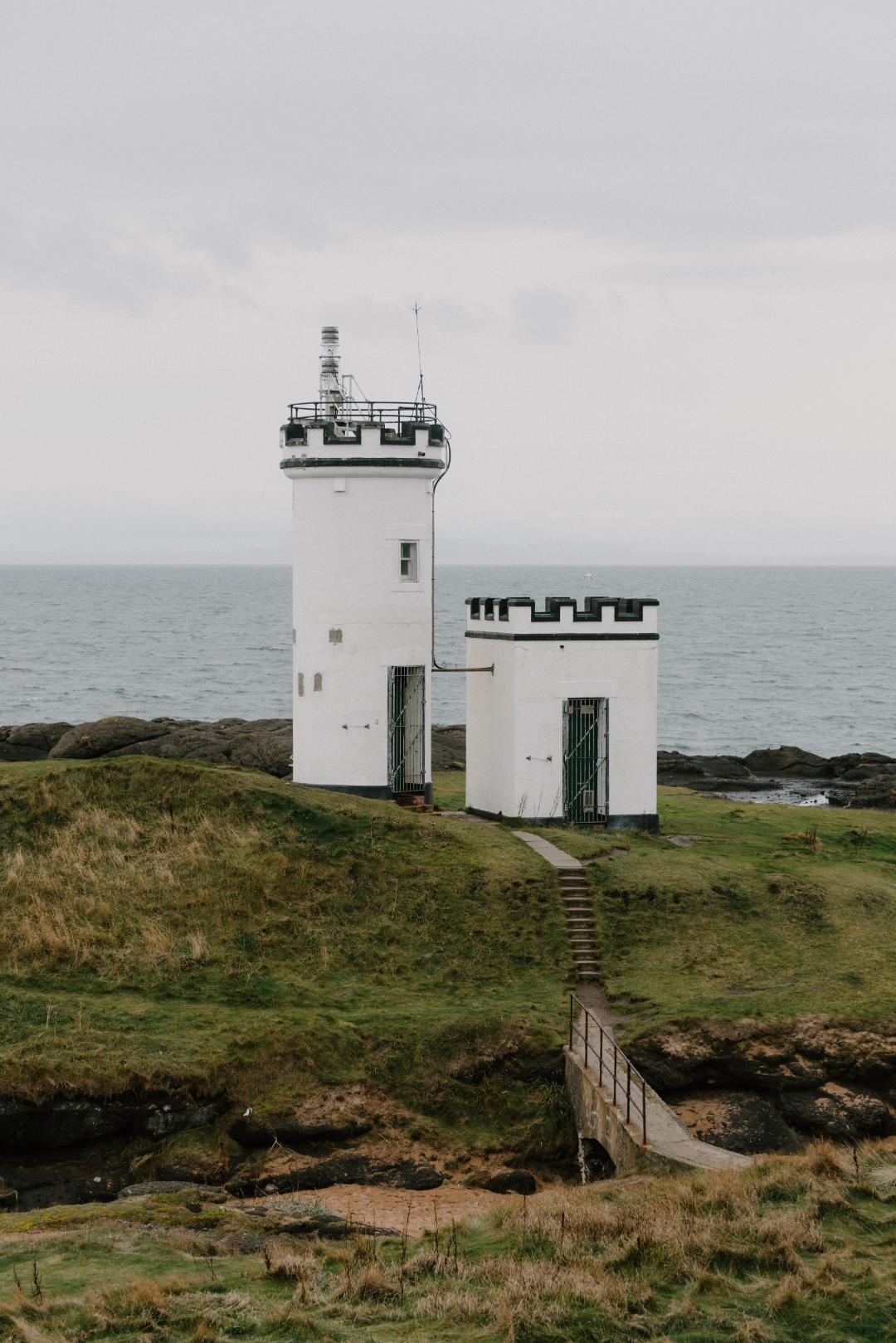
More than a century ago, the waters off Elie Ness could be a torrid place for sailors. In bad weather, the navigational lights on the islands of Inchkeith and the Isle of May became all but invisible in the gales and murk. A mainland beacon was needed, and so was born the solid crenelated bulk of Elie Ness Lighthouse. It’s been in place since 1908, and a small keeper’s cottage still stands alongside.

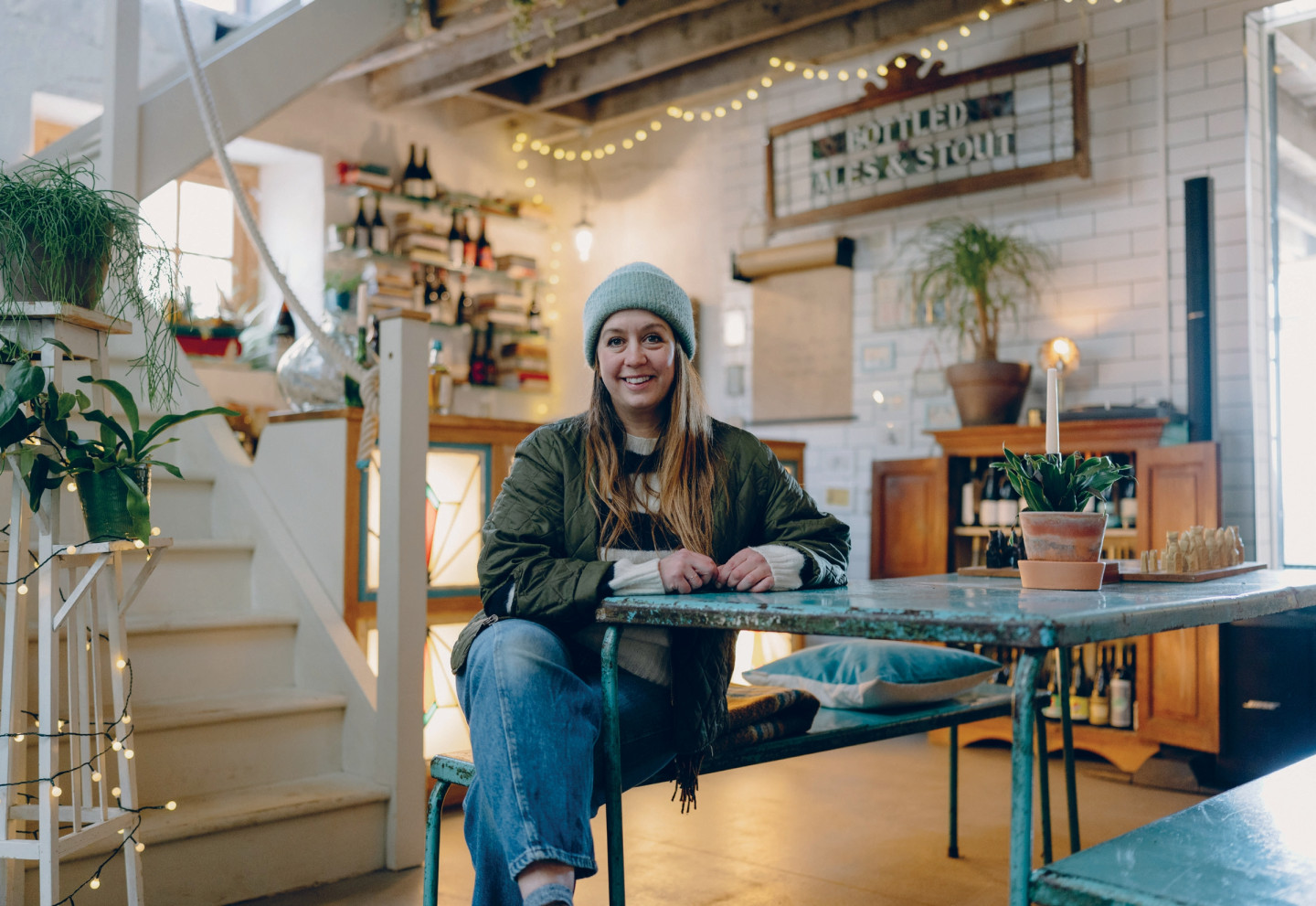
Jaye Hutchison of Aeble
What do you recommend doing in the East Neuk of Fife?
Take a refreshing dip in the sea at Elie, then unwind with a sauna session. Enjoy a delightful cup of coffee and baked goods (we love the cheese scones) at Giddy Gannet. Treat yourself to a tasty lunch at the 17th-century pub and restaurant Kinneuchar Inn. Where the food, drinks, staff and setting are the perfect combination for an incredible dining experience. Of course we have to recommend popping into Scotland’s first cider specialists, Aeble to enjoy a wide choice of ciders, from locally made, traditional west country of a sweet bubbly glass of fence cidre. We would also suggest Cambo Gardens, for the brilliant cafe, walk and woodland play area for children.
The Harbourmaster’s House
Dysart
This solid listed building on the Dysart harbourside has a dual identity. In real life it’s home to Fife’s first ever Coastal Visitor Centre, complete with information on the local region and the coastal path. On screen, meanwhile, the house has appeared numerous times as a period backdrop in harbour scenes for the TV drama series Outlander.
Fife Pilgrim Way
64 mile route across Fife Follow in the footsteps of thousands of pilgrims on Fife’s historic Pilgrim Way. Starting from either Culross or North Queensferry, traverse 64 miles of beautiful Fife countryside on your way to the medieval centre of the Scottish church at St Andrews.
Fife Coastal Path
From the Firth of Forth to the Firth of Tay Hike 117 miles around the Fife coast from the Firth of Forth to the Firth of Tay on the Fife Coastal Path. With beautiful beaches, rocky cliffs, ancient castles and historic fishing villages along the way, every section of the trail brings something new.
Tentsmuir National Nature Reserve
North East Fife
Just a short distance outside St Andrews, Tentsmuir National Nature Reserve is where the forest meets the beach. Peer out from bird hides by Morton Loch, wander through the pines keeping an eye out for red squirrels or climb sand dunes to spot seals stretched out in the sun.
Elie Seaside Sauna
Elie
Recover from the chill of a typical trip to the Scottish seaside by hopping into the Elie Seaside Sauna. Found in a converted horsebox perched at Elie Harbour, the unbroken views across the water from the glass wall are worth visiting for alone
Lady Jane Tower
Unusual & Interesting
Newburgh Bear
Newburgh
You’re not hallucinating. Etched into the hills above Lindores Abbey Distillery is the giant outline of a bear clutching a ragged staff, a symbol that commemorates the links between the abbey and the Earl of Warwick, whose coat of arms the animal represents. Despite its historical roots, the bear on the hill only dates back to 1980. Its outline is periodically lit by cans of petroleum, to spectacular effect.
Hamish McHamish Statue
St Andrews
Between 1999 and 2014, a ginger cat who gloried in the name Hamish McHamish became famed around St Andrews for his daily wanderings through town. So famed, in fact, that he went on to become the subject of a children’s book, amassed several thousand Facebook followers, and is now immortalised in the form of a bronze street statue.
Lady’s Tower
Elie
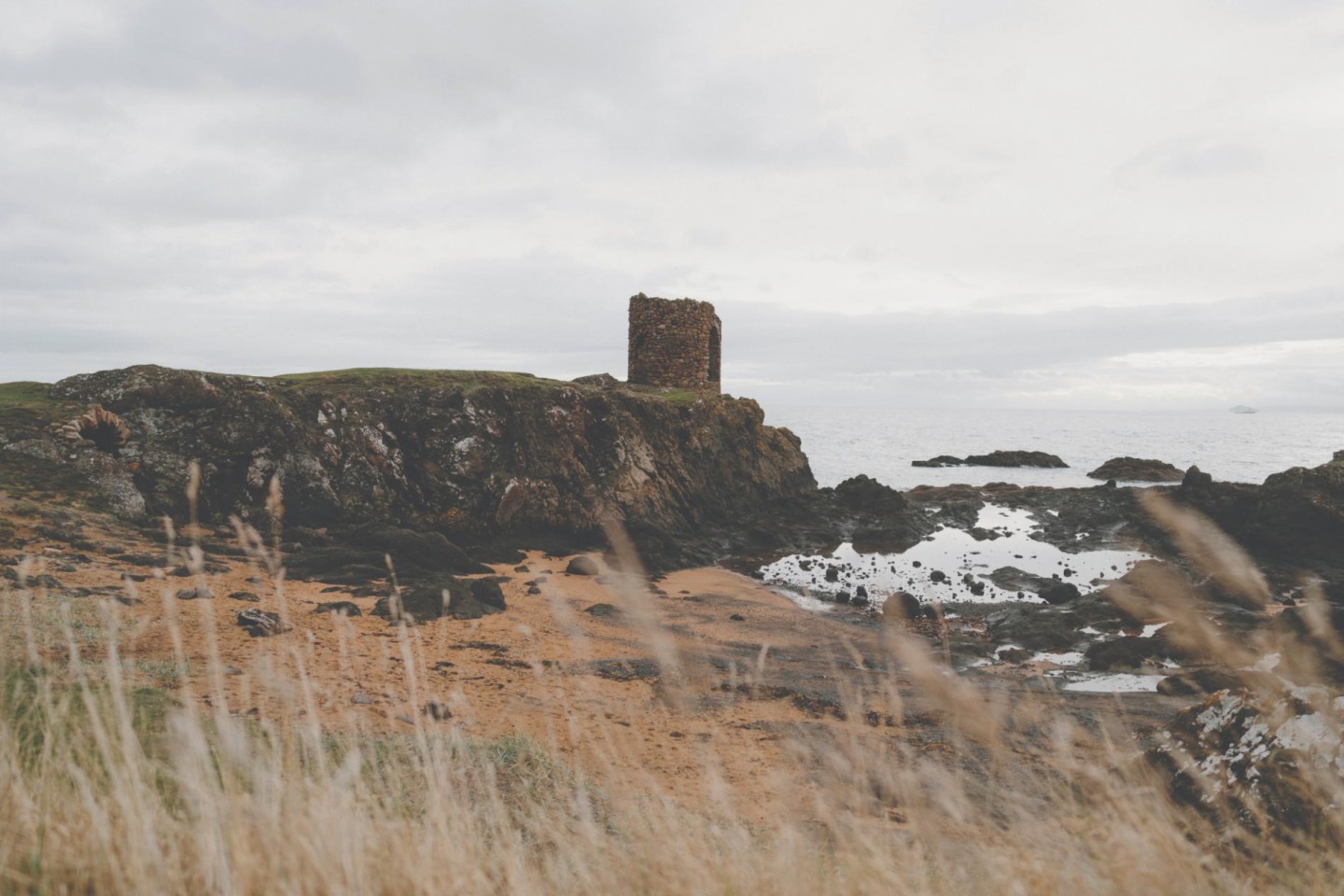
Naked sea-swimming was all the rage in the 1770s, particularly among the upper classes. So when Janet Fall – part of a wealthy local family and renowned for her beauty – decided she needed a place to preserve her modesty while undressing, this little stone tower was built above Ruby Bay. Now roofless, the bespoke changing room still gives deep views out to sea.
Scotland’s Secret Bunker
St Andrews
For some four decades, concealed beneath an ordinary- looking farmhouse near St Andrews, 2,200 square metres of secret rooms were hidden deep below ground. The double- storey bunker – essentially the size of two football pitches, one above the other – was intended to be the base from which the country would have been ruled, in a nuclear fall- out situation. Now a visitor attraction surrounded by tanks, it’s every bit as intriguing as you’d expect.
Culross Witch Trials
Culross
One of Fife’s grislier claims to fame is that between the 16th and 18th centuries almost 400 local people, mainly women, were convicted of witchcraft, with many of them being tortured, burned and executed. The most famous, Lilias Adie, was forced to confess to fornicating with the Devil. A trio of plaques have now been placed along parts of the Fife Coastal Path to commemorate these maltreated women, at Culross, Valleyfield and Torryburn.
St Fillan’s Cave
Pittenweem
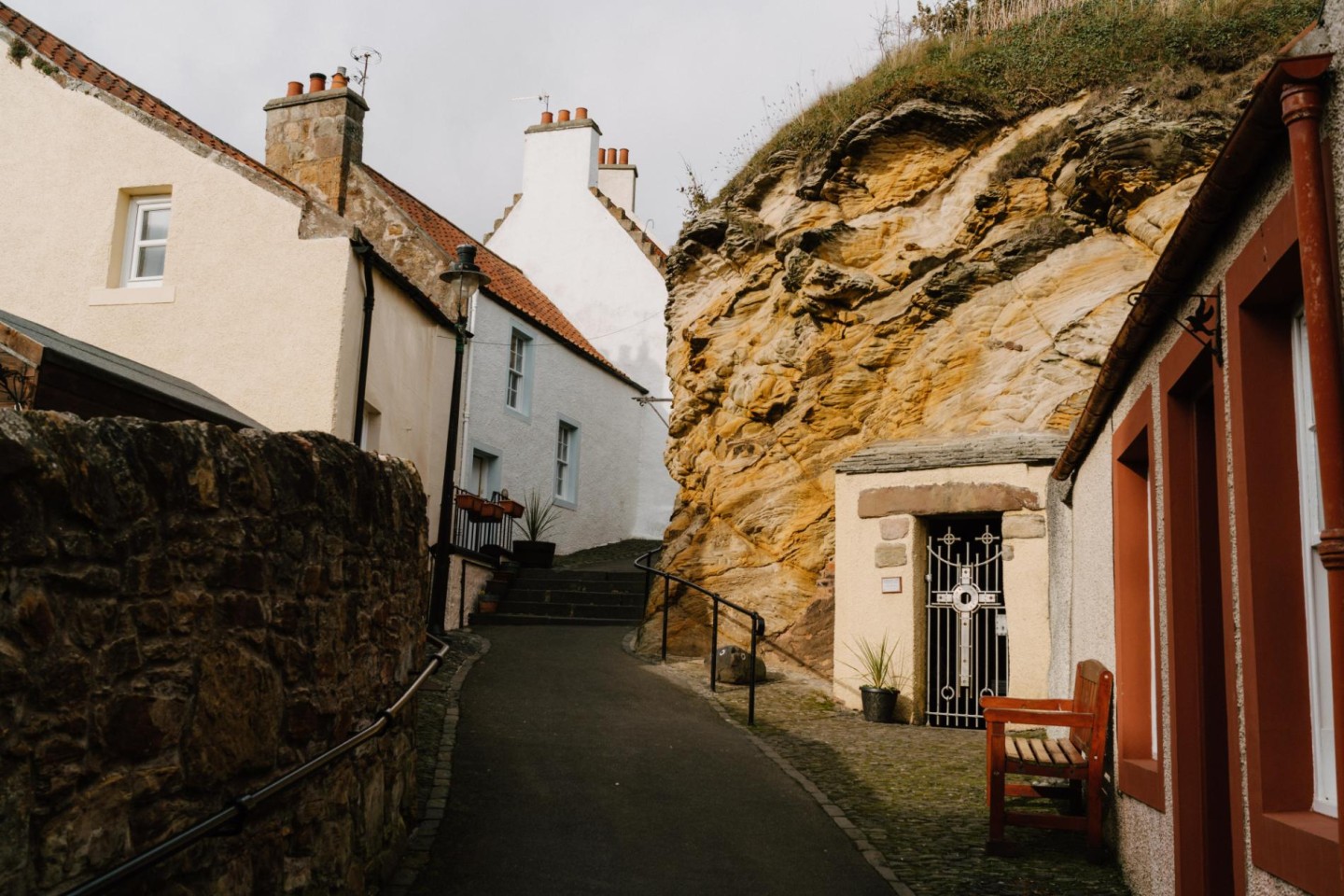
Behind a metal, cross-embossed gate on a footpath in Pittenweem, you’ll find a small cave with an unusual tale. A 7th-century missionary named St Fillan used the rock hollow as a residence of sorts, while attempting to convert the locals to Christianity. According to legend, because he struggled to read and write in such gloomy surrounds, the powers above blessed him with a glowing arm.
Kingarrock Hickory Golf
Near Cupar
Titanium and graphite clubs? Pah! Golf with hickory- shafted clubs, or hickory golf, is a traditional variety of golf that its proponents argue brings more ‘feel’ into the swing. Here at Kingarrock, the nine-hole course is dedicated to this older form of the game, and you’ll be supplied with five original clubs from the early 20th century, as well as replicas of balls from the same era.
Welly Garden
St Monans
A rainbow array of flora-filled wellington boots form the unlikely focal point of this seasonal attraction in St Monans, the bonkers-but-brilliant brainchild of a local schoolteacher, who found herself in possession of wellies that her grandchildren had outgrown. From small beginnings, the community became involved, and these days up to 200 pairs can be seen on the village slipway each summer.
Did you know?
The world’s oldest tennis court still in use can be found in Falkland Palace. Mary Queen of Scots shocked her courtiers by playing the game here while wearing trousers rather than a dress.
Dunino Den
Dunino
Tucked among ferns in a green gorge near Dunino, thispeaceful pagan site is almost impossible to date, whichonly adds to its otherworldly aura. A carved well and amysterious footprint form the den’s centrepiece, while thesurrounding branches are filled with colourful devotionaltokens from modern-day visitors.
Bunnet Stane
Near Gateside
Looking like some giant sandstone mushroom, the BunnetStane (or Bonnet Stone, so named because the upper partof the formation is shaped like a floppy hat) is the result ofcountless centuries of natural erosion. Adding to the air oflegend that surrounds the stone, a manmade cave has beenhewn close by, said to have once played home to hermits.
The Priory Doocot
Crail
More than 100 doocots – dovecotes, or pigeon houses –still dot the lands of Fife, dating back to a time when thebirds were valued for their meat and eggs, their warmfeathers, and their fertile droppings. The best known is thistall, 16th-century, beehive-shaped structure, which hasbeen carefully restored to allow visitors.
Aberdour Train Station
Aberdour
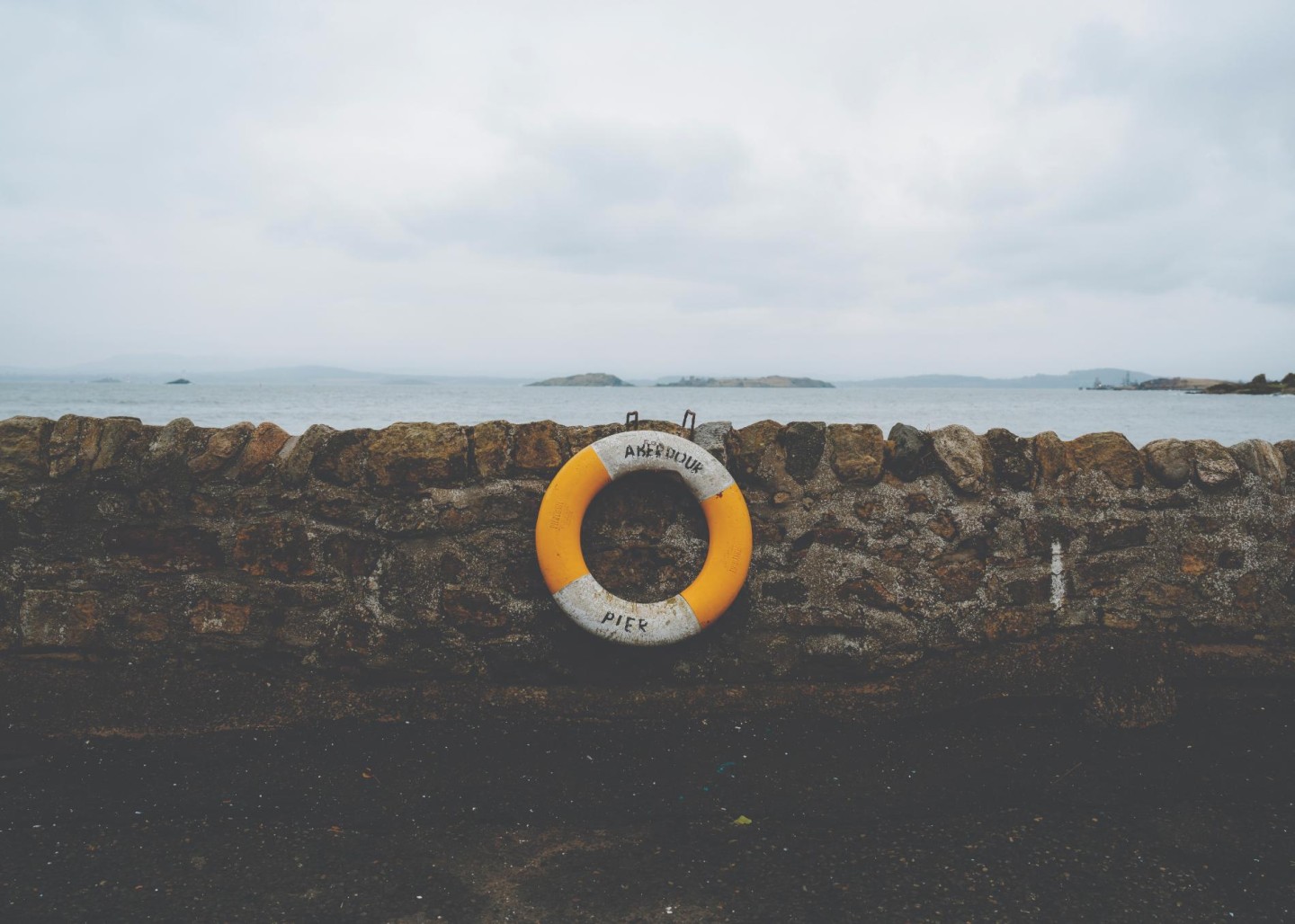
Previously voted the Best Small Station in the UK,Aberdour’s attractive station has been in place since 1890,forming part of the Fife Circle Line linked to Edinburgh. Aswell as its neat, pitched-roof architecture, it’s also knownfor its flower displays, and the fact that its signal box has been transformed into an artist’s studio.
Wemyss Caves
East Wemyss
Proving that nature’s work is so often the greatest wonderof all, these six sea caves near the village of East Wemysswere shaped by the perennial battering of the elements andnow form part of a designated national monument. Theirdamp, dark walls are covered in marks and inscriptionsthat hark back as far as the Bronze Age.
Margaux Larg of Salt & Pine
Other than Salt and Pine, where are your top foodie places to visit in Fife?
Fife has so much to offer in terms of food and drink, Ben and I are still to venture outside of North East Fife to find some more gems but our three favourite places to visit on our days off are The Cheesy Toast Shack for their renowned toasties oozing with cheese, Dook coffee which is a great spot on West sands to hang out at the weekend with DJ’s playing where you can enjoy some tasty sandwiches, great coffee or a drink on the sun and finally Cambo garden cafe where Gillian serves up the most wholesome healthy food in a lovely setting near Kingsbarns.
History
Standing Stones of Lundin
Near Leven
Lundin Ladies Golf Club is one of the oldest courses in the world to have a wholly female membership. It’s also the only course in the world to have three megalithic standing stones in the middle of the second fairway. Dating back some 4,000 years and made of sandstone, the trio reach heights of up to 5 metres: golfing obstacles to some, prehistoric jewels to others. It’s possible to walk to see them if you ask at the hut by the entrance.
Lochore Castle
Near Crosshill
The photogenic 14th-century ruins of the Lochore Castle towerhouse form part of the 1,200-acre Lochore Meadows Country Park, which is slung around the banks of Loch Ore itself. The park is a fascinating place, having been created in the 1960s and 1970s on a landscape ravaged by the coal industry: its reincarnation into a lush swathe of rural countryside is an impressive one.
Ravenscraig Castle
Kirkcaldy
Perched on a windswept clifftop above Kirkcaldy Beach, ravishing Ravenscraig Castle is thought to date back to 1460, and the reign of James II. Its gappy masonry and bulky foundations are these days exposed to the elements, but its thick walls were originally built to withstand heavy cannon fire.
St Margaret’s Cave
Dunfermline
More than 900 years ago, at a time when Dunfermline was essentially the seat of Scottish power, the devout Queen Margaret would come to this quiet grotto to pray. She was the wife of King Malcolm III and the mother of eight children – including three future Scottish monarchs – yet still found time to live a deeply spiritual and charitable life, becoming a saint after her death in 1093.
Dunfermline Abbey
Dunfermline
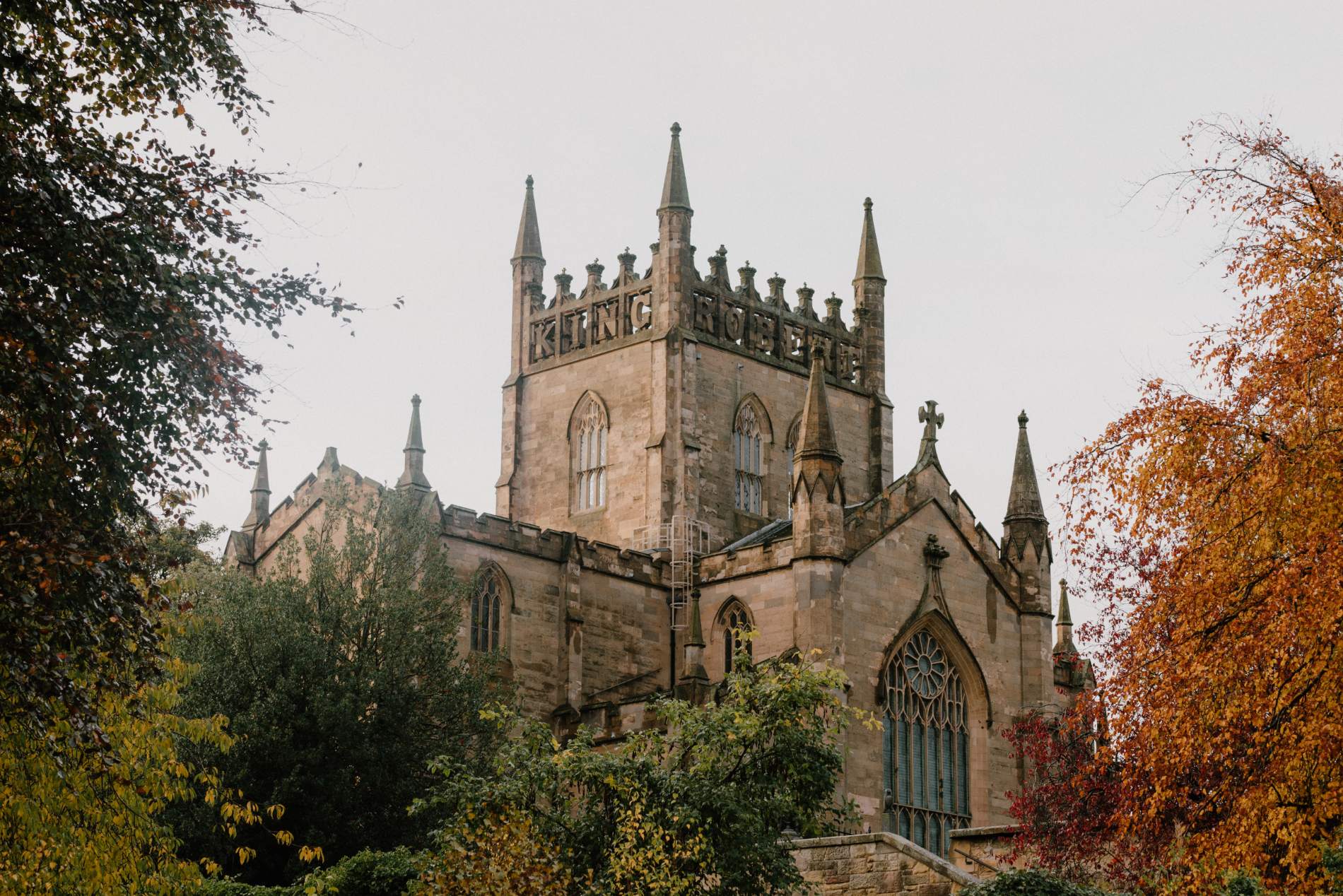
Robert the Bruce is buried in this imposing neo-Gothic kirk, his name still spelt out in capital letters on the tower parapet. It’s one of countless points of interest to draw you to this absorbing cultural site, which stands next to the remains of a Romanesque abbey and also serves as the final resting place of many other Scottish royals. Don’t miss the Tiffany stained glass window commissioned by philanthropist Andrew Carnegie.
Culross Palace
Culross
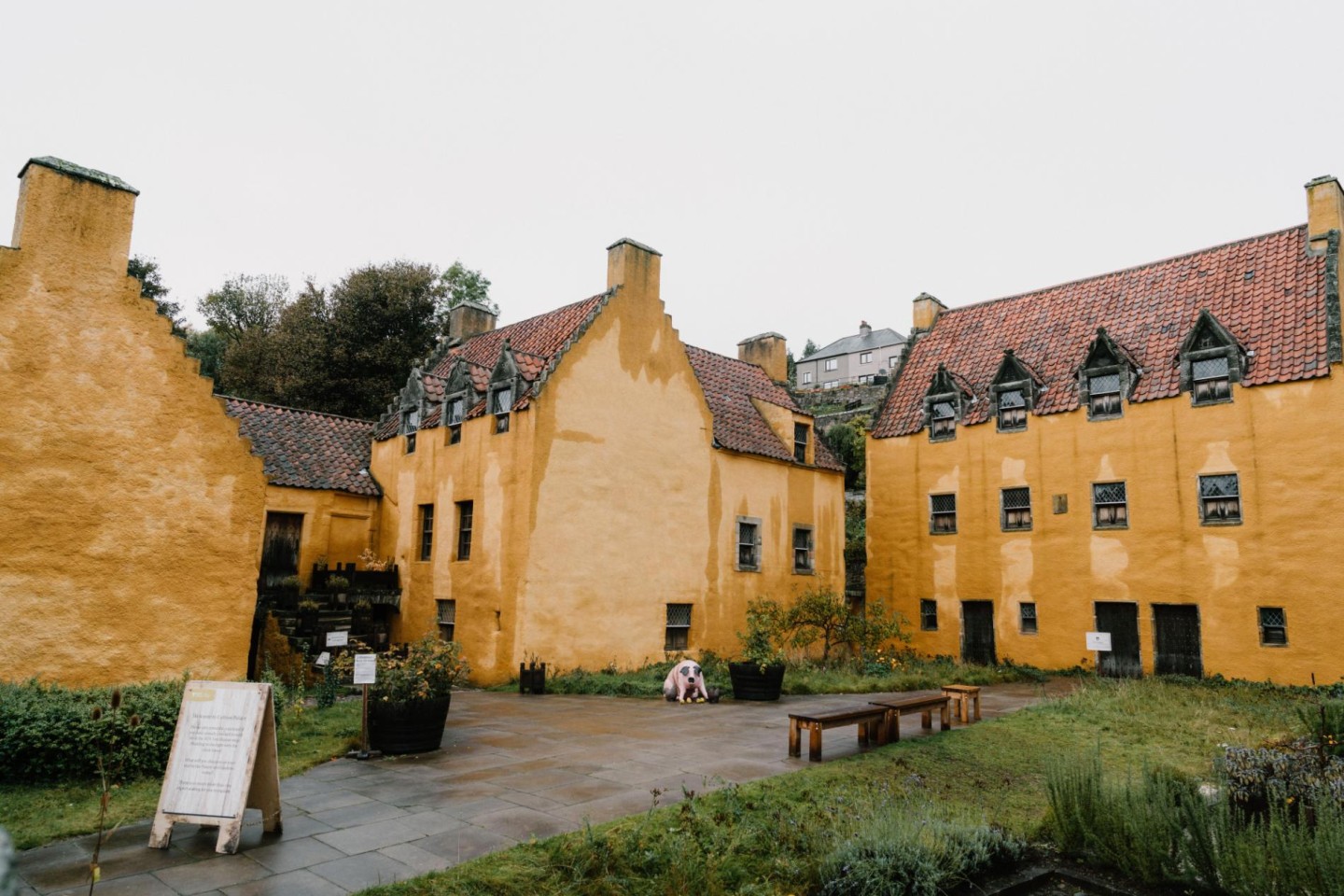
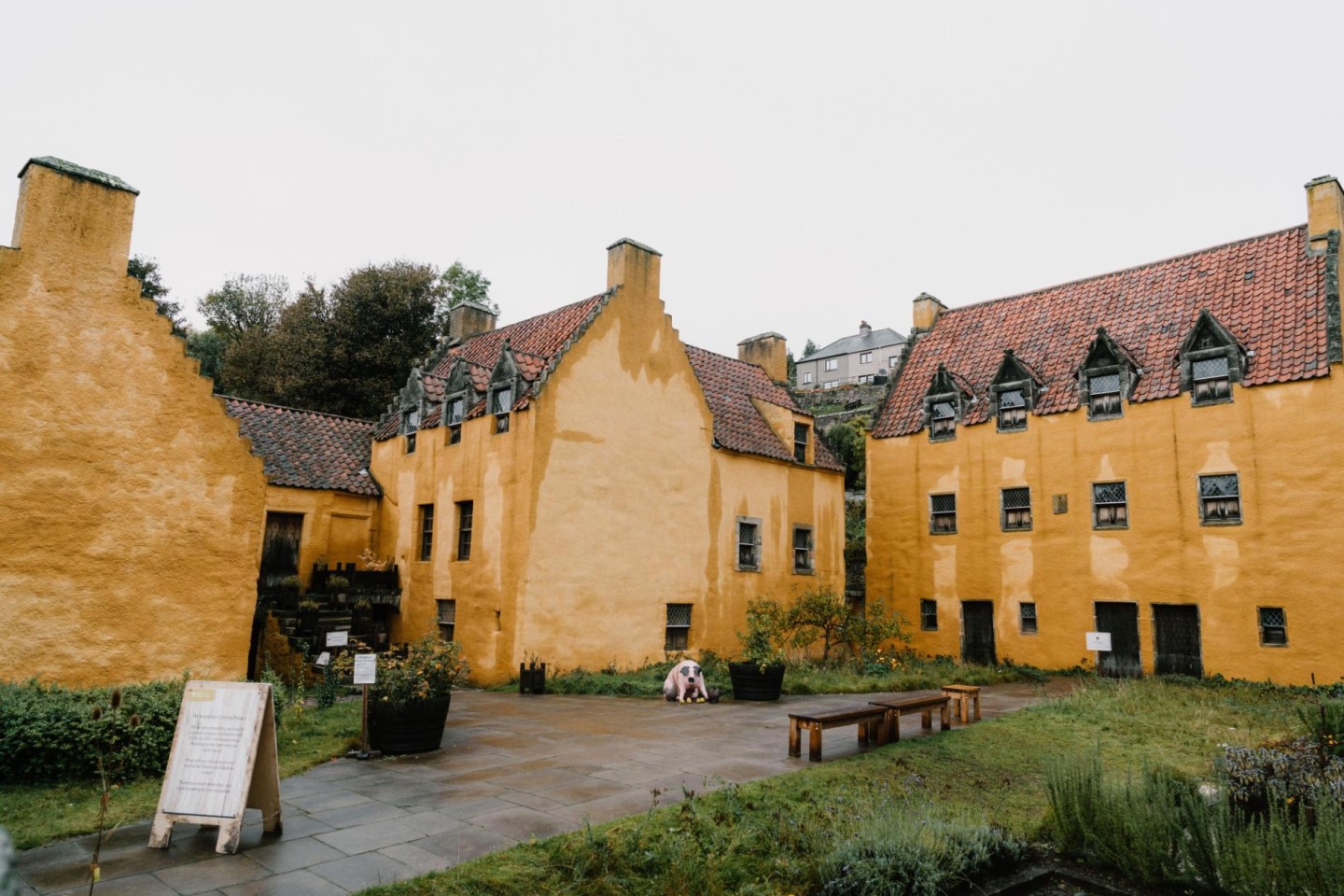
The picturesque former royal burgh of Culross – pronounced ‘Coo-riss’ – is full of interesting corners, but this ochre-hued palace is a highlight. Once the home of a rich coal merchant, its 17th and 18th century interiors have been carefully restored, while the well-tended palace garden is another delight. Remarkably, the whole property was near-derelict when purchased by the National Trust for Scotland in the 1930s.
Inchcolm
Firth of Forth
The presence of a stunning 12th century abbey – the best preserved group of monastic buildings in Scotland, no less – helps give this fascinating Firth of Forth island its nickname ‘The Iona Of The East’. You’ll also find two lovely beaches, plenty of coastal birdlife and a series of wartime fortifications, including a WWI ammunition tunnel.
Culross Abbey
Culross
St Mungo, the founder of Glasgow, is thought to have once been a member of the early Christian community that sprung up here in Culross. The abbey site was once home to a Cistercian monastery, originally built in the 1200s; among the present-day ruins, a parish church still stands.
St Monans
Auld Kirk
St Monans Crouched on a weather-beaten cliff-edge under a distinctive octagonal tower, St Monans Auld Kirk is thought to be the closest to the sea of all Scotland’s churches. It’s been a landmark since the Middle Ages, with the current structure dating back to the mid-1300s, and the graveyard that still surrounds it stands in silent testament to the often perilous East Neuk fishing industry.
St Andrews Cathedral
St Andrews
The tall but fragmented ruins of St Andrews Cathedral – eternally open to the coastal elements – are all that remains of what was once the grandest medieval church in Scotland. Much of its importance was down to the fact that relics of St Andrew, their provenance unknown, were apparently brought here in the 700s. The cathedral museum is well worth a look, and includes a remarkable 1,250-year-old shrine to a Pictish king.
Falkland Palace
Falkland
The forerunner of lawn tennis was real tennis – a quirky, wall-enclosed game played with long-handled rackets – and this historic Falkland residence still boasts one of the oldest UK courts in existence. It’s one of many reasons to pay a visit to what was once the preferred country retreat of the Stuarts, a mansion that still exudes a heavy Renaissance influence.
Aberdour Castle
Aberdour
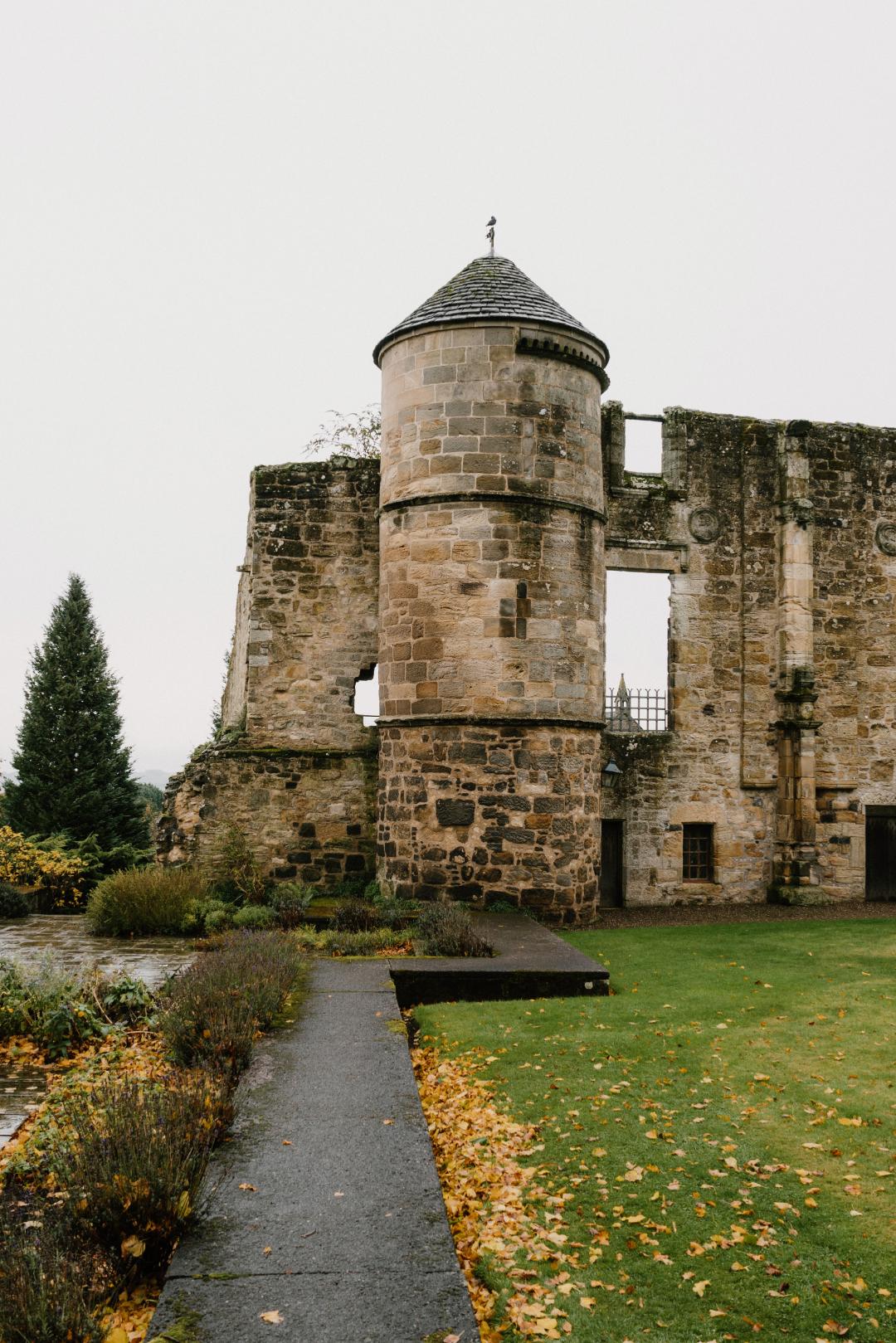
Built in the 1100s and still a handsome sight, Aberdour’s Castle is – according to some sources – possibly the oldest standing castle in the whole of Scotland. Today’s structure is partly in ruins (they’re good ruins, mind), and has been largely unmodernised since the 1720s, leaving a fascinating world of painted ceilings, walled gardens and crumbled towerhouses.
Kellie Castle & Gardens
Arncroach
This towering castle was once overgrown and abandoned, before being brought back from the dead in the 1870s, when an Edinburgh law professor commissioned a painstaking restoration of the property. It’s now a gem of a Victorian mansion, with an Arts & Crafts garden.
Abbot House
Dunfermline
Resplendent behind a glowing pink exterior, Abbot House is thought to be the oldest building in Dunfermline. It dates back to around 1450 and was likely the residence of the abbot – being mere steps from the abbey itself – and its bulky stone walls were secure enough to survive the Great Fire of Dunfermline in 1624. Having spent several years closed due to a lack of funding, it’s now open to visitors once more.
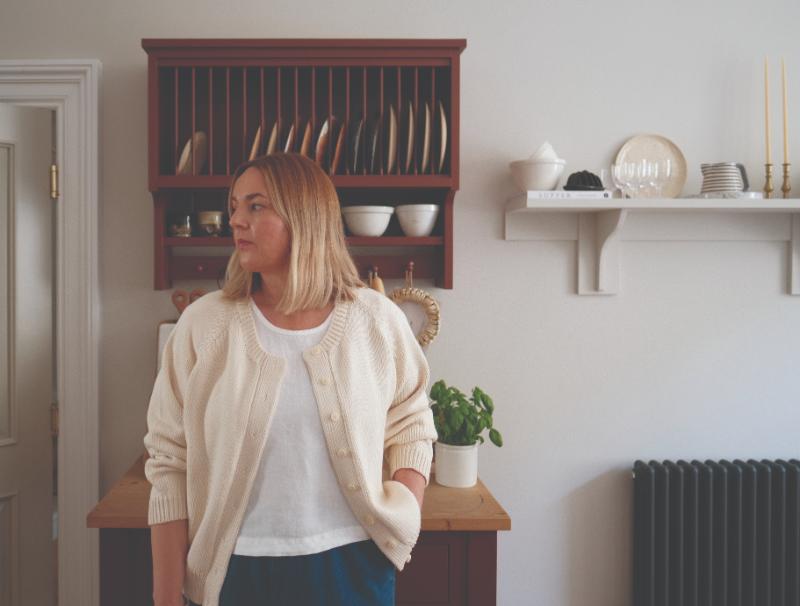
Laura Wilson - The Dundonald
What would you say makes Culross so special?
Culross is more than just a picturesque village steeped in history; it’s our cherished haven where community spirit thrives. Nestled amidst stunning landscapes, its coastal paths and historical routes give us a glimpse into the past, adorned with abbeys, a palace, and castles. What I feel truly sets Culross apart is its community feel. From the beloved community- owned pub, The Red Lion, to quaint galleries and cafes, everywhere filled with local life. And with its perfect location for day trips to hills, cities, and beaches, Culross beckons adventurers of all kinds, promising an memorable experience for everyone who visits
St Andrews Old Course
St Andrews
Known as the Old Lady – and boasting a story that reaches back to the 15th century – St Andrews’ world-famous Old Course is said to be the place where golf was first played. This is some claim, when you consider how far the sport has spread in the intervening 600 years, and fittingly it’s some course. The Open Championship has been held here dozens of times, and if you’re keen to have a round yourself, you’ll need to enter the course’s traditional 48-hour ballot.
The R&A World Golf Museum
St Andrews
Well, the home of golf needs a good museum, after all. Within a ‘fore!’ shout of the Old Course itself is this excellent overview of what makes the venue – and the sport – such a special one. The exhibits delve back into the history of the game, covering everything from equipment and design to famous players and classic championships.
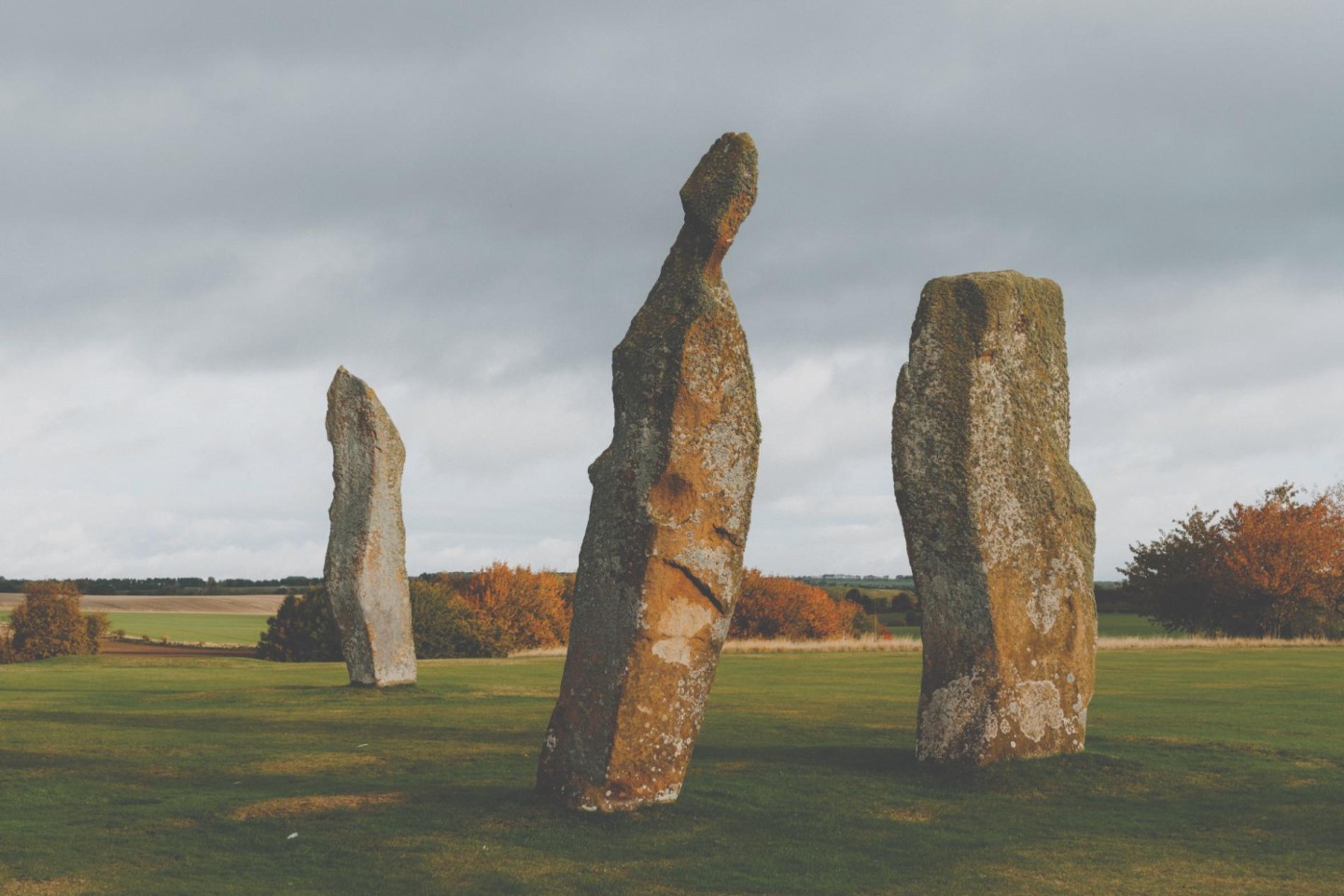
Standing Stones of Lundin
Eat, Drink & Shop
The Kingdom’s mix of opengreen farmland and amplecoastline spells good newsfor hungry visitors – andthere are treats aplenty forthe thirsty, too. The seafoodis an obvious highlight,but this is also a region ofcheesemakers, chocolatiersand drink connoisseurs.
The Dreel Tavern
Anstruther
In one of Anstruther’s most historic buildings, the DreelTavern serves up delicious local produce supplied fromFife fields and North Sea fishermen, with a roaring openfire adding to the rustic feel and keeping the chill away oncold nights.
Bread & Butter
Anstruther
With great cooked food, delicious baked treats and afriendly atmosphere, the dog-friendly Bread & Butter hasquickly established itself as one of Anstruther’s top cafés. In the evenings, the café transforms into a popular live musicand storytelling venue.
Bowhouse
St Monans
Bridging the gap between local producers and the public,Bowhouse Market was set up by the Balcaskie Estate toshowcase the amazing larder of the East Neuk of Fife. Aswell as monthly market weekends, there are permanent in-house traders such as the Bowhouse Butchery.
Baern
St Monans
Situated in the courtyard at Bowhouse, Baern serves upincredible coffee along with cakes, pastries, a cooked menuand possibly the best cheese scones in Fife. Expect to findlocal produce sourced just metres away from the butcheryand Scotland the Bread!
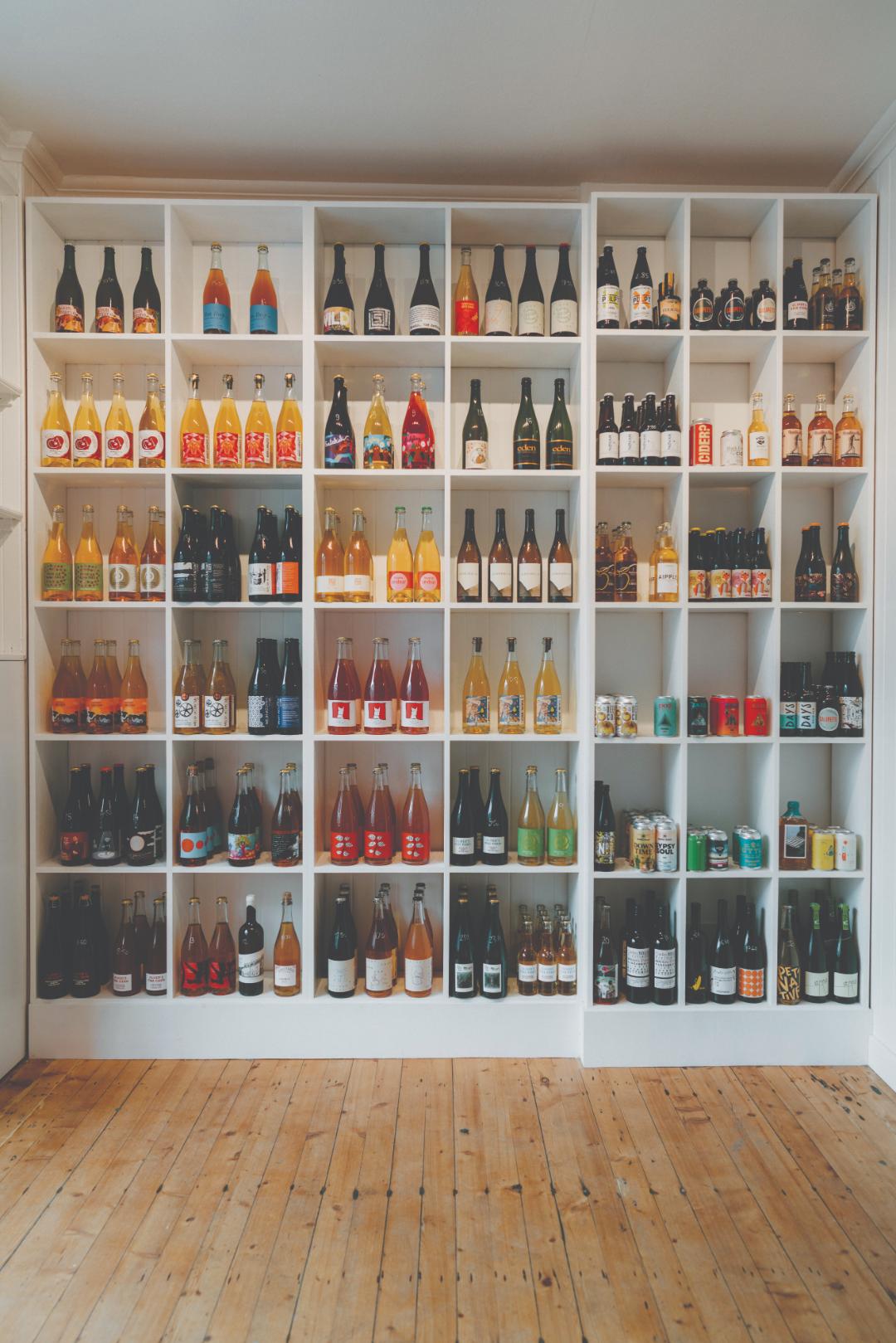
Aeble

Aeble
Futtle
St Monans
Inspired by rustic, European brewing traditions, Futtle produces seasonal, organic beers from locally foraged ingredients. Visit their bar and bottle shop for a taste or one of their workshops, foraging walks or evening live music events.
Cromars Fish & Chips
St Andrews
Since opening in 2013, this top-rate chippy has become a bona fide St Andrews institution, twice being named the best fish and chip shop in Scotland: the fish itself is landed at Peterhead, the spuds are grown in Fife, and the tartare sauce is homemade. There’s an outdoor area – as well as a beach a short walk away – and they even sell local beers and ales.
Reilly Shellfish
Crail
This little harbourside shack has previously been voted one of Fife’s top three seafood restaurants, which is praise indeed for the North Sea crab and lobster that it specialises in. Also known as the Lobster Hut, it’s been filling tourists’ bellies since the mid-1970s, and opens from Easter through to September.
Anstruther Fish Bar
Anstruther
Owners Robert and Alison Smith have centuries-old family involvements with the East Neuk fishing trade, so it’s fair to call this multi-award-winning Anstruther fish and chip shop a labour of love. Haddock’s the speciality, obviously, but you’ll also find lemon sole, Pittenweem prawns and dressed crab.
Kinneuchar Inn
Kilconquhar
Cumbrae oysters, Shetland mussels, Balcaskie beef and Isle of Mull cheddar all get a spot on the menu at this 17th- century, Michelin-recommended village pub on the shores of Kilconquhar Loch. Two firelit bars and a vaulted dining room give you various options for where to tuck in – and the wine and whisky lists are both strong.
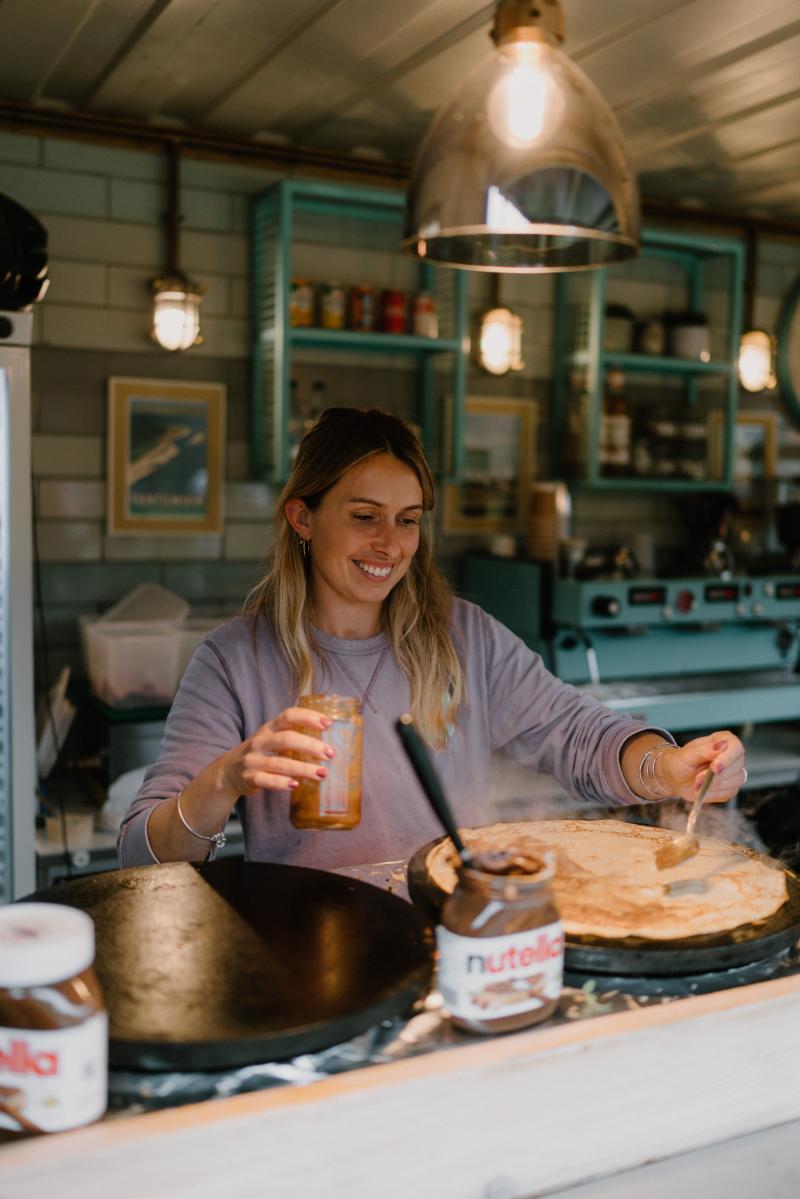
Salt & Pine Creperie
Tentsmuir
This classy creperie and snack bar, based in a converted shipping container, is pretty much exactly the kind of soul- warming sight you’d hope to find after a walk on wide-open Kinshaldy Beach. The savoury and sweet crepes are a cut above (salted caramel and apple pie, anyone?), and barista coffee, soups and salads are also on offer.
The Pizza Box
Near St Andrews
A seasonal pizzeria based at Balgove Larder – a high- quality local farm shop near St Andrews – Pizza Box’s thin-crust sourdough pizzas are cooked in traditional wood-fired ovens. Where feasible, there’s an emphasis on Scottish produce for the toppings, from Corra Linn and Anster cheeses to Great Glen venison salami.
The Fix Fife
Burntisland
A princely pitstop in the strangely named but sweetly located resort of Burntisland – a former royal burgh – this lovable little café serves up toasties, sandwiches and cakes, as well as speciality teas and coffees. You’ll also find other appealing bits and bobs on sale, including reusable cups and local artwork.
The Cottage Window Café
Near Leven
The Cottage Window’s homemade, home-baked goods sell like – ahem – hot cakes, which has helped this campsite takeaway café attract no shortage of sweet-toothed devotees. As the name suggests, orders are dealt with at the window of a cottage, which was once used to house 19th- century mill workers.
The Mirador Café
Elie
A coffee-scented refuge for walkers along the Fife Coastal Path, this café and takeaway forms part of the Elie Holiday Park. It offers a ‘breakfast in a box’ takeaway, including a good vegetarian option, as well as a comprehensive spread of filled rolls, home bakes, ice creams, burgers and hot drinks.
The Pittenweem Chocolate Company
Pittenweem
Serious chocolate-lovers, step this way. The brilliant Pittenweem Chocolate Company specialises in premium chocolates, from malt whisky liqueurs and candied orange peels to stem ginger chocolates and even Kama Sutra chocolates (sold in an elegant, handmade wooden box). The onsite Cocoa Tree Café is the perfect spot to try an indulgent hot chocolate, or an artisan tea/chocolate bar pairing.
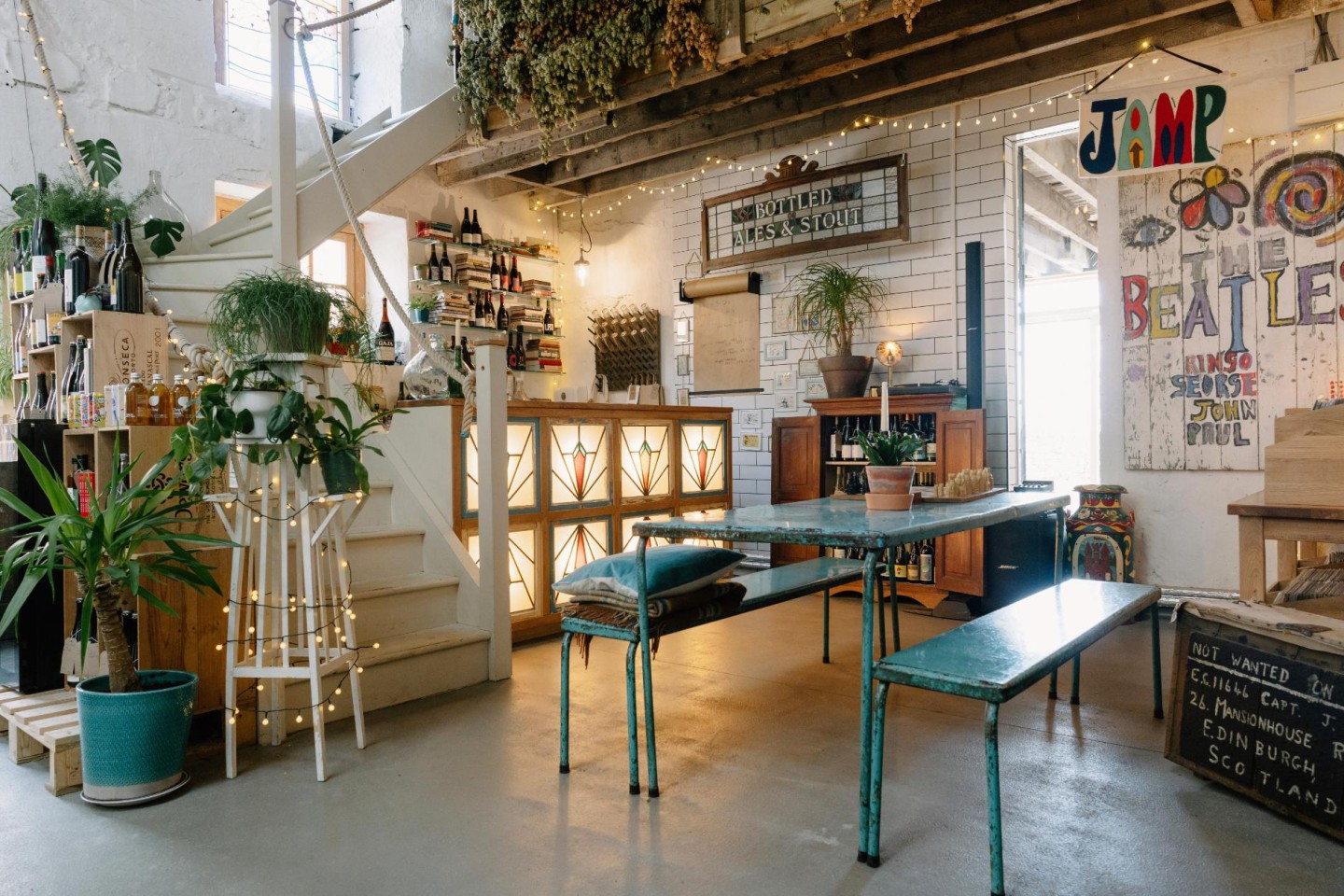
The Red Lion
Culross
Expect solid Scottish hospitality at this enjoyable inn in Culross, where the menu offers classic pub fare such as steaks, salads and pies. It’s a much loved spot among locals. Boat Brae Newport-on-Tay Looking out towards Dundee across the Firth of Tay – and with floor- to-ceiling windows and an outdoor terrace to make the most of the view – this restaurant and bar makes for a memorable meal spot. The restaurant has some great Scottish dishes, with plenty of seafood and several veggie options, while the extensive drinks list features cocktails and mocktails.
The Railway Inn
Lower Largo
A corker of a village pub which has been in situ since 1749, the Railway Inn is about drinking rather than eating (although they do toasties and pies). You’ll find a regularly changing roster of Scottish guest ales and some 25 malt whiskies. CAMRA has previously named it Fife Pub of the Year.
Pillars of Hercules
Near Falkland
An organic farm shop selling a broad range of proper food, from walls of organic fruit, veg and wholefoods to local meat, dairy and gluten-free options. There’s also a takeaway café with outdoor seating and a fully vegetarian menu.
East Neuk Beach Crafts
Anstruther
It’s hard to overstate the simple joys of this store’s lovingly crafted art and jewellery, made as it is from items found on local beaches. Driftwood, pottery fragments, wave-polished pebbles, sea glass and shells all feature.
St Andrews Farmhouse Cheese Company
Near Pittenweem
Producing a range of award-winning cheeses from its homebred herd of Friesian Holstein cows, this family company also runs an on-site cheese counter, selling various British farmhouse cheeses alongside its own. Be aware that it’s around nine miles outside of St Andrews itself.
Aeble Cider Shop
Anstruther
Scotland’s first dedicated cider bottle shop and bar is situated right here in Anstruther and offers a bibulous bounty of cider, perry, beer and wine. The word æble translates as – you guessed it – apple. Lindores Abbey Distillery Newburgh If you call yourself the spiritual home of Scotch whisky – as in the case of this modern distillery, which takes up the baton from a long-lost Tironensian abbey – you need to make sure your produce is up to it. Happily for all, when the distillery’s first single malt was released in mid-2021, some 523 years after the previous batch, the reviews were hugely positive.
Ardross Farm Shop
Near Elie
With its traditionally reared beef, freshly picked fruit and veg, rare breed bacon and locally baked bread – not to mention plenty in the way of beers, chocolates and puddings – this traditional farm shop on the outskirts of Elie is very much worthy of your time.
Stay
Find your perfect spot among charming coastal cottages and elegant country homes, blending heritage with modern comforts.
Balbirnie House Hotel
Near Markinch
Sleeping in a Grade A-listed Georgianmansion is always going to add a bit ofsparkle to a hotel stay. This certainlyholds true at Balbirnie House Hotel,which sits in a building dating back to1777 and has a cabinet’s worth of luxuryawards to show for its high-end brandof hospitality. Four hundred acres ofparkland and a sumptuous spread ofdining options add to the appeal.
The Ship Inn
Elie
There’s plenty to recommend thisquayside inn in the former royal burghof Elie: the food and drink menusshowcase top Scottish produce,the sea views are huge and the sixguestrooms are mighty appealing(particularly the Admiral Room on thetop floor). The pub has its own cricketteam, which plays on the beach.
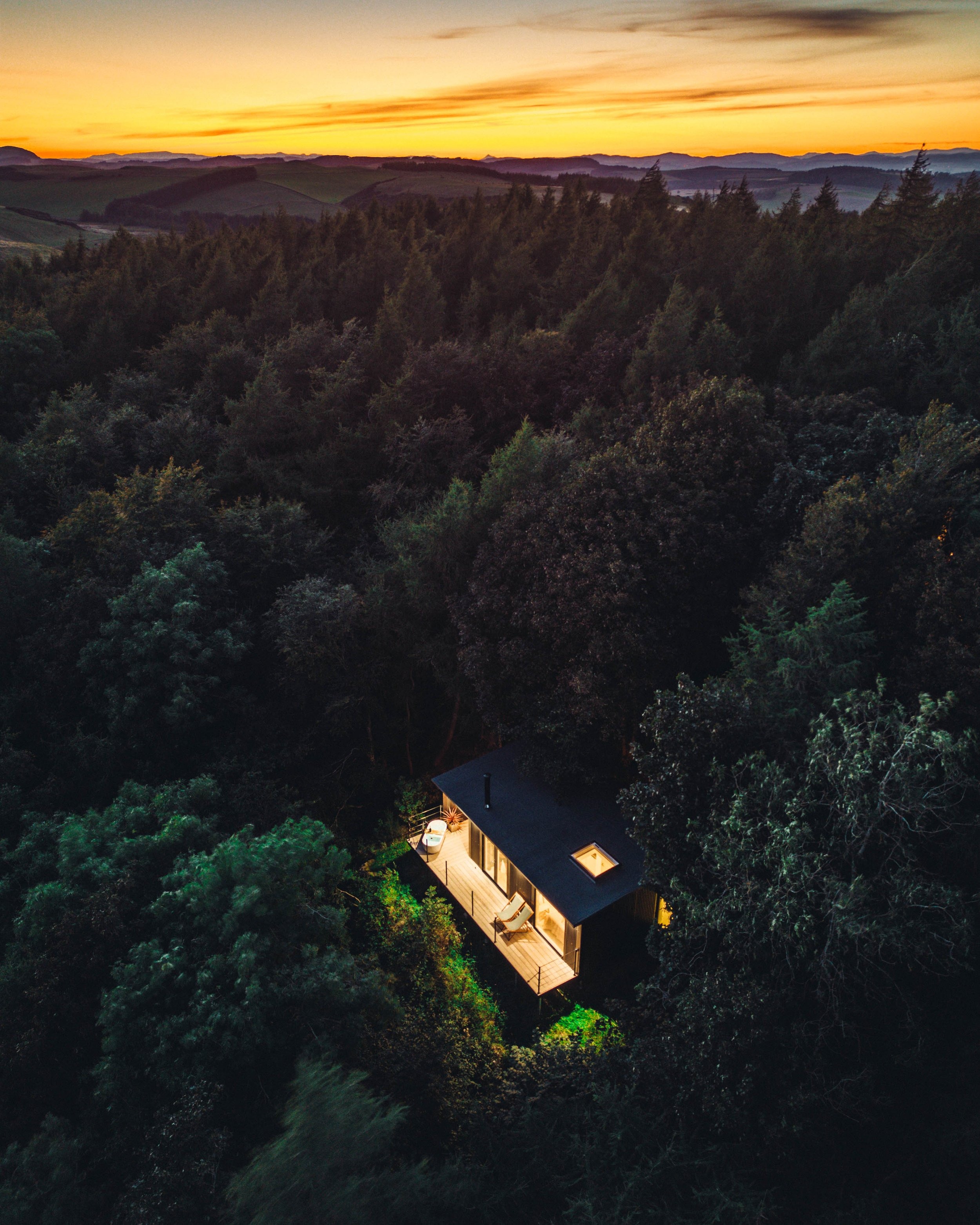
Bracken Treehouse
St Andrews
Spend the night in a woodland canopyat the Bracken Treehouse. This is theperfect hidden retreat for couples,perched in the treetops, surroundedby 35 acres of forest with an outdoorbathtub and over-bed stargazingwindow adding to the luxury.
Promoted Post
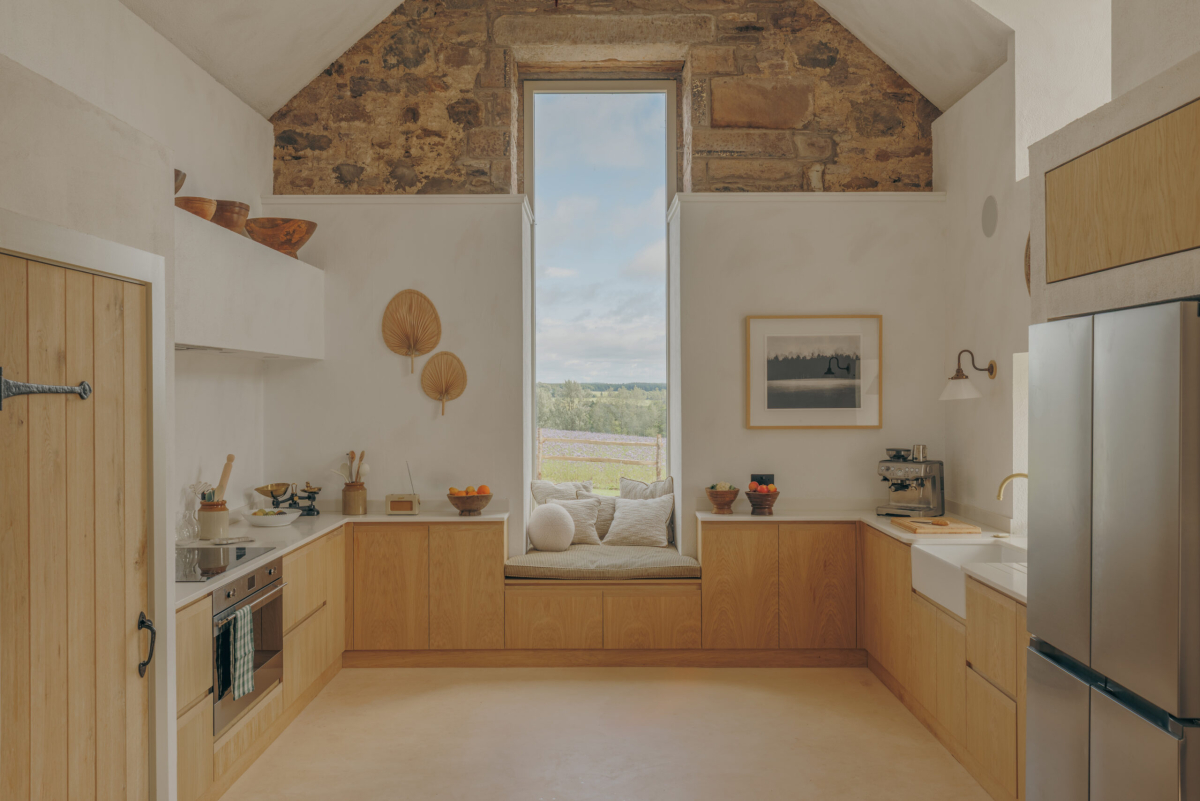
Whitehill Farmhouse
Located on Colquhalzie Estate, this 19th Century farmhouse has been lovingly restored into a family home, having previously been home to the Shepherd who lived there for 40 years. We welcome friends and families of up to 8 people on a self-catered basis for at least 4 nights.
-full-1741009545.jpg)






 Sign in with Google
 Sign in with Email