
Wish You Were Here with Laura Lees
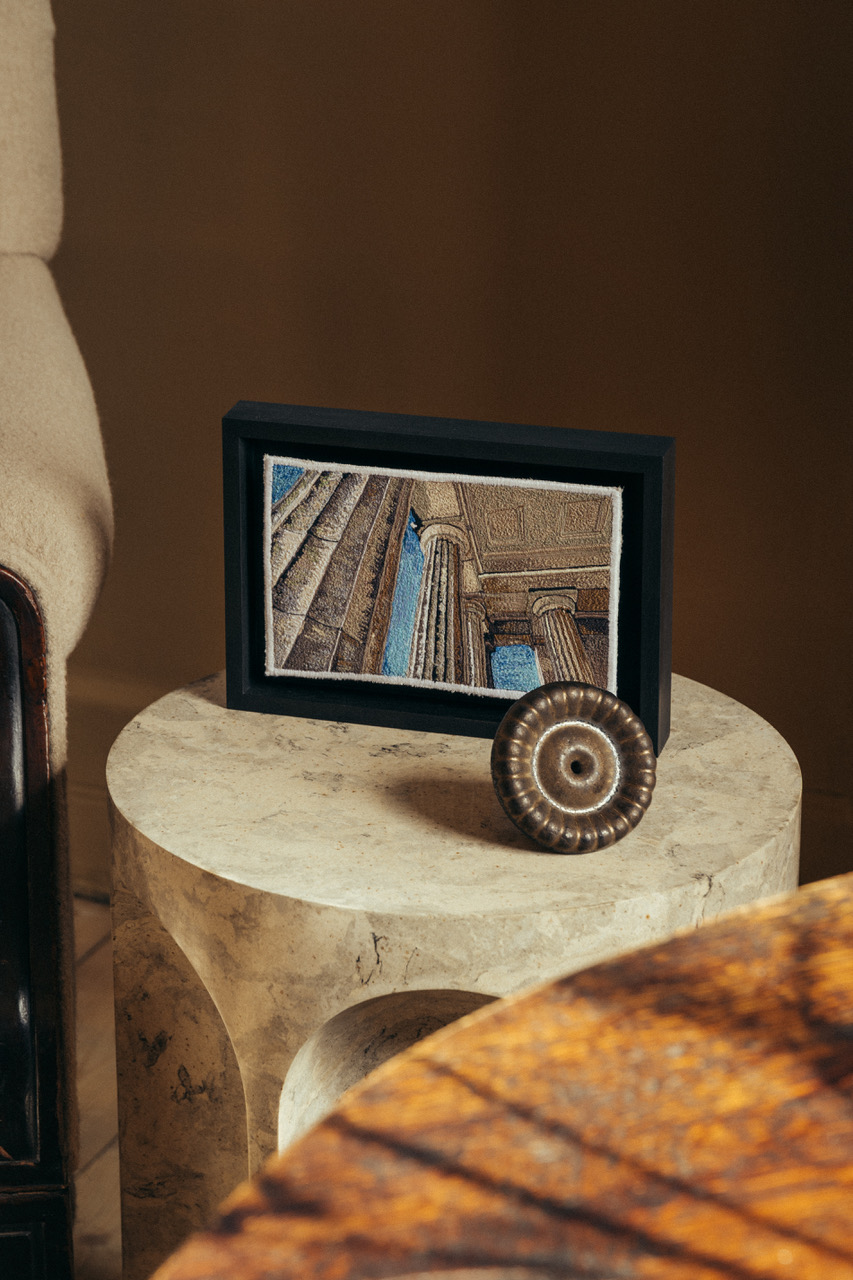
Laura Lees has been a freelance tapestry and embroidery artist for 35 years, with commissions spanning fashion, music and interiors, including a run of 24 hand-embroidered denim jackets for Luella Bartley back in 2000. Her latest project brings her home. Wish You Were Here, at Bard in Leith until 18th July, is a collection of stitched postcards of Edinburgh, made after returning to the city and finding nothing on the postcard racks that matched the places she actually cared about. We spoke to Laura about slowness, her studio, and why she'll always send a postcard.
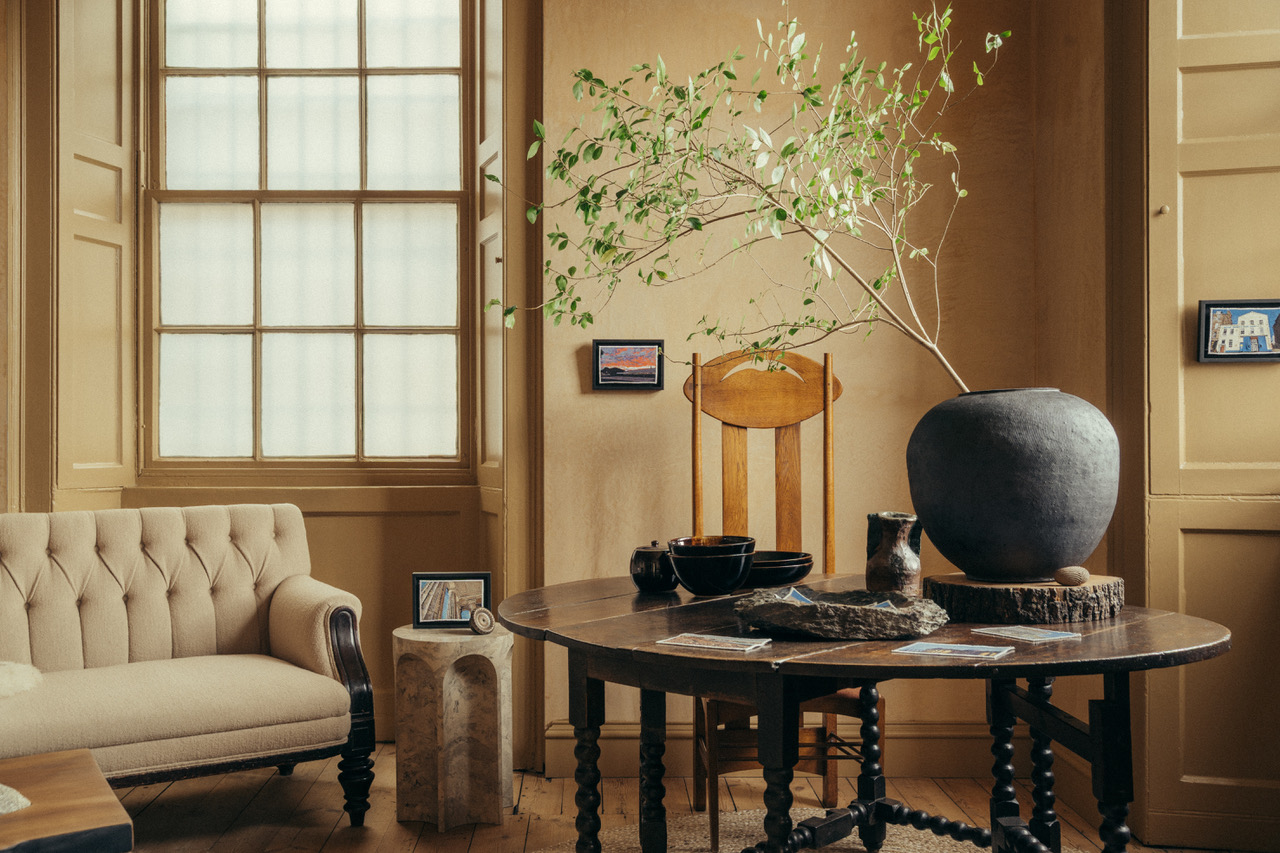
Tell us about yourself and what you do.
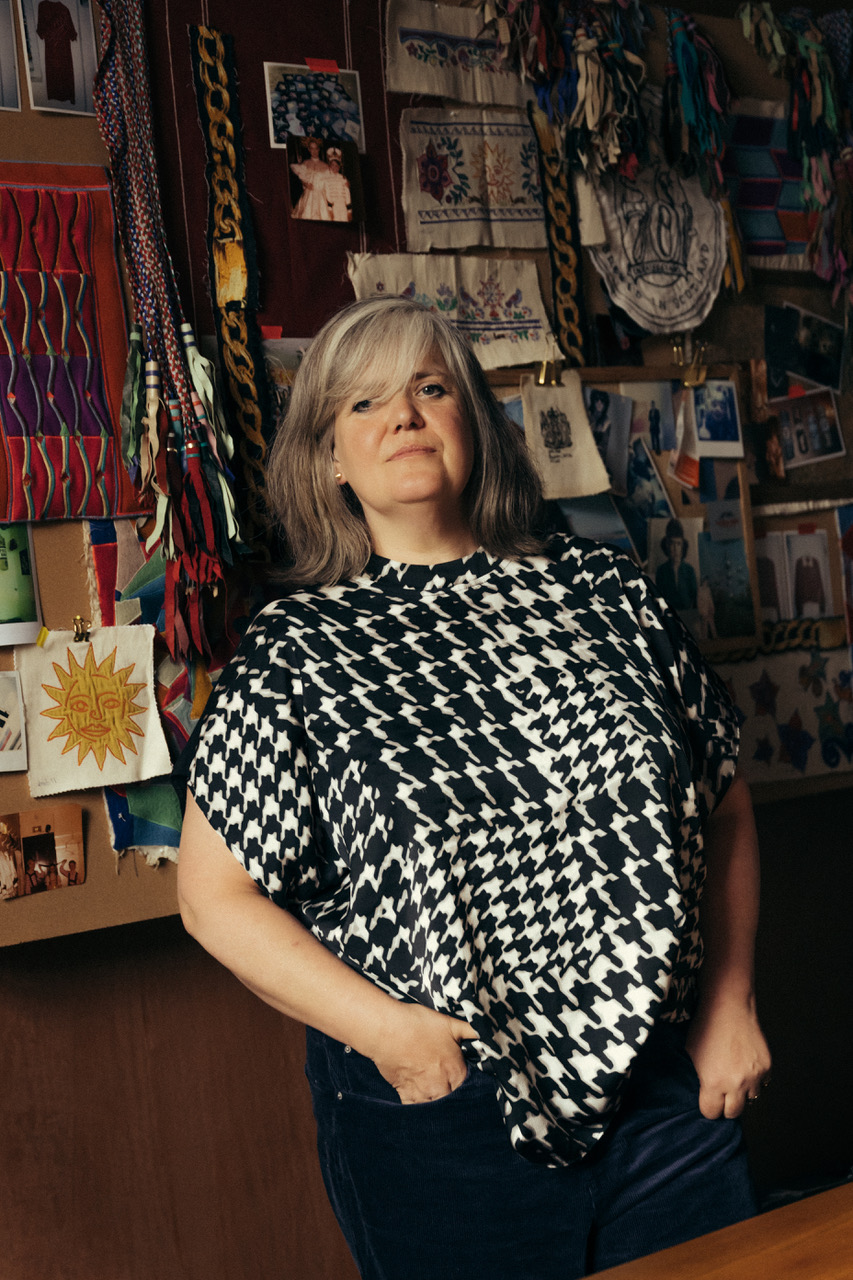
My name is Laura Lees. I am a tapestry and embroidery artist with 35 years of freelancing experience.
You've worked with fashion labels, musicians and furniture designers, which collaboration or commission has stayed with you most, and what made it stand out?
Over the years, yes, I've done many projects in fashion, design and interiors. Outside of doing my own thing, interiors are my favourite. One of the most standout was the Luella Bartley jacket in 2000 — albeit a lifetime ago.
This was a limited edition of 24 denim jackets, a reinterpretation of my personal denim jacket but tailored to her brand iconography.
The handmade nature of freehand machine embroidery meant that individual stitches, quirks and tiny mistakes created a unique quality to each jacket within the series. It was my first big commission; I never dreamed I'd make such a chunk of cash from embroidery. I realised the value of my skill set and design work.
This was by no means my favourite aesthetically, but it taught me rigorous application. I bought my industrial Bernina sewing machine, set myself up as a freelance artist, and it gave me the confidence to seek work of that standard and volume. It allowed me not to be intimidated or apologetic about a craft that was deemed a granny's pastime.
How did Wish You Were Here come about?
The Wish You Were Here show came about as my postcards were already for sale at Bard. I opened the conversation and we all felt Bard was a good match; we all understood each other.
Hugo and James are very creative individuals and they have been hugely supportive and believed in my work.
Why the postcard format?
I send postcards. Always have, always will.
When I was living in Dundee and London I was sending old faded tourist postcards found in down-at-heel newsagents — they seemed the perfect medium for my skint student and post-student life. It's a perfect format to send a "one-liner", a memory, an announcement, a travelogue. It is a great way to let someone know you were thinking of them without having to commit to long letters, which I also like writing. I also enjoy that the postman could read them.
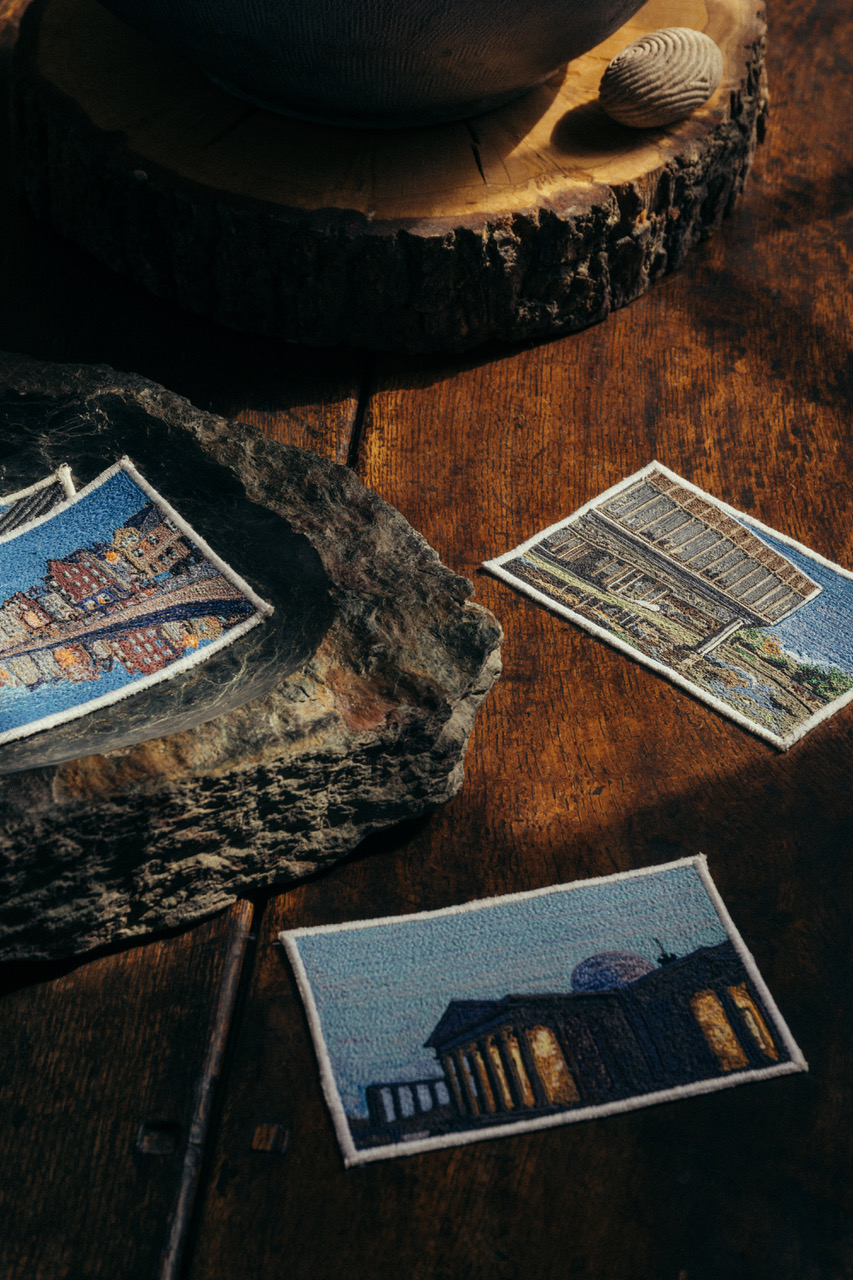
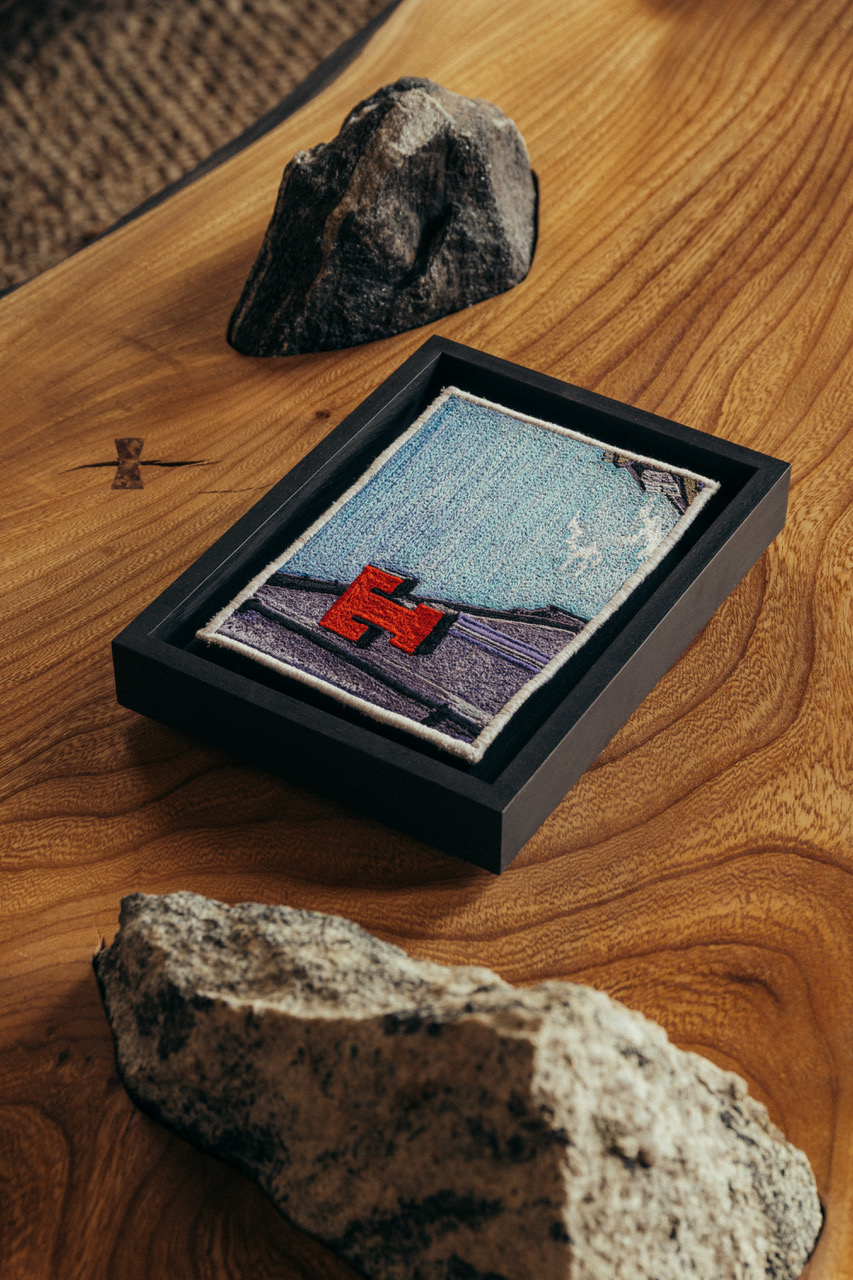
When I moved back to Edinburgh, I felt like a tourist in my hometown, but none of the postcards I could see on display resonated with the things I was interested in. It was a self-initiated project that helped me with the relocation. It felt natural to commit my personal journal of photos into the format of postcards, and to recognise and re-establish my relationship with Edinburgh having just returned.
How do you choose which landmarks are worth stitching?
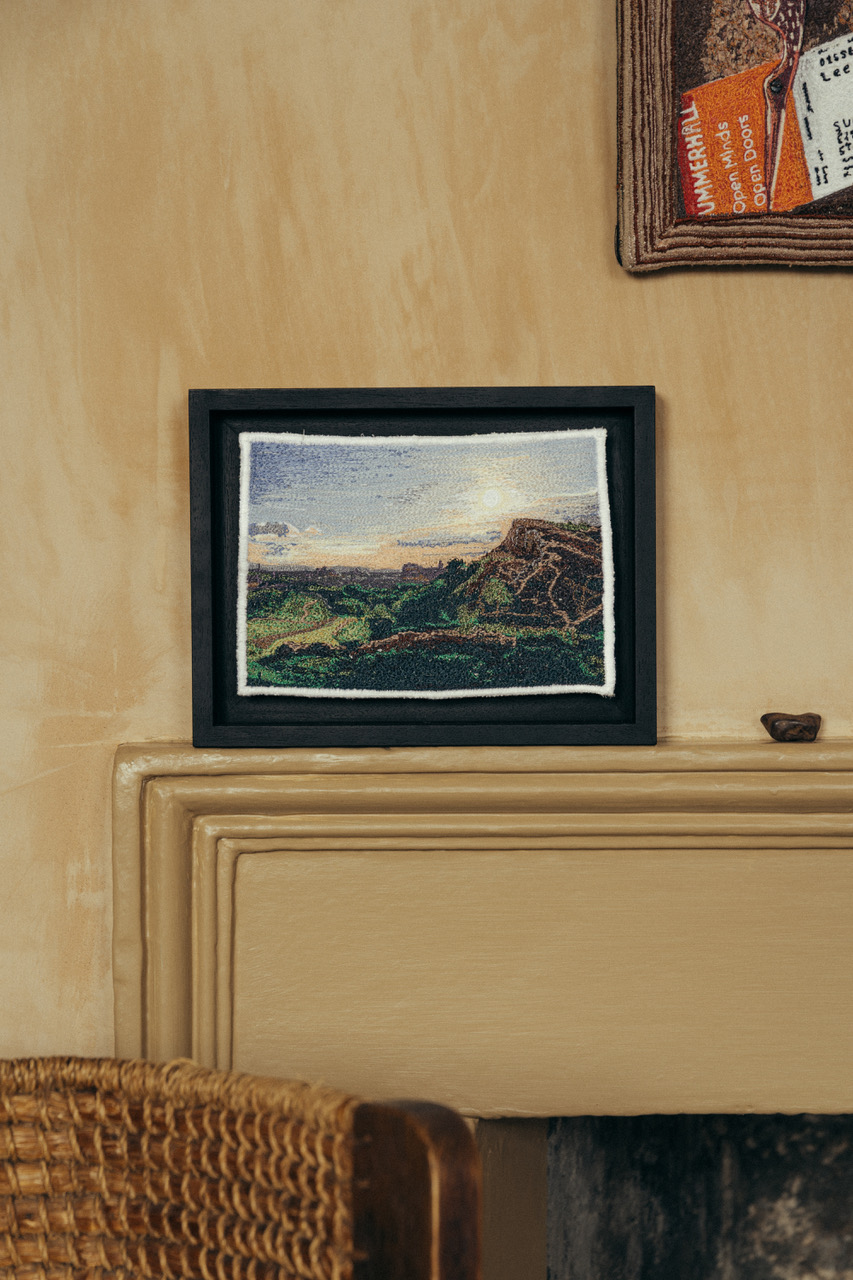
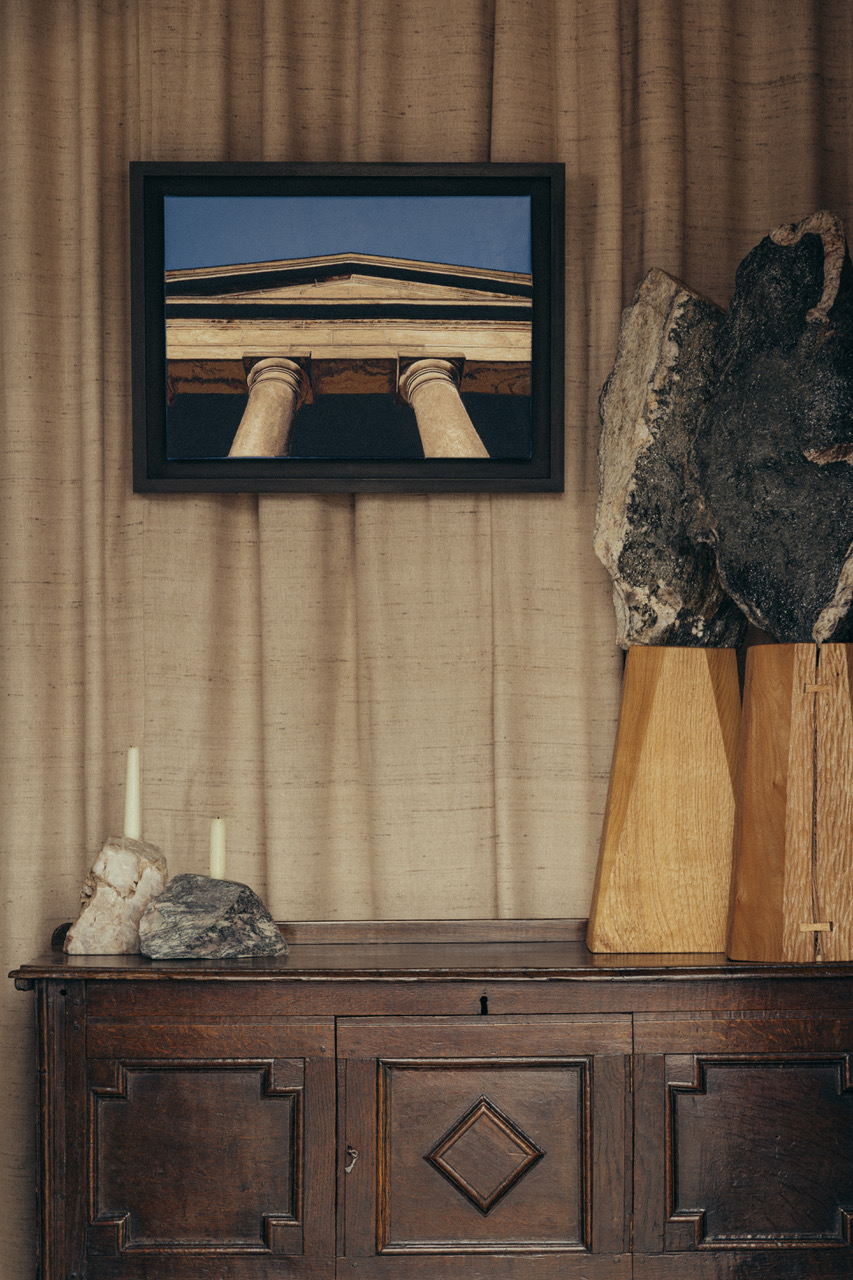
The images are all places I relate to — places I have spent time looking at, that have made me stop in my tracks. Places that have excited me with the materiality of a building, the angles of masonry and how that sits against the blue sky, the negative spaces between buildings, the graphic nature of modernism, the typography of a city. My relationship with a building might be leisure, sport, aesthetic, or simply just beautiful places I've sat for many years — the view from Arthur's Seat, for example. Wee spots that become part of your life's narrative.
They each take a long time to make, what does that slowness give you?
Tapestry allows you to take stock, to become quiet and to be in a cerebral place. It gives your mind the space and calm to explore all sorts of creative thoughts and ideas whilst you engage in this tranquil and beautiful pursuit of interpreting images into yarn.
A good podcast helps the process, it keeps me company and helps time pass quietly.
What does your studio environment mean to you, and are there any specific elements that Bard has recreated that feel particularly significant to your practice?
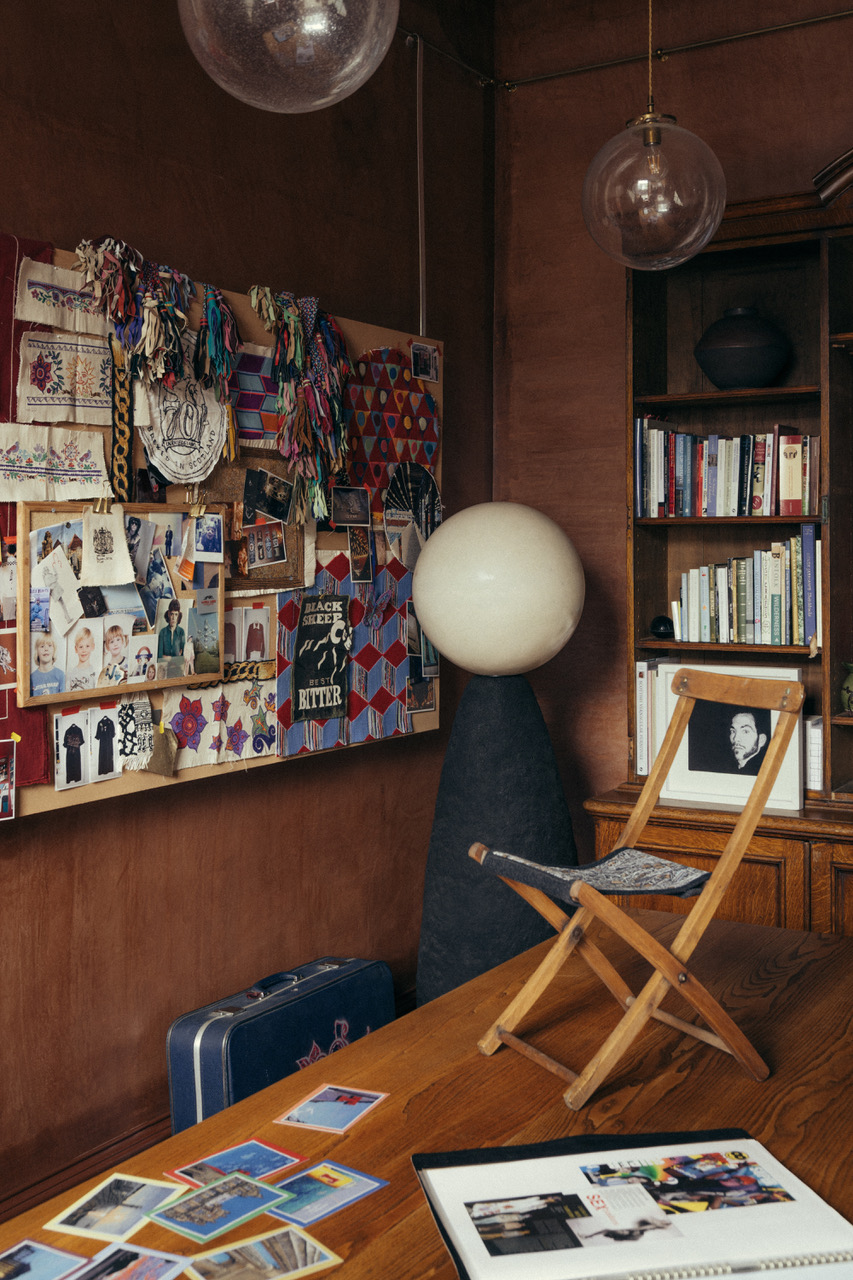
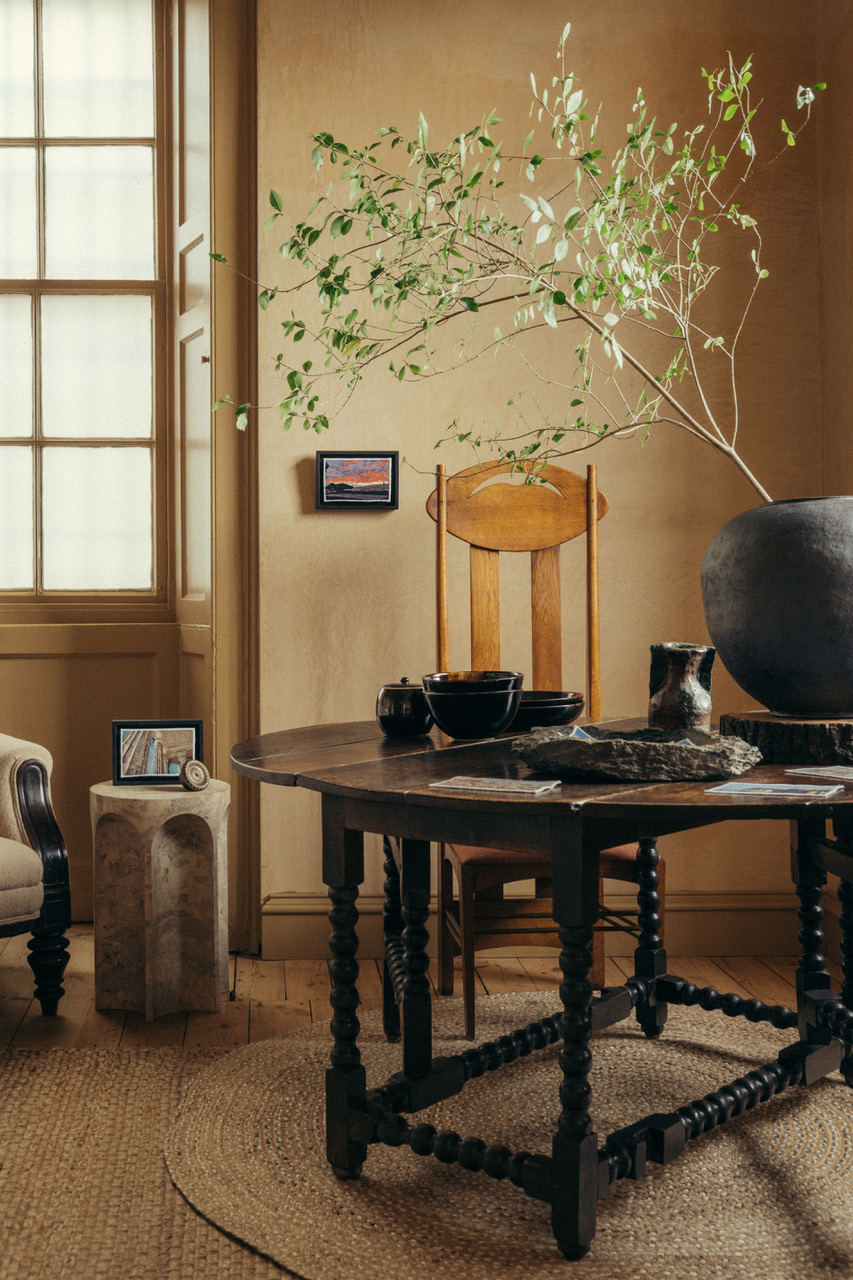
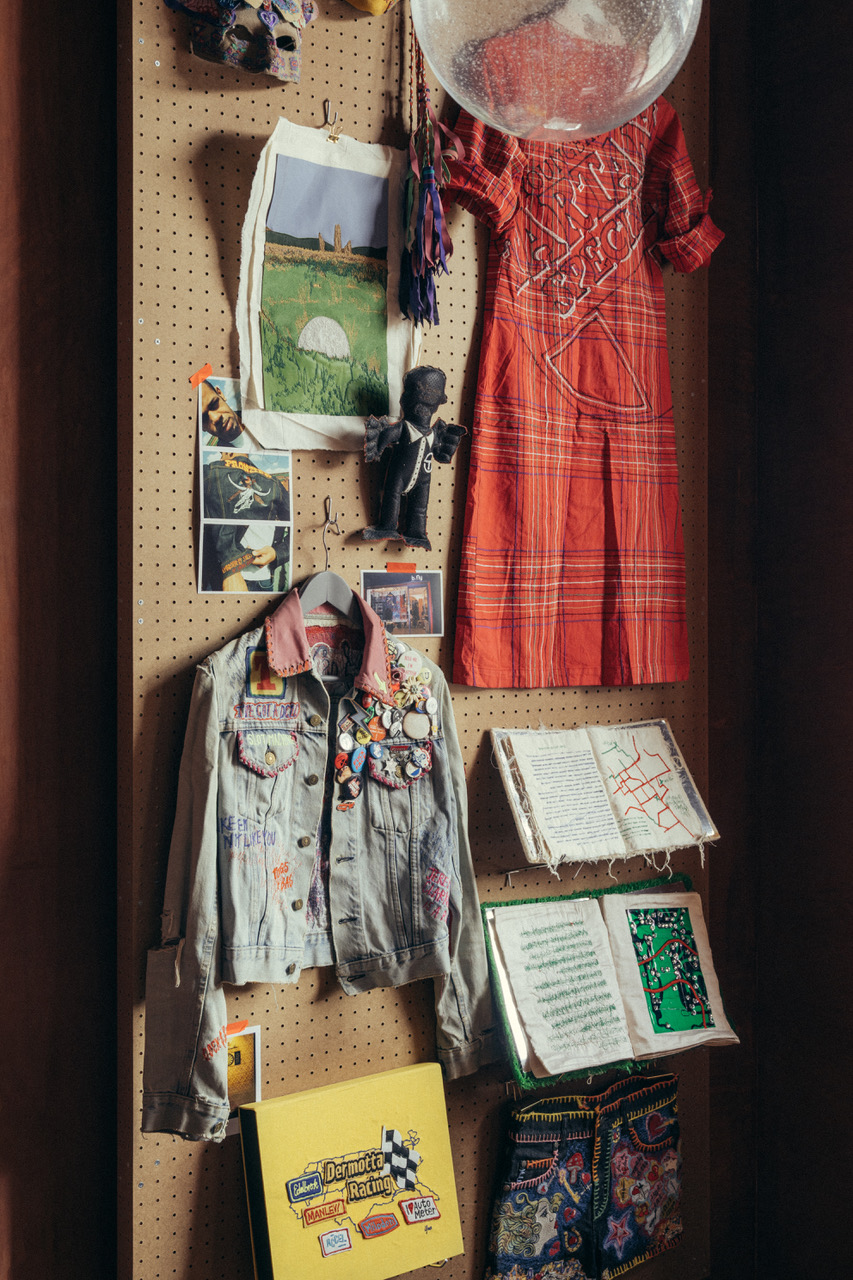
My studio is my world. I spend so much time in it. I have so much equipment and so many tools that I need to create. I know where everything is. I have everything economically sorted so I can easily access my equipment. I know which boxes hold beautiful fabric sourced years ago, stuff that I need to keep for future commissions, while simultaneously being ruthlessly streamlined.
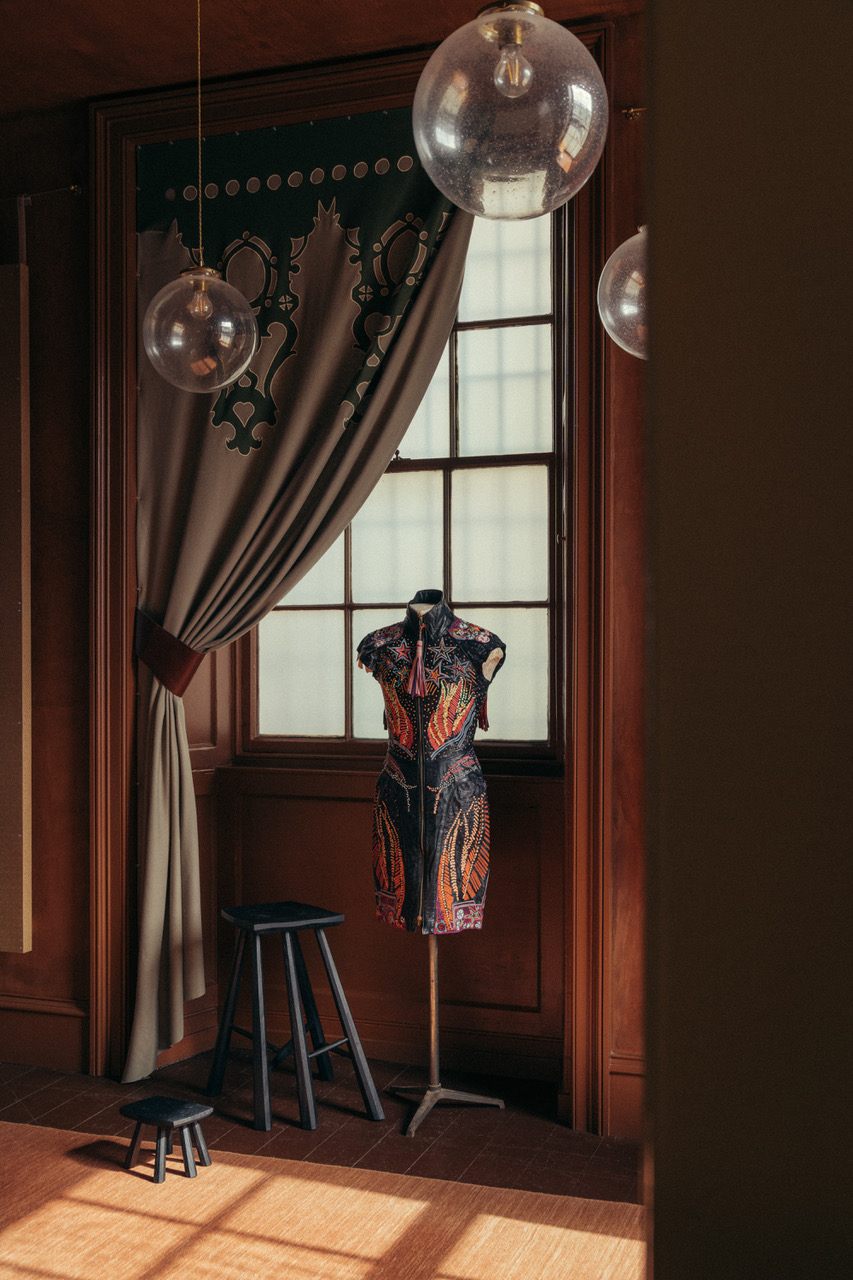
The only constant in my studio is the cork pinboard, which has been immortalised as part of the show at Bard. I think Bard has done an incredible job recreating the essence of my studio, capturing the diversity of projects and interests: the images of high-end and low-end inspiration, from pop culture to the classics. I absorb everything I see and it comes out in my work.
What can people expect to see when they visit your exhibition at Bard?
A collection of postcards, some detailed images of Edinburgh's classical past, and an insight into my studio, my practice and the workings of my mind. Brace, brace.
All photography by Murray Orr
Promoted Post
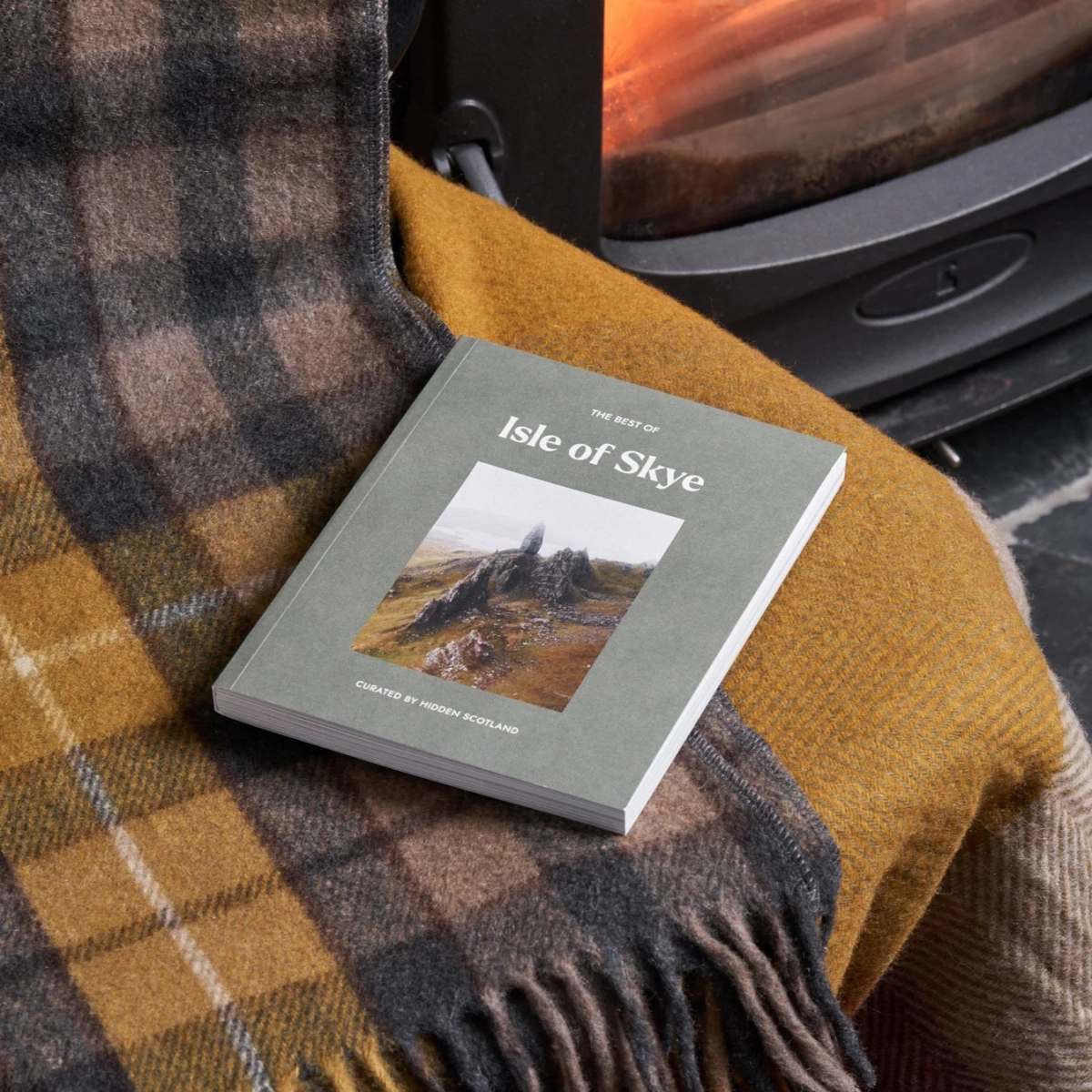
The Best of Skye Guidebook
The Isle of Skye is a place of rare wonder, a wildlife-rich spread of bays, peaks, cliffs and ridges. The views are big, but the prospect of adventure is even bigger. We hope this curated Hidden Scotland guide – which takes in everything from the best walks to the finest restaurants – helps you to have your own unforgettable island escape.
-listable-carousel-1718018374.jpg)





 Sign in with Google
 Sign in with Email