
The Fairy Coffins of Edinburgh: An Unsolved Mystery Beneath Arthur’s Seat
In 1836, a group of boys discovered something strange on Arthur’s Seat in Edinburgh. Seventeen tiny coffins with carved figures inside were hidden in a cave. Their purpose remains unknown.

Written by Hidden Scotland

Walk the lower slopes of Arthur’s Seat and you’ll pass stretches of rock and gorse that don’t seem to hold much. No plaques, no railings. Just worn trails and the edge of the crags. But it was here, in the summer of 1836, that a group of local boys made a quiet discovery that still unsettles people nearly two centuries later.
They had been out hunting rabbits, as the story goes. Near one of the ledges above Duddingston Loch, something caught their attention. Hidden in a small crevice was a line of wooden boxes, tucked neatly behind a slab of slate. Seventeen in total. Roughly the same size, shaped like coffins, and stacked in rows. Some had started to rot. Others had already broken open.
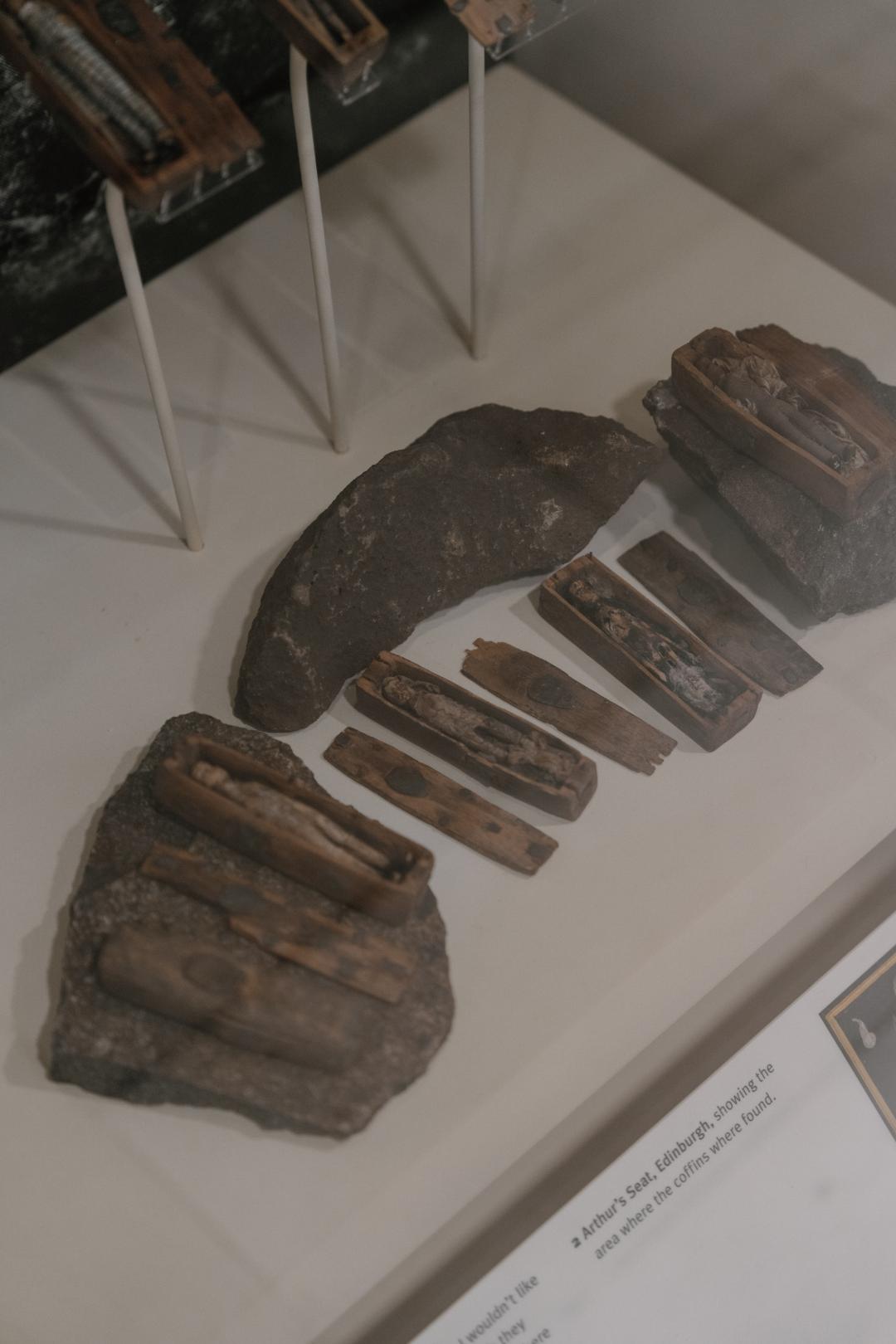
Inside many of them were hand-carved wooden figures, painted and jointed, each dressed in a scrap of cloth. The stitching was fine. The clothes had sleeves and lapels. Faces had been painted, limbs shaped, and in most cases, the bodies placed with care. No one could say how long they had been there.
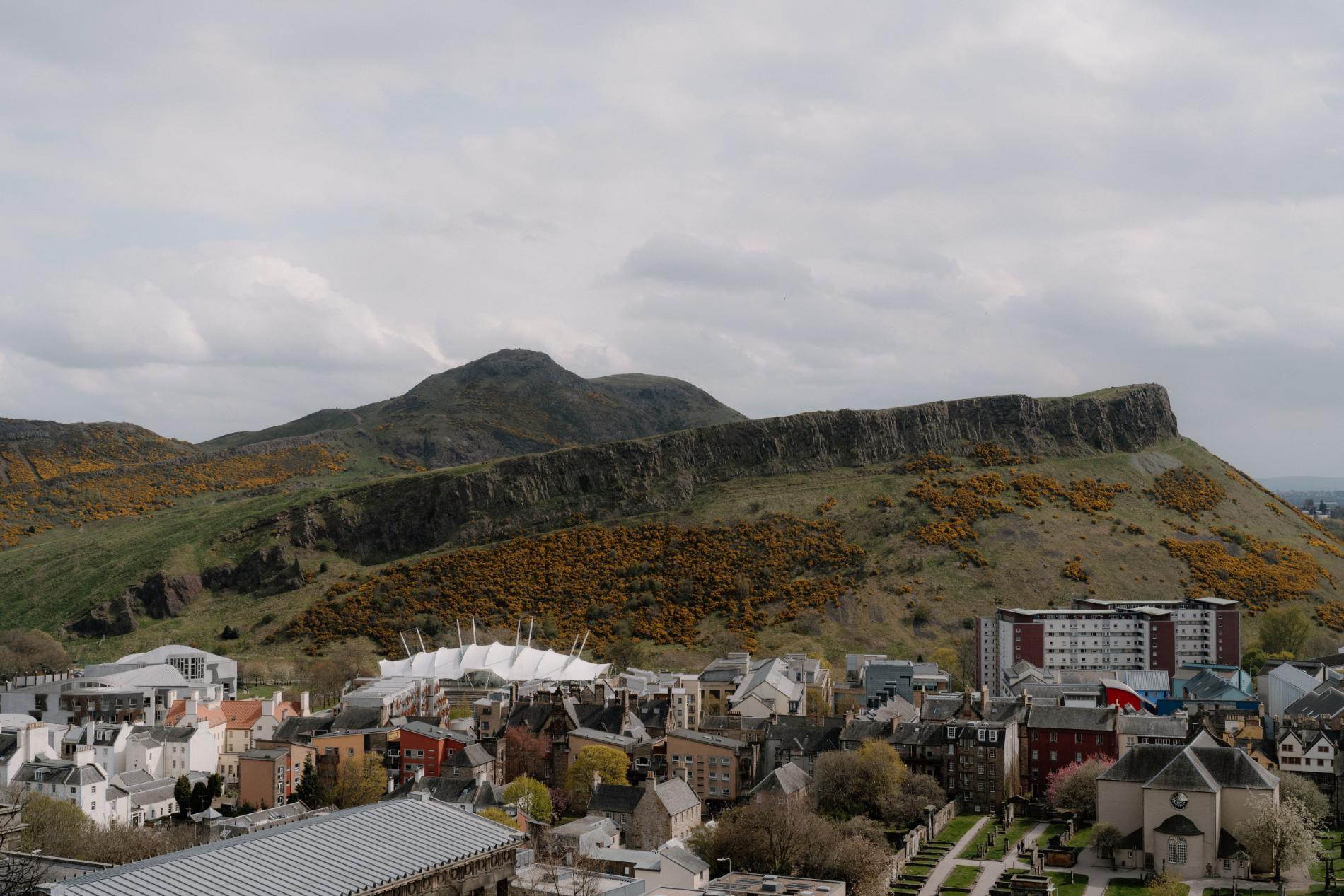
Arthur's Seat
First reactions and a quick disappearance
The boys brought what they found into town. A schoolmaster looked them over, then passed them to a local watchmaker with an interest in curiosities. For a while, they were displayed in his shop window on Princes Street, drawing a small crowd. After that, the trail went cold. Several were sold off or given away. Some were likely destroyed. Just eight of the seventeen are known to survive.
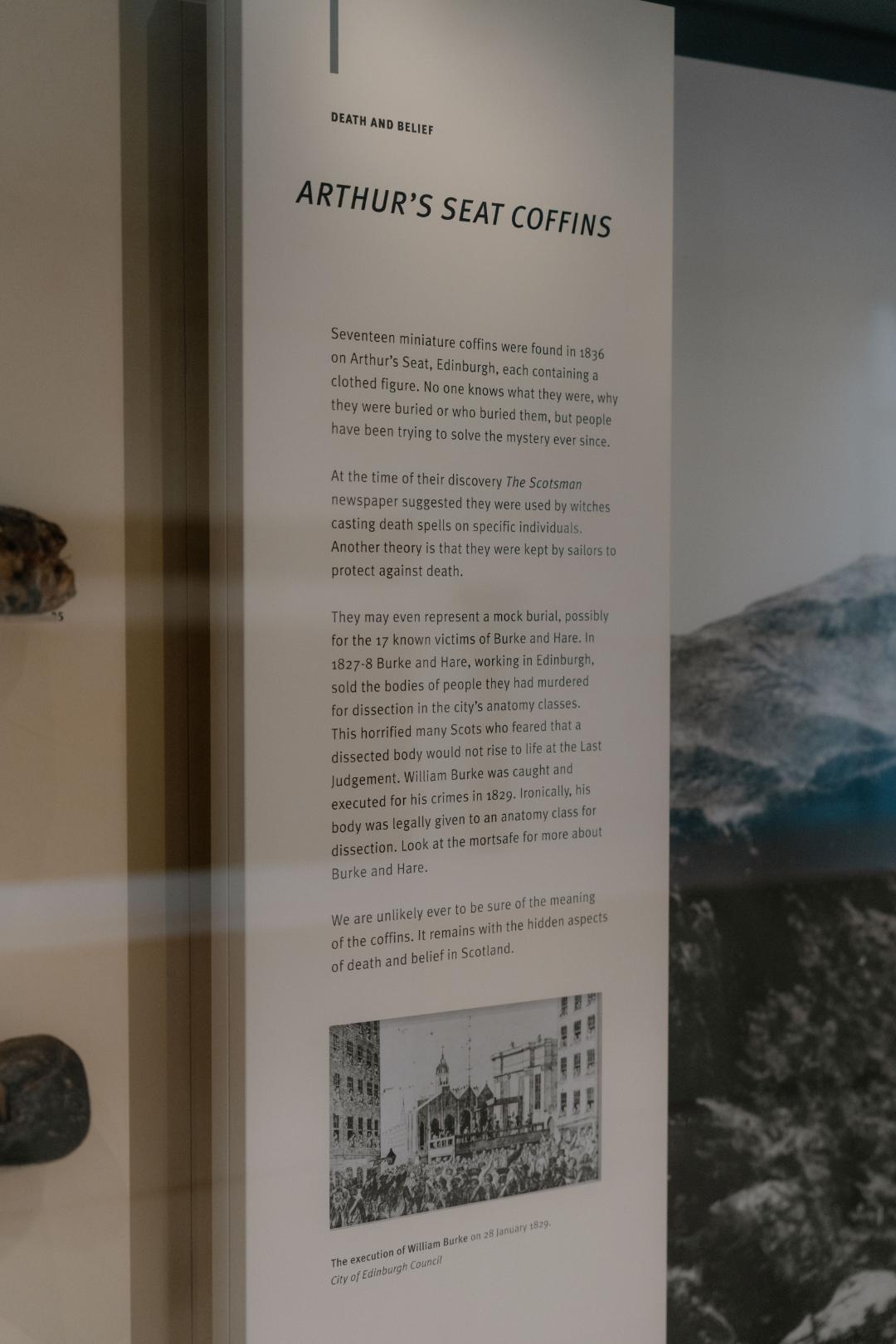
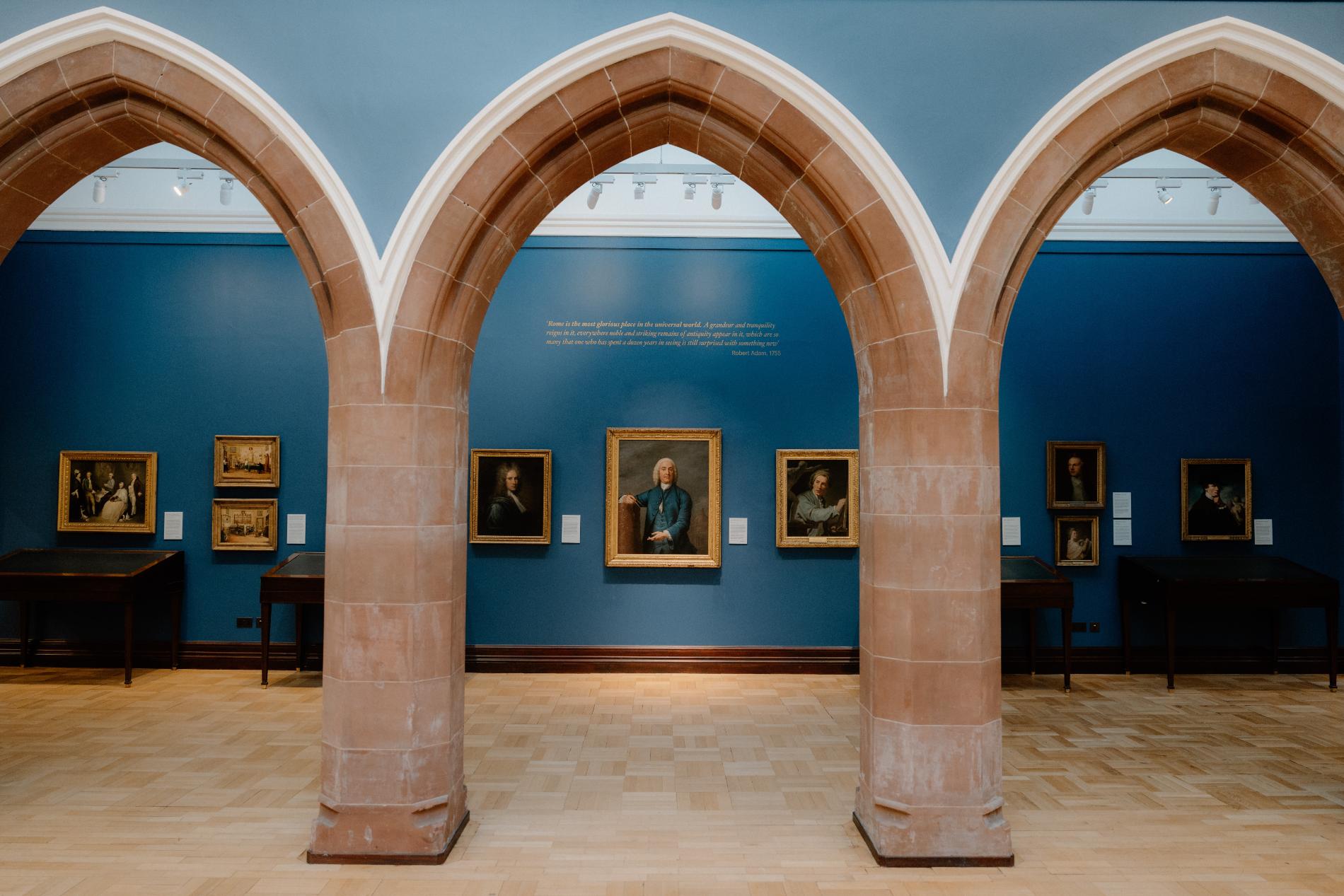
You can see them now in the National Museum of Scotland. The surviving coffins are arranged behind glass in a quiet corner, each still containing its figure. No explanation is offered. Just the date and a brief account of their discovery.
Theories and guesses
Explanations have been offered over the years, but none have ever been confirmed. One of the earliest theories linked the coffins to witchcraft or pagan rituals. It was suggested they had been placed there as part of a protective charm or burial rite. But the style of the figures doesn’t support that. They’re not crude enough to be folk talismans, nor uniform enough to suggest ceremonial purpose.
Another idea, more persistent, ties the coffins to the serial killings carried out by Burke and Hare just a few years earlier. In 1828, they murdered seventeen people in Edinburgh, selling the bodies for dissection. Some believe the coffins were placed as a form of memorial for the victims, one box for each person killed. There is no proof of this. It’s based on numbers more than anything else. But the timing is close enough to keep it in circulation.
Others have looked to superstition. Miniature coffins have occasionally been used as symbolic burial when a body could not be recovered. Sailors lost at sea, for example, or soldiers killed abroad. Some think the figures might represent people who had died suddenly, or without proper burial, and that the coffins were placed to settle that. Again, no names were ever connected. No one came forward. No records explain the act.
In the 1990s, forensic work was carried out on the surviving coffins and figures. Experts confirmed that they were carved from a soft pine, using tools consistent with the early nineteenth century. Some of the materials used in the clothing matched old umbrellas and household fabrics. The carving showed skill, but not formal training. The work was likely done by someone familiar with craft, but not necessarily a professional.
The figures themselves may have originally served another purpose. Some researchers think they began as toy soldiers or shop window models. It’s possible they were repurposed, dressed, and placed into the coffins later on. If that is true, the meaning becomes harder to pin down. It could have been symbolic. Or it might have been a solitary act of grief.
What is left today
The original discovery site was never formally recorded. The cave or cleft is believed to be somewhere on the northeastern slope of Arthur’s Seat, but no one can say exactly where. Most visitors would walk straight past it without realising. That lack of location has likely protected the story. No graffiti, no signage. Just the same slope of stone and brush, untouched.
The surviving coffins are still displayed in the National Museum, though without much interpretation. The glass case is small. Most people stumble across it rather than seek it out. The figures are still dressed, still painted, and still give off a strange, lingering impression that’s difficult to pin down.
No new information has surfaced since the 1990s. Every few years, the coffins appear in books, or on television, usually as part of a list of unsolved mysteries. None of the accounts get closer to a conclusion. They all repeat the same basic facts. What is most unusual, perhaps, is how little drama surrounds them. They are small, handmade, and clearly cared for.
What remains is a physical object, made by someone who never wanted recognition. Seventeen boxes, shaped and sealed, placed in a cleft in the rock where they might have stayed hidden forever if not for a group of boys looking for rabbits.
They were not part of a hoax or a display. They were made for reasons unknown and then left behind.
That is what keeps the story open.
Promoted Post
Stormhouse
Escape to the wild, rugged landscape of Scotland’s west coast, perfectly located between mountain and sea









 Sign in with Google
 Sign in with Email