
The Fault Lines of Our Lives
From geologists and path-builders, to artists and cyclists, a journey along the Highland Boundary Fault Line from Arran to Aberdeenshire explores how the landscape shapes people’s lives and work today.
-full-1744903342.jpg)
“The geology of Scotland is mad and we don’t even realise it,” Luisa Hendry says. Known online as the Scottish Geologist, Luisa combines infectious enthusiasm and academic expertise to illuminate an often overlooked part of Scotland’s story.
“The Highland Boundary Fault is one of my favourites,” says Luisa. “It separates two major geological terranes and two geological supergroup formations, which are very important indeed.” From Arran to Aberdeenshire, follow the fault line on a map, or watch the landscape transform as you travel.
“It’s a very complicated fault line, and there’s still controversy in geology today over how it formed,” Luisa explains. But she demystifies deep time with trademark clarity. “800 to 510 million years ago, Scotland was situated on a continent known as Laurentia, joined with Greenland and North America.” Sand, silt, and mud compacted on the coast, forming rock, before the ancient ocean between these neighbouring continents began to close.
“The two plates eventually collided with each other which squeezed, folded, and changed those sedimentary rocks over geological time. The Highland Boundary Fault formed towards the end of this mountain-building event,” Luisa describes. “As well as being influenced by the fault line, the Scottish landscape we see today was cut by various ice ages over the last 2.6 million years, carving the softer rock of the Midland Valley and the harder rocks of the Highlands.”
This geological frontier has shaped Scotland ever since, creating not only a physical boundary between the Highlands and Lowlands, but cultural and social ones too. Languages, land systems, ways of life. But what does the Highland Boundary Fault mean to people living and working along it today?
Geology upholds Arran’s “Scotland in miniature” tagline. With fertile farmland to the south, and mighty northern peaks, it’s a mirror of the mainland.
ArranWhisky(1)-full-1744903031.jpg)
STEWART BOWMAN - ARRAN WHISKY DISTILLERY MANAGER
“Arran is so beautiful and unique. Having two distilleries at opposite ends of the island means they’ relocated in completely different environments — as if the character of the whiskies we produce reflects the area that surrounds them.”
For Stewart Bowman, Arran Whisky’s Distillery Manager – whose Lochranza stills aren’t far from the fault line outcrop at Glen Sannox – the island’s twin landscape has a big influence on its spirits: the Arran Single Malt and the Lagg Single Malt.
“The Highland Boundary Fault Line is more than a geological feature for us,” Stewart says. “By splitting the island in two and providing a contrasting Highland- Lowland divide, we use this unique duality to shape the difference in our whiskies.”
After stints at other Scottish distilleries, Stewart’s called Arran home since 2021. His role involves overseeing operations and regulations, but most importantly “ensuring every bottle embodies the quality and character that defines the Arran Single Malt.”
Does the fault line influence the flavour of an Arran dram? “It’s almost as if the character of our whiskies reflects their area,” Stewart agrees. “In the north, Lochranza’s lush valleys and mountains give access to the pure water of Loch Na Davie, shaping the Arran Single Malt. It’s creamy, fruity, and refined,” he says. In the south, at the company's Lagg Distillery, peated spirit is distilled and the rolling earthy hills and rugged coasts echo a spirit that’s “bold and smoky”.
2025 marks the thirtieth anniversary of their Lochranza Distillery – “a big milestone for a pioneering, independent whisky company”, Stewart reflects – so they’ll be cracking open limited edition casks to celebrate.
Stewart’s work and family life is now distilled into this 167-square-mile island. “It brings me so much joy to see my kids enjoy nature to its fullest,” he says. “But what sets Arran apart is the people, full of character and heart.” Stewart’s description of his neighbours seems to echo the island’s remarkable terrain.
-full-1744903031.jpg)
Conic Hill
Further northeast, a logo catches the light on Alan Bell’s fleece. Green stitching: A high mountain, rolling lowlands, a loch. An apt depiction for a national park spanning over 700 square miles and endless contrasts. Alan was Loch Lomond & The Trossachs National Park’s first ecologist, and is now Natural Heritage Programme Manager. Alan and his teams focus on nature restoration, peatlands, and provide expert advice on land management.
Islands dot Loch Lomond like stepping stones, rising at Conic Hill – a visual thread of the Highland Boundary Fault, or as Alan describes it, “a spectacular crumple zone.” As well as outstanding outdoor activities, the park’s geology brings wildlife wonders: alpine plants, temperate rainforest, carbon-rich peatlands, rare golden eagles. In Alan’s words, “360 degrees of poetry and magic.”
But there are challenges. “Millions live near the National Park, and we love the place. Ever since steam power was invented, it’s been our playground.” Think of Balmaha’s bustling beaches in summer. “One of our biggest tasks is managing visitor aspirations, the needs of the residents, and modern land uses like timber and farming in ways that also work well for climate and nature,” Alan says.
Robert Andrew Mercer has been tested by the terrain, too. A photographer and landscape gardener based between Glasgow and the Black Isle, Robert’s been involved with path-building for over a decade – notably on the popular route up Conic Hill. “The work was physically the hardest three days I’d ever done,” he remembers. “Six men to hand-fill 180-ton bags of boulders for airlifting.”
By documenting his experiences working on weathered hillsides, Robert hopes to build on his Scottish Portrait Award by publishing a book. “I’ve amassed an archive of images which ought to be shared, because it’s a fairly niche occupation that few know exists.” And it’s an important one, supporting both locals and visitors to enjoy Scotland’s uplands with solid rock underfoot.
In their life and work, both take inspiration from Scotland’s environment. “The mountains humble me simply by reminding me of themselves,” Robert says. Alan remembers his childhood in Glasgow. “I could see the snowy summit of Ben Lomond on my walk home from school.” The infatuation never faded. “It all makes me feel both amazed and human."
-full-1744903031.jpg)
Comrie Earthquake House
Where the National Park’s edges end, the Highland Boundary Fault continues. By the village of Comrie, under a thrawn pine tree, sits a pyramid-roofed stone building from 1874 – The Earthquake House, home to the world’s first modern seismometer.
Comrie’s known for its tremors, but for Kim Grant – creative director at Rural Studio and Wild Guide Scotland author – it holds memories. “I spent so much time with my grandparents here. The fault line – or more specifically, Comrie – always felt like a meeting point. It’s where two dramatically different landscapes converge, but it’s also where I have some of my fondest memories of vibrant community events.”
This nostalgia now inspires Kim in her work with Dunkeld local Fraser Potter on The Taybank, which owner Fraser describes as “a music bar, restaurant and rooms on the banks of the river.” Looking onto Dunkeld’s arched bridge and wooded Birnam Hill, Fraser says he loves “the change in landscape as the Lowlands moves to more dramatic cliffs and mountains.”
Fraser and his team, including Kim, have developed The Taybank’s outdoor offerings: A garden kitchen, wood-fired sauna, and open-air cinema screenings. Kim adds, “The surrounding landscape has always been a constant source of direction for me.”
Here, inspiration flows. Fraser and Kim’s next project is The Birnam Hotel, “a beautiful building dating back to the 1850s just across the river.” Fraser will lead the business and renovation; Kim’ll take the reins on design with friend Eric. “The colour palette will be drawn from the local landscape,” Kim says. They’re sharing progress on Instagram, where a photo of paint swatches shows russet hues drawn from Birnam Hill and the Birnam Oak.
Renovations will take until 2026, but the path ahead is shaped by Perthshire’s stories. “We’re so excited to work on this project,” says Kim. “We aspire to create a space where guests and locals experience a genuine sense of warmth and hospitality, inspired by the area’s natural beauty and the creative spirit of Scotland.”
Following the fault northeast from Dunkeld are quiet corners of Perthshire. The small town of Alyth, home to around 2,000 people, is at the heart of a heritage community initiative revealing the area’s hidden stories.
Clare Cooper is one of the founding directors of an extraordinary museum which includes Alyth and the surrounding area. In 2017, she attended a tourism conference where she met a founder of the European “ecomuseum” movement.
“Ecomuseums are museums without walls, with ‘eco’ shorthand for ‘ecologie’,” Clare explains. “As the ethos was explained to me, I immediately thought, we’ve got one of those already in eastern Perthshire — we just don’t call it that.” Clare came home and built support for the idea, securing crucial funding to launch what’s called the Cateran Ecomuseum.
“Now we offer locally-curated walking, car, and cycling itinerariesto nearly 140 places of natural and cultural heritage interest,stretching back across 6,000 years of human history and 400million years of geological history,” Clare says. “I love to thinkabout how the rocks beneath my feet have shaped the humansocieties that have lived on top of them.”
The ecomuseum website, cateranecomuseum.co.uk, presents “geotours” where you can follow the boundary fault at locations like the Hill of Alyth with Old Red Sandstone outcrops, and Reekie Linn, a breathtaking waterfall that roars over the fault’s hard then softer rock.
One visitor who fell in love with this part of Scotland and now has a home here is Markus Stitz, an adventure cyclist, filmmaker, and writer. Like Clare, he’s an Ecomuseum director and has been instrumental in designing new cycling itineraries.
“The first time I came to Alyth I experienced a small town with a great community spirit and a lot to offer,” Markus says. He recommends visiting the local bike shop and his favourite routes: “South of Alyth has great gravel tracks, and for something bigger, Backwater Reservoir, Glen Prosen or Glen Isla are some of the best places to explore.” Markus also organises the Cateran Dirt Dash, an inclusive bikepacking event held each spring in Cateran country.
What does the Highland Boundary Fault mean to him? “A lot,” Markus answers. “When I arrived in Scotland, I always had the urge to venture north. Tourism advertising Scotland is often just the Highlands and cities.” Perhaps places on the edge can best reveal the contrasts which make a nation. “The Lowlands have so much to explore as well.”
RobertAndrewMercer(1)-full-1744903032.jpg)
ROBERT ANDREW MERCER
Photographer
“The mountains of Scotland, and my time spent working and walking on them, observing and absorbing them, have been hugely influential. They humble me simply by reminding me of themselves.”
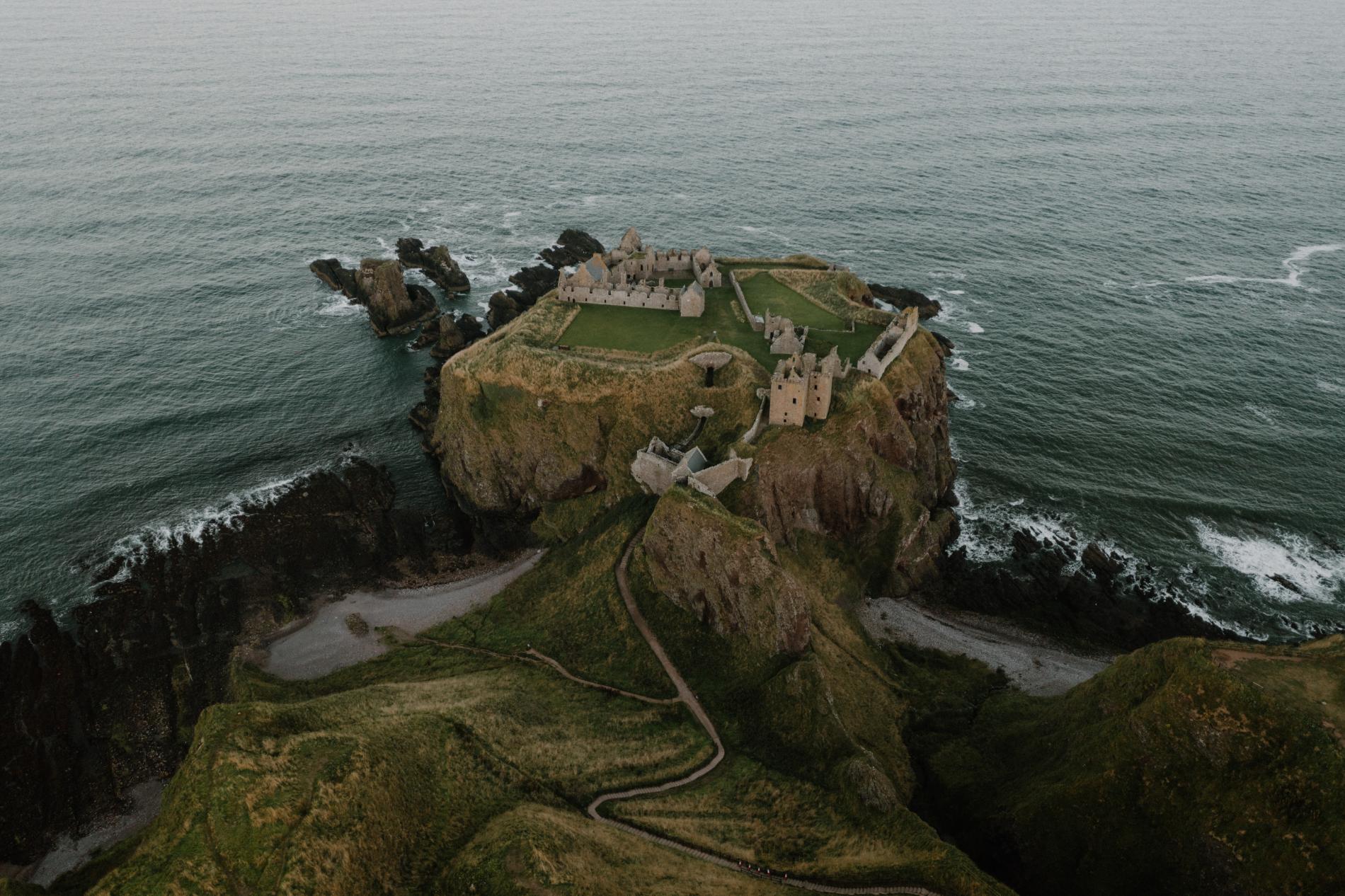
A traditional Scottish fishing town: sheltered harbour, sandy bays, the scent of the sea. To the south, the surreal red sandstone ruin of Dunnottar Castle rises from its clifftop. To the north, the fault line folds and disappears into the waves.
Stonehaven and its surroundings are the muse for Nikki Bruce, a ceramic artist creating from a green-hued garden studio and often exhibiting at local events. Making both functional and sculptural pieces, Nikki says she finds inspiration “from the northeast coastline.”
Growing up in the nearby village of Catterline, made famous by artists like Joan Eardley, young Nikki would spend hours at the rock pools, watching the fishermen return with full boats. “I wanted a similar experience for my family,” she says.
The time she spends with her children by the sea has seeped into her artwork. “The craggy rocks, smooth pebbles, barnacles, shells, seaweed, the sea and sky – all influence my pottery, both in form and the mark-making and colours used.”
What’s outstanding to a sightseer or geology lover can become everyday to Stonehaven locals – like the nearby beaches and cliffs at Skatie and Cowie, where the Highland Boundary Fault rock formations are visible.
“It’s fascinating how we take this beautiful rugged landscape for granted,” Nikki reflects. “When the kids were young and playing on the rocks, finding the landscape interesting and unusual, but forgetting how it was formed. When you think about it, it’s amazing. It feels like a very special place.” The foundations beneath our feet have always defined us. Whether we live and work along the Highland Boundary Fault, or somewhere else entirely, appreciating what’s below could give us a greater understanding of our place in the world.
People like Luisa – who, alongside her engaging and educational videos, is planning more in-person geology tours across the country this year – are leading this conversation, from Scotland with love.
“To this day, I get my breath taken away from me when I think about how geology’s the reason why Scotland looks the way it does,” Luisa says. “Geology can feel like a forgotten subject. I just want to share it with as many people as I can.”
-full-1744903255.jpg)
NIKKI BRUCE
Ceramic Artist
“When I settled in Stonehaven to bring up my family, we spent lots of time at the Cowie rock pools beside the Highland Boundary Fault Line. The craggy rocks, sea and sky all influence my pottery.”
Promoted Post
Stormhouse
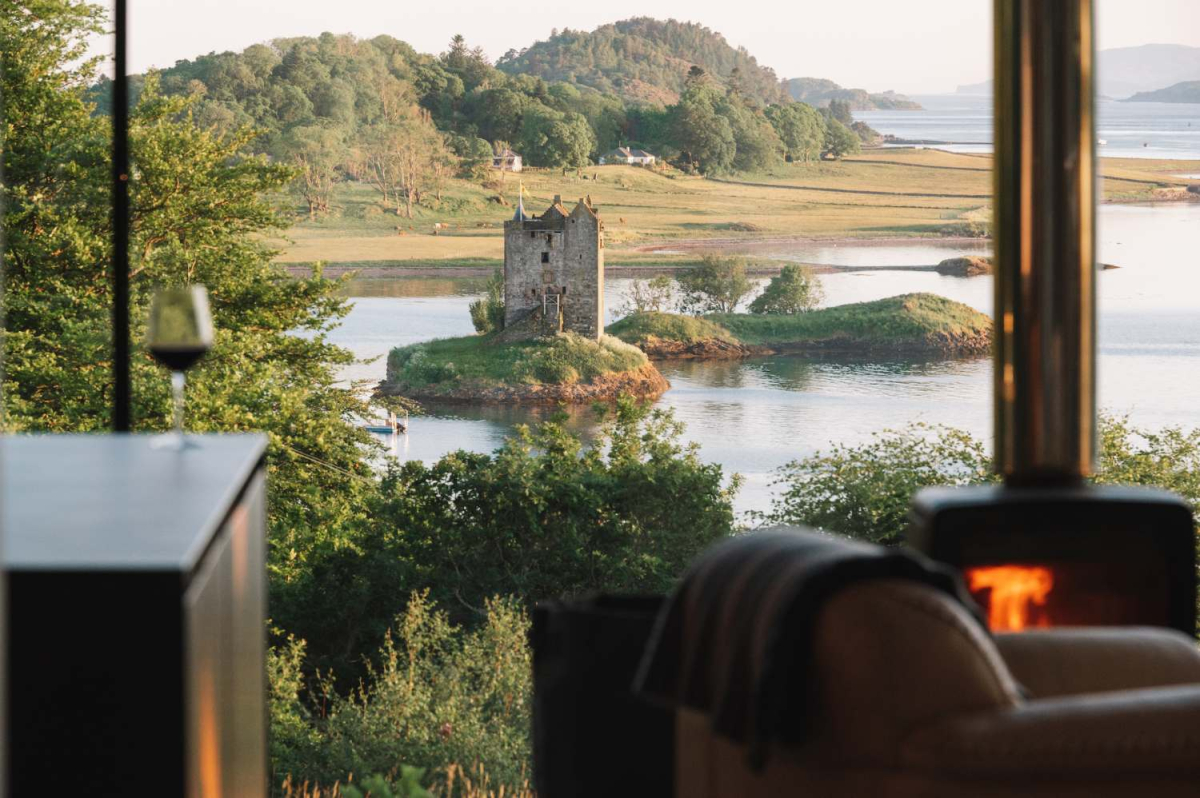
Escape to the wild, rugged landscape of Scotland’s west coast, perfectly located between mountain and sea
-full-1749645255.jpg)
-full-1749413136.jpg)






 Sign in with Google
 Sign in with Email