
Neolithic Sites of Scotland
Step back 6,000 years in time. Scotland, or at least what we know today as Scotland, is a land in revolution. The Neolithic period is ushering in a new way of life, with the people of the day shifting from a hunter-gatherer lifestyle to a less nomadic existence. Trees are being felled to make space for settlements. Land is being tilled. Livestock is being farmed. And monuments – often truly epic, and even in the 21st century still bound up in mystery – are being fixed into the earth.

Written by Ben Lerwill
-full-1748964954.jpg)
Today, many of the stirring remnants of this age remain. They tend to be clustered in coastal spots – most notably the islands of Orkney, which became a hugely important crossroads for seafarers across northern Europe – and while there’s much we’ll never know about the way these sites were used, or even how they were constructed, they stand today precisely where they have done for millennia, oozing intrigue and atmosphere.
From stone circles and burial tombs to ancient monuments and halfburied hamlets, these are places which once rang with life, which witnessed sunsets and sunrises, which gathered families and bound together communities, back in an era that was impossibly remote yet, somehow, still feels within reach. To visit them today is a privilege.
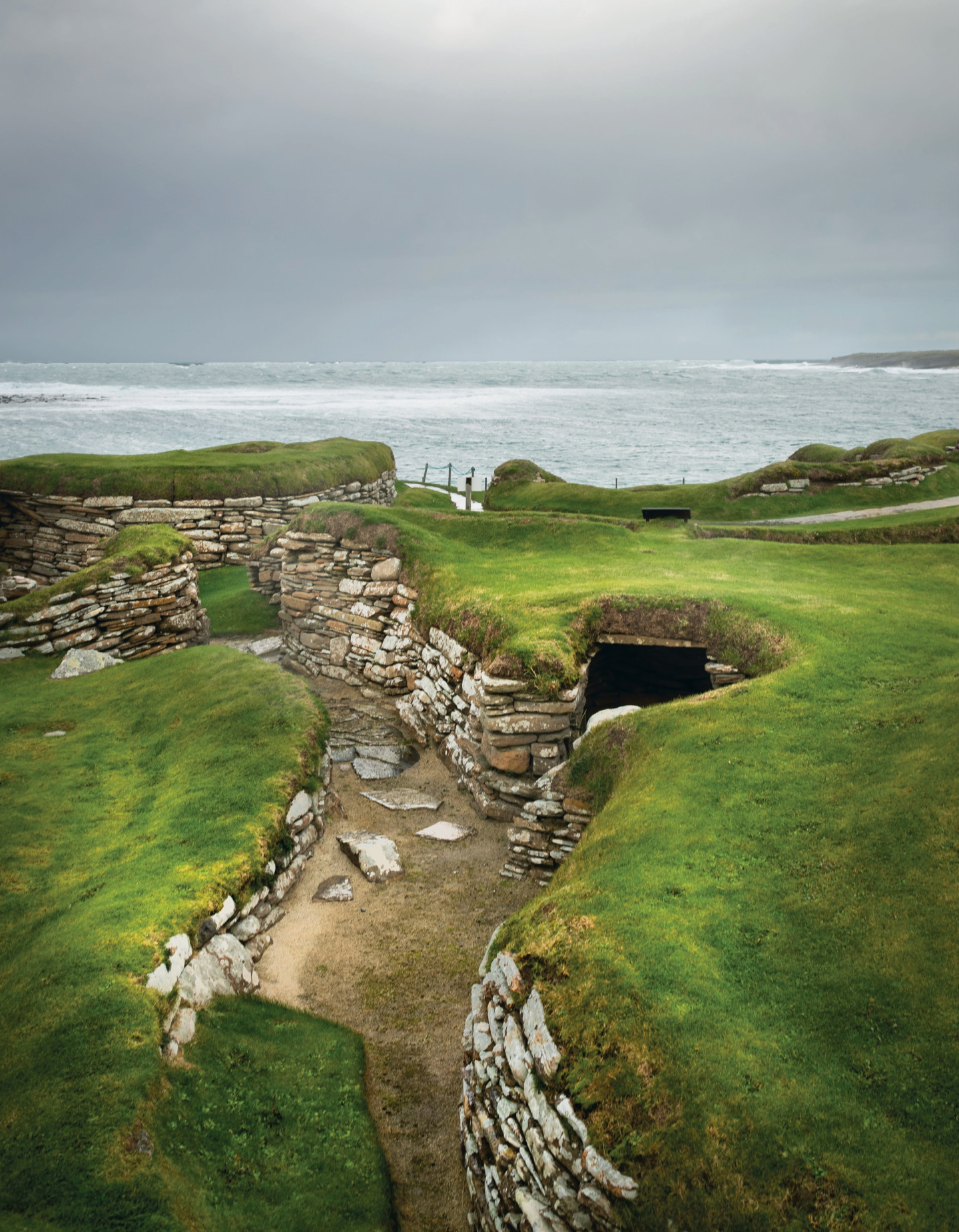
Skara Brae
SKARA BRAE
Orkney
Getting there: Mainland Orkney can be reached by ferry or plane. Ferries depart from various ports on the north coast of mainland Scotland, as well as Aberdeen and Lerwick, arriving in either Stromness, Kirkwall or South Ronaldsay. Loganair flies to Kirkwall from various UK airports.
The winter of 1850 was a stormy one. When a wild tempest tore into Orkney one night, pummelling the islands with ferocious gale-force winds, its power was so great that it tore the tops from the dunes, remodelling the landscape with the violence of a natural disaster. On one particularly hard-hit bay on the west coast of Mainland, however, this earthly upheaval revealed a secret: a vast midden, and the ruins of a series of ancient buildings. Today we know this long-hidden settlement as Skara Brae.
Before Stonehenge was raised, before the Egyptian pyramids took shape, there was Skara Brae. But despite the village being built some 5,000 years ago, a visit today reveals its architecture was anything but crude. The neat, stone-slab houses were interconnected by covered passages, with each dwelling holding a stone shelving unit, a central fireplace and two recessed ‘box beds’, one always larger than the other. Some ten of these buildings still stand on the site, including one that seems to have been used as a workshop for a local flintlike stone called chert.
Experts now consider Skara Brae to be the best-preserved Neolithic farming village in northern Europe, something aided by the fact it spent so long both undisturbed and underground. Incredibly, archaeological studies suggest the settlement was lived in continuously for some 600 years, from around 3100BC to 2500BC. Detailed studies have found precisely decorated stonework and thousands of lost artefacts, from gaming dice and pottery to delicate animal-bone jewellery and carved stones. To step among the village houses today, to wonder at the lives that were lived out here, and the families that worked the land, is an extraordinary experience.
SEE & DO NEARBY
Skaill House
This grand 17th-century mansion, overlooking the prehistoric village, celebrated its 400th anniversary in 2020.
Marwick Head Nature Reserve
A renowned ‘bird city’ on the clifftops north of Skara Brae, at its busiest in spring when guillemots and razorbills arrive to breed.
Yesnaby
A glorious stretch of coastline to the south, renowned for its sea stacks and deep panoramic views.
EAT & DRINK NEARBY
Skara Brae Café Currently operating from a tuk tuk, the café serves coffee, soft drinks and snacks at the Skara Brae site.
Orkney Brewery
Set in Quoyloo, a short drive north of the prehistoric village, this highly thought-of brewery produces a range of excellent local beers.
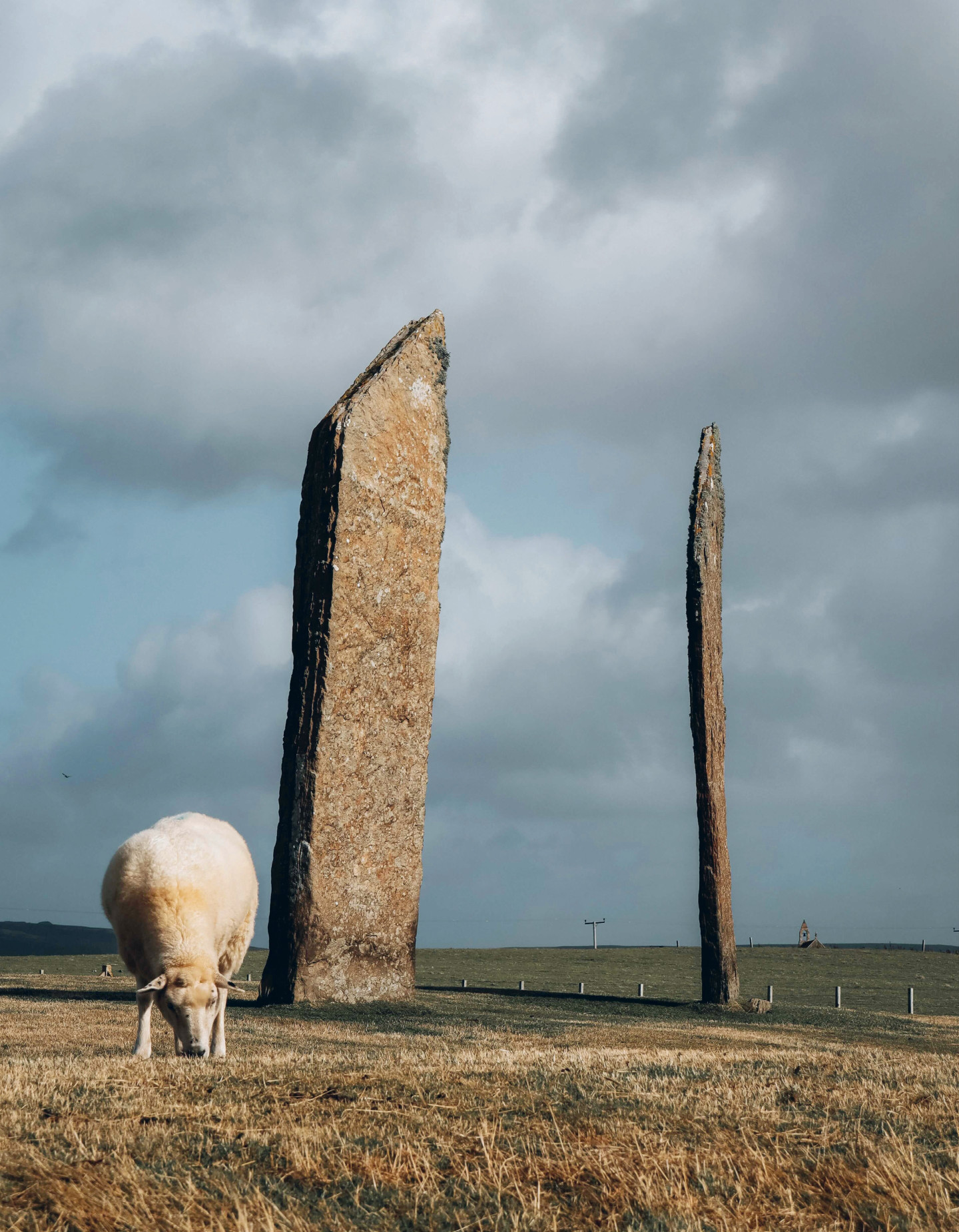
THE STANDING STONES OF STENNESS
THE STANDING STONES OF STENNESS
Orkney
Getting there: Mainland Orkney can be reached by ferry or plane. Ferries depart from various ports on the north coast of mainland Scotland, as well as Aberdeen and Lerwick, arriving in either Stromness, Kirkwall or South Ronaldsay. Loganair flies to Kirkwall from various UK airports.
Even when they’re on the horizon, the Stones of Stenness draw the eye. Under the big skies of Orkney, overlooking the flat green expanses of the Mainland, they jut above the Brodgar isthmus like a quartet of gargantuan incisors: surprisingly narrow but tall, snagged, unmissable and imposing. This, of course, is precisely the point. We still can’t be certain exactly when the stones here were constructed – perhaps as long as 5,400 years ago – but we know they would have been intended to fill Orkney’s Neolithic population with awe.
They still do a fine job of stirring the imagination. What can be seen today, however, is a very different spectacle to the one that would have greeted prehistoric Orcadians. The site was originally surrounded by a large henge, or circular bank of earth, which has since been eroded by centuries of ploughing. The stones themselves, meanwhile, once numbered at least 11, forming a monumental ring some 30 metres in diameter. At its centre, still visible today, is a stone hearth – suggested in Sir Walter Scott’s 1821 novel The Pirate to have once been an altar for human sacrifice.
Is this just fanciful, and rather grisly, speculation? We’ll never know. What’s clear is that the stones here would have been a vitally important communal location for the civilisation of the day. Stenness is today seen as the oldest of all the ceremonial structures in the World Heritage-listed Heart of Neolithic Orkney, with an assortment of smaller upright stones – similarly shrouded in conjecture – lying feet away. Mere steps from the site, meanwhile, and adding to the sense of the stones being at the heart of the things, is the little Neolithic settlement of Barnhouse.
SEE & DO NEARBY
Pier Arts Centre An excellent art gallery and museum in nearby Stromness, with changing exhibitions alongside its permanent collection.
Ferry to Hoy
Catch the NorthLink ferry from Stromness to the island of Hoy for the finest hillwalking in Orkney.
Stromness Museum
Find out more about this fascinating port town, and the maritime history of this unique island group.
EAT & DRINK NEARBY
Hamnavoe
An enjoyable Stromness restaurant specialising in seafood and other Orkney fare – open in the summer only.
The Ferry Inn
A harbourfront pub with an atmospheric bar, good food (try the seafood chowder) and outdoor seating.
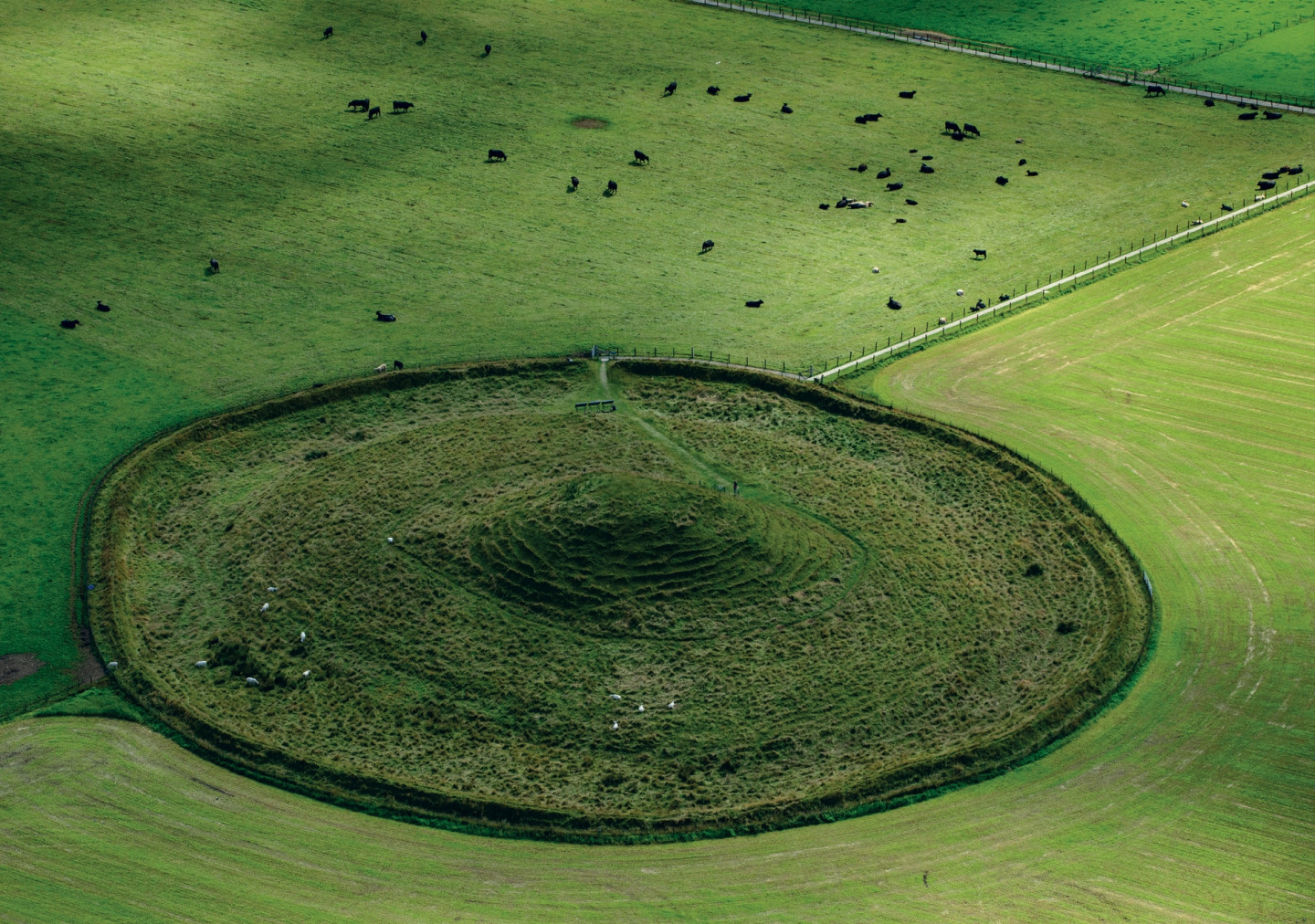
MAESHOWE
MAESHOWE
Orkney
Getting there: Mainland Orkney can be reached by ferry or plane. Ferries depart from various ports on the north coast of mainland Scotland, as well as Aberdeen and Lerwick, arriving in either Stromness, Kirkwall or South Ronaldsay. Loganair flies to Kirkwall from various UK airports.
From a distance it looks like a freak lump in the land, a grassy hillock surrounded by low-lying fields. Up close, however, majestic Maeshowe reveals itself for what it is: a prehistoric chambered tomb of exquisite complexity. Circled by a carefully sculpted ditch and bank, and entered by way of a long, narrow passage, the structure displays a precise design that makes its age seem almost unfathomable. It was around 5,000 years ago that a team of builders constructed the tomb here, for bodies unknown – and their work is no less astonishing today than it would have been then.
The most likely hypothesis is that the tomb was used to bury multiple important members of the island community, although the central chamber, while neatly proportioned, is a relatively compact one. Parts of the roof are the result of modern-era restoration, but the drystone walls, made from painstakingly aligned stone slabs, have been in place for five millennia. The low-lit, womb-like atmosphere inside the tomb makes the wide open countryside outside feel like another world altogether, and the simple but unreadable geometric carvings along the walls hint at some long-lost symbolism. Who was laid to rest here? Who was allowed in to pay their respects? And what beliefs swirled around the bones?
Clumsy clearance work in the 1800s removed much of the evidence that would have given us a greater understanding of Maeshowe’s past, although more modern archaeological studies have still revealed plenty. Perhaps the most remarkable factor of all is that the passageway into the tomb aligns precisely with the midwinter sunset. Each year, for three weeks either side of December 21 – the shortest day of the year – the Scottish sun shines directly down the passageway and into the tomb, filling the chamber with light.
SEE & DO NEARBY
Maeshowe Visitor Centre
Tours of the site begin at this informative little visitor centre, a short shuttle bus ride from the tomb itself.
Happy Valley
A peaceful spot with an old cottage, a woodland garden (there are around 700 trees) and a wee burn.
Firth Park
Another serene slice of parkland, this time in nearby Finstown. Expect abundant plant life and various paths to explore.
EAT & DRINK NEARBY
Gerri’s Ice Cream Parlour
Sunny day? Head to nearby Gerri’s to sample the island-made Orkney Ice Cream. The rum-soaked raisin flavour has won awards.
Leigh’s Real Taste of Orkney
A snack van with a cult following and a fine range of local food, making use of an array of different island producers.
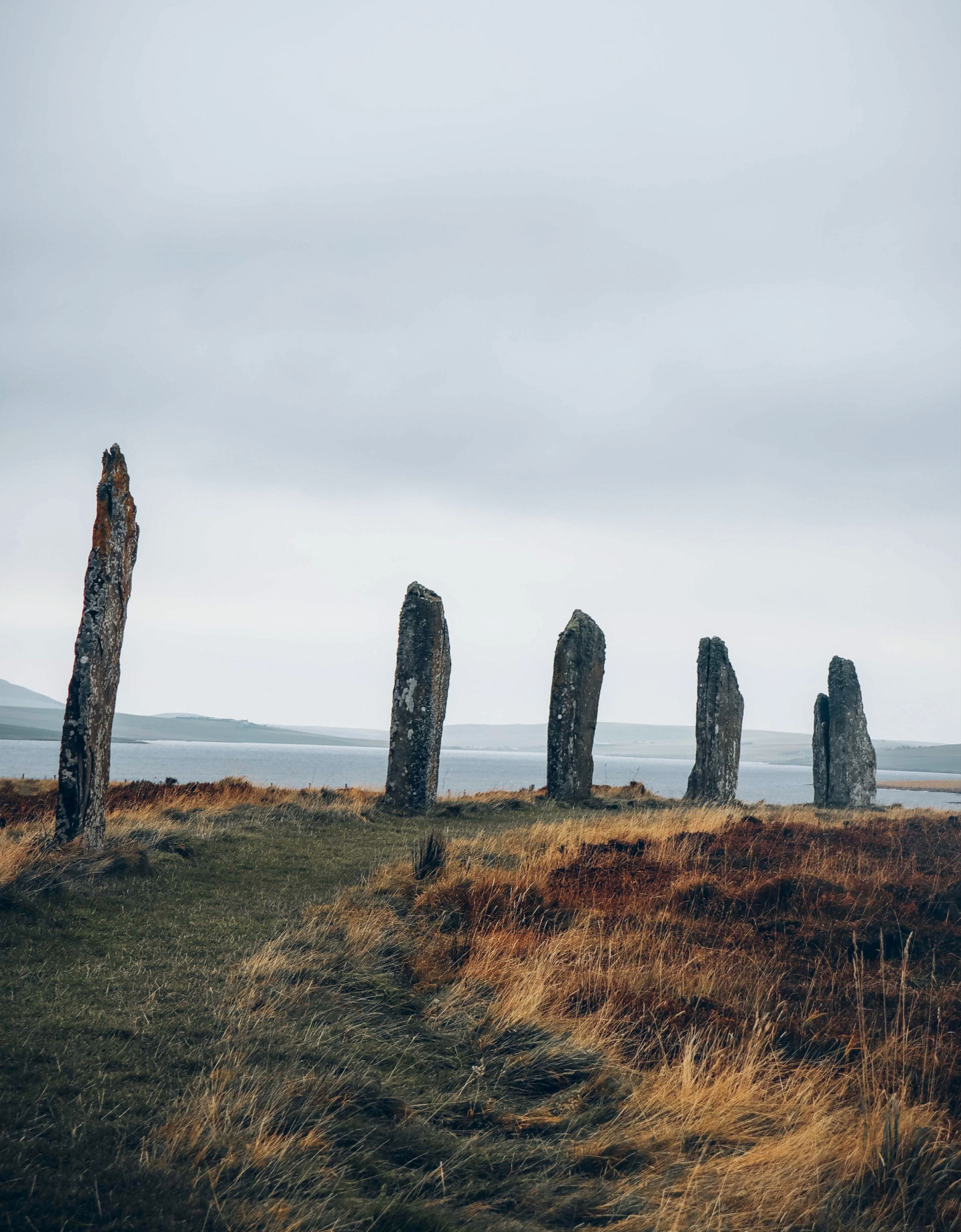
Ring of Brodgar
RING OF BRODGAR
Orkney
Getting there: Mainland Orkney can be reached by ferry or plane. Ferries depart from various ports on the north coast of mainland Scotland, as well as Aberdeen and Lerwick, arriving in either Stromness, Kirkwall or South Ronaldsay. Loganair flies to Kirkwall from various UK airports.
Rewind 4,500 years into Orkney’s past. The Stones of Stenness have already been a fixture on the landscape for centuries when the people here are compelled – by a sense of societal ambition, perhaps, or by reverence to an ancestral power – to create a monument that is bigger and bolder than its predecessor. Less than a mile from the Stones of Stenness, therefore, is constructed the mighty Ring of Brodgar, its 60 stones arranged in a near-perfect circle measuring more than 100 metres in diameter. The result is an epic henge monument that counts as one of the most impressive in Europe. More than half the stones are still standing today, circled by a large ditch carved out from the local sandstone.
As ever with prehistoric remains, the questions come thick and fast. What purpose did the Ring serve? What stood in its centre? And who gathered here, in those long-gone days when Orkney became a cultural crossroads in the seas? The importance of the site is indisputable, and not just because of its scale. A scattering of burial mounds surrounds the henge, as well as a nearby six-foot-high standing stone – known as the Comet Stone – which may have served as a viewing point for gazing over the henge.
Records show that historians have puzzled and marvelled over the Ring for some 500 years at least, with the earliest accounts from antiquarians dating back to 1529. Half a millennium from now, our descendants will doubtless still be looking across the land at this gnomic ring of stones, and wondering at the tales and rituals that were played out here.
SEE & DO NEARBY
Brodgar Nature Reserve
Situated between Loch Harray and Loch Stenness, this RSPB reserve gives the chance to spot lapwings, curlews, oystercatchers and more.
Ring of Bookan
This raised earthwork, surrounded by a ditch, is thought to be all that remains of another huge prehistoric henge.
Orkney Folklore & Storytelling Centre
An attraction dedicated to protecting, preserving and presenting the traditional tales and legends of the islands.
EAT & DRINK NEARBY
The Tearoom
A small, family-run vintage tearoom in Stromness, selling light lunches, homebakes, and high-quality teas and coffees.
Bayleaf Delicatessen
You’ll find fine food in the heart of Stromness at this well-stocked deli, which showcases the best of Orkney’s produce.
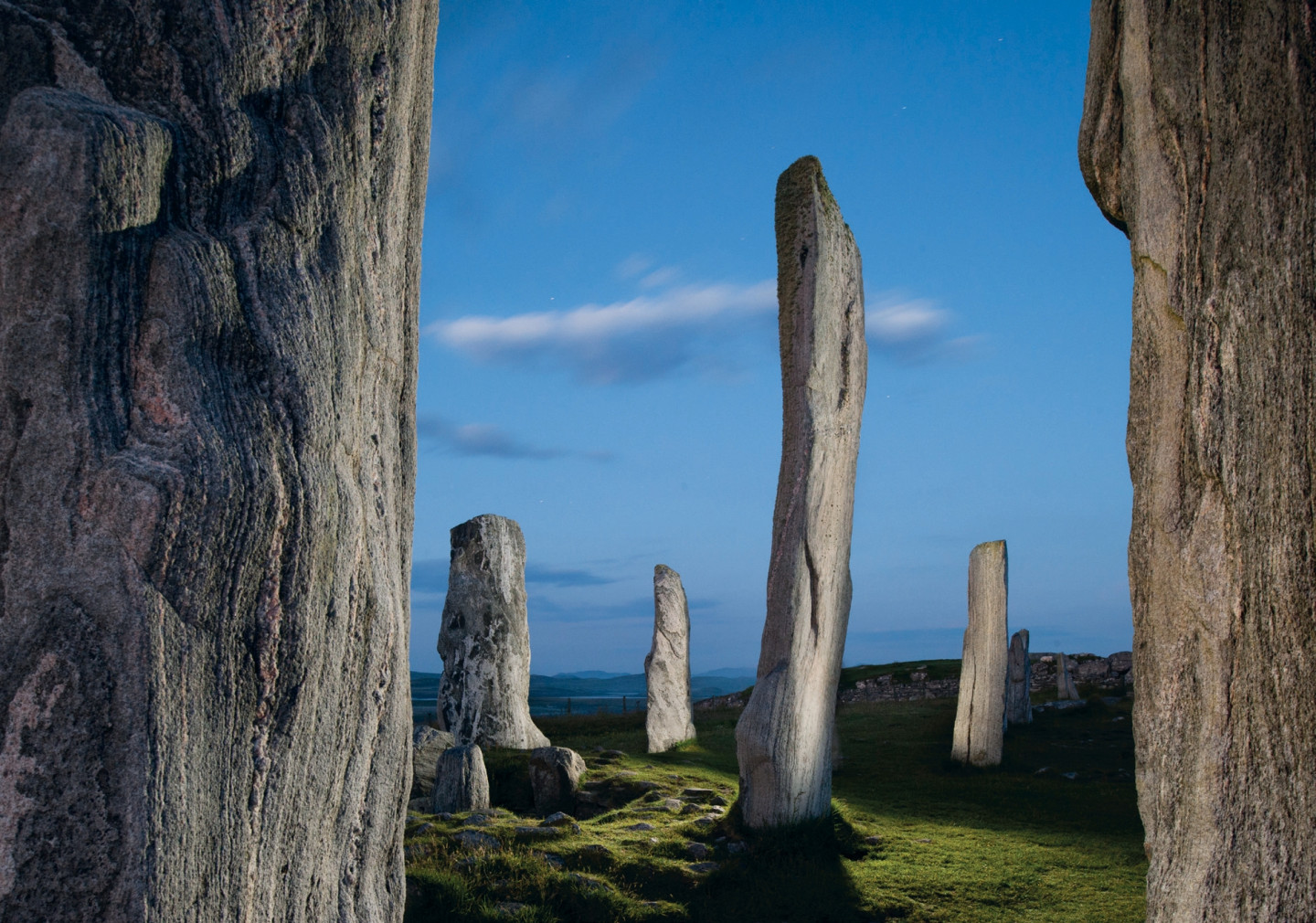
PHOTOGRAPHY // Jim Richardson Instagram: @jimrichardsonng
CALLANISH STONES
Isle of Lewis
Getting there: The nearest airport and ferry port are both at Stornoway, around 20 miles (or 30 minutes’ drive) away. Loganair flies there from Glasgow, Edinburgh and Inverness. CalMac Ferries sails there from Ullapool. The stones are also on the Hebridean Way Cycle Route.
And so to the Western Isles, and the dim and distant Hebridean past. On a long ridge above Loch Roag, on the Isle of Lewis, there stands a monumental assemblage of Neolithic standing stones, as prominent now as they would have been 5,000 years ago. These are the Callanish (or Calanais) Stones, and the fact that they predate Stonehenge says plenty about the geography of power in the New Stone Age. Just as remarkably, there’s evidence that the stones were used as a place of gathering and ritual for as long as 2,000 years. (And unlike Stonehenge, they’re today free to wander around and explore.)
The layout of these ancient markers is a wonder in itself. Arranged in a cruciform, or cross, shape – with a large stone circle at its core – the stones comprise a long northern avenue, with separate arms extending to the east, south and west of the central circle. One scientifically supported theory is that the site had an astronomical role, with its tall, thin slabs of stone having been placed to align with the movements of the Sun and Moon. That our ancestors had the will, strength and ability to haul the stones into such a deliberate grouping is a stirring thought to hold in mind as you stand on the ridge today, with an island wind blowing in from the south.
The stones themselves are hewn blocks of Lewisian gneiss, some as large as 12ft tall. Other, smaller stone circles also stand in the vicinity, constructed from the same rock type. Fittingly, perhaps, the local gneiss is one of the oldest geological substances in the British Isles, having been formed some 3,000 million years ago.
SEE & DO NEARBY
Calanais Standing Stones Visitor Centre
Home to the ‘Story of the Stones’ exhibition, which looks at the role of the stones over the centuries, as well as a gift shop and café.
Callanish Alpacas
Fancy cooing at some oh-so-cute female alpacas and their babies? You’re in the right place. Stornoway The island capital of Lewis sits less than 18 miles away – don’t miss Lews Castle and the Museum nan Eilean.
EAT & DRINK NEARBY
Mollans Takeaway
Scampi, prawns and haddock are the specialities at this small but well-run takeaway – all served with chunky hand-cut chips.
Doune Braes Hotel
The nearest hotel to the standing stones, sitting on the shore of a lochan, serves fresh island seafood and other dishes.
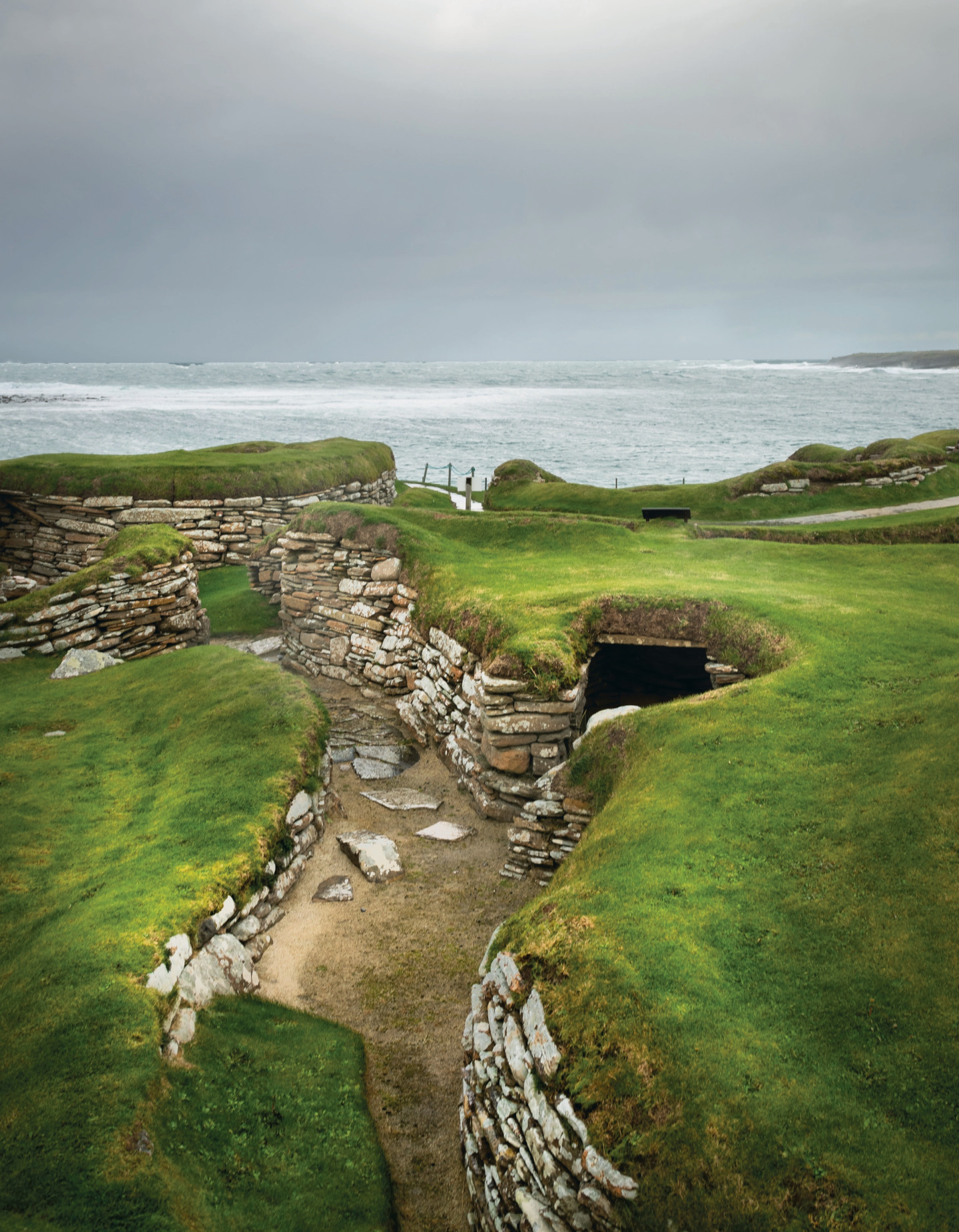
KNAP OF HOWAR
Island of Papa Westray, Orkney
Getting there: Papa Westray has various air and sea connections, mainly via Kirkwall. Orkney Ferries sails from Kirkwall to Papay twice a week. In summer, there are also regular crossings from Westray. Loganair flies from Kirkwall to Papay at least twice a day (once on Sundays).
Orkney is home to a dizzying abundance of different Neolithic sites. The islands here are scattered liberally across the sea, with mainland Britain to the south, Shetland to the north, and the faroff lands of Scandinavia away to the east. Each of Orkney’s islands has its own distinct character, not least Papa Westray – a small outlier at the top of the archipelago – which has a mood of remoteness rarely encountered in the UK. When writer Amy Liptrot wrote The Outrun, her multi-awardwinning memoir of life in this part of the country, it was largely set here on Papay (as the locals know it).
The island measures some four miles across by one mile wide, but these modest dimensions bely the fact people have settled here for at least 5,000 years. For proof, you need look no further than the Knap of Howar, thought to be the oldest preserved stone house in northern Europe. Let that sink in for a moment. Up here, on a tiny, wave-tossed island on the very edge of Scotland, stand a pair of connected dwellings said to have a longer history than any other in the northern half of our continent.
The two stone-built, oblong buildings – linked by a passageway – were lived in for around 500 years, and their stone cupboards and stalls, and central hearth, hint at a well ordered, if isolated, way of life. The walls are some five feet high. Elsewhere on the island, meanwhile, you’ll find a chambered cairn at Holm of Papa Westray. Were the cells of this prehistoric tomb the resting place of the inhabitants of the Knap of Howar farmsteads?
SEE & DO NEARBY
St Boniface Kirk
A restored church dating back to the 8th century, surrounded by historical remains from different eras of the island’s past.
Fly to Westray
Catch a plane to neighbouring Westray – the shortest scheduled passenger flight in the world.
RSPB North Hill
Home to the rare Scottish primrose, the cliffs in this reserve also attract Arctic terns and skuas during the breeding months.
EAT & DRINK NEARBY
Papay Co-op Shop
Dining options are limited on the island, but the local shop sells groceries and supplies.
Papa Westray Hostel
The dining room at the island hostel is also a community function room and bar, with meals often available at weekends.
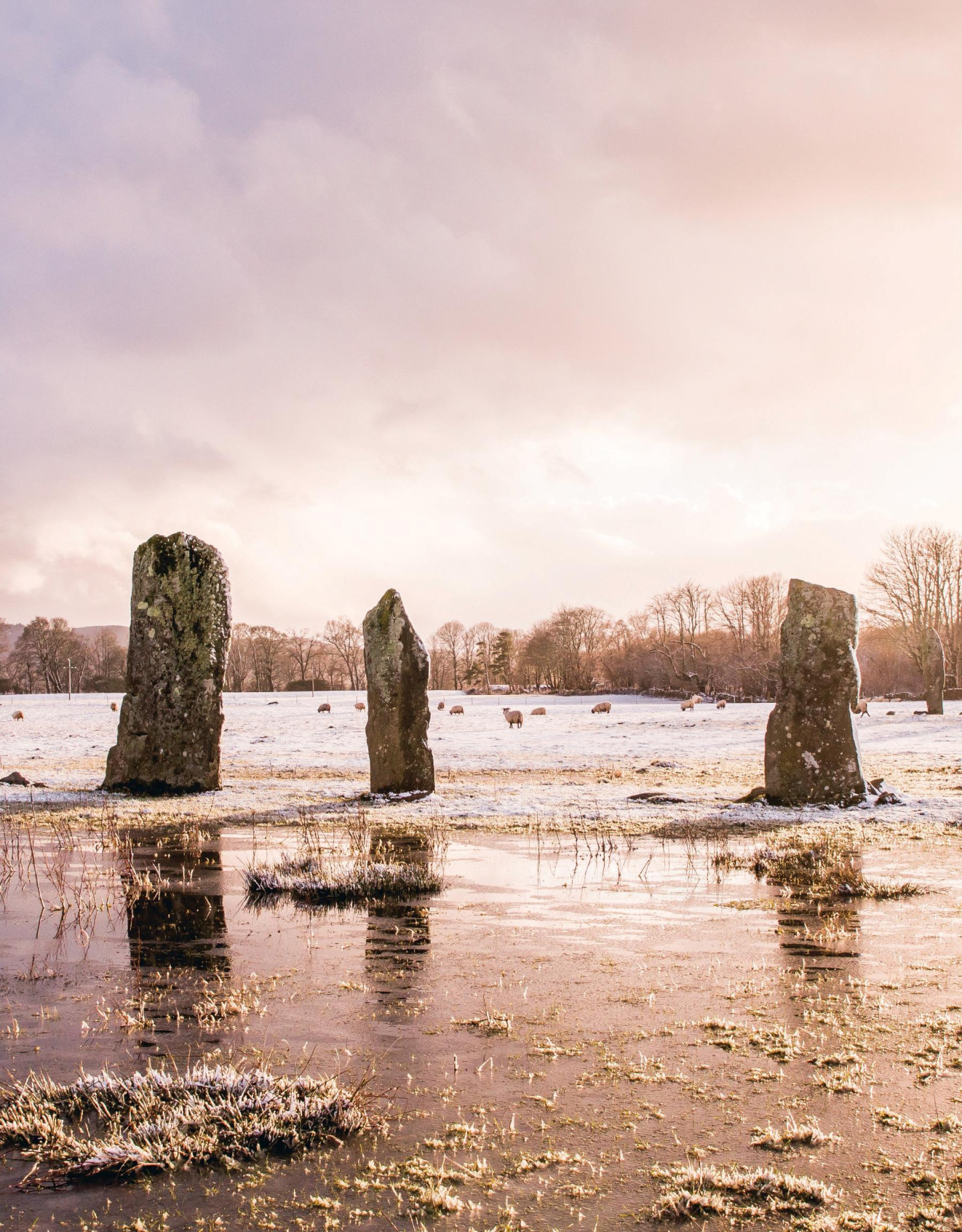
KILMARTIN GLEN
Argyll
In the spring of this year, an archaeologist in Argyll was passing a cairn at sundown and decided – on a whim – to slide inside with a torch. Above his head, he noticed a distinctive manmade symbol etched into the rock, an ancient engraving which on closer investigation revealed itself as the outline of a deer. Within minutes, he was able to make out images of other creatures close by. What the archaeologist had uncovered, on a spur-of-themoment investigation, were the first confirmed prehistoric animal carvings in Scotland.
That this discovery took place at Kilmartin Glen was emphatically no surprise. The site, located around 20 miles south of Oban close to Scotland’s west coast, is home to one of the most comprehensive collections of Neolithic remains in the UK. Burial cairns, rock art, henge monuments and standing stones – as well as who knows how many longhidden carvings and structures – are all abundantly scattered around the countryside surrounding the present-day village of Kilmartin.
The past doesn’t stop in its tracks, of course, and Kilmartin Glen’s historical treasures also stretch through the Bronze Age, Iron Age and into the more modern era. Castles, forts and sculptured stones – not to mention a huge array of excavated pottery, jewellery and weapons – add to the fact that this pocket of the mainland has witnessed settlers, invaders and pioneers come and go for the best part of five millennia. Such was its prestige, in fact, that in the 6th century it was the site of the ‘capital’ of the Gaelic kingdom of Dál Riata, with trade links across Europe. The old hillfort of Dunadd, indeed, can still be visited today.
SEE & DO NEARBY
Kilmartin Museum
Reopening bigger and better in 2023, the museum gives an absorbing overview of the area’s story-filled past.
Kilmartin Parish Church
A Gothic church which also plays home to two remarkable early Christian crosses, and a collection of ancient graveslabs.
Carnasserie Castle
This now ruined 16th-century building was once a stylish residence, complete with the Renaissance flourishes of the day.
EAT & DRINK NEARBY
The Smiddy Bistro Come for the quiches, the brunches, the salads, the seafood… and a resistanceslaying selection of cakes.
Kilmartin Hotel & Restaurant
Close to the prehistoric remains, this whitewashed hotel serves pub fare with a focus on Scottish and seafood dishes.
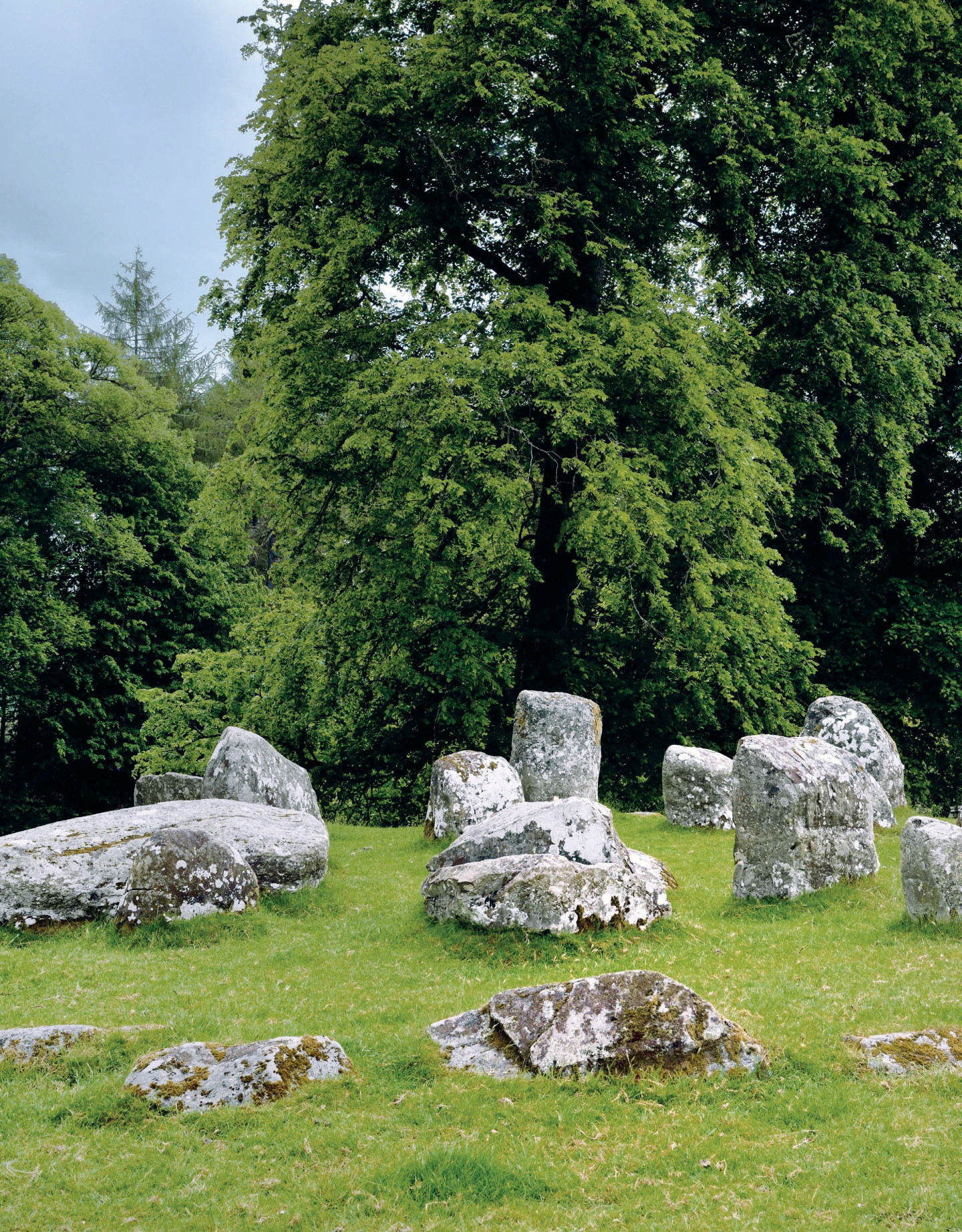
CROFT MORAIG STONE CIRCLE
Aberfeldy
The River Tay is the longest waterway in Scotland, stretching for some 117 miles from its source on the slopes of Ben Lui to its mouth on the Firth of Tay. A river of this scale would have held as much importance in Neolithic times as it does today, so it’s no shock that the Tay Valley is scattered with prehistoric and Bronze Age remains. Of these, one of the most remarkable – and certainly the most accessible – is the Croft Moraig Stone Circle, near Aberfeldy.
Today based in a farmer’s field close to the A827, the stone circle was excavated in 1965, during which it was discovered that construction took place in three phases, all several thousand years ago. Originally created as a ring of timber posts, it was then rebuilt as an oval of standing stones, before eventually being encircled by a larger circle of stones. What’s left today is a hugely atmospheric arrangement of hefty menhirs whose role and symbolism remain largely wrapped in supposition.
A pattern of cup-marks decorates one of the larger stones, which itself aligns with the midsummer full moon, while shards of pottery from around 3,000BC have been found on the site during archaeological work. The inland location of the stone circle makes it something of a rarity among Scotland’s best-known Neolithic remnants, but as with so many of the country’s sacred sites, it exudes a peculiar enchantment that’s hard to convey until you’re standing in front of it, with your hands running over its bulk and your mind spinning back through the millennia.
SEE & DO NEARBY
The Scottish Crannog Centre
Crannogs were ancient dwellings built over lochs – the centre gives a fascinating overview of their use and construction.
Birks of Aberfeldy
A famous circular walk through birch woodland, named after Robert Burns’ 1787 poem The Birks o’Aberfeldie.
Highland Safaris Red Deer Centre
The kids can meet red deer and barn owls at this activity centre, which also offers wildlife safari tours.
EAT & DRINK NEARBY
The Tay
A top-notch sandwich shop in Aberfeldy, with an extensive salad bar as well as soup, paninis and jacket potatoes.
Karelia House
A “crafters’ paradise” selling fabrics, yarns and more – and home to an excellent, firewarmed café selling homemade scones.
PHOTOGRAPHY // Keith Taylor
MACHRIE MOOR STANDING STONES
Isle of Arran
Getting there: The standing stones are around three miles north of Blackwaterfoot, close to Arran’s west coast. The nearest ferry port is Brodick, around 11 miles (40 min) away, which can be reached from Ardrossan with CalMac Ferries.
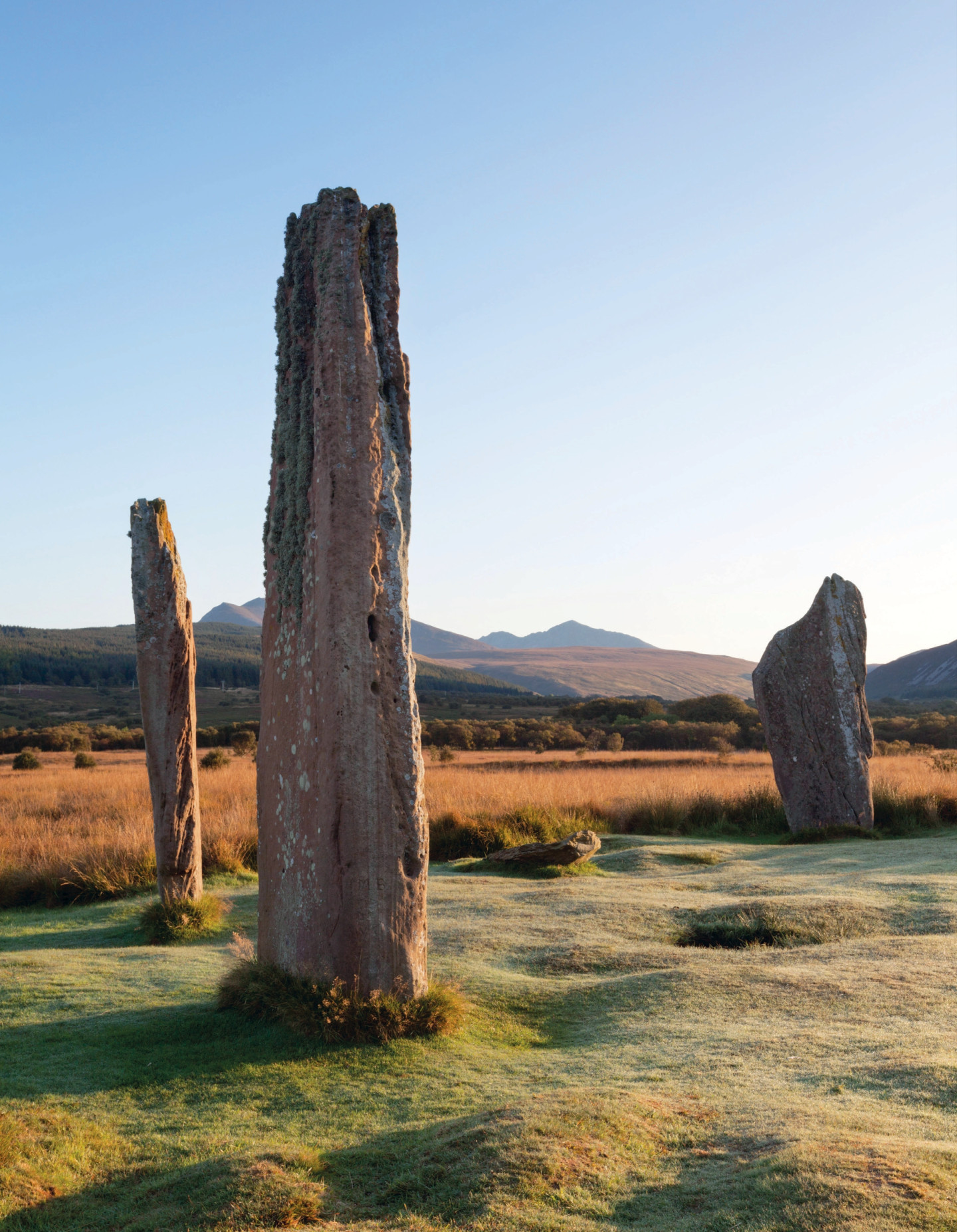
Stone circle locations weren’t selected at random. The work involved in heaving colossal slabs of rock into place would have been herculean, but they still required precise positioning. Nowhere gives better evidence of this than windswept Machrie Moor, on the Isle of Arran, where no less than half a dozen stone circles stand in close proximity to each other. Why so many? The overriding theory lies in the surrounding hillscape, where a notch to the northeast not only splits Machrie Glen into two valleys but also cradles the sun during the summer solstice sunrise. This is no arbitrary scattering of stones.
Today, our ancestors’ astrological know-how can seem like a lost art, or some strange seventh sense, but the truth is perhaps much simpler: that this tribute to the skies was a way of recognising nature as something to be guided by. At a time when weather conditions could regularly have meant the difference between survival and suffering – or even between life and death – it’s no wonder that the shifting of the seasons was seen as so great an event.
The moor remains one of the most important prehistoric sites in Scotland, with a number of chambered cairns, hut circles and standing stones – and even a couple of crumbling age-old forts – also sprinkled across its plains. It’s relatively straightforward to explore, too, being accessible on foot from a nearby car park. The handsome Isle of Arran gives any number of strong reasons to be visited, from its cycle trails and mountain hikes to its fresh produce and whisky distilleries, but magical Machrie Moor stands shoulder to shoulder with the best of them.
SEE & DO NEARBY
Arran Heritage Museum
Revisit the Arran of the past through a reconstructed farmhouse, milk house, stable, bothy, laundry and more.
Brodick Castle
A baronial castle surrounded by woodland, gardens and waterfalls, with plenty of entertainment for families.
Blackwaterfoot Beach
A quiet but spectacular sandy beach on the island’s southwest coast, overlooking the Kintyre peninsula.
EAT & DRINK NEARBY
Blackwater Bakehouse A local bakery of real renown, using freshmilled organic heritage grains to create all manner of goodies.
Café Thyme
Based in the family-run Old Byre showroom, the café serves good home bakes and lunches, as well as Turkish-style flatbreads.
PHOTOGRAPHY // Jim Richardson: jimrichardsonphotography
NESS OF BRODGAR
Orkney
Getting there: Mainland Orkney can be reached by ferry or plane. Ferries depart from various ports on the north coast of mainland Scotland, as well as Aberdeen and Lerwick, arriving in either Stromness, Kirkwall or South Ronaldsay. Loganair flies to Kirkwall from various UK airports.
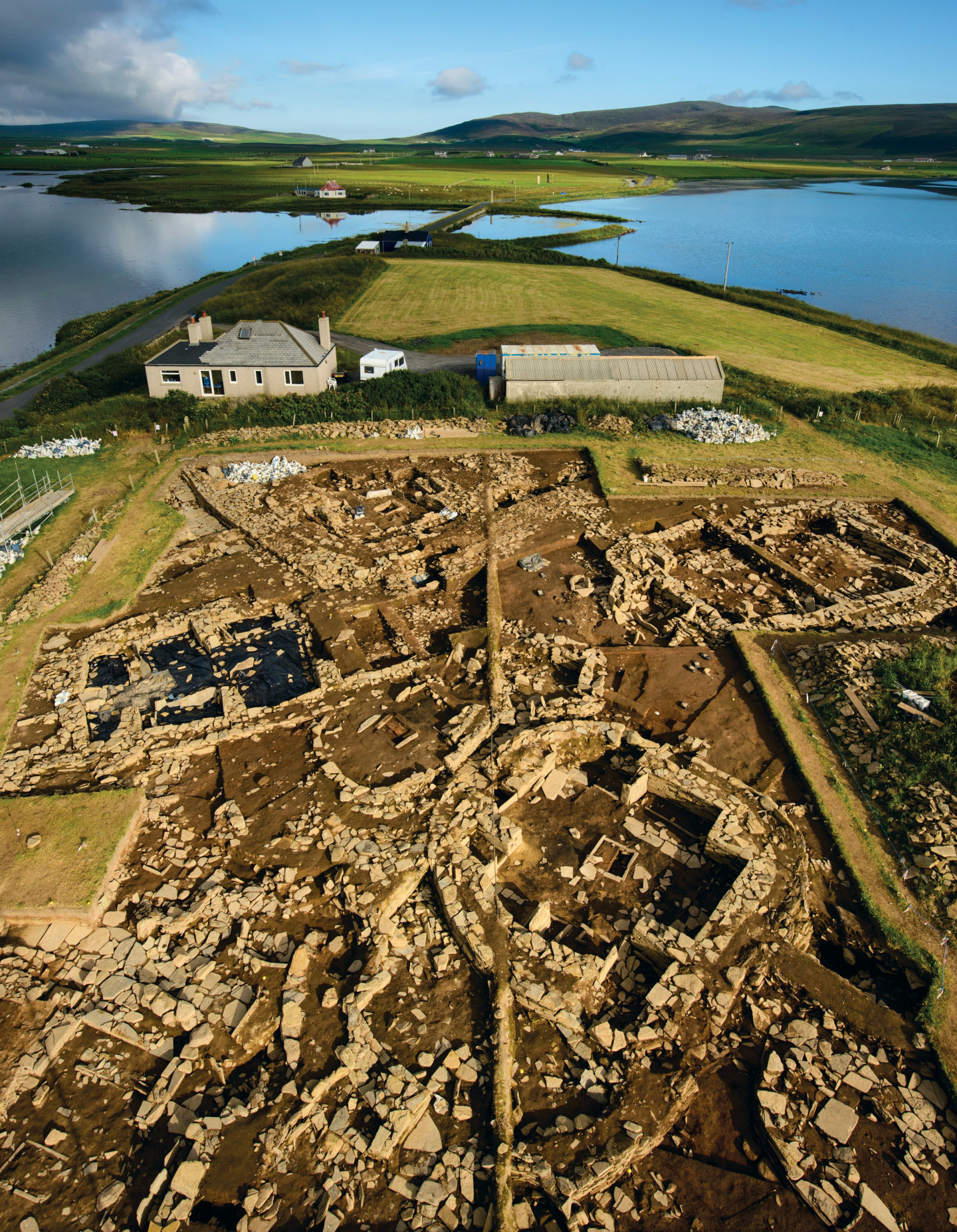
It was 1999 when UNESCO conferred World Heritage Status onto what is now known as the Heart of Neolithic Orkney. Ironically, however, it wasn’t until a few years later that arguably the most extraordinary prehistoric site of all was discovered here, on the neck of land between the Standing Stones of Stenness and the Ring of Brodgar. That was in 2003, when a ploughman working the field uncovered a large chunk of dressed stone – a first hint at the huge, buried complex of prehistoric buildings that have since drawn archaeologists from far and wide.
It was clear early on that the structures here were more than mere houses. Their scale suggested a large, wall-ringed site of immense ceremonial importance, containing buildings which had been in use for around 1,000 years. The stonework was elaborate, and carefully laid, with evidence of drains, as well as ‘newer’ buildings having been erected on the site of older foundations. The excavations also revealed a vast number of buried artefacts, from pottery fragments and carved stones to volcanic glass – a sure sign that the people who used the Ness of Brodgar had links further afield. All this, and to date only a fraction of the overall site has so far been explored.
One building on the site, however, has captured the imagination of archaeologists more than any other. Known in some quarters as ‘the Temple of Orkney’, it measures more than 80ft in length, with a width of more than 620ft, and its final act seems to have been the sacrifice of around 400 cattle, whose shinbones were found piled around its walls. Was this symbolic offering a way of marking the end of the Ness of Brodgar? This, and countless other questions, still flit around the site, with each fresh discovery throwing up answers and quandaries of its own.
SEE & DO NEARBY
Orkney
Wireless Museum Using vintage and modern radios to explore the archipelago’s changing culture, and its eventful wartime history.
Scapa Distillery Visitor Centre
Arrange a tasting at this quality Kirkwall distillery, named for its location overlooking the famous Scapa Flow.
St Magnus Cathedral
Kirkwall’s most eye-catching sight is this medieval cathedral, built over three centuries and brimming with history.
EAT & DRINK NEARBY
The Foveran
Find everything from Orkney-reared steaks to freshly caught scallops at this family-run restaurant just a few miles from the Ness.
Helgi’s
A traditional slate-floored pub serving interesting grub (think haggis quesadillas), and renowned, in normal times, for its music sessions.
Promoted Post
Issue 12 is now shipping worldwide from Scotland.
Issue 12 is now shipping worldwide from Scotland.






 Sign in with Google
 Sign in with Email