
Shetland’s Forgotten Women
Four hundred years on, and we still remember Scotland’s witches...
You don’t have to travel far in Scotland to find a story of a witch, wizard, or some other supernatural being. Our culture and folklore are deeply woven with tales of those who had healing powers, seeing eyes or the ability to curse, for good or evil. However, 17th-century Scotland had an altogether darker side; one where women were wrongly persecuted, judged, tried and executed for crimes they hadn’t committed.
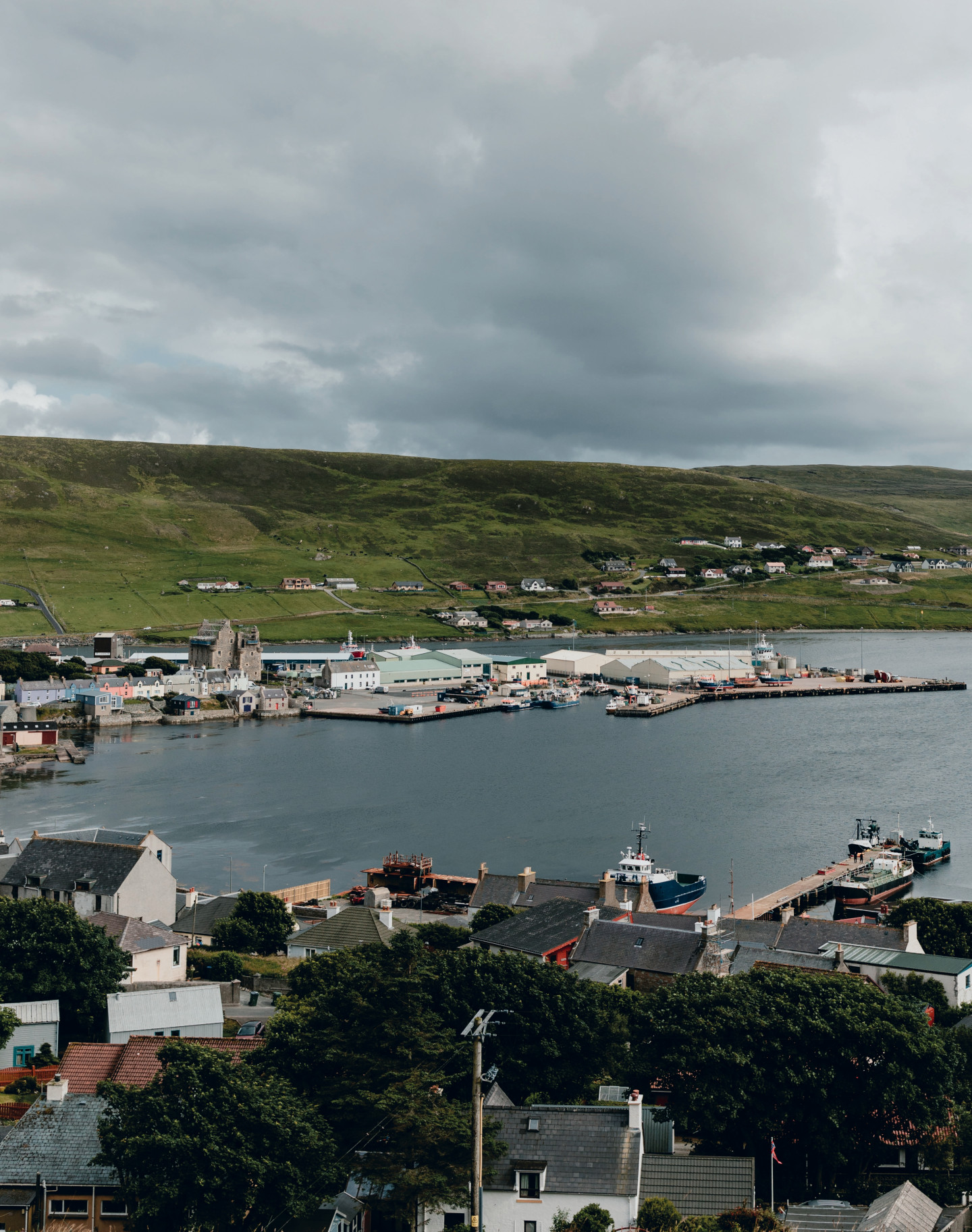
Growing up, my bedroom window overlooked the Gallow Hill in Scalloway, the former administrative capital of Shetland. As the name suggests, Gallow Hill was the main execution site where witches faced their final humiliation. This was the place where their dignity was stripped from them and their lives cruelly extinguished. I spent my younger years wondering about the fate of the women, and men, who were tried on this tranquil hill overlooking my picturesque childhood home.
These women’s stories have, for the most part, been lost to history; all that remains of their rich lives are a few indecipherable lines in the clerk’s court records. With scant detail about who they were or what their lives looked like outside their accusation, and without graves to mark their passing, many of these women have been lost to history. This research is dedicated to all those accused of witchcraft, and I hope that in telling the story of Shetland’s witches, I can weave a few of the threads of their stories together again, so they’re remembered as women, not witches.
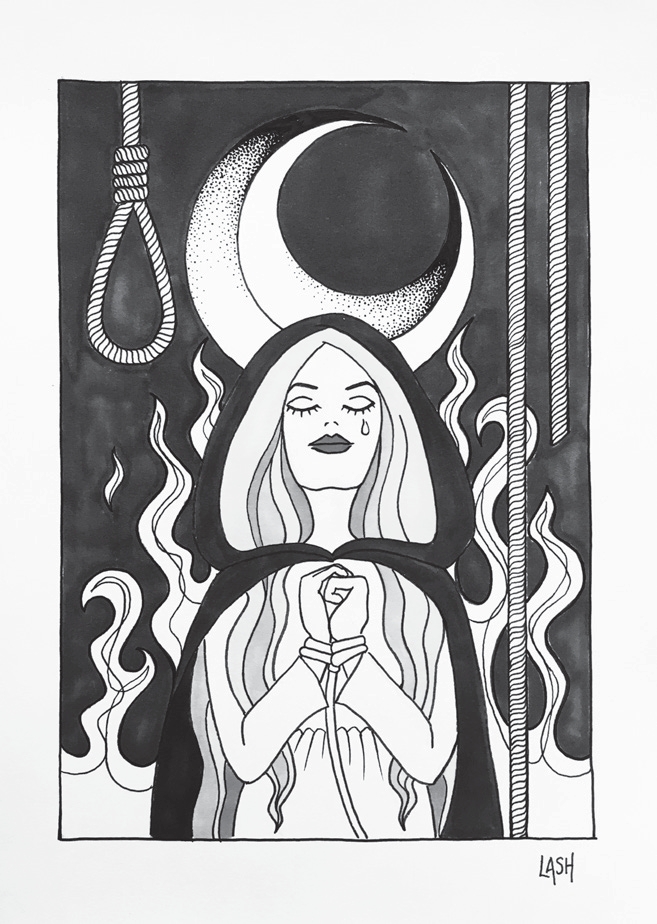
“17th-century Scotland had an altogether darker side; one where women were wrongly persecuted, judged, tried and executed for crimes they hadn’t committed.”
Witch hysteria
The first laws on witchcraft followed Scotland’s Reformation in 1563. In the early 1600s, King James VI, a monarch obsessed with the nation’s morality, introduced revised laws on witchcraft, and it wasn’t long before witchhysteria swept the country, resulting in the well-known witch hunts and the trials of some 4,000 women and men. An estimated 2,500 men and women were executed and burned at the stake. The Witchcraft Act remained in law until 1736.
Not every witch was a woman, and it’s important to say that about 15 per cent of those executed in Scotland as witches were men, but every woman was a potential witch and the ingredients that made a witch tended to favour women. Women were more likely to quarrel where men would fight, and people feared the words of women and believed that their curses could come true. Similarly, witches were often accused of sleeping with the devil, and as the devil was not considered homosexual, it was thought less likely that men would fall under his spell. The belief that the devil actively sought women was widely held at this time.
Witches had the power to cause crops to fail, animals or people to become sick or die. They could control the weather, causing storms on otherwise fine days and, in some instances, were able to shapeshift and change their form into that of a bird or an animal.
It’s important to say that, although today we see some of the allegations against these women as far-fetched, in the 17th century, these fears were very real, and they were very much believed by a god-fearing nation who explained the unexplainable with God or the Devil. Good or evil.
Those convicted of witchcraft faced long trials. They were held in prison, questioned and often tortured. They were then tried and sentenced. Death was by strangulation before their lifeless bodies were burned at the stake, leaving no form to bury. More often than not, these were merely ordinary women who were perhaps wise or familiar with alternative medicines. They were maybe spinsters or widows who lived alone and depended on the charity and goodwill of others.
Shetland’s women on trial
The Database of Scottish Witches lists 28 people who were tried for witchcraft in Shetland (22 of whom were women and six were men). There are no details about the outcomes of the trials, and we cannot be certain of the accuracy of this database in relation to Shetland’s witches. However, we do know from other records that eight people were executed.
Helen Stewart
One of the most unusual and telling records comes from the trial of Helen Stewart. Her trial is first mentioned in a book by George Sinclair, first published in 1685, called Satan’s Invisible World Discovered. In it, he describes the story of her trial.
He says that “When Helen Stewart and her daughter were brought to the gibbet [or gallows] to be burned, the poor girl was so stupified that she was thought to be then possessed by Satan; for after she had hung some little time at the gibbet, a black pitchy ball foamed out of her mouth, which after the fire was kindled, grew to the bigness of a walnut, and then flew up like squibs into the air – this being a visible sign that the devil was gone out of her.”
1616 trials
In the 1616 court records, we meet three women, all ultimately tried and sentenced to death for crimes they are said to have committed. They were tried at Scalloway Castle on 2nd October. Katherine Jonesdochter, Jonet (or Jonka) Dynneis and Barbara Thomasdochter (or Scord) were “all indytit and accusit for common witches, sorceris, and deceaveris of the people.” They were sentenced to be taken to the place of execution above Berrie [Scalloway] and “wirryet” (strangled) at the stake and “brunt in ashes”. Their accusations followed the pattern of others across Scotland; they were accused of sleeping with the devil, summoning trows, causing boats to come into trouble at sea, stealing the profit from the byre, and one woman who had caught a man with her daughter was said to have “grippit his member in her hand.”
Historian Kirsty Larner notes that witch hunts often followed a change in administration, and this was the case at that time in Shetland. In 1611 the Law Book was abolished, bringing Shetland under Scottish Law for the first time in history. Since Viking and Norse times, Shetland had followed the Law Book of Magnus Lawmender and, despite becoming part of Scotland in 1469, had continued to use this until an Act of Parliament banned it in 1611. It’s interesting to note that the greatest number of witch trials occurred just a few short years later.
Marion Pardon (or Peebles)
In 1645, Marion Pardon was executed. She was said to have the ability to curse other living beings, bringing them ill luck. She was accused of cursing neighbours and their cattle. Pardon’s accusation was much more bizarre, however. She was eventually executed for shapeshifting. It’s said that she transformed herself into a porpoise before swimming out to sea, where she capsized a boat, drowning the crew. She was caught because another witch had given her away. To prove her guilt, she was ordered to lay her hands on the dead bodies of the crew members. The bodies began to gush blood, and this was seen to be conclusive proof of her guilt. One was said to bleed out from the craig-bane (the throat), and the other bled from the head and fingers. This was an old test used to prove the guilt of a person, known as the bahr-recht.
Marion was described as “a wicked, devilish, fearful and abominable curser, and that whenever she cursed those to whom she wished evil, every evil, sickness, harm, and death followed.” She was said to have an evil eye - commonly associated with those with magic powers.
Wizard Luggie
There are many stories in Shetland’s folklore about a wizard called Luggie (Andrew Stevenson) who lived near Kebister, just a few miles from Lerwick. He occupied a place known to this day as Luggie’s Knowe (which means a knoll/hill). Luggie could cause the land to open up beneath his feet so that he could fish. On the days when the fleet was tied up with bad weather, Luggie was always able to land a big catch. He was also able to control the wind and always found it to be in his favour. Visitors to Shetland, including George Low in 1774 and the Reverend John Brand in 1701, speak about Luggie’s execution at Scalloway.
Remembering Scotland’s witches
Four hundred years on, and we still remember Scotland’s witches; however, their stories are not as well-known as other periods in our history, and many of their stories have been lost. Witches of Scotland is an organisation that is seeking justice for people accused and convicted under the Witchcraft Act 1563-1736.
They seek three things:
1. A pardon for those convicted of witchcraft.
2. An apology for all those accused and convicted of witchcraft.
3. A national memorial to respect the memory of those accused and convicted of witchcraft.
The last witches
According to oral tradition, Barbara Tulloch and her daughter Ellen King were the last witches burned on Scalloway’s Gallow Hill around 1700. Like many more before them, Barbara and Ellen were burned at the Gallow Hill after being strangled. Scalloway Museum has a display honouring Shetland’s witches. The exhibit includes a three-legged pot containing ashes from the burial site on the Gallow Hill. This thought-provoking memorial remembers these women, and men, where no other grave marks their passing.
You can find out more stories about Scotland’s witches and follow the progress of their campaign via their website, witchesofscotland.com or listen to the podcast Witches of Scotland.
words // Laurie Goodlad - photography // Susan Molloy
Promoted Post
Whitehill Farmhouse
Located on Colquhalzie Estate, this 19th Century farmhouse has been lovingly restored into a family home, having previously been home to the Shepherd who lived there for 40 years. We welcome friends and families of up to 8 people on a self-catered basis for at least 4 nights.


-full-1748964954.jpg)






 Sign in with Google
 Sign in with Email