Far Out, Yet Still So Close
Traveller’s Tales to Fair Isle

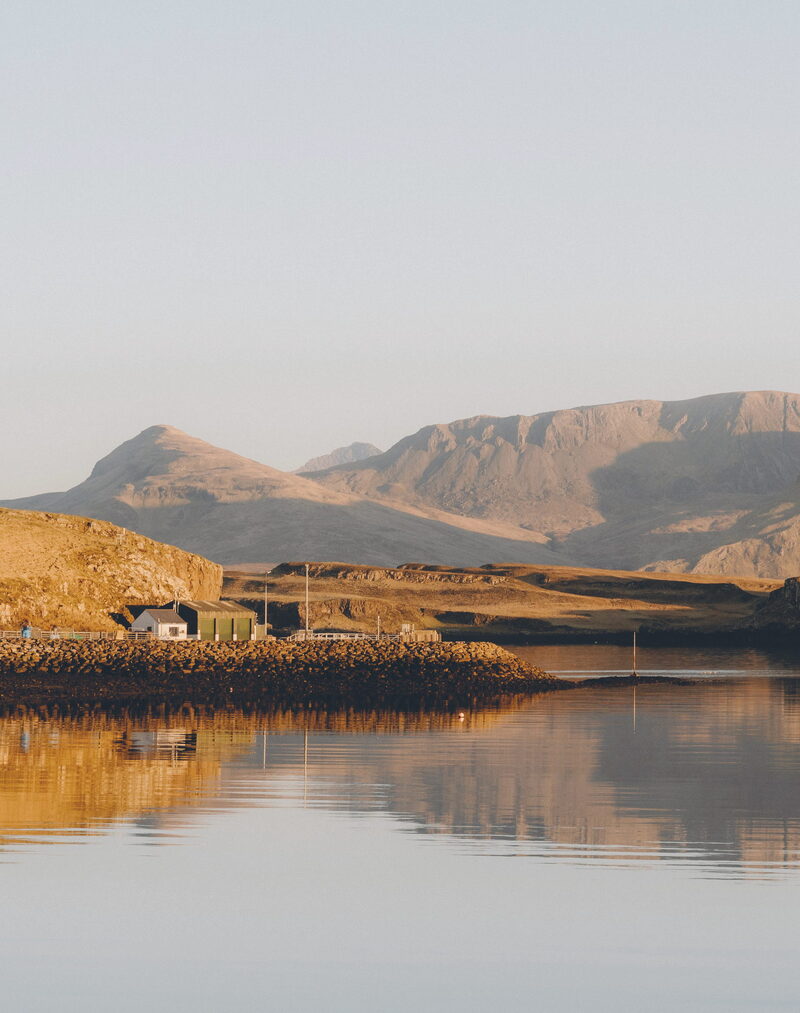
Fair Isle is a unique, magical place. And, at the same time, it is not. Life there cannot be compared to what we, in the rest of the world, are used to. Yet, if you get to spend some time on this tiny patch of land miles out into the sea, you’ll realise that, in some unexpected way, it’s not that different to modern day-to-day business in a rural community.
But what will certainly strike you, once you set foot on this remarkable place, is a subtle and warm feeling of: ‘I’ve found it.’
I stumbled across Fair Isle for the first time in the spring of 2017, through an ad in The Guardian. The community of “Britain’s most remote inhabited island” was looking for a nurse. This superlative intrigued me. And after starting to read a little about the island and its people, I developed a huge crush. It took me more than two years to finally organise a trip. When I went there in the summer of 2019, Xiomara, a friend and professional photographer, came along.
Fair Isle is officially part of Scotland and is located halfway between Orkney and Shetland, right where the Atlantic Ocean, the North Sea and the Norwegian Sea meet. Which is why getting on and off the island is highly dependent on the weather. Basically, you’ve got two options: you can catch a tiny plane from Kirkwall (Orkney) or Tingwall (Shetland) and enjoy, at best, a half-hour scenic flight. Sometimes, though, the small ten-seater plane jolts and rumbles like a migratory bird with hiccups as it hovers over the North Atlantic.
In any way, you get rewarded by touching down at what probably qualifies as one of the smallest airports in the Western world. The airstrip is not made up of tarmac but is a wide gravel road, there are no huge barbed-wire steel gates but a simple wooden fence about one-metre high, and the terminal building is a little stone house comprised of two small rooms and a toilet – all of which could certainly do with some refurbishment. In summer, there are 14 planes scheduled per week. In winter, this number stands at ten. Weather permitting, of course, because if the conditions are wrong, Fair Isle is cut off from the mainland for days, maybe even weeks on end.


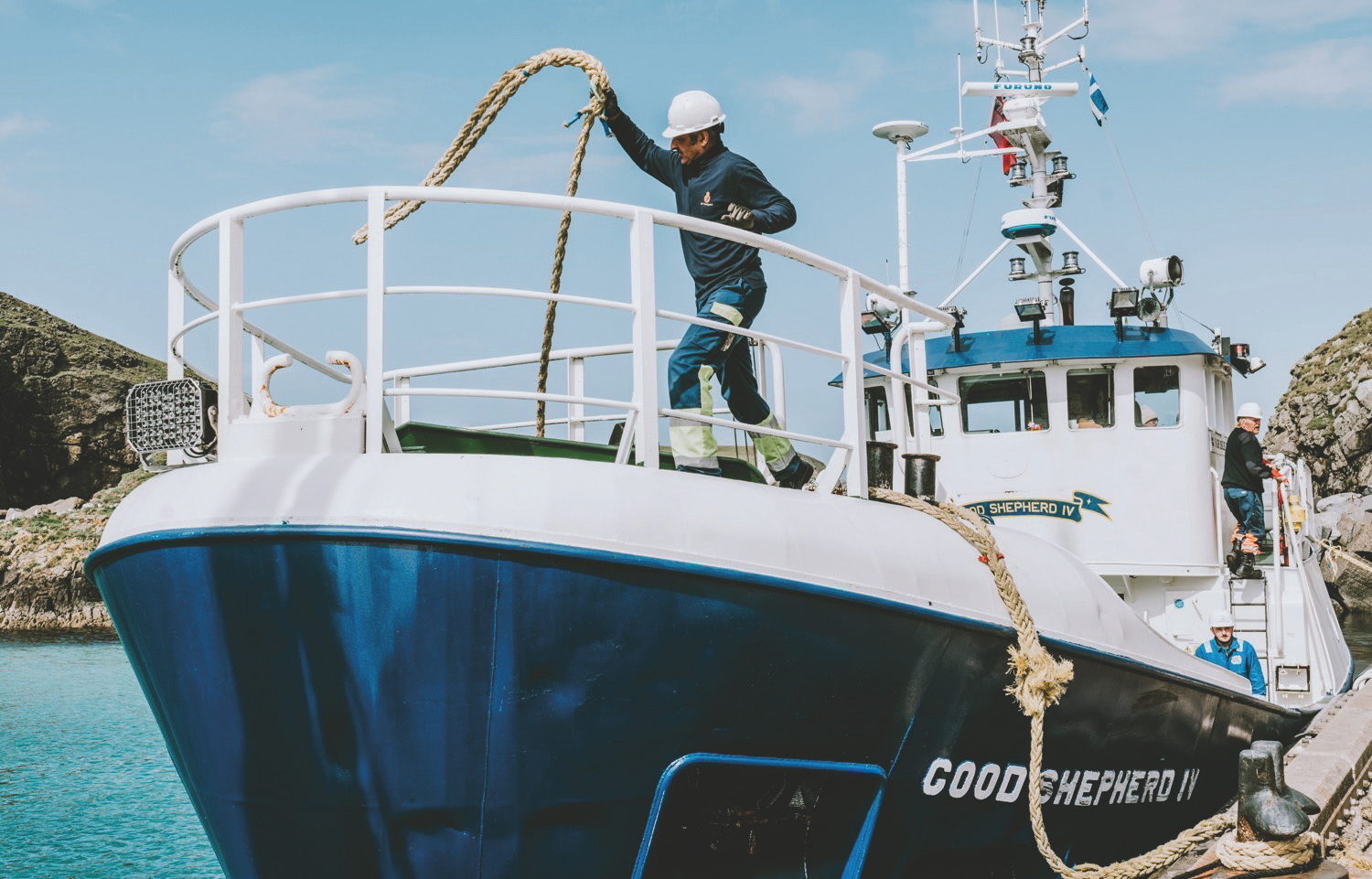
The other option is to board the Good Shepherd IV. The ship with its bright blue hull has been in service since 1986 and is the fourth ferry of the islanders. The first started operating in 1921. The Good Shepherd is the second lifeline for the island. It runs to Grutness on Shetland mainland three times a week. The ride takes about two-and-a-half hours and, because of the rough sea and the small size of the boat, is only seen as a last resort to many people. Even some crew members still get seasick on it. Every second Saturday, the Good Shepherd heads for Lerwick rather than Grutness – which doubles the travelling time to about five hours and doesn’t make the trip any more comfortable. Though ferry rides are not held in high esteem, they are vital for the community. Other than passengers they bring food, fresh fruit and vegetables, building materials, household goods and even cars to Fair Isle.
Xiomara and I caught the plane from Tingwall and had a smooth flight. Next to the runway, we were met by Cathy, our B&B host, with whom we would stay for the next nine days. The welcome was warm-hearted, something that is standard procedure in this close-knit community, as the two of us would soon realise.
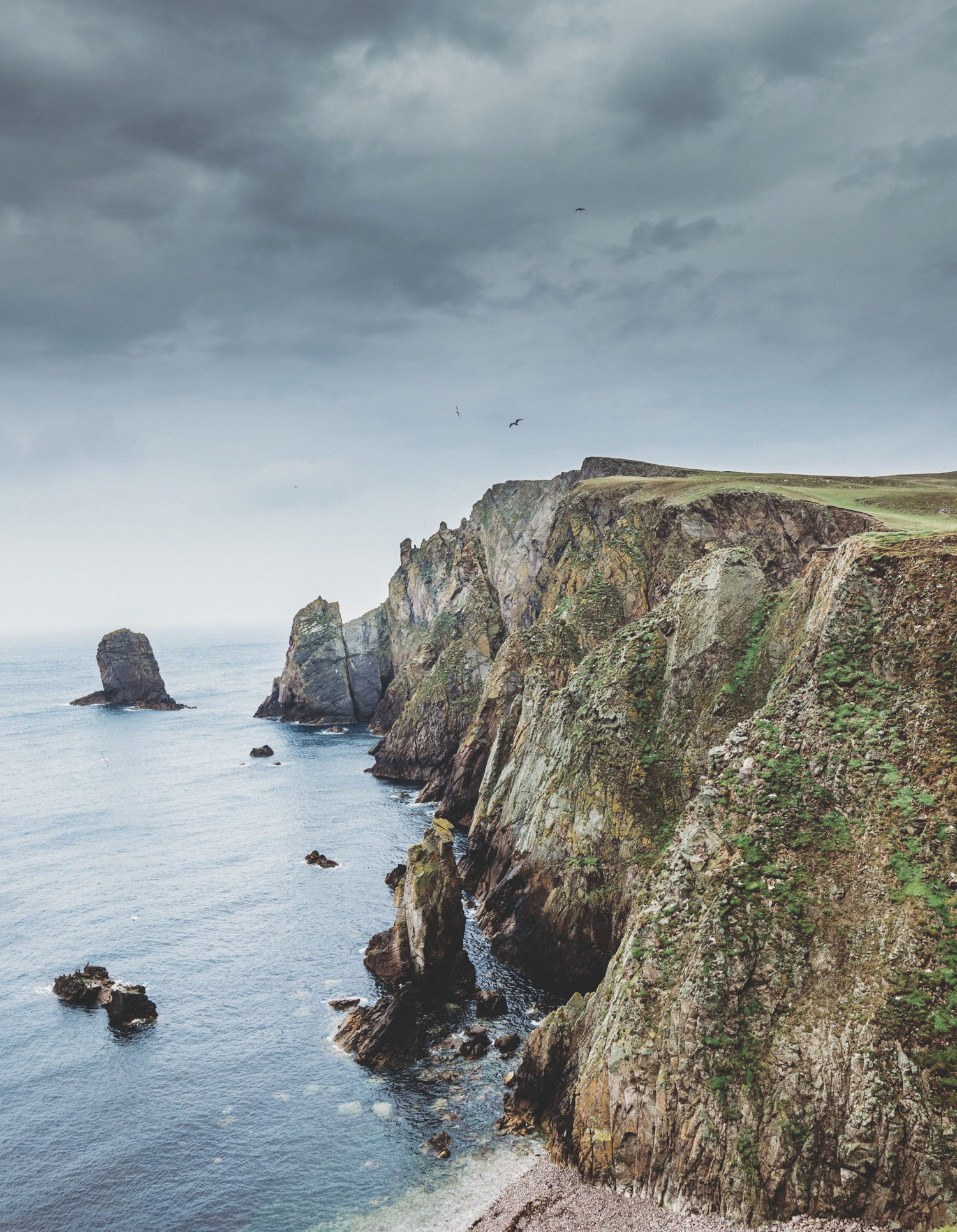
After a quick snack, we started exploring the island – which would basically be our daily schedule during our entire stay. We meandered through lush green meadows, past beautiful crofts and dozens and dozens of sheep, towards steep cliffs and along the rugged coastline with its two white lighthouses on the northern and southern end of the island. Even though Fair Isle is only eight square kilometres in size, we left without any feeling that we’d seen it all.
Every now and again, we’d meet one of the locals and quickly find ourselves in the middle of a conversation. One of the chattiest people of the community certainly is John Best. At 85, he’s the island’s oldest resident. He invited us over to his house for a cup of tea several times. John - bushy white beard, alert eyes and always keen for a flirt with Xiomara - moved to the island in 1973. His wife Betty (who passed away several years ago) started working here as a nurse. Initially, the assignment was agreed upon for only a year. John was sceptical about permanently living somewhere so secluded, but the community convinced the couple and their two kids Ian and Fiona to stay.

That’s why every adult out here holds various jobs at a time. Not necessarily because they want to, but because some things just need to get done. When we were there, John’s daughter Fiona, for example, ran the local shop and the post office with her husband Robert; she taught art at the primary school (which only had four students then) and was the Watch Manager for Fair Isle’s unit of the Scottish Fire and Rescue Service. On top of that, Fiona’s a trained aircraft fire fighter for the licenced aerodrome, worked as a community councillor, was a member of various boards on the island and, much like several women out here, also does some knitting. “For us, no day is the same and there’s always something to do,” said Fiona, who first came to the island as a ten-year-old. “In fact, one of the biggest misconceptions people have about living on Fair Isle is that they think we must be bored in the evenings or especially in winter.”
Truth be told, boredom is a concept which does not exist in the lives of the islanders. Even though, well, no: precisely because Fair Isle is so remote. Almost everything must be built, repaired, serviced and maintained by the locals themselves. Once you live here, you (have to) become a problem solver and acquire new skills. After all, getting outside help and materials is not only expensive, it just might not arrive.

Xiomara and I wanted to blend in with the community as much as possible, get to know what living here means, rather than see only the touristy façade you spot when visiting the island for a day or two. We helped harvesting and baling the hay, were there for shearing the sheep, got shown how the world-famous and 400-year-old tradition of producing Fair Isle knitwear works and were given a tour of the South Lighthouse – which, in fact, was the last manned lighthouse in Scotland and got automated only in 1998; even Princess Anne paid Fair Isle a visit on this special occasion. We went on a boat ride with Steven Wilson to check his lobster crates near the cliffs, spent an evening playing darts and pool with the young folks of Fair Isle and got invited for a private concert by guitar enthusiast and replacement captain of the Good Shepherd IV, Neill Thomson, whose ancestors came to Fair Isle back in the 1700s. When it was finally time to leave, my crush on Fair Isle had turned into love. Xiomara felt the same. And we both decided that we will come back one day.
Freelance journalist Florian Sturm and professional photographer Xiomara Bender find their stories all over the world.
The two of them have reported together from Scotland, Germany and Botswana.
For more of their work, visit:
Florian Sturm florian-sturm.com Twitter: @wordscombined
Xiomara Bender xiomara-bender.de Instagram: @xiomarabenderphotographer
Promoted Post
Glen Glack Cabins
Five luxury, bespoke, new cabins sitting on the edge of Cally Loch, in the picturesque town of Dunkeld.


Sign in with Google
Sign in with Email