
Clues in the Rock: What Dunadd Tells Us About Early Scotland
Once the seat of early kings, Dunadd still carries carved traces of power at its summit. A footprint, a basin, and a view that explains it all.
Written by Jack Cairney
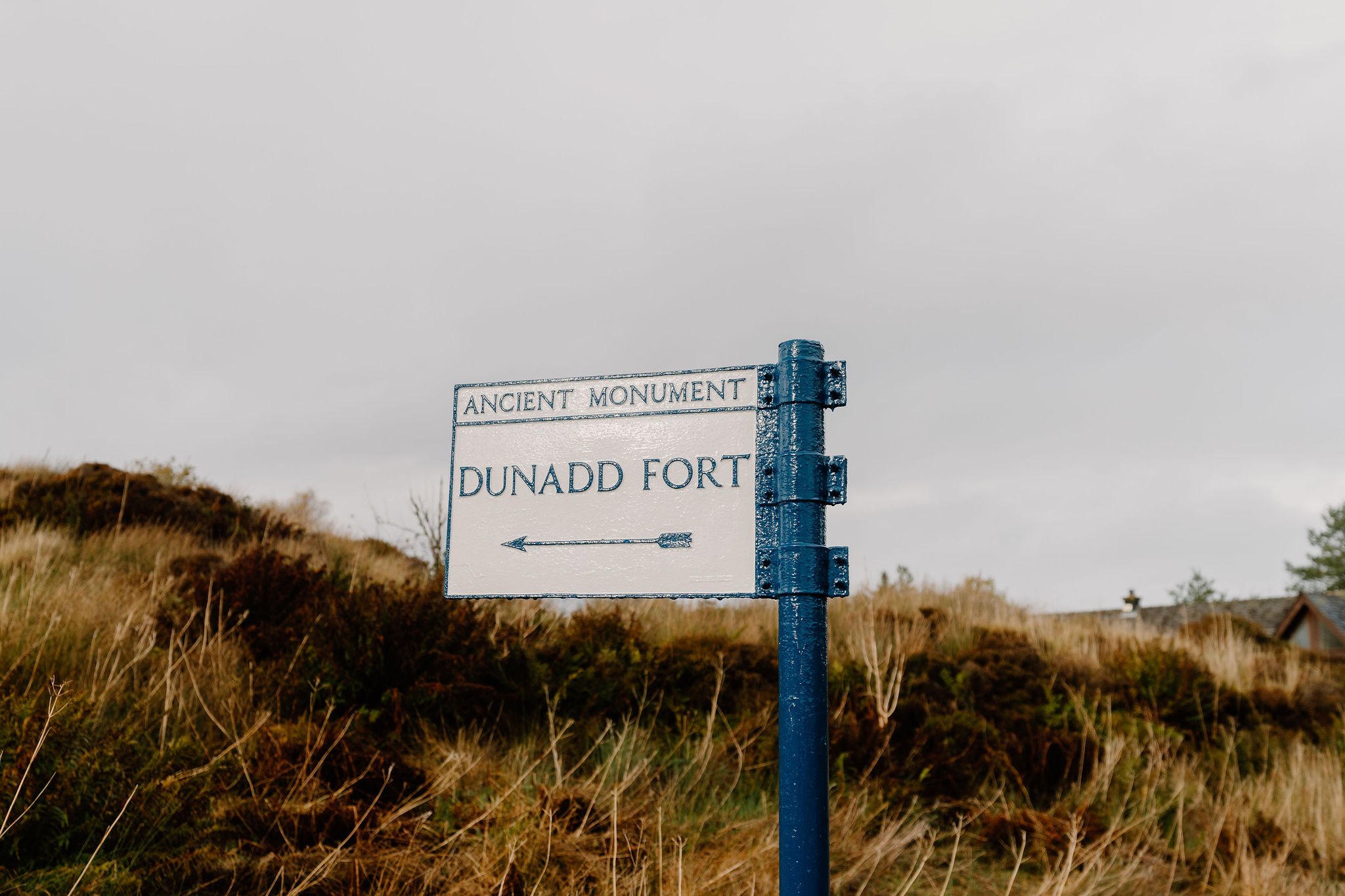
You reach Dunadd by crossing a low sweep of mossland. Even in dry weather, the track feels soft underfoot—spongy in places, with reeds along the edges. There’s a sign at the turnoff and a faint path ahead, climbing gently toward the hill.
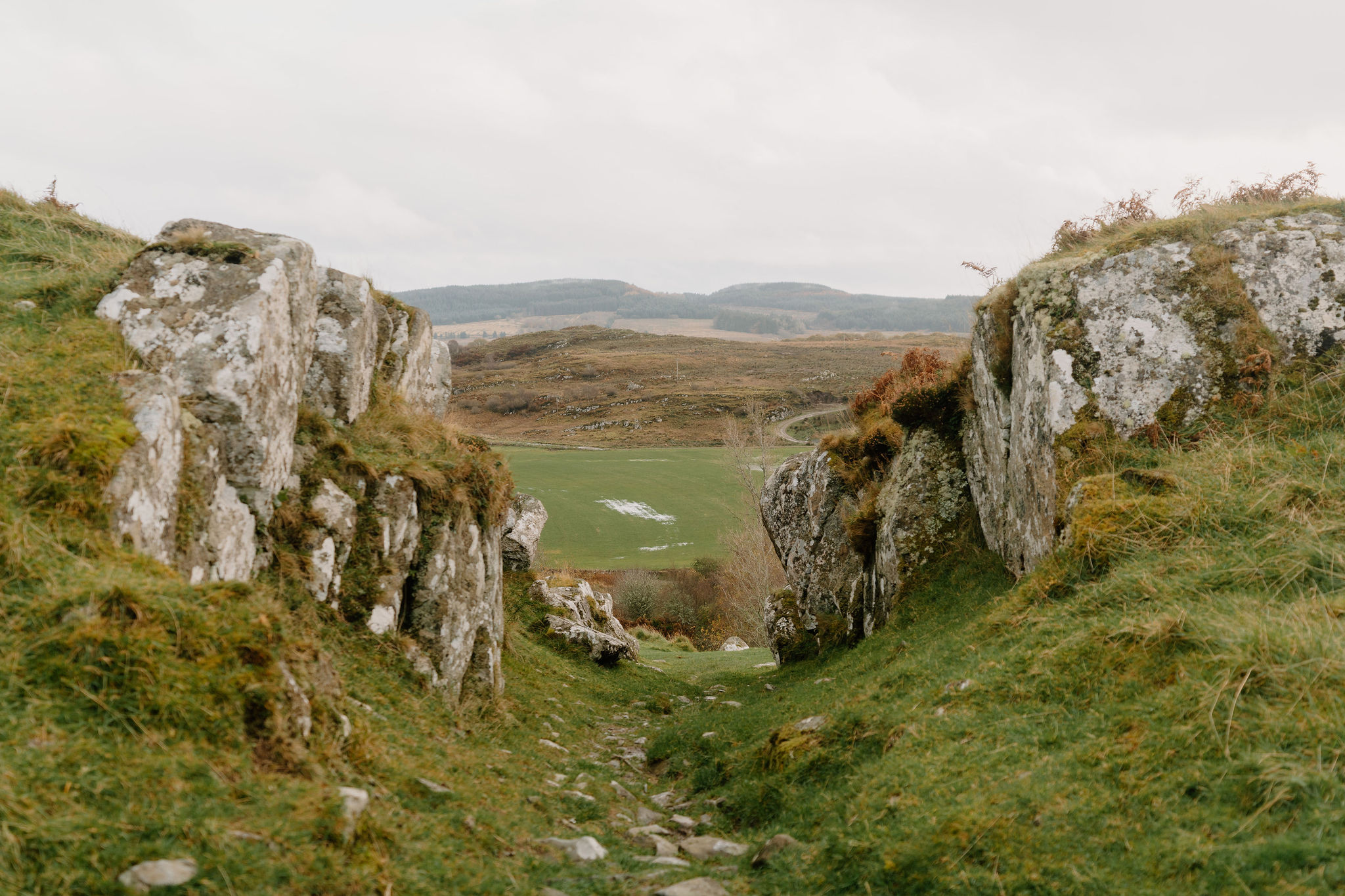
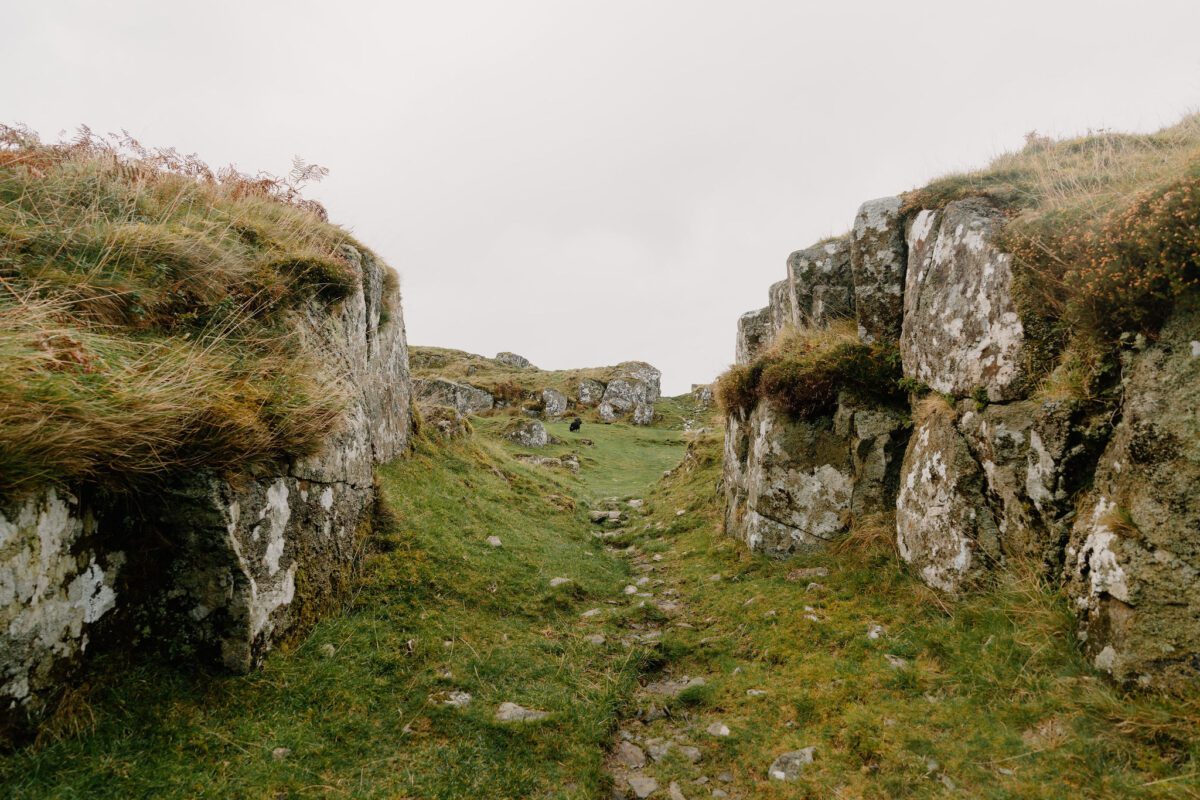
The path rises quickly. A few parts are steep, but it doesn’t take long. Near the top, the ground flattens out and the wind starts to lift. Everything opens up.
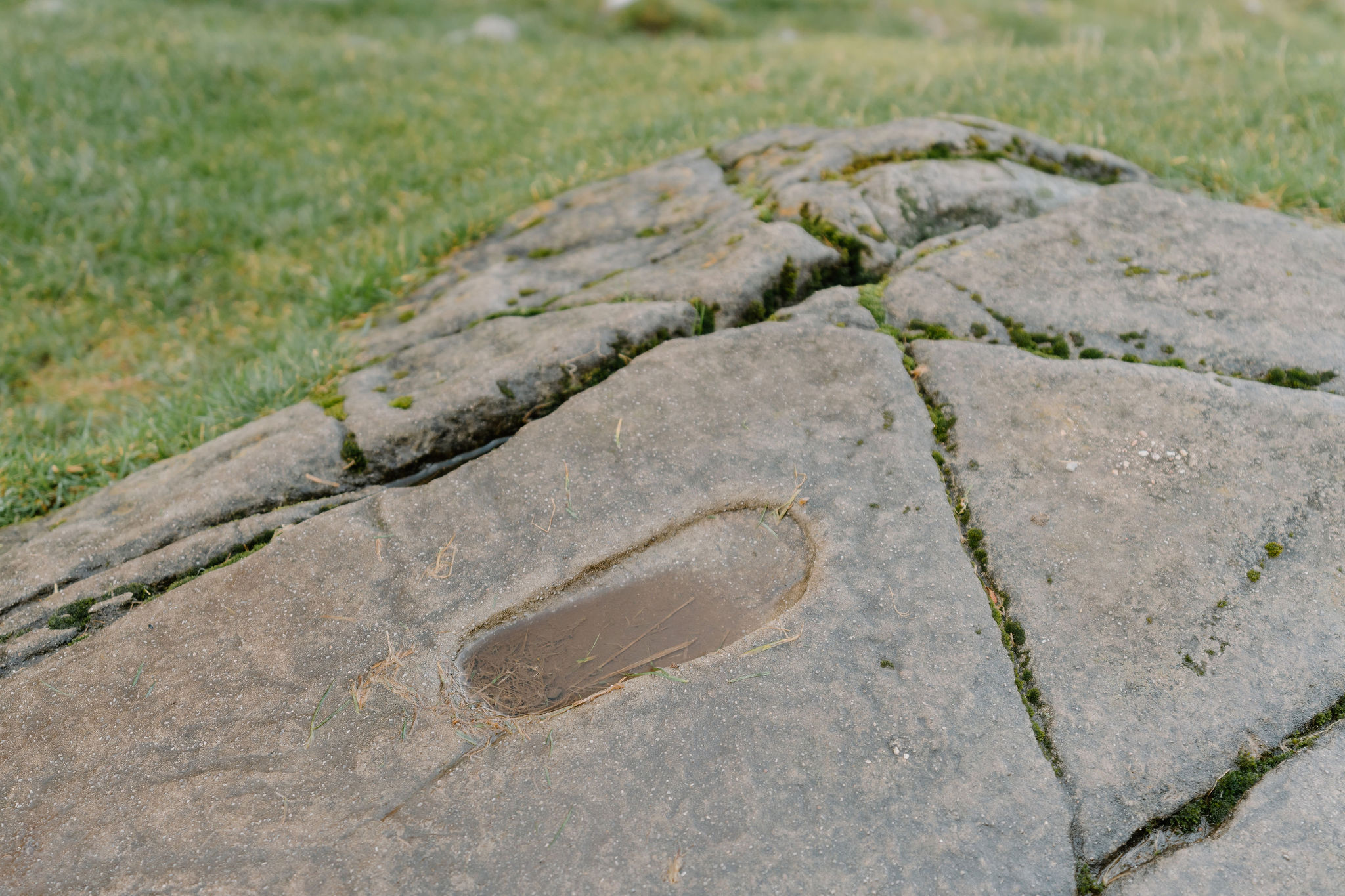
There’s no plaque pointing it out, but the footprint is easy to find. It’s carved directly into the summit stone—shallow and smooth, often holding rain. Beside it is a small basin, and just behind that, a narrow split in the rock with faint markings cut into the surface. They're thought to be ogham script, but hard to make out now. You have to crouch low and look closely.
This was once a royal stronghold. Likely the capital of Dál Riata in the early medieval period—a Gaelic kingdom stretching across western Scotland and northeast Ireland. The kings of that time may have been inaugurated here, with formal rites tied to the land. The footprint wasn’t symbolic. It was used.
Excavations have uncovered moulds for high-status brooches, glass beads, imported pottery from the Mediterranean, and traces of metalwork. The fort had reach. It was more than just defensive—it was administrative, ceremonial, and connected. Terraces cut into the slope may have held timber structures. The summit, though small, was enclosed and intentional.
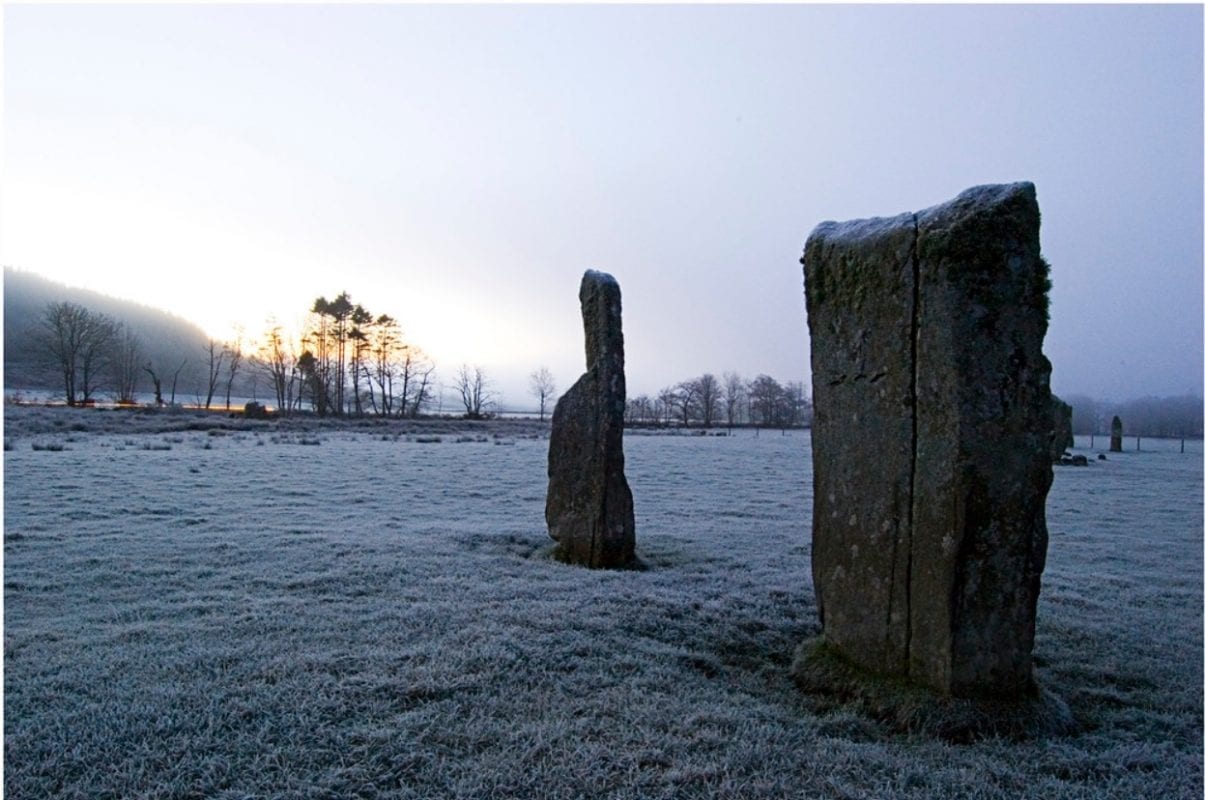
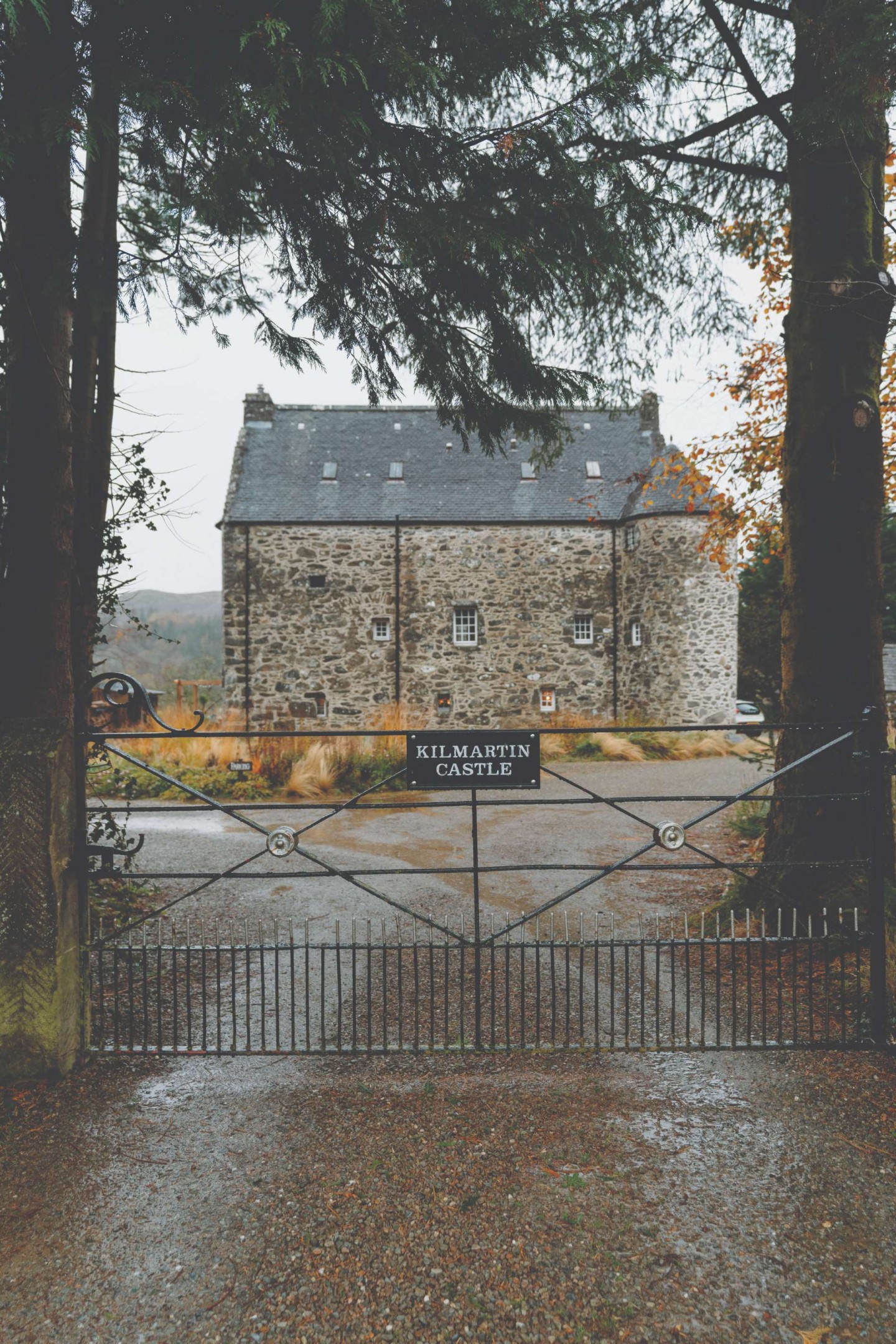
The geography helps explain it. Back then, the Moine Mhòr below was an estuary, not a bog. The sea came in further. Boats could land close to the base. From the top, it’s easy to imagine—a ring of water, tidal channels stretching out, a long view over Kilmartin Glen.
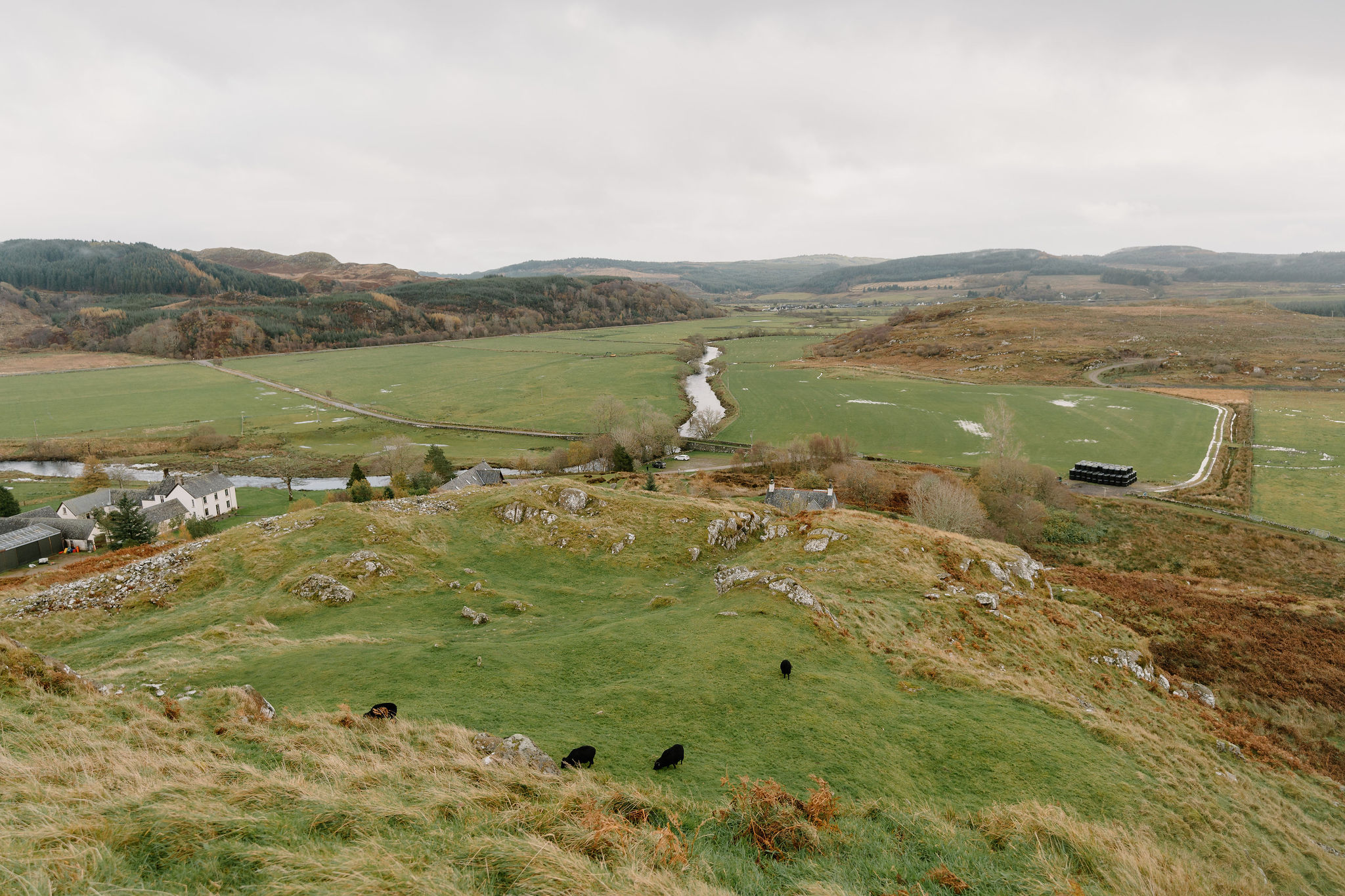
When I visited, there were only two others—quiet walkers, heads down, watching their footing. One of them called over when they found the footprint. Then it went quiet again. That seems to be the way here. Some climb, pause, and move on. Others stay longer, picking over the stones, trying to piece something together from what’s left.
Even now, it doesn’t feel abandoned. Just unspoken. A place where the wind moves freely and the carved lines in the stone still hold shape, if not full meaning. You leave without all the answers—but with a clearer sense of where power once stood.
Words: Jack Cairney
Photography: Sam Rogers
Promoted Post
Issue 12 is now shipping worldwide from Scotland.
Issue 12 is now shipping worldwide from Scotland.
-full-1749415774.jpg)
-full-1749367171.jpg)
-full-1749245005.jpg)






 Sign in with Google
 Sign in with Email