
Chasing the Night
With some of Europe’s darkest nights, Scotland displays the Aurora Borealis to splendour – especially with solar activity peaking in its current cycle. But the clarity of the stars makes night-sky viewing essential even when the Aurora isn’t forecast, writes Emily Rose Mawson, as she shares five of Scotland’s richest skies.
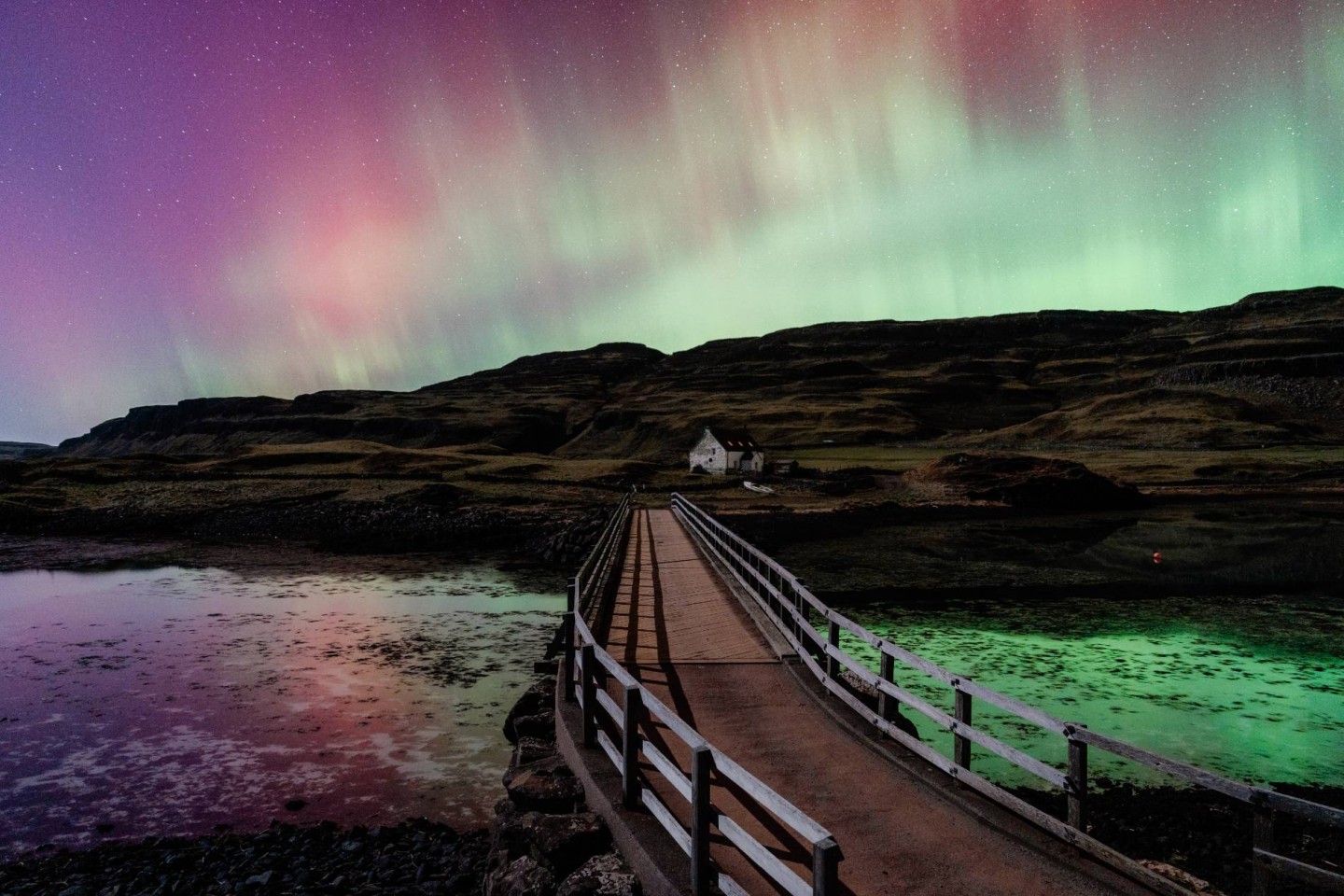
In the hours after the Aurora Borealis lit up Scotland’s skies like a crayon-bright watercolour in May 2024, social media became a digital Northern Lights as flurries of accounts posted colourful captures of the natural phenomenon. For those who slept through, the majesty of the event was tangible – but if missed, there is also next time.
Known as ‘Na Fir-chlis’ in Gaelic, literally meaning ‘the nimble men’, the Aurora is symptomatic of the electromagnetic coupling between the Earth and the Sun, explains Professor Jim Wild from the Physics Department at Lancaster University, which launched the AuroraWatchUK app.
“To see them from the UK, we need the Sun to be particularly active and push aurorae south from their usual location at the edge of the Arctic circle,” he says. Solar activity varies over a cycle that peaks every 11 years and “is fast approaching the peak of its current cycle: this is why we’re seeing more displays of the northern lights”.
WHAT IS A DARK SKY PARK?
Awarded by the International Dark Sky Association, this title recognises areas committed to controlling light pollution. The US-based organisation also honours Dark Sky Communities, while Dark Sky Scotland names Dark Sky Discovery Sites, which are the best local places to look at the night sky.
According to Professor Wild, the best displays are usually associated with processes in the space environment that occur around local midnight, although a large solar storm can trigger aurora at any time. “But obviously it needs to be dark wherever you are if you’re going to stand a chance of spotting a display,” he says.
Lucky then that Scotland has some of Europe’s darkest skies: because 91 per cent of the population lives in two per cent of the land area, according to the National Records of Scotland in 2022, not only is the Aurora intensified; stargazing is very rewarding. The country is garnished with designated dark sky places, where you can see more than 1,000 stars with the naked eye.
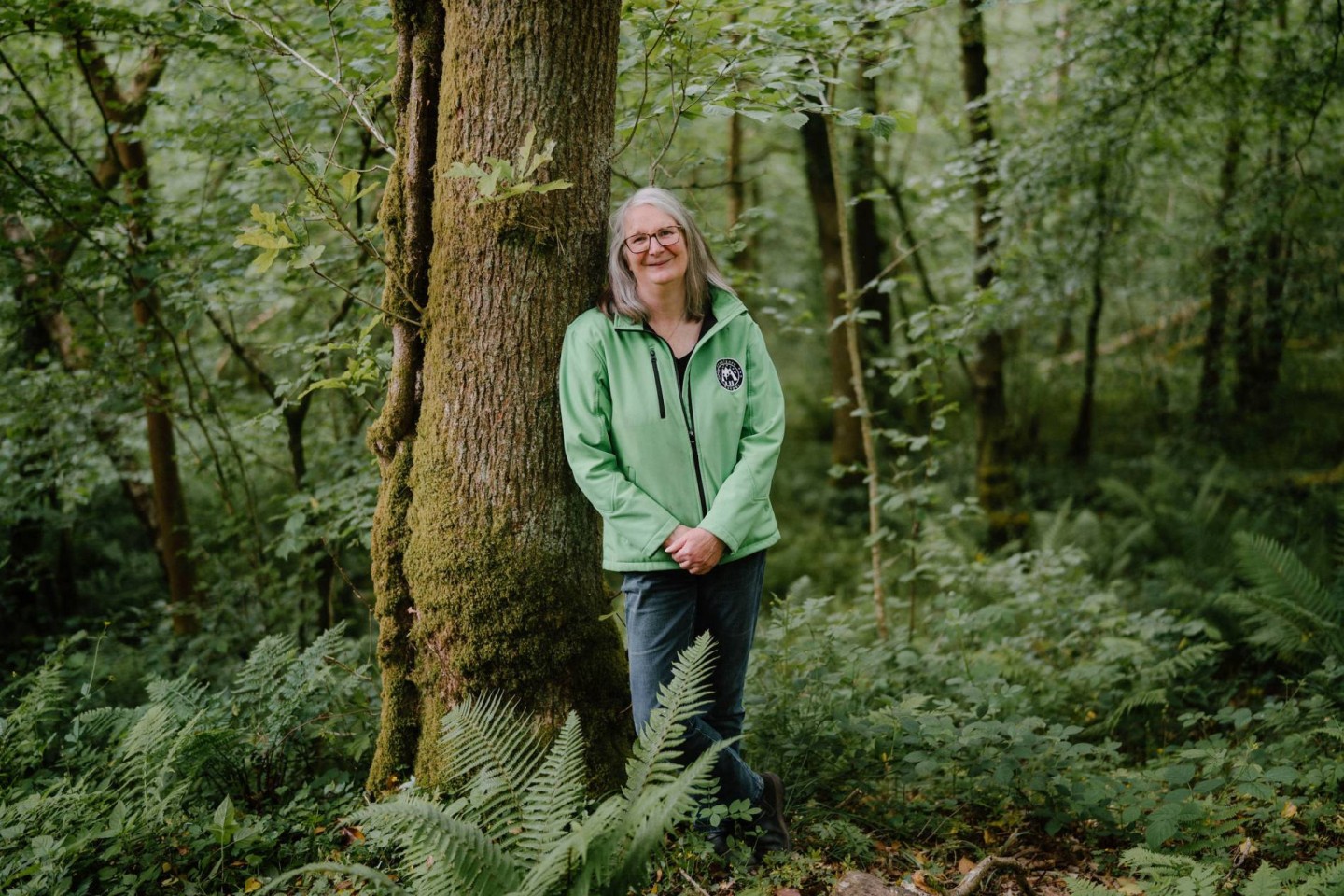
“Being out in the dark is a primal thing, with so many textures to experience without relying on your eyes,” says Biosphere Dark Sky Ranger Elizabeth Tindal, who works in Galloway Dark Sky Park and Galloway and Southern Ayrshire Biosphere. “The noises of the environment around you, with owls and trees moving in the wind. The smoky smell of a campfire mixed with the scent of pine trees. All of that and so many stars and constellations above you.”
Over the following pages, there are five dark places to experience the feeling for yourself – and pencil in that next sighting of the Aurora.
Canna
This tiny island, the westernmost of the Small Isles, is adrift 23 miles out in the Atlantic. And with just 18 residents and no street lighting, it is currently applying for Dark Sky Status with the Dark Sky Association. As well as the Aurora Borealis, which puts in spectacular appearances, look out for The Plough and Vega in the Summer Triangle in summer, and in winter, the Milky Way and Orion. Head for Compass Hill, a high vantage point, where you can photograph the Aurora backdropped by the Isle of Skye. There are clear views from Tarbert and St Edwards Church, or you can try dark sky activities like UV rock pooling at Sanday Beach. The National Trust for Scotland lends Stargazing Backpacks, including binoculars, blanket, red torch and astronomy guide, from the waiting room at the pier.
Galloway Forest Park
In 2009, Galloway Forest Park, a 300-square-mile spread of ancient woodland, lochs and hills in southwest Scotland, was named the country’s first International Dark Sky Park. On clear nights, you can see over 7,000 stars and planets with the naked eye – best viewed on a tour with a Dark Skies Ranger. Freelance Ranger Elizabeth Tindal runs walks that call on all the senses while keeping you warm with marshmallows over a campfire. There is also a Dark Space Planetarium in Kirkcudbright; you can book night-time cycling and swimming adventures; and Galloway is home to Moffat, Europe’s first Dark Sky Town, where street lighting is designed to minimise light pollution.
Isle of Coll
Scotland’s second Dark Sky Park, designated in 2013, lies northwest of the Isle of Mull. The island, just 13 miles by 3 miles and home to 150 people, has no high mountains so is less likely to attract star-obscuring cloud. Experience it to full effect on a ‘Coll & The Cosmos’ dark sky weekend, run by Coll Community Centre and Coll Bunkhouse, featuring state-of-the-art equipment such as the fully digital six-metre indoor planetarium. The next weekend – the event’s 10th anniversary – takes place on 2nd and 3rd November 2024.
The Far Northwest
Northern Scotland lies at the same latitude as Stavanger in Norway, so heading for places like Applecross, Lochinver and Ullapool on clear nights from October to March is a good plan for seeing the Aurora. Lochinver, an idyllic (and very remote) fishing village, is renowned among stargazers, while Wester Ross near Ullapool hosts a Dark Sky Festival in November, with local planetarium shows, stargazing workshops and night-time photography throughout the month.
Stirling
Between the bright lights of Edinburgh and Glasgow, Stirling sits in the sort of wide-open landscapes you need for successful stargazing. There are good views at the David Stirling memorial, but for a closer look try the Stirling Highland Hotel: in 1889, Sir Henry Campbell Bannermann gifted the former school a rooftop observatory. The copper-covered dome contains a stillworking, 135-year-old Newtonian reflecting telescope. Use it to view the night sky on a 30-minute tour with Stirling Astronomical Society. Observatory guide Bert Mackenzie says you might see the rings and moons of Saturn, the cloud belts of Jupiter and the craters of our own Moon. Tours are free but donations are welcome.
Promoted Post
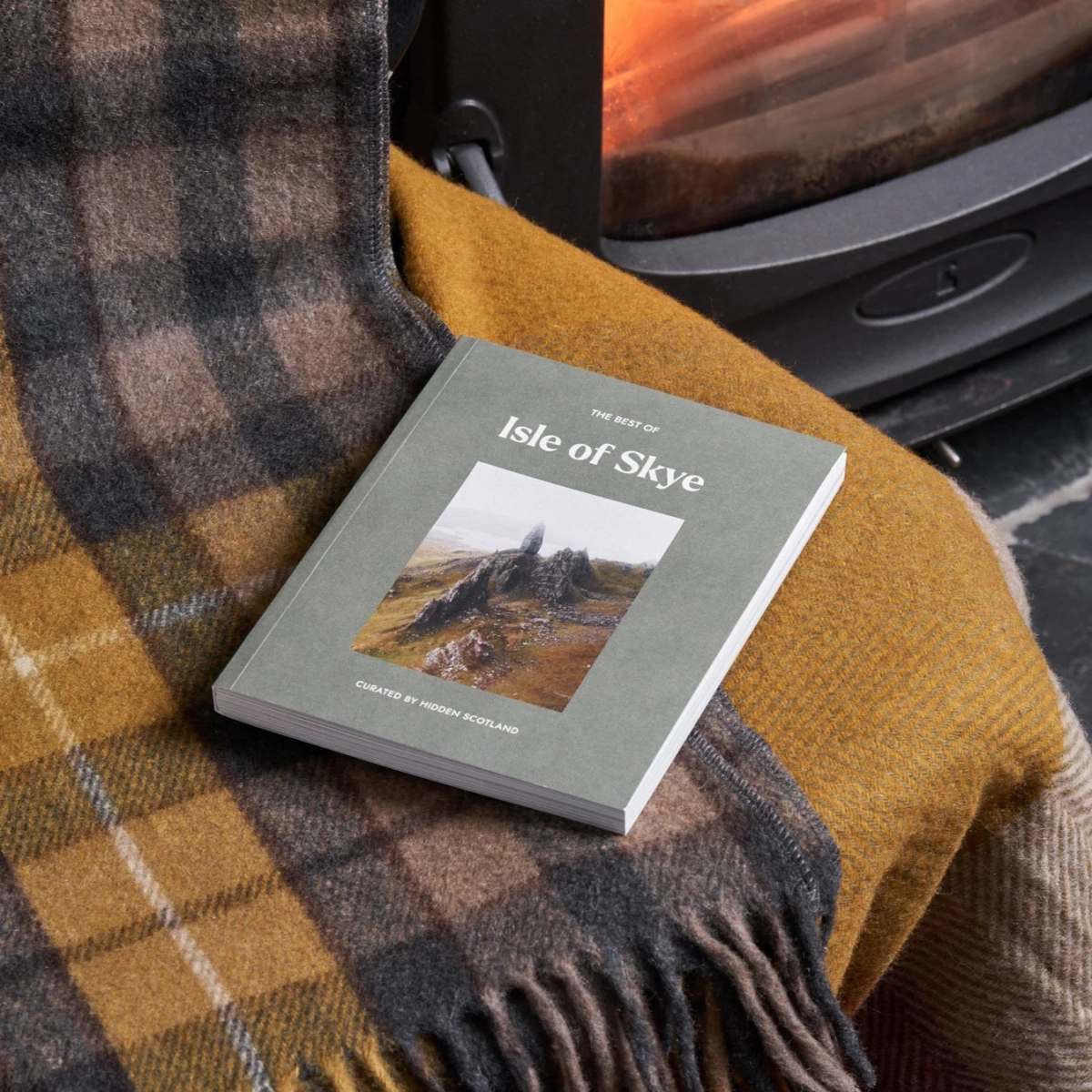
The Best of Skye Guidebook
The Isle of Skye is a place of rare wonder, a wildlife-rich spread of bays, peaks, cliffs and ridges. The views are big, but the prospect of adventure is even bigger. We hope this curated Hidden Scotland guide – which takes in everything from the best walks to the finest restaurants – helps you to have your own unforgettable island escape.






 Sign in with Google
 Sign in with Email