
Who Built Scotland’s Most Bizarre Building — and Why?
Tucked away near Airth, the Dunmore Pineapple is easy to miss — but impossible to forget. Built in the 18th century by a returning colonial governor, this surreal structure raises more questions than it answers. What does it say about taste, power, and the meaning of home in stone?

Written by Jack Cairney
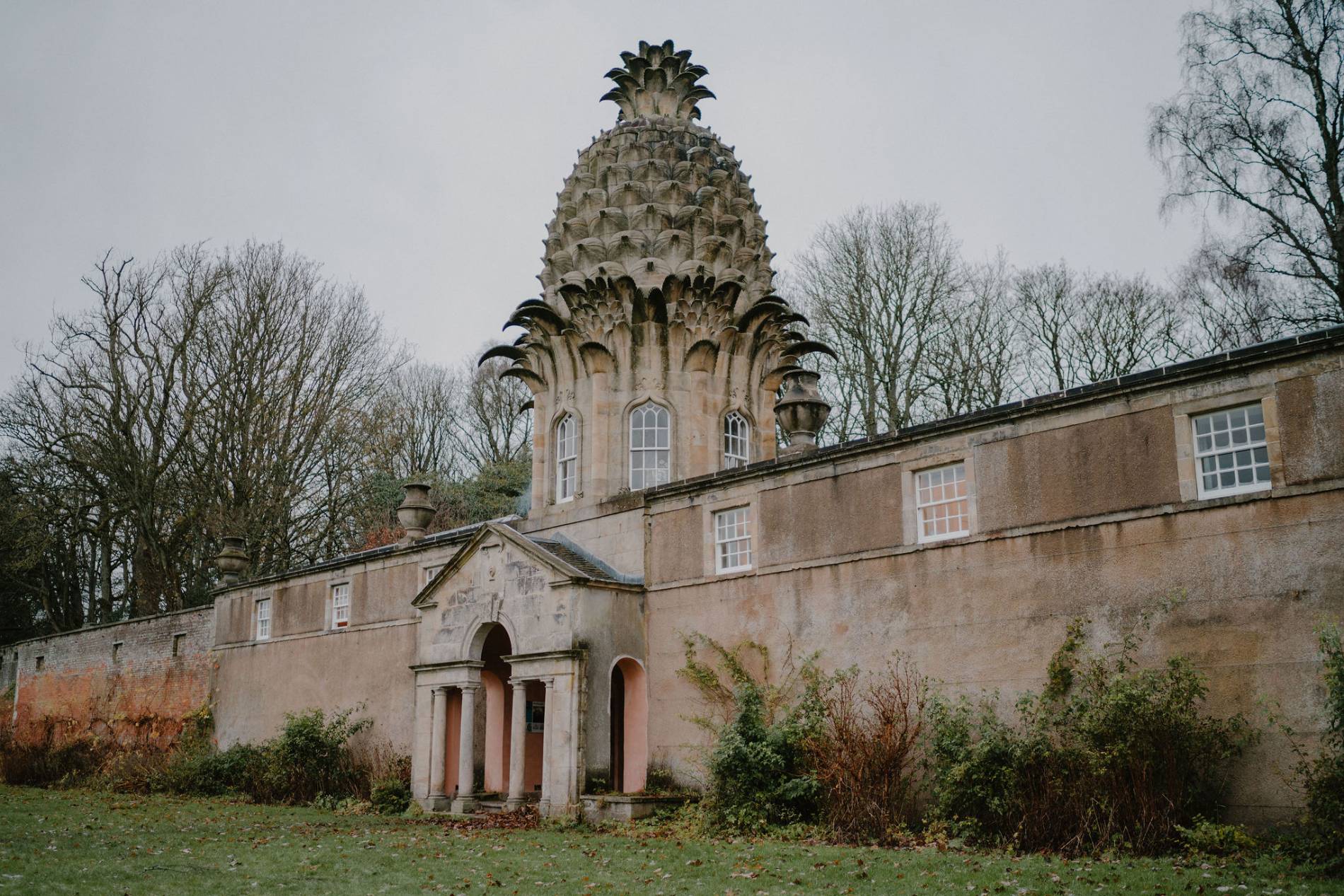
Set back from the road near Airth, above an orchard and a curling pond, sits one of the most unlikely buildings in Scotland — a stone pineapple, symmetrical and gravity-defying. It doesn’t appear on most postcards. But once seen, it isn’t forgotten. The question is: why was it built at all?
The pineapple, in 18th-century Scotland, was more than a fruit. It was a statement. Rare, costly, and almost impossible to grow without imported heat, pineapples were a form of edible prestige — displayed at dinners but rarely eaten. So when John Murray, 4th Earl of Dunmore, returned from Virginia in the early 1770s, he built one out of stone and set it on top of a garden pavilion.
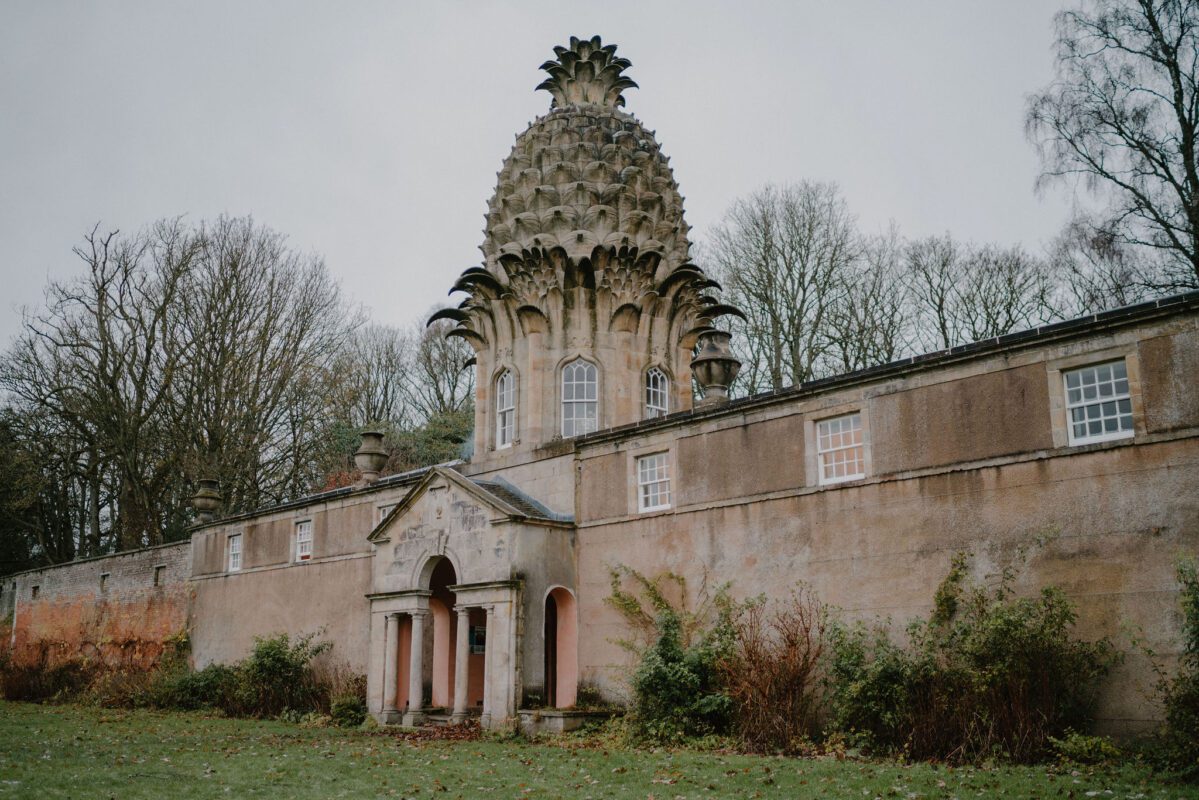
The Dunmore Pineapple wasn’t meant to be subtle. Even by the standards of aristocratic garden follies, it stood apart. The building sits at the centre of a walled garden, and at first glance appears like a classical pavilion — until your eyes reach the top. There, carved in precise radial geometry, is the fruit itself: fourteen metres high, fluted, scaled, and crowned with spiky leaves that defy weather and logic.
Architecturally, it makes no sense — and perfect sense. The identity of the designer remains unknown. Some suggest Sir William Chambers, the architect behind several ornamental buildings at Kew, though no records confirm it. The pineapple sits on a base flanked by two wings, formerly hothouses used to grow real pineapples and exotic plants. The structure itself may have served as a summer house or viewpoint, though its interior layout — simple, cold, and formal — suggests symbolic purpose more than comfort.
There are no surviving documents explaining why Dunmore built it. But there is timing. The pineapple appeared shortly after his return from serving as the last colonial governor of Virginia — a posting marked by instability and growing rebellion. Some suggest the pineapple was a tongue-in-cheek gesture, a borrowed symbol from plantation life transformed into an imperial ornament. Others see it as a private joke: Murray had money, land, and no need to explain himself.
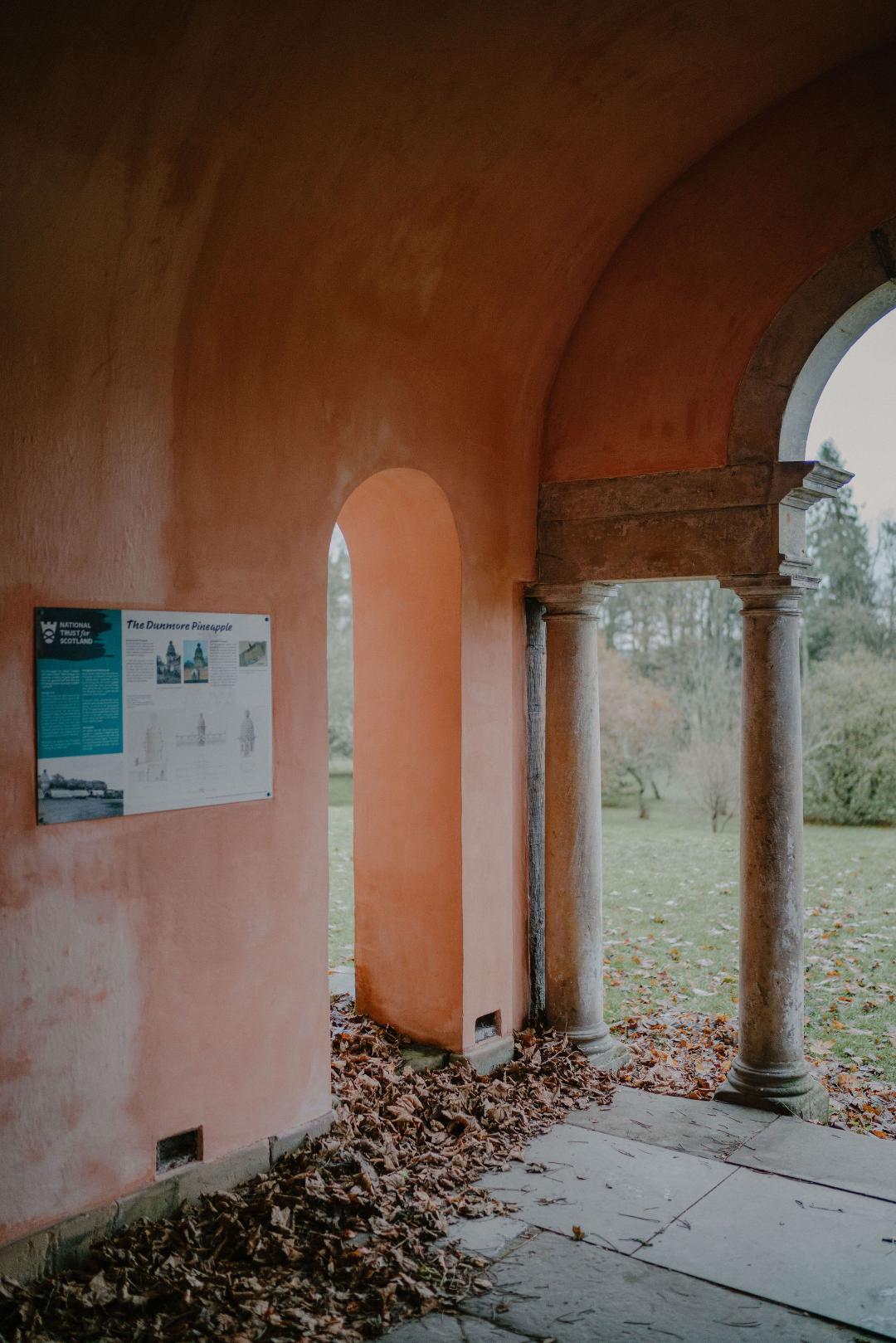
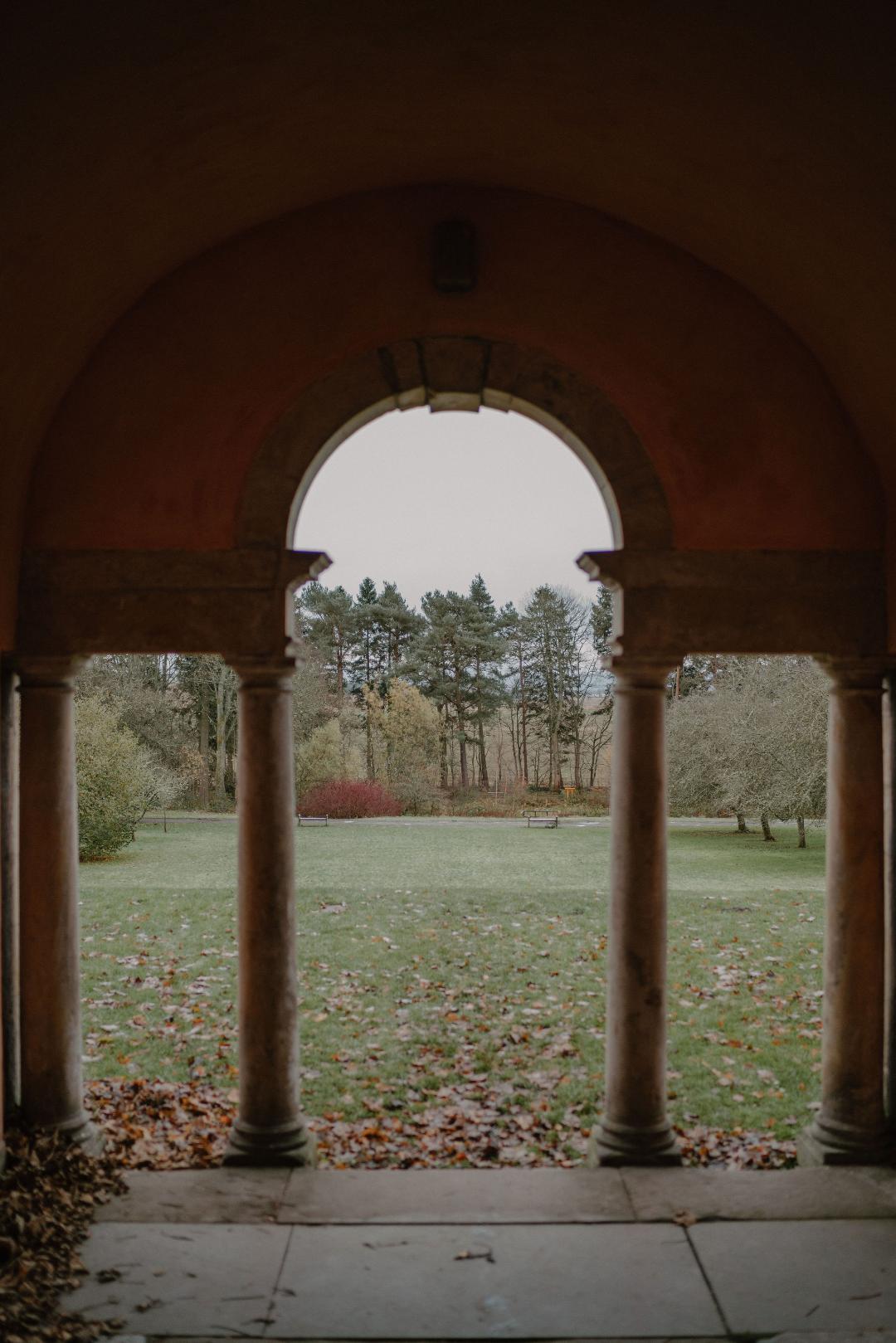
It wasn’t unique in its time, but it remains alone today. Other estates dabbled in similar excess. Pineapples were painted onto walls and stitched into tapestries. Glasshouses at places like Drummond Castle or Culzean grew the fruit in coal-heated pits, with elaborate ventilation systems and the labour of dozens. But no other site in Scotland built a stone pineapple at this scale.
The symbolism isn’t just botanical. In classical iconography, the pineapple came to represent welcome, wealth, and hospitality. Seafarers returning from long voyages placed them on gateposts to signal safe arrival. In this context, the Dunmore Pineapple may have been a gesture of return, a monument to homecoming — though one filtered through Enlightenment spectacle.
The building didn’t remain pristine. By the early 20th century, the surrounding estate was in decline. The garden was overgrown, the hothouses disused, and the pineapple was missing sections. It was only in the 1970s that the Landmark Trust stepped in. They stabilised the structure, restored the stonework, and converted the base into holiday accommodation.
You can now stay in it. The interior — minimalist and quiet — sits beneath the stone fruit. A spiral staircase leads to a simple bedroom and living space, looking out over lawns and formal plantings. The symmetry continues inside. There’s no clutter, and little attempt to modernise. The idea seems to be: let the pineapple do the talking.
Visitors still stop in disbelief. From a distance, the building looks like a mirage. Up close, it holds together with unlikely grace. The carving is delicate but robust — each leaf, floret, and crease cut by hand. In some light, the shadows make it look soft. In others, it appears industrial, like cast iron or folded tin.
Today, it’s hard to tell whether the building is still read as a joke, a marvel, or both. It’s listed, protected, and often photographed, but not widely discussed in histories of Scottish architecture. That may be because it defies category. It’s a folly, but one that invites real study. It’s imperial, but also intensely local. And it’s playful — absurd even — but crafted with extraordinary skill.
There is no record of Dunmore commenting on the pineapple. That silence may be the final mystery. A man who governed one of Britain’s most volatile colonies, returned home to his estate, and marked the moment not with a statue or an obelisk — but with fruit in stone. We don’t know if he laughed when he commissioned it. But someone, at some point, must have. Because of all the things built in 18th-century Scotland, this is the one people still drive hours to see — without quite knowing why.
Words: Jack Cairney
Photography: Simon Hird
Promoted Post
Issue 12 is now shipping worldwide from Scotland.
Issue 12 is now shipping worldwide from Scotland.

-full-1744807764.jpg)







 Sign in with Google
 Sign in with Email