Braemar Castle

A castle which owes its very survival to the tireless efforts of its local community.

Profile

When Braemar Castle faced closure in 2007, the local community of Braemar stepped in. Twelve years later in 2019, the castle underwent the beginnings of a £1.6m conservation and development project and finally reopened its doors once again in May 2024. This is a castle which owes its very survival to the tireless efforts of its local community.
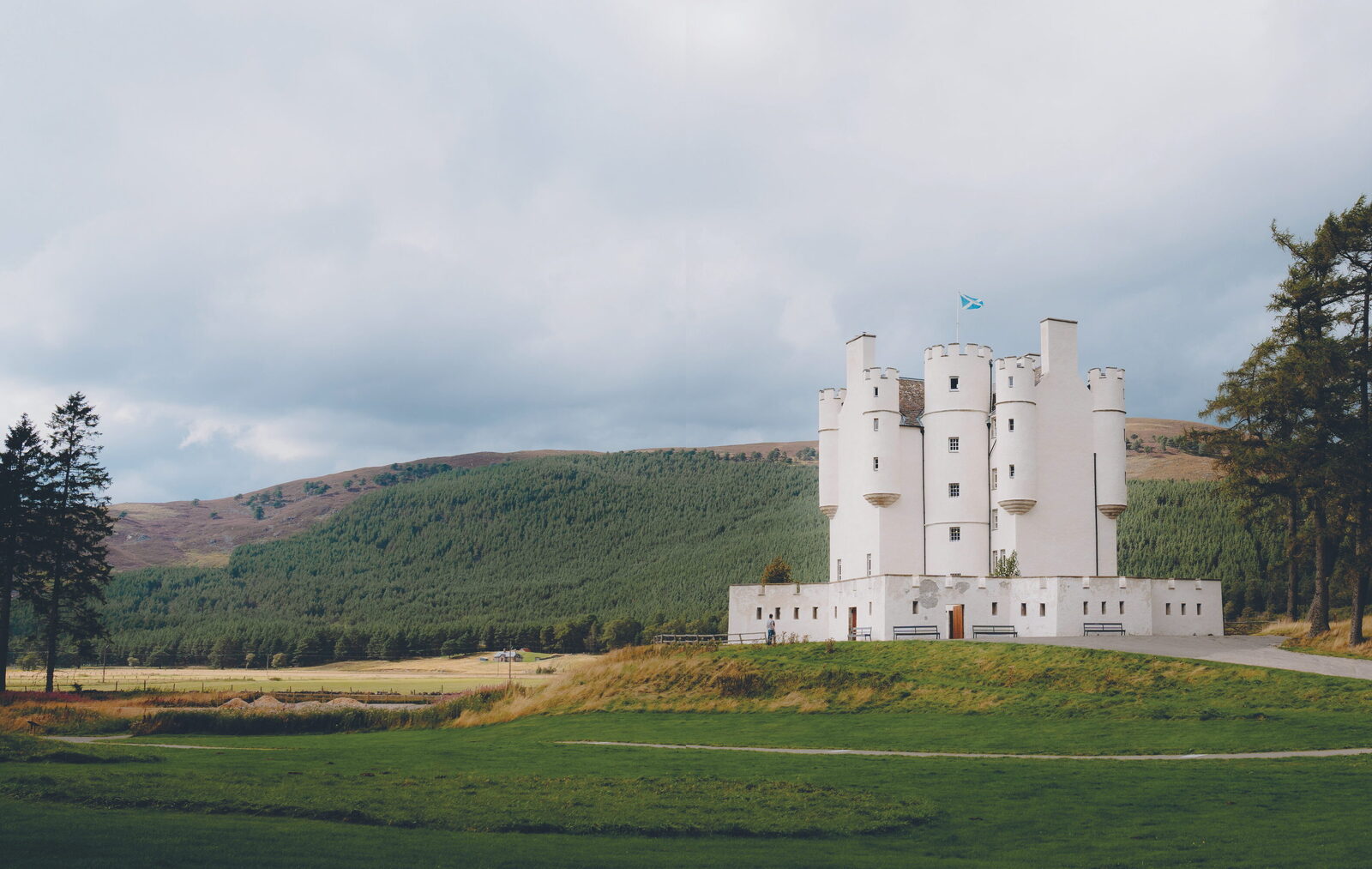
The present castle was constructed in 1628 by John Erskine, Earl of Mar, who sought to elevate his political and military influence over Deeside whilst undermining the growing power of his local rivals, the Farquharsons. However, the site has been occupied since long before this and was a key residence within the ancient earldom of Mar. Perched upon a rise by the River Dee in the heart of the Cairngorms National Park, this was a strategic location for a fortification as it commanded authority over significant routes through the Cairngorms. 

That rivalry between the Erskines and the Farquharsons, which resulted in the construction of the current castle, would reoccur throughout the 17th and 18th centuries. Both families became embroiled in the drama and violence of the Jacobite Risings, which would cause Braemar Castle to become a regular target and factor in the machinations of war. 

In 1689, the castle was attacked by John Farquharson, better known as the Black Colonel of Inverey, who set it ablaze to prevent government forces from using the castle as a military base. The 1715 Rising found Braemar Castle at the centre of the Jacobean movement, with the earl of Mar being a primary Jacobite leader. After Mar’s exile to France one year later, his estates were forfeited to the Crown before eventually falling into the hands of the Farquharsons, who purchased the castle and its surrounding territory in 1732. 

The final Jacobite Rising of 1745 again affected Braemar Castle when it was damaged by Jacobite forces after the Farquharsons refused to join their cause. Resultantly, the ruined castle was then leased to the government to be used as a barracks for Hanoverian forces until 1797.

The 19th century saw a far kinder and grander fate for Braemar Castle. After wrestling it back from government hands in 1807, the 10th Farquharson Laird of Invercauld began a programme of works to restore this long-suffering castle as a family home. This was a great triumph for the Farquharsons, who transformed a once targeted strategic military base into a home fit for both nobility and royalty. Braemar Castle even hosted Queen Victoria during her many visits to Braemar. 

As with many incredible historic sites in Scotland, Braemar Castle’s bloody and regal history did not guarantee its survival. In 2007, the castle was on the brink of permanent closure. This would have had a devastating impact on Braemar and beyond, ceasing public access to a precious historic site with centuries of history and artefacts within its walls. Some of these artefacts, including original furniture from the 17th century, were even at risk of being put on the auction block. 

However, hope was not lost. Generous benefactors stepped in to prevent a significant amount of the castle’s artefacts from leaving the castle, in addition to supporting an incredible initiative by the local community to save Braemar Castle by embarking on a 50-year lease from the Farquharsons. Doreen Wood, vice-chair of Braemar Community Ltd, emphasises that Braemar’s community was ‘the driving force who really rallied behind the initial leasing in 2007’. Indeed, this is reflected by the castle’s operation and protection by local volunteers with a passion for Braemar and its history. It was thanks to this community that Braemar Castle found a new lease of life as the first community-run castle in Scotland. 

The castle’s future was further strengthened when a new £1.6m project began on the site in 2019, undertaking high levels of conservation and development to the castle and its grounds. This was a momentous project that again saw volunteers and fundraising at its forefront, in addition to support from Historic Environment Scotland and the National Heritage Lottery Fund. Volunteer Shiela Anderson describes that this project was “a long haul”, with the primary aim being to tackle the harling, the external rough cast of the castle commonly seen on historic Scottish buildings. “The chimneys, roof, and turrets were the first priority,” Shiela explains, “then the next major priority was restoring the harling, which was a fascinating process.” The significance of this project coincided with the closure of public sites in 2020 due to the COVID-19 pandemic. As pointed out by Shiela, this meant that the castle was effectively closed for nearly four years.

Image One
Image Two

In addition to the conservation of the castle itself, the project continues to aim at the redevelopment of the castle grounds and the establishment of a formal community programme. The result of the latter aim was Raising the Standard, a programme committed to the volunteering ethos of Braemar Castle’s community operation. This innovative programme is itself symbolic of the importance of Braemar’s community in saving the castle and “handing over the torch to the younger generation”, as Sheila explains. Doreen also particularly emphasises the importance of inspiring the next generation. “This is such a unifying project for the village,” Doreen stresses. “People from all ages can enjoy this asset for the village and become more aware of their history. We need to make sure people feel involved and connected.” 

In May 2024, Braemar Castle reopened its doors once more. The actions of the local community in stepping in to save the castle in 2007, promoting the castle’s need for conservation, and continuing to manage the castle, ultimately saved Braemar Castle from ruin. This is testament to the power of community and local relationships with historic heritage sites. As proudly said by Suzanna Atkinson, manager of the castle, “the future is very bright for Braemar Castle, and we are all so excited to make the castle the jewel in the crown of this utterly unique and beautiful area.” With such an innovative and passionate local community, there can be no doubt indeed that the historic gem of Braemar Castle is in very good hands.

Image One

Other articles you may like