Did you know
A lunar observatory.
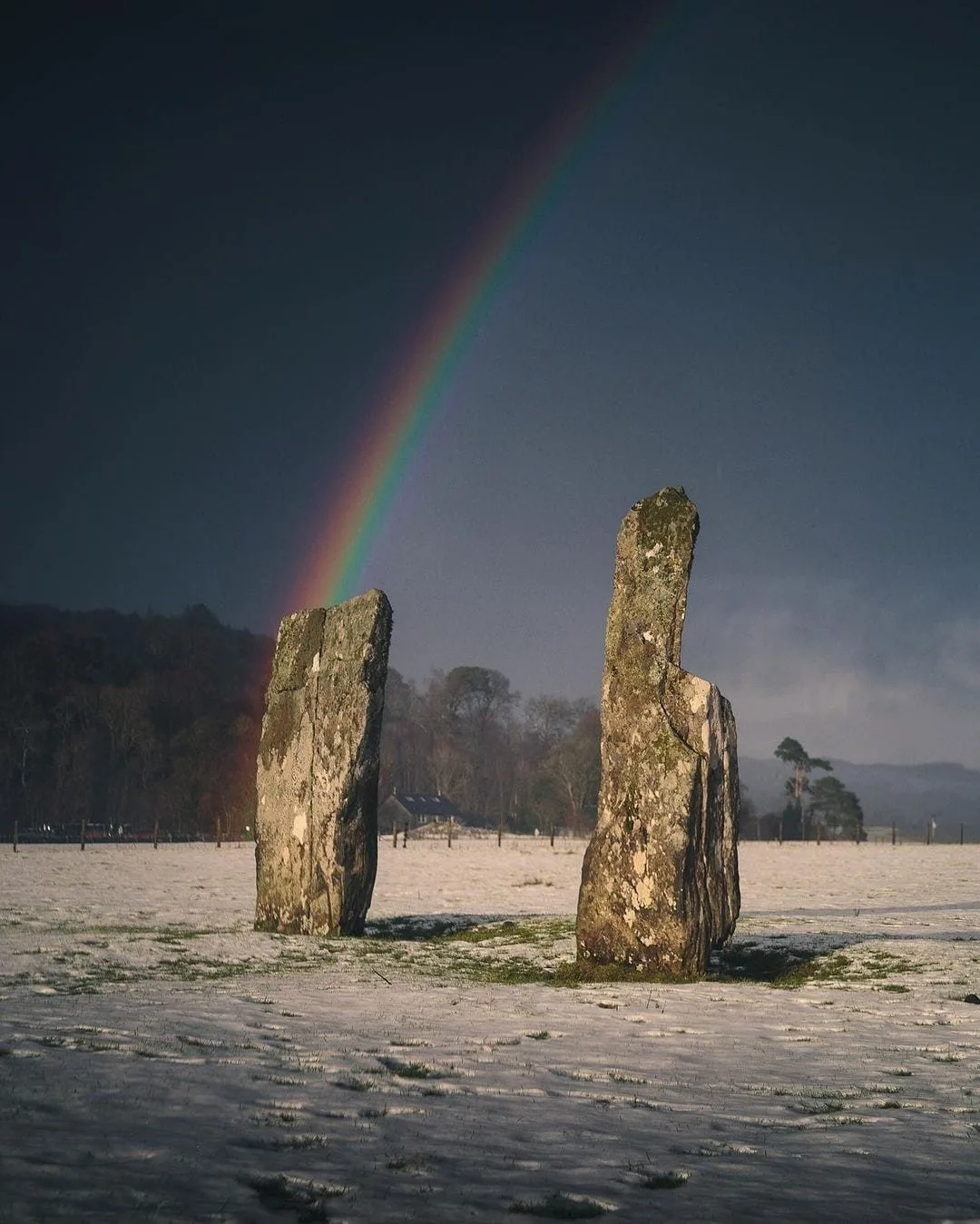
The stones are thought to mark where the moon rises and sets at certain points in its cycle.
Five tall stones in Kilmartin Glen raised some 3,200 years ago, thought to mark the rising and setting of the moon.
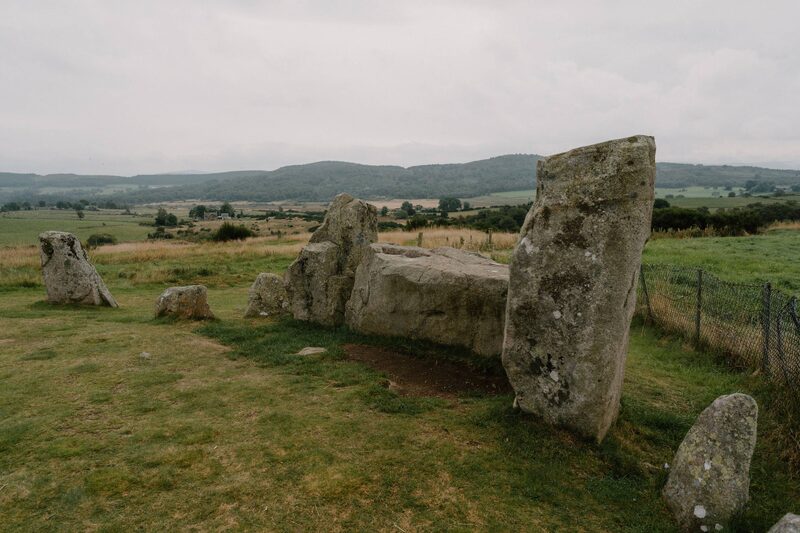
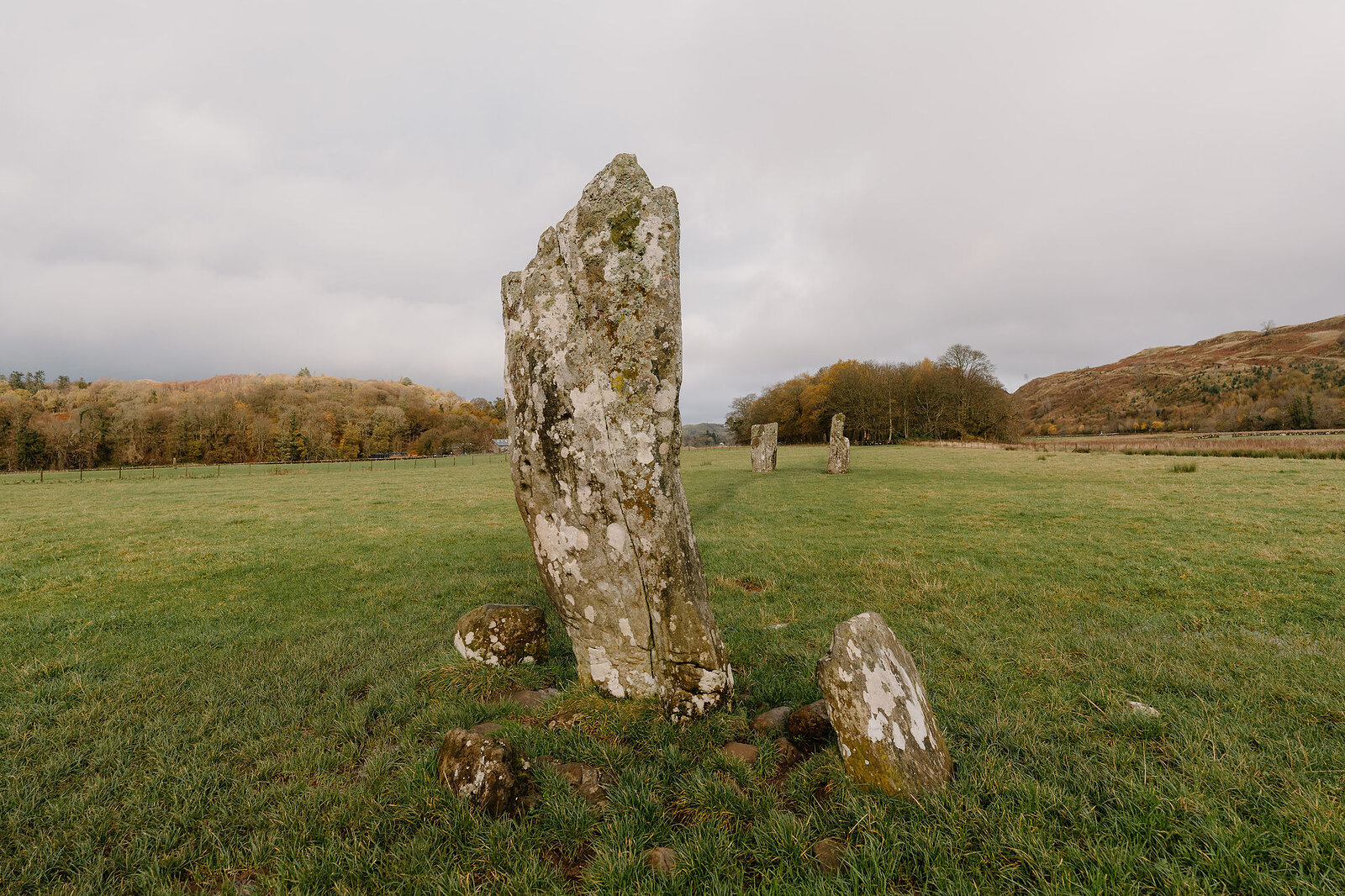
The Nether Largie Standing Stones stand in a field on the floor of Kilmartin Glen, five great slabs set in a line from north-east to south-west: a pair at each end and the largest stone alone between them, the tallest reaching 2.85 metres.
Visited and photographed by Simon Hird
They were raised about 3,200 years ago, and the most widely held idea is that together they formed a lunar observatory, marking where the moon rises and sets at points in its long cycle; alignments with the sun have been found too.
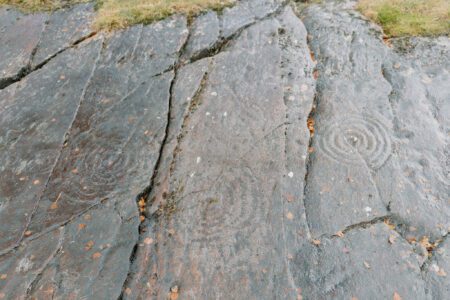
Look closely at the central stone and you will find 23 cup marks, small round hollows pecked into the rock, three of them ringed, and there are three more on one of the southern pair. The carvings are some 1,500 years older than the setting itself, so the stones seem to have been taken from a place already sacred and reused. They are reached by a wooden path across the boggy edge of the field from a car park on the B8025, and Temple Wood stone circle is a few minutes away.
The Daily
Arrives at 5am every day.
A free morning email to see what’s on this week, catch up on what’s happening in Scotland and find somewhere new to go.

Park at the large car park on the east side of the B8025, south of its junction with the A816, and follow the wooden path across the field.
The stones are open at any time and free.
Been here? Tell others what you know, and the best go on this page with your name.
Add your reviewThe stones are thought to mark where the moon rises and sets at certain points in its cycle.
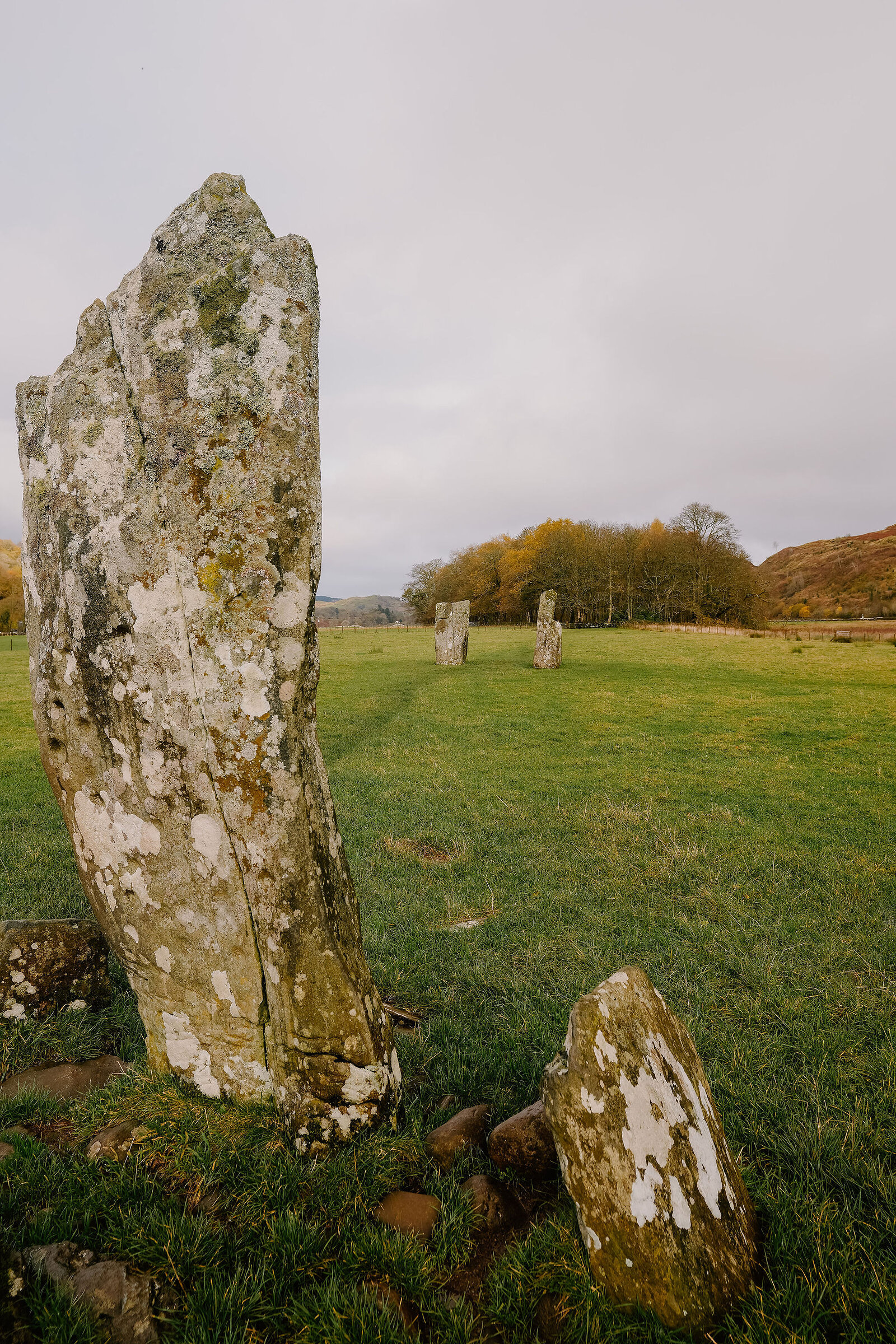
The central stone carries 23 cup marks, three of them with rings around them.
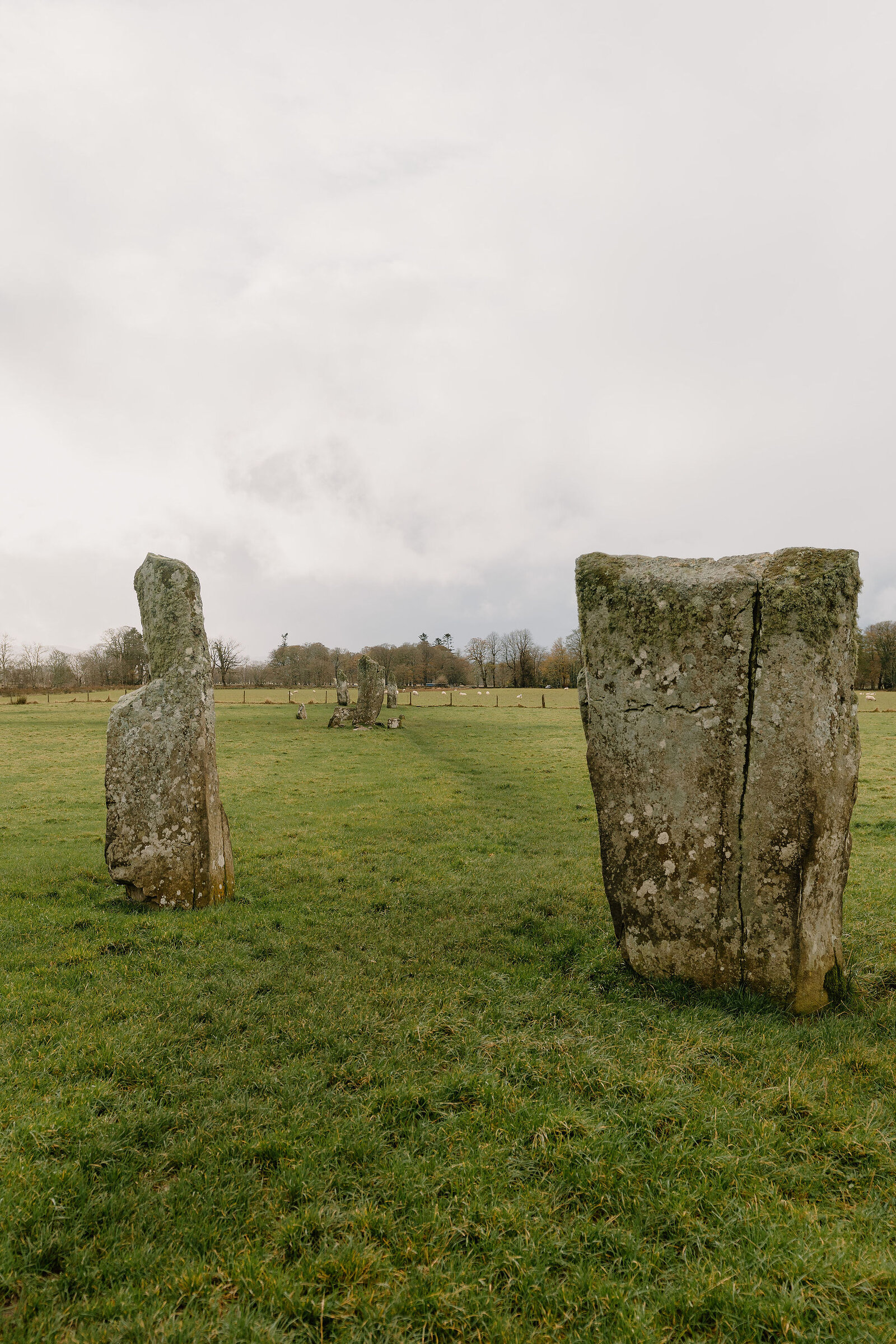
The cup and ring marks are some 1,500 years older than the setting, so the stones may have come from an earlier sacred place.
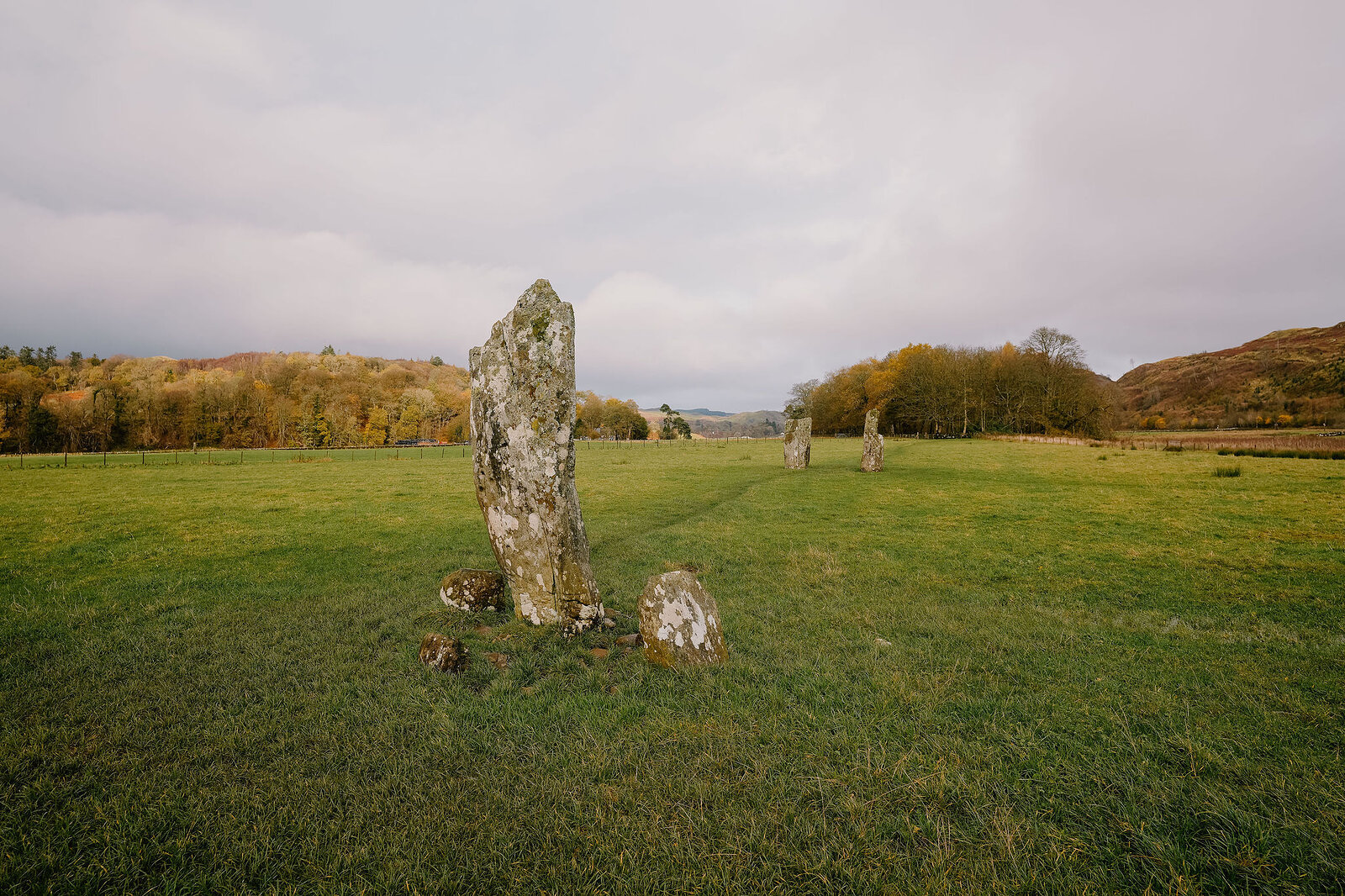
The tallest of the five stones stands 2.85 metres high.
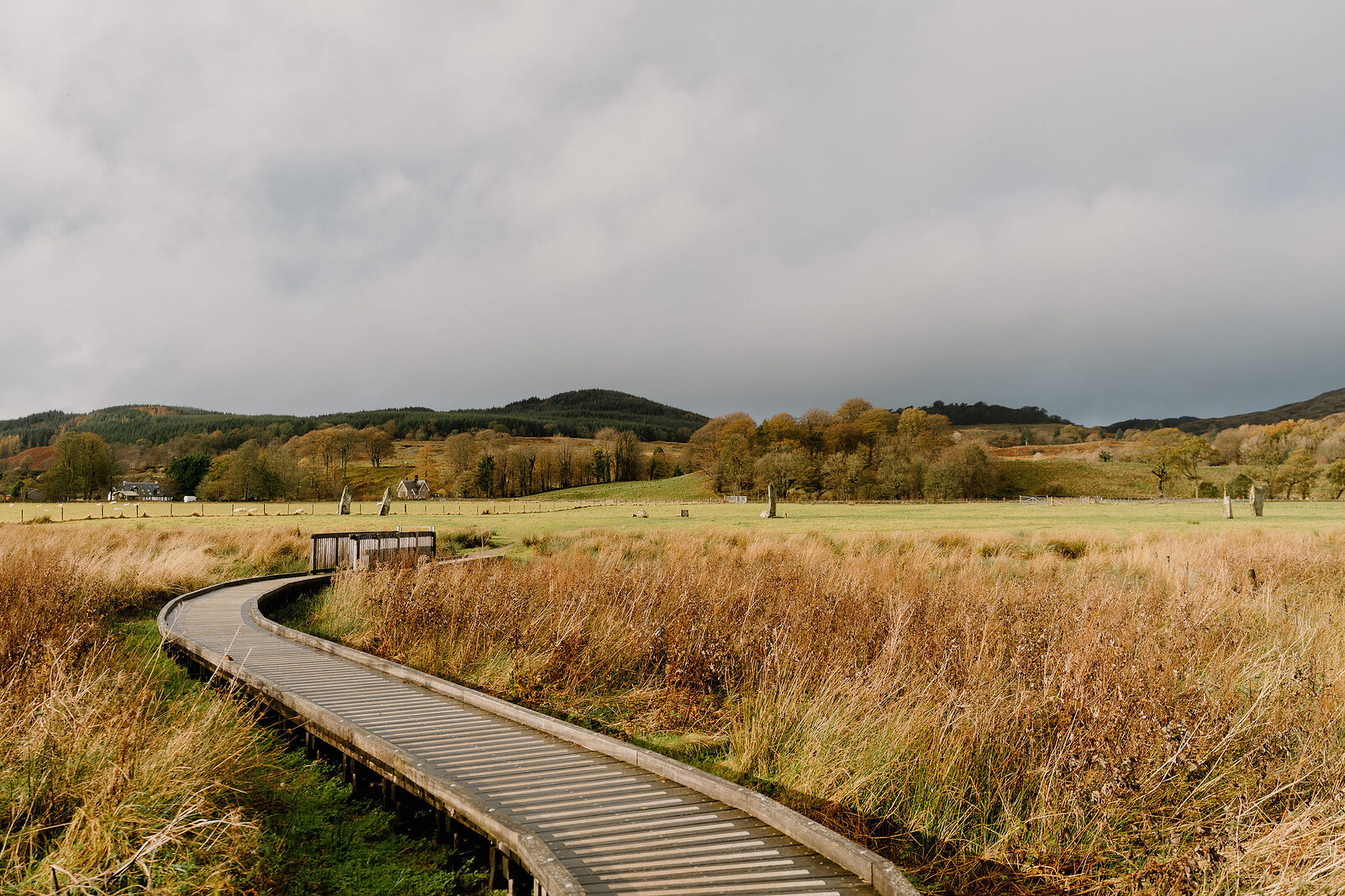
A wooden path carries you over the boggy edge of the field to the stones.
New places, news and stories, as we find them.
What is on in Argyll and ButeKilmartin Glen, south of Kilmartin.
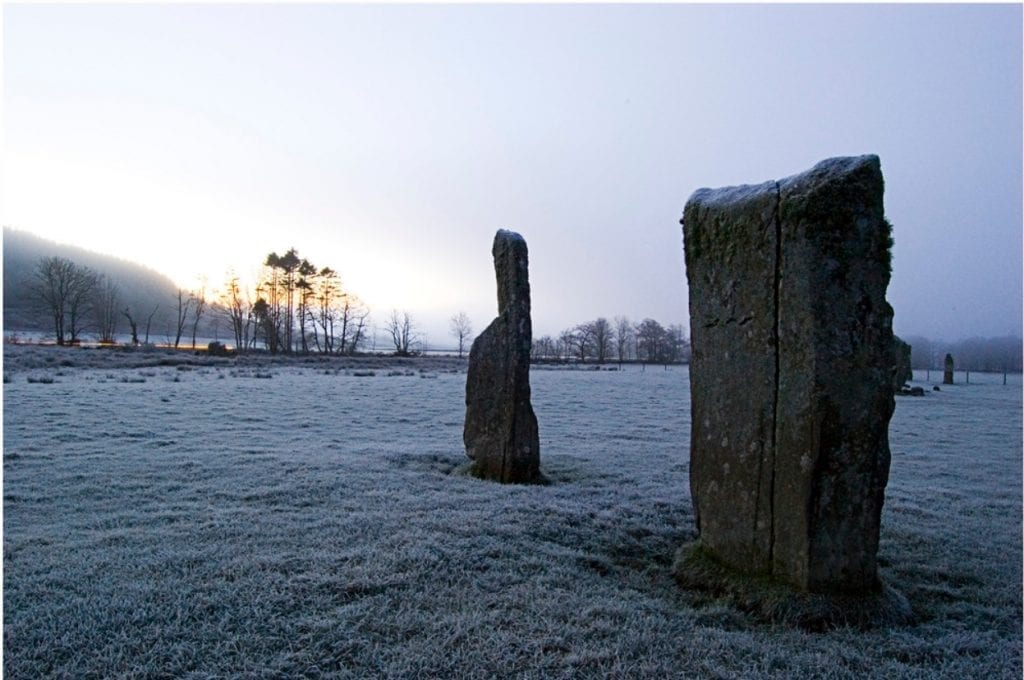 Kilmartin GlenOne of Scotland's richest prehistoric landscapes, with more than 800 monuments within six miles of Kilmartin and a museum to explain them.1 mile 2 min by road
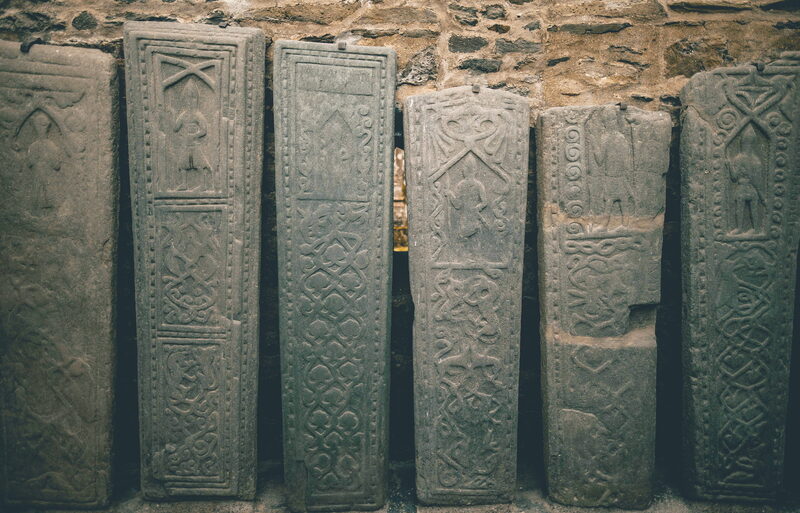
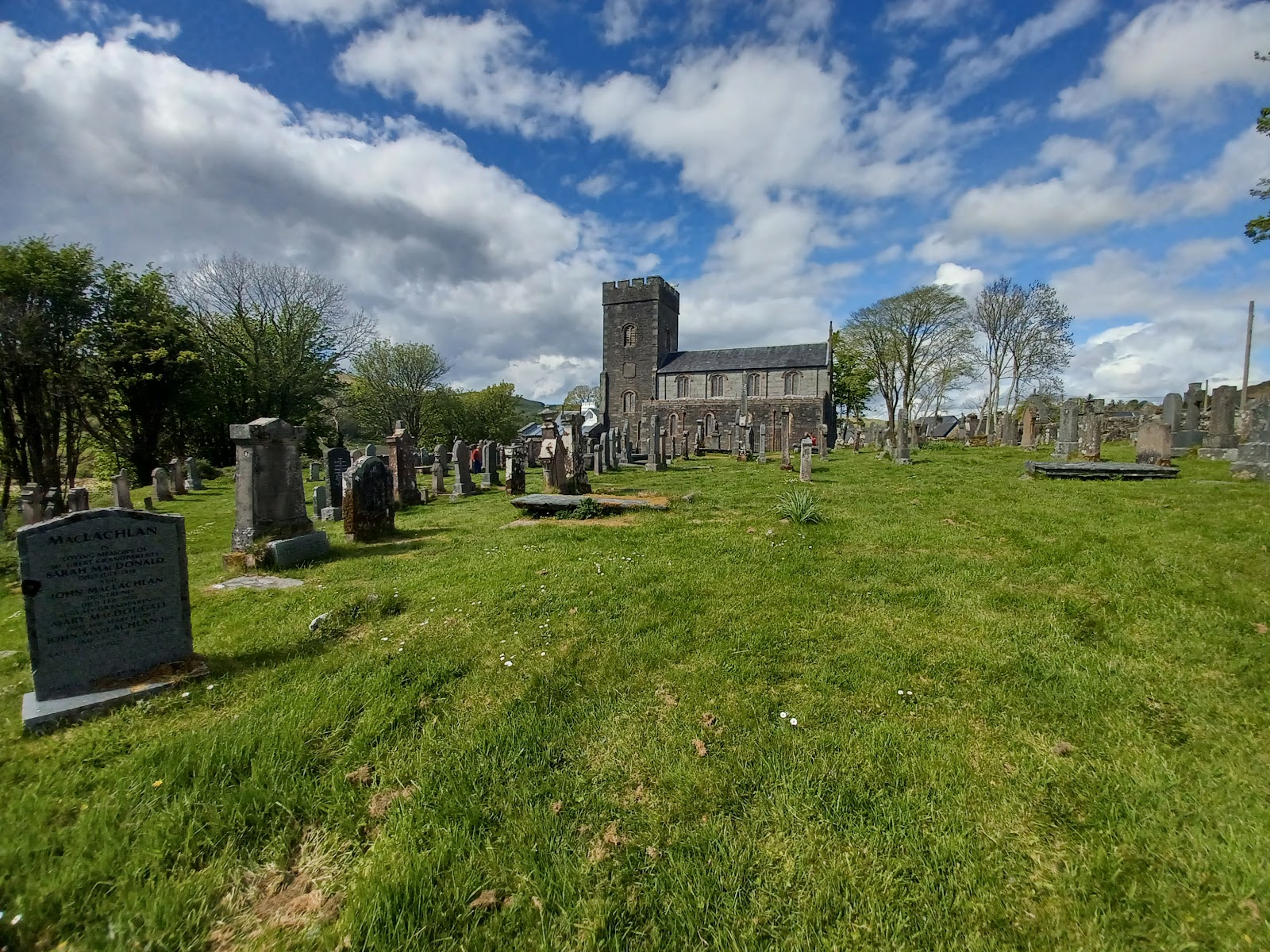 Kilmartin StonesMedieval West Highland grave slabs of warriors, swords and interlace in the churchyard at Kilmartin.1 mile 2 min by road
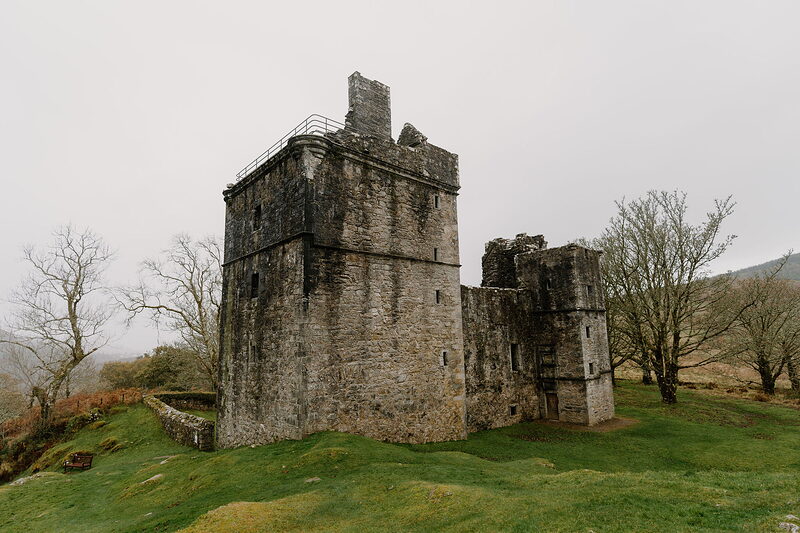 Carnasserie CastleThe Renaissance tower house of John Carswell, first Protestant Bishop of the Isles, at the head of Kilmartin Glen.2 miles 3 min by road
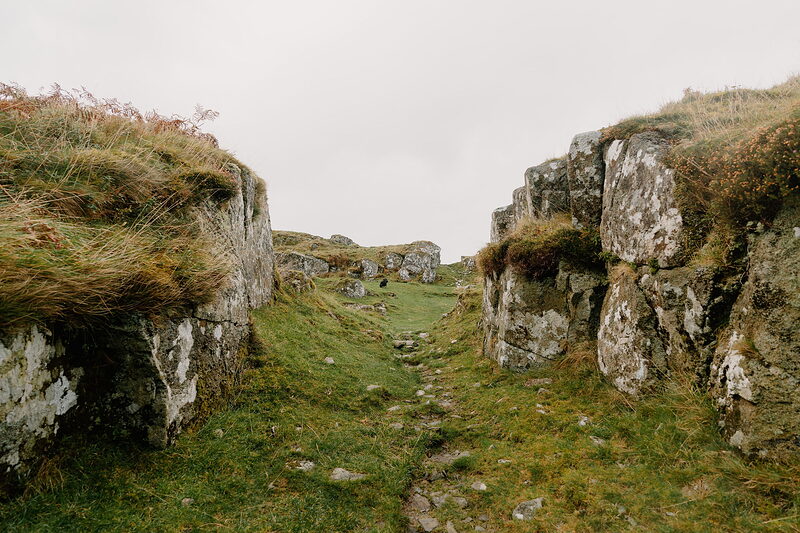 Dunadd FortThe rock of the Gaelic kings of Dál Riata in Kilmartin Glen, with footprints carved for the making of kings.3 miles 6 min by road
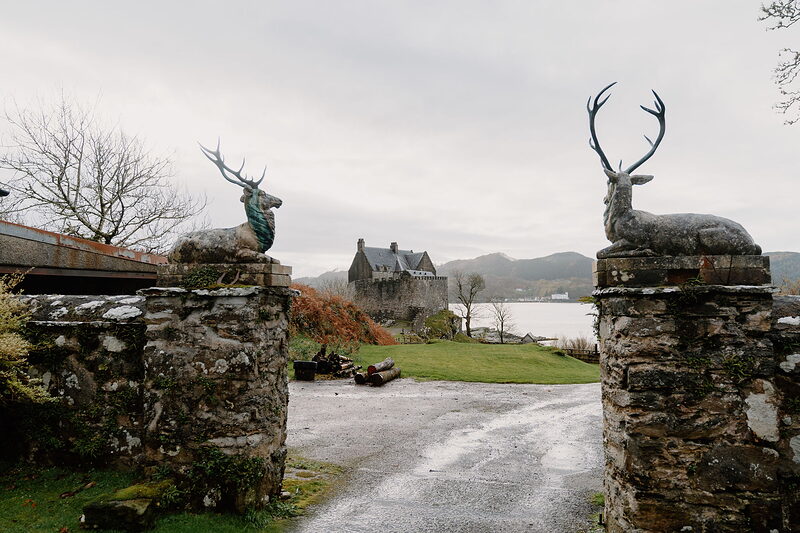 Duntrune CastleThought to be Scotland's oldest continuously occupied castle, on a rock above Loch Crinan, home of the Malcolms since 1792.4 miles 12 min by road
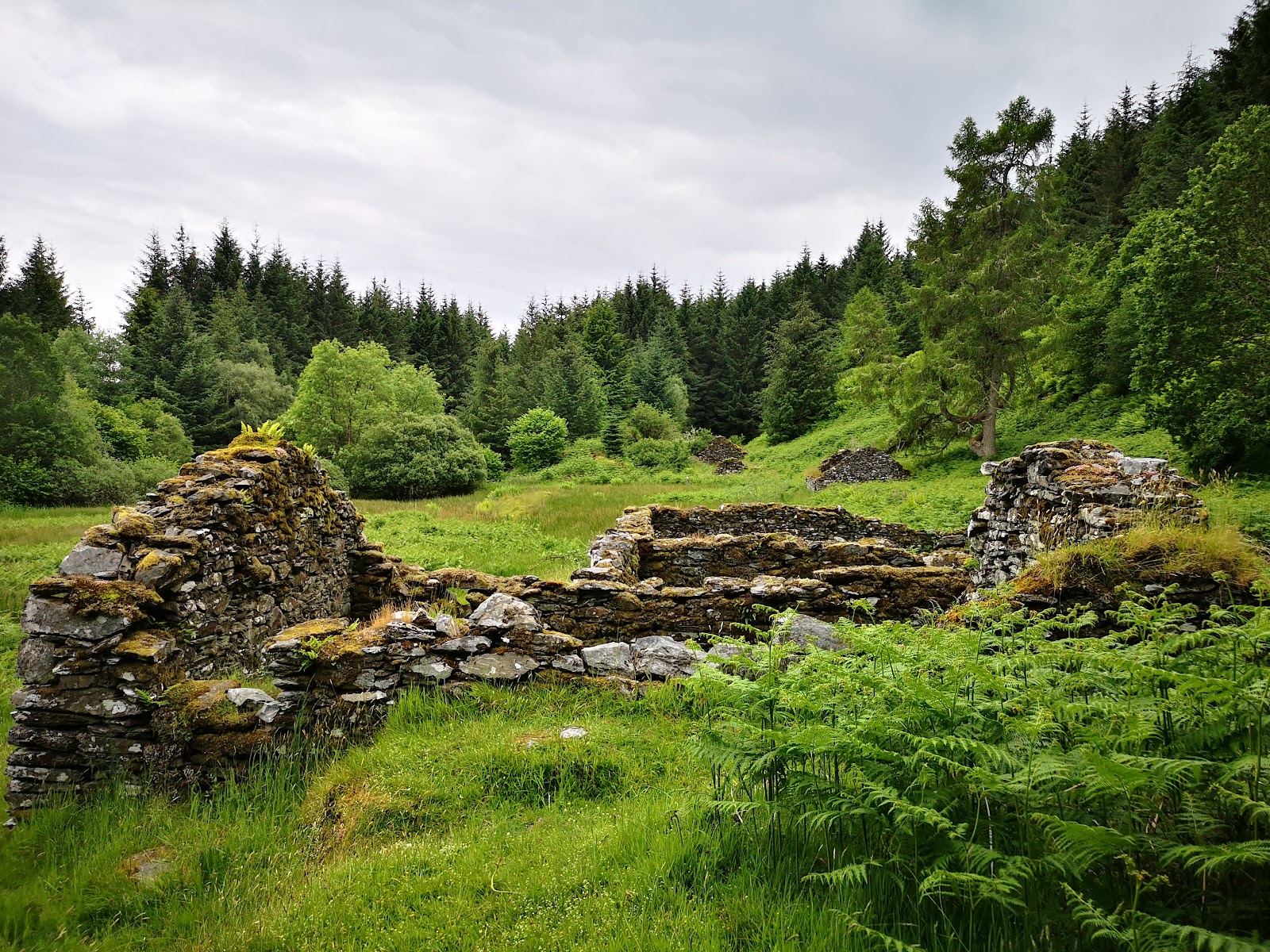 Kilmory Oib TownshipThe ruins of a township of at least seventeen buildings in Knapdale Forest, with an early Christian cross-marked stone.6 miles 8 min by road
Places to stay near the stones, and when each is next free.
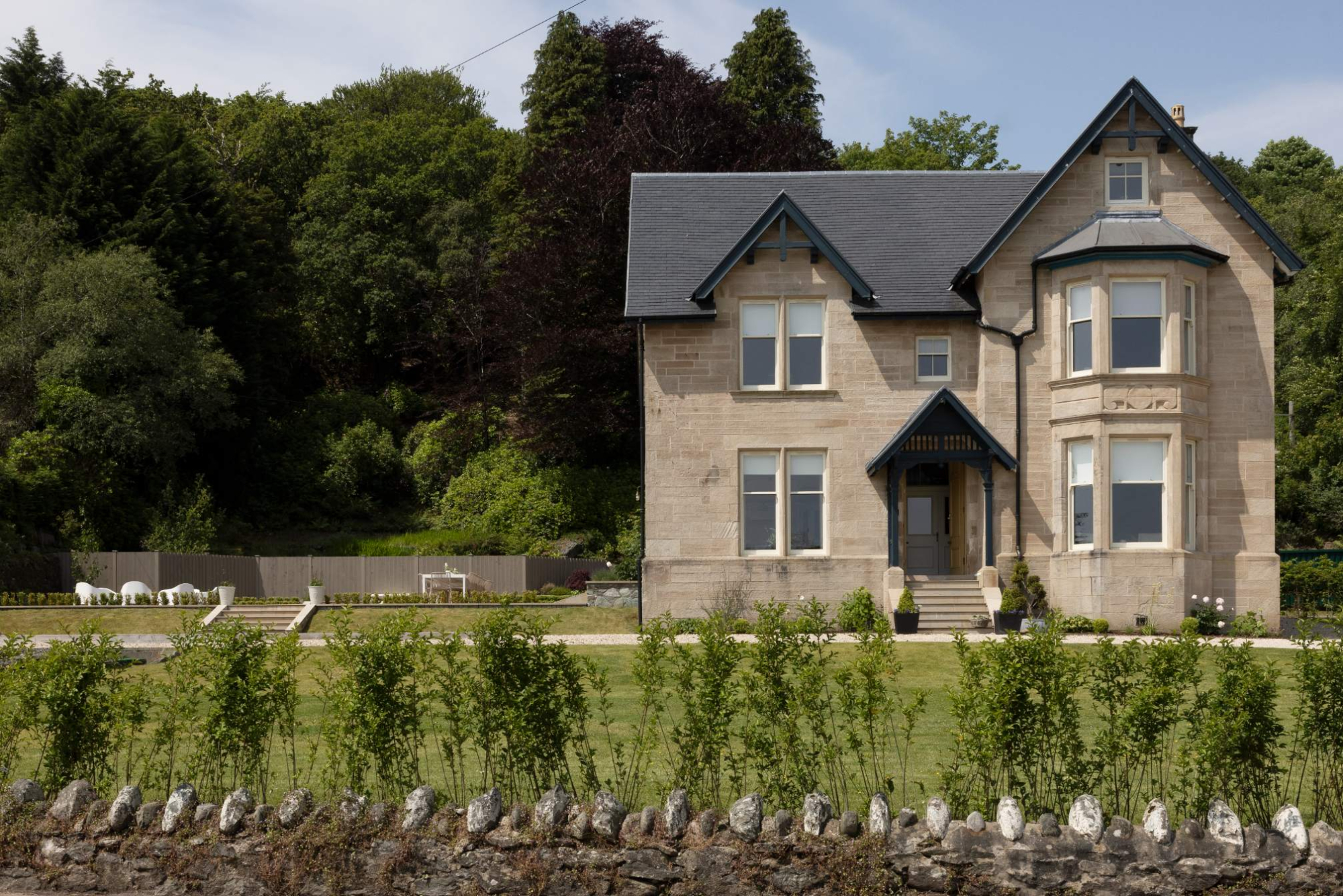 The Hollies
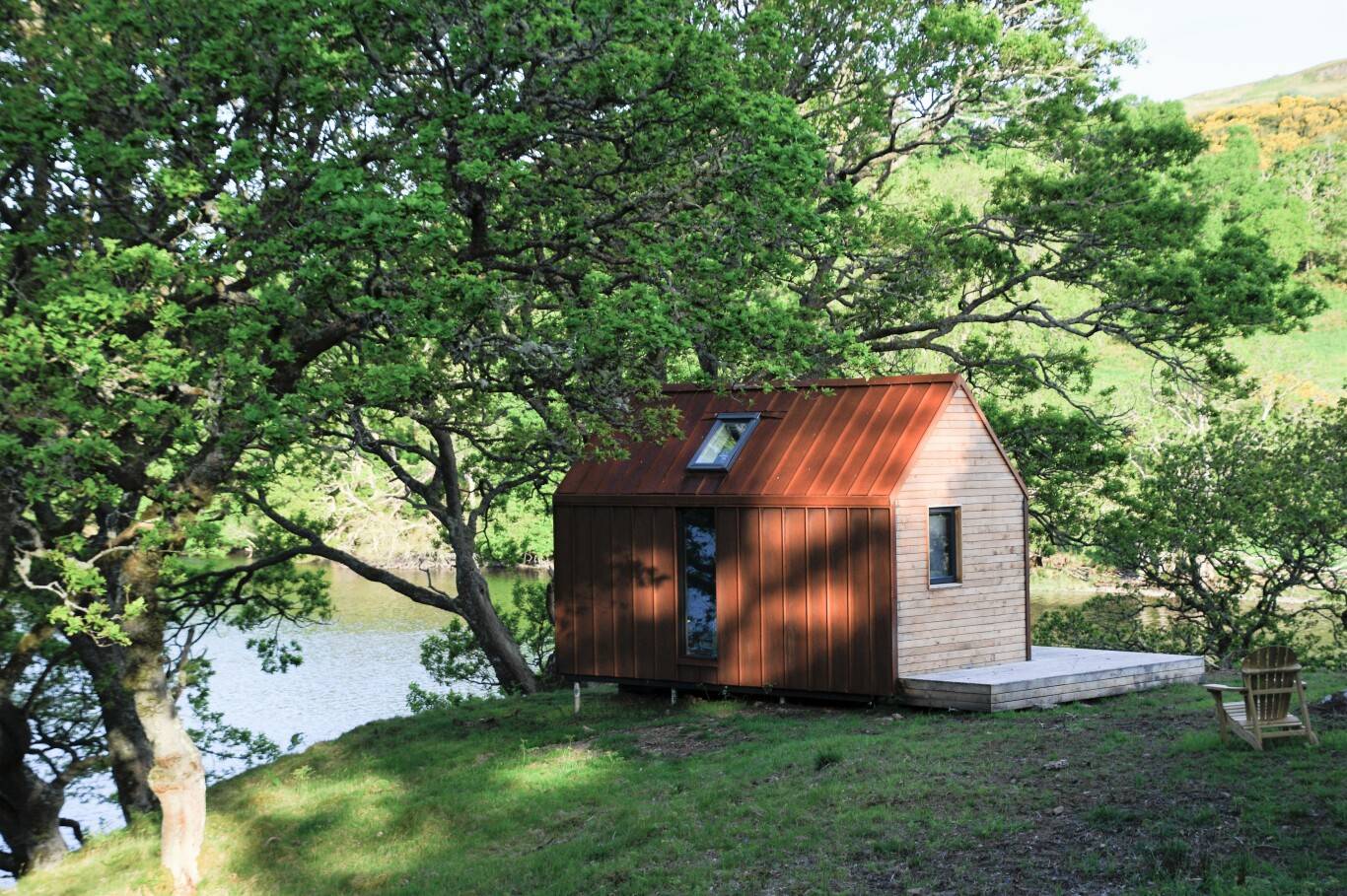 Uisge Bothy
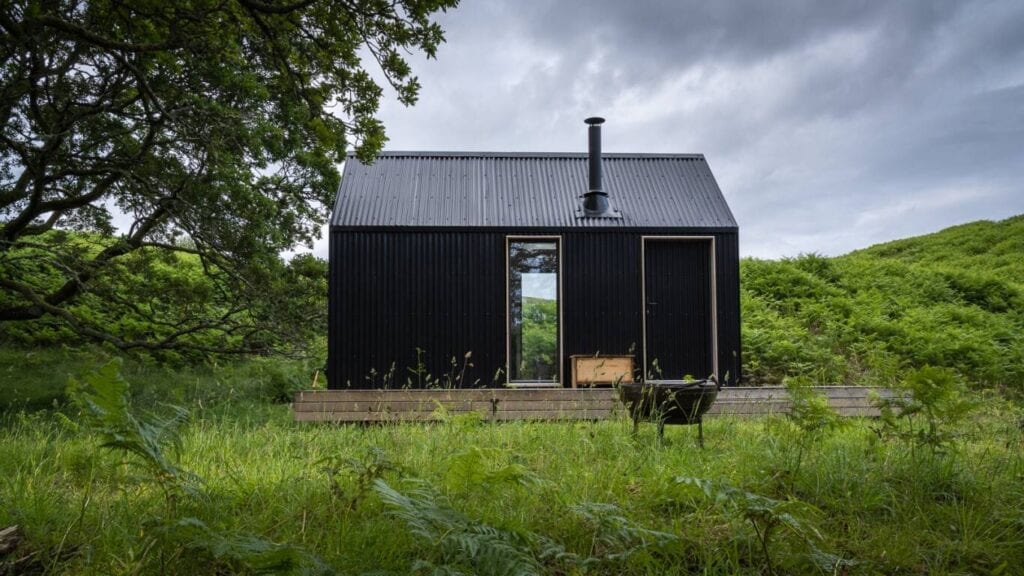 Beatha
 Fern Cottage
We want to show you the best that Scotland has to offer. The makers and the creatives, the enduring experiences, the evocative tales, the concealed corners. The roads less travelled that take you to places that matter. The adventures that gather you up and sweep you away. The blend of the wild and the artistic that makes Scotland what it is. We’d love for you to join us.
What we have written about it, the collections it is in and more in Argyll and Bute.
For further reading, before you go. The details on this page were checked on .