Did you know
A night watchman's dog.
Bobby belonged to John Gray, a gardener who came to Edinburgh in 1850 and, finding no garden work, joined the police as a night watchman. Bobby walked the cobbled streets with him through the winter nights.
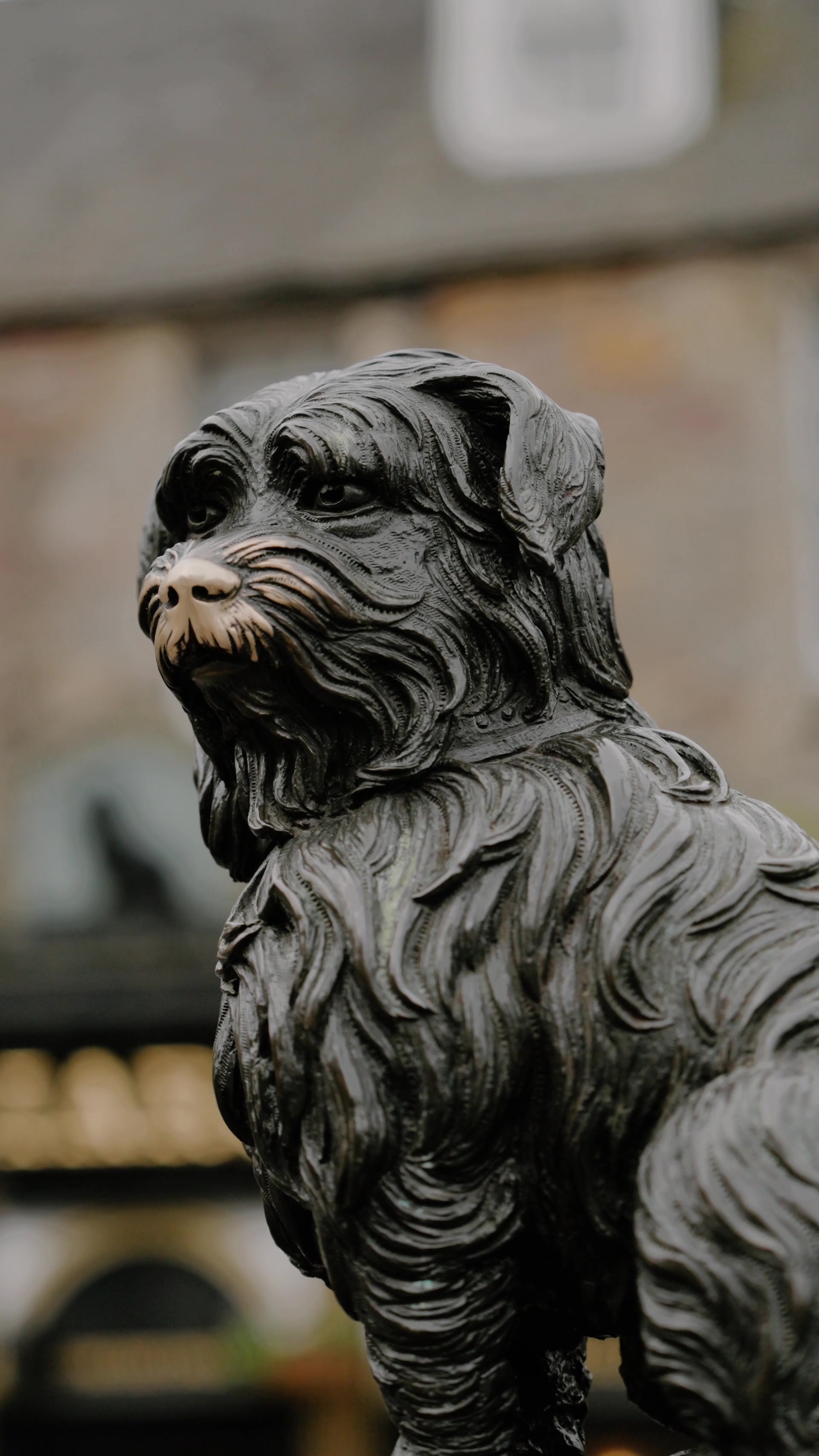
A bronze of the Skye terrier said to have kept watch over his master's grave in Greyfriars Kirkyard for fourteen years, modelled from life and set on a drinking fountain in 1873.
At the top of Candlemaker Row, where it meets George IV Bridge, a small shaggy dog sits on a granite column, looking across the street towards the kirkyard gate.
He is life-size, which is to say not very big, and he has sat there, watching, since 1873.
The story goes that his master, a policeman, died in 1858 and was buried in Greyfriars Kirkyard, and that the little terrier would not leave the grave. The people of the Old Town fed him and sheltered him, and in the end the city took him in as its own. When he died, a statue was made in his likeness and set on a drinking fountain opposite the gate he had watched.
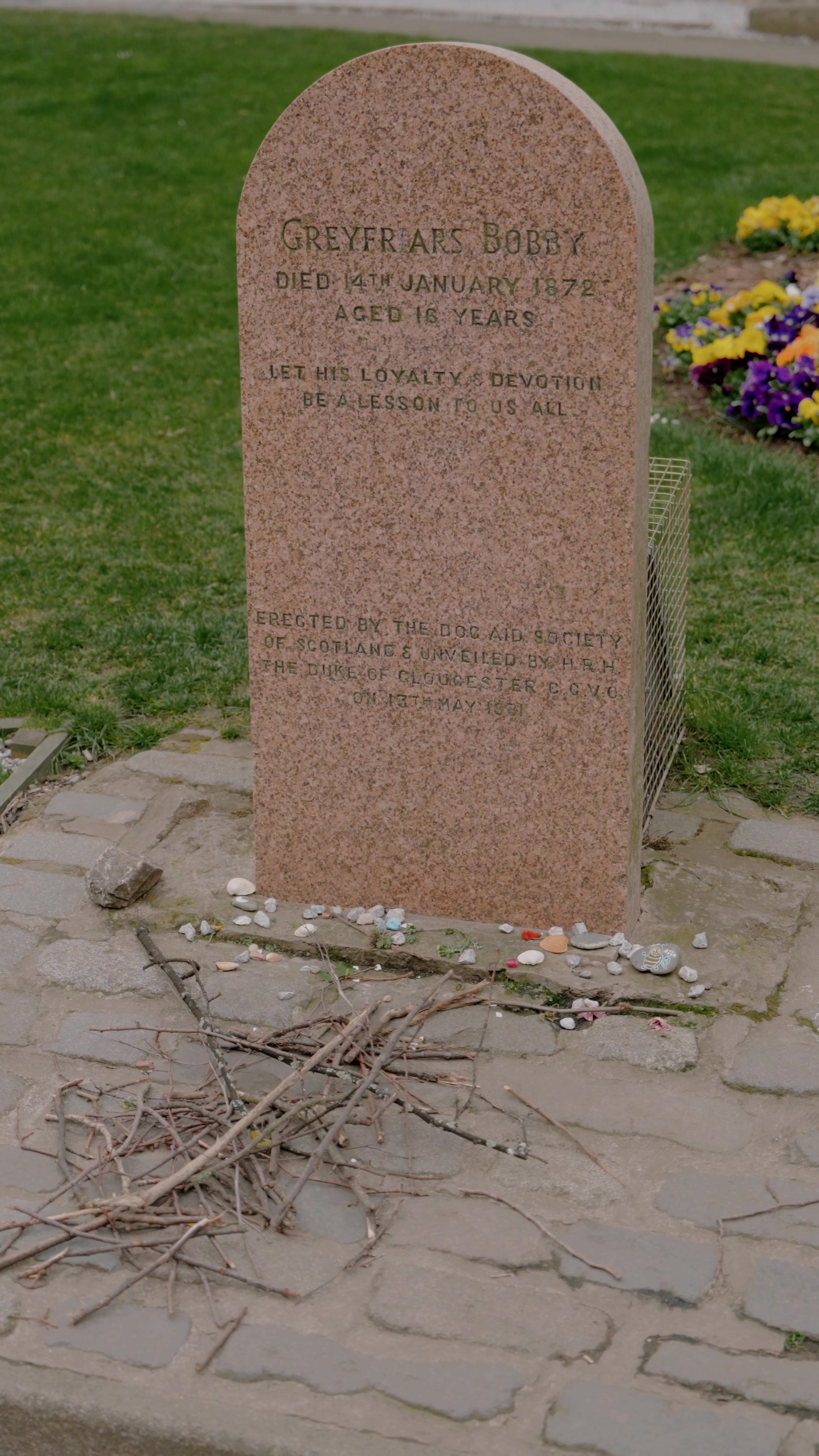
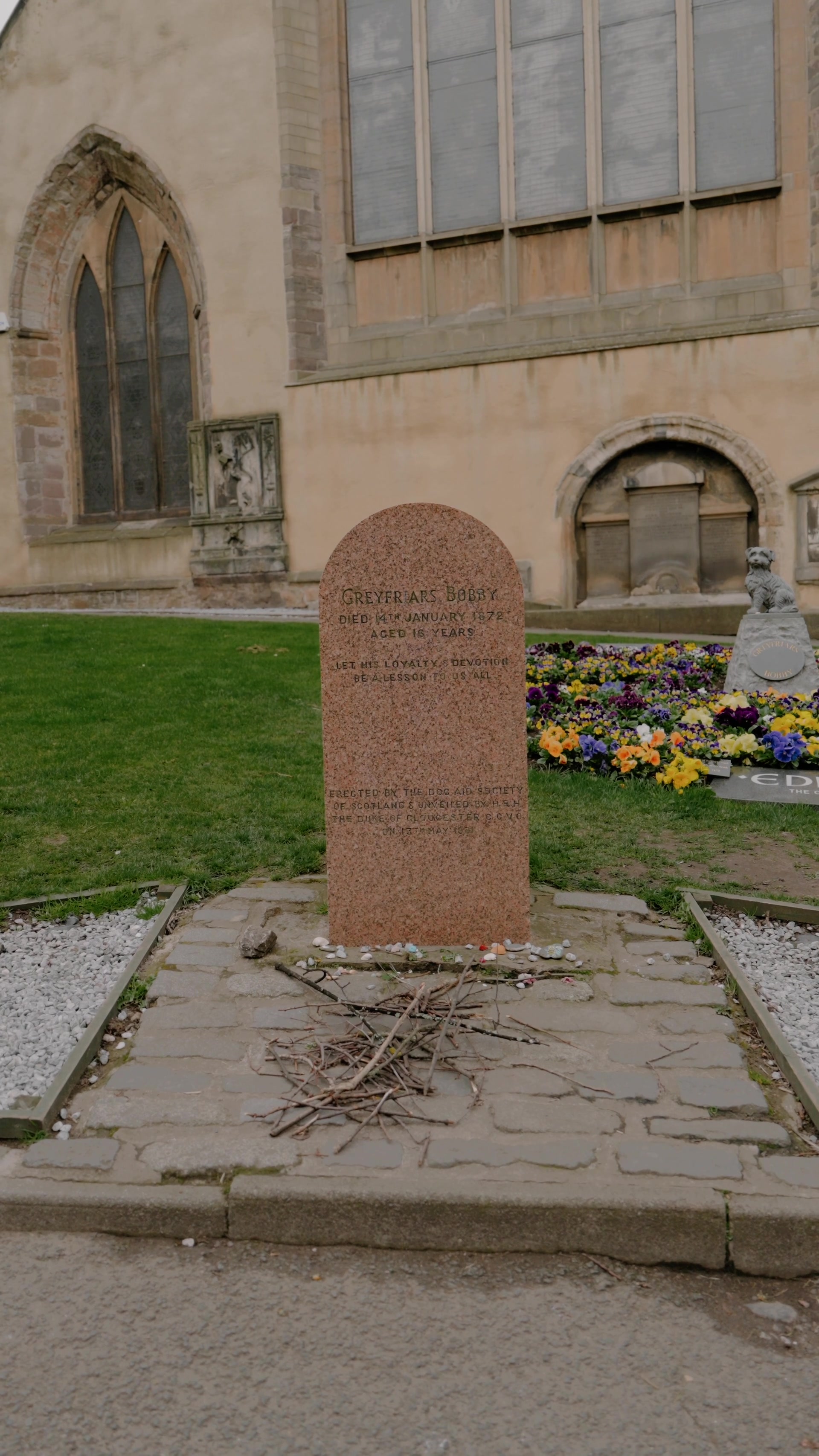
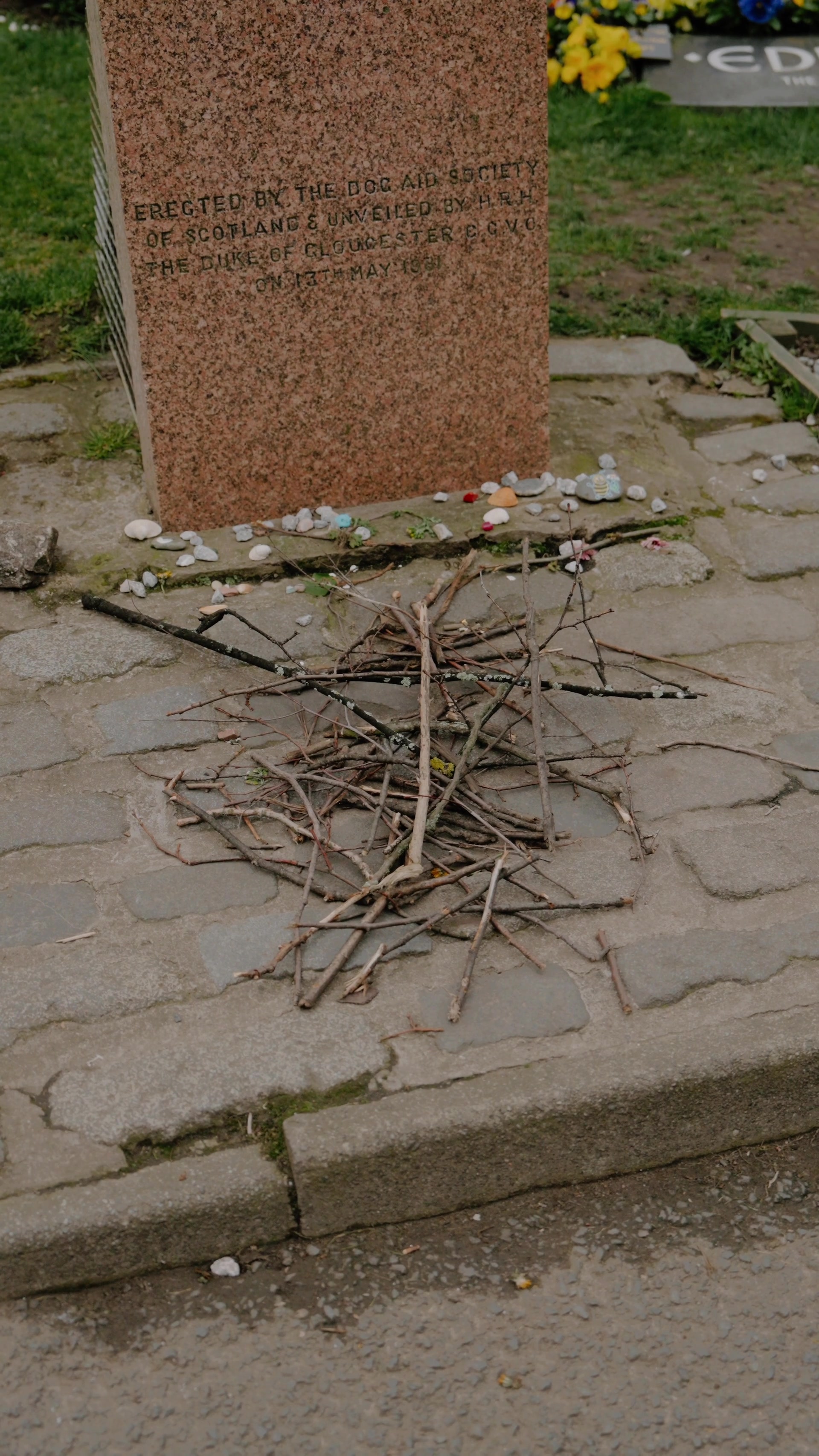
Cross the road afterwards to find his own headstone just inside the kirkyard, where people still leave sticks for him.
The statue stands on the pavement at the corner of Candlemaker Row and George IV Bridge, free to see at any hour.
His grave is a few steps away, just inside the gate of Greyfriars Kirkyard, and his collar and dish are in the Museum of Edinburgh on the Canongate.
Bobby belonged to John Gray, a gardener who came to Edinburgh in 1850 and, finding no garden work, joined the police as a night watchman. Bobby walked the cobbled streets with him through the winter nights.
Crowds gathered at the kirkyard gate to wait for the one o'clock gun, when Bobby left the grave for his midday meal at Traill's Coffee House round the corner, served in his own dish.
When a law of 1867 ordered every unlicensed dog to be destroyed, the Lord Provost, Sir William Chambers, paid Bobby's licence himself and gave him a collar engraved with the fact.
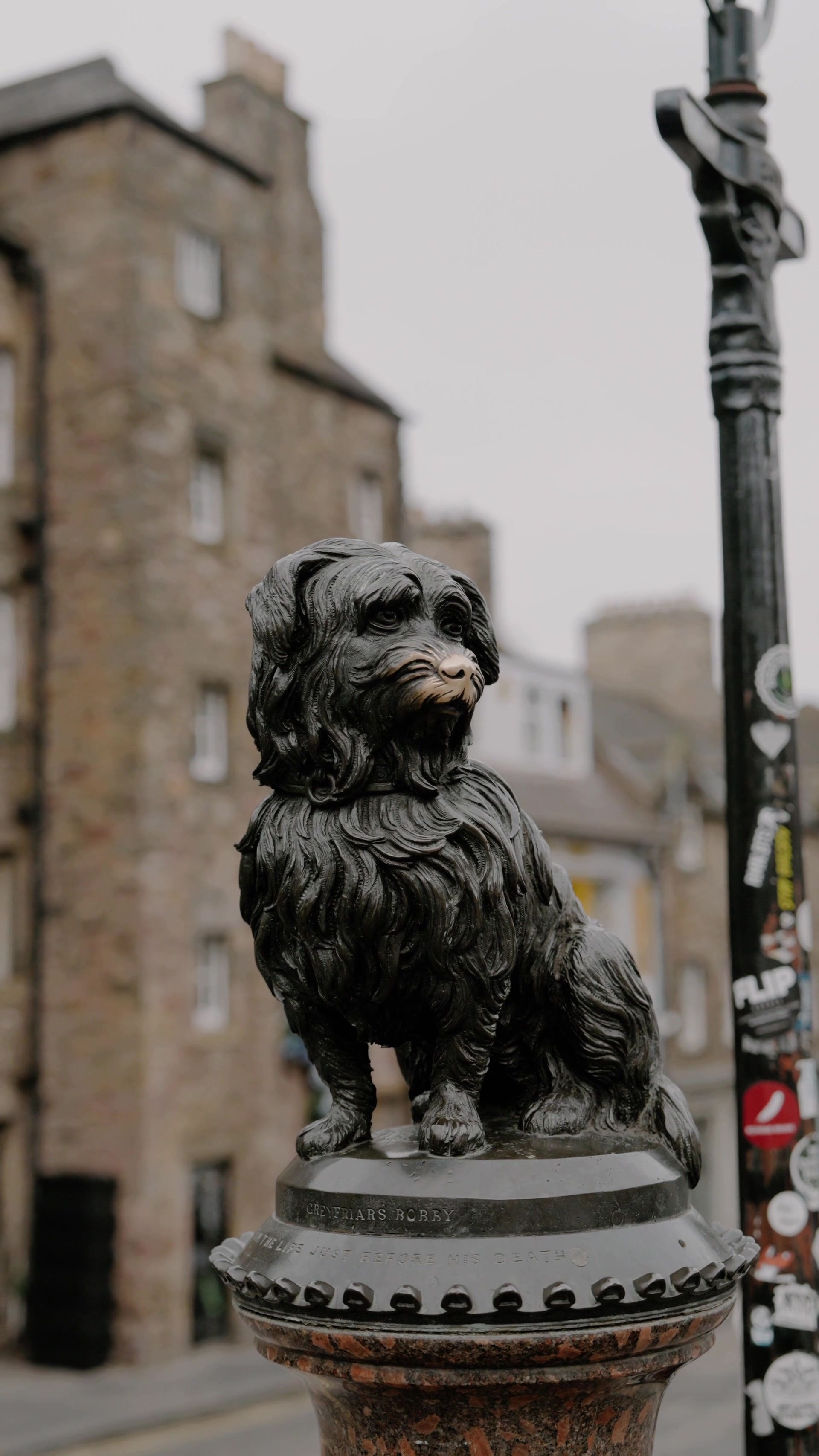
William Brodie modelled the statue from Bobby himself, shortly before the dog died. The words round its base say so: Greyfriars Bobby, from the life just before his death.
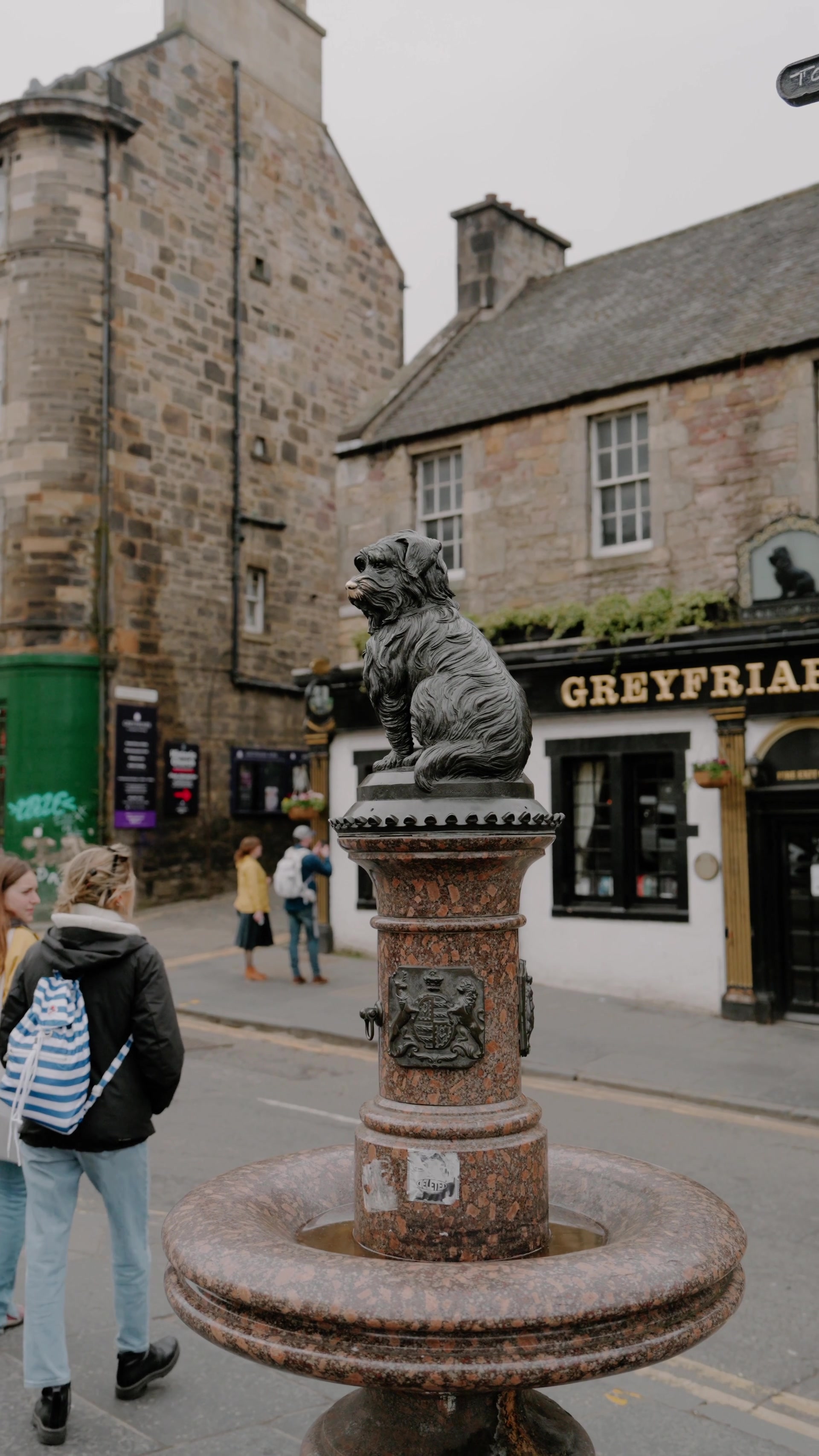
The statue tops a drinking fountain given by Baroness Burdett-Coutts: a low trough for dogs and a basin above for people, with two bronze cups on chains. The water was turned off in 1957.
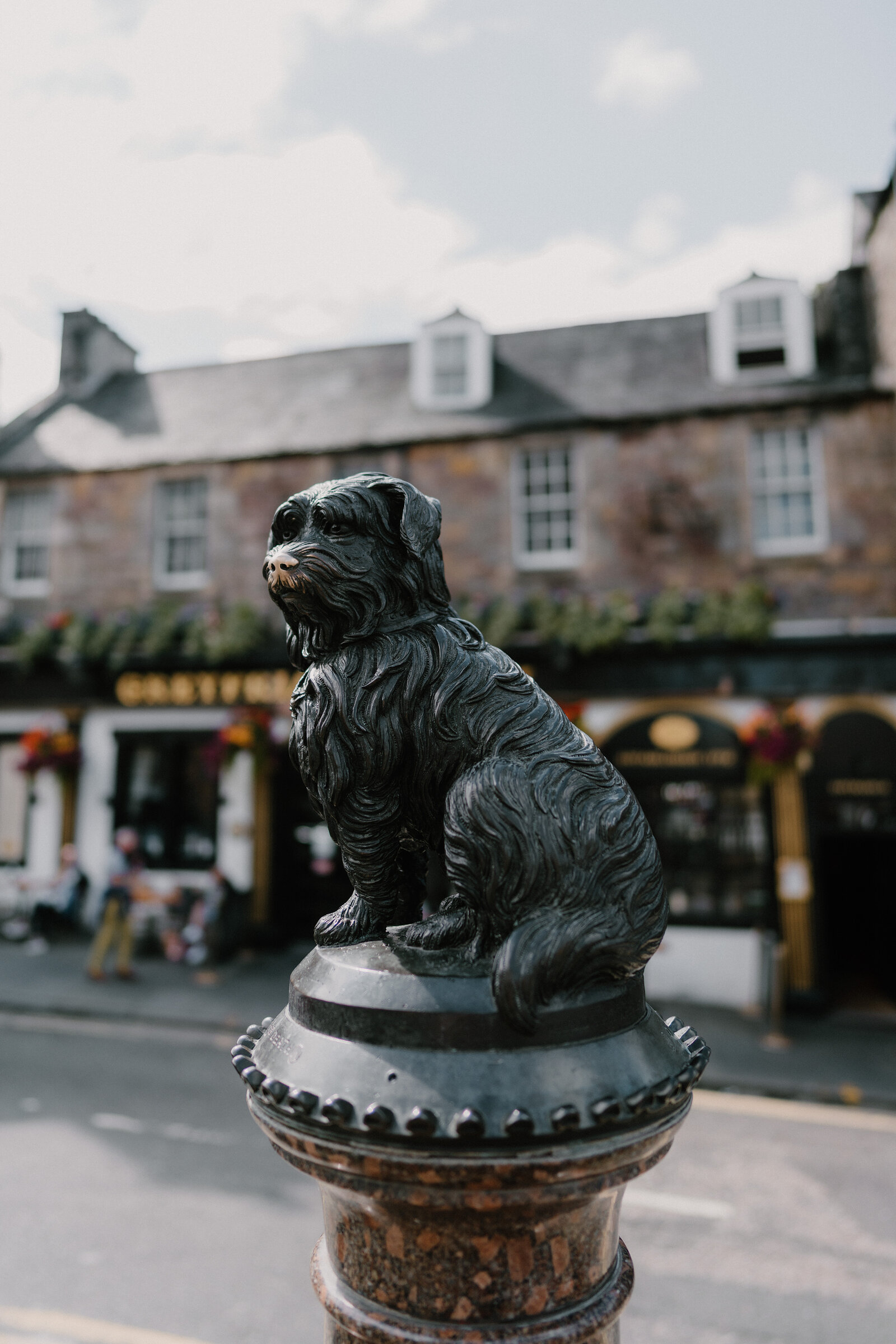
Visitors rub the statue's nose for luck, and it shines. The city's museums ask people to leave it be, so the bronze lasts.
The historian Jan Bondeson found more than sixty loyal cemetery dogs recorded in 19th-century Europe, and has argued that the Edinburgh story may join more than one dog together.
One of Edinburgh’s more unlikely historical heroes is Greyfriars Bobby, the little Skye terrier that reportedly spent the last 14 years of his life sitting patiently by his late owner’s grave. Bobby’s statue now sits atop a granite fountain on the corner of George IV Bridge and Candlemaker Row, close to Greyfriars Kirkyard, the cemetery where he’s now buried near his master. The churchyard is also notable for being home to the reportedly haunted mausoleum of Sir George ‘Bloody’ Mackenzie.
Read moreNew places, news and stories, as we find them.
What is on in EdinburghAt the corner of Candlemaker Row and George IV Bridge, opposite Greyfriars Kirkyard.
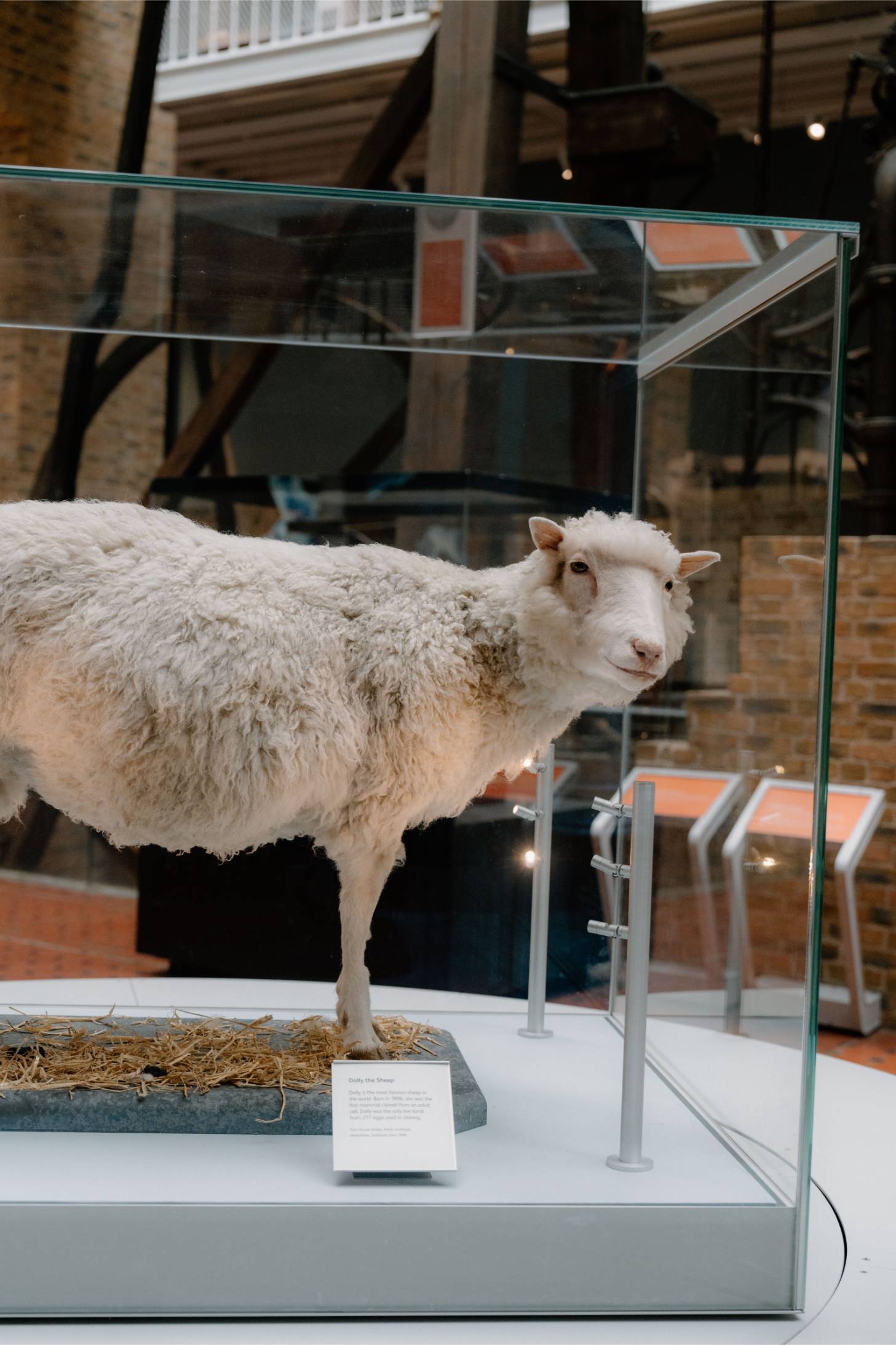 Dolly the SheepThe first mammal cloned from an adult cell, in the National Museum.Under a mile1 min by road
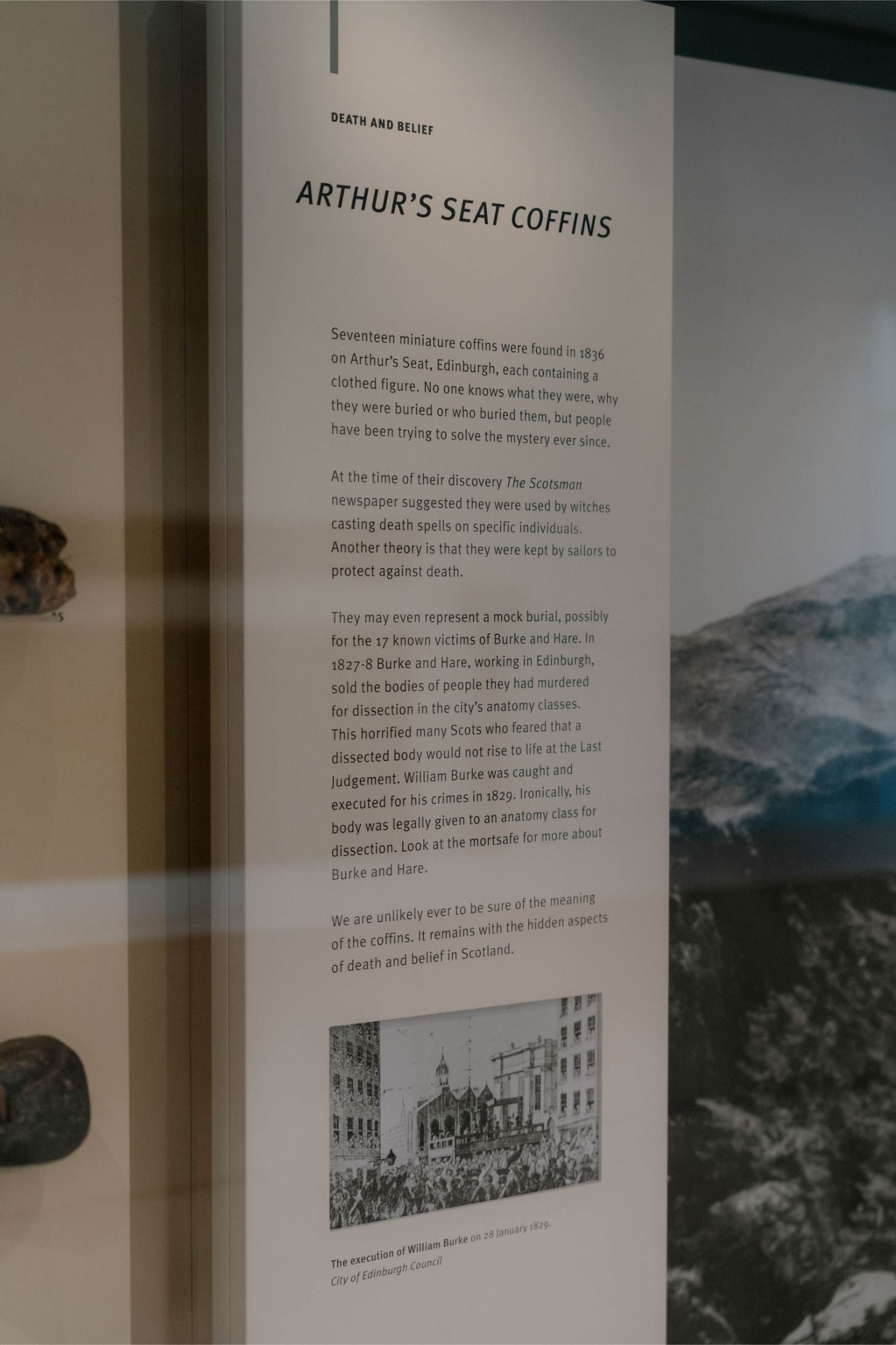 The Arthur's Seat CoffinsTiny coffins found hidden on Arthur's Seat in 1836, eight of which survive.Under a mile1 min by road
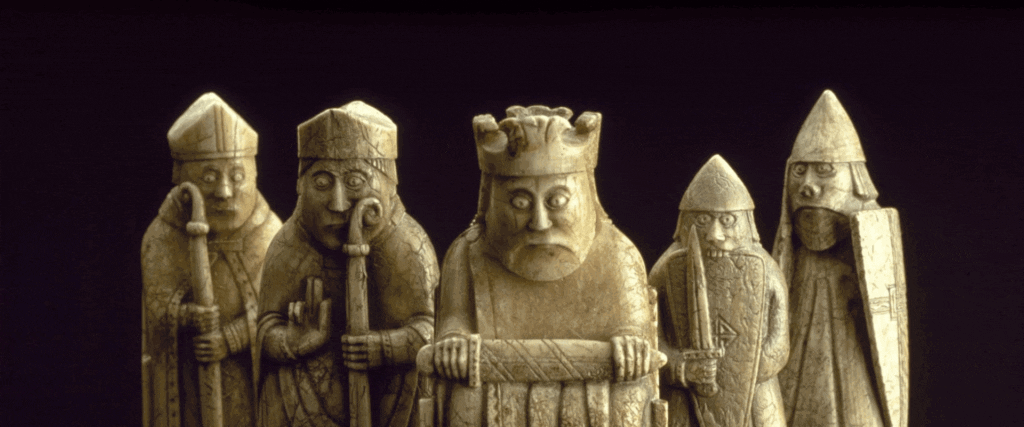 The Lewis Chess PiecesUnder a mile1 min by road
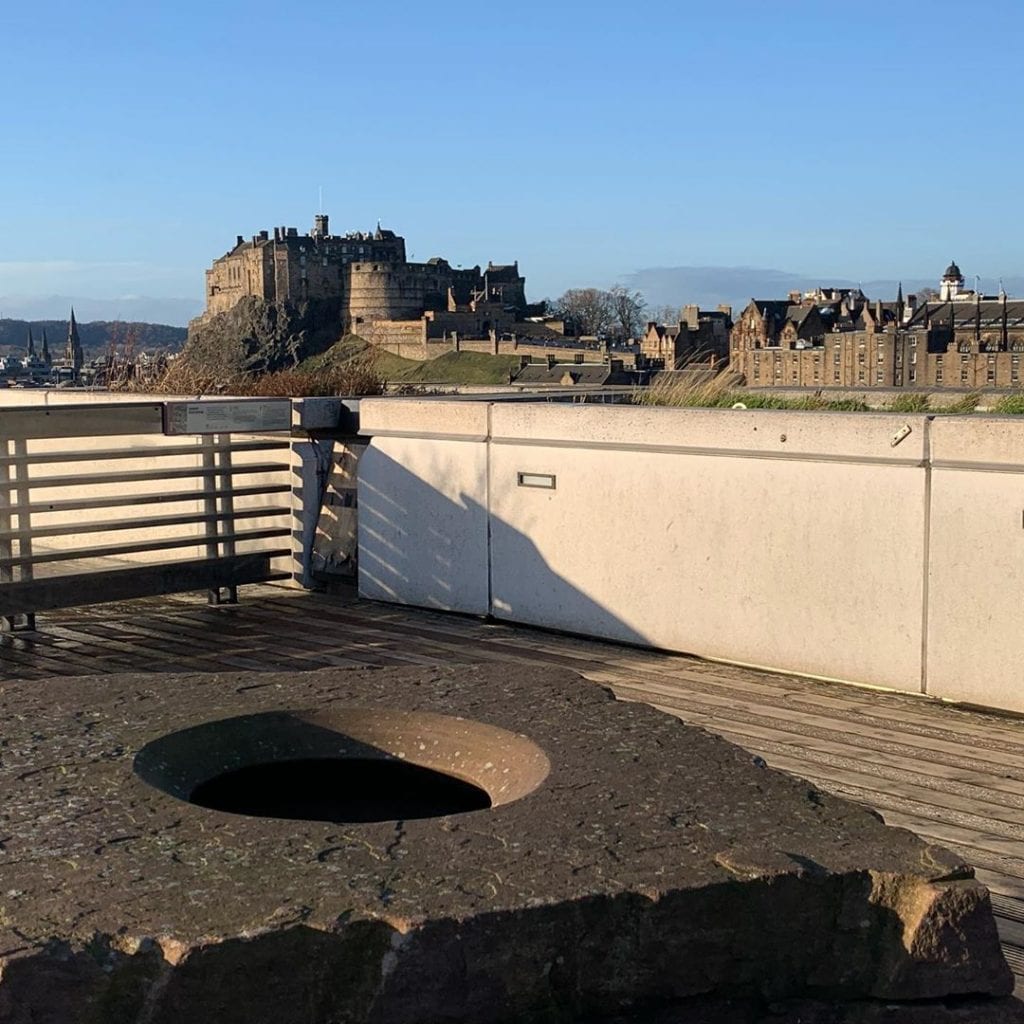 Andy Goldsworthy's 'Hutton Roof'Andy Goldsworthy's sculpture on the roof of the National Museum.Under a mile1 min by road
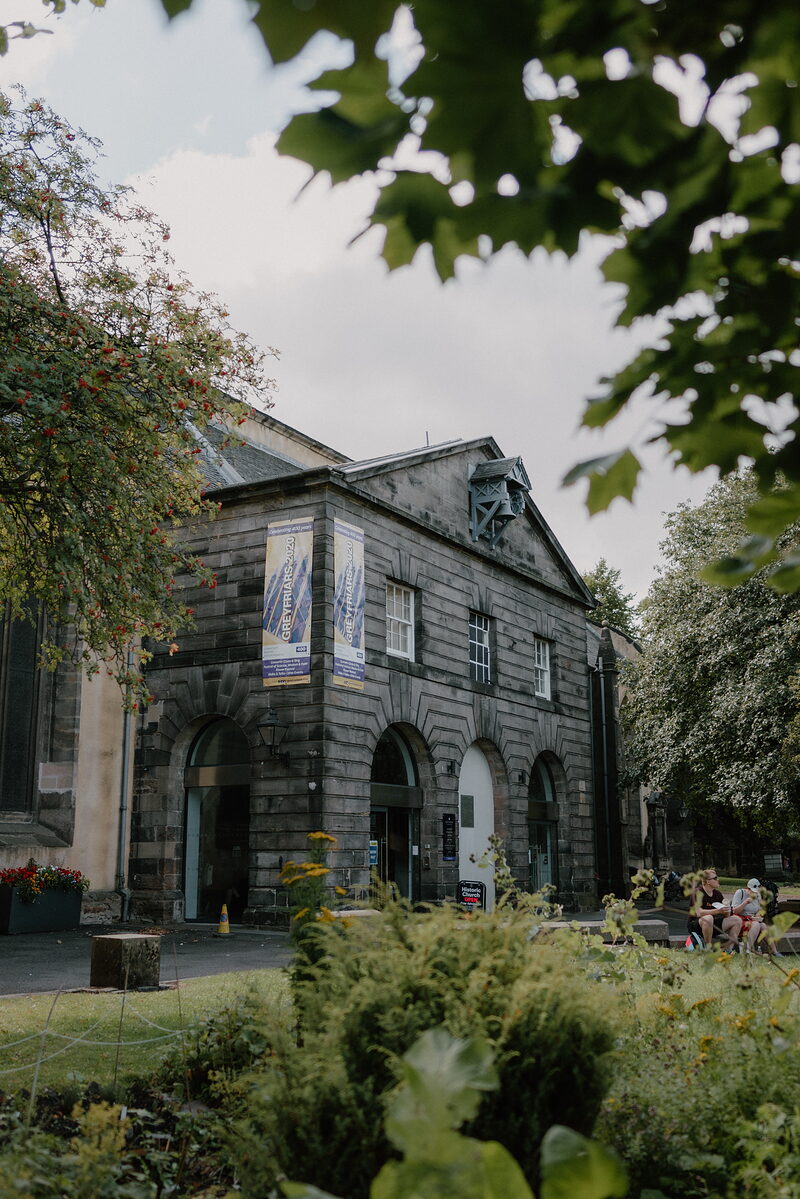 Greyfriars KirkThe first church built in Edinburgh after the Reformation, where Bobby's master is buried.Under a mile2 min by road
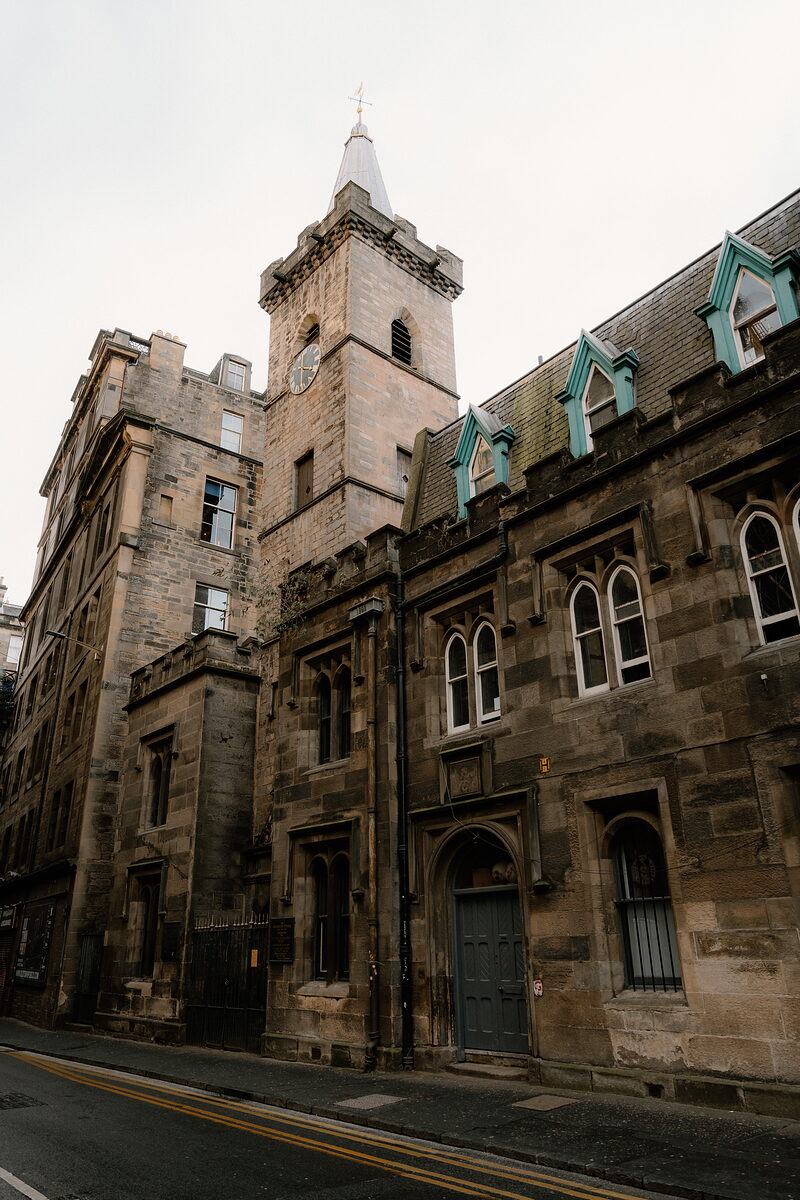 Magdalen ChapelA chapel of the 1540s on the Cowgate, with stained glass older than the Reformation.Under a mile2 min by road
Places to stay near Bobby, and when each is next free.
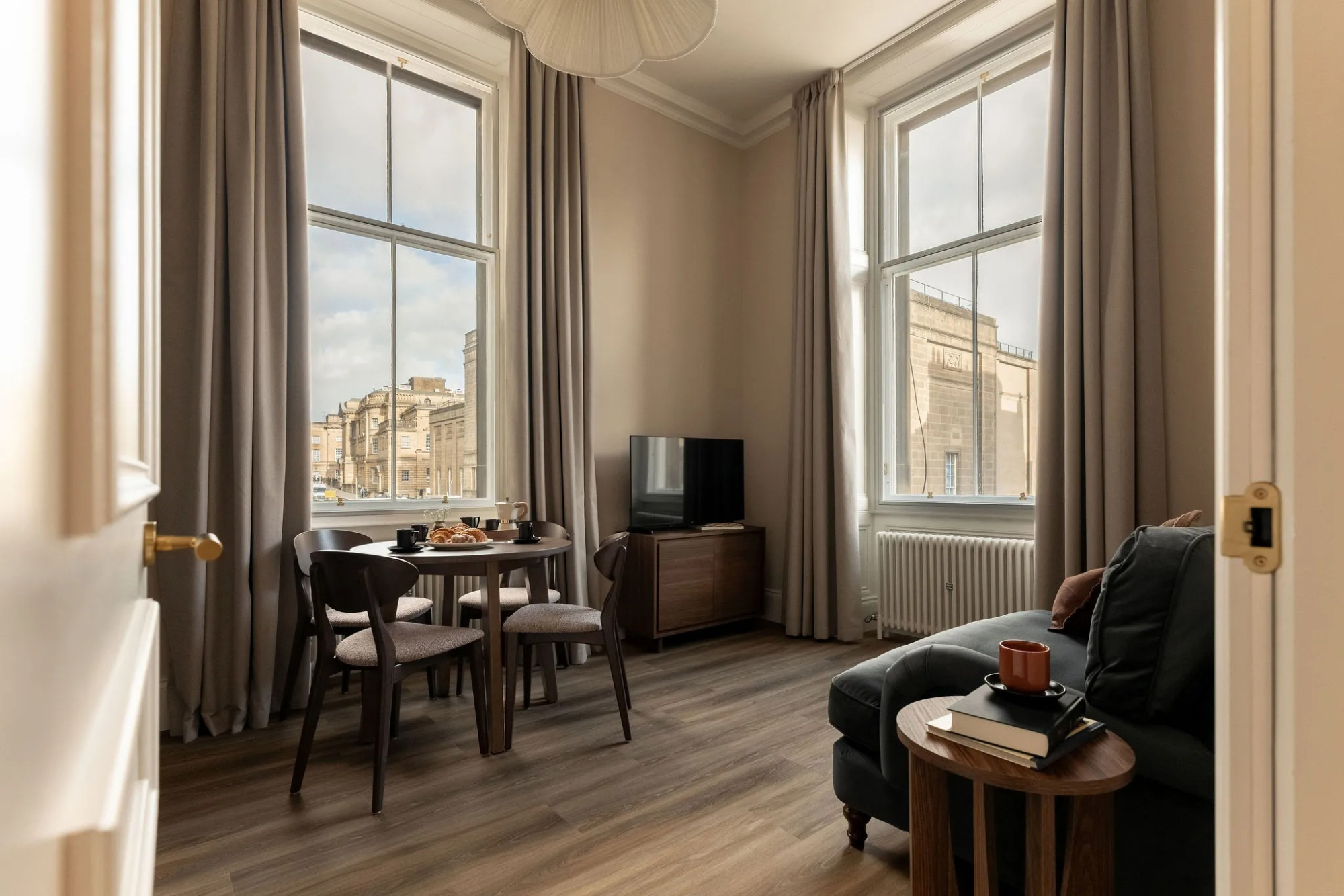 Moment George IV Bridge
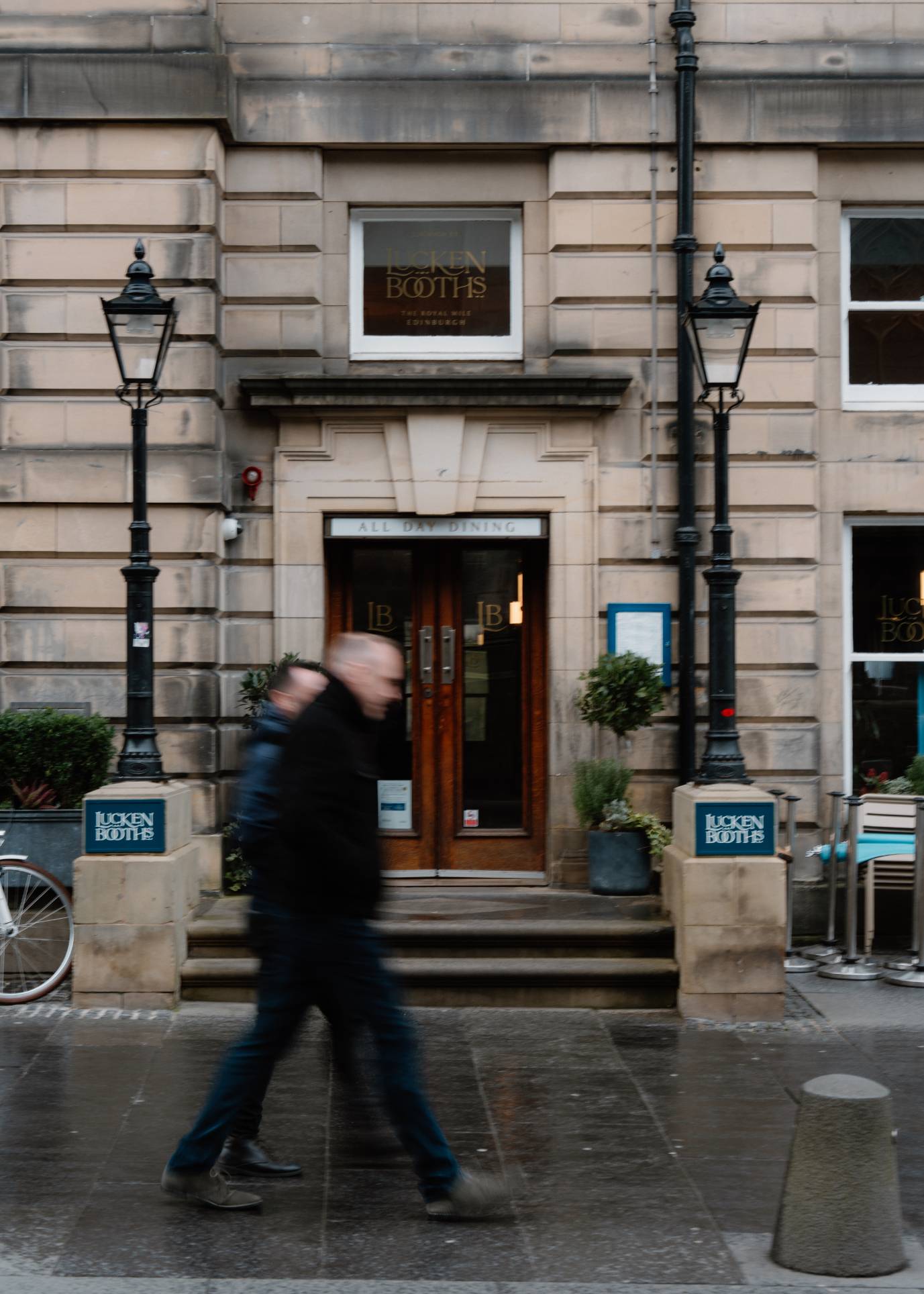 Old Town Chambers
 West End Muse
 The Scott Hotel
Every photograph commissioned, every word written by somebody who went. Printed twice a year, made in Scotland.
For further reading, before you go.