
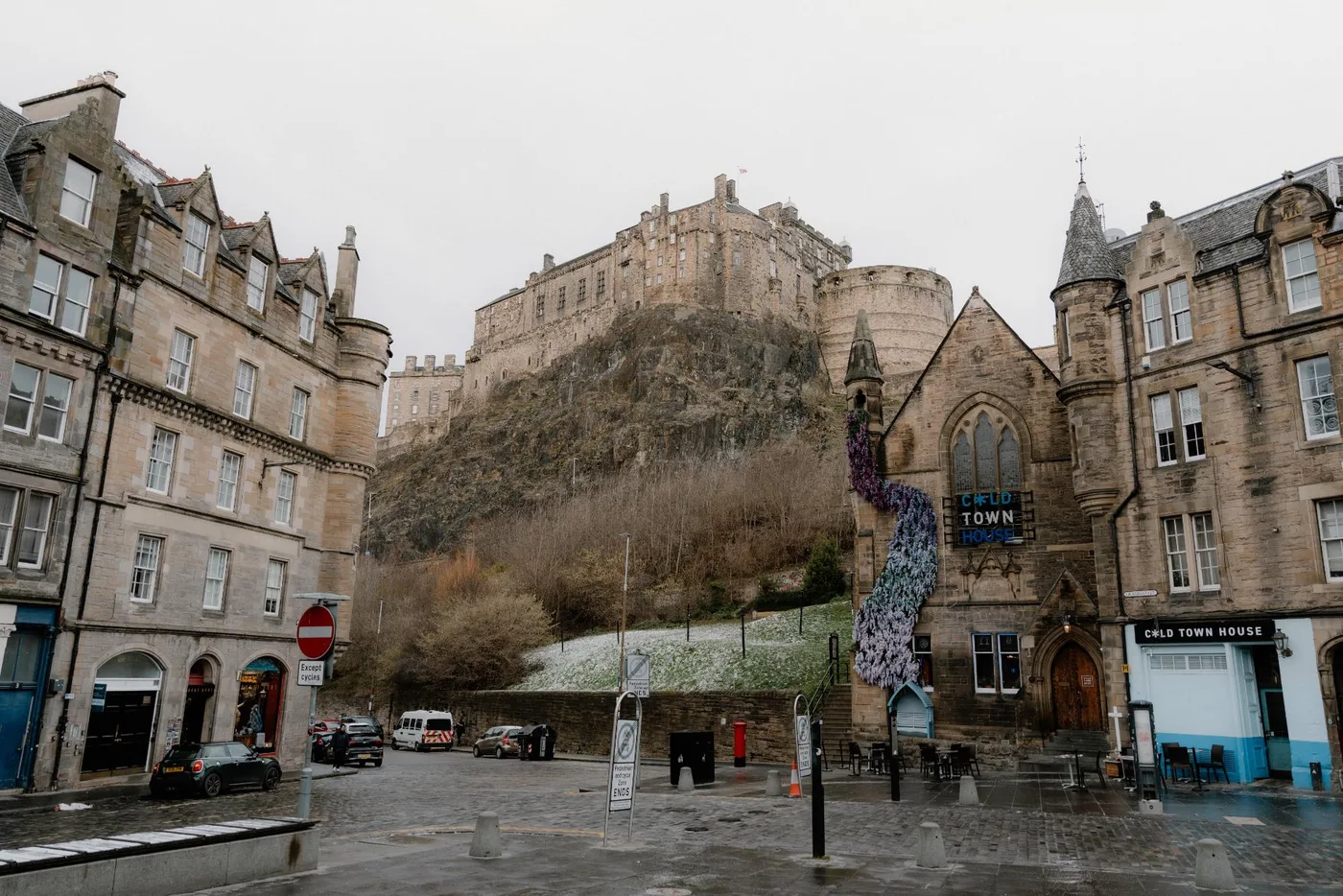
5 Surprising Facts about Grassmarket
Five things you may not know about the Grassmarket.
Words by Hidden Scotland
Although the Grassmarket’s infamy as the site of public execution stretches back over 300 years, the final hanging in Edinburgh of a convicted criminal is, perhaps surprisingly, within living memory: 23rd June 1954.
The White Hart Inn is Edinburgh’s most haunted…
Dating back to 1516, the White Hart Inn perhaps has more reason than most to be haunted. Pulled hair, slamming doors and flying chutney bottles have been reported, while paranormal experts allegedly captured the whispered words, ‘Help me!’ Someone must have missed last orders.
…while The Wee Pub is Scotland’s smallest.
Measuring just 17ft by 15ft, The Wee Pub is reputedly the country’s smallest drinkery, accommodating just 20 patrons – at a squeeze. In keeping with the diminutive size of the establishment, even the drinks are listed on postcards, with magnifying lenses on hand.
The convict who came back from the dead.
1724: fish hawker Maggie Dickson is convicted of concealing her pregnancy after the stillbirth of her baby. Despite being hanged on the Grassmarket, Dickson later awoke, in a coffin, having apparently survived the ordeal. Under Scotland’s double jeopardy law, she couldn’t be convicted for the same crime twice, so was free to enjoy the rest of her life.
The dogged persistence of Bobby.
Greyfriars’ Bobby is one of Edinburgh’s most famous residents, with a statue on the corner of Candlemaker Row. Bobby was a Skye Terrier who memorably kept watch over his owner’s grave for 14 years until his own death in 1872 – or, by some accounts, in 1867, with a lookalike taking over thereafter. Either way, Bobby is the only dog to be afforded the Freedom of the City in Britain.
Catapulting Edinburgh into the Middle Ages
In 2018, a large object resembling a cannonball was uncovered during excavations for a new hotel development, offering archaeologists an unprecedented insight into the city’s history. Believed to be launched from a trebuchet – a popular medieval weapon resembling a giant catapult – the ball was most likely used in the Siege of Edinburgh of 1296, revealing that the entire city would have received a pummelling, not just the castle itself.
 Out now
Twice a year, to your door
One hundred and sixty pages of Scotland, every photograph commissioned, every word written by someone who went. Members get both issues posted and everything on screen.

 The 900th Anniversary of Stirling
 Kilmartin Glen