Loader

The 900th Anniversary of Stirling Historic Highlights

In 2024, Stirling will celebrate its 900th anniversary as a royal burgh. During the reign of David I of Scotland in the twelfth century, royal burghs were introduced across the kingdom. These were market towns with a direct relationship with the crown and in ownership of exclusive rights, including the ability to elect a local council, manage taxes, and hold land and property straight from the monarchy. Stirling’s elevation to this status in 1124 was a pivotal moment

Profile

The nine centuries which have since passed have seen Stirling at the centre of some of the most iconic and bloody passages in Scottish history. Stirling’s central location in Scotland and all-important command of the crossing point of the River Forth made it strategically invaluable and propelled it to the heart of politics and warfare. It was regularly involved in various conflicts over the centuries, was a favoured home of Scottish kings and queens, and witnessed parliaments and coronations which would change the course of Scottish history. Stirling’s monumental history can still be found today in the many historic sites across what was once Scotland’s ancient capital.

Stirling Old Town 

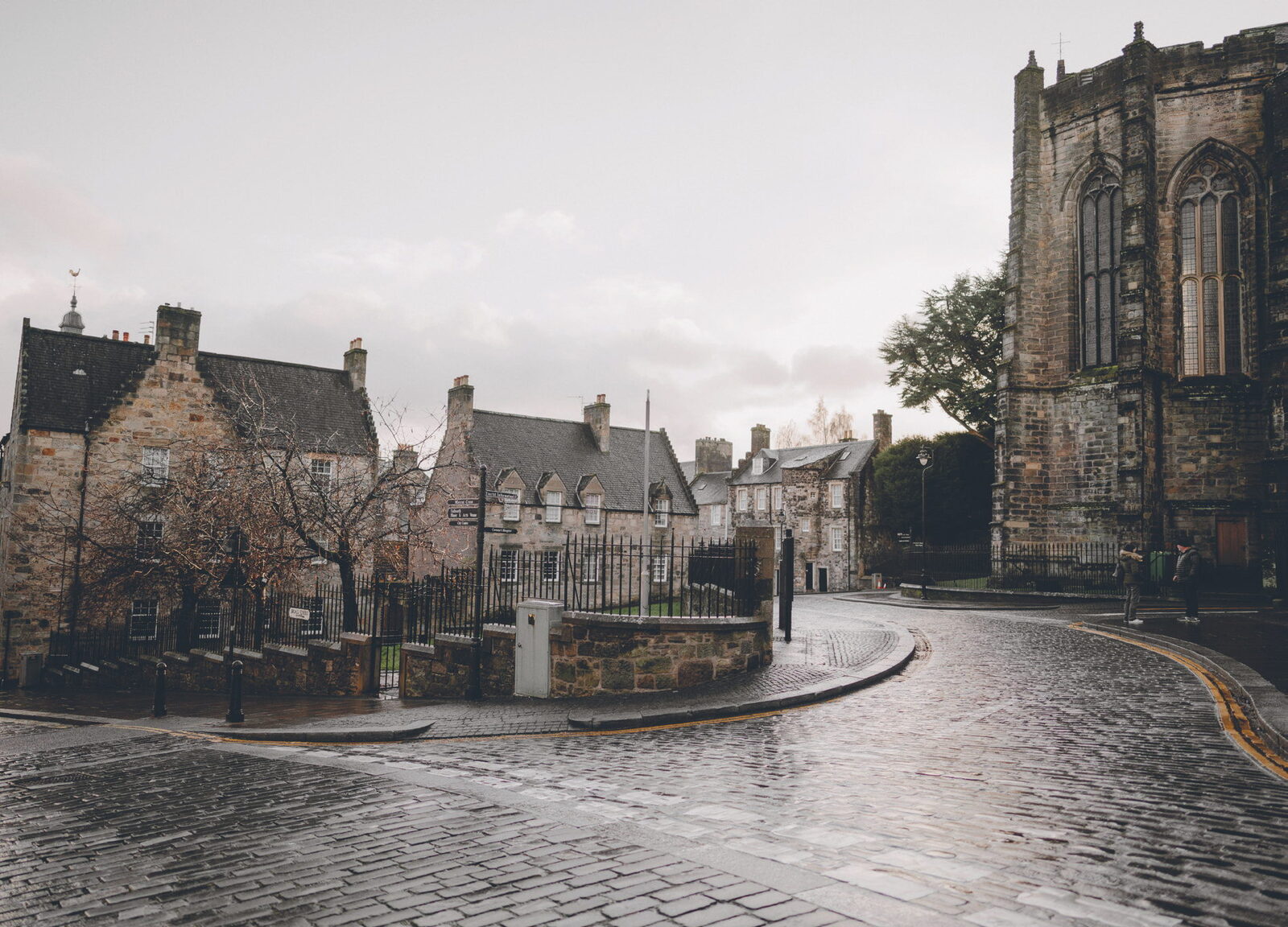
The cobbled streets and historic townhouses of Stirling’s Old Town speak to its past importance as a royal burgh. These steep streets connected the castle to the bustling markets and port of Stirling, and still contain many key buildings which were the royal burgh’s lifeblood, such as the Tolbooth, the Old Town Jail, and the seventeenth-century Cowane’s Hospital. Stirling’s Old Town also contains the historic residences of Scottish nobility, including the sixteenth-century Mar’s Wark, which was home to the earl and countess of Mar, and the earl of Argyll’s home during the seventeenth century at Argyll’s Lodgings.

Old Town Cemetery 

An iconic layer of Stirling’s historic landscape, the Old Town Cemetery is separated into four sections: the Old Kirkyard, the Valley Cemetery, the Snowdon Cemetery, and the Drummond Pleasure Ground. The Old Kirkyard was the original cemetery, connected to the medieval Church of the Holy Rude and containing Ladies’ Rock, a vantage point from which noblewomen would spectate sporting events. The expansion of the kirkyard from 1857 resulted in the remaining three sections, which include memorials to martyrs in various civil and religious conflicts in Scotland, such as the Star Pyramid and the Martyrs’ Memorial.

Image One

Castle Wynd

The Church of the Holy Rude 

This beautiful medieval church was founded in 1129 by David I of Scotland, but the original building was destroyed during a terrible fire in 1405 along with much of Stirling’s Old Town. Work began on the new church in 1414, continuing well into the sixteenth century. The church’s age makes it the second oldest building in Stirling, and its proximity to Stirling Castle meant that it enjoyed a close relationship with the Stewart monarchy. Local tales claim that James IV himself assisted with the church’s construction, and that a tower was nicknamed ‘Margaret’s Tower’ after James III’s queen, Margaret of Denmark. 

Cambuskenneth Abbey 

The atmospheric ruins of Cambuskenneth Abbey sit amongst the lazy meanders of the River Forth. Founded by David I around 1140, this was one of the most important locations in medieval Stirling. The abbey played a prominent role during the Scottish Wars of Independence as a location for significant political events and remained close to Scottish royalty across the centuries. James III and his queen, Margaret of Denmark, were interred here in the fifteenth century, while James IV had intentions to create a royal mausoleum at Cambuskenneth before his untimely death in 1513.

Image One

The Beheading Stone, Mote Hill

Image Two

The National Wallace Monument

Mote Hill 

Mote Hill was a significant location in historic Stirling as a primary site for public executions—hence its nickname, ‘Heiding Hill’. Today, Mote Hill is still home to the fifteenth- century Beheading Stone, allegedly the original stone used for beheadings. This was a key part of dispensing justice during the medieval period; anyone could end up with their head on the Beheading Stone, regardless of their class. The most infamous execution at Mote Hill occurred in 1425, for Murdoch Stewart, Duke of Albany, a powerful man who was James I of Scotland’s cousin and accused of treason against the king. 

Bannockburn Battlefield 

The Battle of Bannockburn Visitor Centre remembers the Scottish victory at the Battle of Bannockburn in June 1314, led by Robert I of Scotland. This was a momentous result for the Scots against the renowned English army. Although it did not end the Scottish Wars of Independence, it was a major turning point in the conflict and Robert’s reign. The visitor centre opened in 2014 to commemorate the 700th anniversary of the battle. Its huge memorial to the battle, the Rotunda, is carved with a poem by Kathleen Jamie and features a cairn marking the site where Robert allegedly raised the royal standard of Scotland after the battle

Image One

Stirling Castle 

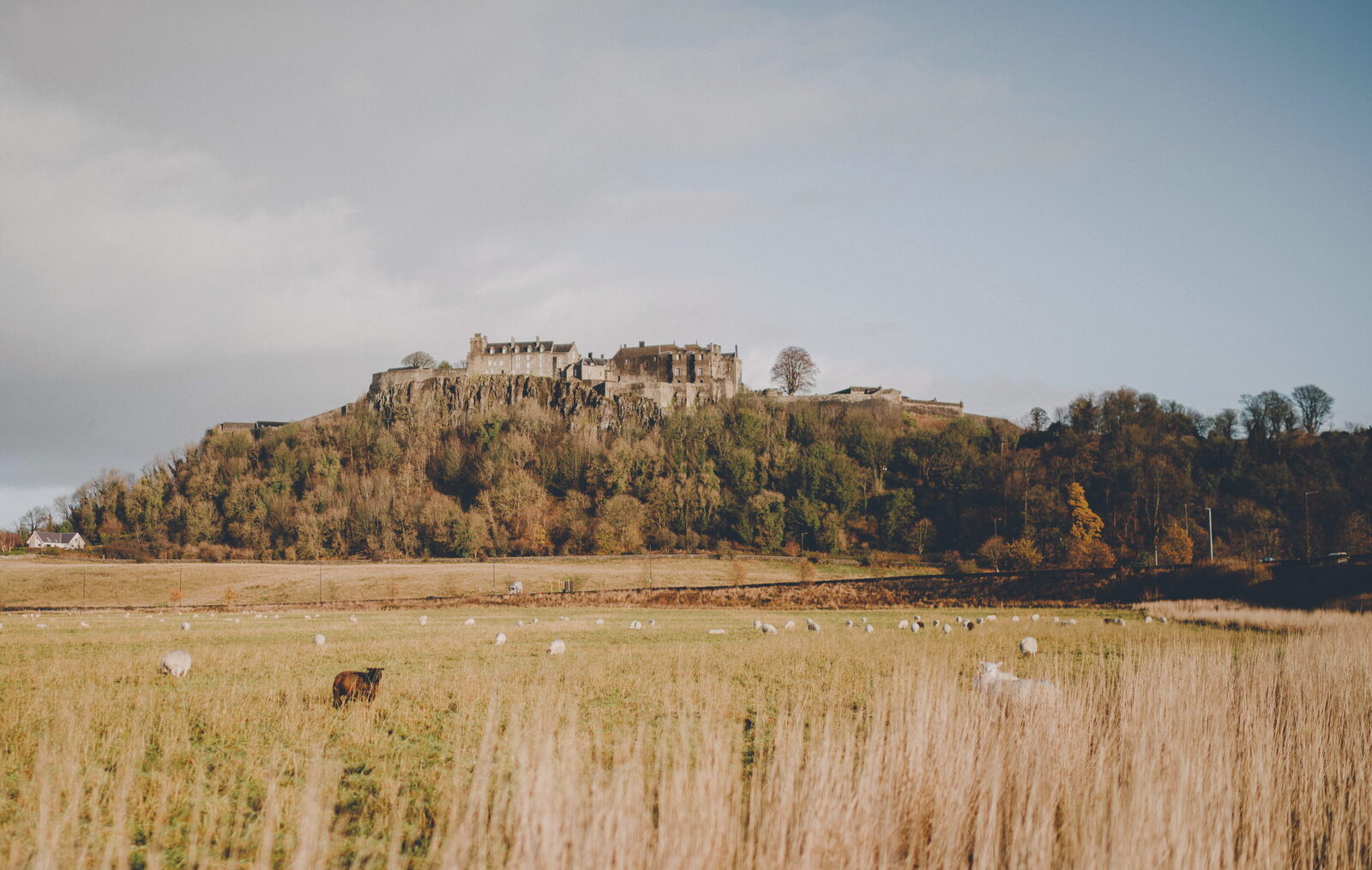
While the first record of a royal castle at Stirling comes from c.1110, the castle’s strategic position atop an ancient crag of rock with unparalleled views across the Forth Valley means that it was the site of a fort for many centuries before this. Stirling Castle’s importance was retained through to the late thirteenth and fourteenth centuries during the Scottish Wars of Independence, as the castle changed hands around eight times during this conflict. It went on to become a favoured residence of the Stewart monarchy, and the surviving architectural patchwork of royal buildings reflects the castle’s strong connection to Scottish royalty. 

The National Wallace Monument 

This 67-metre-tall structure sits atop the Abbey Craig across the Forth Valley from Stirling Castle. Constructed in the nineteenth century, the monument is a memorial to William Wallace, an important military leader during the Scottish Wars of Independence, who co-led the Scots to victory at the Battle of Stirling Bridge in 1297. It may seem odd that such an impressive and iconic building honours a man who died nearly 460 years before the monument’s foundation stone was laid in 1861. This was due to the popularity of romanticised nationalism during the Victorian period, which resulted in historic events receiving renewed interest and key leaders becoming revered heroes.

words // Beth Reid - photography // Simon Hird

Image One