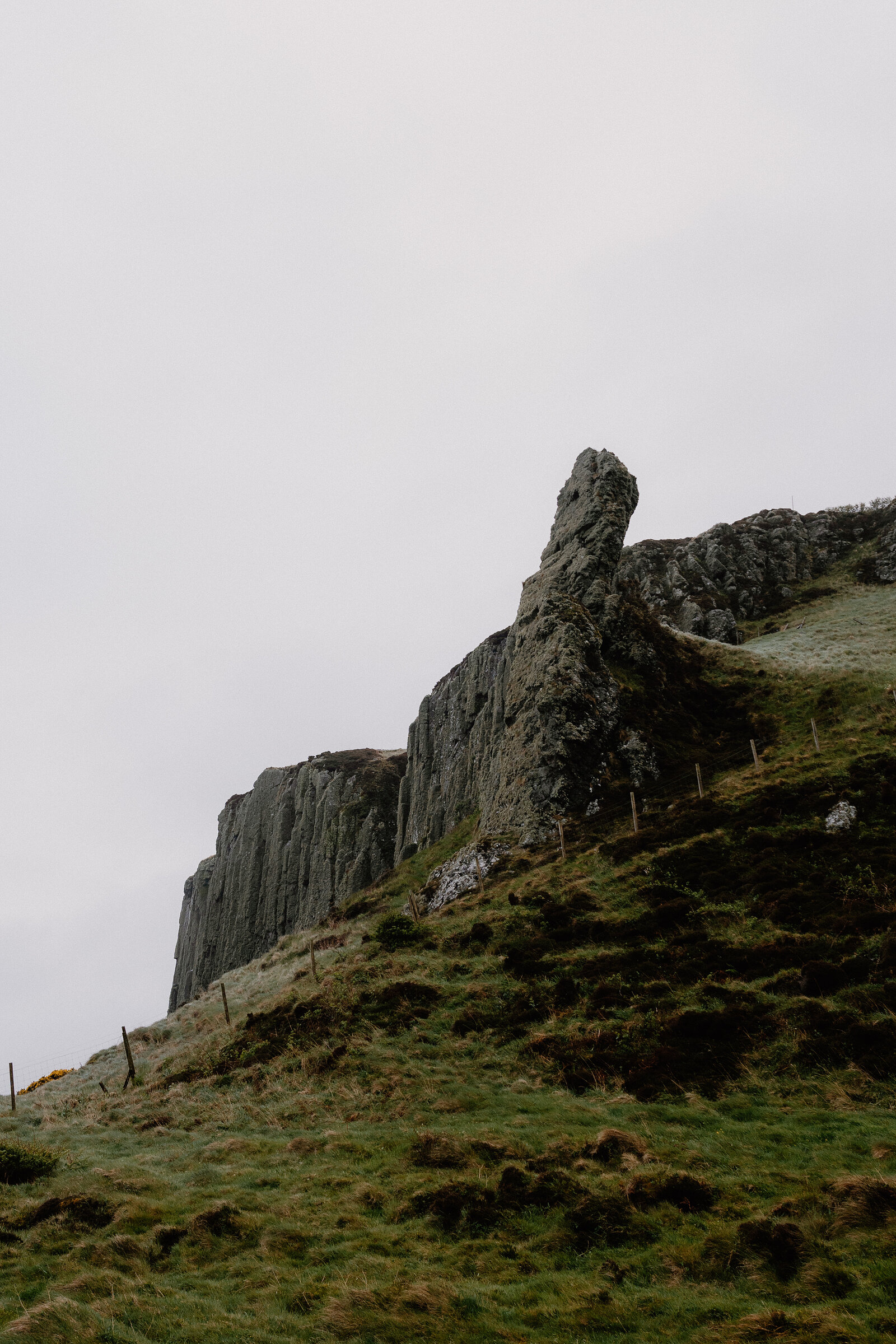
Did you know
Older than the fort.
The standing stone inside the Doon was raised in the late Neolithic or early Bronze Age, long before the fort was built.
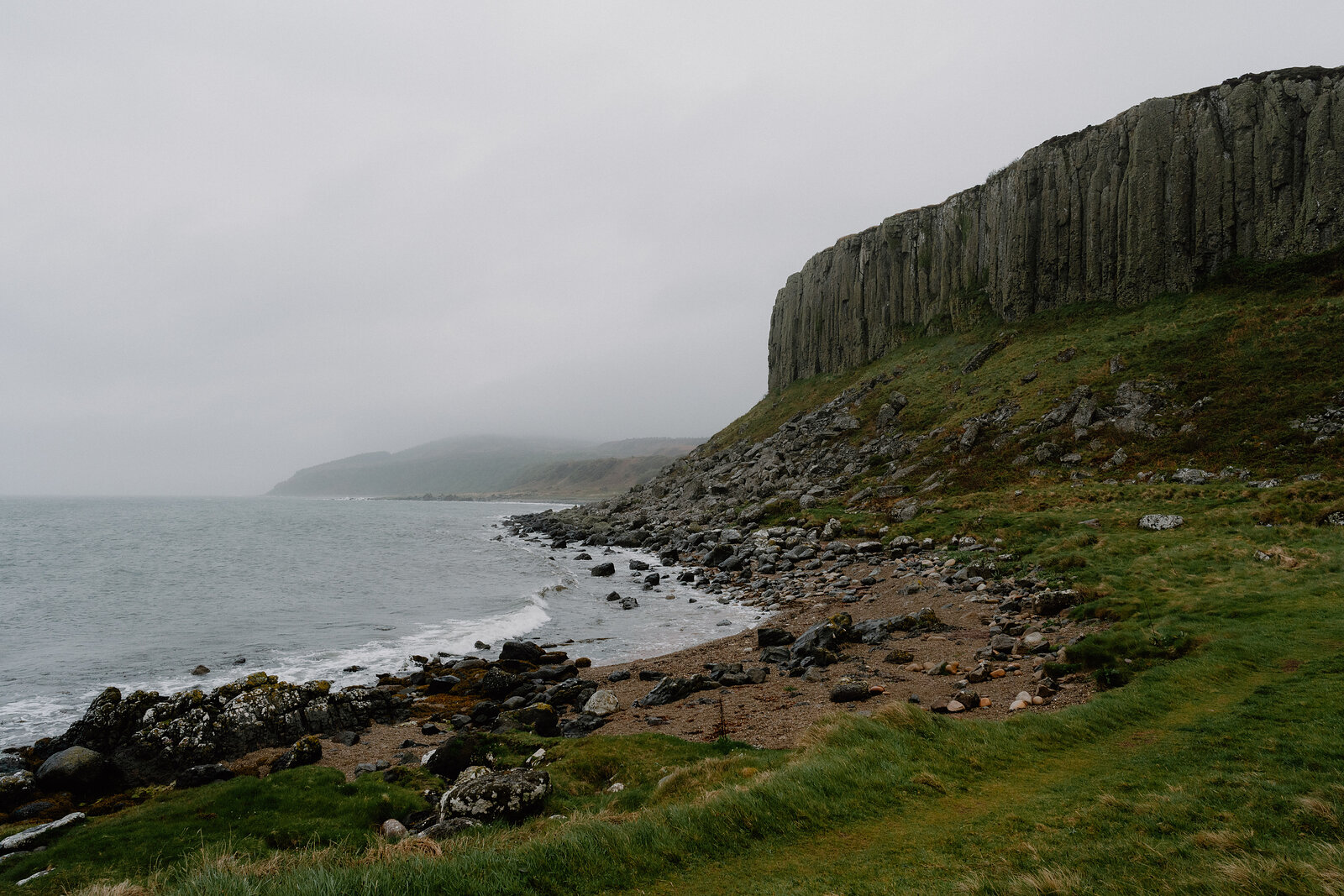
A headland of columned porphyry cliffs north of Blackwaterfoot, topped by the Doon, the largest Iron Age fort on Arran, with a path through the boulders below.
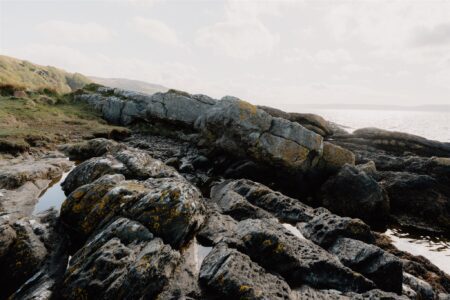
Just north of Blackwaterfoot, the land ends in a headland of tall basalt cliffs, their rock split into great columns that rise above a shore of pebbles and boulders.
Visited and photographed by Simon Hird
This is Drumadoon Point, and on top of the cliffs lies the Doon, the largest Iron Age fort on Arran.
The fort covers almost twelve acres. Its builders let the sheer cliffs guard the seaward side and raised a single wall, up to three metres thick, round the other three, an arrangement rarely found on Scotland's west coast. Inside stands a standing stone far older than the fort itself, set up in the late Neolithic or early Bronze Age.
Park by the golf course in Blackwaterfoot and walk north along the shore. The Arran Coastal Way threads a path through the boulders beneath the cliffs, and carries on towards King's Cave for those with time for a longer walk.
Arrives at 5am every day.
A free morning email to see what’s on this week, catch up on what’s happening in Scotland and find somewhere new to go.
Open at all times.
Park at the golf course in Blackwaterfoot and follow the shore north.
Been here? Tell others what you know, and the best go on this page with your name.
Add your reviewThe standing stone inside the Doon was raised in the late Neolithic or early Bronze Age, long before the fort was built.
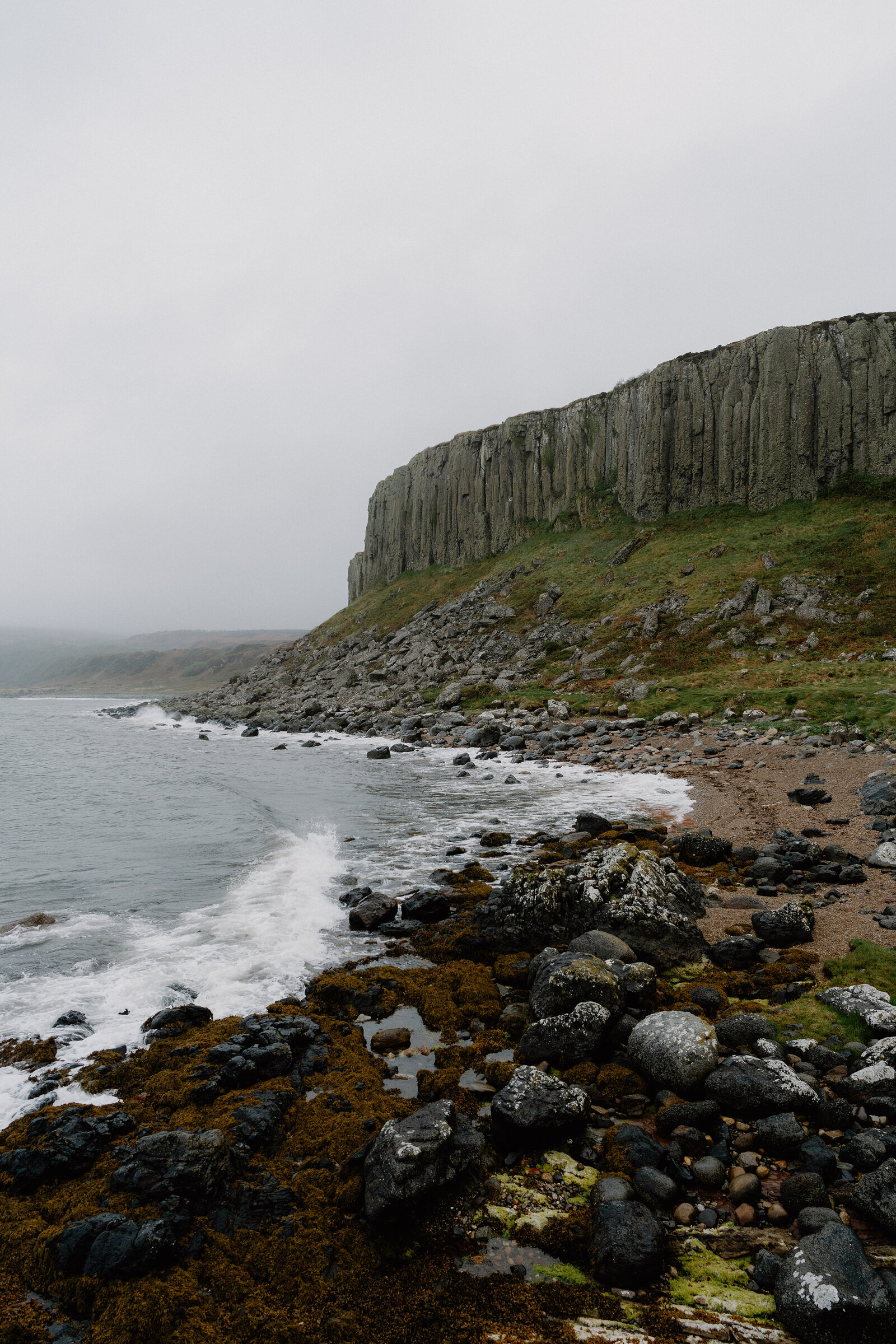
Single-walled promontory forts like the Doon are rare on the west coast of Scotland.
Just north of Blackwaterfoot, the coast ends in tall cliffs of basalt split into great columns. On top lies the Doon, the largest Iron Age fort on Arran, covering almost twelve acres. Its builders let the cliffs guard the seaward side and raised one thick wall round the rest. Within the walls is a standing stone far older than the fort itself. Park by the golf course in Blackwaterfoot and walk north along the shore, where the Arran Coastal Way picks a path through the boulders. Keep going and it leads on to King's Cave.
Read moreNew places, news and stories, as we find them.
What is on on ArranJust north of the golf course at Blackwaterfoot, with parking by the course.
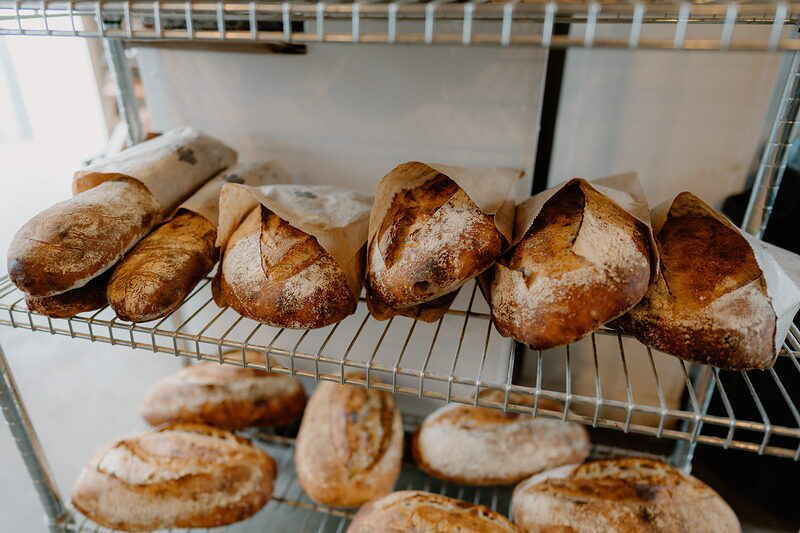 Blackwater BakehouseUnder a mile 5 min by road
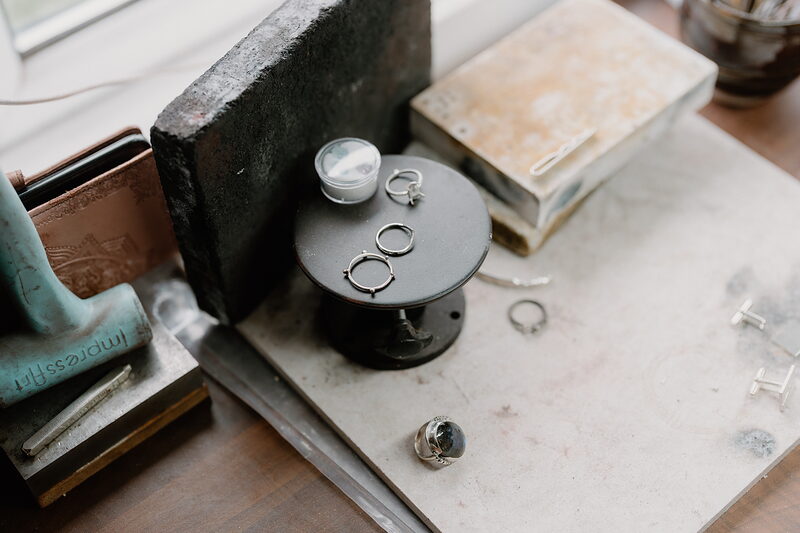 Jess MacDonald BrassA silversmith's studio in Blackwaterfoot.2 miles 7 min by road
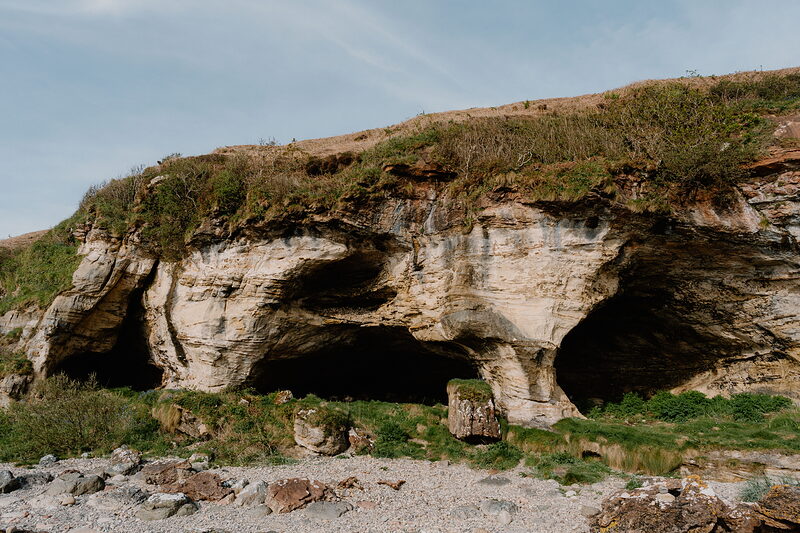 King's CaveCarved sea caves to the north.3 miles 9 min by road
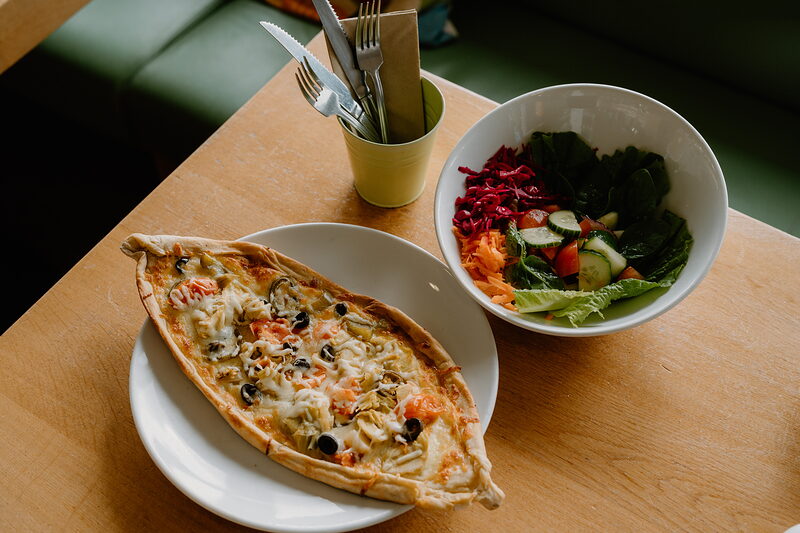 Cafe Thyme, MachrieThe cafe at the Old Byre in Machrie, where a Turkish wood-fired oven bakes pide and flatbread alongside local Arran produce.7 miles 19 min by road
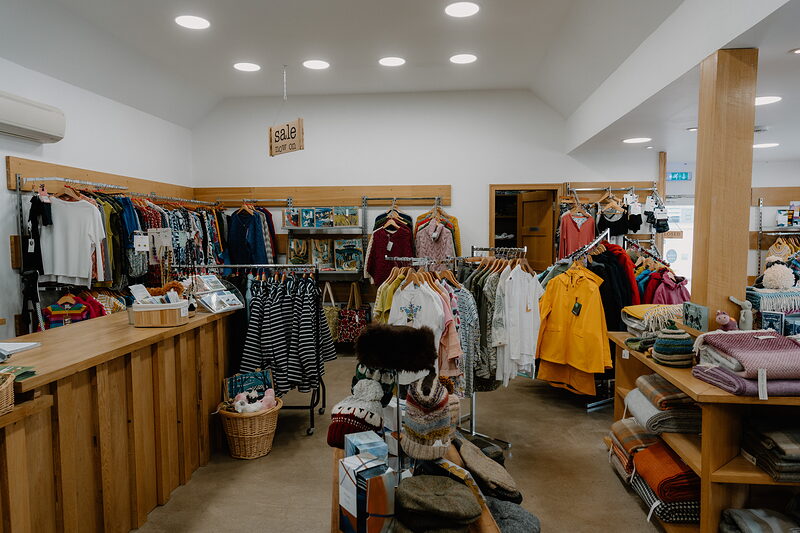 The Old Byre ShowroomA family-run knitwear and clothing showroom at Machrie on Arran's west coast, begun in 1967 selling sheepskins, with a cafe and a play park.7 miles 19 min by road
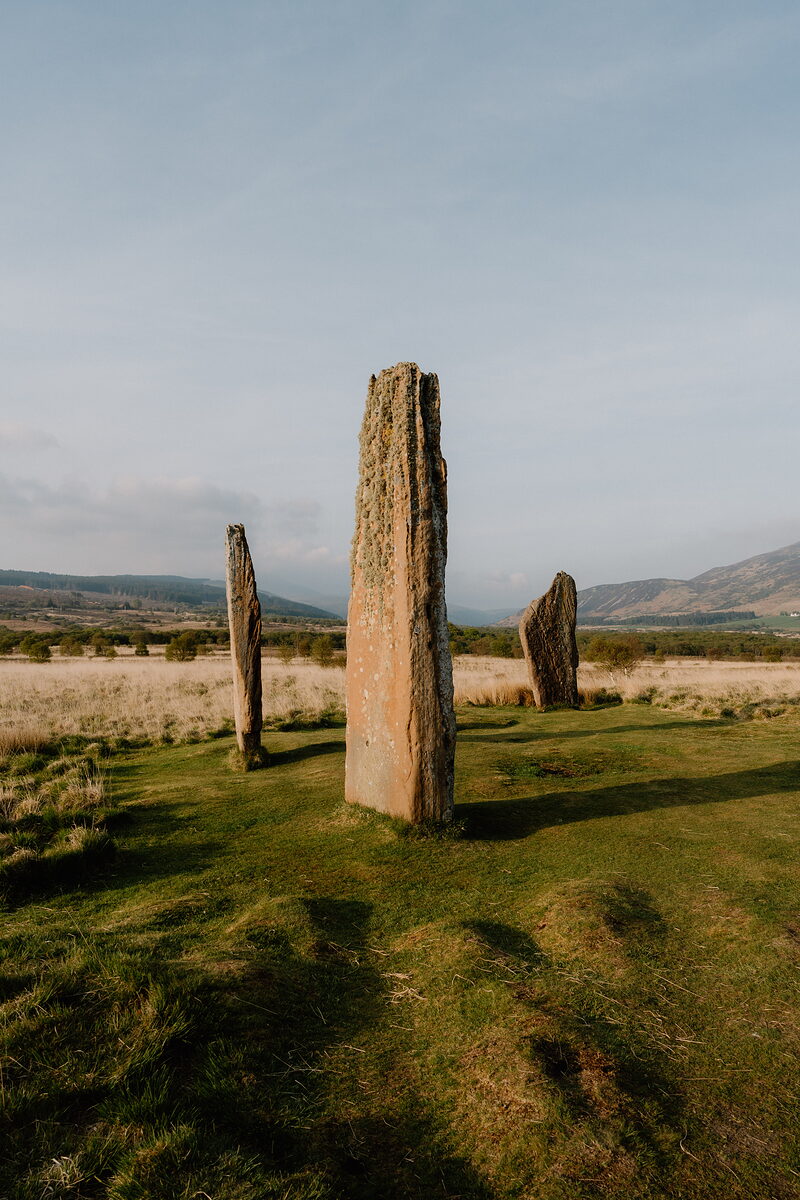 Machrie Moor Stone CirclesStone circles up the coast.7 miles 14 min by road
We want to show you the best that Scotland has to offer. The makers and the creatives, the enduring experiences, the evocative tales, the concealed corners. The roads less travelled that take you to places that matter. The adventures that gather you up and sweep you away. The blend of the wild and the artistic that makes Scotland what it is. We’d love for you to join us.
What we have written about it and more on Arran.
For further reading, before you go. The details on this page were checked on .