Did you know
Deep time.
Hutton's reading of these rocks helped overturn the belief that the Earth was only 6,000 years old.
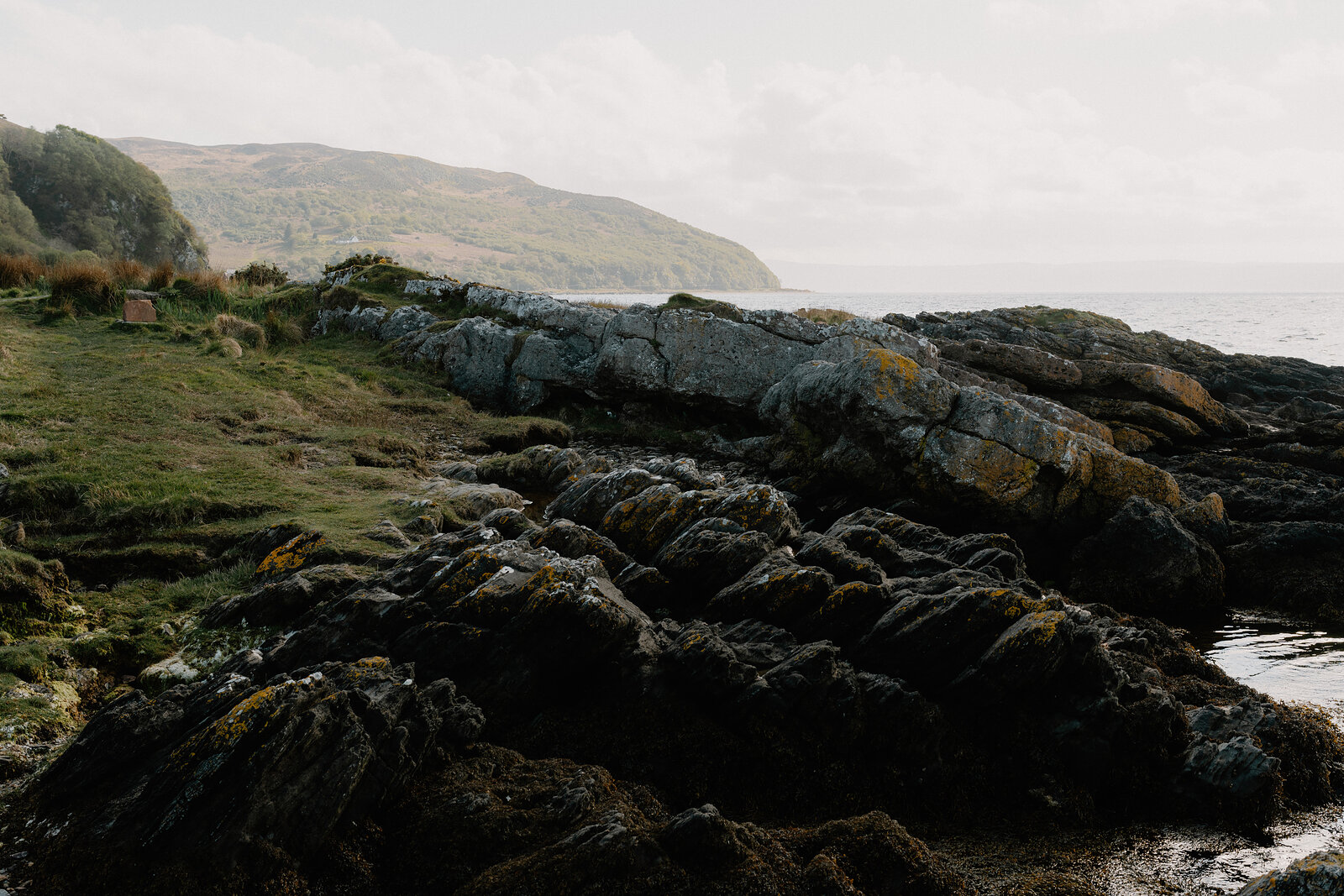
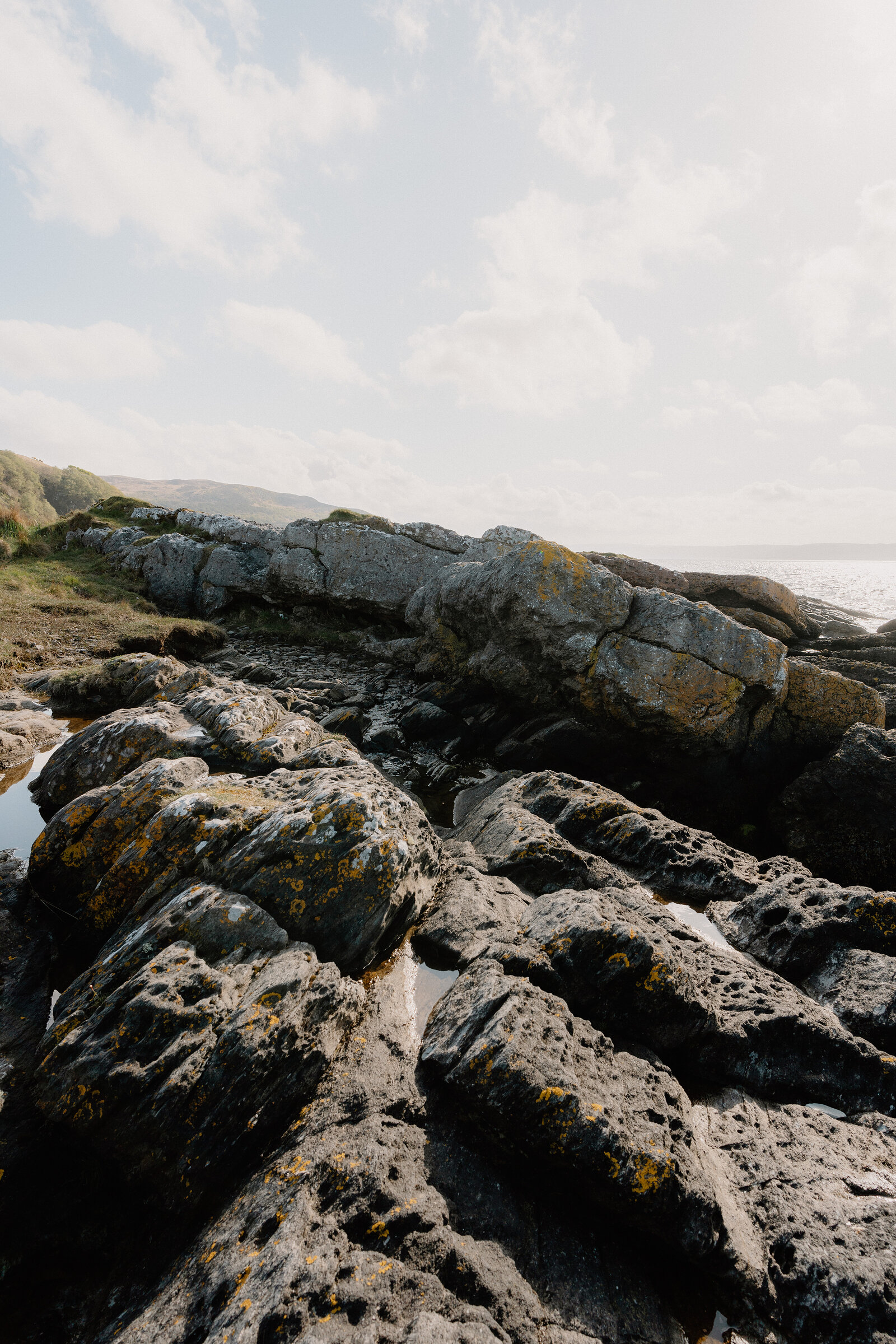
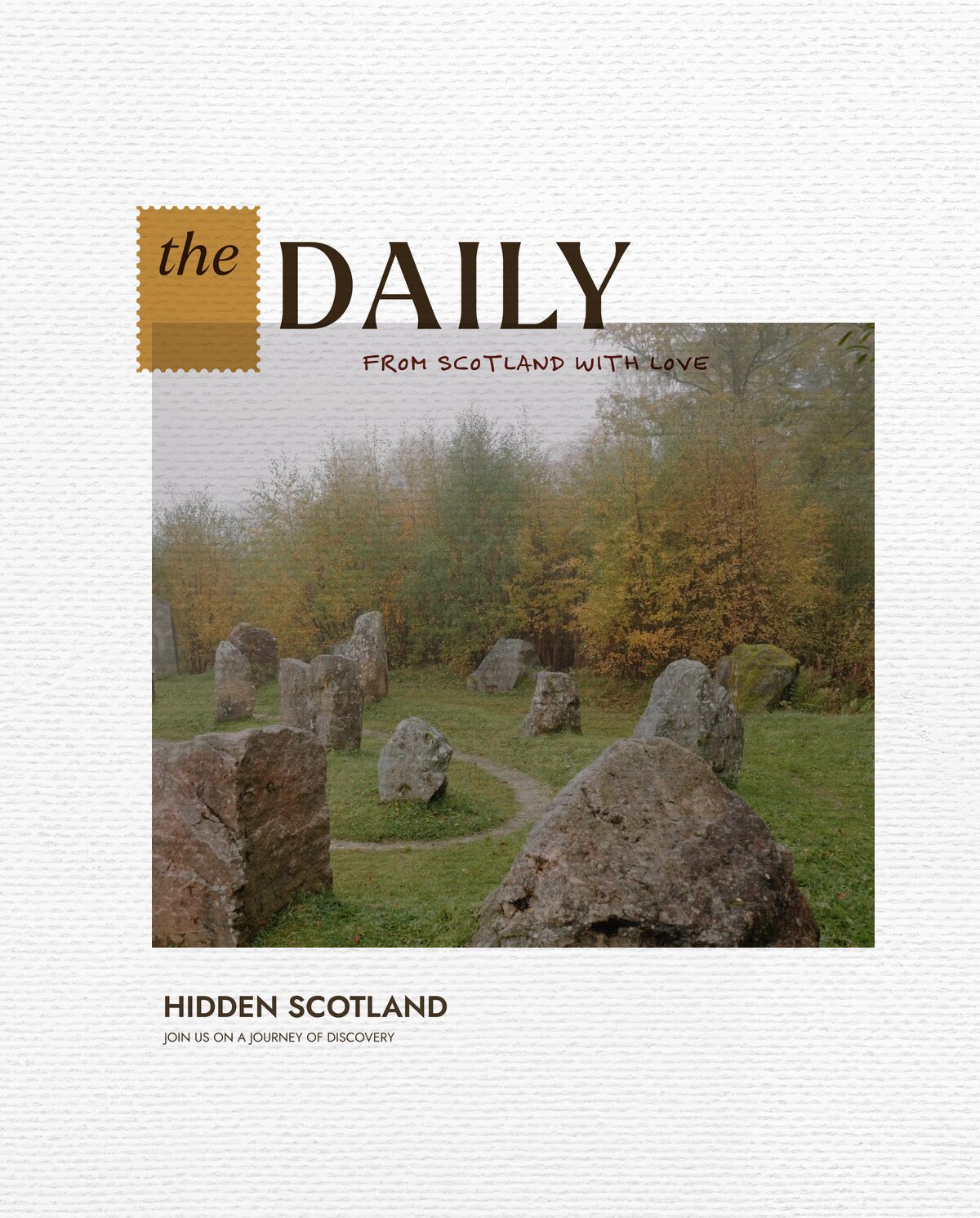
The rocks on Newton Shore near Lochranza where James Hutton found his first unconformity in 1787, a gap of about 190 million years between two layers.
On the shore north of Lochranza, a few rocks by the water changed the way the world thinks about time.
Visited and photographed by Simon Hird
In 1787 the geologist James Hutton came to Arran to study its granite, and on Newton Shore he found what he was looking for: grey schist standing almost on end, with red sandstone lying gently across its tilted edges.
The schist is around 540 million years old and the sandstone about 350 million, so some 190 million years are missing between them. Hutton reasoned that laying down, tilting and wearing away rock on such a scale must take an unfathomable length of time, and his idea of deep time overturned the belief that the Earth was only a few thousand years old. The gap here is around three times the one at Siccar Point, his better-known site in Berwickshire.
An engraved sandstone block now marks the spot. It is a short, easy walk along the shore from the car park on Newton Road in Lochranza.
Arrives at 5am every day.
A free morning email to see what’s on this week, catch up on what’s happening in Scotland and find somewhere new to go.
Open at all times.
A short shore walk from the car park on Newton Road, Lochranza.
Been here? Tell others what you know, and the best go on this page with your name.
Add your reviewHutton's reading of these rocks helped overturn the belief that the Earth was only 6,000 years old.
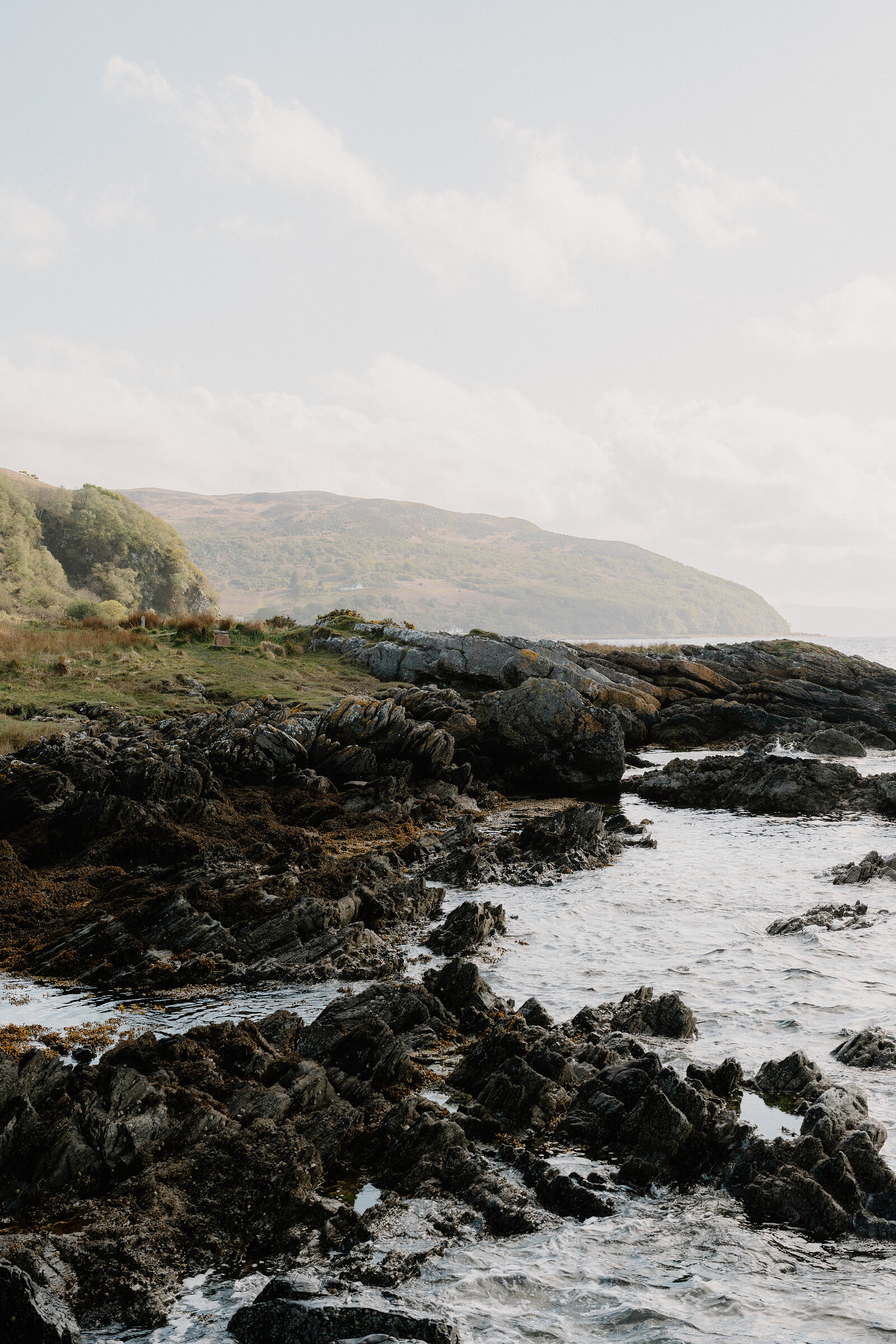
Hutton came to Arran in 1787 to study granite and how it met the rocks around it.
A few rocks on the shore north of Lochranza changed the way the world thinks about time. In 1787 the geologist James Hutton found grey schist here standing almost on end, with red sandstone lying across its tilted edges. Some 190 million years are missing between the two layers. Hutton saw that laying down, tilting and wearing away rock on that scale must take an almost endless span of time, and his idea of deep time overturned the belief in a young Earth. An engraved stone marks the spot, a short, easy walk along the shore from Newton Road.
Read moreNew places, news and stories, as we find them.
What is on on ArranOn Newton Shore, a short walk north from the car park on Newton Road, Lochranza, KA27 8HL.
 Arran Coastal Way with Thistle TrekkingUnder a mile 1 min by road
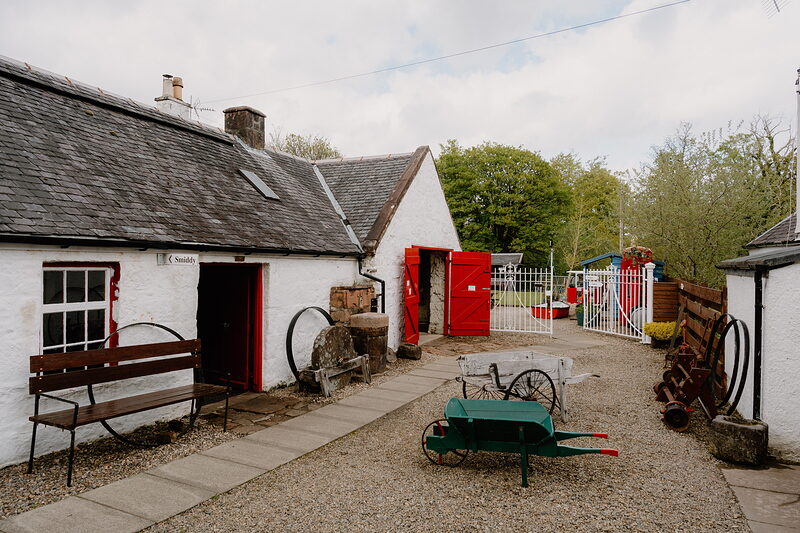 Isle of Arran Heritage Museum2 miles 3 min by road
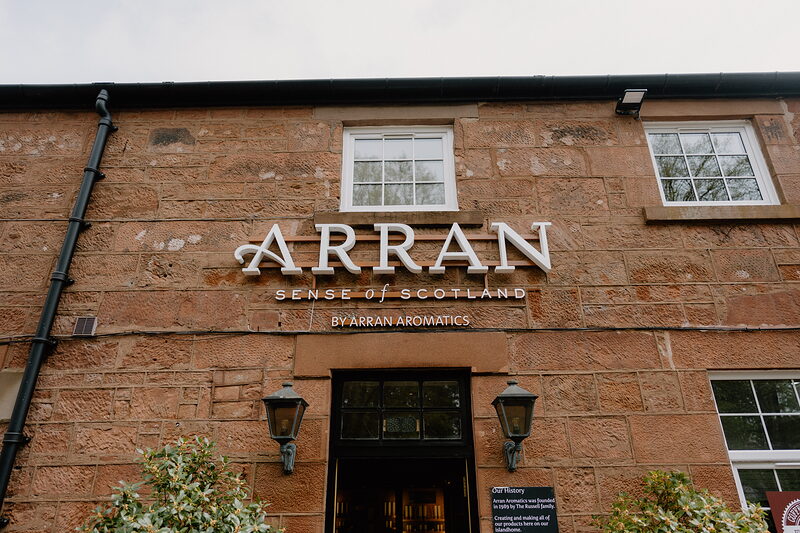 ARRAN Sense of ScotlandThe island's bath, body and home fragrance maker, founded in 1989 and still making its products at Home Farm near Brodick, with a shop.2 miles 3 min by road
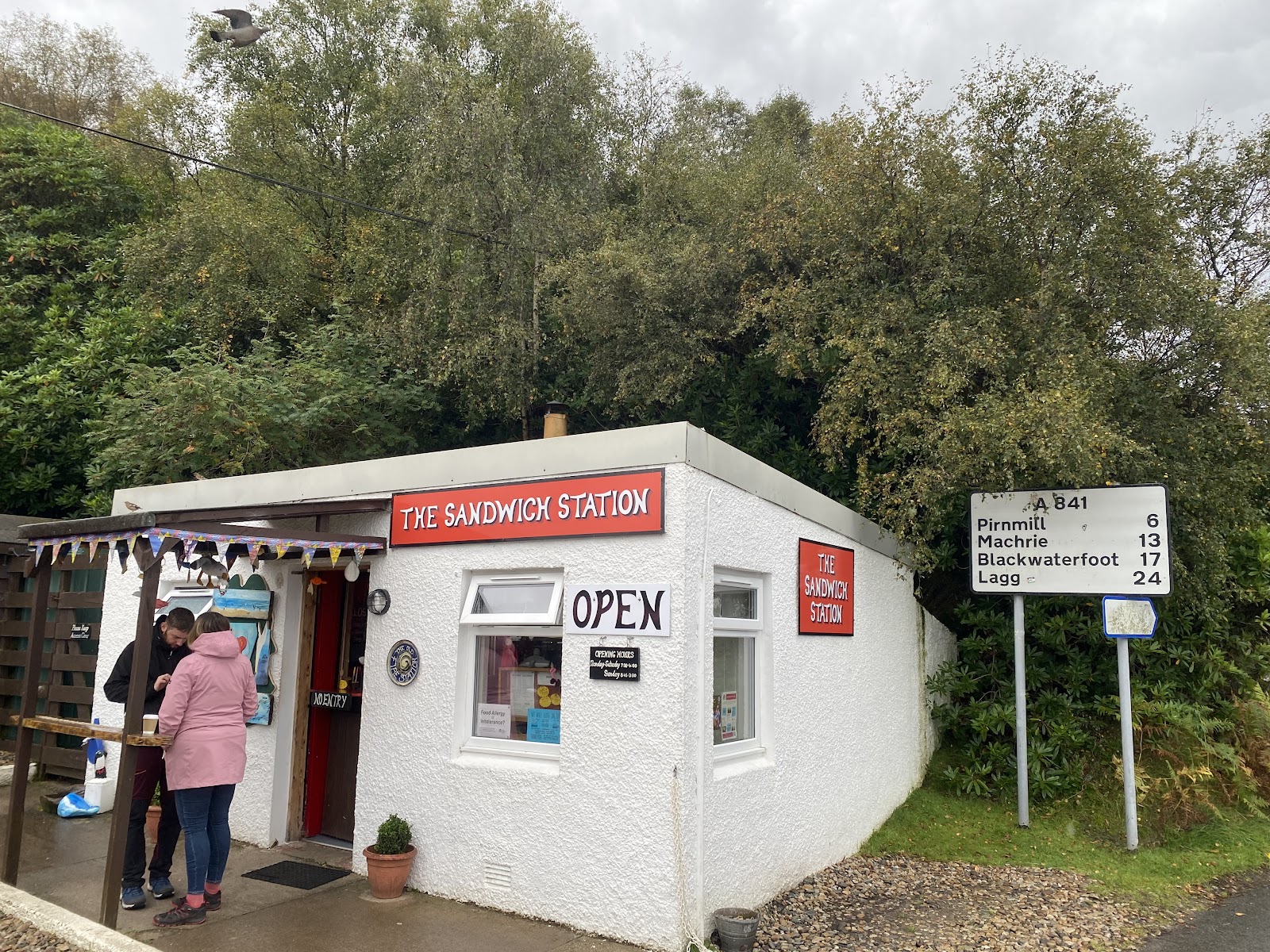 The Sandwich Station, LochranzaSandwiches from the old fire station.19 miles 25 min by road
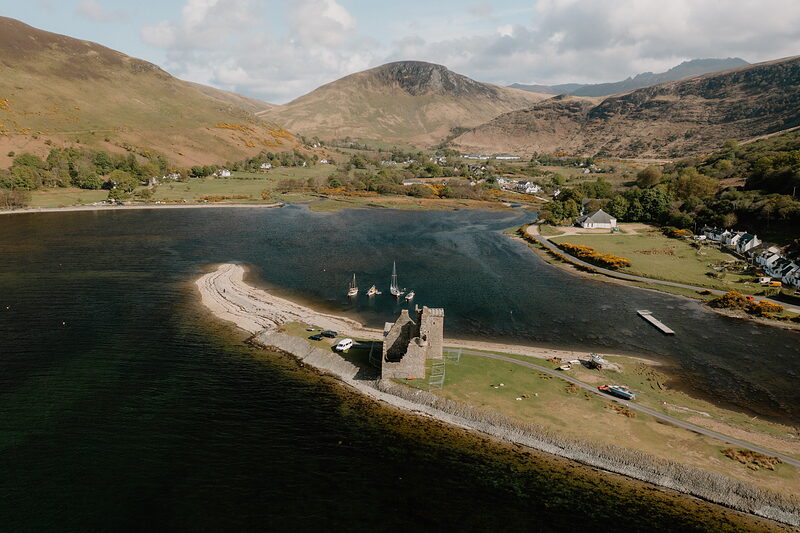 Lochranza CastleA castle on a spit in the loch.20 miles 27 min by road
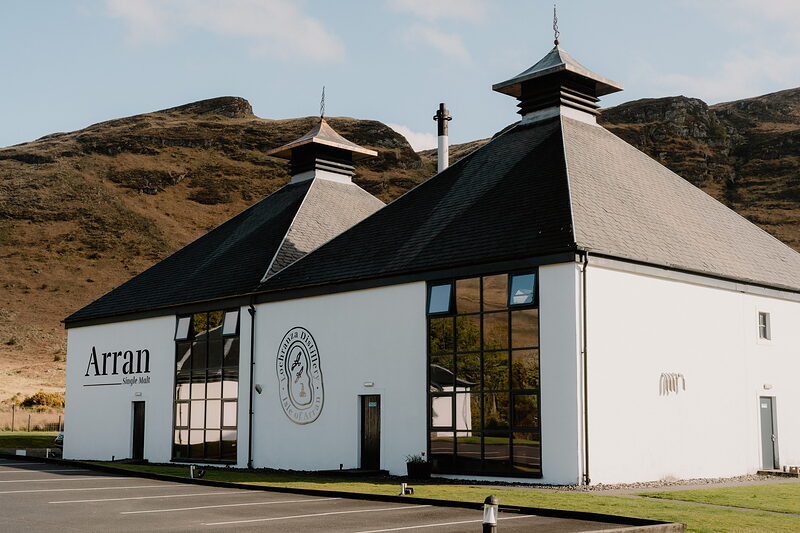 Lochranza DistilleryArran whisky up the glen.20 miles 28 min by road
We want to show you the best that Scotland has to offer. The makers and the creatives, the enduring experiences, the evocative tales, the concealed corners. The roads less travelled that take you to places that matter. The adventures that gather you up and sweep you away. The blend of the wild and the artistic that makes Scotland what it is. We’d love for you to join us.
What we have written about it and more on Arran.
For further reading, before you go. The details on this page were checked on .