A is for Arran - A Family Guide to Arran

From beaches and ferries to cafés, castles and wildlife, nothing is far away on Arran, says Emily Rose Mawson, as she and her four-year-old tour the west coast island known as Scotland in Miniature.
Profile

B is for Brodick

“Can you see our banana tree?” asks National Trust for Scotland ranger Corinna Goeckeritz. A banana tree? I pull my gaze from the CalMac ferry slicing into the bay, following her finger to a serrated green fan beside the 300-year-old sandstone wall of an exquisitely landscaped garden. “Look, Albie, bananas,” I call to my son, who is counting steps on the way to towering masses of coastal firs as he completes his nature identification sheet. He’s exhilarated after finding fairy doors in the woods and zooming between trees on a zip wire, so piquing his attention now is easy. “It hasn’t grown any fruit yet... which explains why there aren’t any monkeys,” sighs Corinna. “But we do have red squirrels.” 

Sciurus vulgaris are one of Scotland’s “Big Five” that roam Arran, an hour’s ferry crossing from Ardrossan in Ayrshire and a brilliant destination for a family holiday. You can spot the other four too – red deer, otters, golden eagles and harbour seals – in scenery sculpted by the Highland Fault Line. This is why the island in the Firth of Clyde is called Scotland in Miniature, for its 20-by-10-mile package of magnificent northern summits and deep valleys submitting to southern pastures.

Thanks to Arran’s position in the warming Gulf Stream, it’s a botanical wonderland, with a unique climate that makes it one of the few places in Scotland where exotic plants like the banana tree can grow. They can all be found in the gardens at Brodick Castle, former seat of the Dukes of Hamilton, now a National Trust for Scotland property, and Britain’s only island Country Park. My son dives behind an Australian tree fern that arrived on Arran as ballast on ships. We rub eucalyptus between our fingertips and it fizzes in our nostrils, mingled with aromas of juniper and something like candyfloss. “It’s the Katsura tree,” says Corinna, who runs family events like today’s nature safari with the ranger service. It’s from Japan and is a billowing balloon of beauty. Many of these species were brought to Arran by plant hunters in the 18th century, she explains. It’s a world tour in steps, all with a quite spectacular view.

From the high point, you can admire the mile-long sandy crescent that gave Brodick its Viking name: Bredavik, for ‘broad bay’. Nowadays, it is Arran’s main village: alongside the port, its north-facing shore is a warren of restaurants, hotels and shops, including Arran Active, a family-friendly outdoors store where you can hire SUP boards. The lot is encircled by hills that climb to fang- shaped mountains – the remnants of ancient volcanoes – and the island’s tallest peak, Goatfell (874m), a granite pyramid that sometimes looks like a giant sand dune. “My six-year- old nephew climbed Goatfell,” says Corinna. “But it is a proper mountain, where conditions can change quickly. You need the right kit and plenty of snacks, as well as a map and compass that you know how to use.” Descending the summit the wrong way can have very serious consequences, she warns, but these tools can also be used to motivate children by getting them involved with navigating. “Ask them to take over being the leader for short sections,” she recommends. “It helps to take their mind off the physical challenge!”

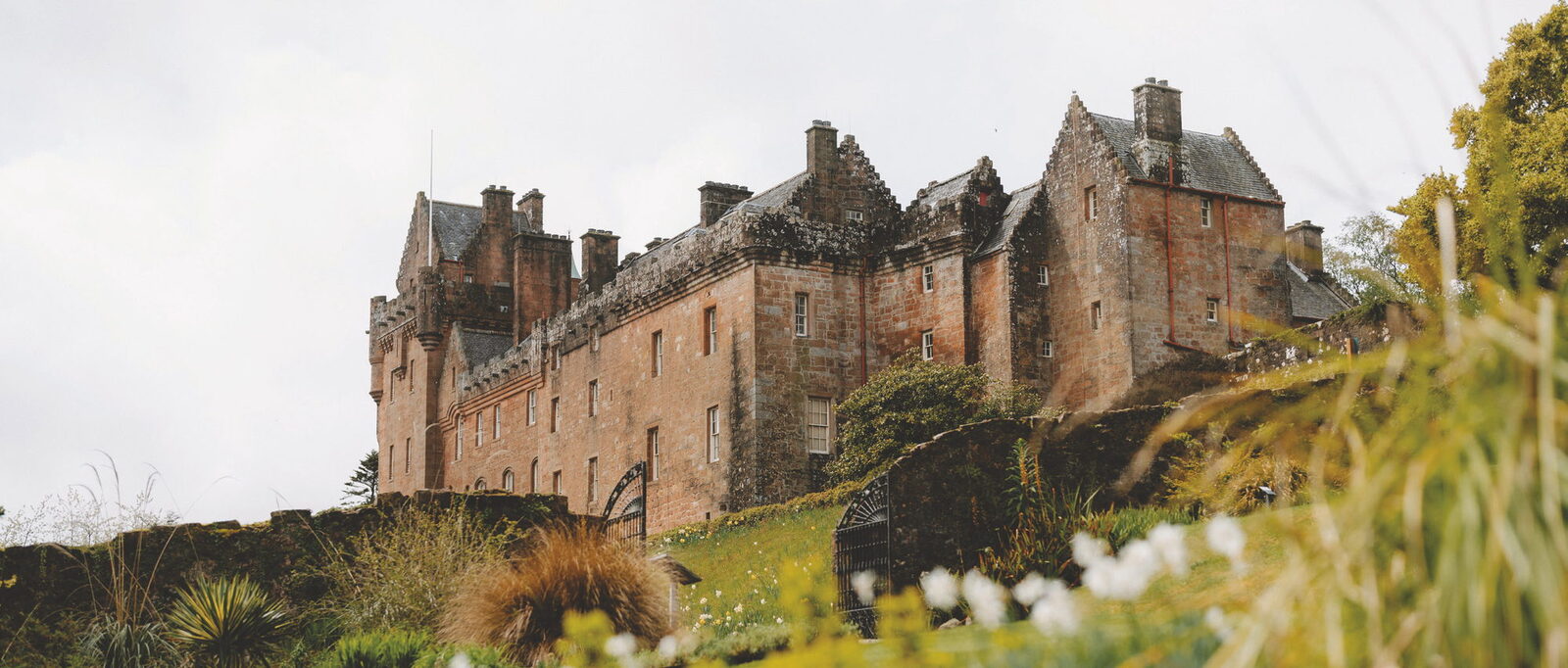
Before going high, the castle is a good place to start your island explorations. Children can roam for hours: as well as the woodland adventure playground and fairy door trail, there is a red squirrel hide with feeders. On family tours of the property, which is all red sandstone and turrets and battlements, with parts dating from the 13th century, you can see dazzling Hamilton treasures – the likes of a gold encased bezoar stone and a unique dodo wine jug – and compete on a Victorian games arcade. You might even meet the ghosts. “There’s the grey lady, last seen, we think, in the 1930s,” says Guiding and Education Supervisor Susan Mills. “She was always seen by servants. But last year, two ladies told me they had seen a grey figure standing at the top of the stairs, looking into the kitchen, and everything had gone icy cold...”

WET WEATHER OPTION 

Arran Heritage Museum contains tractors to climb on, a recreated 1920s Arran cottage, and exhibits on how Arran’s pre-historic settlers lived. It also has one of the best cafés in Brodick. 

TOP TIP 

Play mini golf on the seafront at The Taste of Arran Shop. Follow your round with a platter of ham, cheese and Arran oatcakes at the deli-café Little Rock

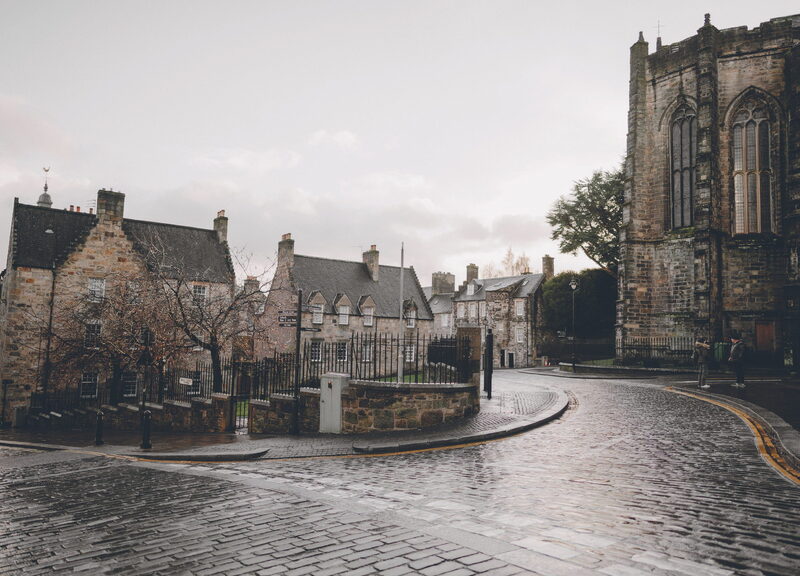
Image One

Brodick Castle

N is for North End

Next day, I gaze at light playing on heather-swaddled fells when – is that a golden eagle? I call to Albie, pointing at the sky. But he’s preoccupied, wearing a transparent donut, charging at another child, dressed the same. It’s a ‘zorb’, and we’re at an activity day in Lochranza, tucked where Arran folds into the Kilbrannan Sound. It’s reached from Brodick by a pass road “like Snakes and Ladders”, says Albie, and was only accessible by water until 1843. It’s most famous as the spot where 18th-century Scottish geologist James Hutton proved that the earth was billions, not thousands, of years old, and it’s spectacular: sheltered by glens Easan and Chalmadale, with the photogenic remains of a 13th-century castle on the peninsula in the loch. 

The zorbs are at Lochranza Centre, which offers family activity holidays, as well as abseiling, open canoes, gorge walking and geology courses (Arran is an aspiring UNESCO Global Geopark, with features such as sedimentary rocks that record Scotland’s journey across the equator). The centre is across the road from Lochranza Golf, a family- friendly course and one of the island’s seven. It has a putting green suitable for small children, and as we walk past, I notice red deer grazing.

Next day, I gaze at light playing on heather-swaddled fells when – is that a golden eagle? I call to Albie, pointing at the sky. But he’s preoccupied, wearing a transparent donut, charging at another child, dressed the same. It’s a ‘zorb’, and we’re at an activity day in Lochranza, tucked where Arran folds into the Kilbrannan Sound. It’s reached from Brodick by a pass road “like Snakes and Ladders”, says Albie, and was only accessible by water until 1843. It’s most famous as the spot where 18th-century Scottish geologist James Hutton proved that the earth was billions, not thousands, of years old, and it’s spectacular: sheltered by glens Easan and Chalmadale, with the photogenic remains of a 13th-century castle on the peninsula in the loch.

The zorbs are at Lochranza Centre, which offers family activity holidays, as well as abseiling, open canoes, gorge walking and geology courses (Arran is an aspiring UNESCO Global Geopark, with features such as sedimentary rocks that record Scotland’s journey across the equator). The centre is across the road from Lochranza Golf, a family- friendly course and one of the island’s seven. It has a putting green suitable for small children, and as we walk past, I notice red deer grazing.

On the way back to Brodick, I take Albie for a ride at North Sannox Pony Trekking, on a working sheep farm that Karen McKinnon’s family has run for generations. Her father opened the trekking in 1981, she tells us, as she introduces us to Cassius, the sweet grey pony Albie will be riding. These days Karen takes riders of any ability on her herd of all-native ponies along the coast and into Glen Sannox, overlooked by the Matterhorn-like tusk of Cioch na h’Oighe and its ominously named dark cauldron of a corrie – the Devil’s Punchbowl. “We had lots of freedom growing up in Sannox,” recalls Karen. “The roads were very quiet, great for roller skating and football, jumping out of the way when the occasional car passed. We could head into the hills or go to the beach, as long as we were home in time for dinner.” I notice that my son is quiet, gazing between Cassius’ fluffy pricked ears to the hills beyond.

TOP TIP 

Take the 30-minute crossing on the MV Catriona from Lochranza to Claonaig on Kintyre. You can sometimes spot dolphins and porpoises, and on the other side, it’s a two-mile walk to Skipness, home to a 13th-century castle, Skipness Smokehouse with deli shop, and Skipness Seafood Cabin (summer only).

Image One

Lochranza Castle

W is for West Coast

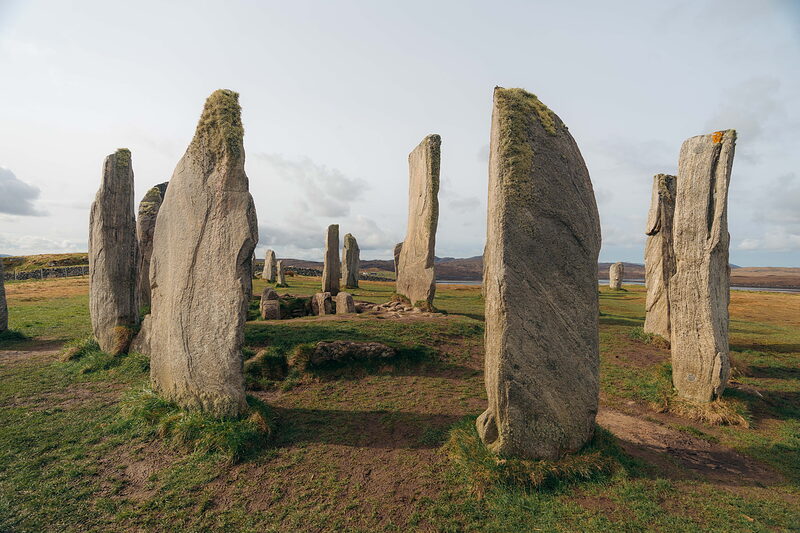
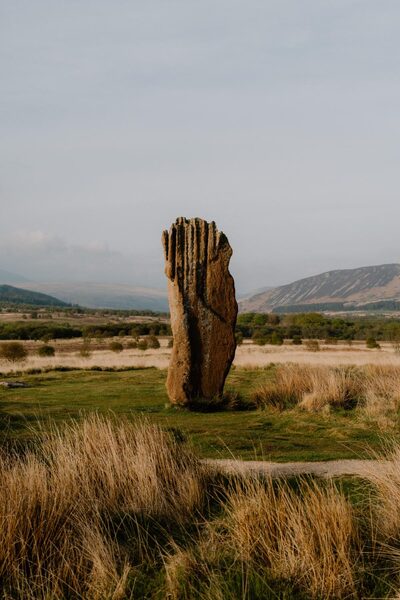
Albie and I grin as we fill our mouths with succulent sourdough sandwiches and watch clouds sliding across purple hills and Neolithic stones. Today we’re at Machrie Moor, where a path slithers between fields of sheep to a wide- open landscape, between sea and fells, of standing stones, burial cairns and cists dating to between 3500 and 1500 BC. We might be sitting beside the stone where legend says Fingal the Giant once tethered his dog Bran, I think, when – “More,” commands Albie. These sandwiches are, he says, “really good”.

The bread is organic and made with wild yeast and flour from British heritage grains. There are no additives or provers. “There’s not even any baking powder,” says artisanal Arran baker George Grassie, who opened Blackwater Bakehouse nine years ago. It’s tucked onto an alley behind the Kinloch Hotel in Blackwaterfoot, signed ‘Bread Shed’, where rattan baskets row up in a hutch containing brown paper bags of often still warm creations. The air oozes fresh baking, especially when George and his apprentice Andrew are at work – a lot of the time in summer, when they can “handmake 450 units every day”.

As well as the sourdough, they bake viennoiseries, such as almond croissants, using raw sugar. But “time is the main ingredient”. The loaves result from a long, cool fermentation, making them highly nutritious and gentle on digestion, says George. The sandwiches were his idea. “Split open the baguette, go to a village shop,” he said, “and buy local produce to stuff it with”. We found hot smoked salmon from Skipness, but you might try creamy cheddar from Arran Cheese Shop or juicy leaves from any number of island producers. The west coast is a ribbon of ideal picnic spots. Blackwaterfoot itself, with Arran’s loveliest sandy beach. It leads to Drumadoon Point – a favourite family walk to an organ-like cliff of columnar basalt. “Or Machrie at sunset,” suggests George, saying there are benches dotted along the coast and “you will have it to yourself”. And there is King’s Cave near Machrie, where Robert the Bruce is said to have seen the spider before the Battle of Bannockburn. The cave is deep and sheltered, opening onto a coast foraged by sea birds. A place to play and relax for hours.

TOP TIP 

Blackwaterfoot is the main village on the west coast, alongside Shiskine, Machrie and Pirnmill. It’s home to The Arran Butcher; The Harbour Shop, for gifts and snacks; and Bellevue Farm, which offers brilliant farm tours. At Machrie, the Old Byre Show Room has an outdoor playground with go karts and tractors, a café serving hand- baked pide, and a shop selling country clothes and homeware.

words //Emily Rose Mawson - photography //Simon Hird

Image One

Machrie Moor Standing Stones

S is for South Coast

Arran’s south end is rural and green, with a windswept coast road connecting solitary farms. It’s here that fields fall into the sea, where waves break around the uninhabited island of Pladda, and the volcanic plug Ailsa Craig is silhouetted by metallic light, like a UFO. This is the view through the door of the ‘Library in the Woods’, at Eas Mor Ecology, a gingerbread-style hut stacked with hardbacks, paperbacks, children’s books and anthologies, at the top of a broad ravine. Around 250 million years ago, the valley would have been a desert. Nowadays, it billows with trees that remind me of giant kelp. The library’s walls are pinned with layer upon layer of papers that flap in the breeze. There are drawings of pets and families, copies of poems and proverbs. Words of motivation line up with holiday memories, and what most of all reminds us that the world is a place of love. One reads, “Arran, you are my happy place”. Another: “I’m nine-years-old and I like ice creams and football.” One says simply, “LOVE”. My son draws a yellow rabbit, writes his name and pins it to the wall.

Eas Mor Ecology is a charitable trust, also encompassing trails, viewing platforms, picnic tables and lagoons, established in the 1990s by landowner Albert. “We call him the ‘Wizard of the Woods’, because he has long silver hair,” smiles Sarah, who works in the café. “I was friends with Albert’s daughters, and we spent our weekends growing up helping to build the paths. Now my son loves playing in the woods.” She tells me that a five-minute drive away, Kildonan is one of the best places on Arran to see seals. It’s also the site – somewhere on the cracked maze of black basalt coast, about 50 metres from the car park, according to Arran Geopark – of a hand-shaped footprint left by the giant reptile ‘Chirotherium’. We splash in rockpools and clamber over walls of rock, searching for this 240-million-year-old fossil. Then, silhouetted nearby – a pair of otters. We stand still, not daring to breathe, but they sense us and are gone. I’m thrilled: we’ve seen all five!

That afternoon, Albie builds a sand castle beside Cladach Beach House in the burn estuaries below Brodick Castle gardens. Close to shore, seals bob as if playing Whac-a-Mole. I sup a mocktail infused with local wildflowers – from the menu at Scotland’s only cocktail beach bar, which reads like foraging alchemy: blackcurrants and meadowsweet, noble fir, lemon balm and hogweed seed. We found the dinosaur footprint in the end. It was amazing, but smaller than expected, like Arran. Fiona Mackintosh, who runs Hamilton Cottages where we are staying, summarises it nicely: “Arran is compact and varied. Once you’re on the island there are no long journeys. Within ten minutes’ drive, you have everything the island has to offer.”

TOP TIP COAST 

Discovery Centre at Lamlash, near Brodick, uses interactive exhibits and a marine life tank to reveal how Arran created Scotland’s first Marine Protected Area.

Image One

The Library in the Woods

Other articles you may like