This 11-Mile Drive Through Sky Ends with a Pint by the Sea
Written by Jack Cairney
Waternish is one of those parts of Skye that you might not get to on your first visit. It doesn’t have a headliner attraction. There are no dramatic mountain passes or overflowing car parks. It’s quieter, slower, tucked to the northwest like an afterthought. But for those who make the turn, often on a whim, it becomes the place they talk about when they get home. Not because of what they saw—but because of how it felt to be there.
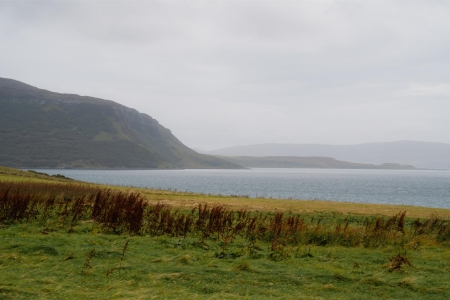
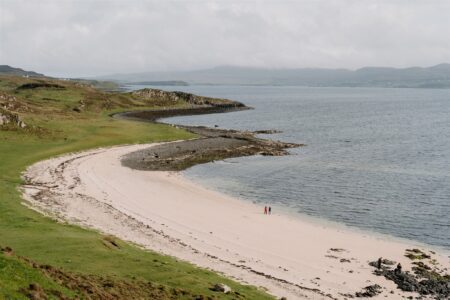
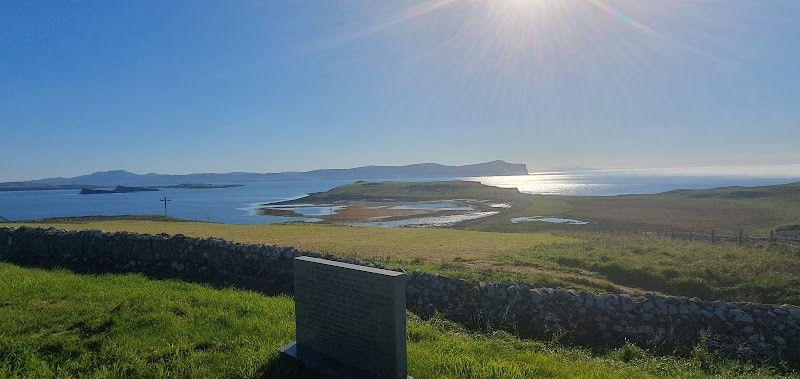
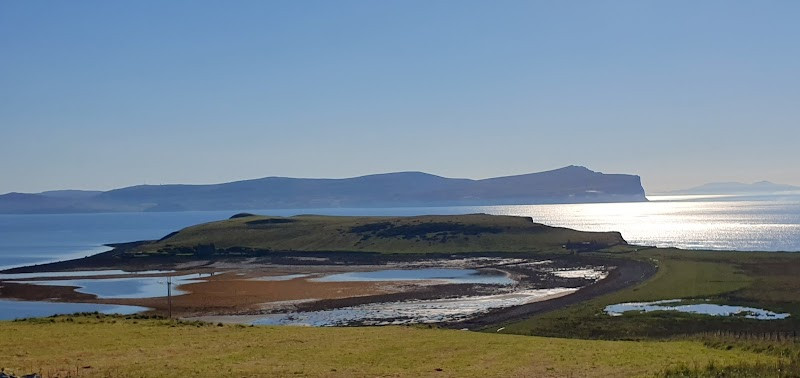
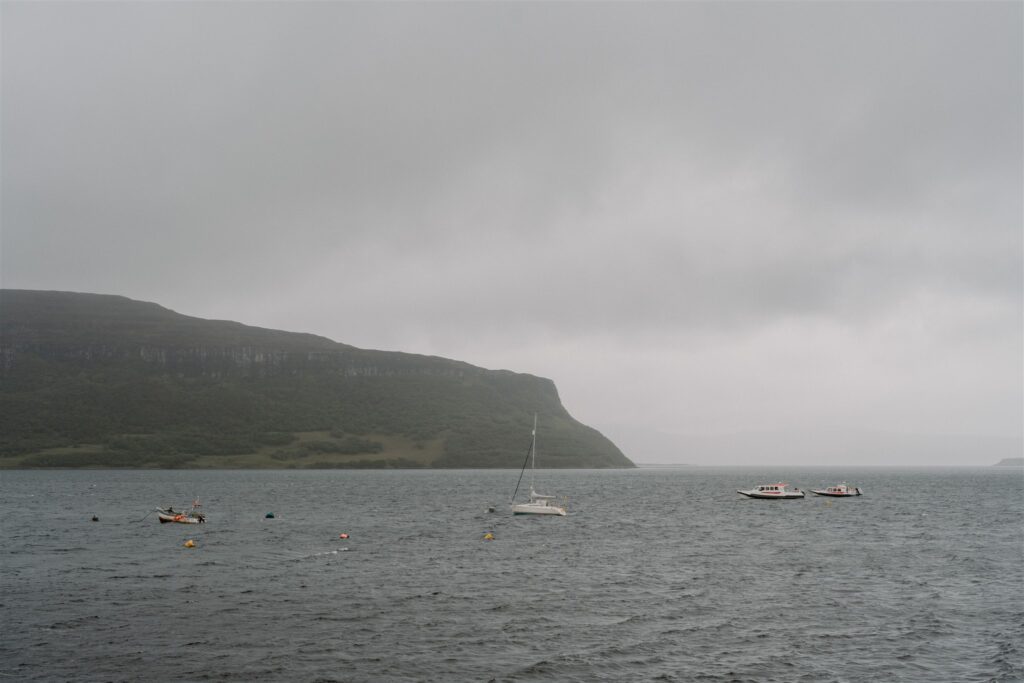
The peninsula draws its shape like an open hand. A narrow road runs through its centre, drifting toward Stein where land dissolves into the sea. Off to the sides, tracks lead to crofts, studios, abandoned churches, and working sheds. The sea is never far away. You catch it in flickers—beyond a slope, at the end of a line of birch trees, reflecting wide skies or carrying the low shimmer of the Outer Hebrides beyond.
This 11-mile loop asks nothing of you. No bookings, no ticket queues, no rush. Just the kind of soft, unforced rhythm that comes from making short stops and noticing what’s around you. A ceramics studio where every glaze feels like it belongs to the island. A yurt café warmed by a stove, serving coffee and oatcakes while the wind moves past outside. A sheepskin tannery, still working as it has for decades. And, toward the end, a stretch of coast with crumbled ruins, remembered stories, and then a pint by the water in a village that barely looks like one.
You could do it in a couple of hours. But there’s no need. It suits a day where time isn’t the measure. Where you drive with the windows open and stop without planning to. The mileage may be short, but the impressions stay longer.
Skio Pottery
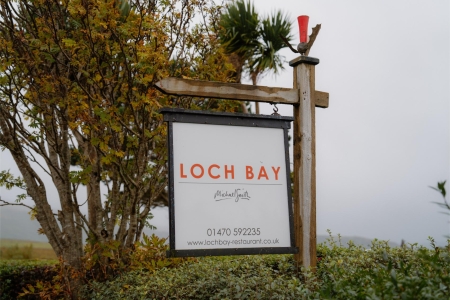
Loch Bay isn’t a village in the conventional sense—just a smattering of houses, sheds, and grazing fields that edge toward the sea. But it holds one of Skye’s most thoughtful pottery studios. Skíō Pottery, run by Kayti and Luke, works quietly from a converted croft house, blending function with place...
YURTea&Coffee
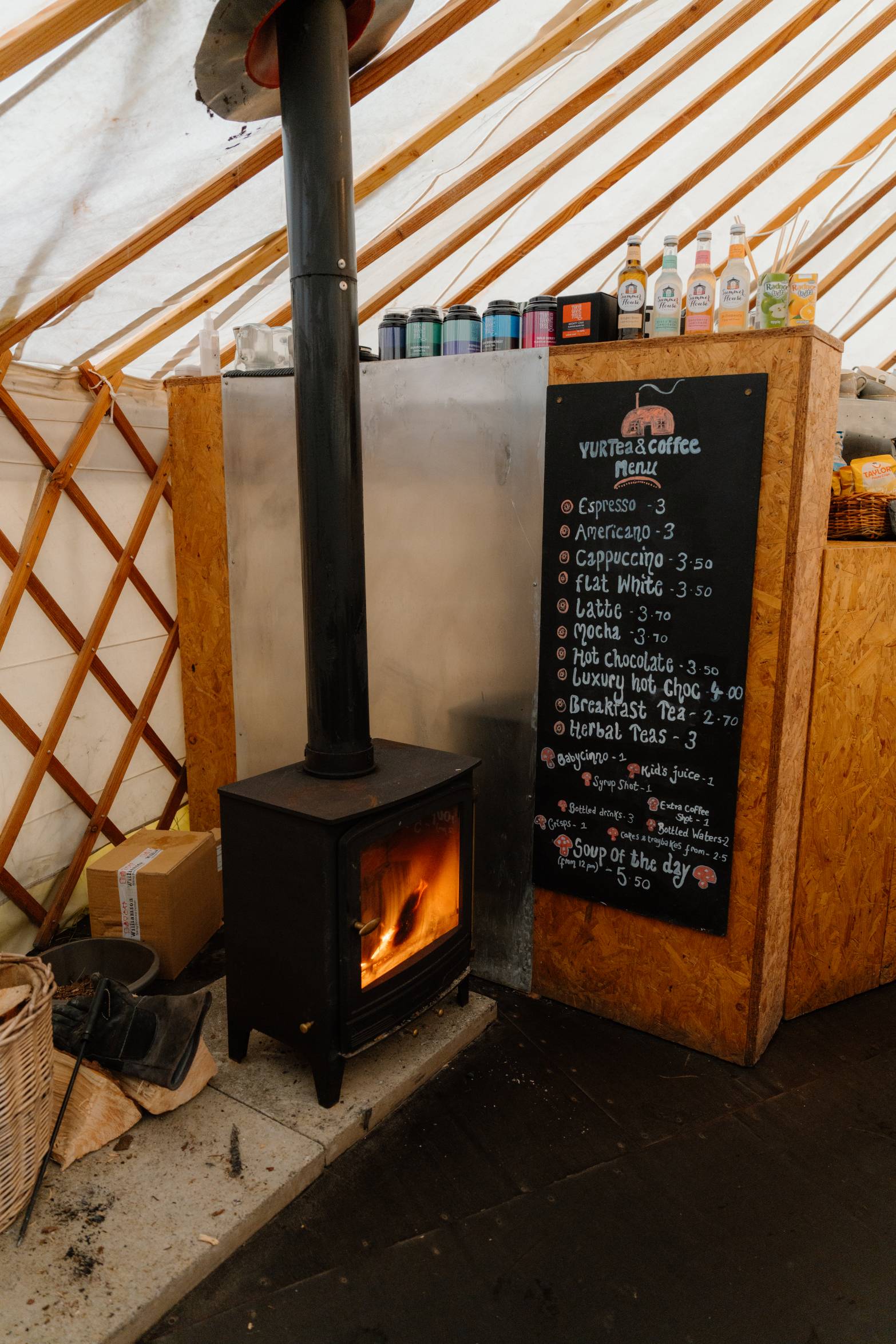
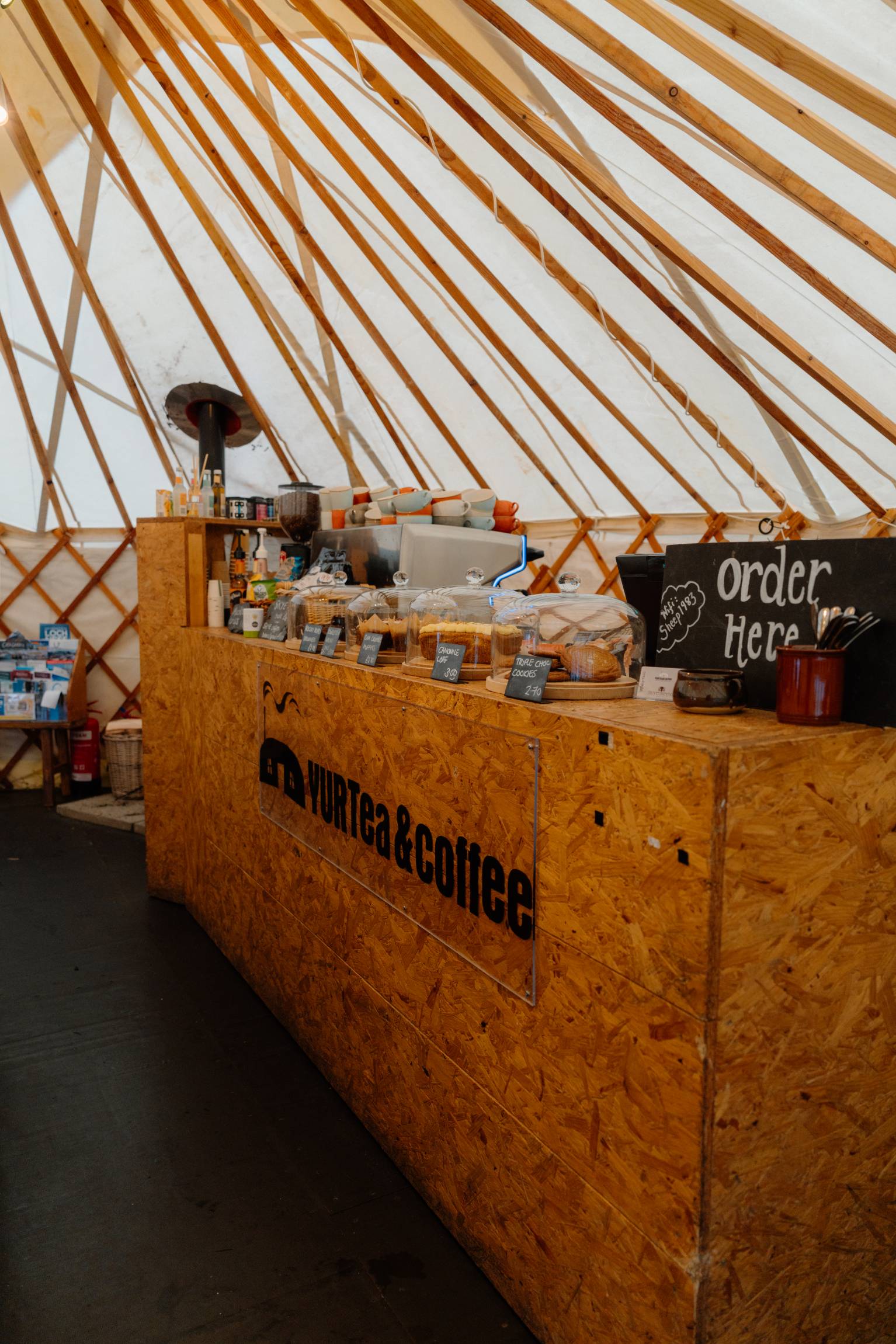
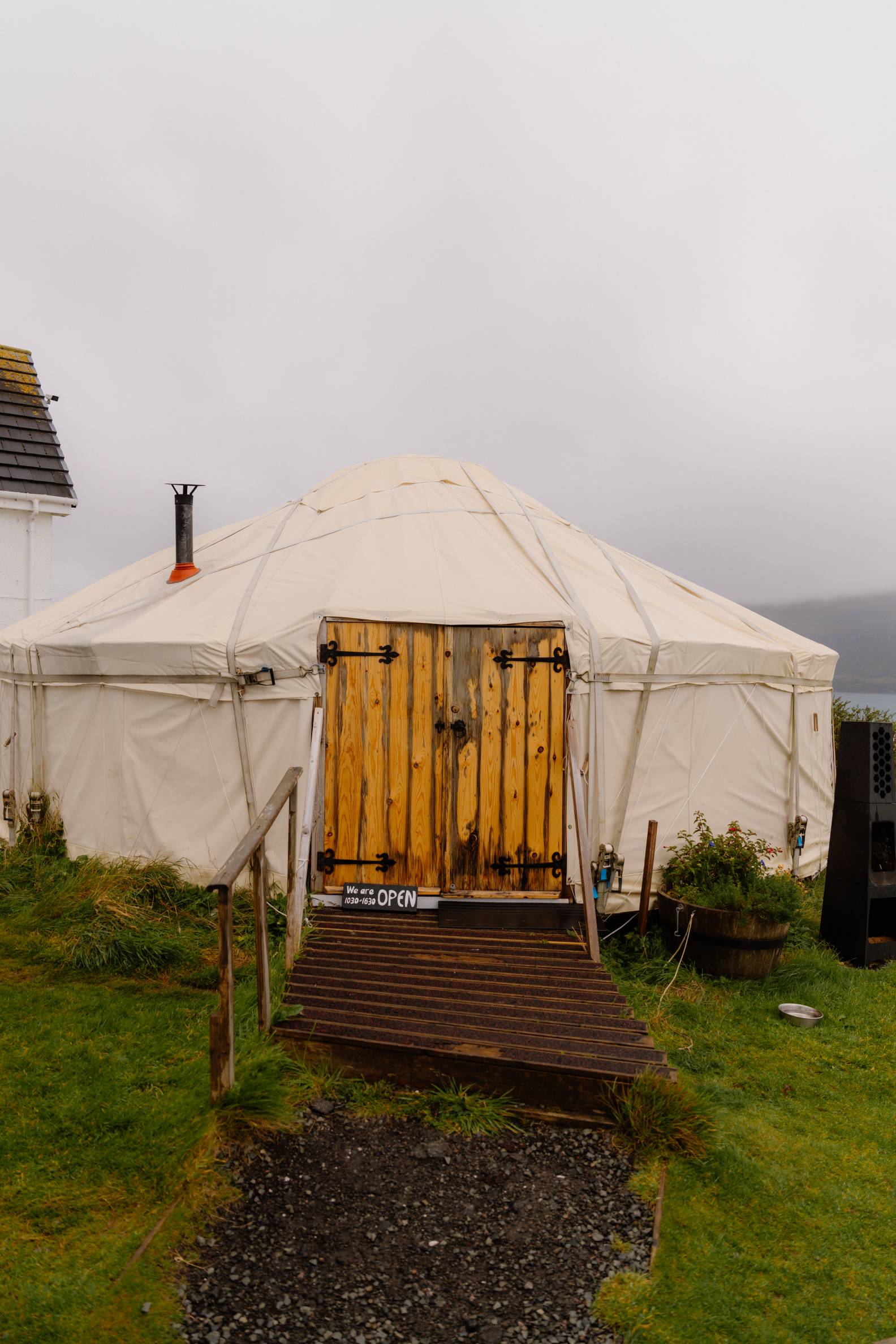
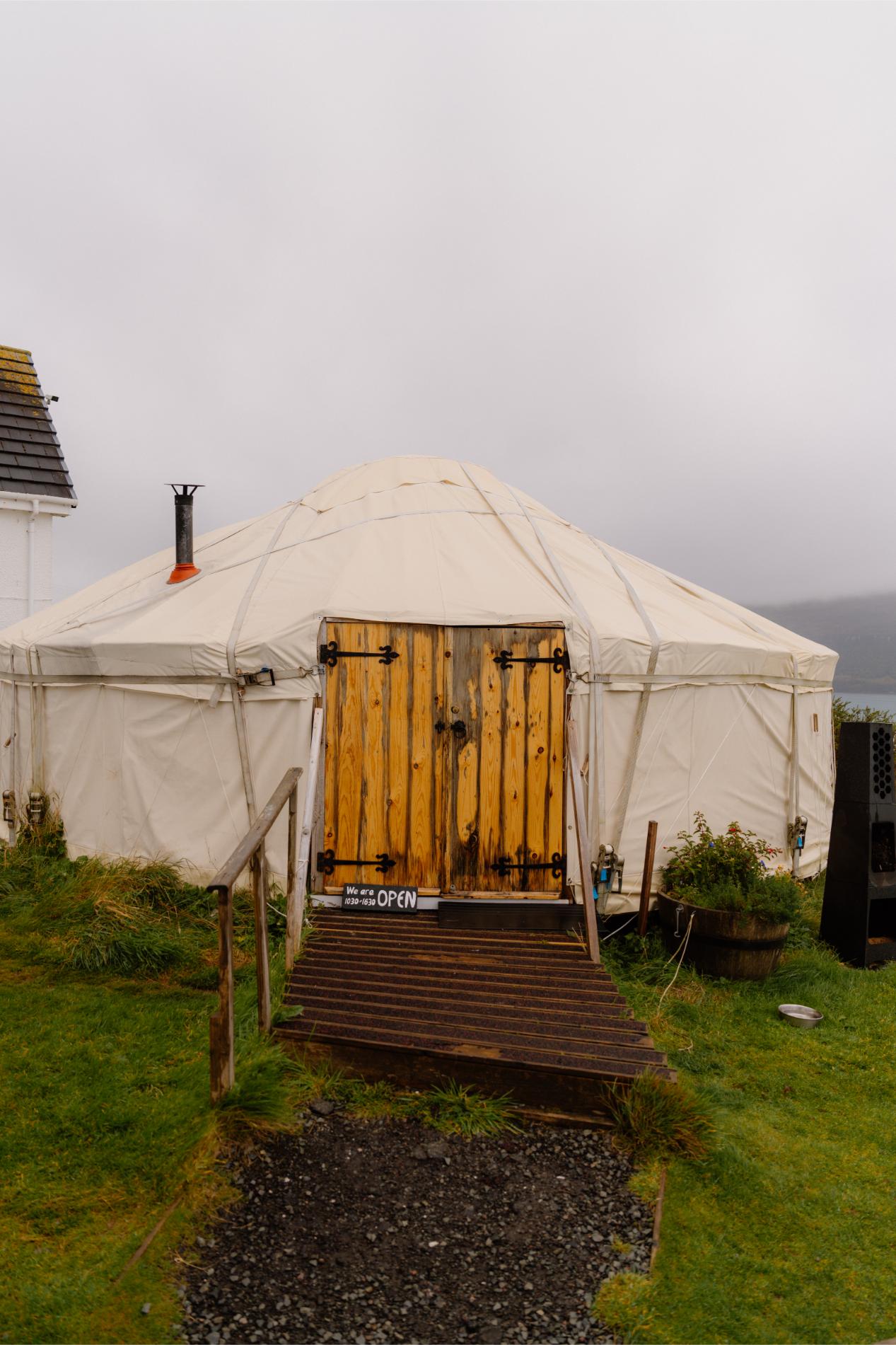
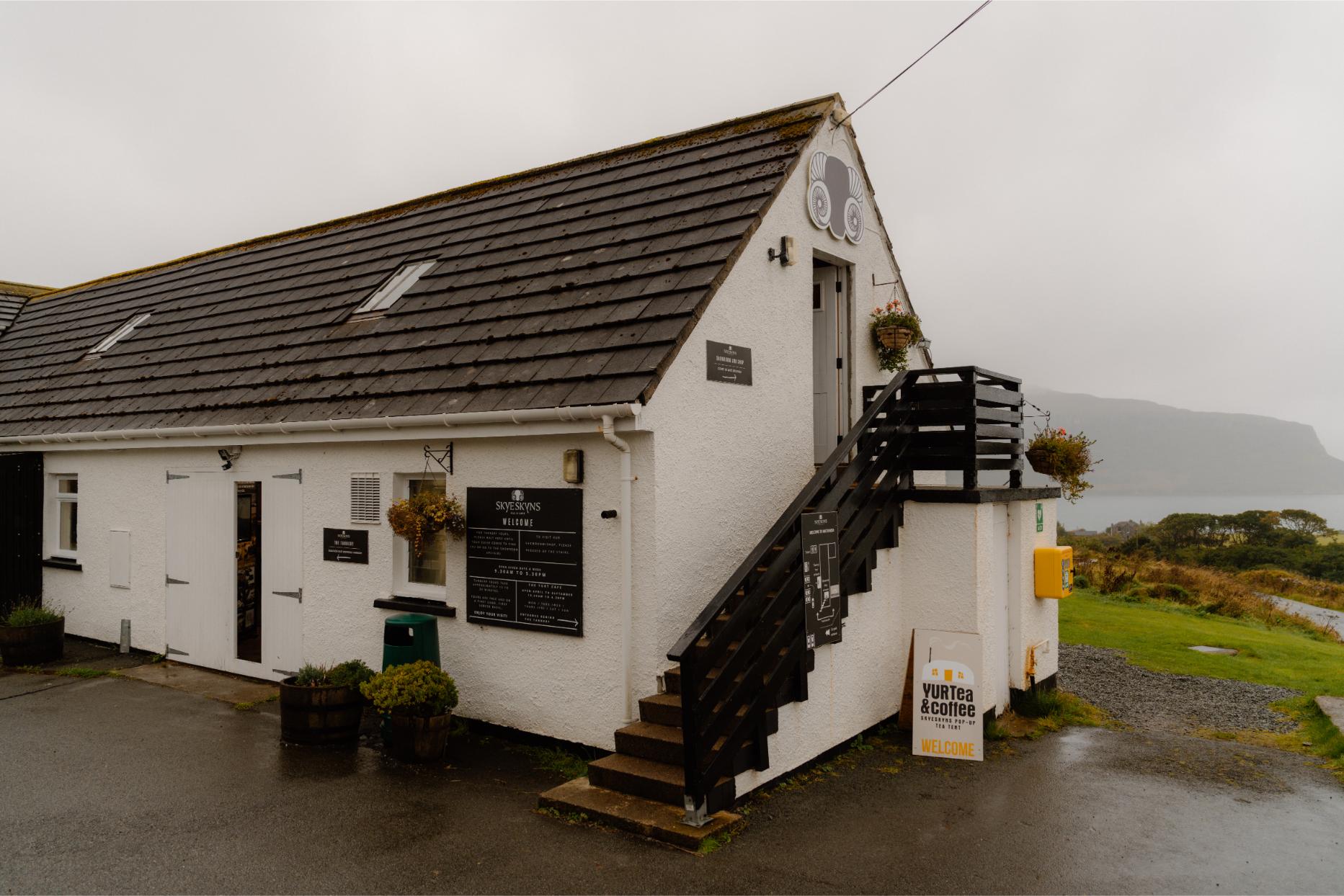
Just a few minutes down the road from Skíō Pottery, tucked behind the sheepskin tannery at SkyeSkyns, sits a café that manages to be both unexpected and exactly right for the setting. YURTea&Coffee is housed in a full-sized Mongolian yurt—a round, wood-framed shelter with canvas walls and a central skylight...
Skyeskyns
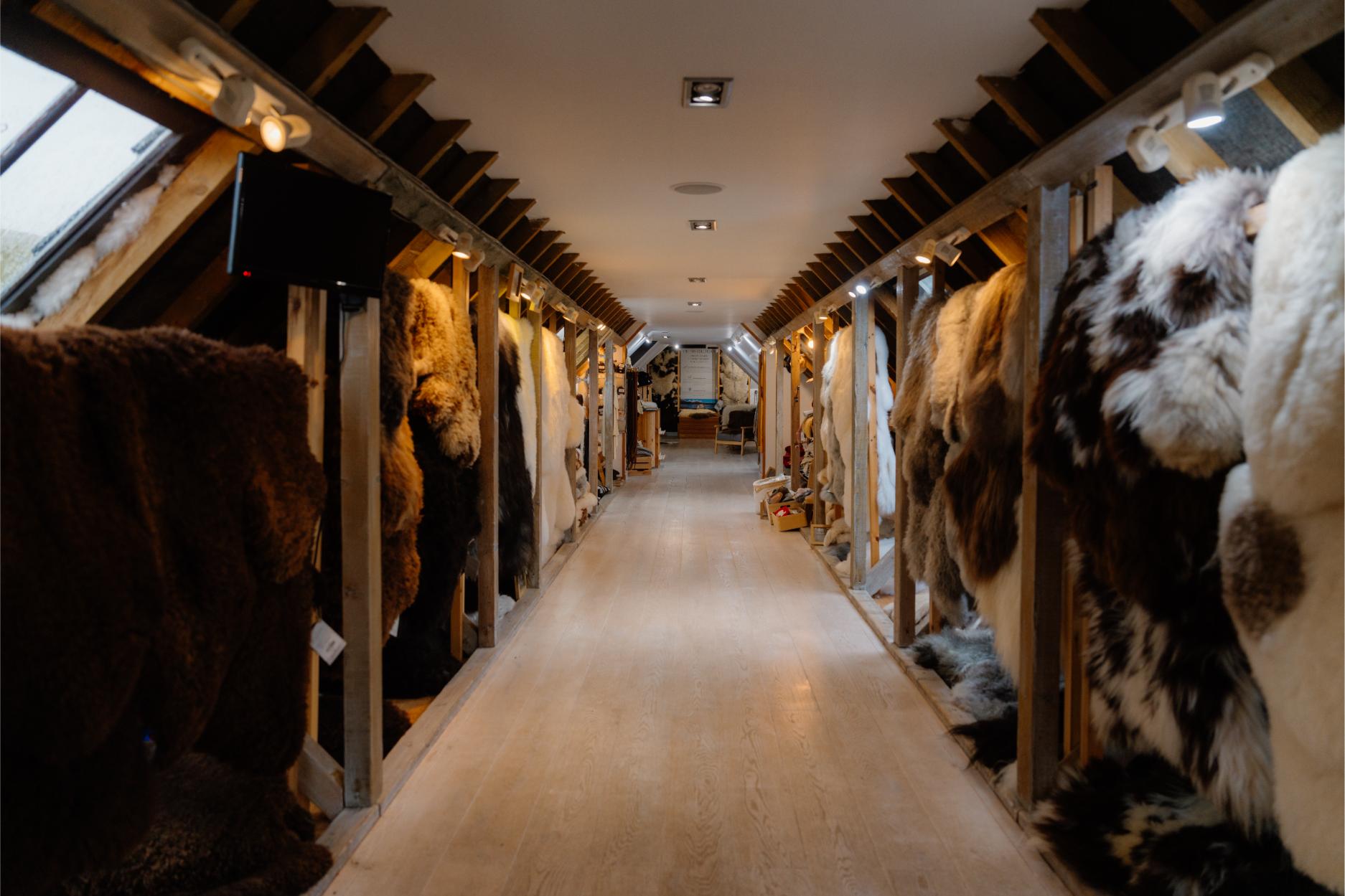
Adjacent to the café is the heart of the place—SkyeSkyns’ working tannery. It’s the last of its kind in Scotland, and it still works with traditional, labour-intensive methods. You may be offered a short tour, or you might just be free to browse the shop, which in itself is an...
Fairy Bridge
A few miles east from the main loop, just off the A850 as you enter Waternish, a low, nondescript bridge spans a shallow burn. This is Fairy Bridge—An Drochaid nan Sìthichean—where history and folklore meet in a way that feels very Skye. There’s no visitor centre or signage cluttering the...
Trumpan Church
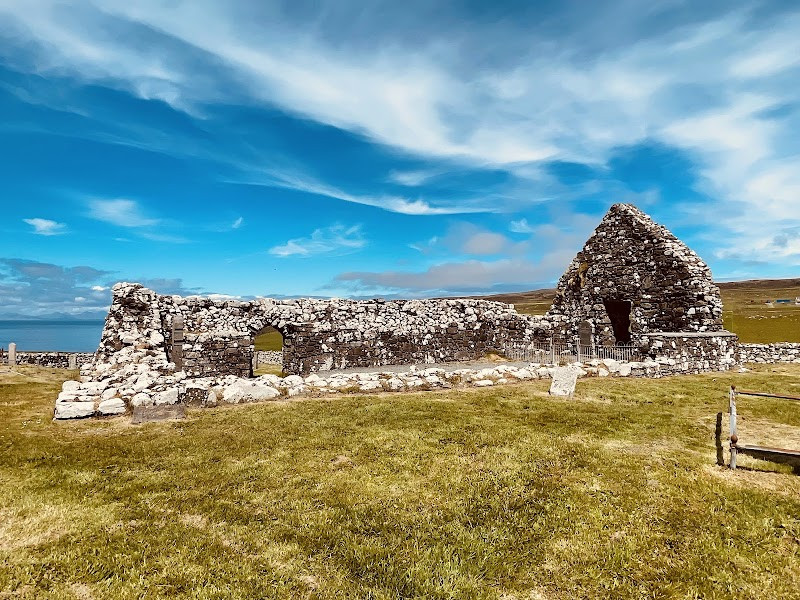
Carry on west, and you’ll come to a bare headland where the ruins of Trumpan Church stand exposed to sea wind and sky. Roofless and roofless, the church is stark but striking, its walls still standing, its small graveyard half-swallowed by bracken and time. From here, the view opens out...
Stein Inn
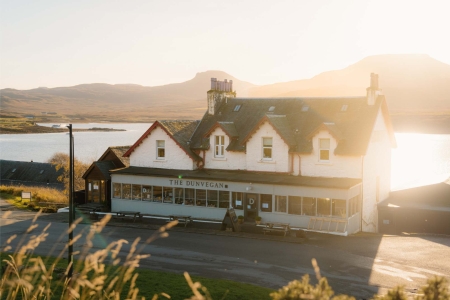
You arrive in Stein just before the road stops. A line of white buildings hugs the shoreline, dipping slightly towards the water. The Stein Inn is the anchor here—Skye’s oldest inn, known for its relaxed charm, fireside tables, and ever-changing selection of local ales and whiskies.
Inside, the pub is as...
Restaurants on the route
Cafes on the route
Shops on the route
Accommodation nearby
Attraction nearby
Skio Pottery


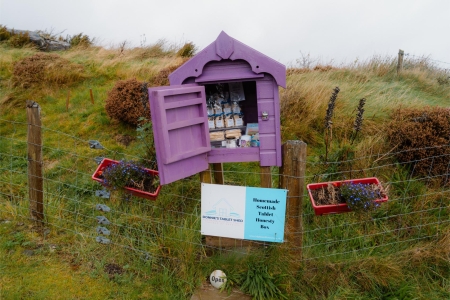
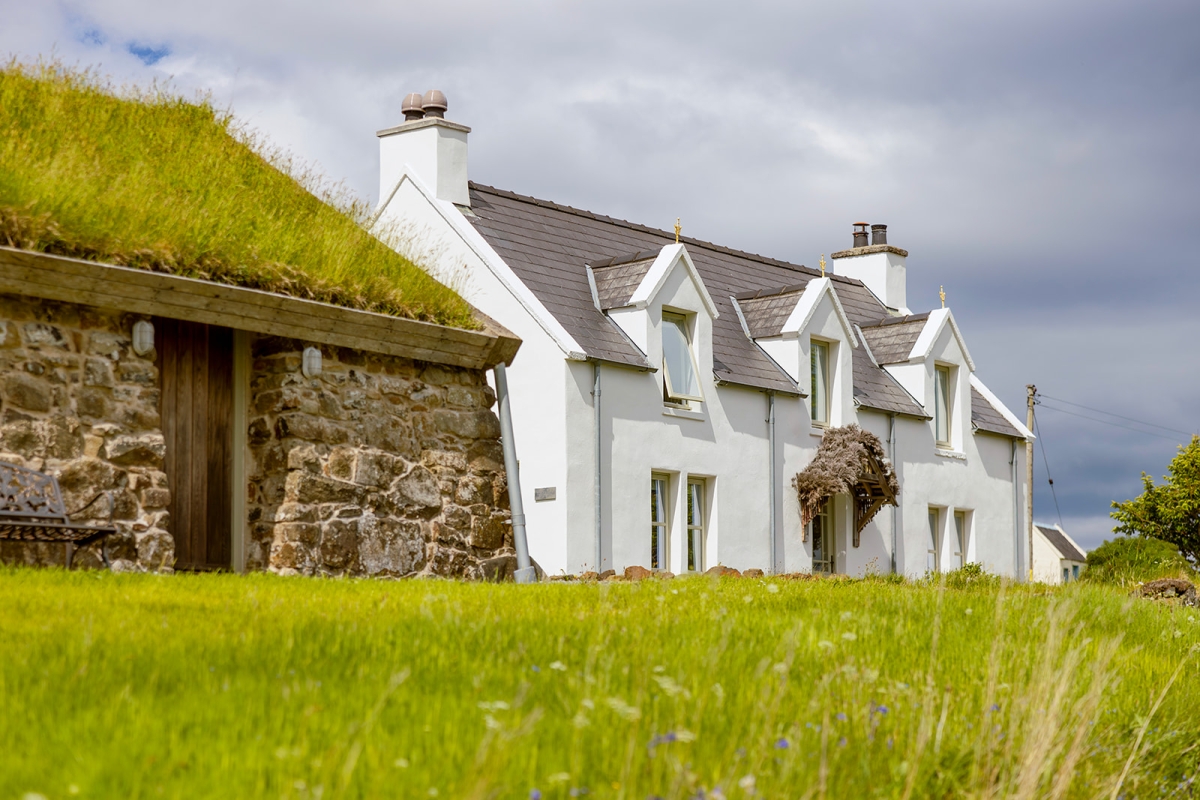
Loch Bay isn’t a village in the conventional sense—just a smattering of houses, sheds, and grazing fields that edge toward the sea. But it holds one of Skye’s most thoughtful pottery studios. Skíō Pottery, run by Kayti and Luke, works quietly from a converted croft house, blending function with place in a way that feels both studied and intuitive. You won’t find signage shouting for attention. Instead, there’s a small, hand-painted notice and a parking space with room for just a few cars. Entry is by the Croft Box or appointment, though if someone’s in, they’ll likely wave you inside.
Inside, the studio is calm but purposeful. Clay is worked into form by wheel and hand; glaze tests lie stacked in corners. Everything seems to carry the light—subdued blues, earthy greys, a soft speckled white. The pieces aren’t decorative in the usual way—they’re made to be used, to sit in your palm with weight and purpose. You can pick up a mug and feel the shape echo the island’s quiet geology: rounded, muted, and absolutely certain.
Conversation drifts naturally to the materials—where the clay comes from, how the glazes settle in different firings, what it means to work with your surroundings. There’s no need for fanfare. It’s the sort of place where the pace slows without you realising, and where a single bowl feels like a full stop to the chatter of the outside world.
When you leave, it’s not with a souvenir—it’s with something tactile, something shaped by the wind, the sea, and a day spent watching hands at work.


YURTea&Coffee


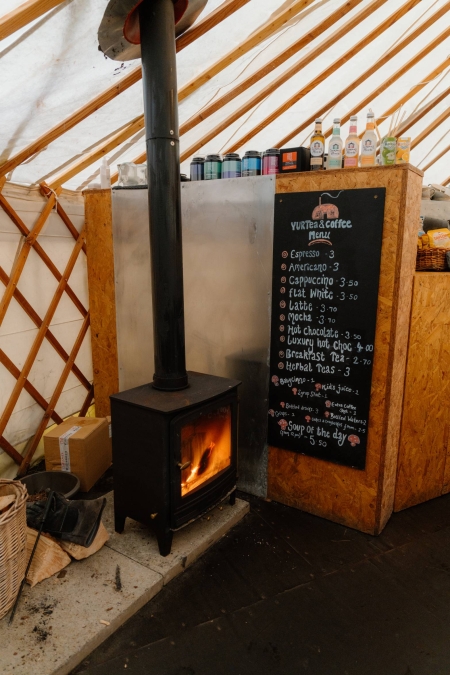
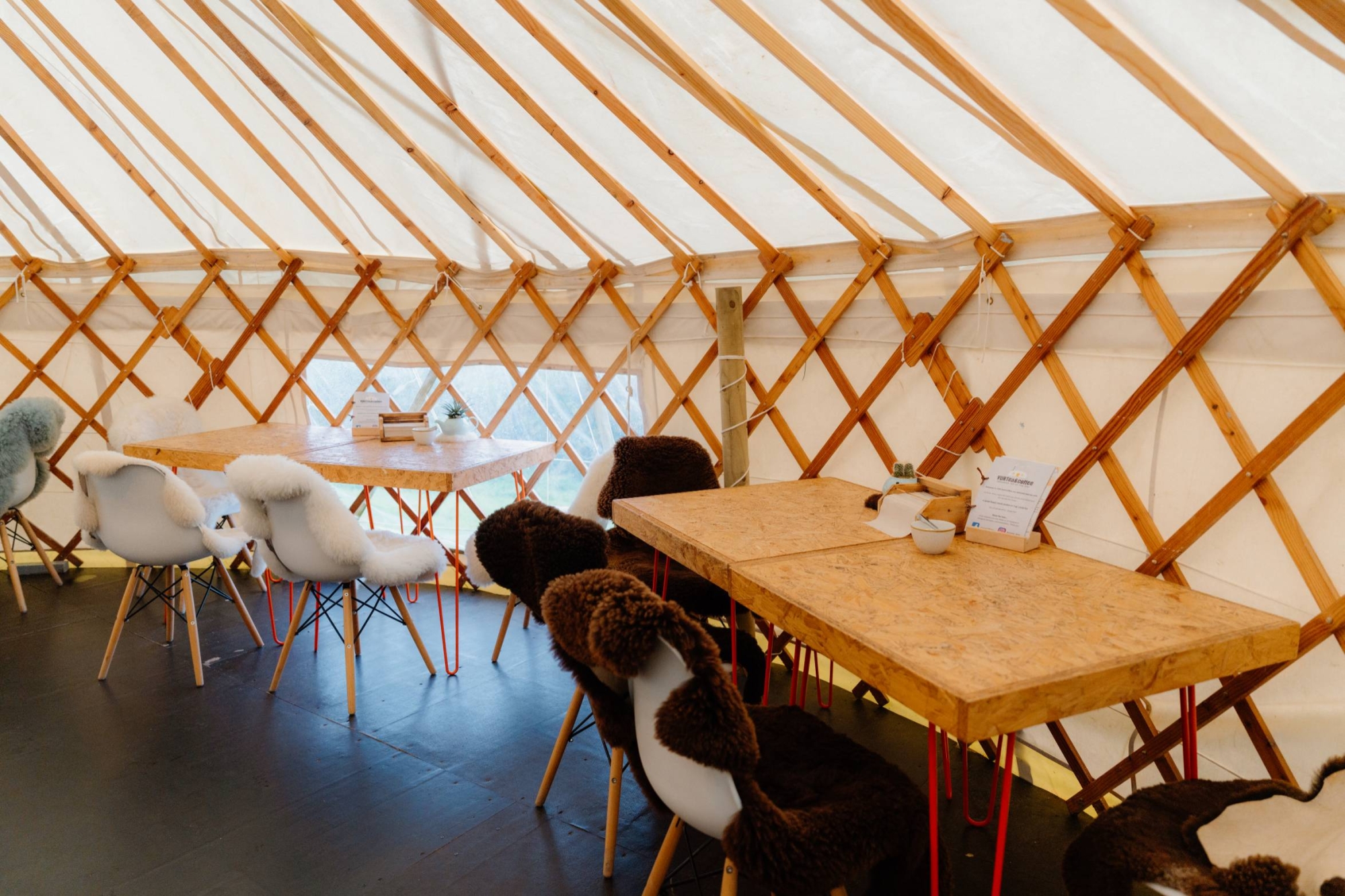
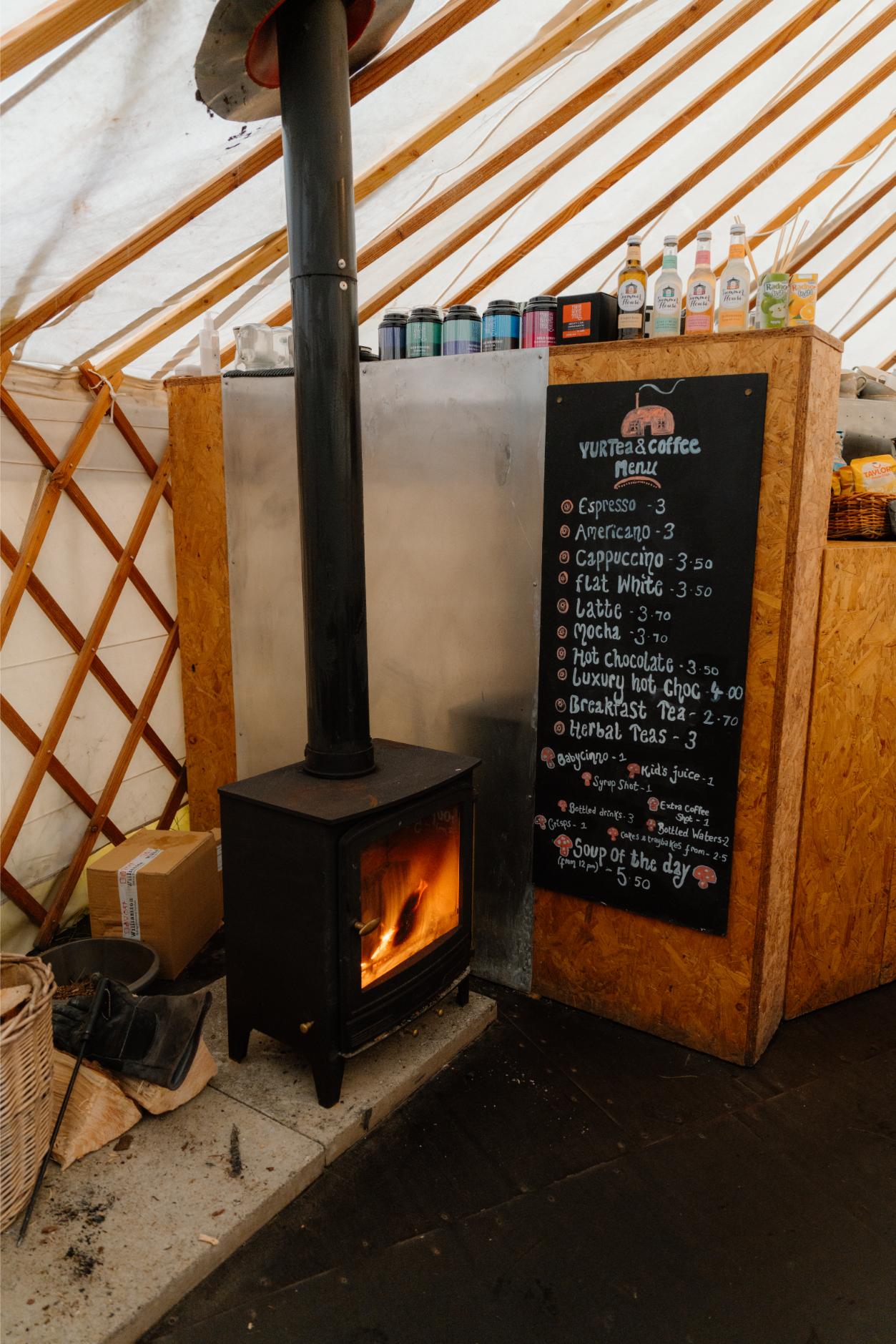
Just a few minutes down the road from Skíō Pottery, tucked behind the sheepskin tannery at SkyeSkyns, sits a café that manages to be both unexpected and exactly right for the setting. YURTea&Coffee is housed in a full-sized Mongolian yurt—a round, wood-framed shelter with canvas walls and a central skylight that softens the light and gives the space an immediate calm. Step inside and it’s warm, quiet, with the faint crackle of a stove and the scent of baking in the air.
The interior is simple but thoughtful: low tables, handmade cushions, woven rugs, and sheepskins over benches. Light filters through fabric wall panels during the day, and when it’s grey or rainy outside—as it often is—you feel cocooned, but not cut off. It’s a welcome contrast to the wide, open spaces of Waternish.
You order at the counter—fresh cakes, oatcakes with cheese or chutney, real coffee in ceramic mugs—and take a seat while the wind moves past outside. Visitors drift in quietly, some coming from the shop or tannery next door, others just looking for somewhere to pause. It’s not busy in a hurried sense, but it’s well loved.
It’s also the kind of place that could only really work here. The yurt feels temporary but rooted, slightly improvised but solid—much like the best corners of Skye. You finish your drink, fold your map back up, and step out into the weather again, ready for the next stop.


Skyeskyns


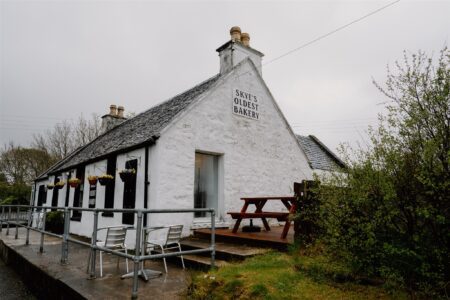
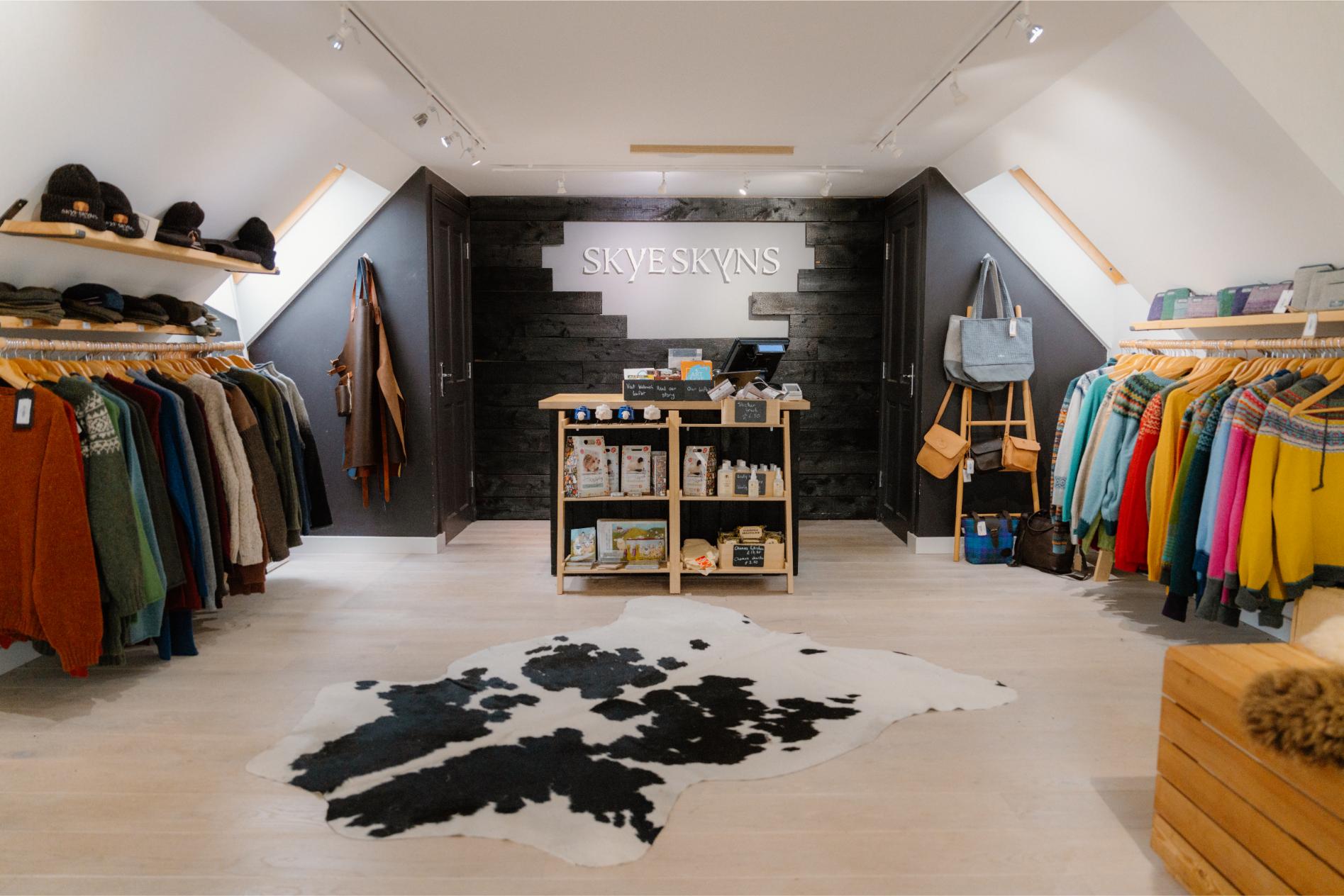
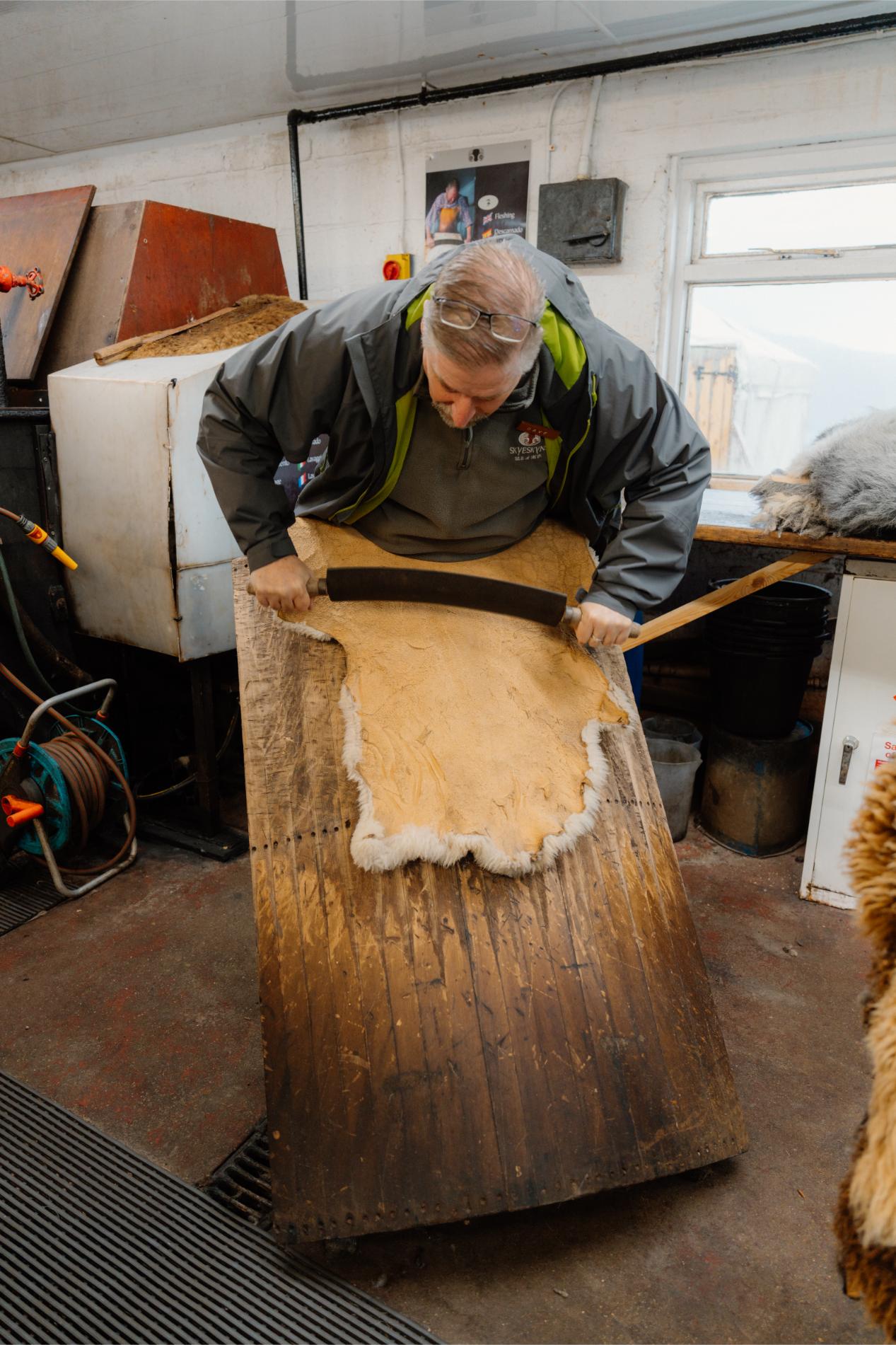
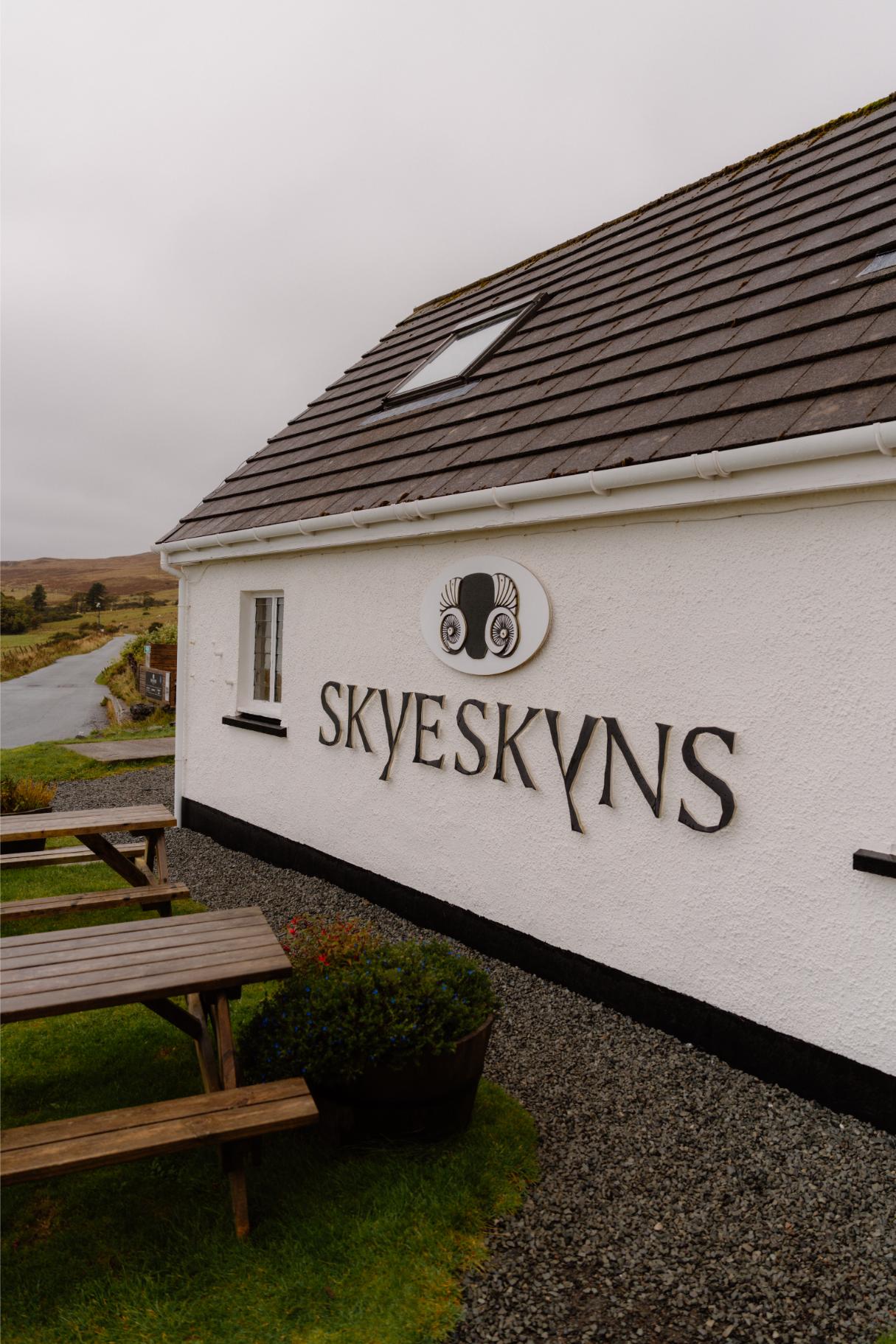
Adjacent to the café is the heart of the place—SkyeSkyns’ working tannery. It’s the last of its kind in Scotland, and it still works with traditional, labour-intensive methods. You may be offered a short tour, or you might just be free to browse the shop, which in itself is an experience. But even without a demonstration, it’s clear that this is not a museum piece—it’s a working operation with real heft.
Inside the main space, you’ll see pelts stretched, hanging, or stacked—some still bearing the heft of the croft, others softened into rugs or shaped for clothing. There’s a scent to the place: slightly sweet, faintly earthy, nothing harsh. It speaks of natural processes and patient work. Staff are happy to answer questions, and even if you’re not buying, there’s value in learning how the raw materials of this place—wool, hide, bark—are still being handled with craft and care.
In an age of rebranded authenticity, this place just gets on with it. There’s no show. Just a sense of continuity, and a tactile reminder that not all industry has to be invisible or mechanised. For those drawn to texture, tradition, or simply the weight of things well made, it’s a quiet highlight.


Fairy Bridge


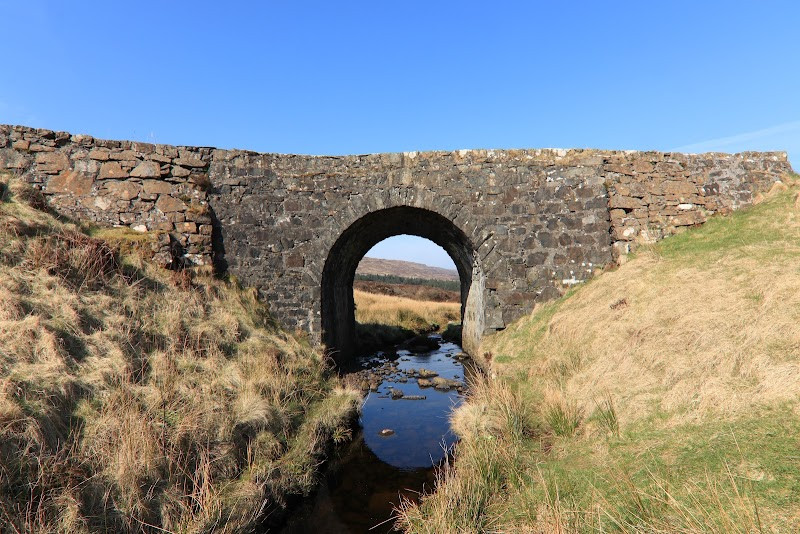
A few miles east from the main loop, just off the A850 as you enter Waternish, a low, nondescript bridge spans a shallow burn. This is Fairy Bridge—An Drochaid nan Sìthichean—where history and folklore meet in a way that feels very Skye. There’s no visitor centre or signage cluttering the view. Just a layby, a plaque, and the sense that something older clings to the stones.
According to tradition, this was the parting point between a MacLeod clan chief and his fairy wife. She gifted him a woven flag with protective powers, the legendary Fairy Flag now kept at Dunvegan Castle. Whether you believe in the story or not, standing on the bridge—with the wind pushing at your back and the burn sliding beneath—it’s easy to feel the weight of things passed down.
It’s not the most dramatic stop on the route, but that’s not the point. It reminds you how myth and history are treated here—not separate from place, but layered into it. The bridge is still used, traffic rumbling softly over its surface, but it holds its other story quietly. Step out, take a moment, then carry on.


Trumpan Church


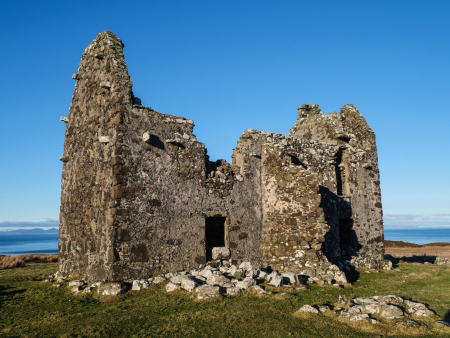
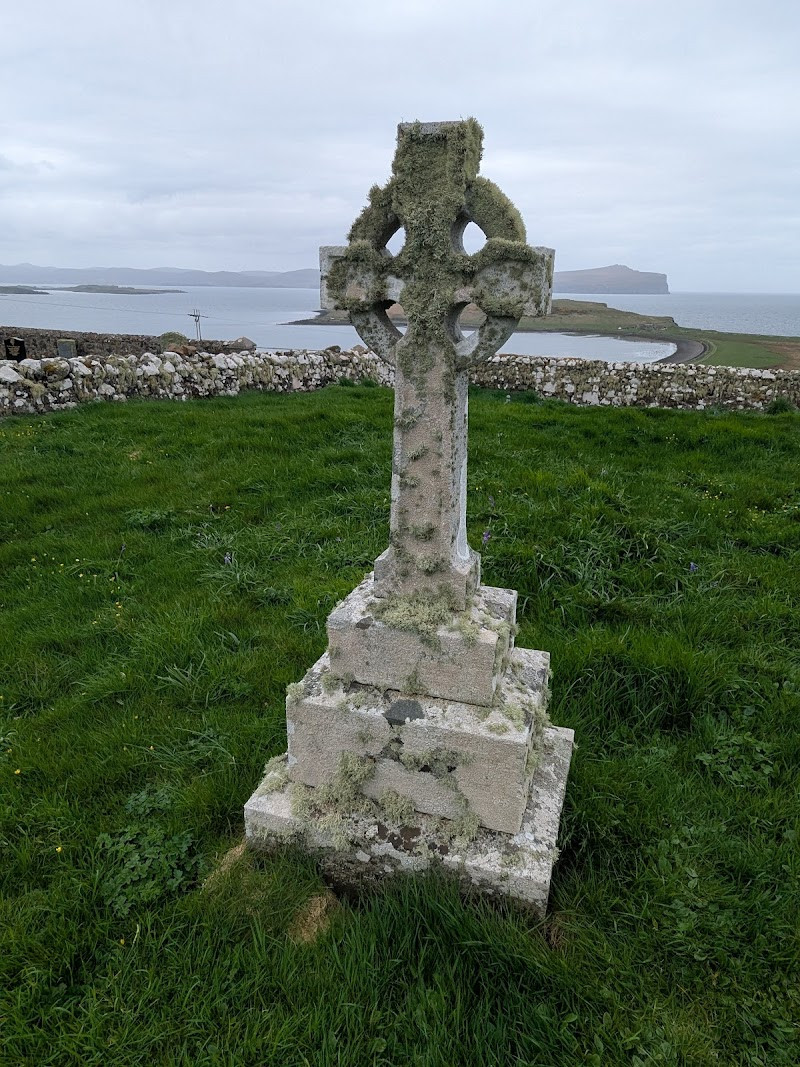
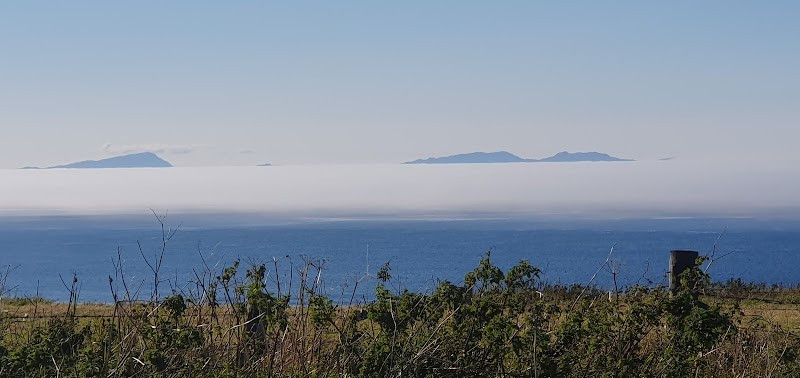
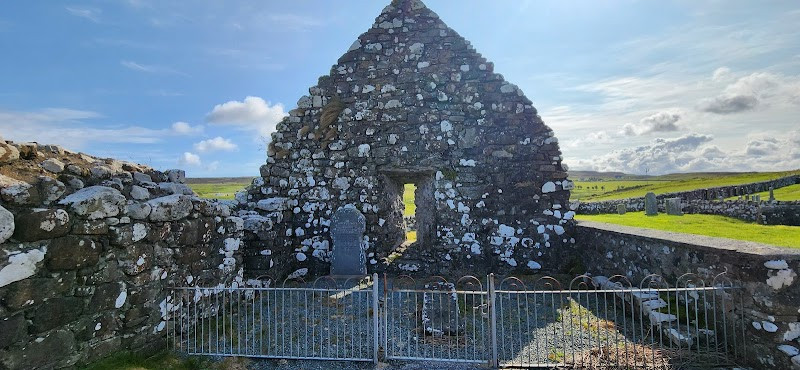
Carry on west, and you’ll come to a bare headland where the ruins of Trumpan Church stand exposed to sea wind and sky. Roofless and roofless, the church is stark but striking, its walls still standing, its small graveyard half-swallowed by bracken and time. From here, the view opens out over the Minch, with the outlines of Harris and North Uist etched faintly in the distance.
This was the site of one of Skye’s darkest clan stories. In 1578, the church was attacked and burned during a service, part of a long feud between the MacDonalds and MacLeods. Retaliation came quickly, and the MacLeods trapped and killed the invaders as they attempted to escape. The site carries that weight—not morbidly, but with a kind of clarity that only places shaped by conflict can hold.
Despite the past, it’s now a peaceful spot. The surrounding fields are often empty but for sheep and wind. The track in can be rough in parts, but it’s easily walkable, and parking is available at the edge. Come for the view, stay for the stillness, and let the silence settle around you before the final stretch.


Stein Inn


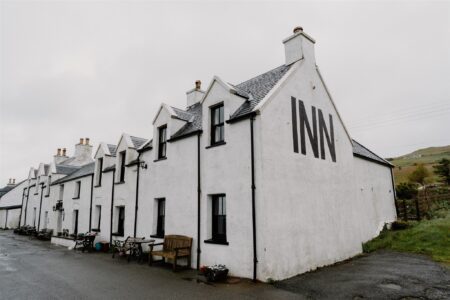
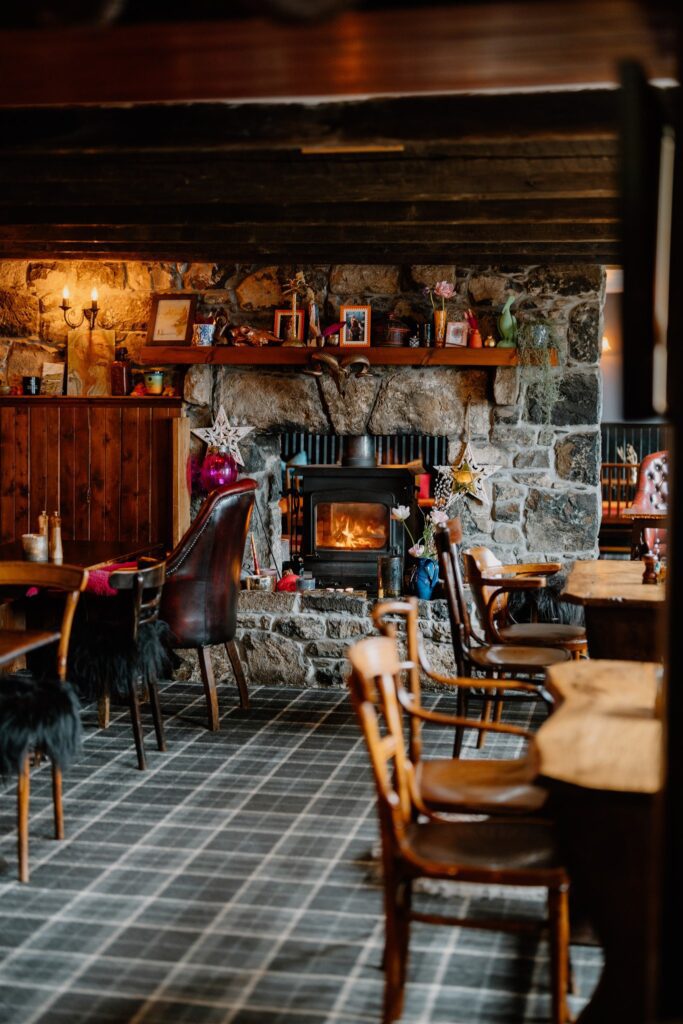
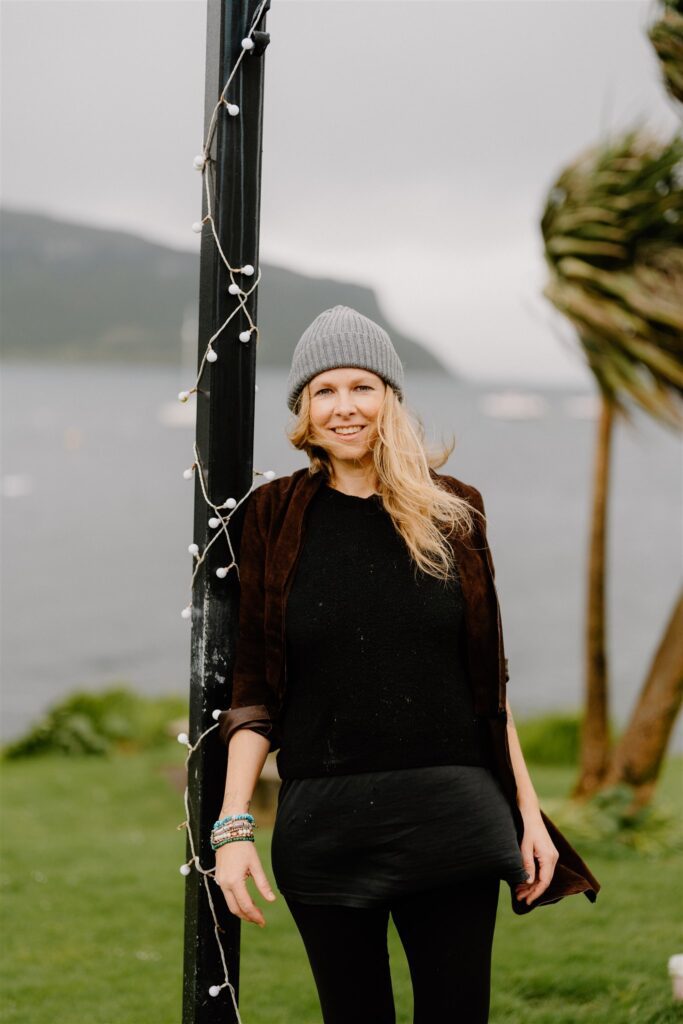
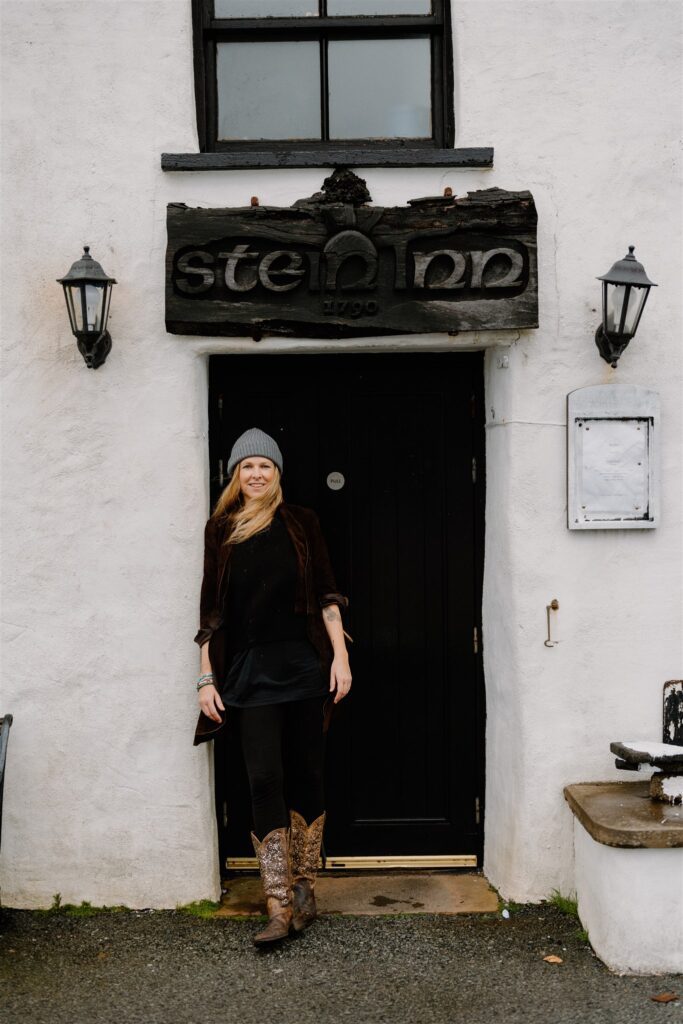
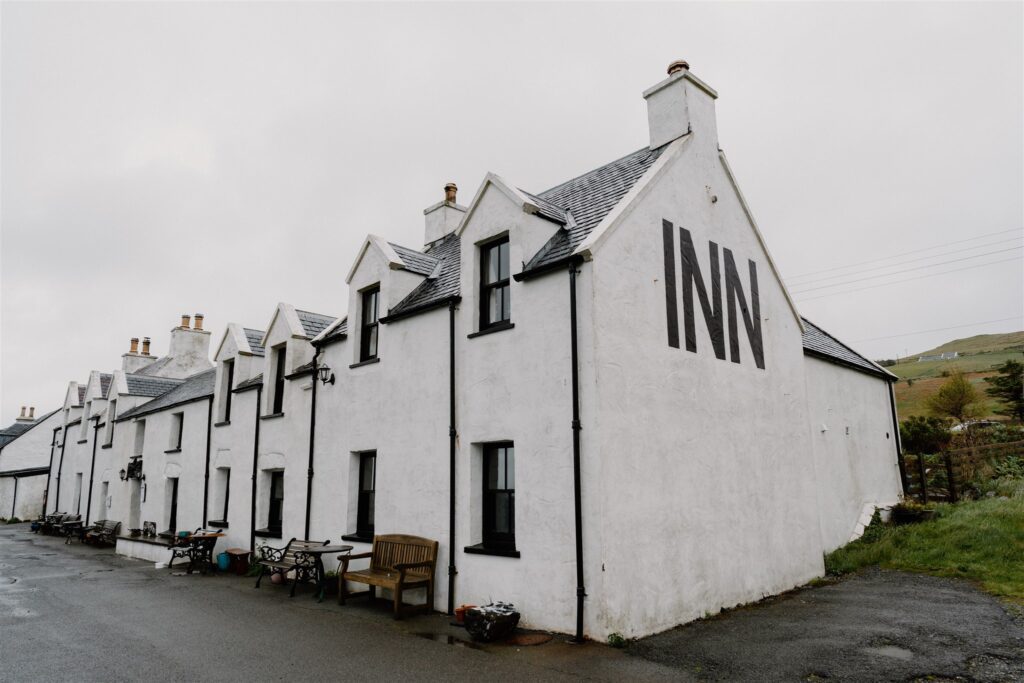
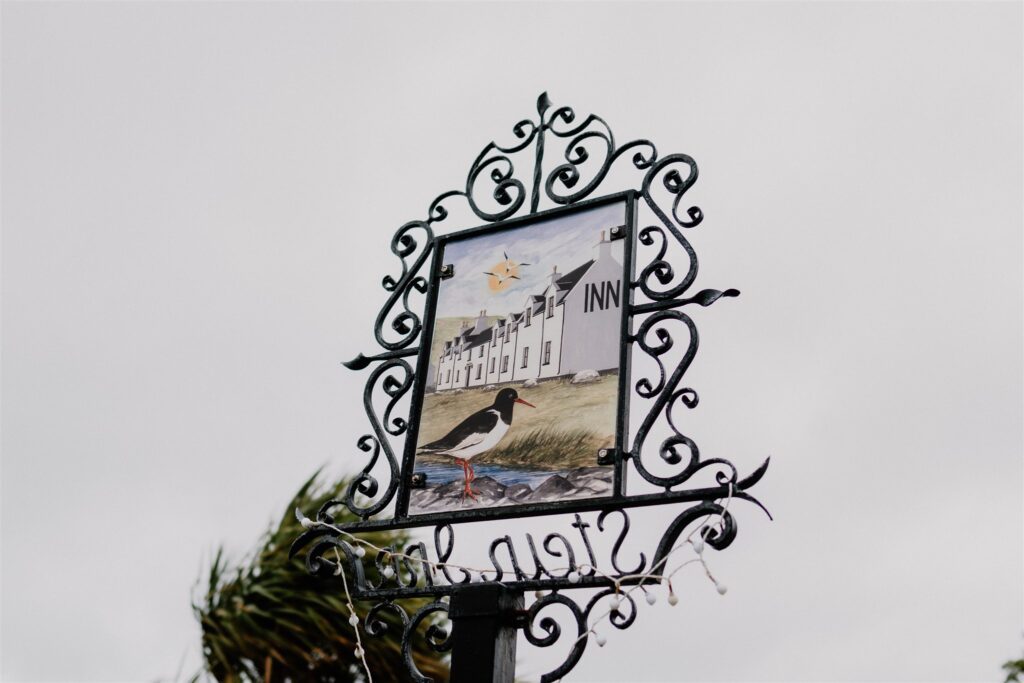
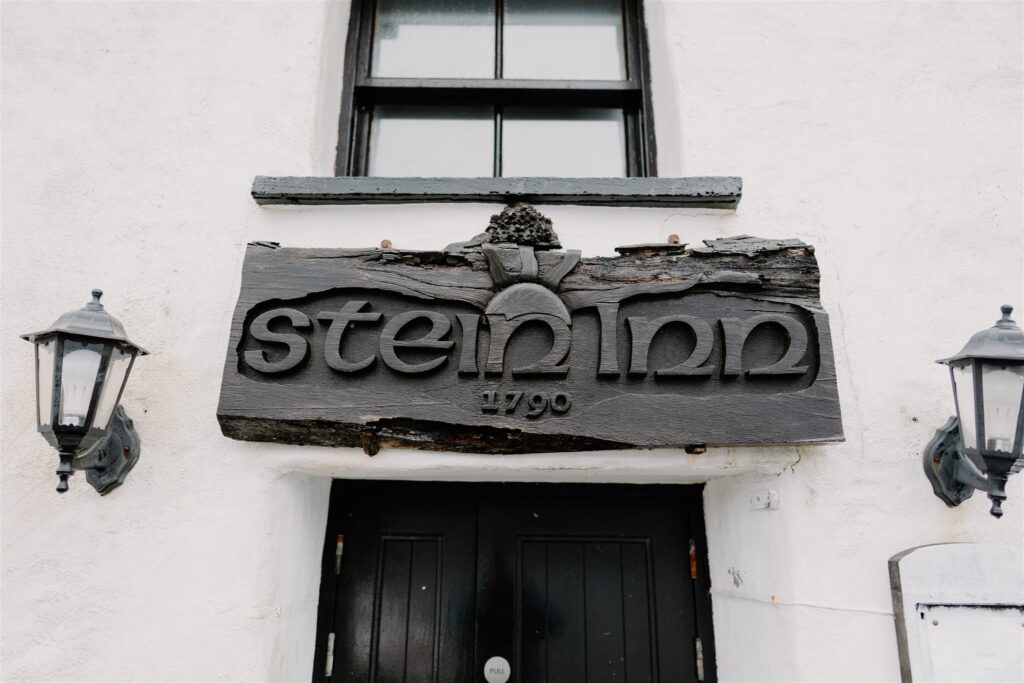
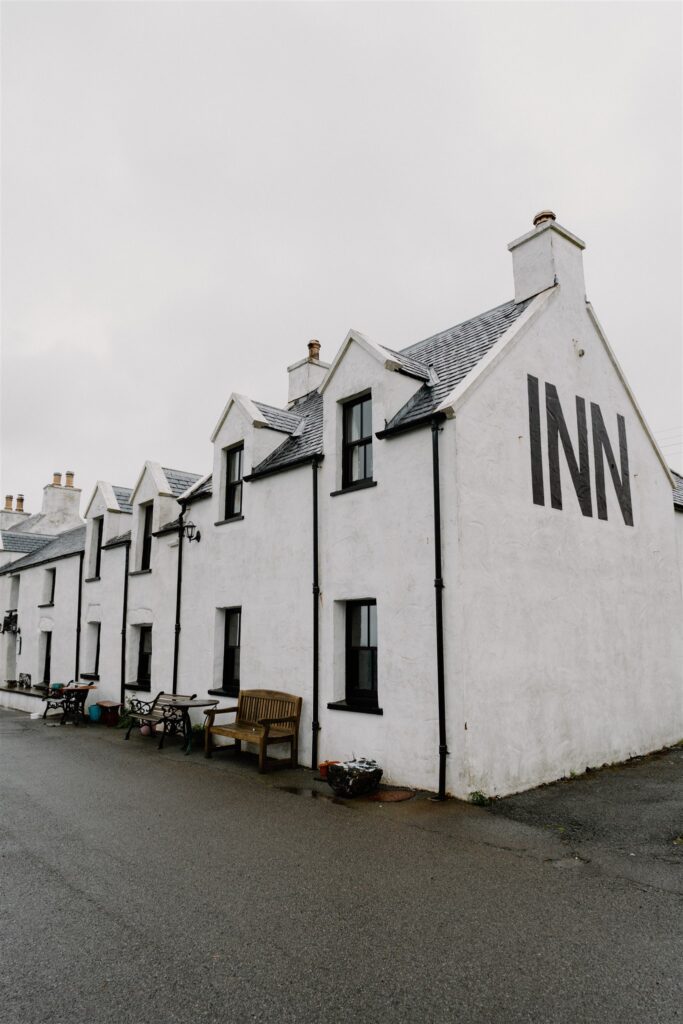
You arrive in Stein just before the road stops. A line of white buildings hugs the shoreline, dipping slightly towards the water. The Stein Inn is the anchor here—Skye’s oldest inn, known for its relaxed charm, fireside tables, and ever-changing selection of local ales and whiskies.
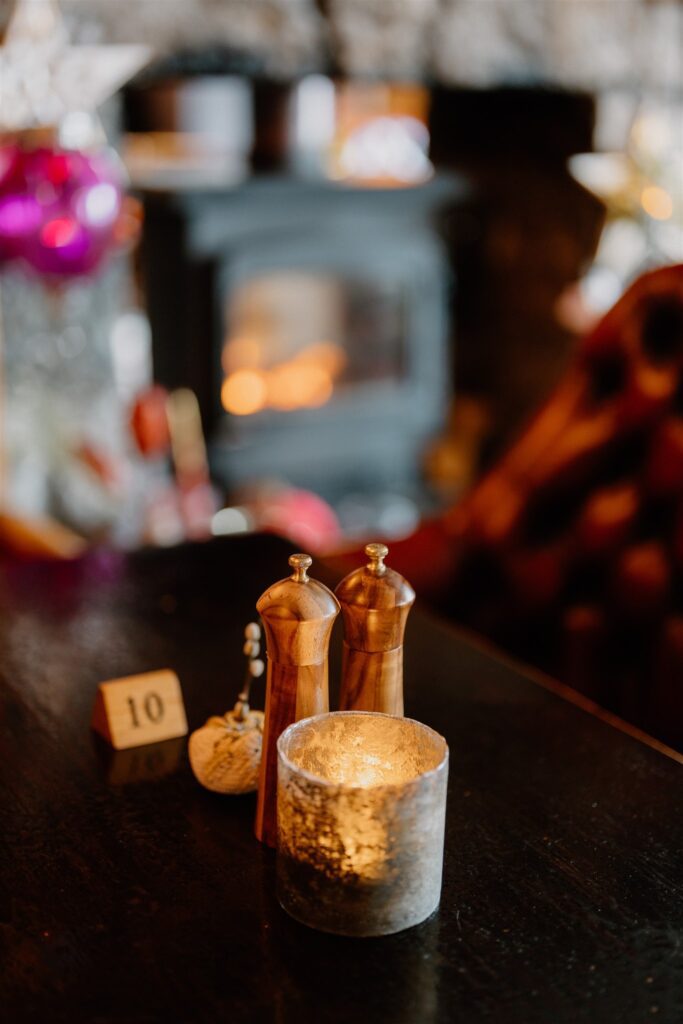
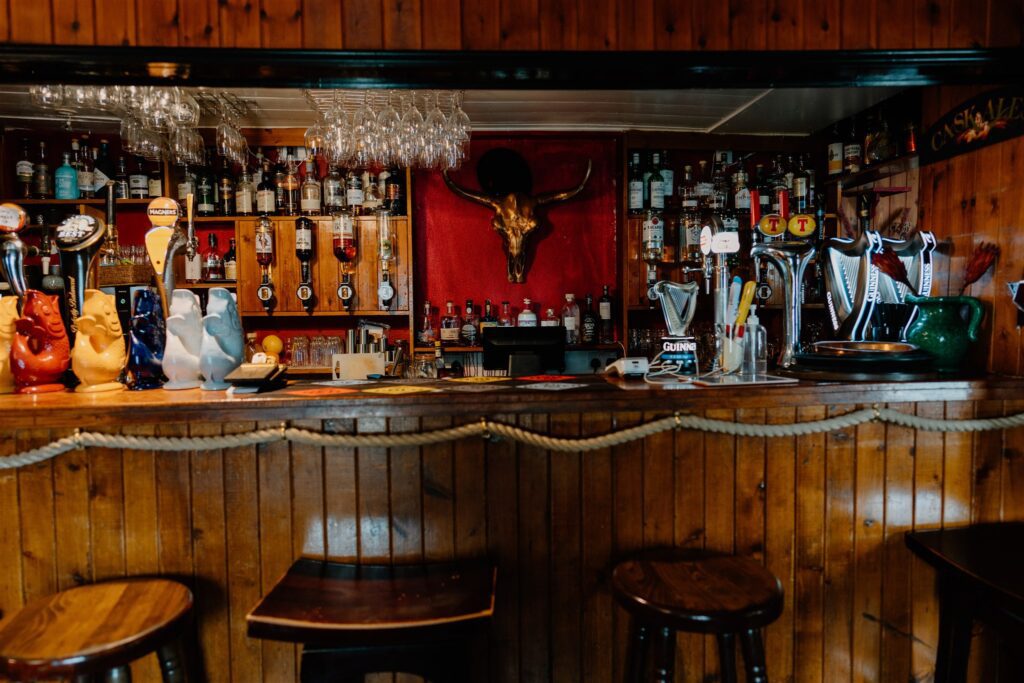
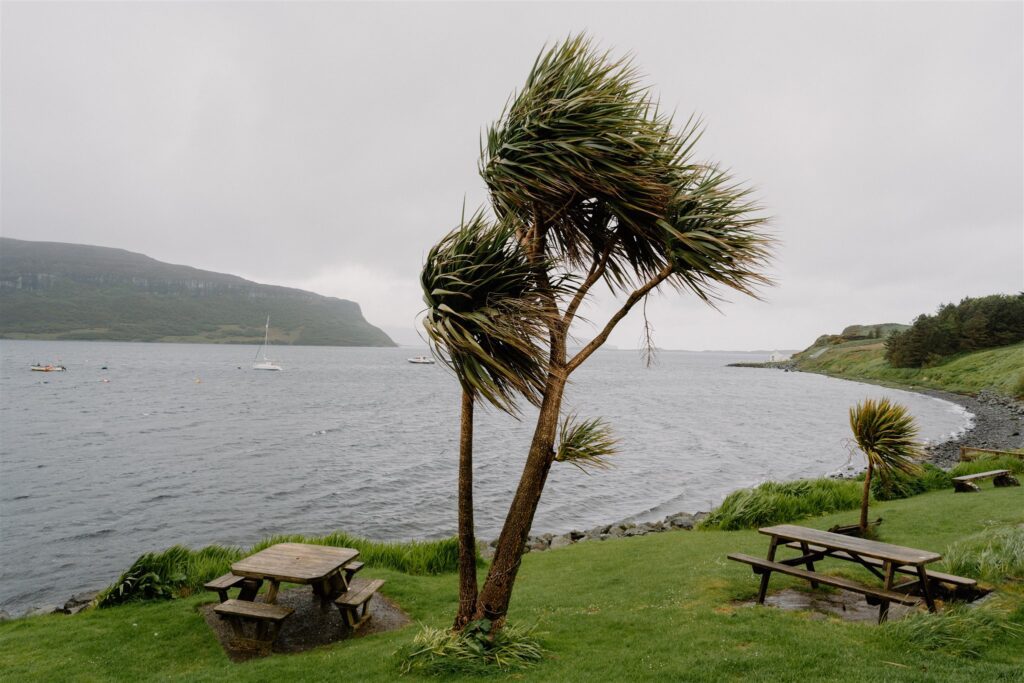
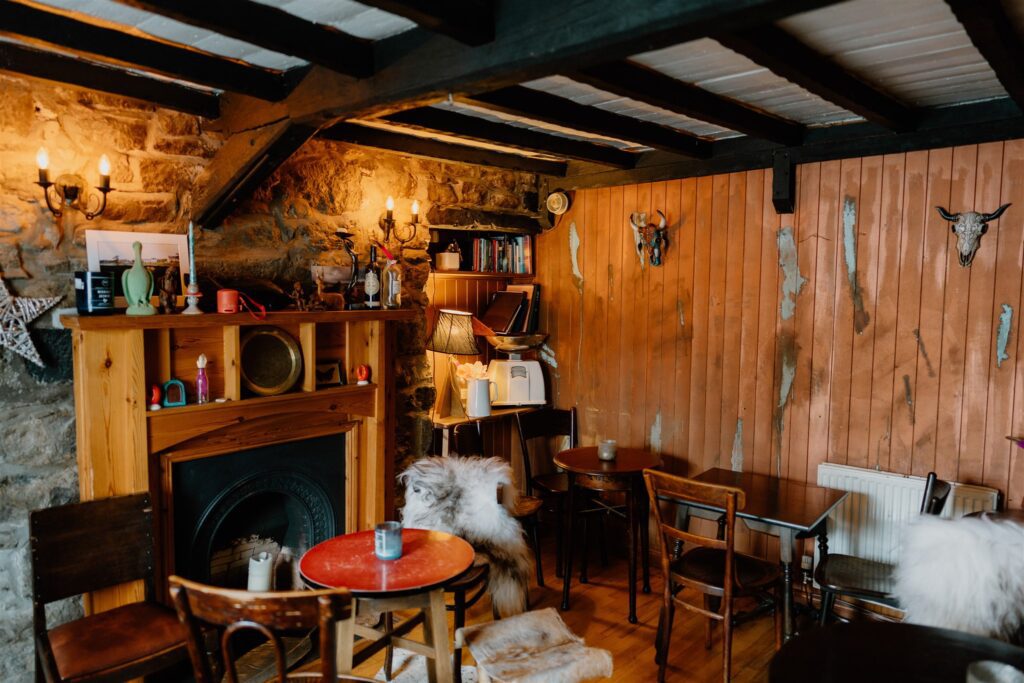
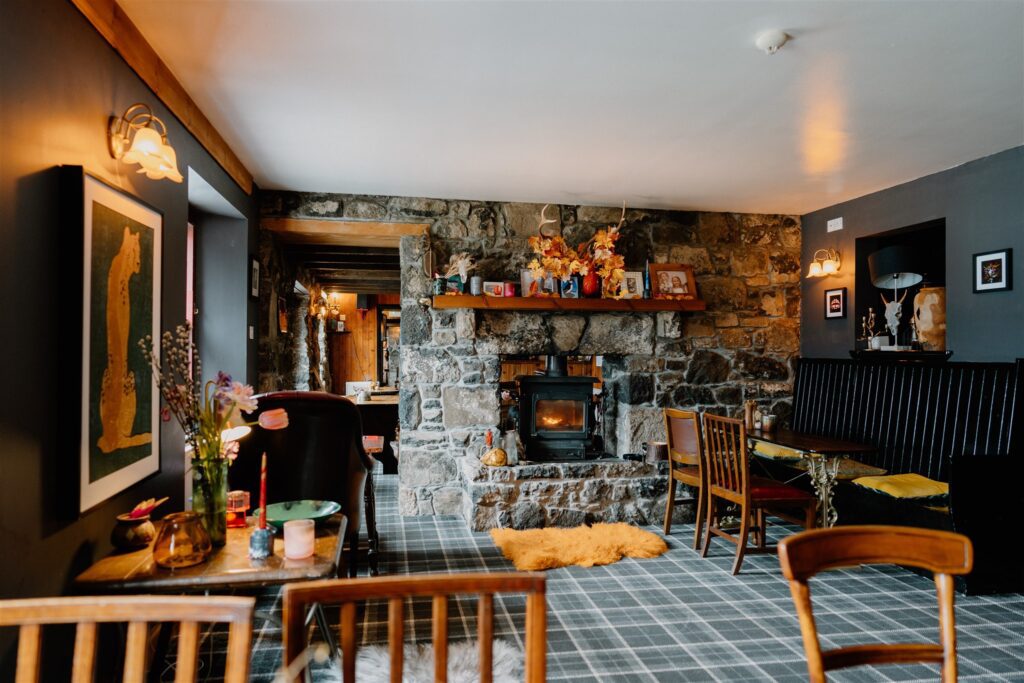
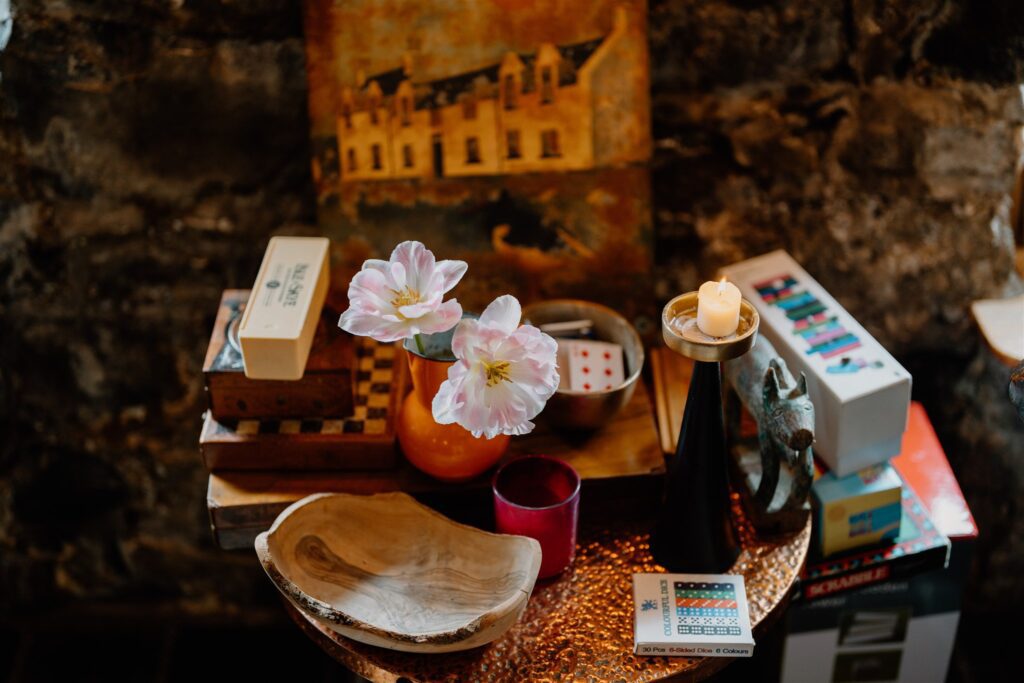
Inside, the pub is as it should be: wood-panelled, warm, and lived-in. Locals lean into conversations. Visitors trade glances over maps and guidebooks. There’s seafood on the blackboard, and the bar staff always seem to know what’s just come in. Take your pint to a bench outside if the weather allows. The loch is just metres away, its surface shifting with the wind or still as glass.
This is not a place to rush through. If you’ve done the route right, you’ll arrive here slightly windswept, a little salt-sprayed, and carrying the quiet of the peninsula with you. Order something from the board. Let the sun drop lower. And sit long enough to notice the light.


Add to a List
Name your list
Add to a trip
By continuing, you agree to our Terms of Service Read our Privacy Policy
Sign in
By continuing, you agree to our Terms of Service Read our Privacy Policy
Reset Password
By continuing, you agree to our Terms of Service Read our Privacy Policy


Sign in with Google
Sign in with Email