Loader

Old Town Walking Tour

Old Town Walking Tour

Embark on a captivating journey through Edinburgh's historic heart with our Old Town Walking Tour. Discover centuries of history as you explore iconic sites from the National Museum of Scotland to Edinburgh Castle. This tour offers a deep dive into the city's past, featuring tales of notable figures, eerie legends, and architectural marvels, each stop enriching your understanding of Scotland's capital.

1
2 mins

World-class exhibitions cover the whole breadth of Scottish history, from Picts and Vikings to Dolly the Sheep. Don’t miss the rooftop terrace for panoramic city views. 

2
1 min

Greyfriars Bobby

When Bobby’s master, John Gray, died in 1858, the Skye terrier stood vigil at Gray’s grave for the rest of his life. Locals ensured that ‘Edinburgh’s best friend’ was well cared for with blankets and food.

3
2 mins

Greyfriars Kirk

Over 100,000 people are buried here. Within is the old city wall, names which inspired Harry Potter characters including William McGonagall and Thomas Riddell, and iron ‘mortsafes’ for deterring body snatchers.

4
1 min

This square, like the Lawnmarket, is named for agricultural fairs. Criminals, rebels, and martyrs were executed here with ‘The Maiden’ guillotine. Catch a breathtaking view of Edinburgh Castle from the steps of The Vennel.

5
1 min

Vennel Steps

The Vennel gives one of the most breathtaking views of Edinburgh Castle and its precipitous rock. French for ‘little street between two buildings’, this stepped passageway connects the Grassmarket to Lauriston Place. Sections of two old walls, the Flodden Wall and Telfer Wall, are at the top.

6
3 mins

Bursting with colour, here you’ll find tweed suits, whisky, art shops, and fine dining. Victoria Street’s most notorious resident was the ‘Wizard of the West Bow’, executed for witchcraft in 1670.

7
2 mins

Writers' Museum

Edinburgh is a UNESCO City of Literature and the muse for countless writers, or ‘makars’, including Robert Louis Stevenson, Muriel Spark, Sir Walter Scott, and JK Rowling. Dwell on the quotes inscribed on the ground, and visit the Writers’ Museum for inspiration.

8
5 mins

Gladstone’s Land

This 17th century tenement building demonstrates domestic life in the bustling capital. Edinburgh had the world’s first ‘skyscrapers’ due to its medieval and Early Modern population density, and this is the best-preserved of them all. Climb the steps out front for the perfect picture of the Royal Mile.

9
1 min

The Heart of Midlothian

 A heart marks the site of the infamous Tolbooth Prison. It shares its name with Sir Walter Scott’s novel, The Heart of Midlothian, and the football club Heart of Midlothian F.C. Tempted to sit on it? Don’t – locals spit on it out of contempt for the injustices suffered here.

10
2 mins

St. Giles’ Cathedral

The beating heart of Edinburgh’s spiritual life, St Giles Cathedral has stood since around 1130 AD. John Knox, the firebrand head of the Protestant Reformation in Scotland, preached from its pulpit. Rooftop tours are available, and the ornate Thistle Chapel is not to be missed.

11
4 mins

Advocates Close

More than 100 ‘closes’ or alleyways extend off the Royal Mile, like ribs from a spine. This one was home to the Lord Advocate of Scotland in the early 18th century.

12
4 mins

Mercat Cross

The Mercat, or ‘market’, Cross was a focal point of city life. Criminals were publicly punished here, proclamations were read out by a town crier, and merchants thronged around it in wooden booths called ‘luckenbooths’. Scotland’s national animal, a unicorn (yes, really!) stands atop it, symbolising royal authority.

13
3 mins

Cockburn Street

Cockburn Street (pronounced co-burn) was built in the 1850s to give easy access to Waverley Station from the Royal Mile, and it still achieves this. Explore the picturesque Anchor Close and Fleshmarket Close, and look out for vintage painted shop signs like on the frontage of The Milkman café.

14
3 mins

The World’s End

This pub marks where city walls once divided Edinburgh from the Canongate, which were two separate burghs until 1851. Most Edinburgh residents did not regularly venture beyond the walls, so their world ended here. Being outside the walls was dangerous, and the Canongate was repeatedly burnt by invading English armies.

15
39 mins

John Knox House

This beautifully preserved tenement was home to John Knox while he preached fire and brimstone at St Giles’ Cathedral. The Scottish Storytelling Centre is a vital part of Edinburgh’s cultural scene with a year-round programme of events, from traditional storytelling evenings to book launches and creative workshops.

16

Chessells Court

Established c.1748, the peaceful Chessels Court was home to the infamous Deacon William Brodie. A cabinet maker and esteemed guild head, Brodie moonlighted as a robber. A botched heist resulted in his execution by hanging, after three attempts, in 1788. This two-faced character inspired Dr Jekyll and Mr Hyde.

17

Bakehouse Close

Aesthetically frozen in the 1700s , Bakehouse Close was home to publishers and brothels including ‘The Cock and Trumpet’, whose insignia is still visible on Acheson House. Outlander fans may recognise Bakehouse Close as the filming location for Alexander Malcolm’s print shop. You’d think Jamie would know better!

18

White Horse Close

Described as “a Hollywood dream of the 17th century”, White Horse Close appears frozen in time. It was actually remodelled in the 1960s with exaggerated baronial flourishes. Mary, Queen of Scots stabled her favourite white horse here. Hiding in plain sight, it’s a haven amid the bustle of the Canongate.

19

Visit Holyrood Palace

The name ‘Holyrood’ refers to the True Cross, the ‘Holy Rood’. Renaissance king James IV built the palace alongside the now-ruinous Holyrood Abbey. It was here that Mary, Queen of Scots’ Italian advisor, David Rizzio, was murdered before her eyes. It is now the official Edinburgh residence of the King.

20

Scottish Parliament Building

The Scottish Parliament was dissolved in 1707 with the Union of Parliaments. On 11 September 1997 a referendum saw 74.3% of voters agree to re-establish a Scottish Parliament. The new building opened in 2004 embodying a vision for a more progressive, forward-thinking Scotland. It is free for all to visit.

21

Holyrood Park and Arthur’s Seat

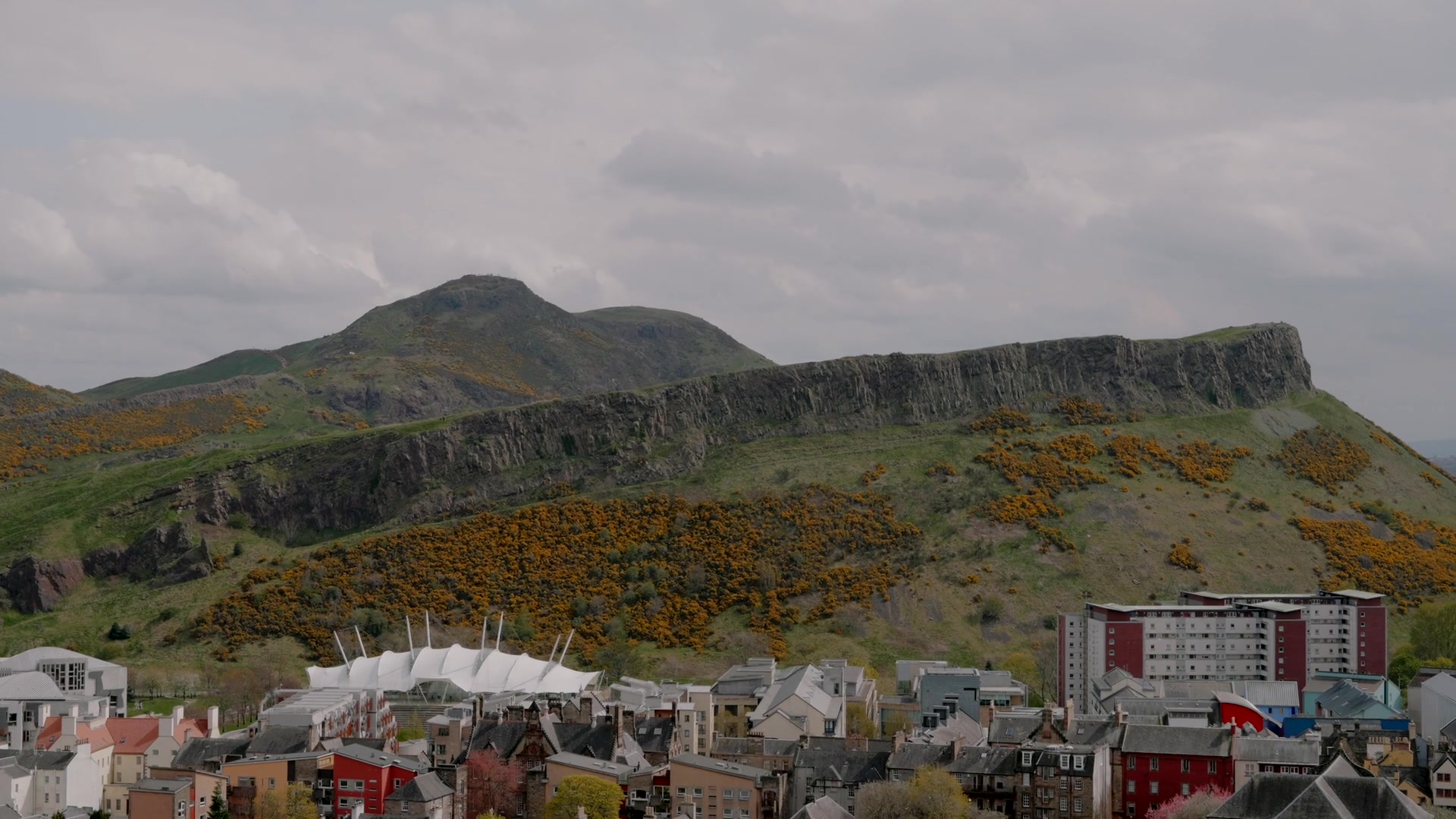
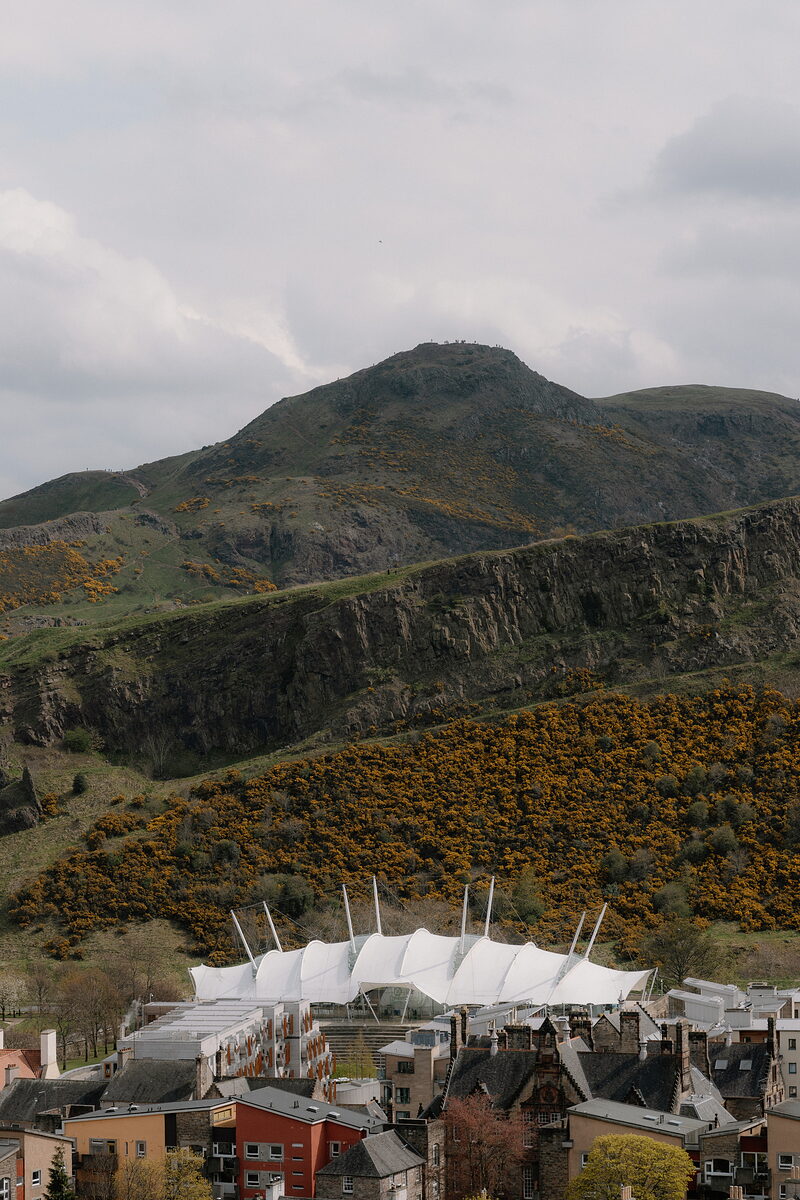
This vast park was used as royal hunting grounds. Lore says King Arthur sleeps within, hence ‘Arthur’s Seat’. The Hutton Section of the Salisbury Crags played a formative role in the science of geology. Climb to the ruins of St Anthony’s Chapel and admire wildlife around Duddingston and Dunsapie lochs.

Restaurants on the route

Cafes on the route

Shops on the route

Accommodation nearby

Attraction nearby