
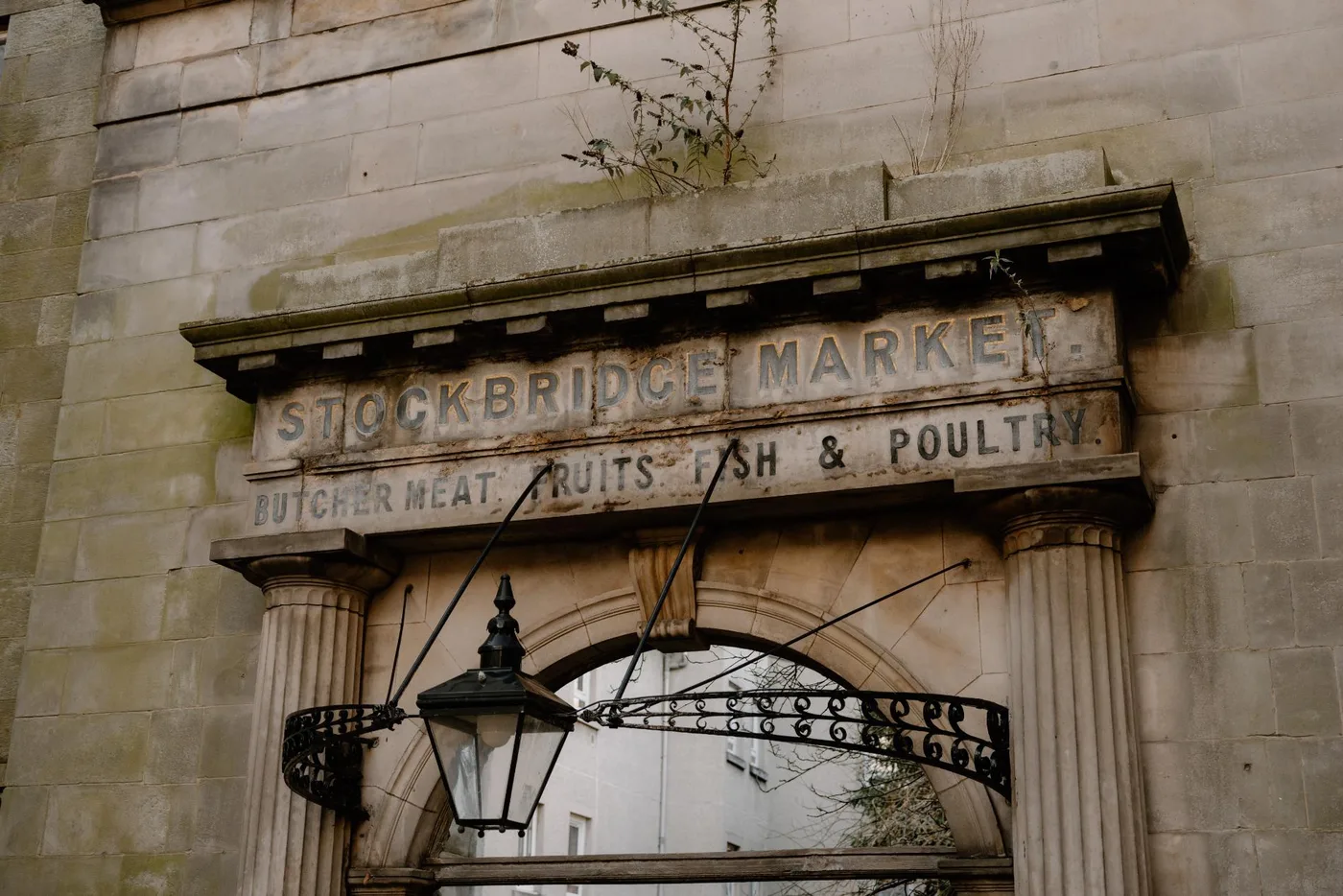
The History of Edinburgh’s Stockbridge
A mill village on the Water of Leith, and the bridge Henry Raeburn commissioned in 1801.
Words by Hidden Scotland
Walking through the Edinburgh suburb of Stockbridge today, you’re bound to sense the strong Bohemian atmosphere that has made the village a favourite haunt of artists, musicians and writers for the last 200 years. But the history of Stockbridge reaches far deeper into Scotland’s past, to a time when it was a small village quite remote from the medieval Old Town that compressed Edinburgh within the claustrophobic city walls. In fact, even its name, from the Old English stocc brycg meaning log bridge, hints at a history that stretches as far back as the Middle Ages.
-full-1749383090.jpg)
The satellite village consumed by the New Town
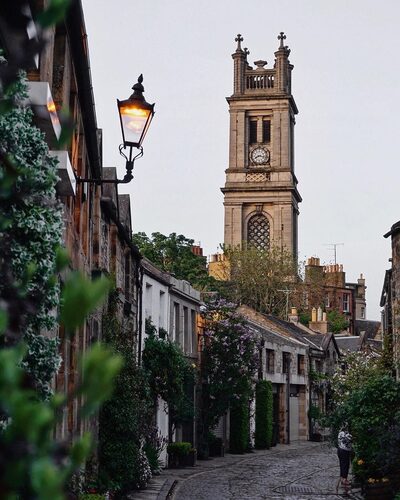
Until the mid-18th century, Stockbridge was a separate entity from Scotland’s capital city, just one of several isolated villages that formed a constellation around Edinburgh. But as the New Town expanded, encroaching northwards, each village dotted along the Water of Leith became absorbed into the growing city, and Stockbridge was no exception. In fact, Stockbridge fitted perfectly into the grand, visionary scheme created by the architects of the Scottish Enlightenment for an Edinburgh that was at the forefront of scientific thinking and artistic endeavour.
-full-1737113398.jpg)
The construction of the stone bridge over the Water of Leith in 1801 was more than a convenient way of connecting the two sides of the river; celebrated painter Henry Raeburn, who owned the adjoining estates of Deanhaugh and St Bernard’s, commissioned the bridge as a means of expanding the village to accommodate the growing artisan population.
Houses in the new development featured front gardens, unusual for the time but a characteristic straight out of James Craig’s creative urban scheme for the New Town.
Harnessing Stockbridge’s geology
In the 19th century, Stockbridge officially became part of Edinburgh. Due to the steep gorge in Stockbridge where the river is fast flowing, before the Industrial Revolution the village was the ideal location to harness the power of water to drive the wheels at the mills that were dotted along the river, from where cloth, flour and paper were produced. At Stockbridge, the mill-lade (the channel that transported water to more distant places) provided power for the mills at Canonmills and Greenland, as well as to the Stockbridge mill itself.
At the forefront of artistic endeavour
Throughout the 18th and 19th centuries, Stockbridge established itself as a favourite hangout for artists, poets, writers and musicians, whose presence helped to shape the village’s Bohemian culture that still survives today. Artisans also made Stockbridge the centre for their trade; today, the Stockbridge Colonies, the rows of terraced housing constructed for skilled workers in the second half of the 19th century, stand as a legacy to the growth of industry in Edinburgh. Artisan specialities still dominate the retail alleys and the weekly market, from cheese and coffee to soaps and jewellery, a lasting reminder of the rise in skilled craftsmanship that helped to establish Scotland’s capital as a thriving commercial centre.
Stay near The New Town
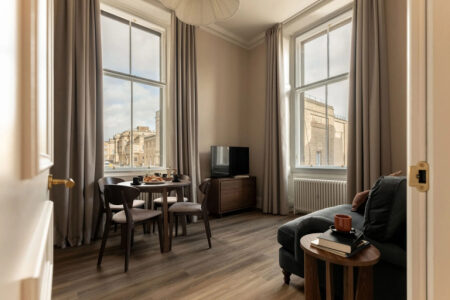
Our places to stay, nearest by road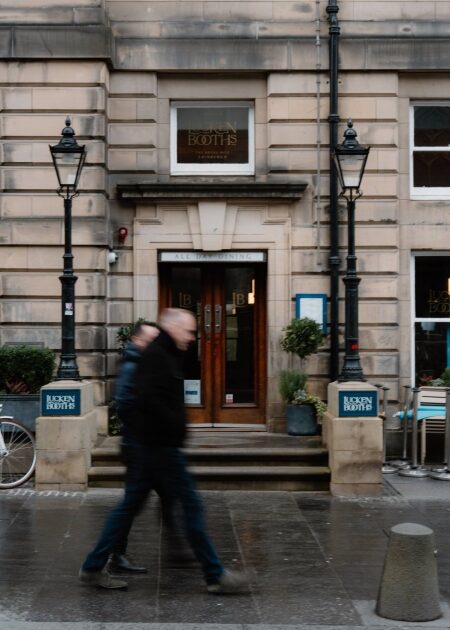

(1)-listable-card-1778448486.jpg)
 Out now
Twice a year, to your door
One hundred and sixty pages of Scotland, every photograph commissioned, every word written by someone who went. Members get both issues posted and everything on screen.

 The 900th Anniversary of Stirling
 Kilmartin Glen