
Saving Scotland’s Red Squirrels
I’m birdwatching near the shores of Loch Garten when there’s a scratchy, scrabbling sound coming from the tree above. I look up to see a flash of bright russet dash along a branch, then stop, poised and alert. I raise my binoculars and – I must confess – squeal out loud. And not only do I squeal, which is unacceptable behaviour among serious wildlife watchers, I use a word which is pretty much taboo. It would make Chris Packham wince. My excuse is that close-up in the circle of my vision is the most exquisite and endearing sight: a delicate little orange face adorned with comically long ears; an agile body, still but quivering; a fluffy orange tail almost the same size as the body; and those eyes! Bright and black, framed by a pale circle as if painted with the most delicate brush. "Oh!" I say. "That’s so cute!”
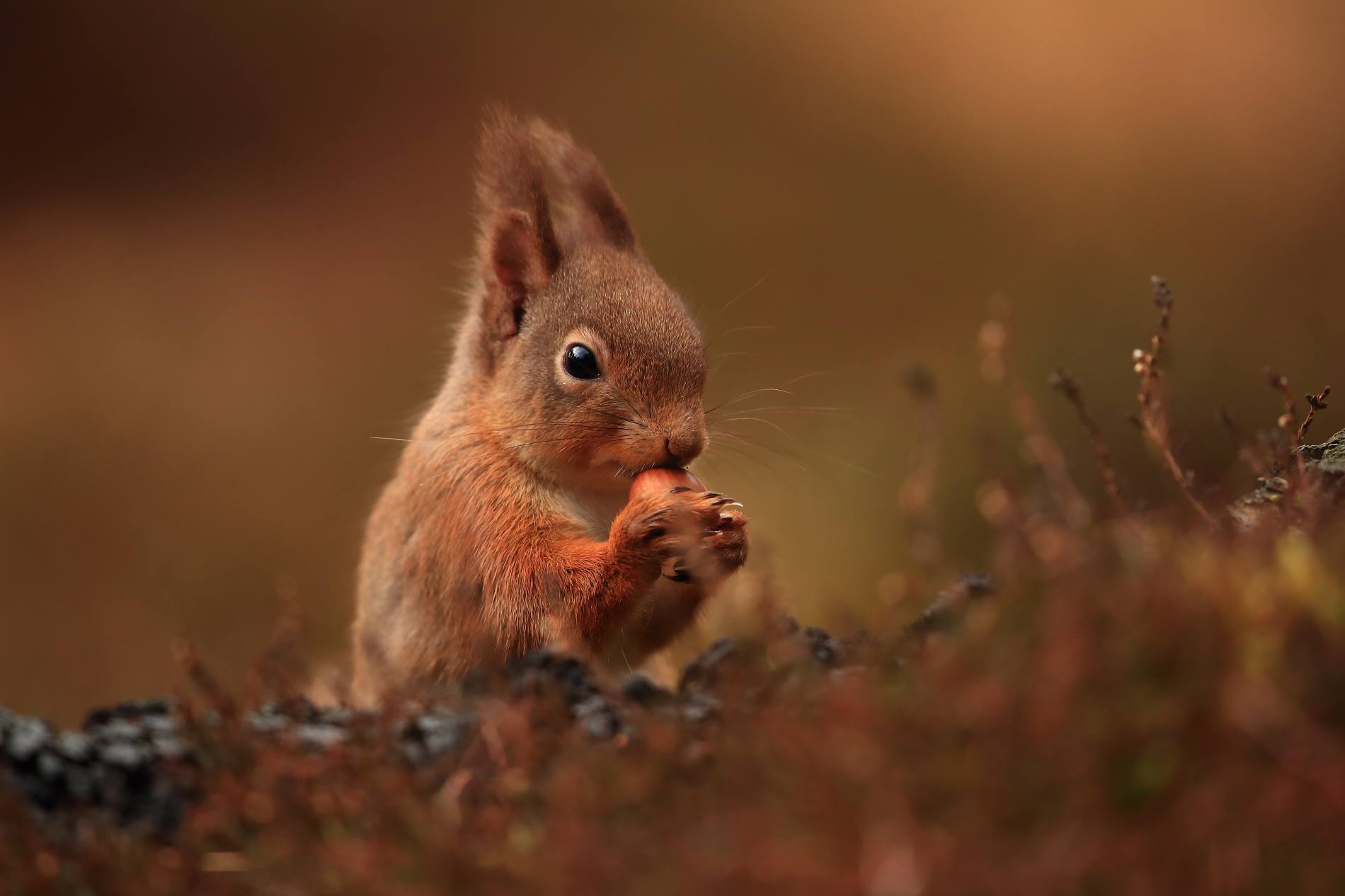
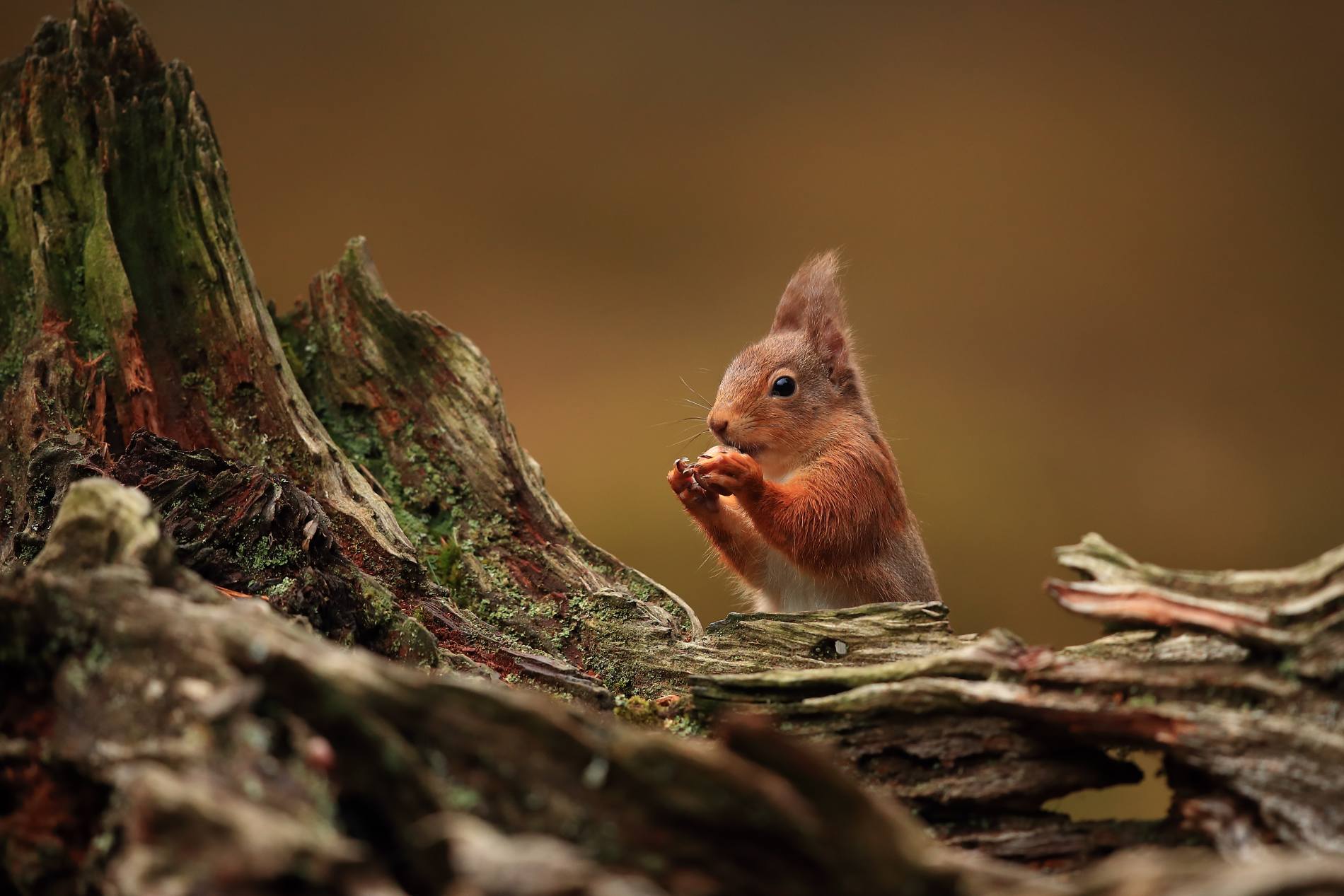
The writer Gavin Maxwell described otters as ‘an animal that might have been specifically designed to please a child’ and the same could be said of red squirrels, another iconic attraction among Scotland’s native mammals. With their bright eyes, beautiful colouring and cuddly-toy furriness, they bring out the child in us all. And with their sleek forms and impressive leaps between trees, red squirrels are sheer joy to watch.
A partnership project, Saving Scotland’s Red Squirrels (SSRS), has been working hard throughout the country to protect red squirrels and ensure that the delightful sight of them is one that future generations can enjoy. Reds were once the only squirrel species in Scotland and could be found in woodlands throughout the country. In Victorian times, grey squirrels were brought from America to stately homes in England and quickly spread into the wild. Wherever greys encroached, the reds declined or disappeared altogether.
‘While factors such as habitat loss play a role, greys are by far the main threat to red squirrels,’ explains SSRS Communications and Engagement Officer Molly Martin. ‘They endanger reds in two ways – firstly greys are bigger animals that can live at higher population densities, so they soon out-compete reds for available food sources. They can also eat foods such as acorns earlier in the season. Secondly, greys carry a virus, squirrel pox, which doesn’t harm them but is fatal and highly contagious to red squirrels.’
One SSRS priority area is defending the “Highland Line” – the geographical fault line that forms the natural boundary between the lowlands and highlands of Scotland. North of this is a red squirrel stronghold. SSRS aims to prevent incursions from greys and, in time, move the battle line south to claim more of Scotland as red territory.
Another project is in and around Aberdeen, where SSRS is working to eradicate an ‘island population’ of grey squirrels.
‘Back in 1971, around 20 grey squirrels were transported to a zoo in Aberdeen and escaped,’ says Molly. ‘By the 2000s, the population of greys had taken over and the reds were disappearing.
Now, after 15 years of conservation work, greys are only occasionally sighted, and reds are reclaiming the space – even in the city’s parks and gardens.’
The public can contribute, Molly continues, by sending in squirrel sightings of both greys and reds. This helps the project keep an up-to-date map of their presence throughout Scotland. Telling the difference between the species isn’t always straightforward, due to colour variation in both – greys can have a ginger-tinge, and reds may be grey-ish and quite dark. The best indicators are the small, delicate face and body of the reds, while greys are bigger and chunkier. Greys have white tips on their tail fur, forming a halo of white; but it is only the reds that have the distinctive ear tufts, which are especially prominent in autumn and winter. (And, whisper it, reds are simply cuter!)
So being squirrel-aware – looking up and listening out – can help to protect a native species, as well as enhancing a walk in the woodlands.
Molly shares some spotting tips:
‘There are many wildlife reserves around with hides and feeders, so these make great viewing spots. If you’re not in a hide, sitting quietly for 20 minutes is a good timeframe for any wildlife to forget that you’re there or glean that you’re not a threat. Understanding habitat is key to any wildlife watching. Reds like to feed on seeds from coniferous trees such as pine and spruce, so look for chewed cones, which are stripped and nibbled. They’ll also feed in mixed broadleaf woodland on hazel and beech nuts, leaving cracked shells lying around.’ ‘While reds are active year-round, they’ll hunker down and are unlikely to be out in wet, wild weather,’ says Molly. ‘Autumn is the best time to see them, when squirrels are most active with so many seeds and nuts available. They’ll also be looking their best! Reds shed their coats in spring and summer but regrow rich red fur in autumn. And they look particularly stunning among the colours of surrounding woodland.’
Submit your sightings to:
scottishsquirrels.org.uk/squirrel-sightings/
Words: Anna Levin // Photography: Bret Charman
Next Article
Promoted Post
The Scullery
Tucked away in the heart of the Yarrow Valley, The Scullery is a one-bedroom boutique hideaway, eloquently designed for comfort, calm, and connection. Whether you’re escaping the city or craving a countryside reset, this is your space to slow down and just be.
-listable-carousel-1769292770.jpg)
-full-1746451521.jpg)






 Sign in with Google
 Sign in with Email