
Beaver, is that you?
C.S. Lewis’ Narnia cemented beavers in the popular imagination but hunting removed Europe’s largest rodent from Scotland centuries ago. Their story didn’t end there. Nature’s so-called ecosystem engineers are back, in carefully increasing numbers, and the latest release in the Cairngorms National Park has shown early success.
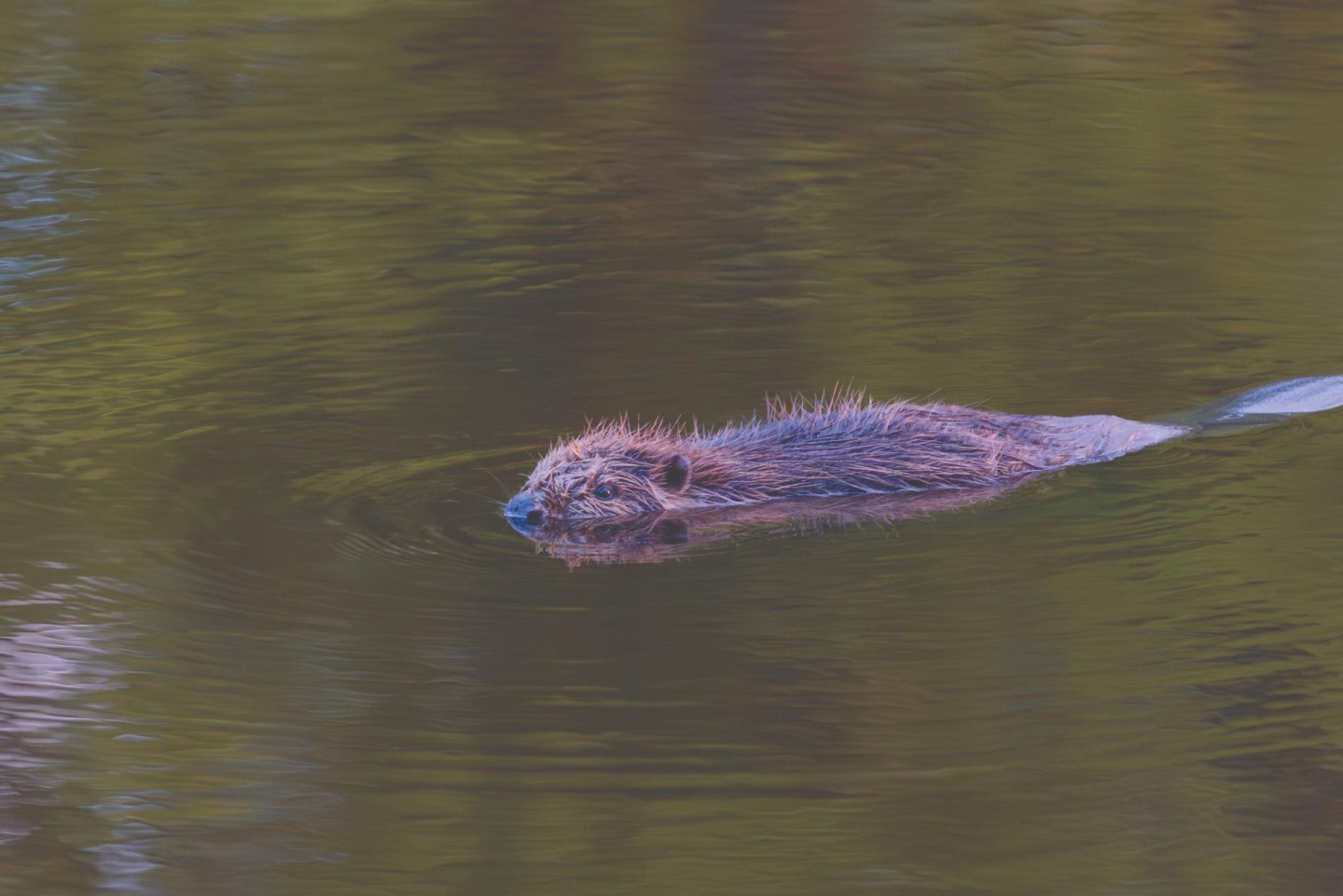
When I think of beavers, I think of marmots, and that’s probably because I’ve spotted lots of the Alpine variety during European holidays, and none of their Rodentia relations back home in Scotland. They’re not just part of the same mammal family; they look similar, sharing brown furry bodies (beaver comes from the Indo-European root for brown). But beavers are bigger, with adults the length and weight of a small Labrador, and they have waterproof coats and webbed feet. And while marmots are found in high numbers across the European Alps, the Latin-named Castor fiber, the Eurasian beaver, which has slight anatomical and chromosomal differences to its American counterpart, is only just starting to gain ground again in Scotland after centuries of extinction due to hunting for fur, meat and a secretion called ‘castoreum’, believed to have medicinal benefits.
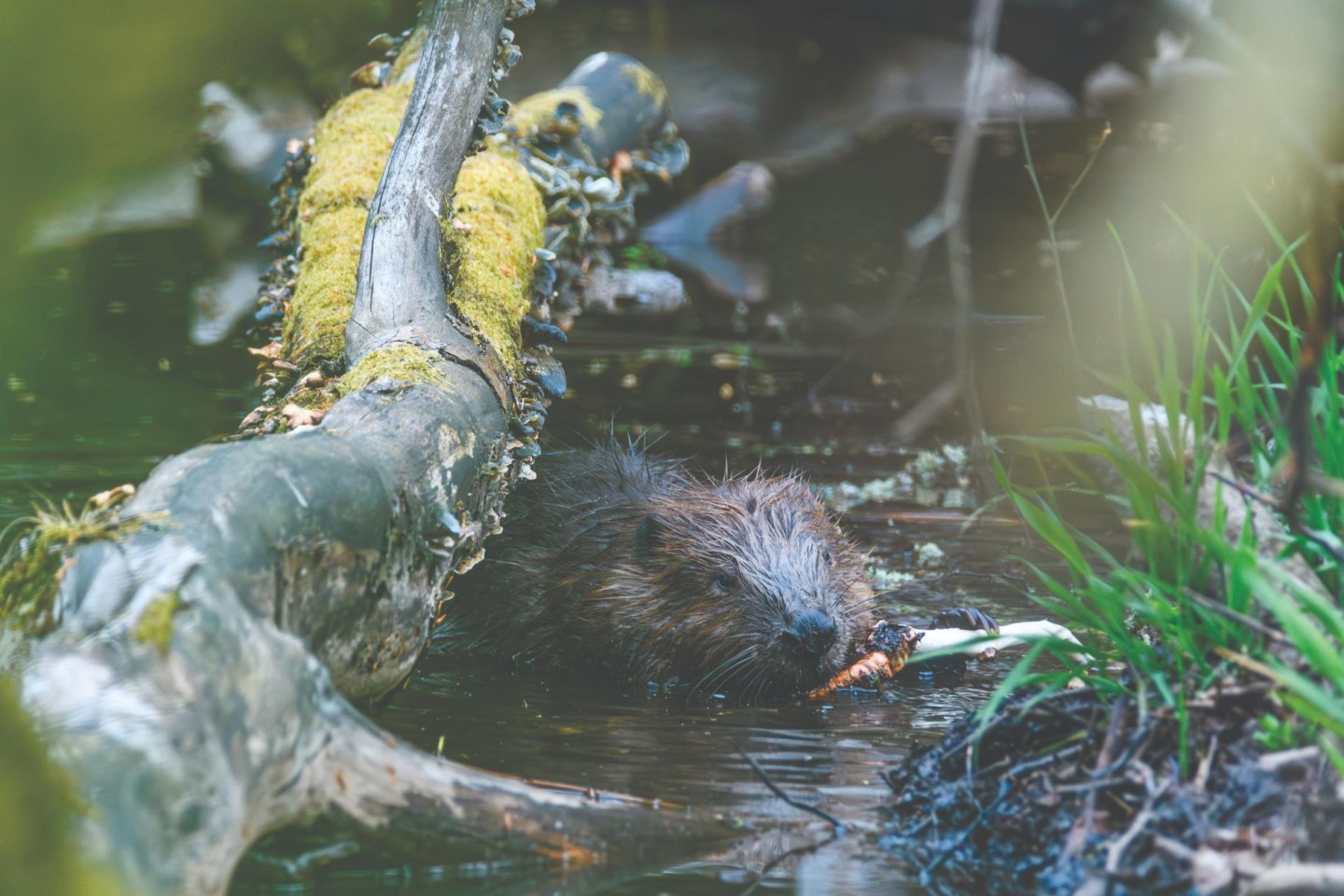
My next thought will be Mr. and Mrs. Beaver in C.S. Lewis’ The Lion, the Witch and the Wardrobe, but the less said about that the better. For one thing, unlike the author’s depiction, beavers don’t eat fish. They favour the cellulose underneath the bark of the trees they fell with their long orange teeth, so-coloured due to their iron content. They live in wetlands, where they use their flat, scaly tails as rudders when swimming and their human-like forepaws to pat mud into place on their dams; and they build lodges out of woody debris for sleeping, keeping warm and raising their kits.
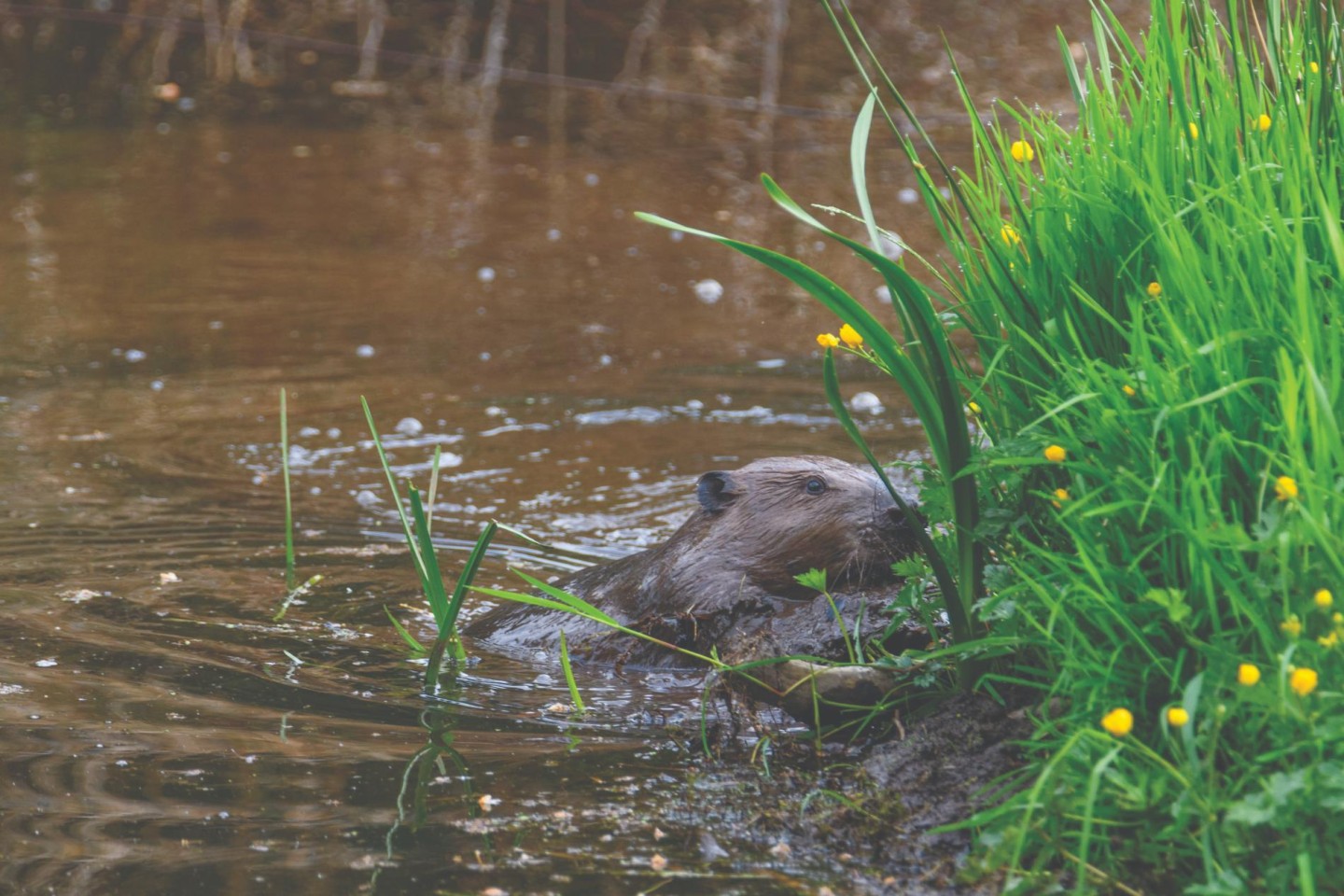
What’s perhaps most remarkable about beavers – making them unique among non-human mammals – is their ability to modify their habitat to suit their needs, and in turn benefit ours. The dams they build out of wood, mud and stones on narrow, slow-flowing streams – sort of like a moat around a castle – protects them from predators and makes them feel safe. These battlements also work to restore wetlands areas. Jonathan Willet, Beaver Project Manager in the Cairngorms National Park, explains that in the past, all rivers that weren’t too wide would have been “beavered” into a complex series of wetlands. “In the Cairngorms National Park, much of our river catchment restoration work centres around restoring wetland habitats, creating native woodland, re-naturalising our rivers – all work that beavers have the ability to do naturally,” he says.
Jonathan was involved in the latest beaver release in the Upper Spey catchment area, where late last year, NatureScot approved Cairngorms National Park’s application, supported by the nature restoration charity Beaver Trust, to translocate a pair of Eurasian beavers on Rothiemurchus – incidentally, close to the location of the beaver dam for the BBC’s 1988 The Chronicles of Narnia – followed by a further pair on land owned by Wildland Cairngorms Ltd. “It was simply amazing to see beavers walking out of their carrying crates and swimming off into their new surroundings,” remembers Jonathan. Three weeks after the Cairngorms release, he says, the beavers are eating more bark and are felling trees up to ten centimetres in diameter, as well as feeding on reeds, water horsetails and sedges. Thanks to trail cameras on the release sites, the team can make sure the beavers are in good condition and behaving normally.
Jonathan says that the date of the last beaver in Scotland is possibly the 1700s in Lochaber, where it was named Dobhran Los Leathan (broad-tailed otter). Beavers wouldn’t return to Scottish shores until the early 2000s, due to a series of escapes and possible deliberate releases from private enclosures. The first government-authorised release project was the Scottish Beaver Trial, between 2009 and 2014. Since then, there have been further releases at the trial site in Knapdale, mid-Argyll, to reinforce the population, while unlicensed releases or escapes on the east coast have established wild populations in the Tay and Beauly catchments in Perthshire and north of Inverness, according to Beaver Trust. Beavers have also been reintroduced by the RSPB and Forestry Land Scotland, and in 2022, NatureScot estimated Scotland’s current beaver population to be around 1,500 individuals.
In 2021, Tom Bowser, who runs Argaty Red Kites in Perthshire, became the first private landowner since the Scottish Beaver Trial to introduce beavers to his farm. “The project has been a huge success,” he says. “Most of the beavers we relocated have stayed on their release sites and have set about changing the landscape. They have stored water during heatwave summers. They have stopped most of the flood problems that we used to have.”
Not all farmers are in favour of beaver reintroduction, however. According to the NFU, concerns range from dams undermining riverbanks to impeding farmland drainage, and waterlogged fields becoming unsuitable for grazing or cropping. But Beaver Trust maintains that before release, thorough precautions are taken. Where beavers are released, explains Jonathan, sites are carefully checked for suitability. “We hope to show that a rapid response using appropriate mitigation will allow beavers and people to live together harmoniously,” he says.
Jonathan feels “intensely privileged” to be part of returning beavers to Scotland. “The impact of beavers as THE ‘ecosystem engineer’ will be of great benefit to biodiversity in our lochs, wetlands and river systems,” he says. It’s perhaps fitting that Narnia’s Mr. and Mrs. Beaver are said to symbolise guardian angels as they guide the Pevensies to safety. And perhaps since the beaver was given European Protected Species status in Scotland in 2019, we can show them kindness in return.
More information www.beavertrust.org
words // Emily Rose Mawson - photography // Karen Miller
How to spot beavers
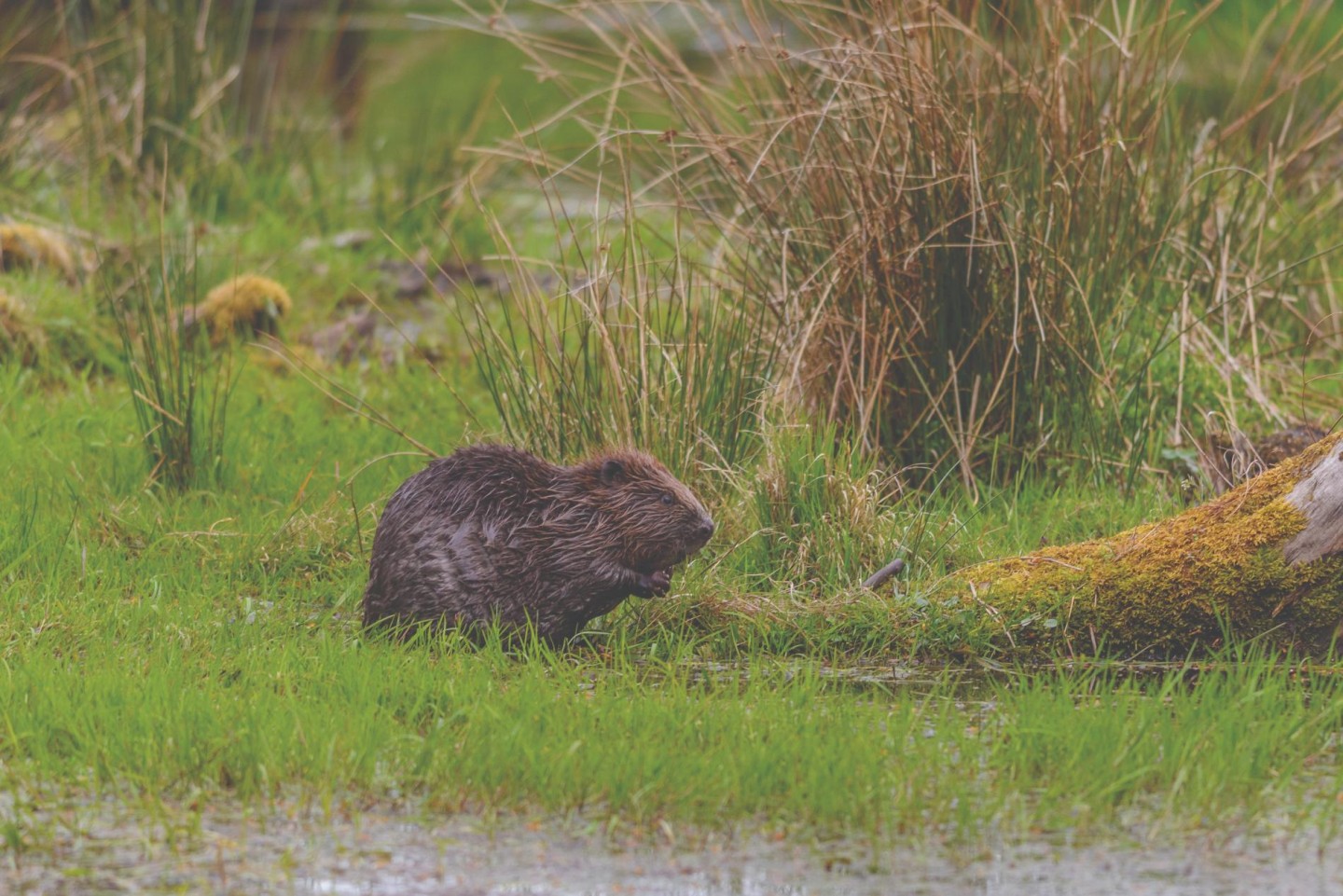
Beavers are shy and spotting them requires patience. They don’t hibernate, but summer is the best time for sightings, as they are most active between 7pm and 7am. Look for signs such as ripples on the water, felled trees, stripped branches and beaver canals. Booking a guided tour can guarantee a sighting. At Argaty Red Kites (www.argatyredkites.co.uk) in Doune, Tom Bowser runs beaver tours in the spring and summer. “We chuck the beavers carrots from time to time,” he says, “so we know they’ll be on the far side of the pond and we can watch them from a safe distance.” Perthshire Wildlife offers beaver safaris (www. perthshirewildlife.co.uk) and Argyll Beaver Centre runs weekly beaver walks between March and September. There is also a Beaver Detective Trail around Loch Dubh, or you could spot beavers by canoe with Beyond Adventure on the River Tay (www.beyondaventure.co.uk).

Promoted Post
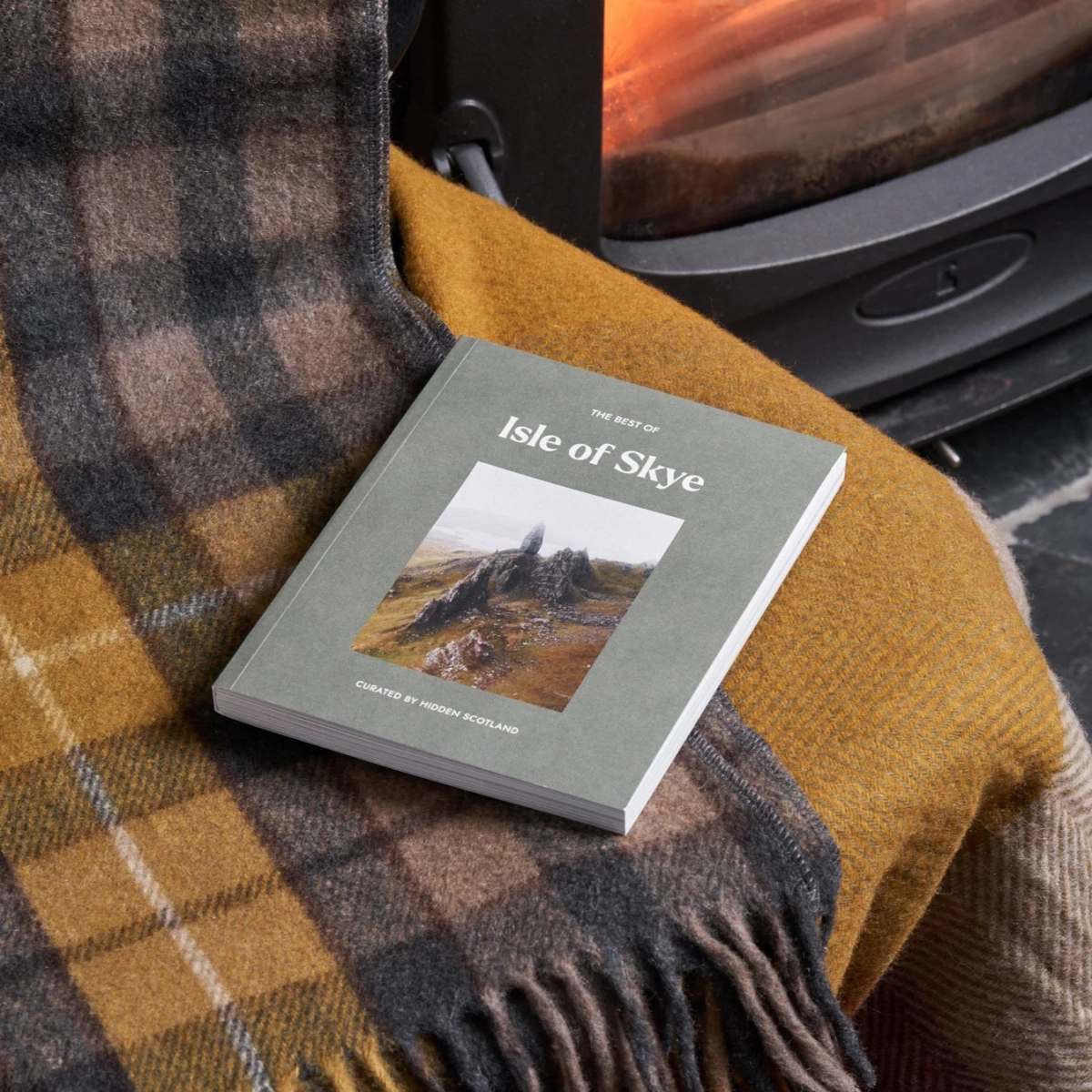
The Best of Skye Guidebook
The Isle of Skye is a place of rare wonder, a wildlife-rich spread of bays, peaks, cliffs and ridges. The views are big, but the prospect of adventure is even bigger. We hope this curated Hidden Scotland guide – which takes in everything from the best walks to the finest restaurants – helps you to have your own unforgettable island escape.
-full-1746451521.jpg)







 Sign in with Google
 Sign in with Email