
Ghosts of the Mountains
Capturing the elusive beauty of the mountain hare
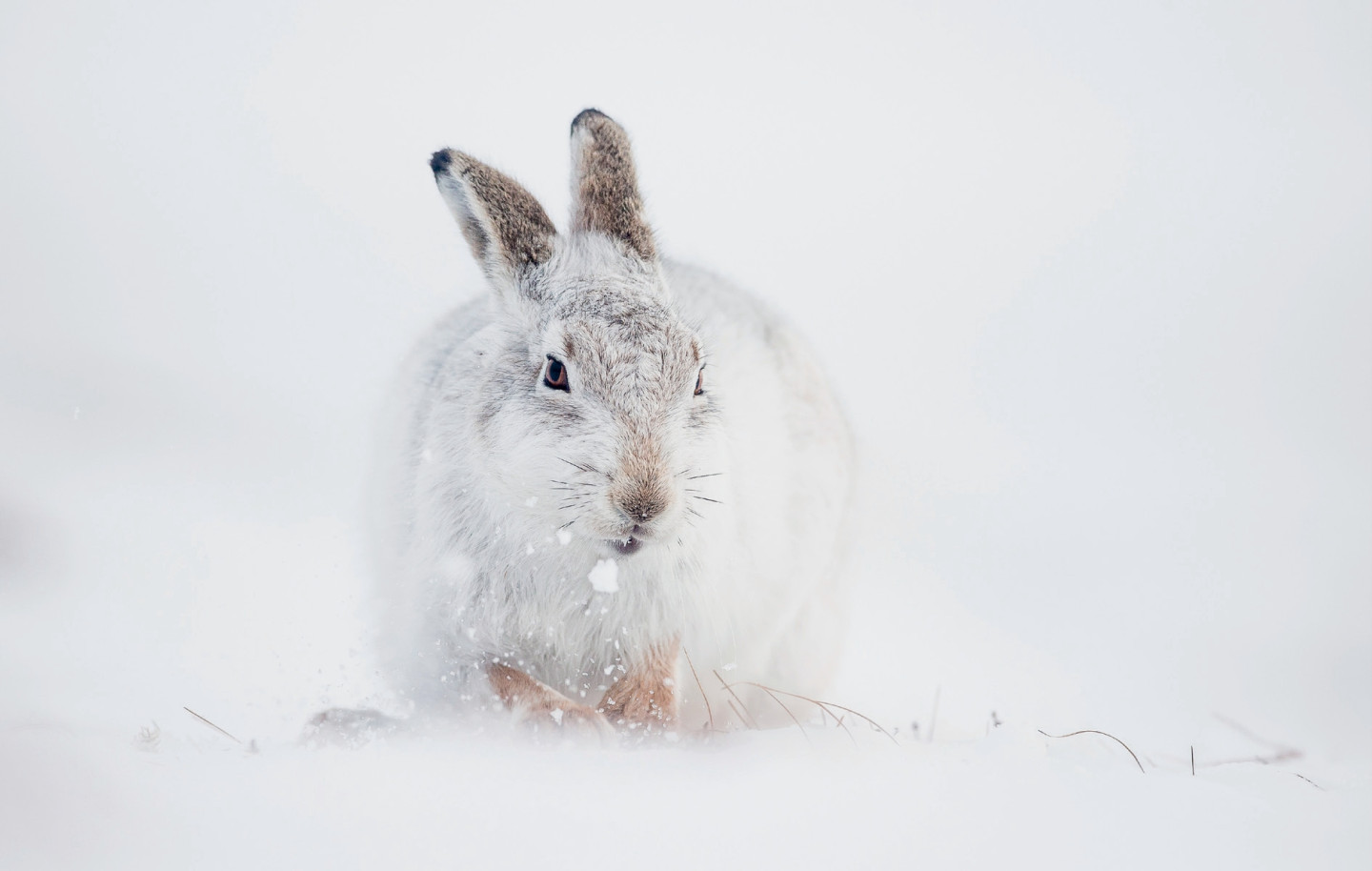
Each winter I make the annual pilgrimage north to explore the Scottish mountains. The weather can be bleak at this time of year and the upland habitat can be a hostile place. As dawn breaks I slowly make my way up the mountain, one foot in front of the other, climbing to the higher slopes. The wind howls, buffering my every step, seemingly pushing me two steps back for every one forward. The deep, fresh snow makes it difficult to follow the track, and snow in the air drives into your face like tiny needles. This is not for everyone and at times I do question my own sanity. But ultimately this is what I love; the sense of adventure, combining my two passions in life - hiking and photography - in search of the elusive mountain hare. Throughout this piece, I will talk about my experiences photographing mountain hares, and how working with the hares in the winter presents its own set of challenges, not only for the animals, who each day have to face a battle for survival on these desolate hills, but also for anyone wanting to get a glimpse of these elusive creatures. Whilst the hares have evolved over millennia to deal with these conditions, we as mere city-dwelling humans do not fare quite as well. Unlike their lowland cousins the brown hare, mountain hares are native to the UK and since the last ice age have retreated to the high hills and mountains of Scotland. A small population can also be found in the Peak District, which was introduced from Scottish stock for ‘sporting pursuits’.
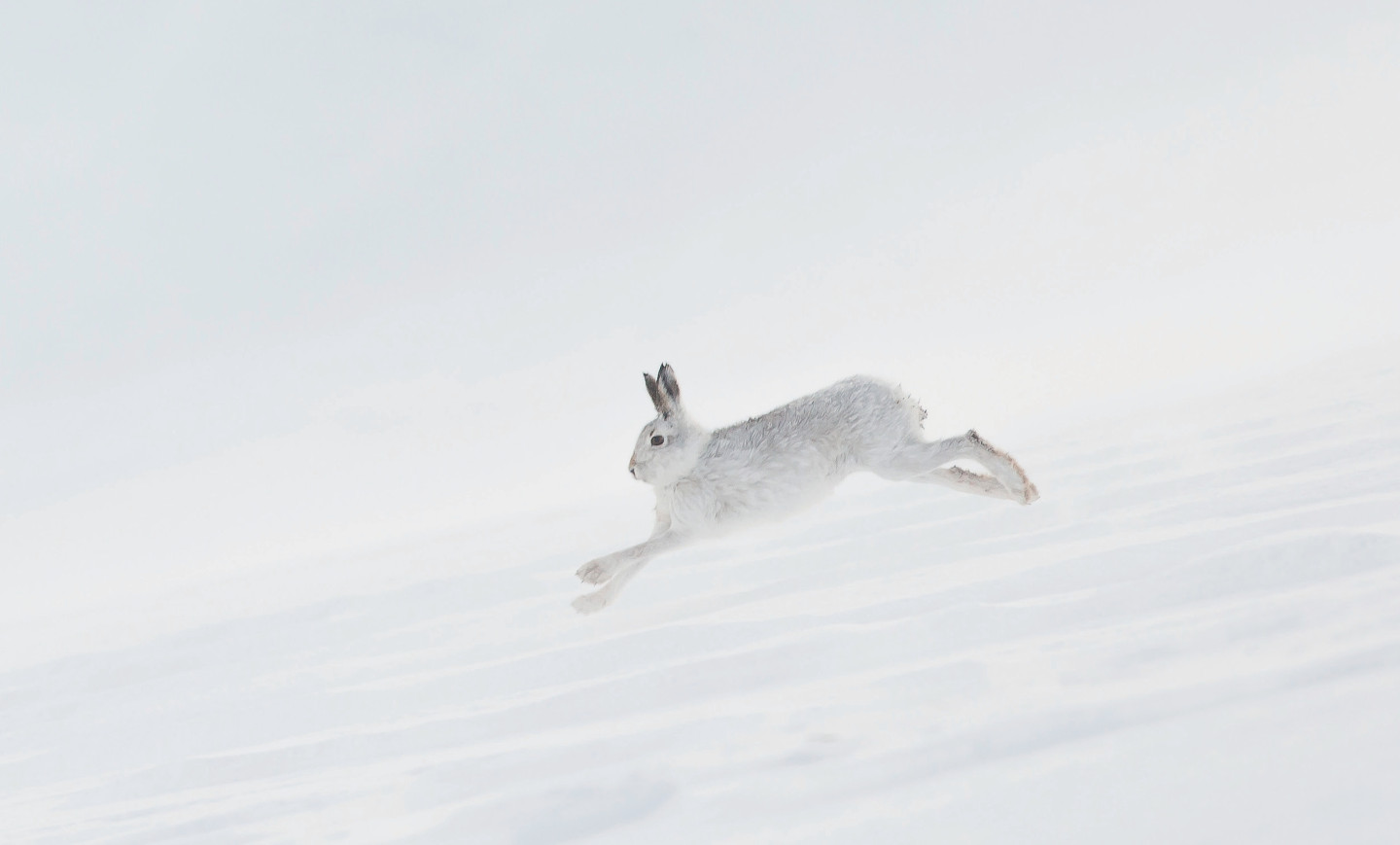
Only by getting to know your subject are images like the ones showcased alongside this article possible. Mountain hares each have their own traits, including varying in shyness and tolerance of humans. The vast majority of hares will run at first sight of you, making it difficult to get any images. If approached respectfully, a small number of individuals may allow you to get in range. Gaining the trust of these individuals requires patience and a slow, careful approach. Normally, this involves spotting a hare at a distance, letting them see you, and simply waiting. For me, this normally involves eating a sandwich or two after a tough slog up the hill. Every second you spend letting the hare become accustomed to your presence is a second well spent. You should never try to sneak up on a hare from behind or by using an obstacle as this will almost certainly end in failure. To get within range you need to gain the complete trust of the individual. This is only earned by carefully approaching over an extended period of time, not startling it at the last minute. One of the telltale signs of how comfortable a hare is in any given situation is its ears. A relaxed hare’s ears will be flat. If you are approaching a hare and its head suddenly lifts up and the ears raise, stop in your tracks and don’t move. If you are lucky, the hare will settle back down in its form and, after a while, you may have the opportunity to begin the approach again. Other signs a hare isn’t comfortable include if it begins to twitch, tightening its muscles or turning its head, looking for possible escape routes. Please, don’t forget the welfare of the hare is paramount and takes precedence over any images. During the cold winter months, hares need to conserve as much energy as possible and shouldn’t be disturbed. Ideally, you want to leave the hare where you have found it.
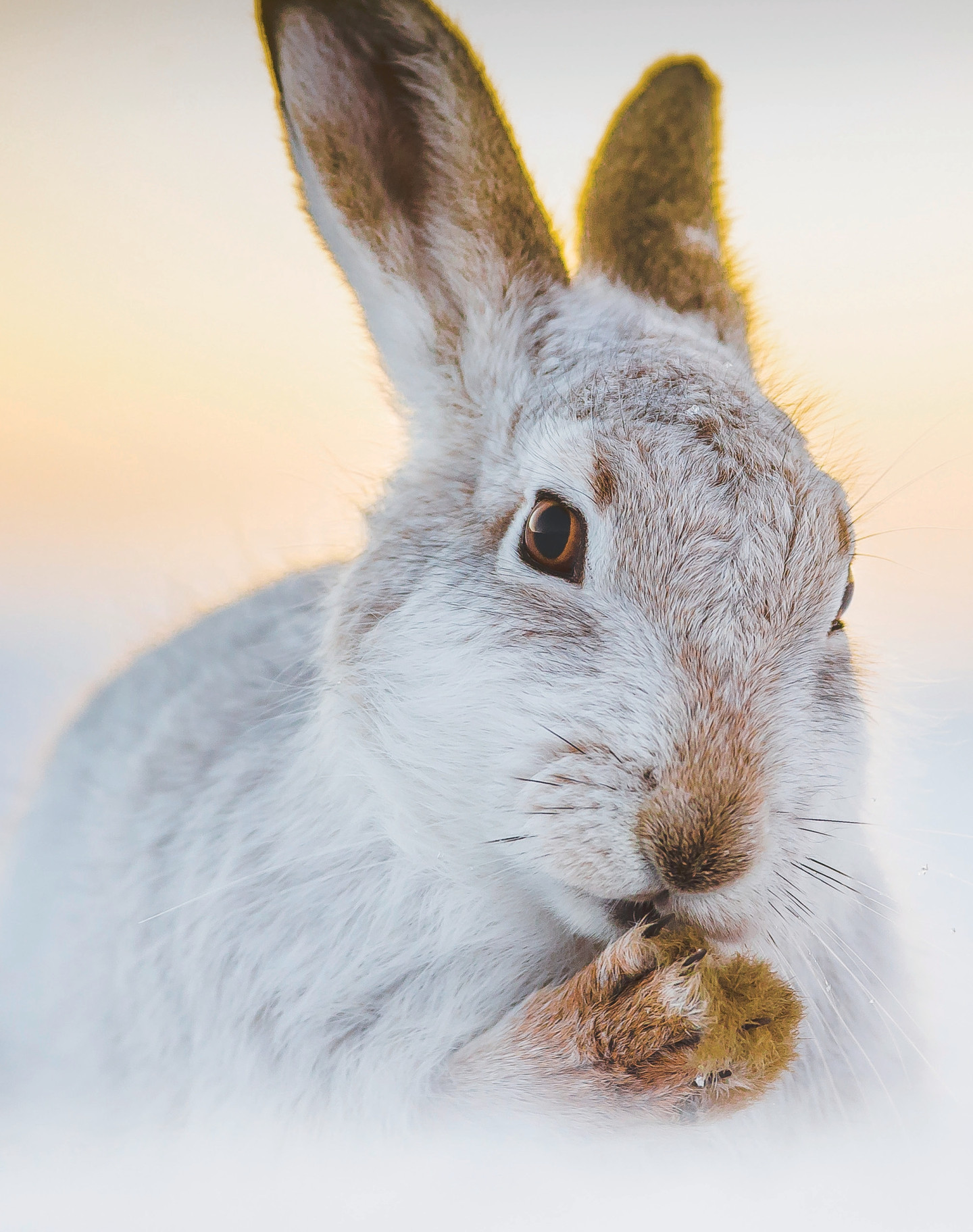
“Photographing hares in the winter is a magical experience. The fresh covering of snow often transforms mundane scenes into a magical winter wonderland.”
known as ‘forms’. They are creatures of habit and regularly use the same forms. On high mountain plateaus, these can often be found under the rim on overhangs in the heather or behind large boulders. Simply, anywhere the hares can seek shelter from the elements. Every photographer has their own way of working. I like to work on long-term photographic projects with a small number of individual species. One of these is the mountain hare. If you don’t shoot what you love or what you are passionate about, your best work will struggle to shine through. Dedicating time to an individual species will allow you to learn the intricate behavioural patterns and in time capture rarely seen behaviour. Luck is a massive part of photography, but I’ve always been a big advocate of making your own luck. The more time you spend in the field the luckier you will get.
Photographing hares in the winter is a magical experience. The fresh covering of snow often transforms mundane scenes into a magical winter wonderland. But these beautiful scenes present a new set of problems for us, from getting to the location in often treacherous conditions to staying warm and keeping kit dry. When working with the hares, it’s slightly counter to what you would normally want: the worse the weather is, the better. When I say worse, I mean sleet, snow and wind. These conditions are key components for producing unique imagery of the hares. The downside of this is keeping yourself warm and your camera gear dry.
Mountain hares can be found on high, exposed hillsides, where you are exposed to the full brunt of a weather system. Once you have found a mountain hare, photographing it is a relatively slow-paced pursuit. It will spend long periods of the day resting and doing very little. This means you also have to sit for long periods waiting for that brief burst of activity. Lying on the cold ground in freezing windchill for hours becomes a war of attrition between you and the elements, praying for that brief moment of the animal’s behaviour. Just to keep the blood flowing I’ve often crawled a bit further away from the hare and started press-ups or another form of physical exercise to keep warm. The best advice I can give for keeping warm is layering. Start cold when you are hiking up, and just keep adding layers as you get colder. Don’t be fooled into thinking that, just because you are warm at the bottom, you will be okay at the summit. It’s always best to bring excess clothing. Keeping yourself warm is vital in these conditions, not only for your own safety but for producing unique images. Once you get cold and wet, well in my case your thoughts may turn to that hot cup of tea by the fire rather than the photography at hand. The longer you can stay out while others are heading home, the more chance you have of capturing that once in a lifetime image.
While seeing mountain hares in their natural environment is always a privilege, the Scottish mountains are a hostile place during winter, with dangers such as hypothermia, falling or becoming disoriented in a snow storm to name a few. There have been a few situations where I’ve been on the hill and the weather has closed in causing a total white out, which if you don’t know the area can be very scary. Please be careful when exploring the mountains in winter; these are not places to take lightly.
This is just a small taste of the adventure that awaits. For the past four years I have taken people into the hills to see these amazing animals. If you would like to join me this winter, please check out further details on my website: www.kevinmorgans.com
words & photography // Kevin Morgans
Promoted Post
The Scullery
Tucked away in the heart of the Yarrow Valley, The Scullery is a one-bedroom boutique hideaway, eloquently designed for comfort, calm, and connection. Whether you’re escaping the city or craving a countryside reset, this is your space to slow down and just be.
-listable-carousel-1769292770.jpg)
-full-1746451521.jpg)






 Sign in with Google
 Sign in with Email