Wild at Heart
Yoga in a yurt, forest bathing, cold-water therapy and whittling in the woods; wild wellness is a growing trend. Being surrounded by nature is now widely acknowledged to have healing powers and across the Highlands there are wild spaces where you can retreat from the world and experience its restorative effects. The wild is calling.

Myrtle, buttercup, bluebell, eyebright, hawthorn; the bedrooms at Kinloch Lodge in a remote corner of Sutherland are all named after native plants and wildflowers - which should come as little surprise. Everything connected to Wildland revolves around nature - including the retreats launching this autumn.
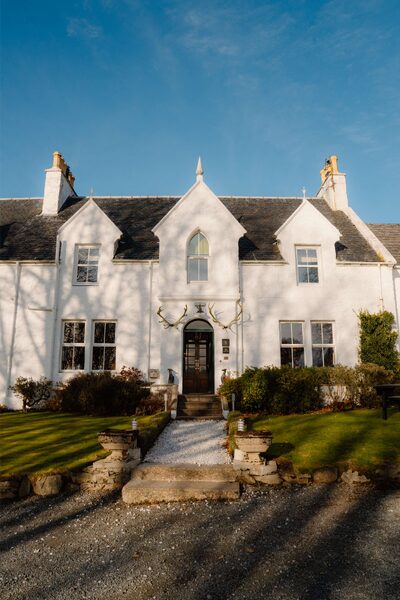
Founded by Danish businessman, Anders Holch Povlsen, whose vast estates stretch from Scotland’s north coast to the Cairngorms, Wildland is an organisation with a much-publicised 200-year vision to protect and sustainably manage Scotland’s wilderness. One of the most far-reaching rewilding – or, as they now refer to it, rehabilitation – programmes they are restoring huge swathes of peatland and replanting native woodland – 5.5 million trees.
Hand in hand with the conservation projects is a reimagining of Highland hospitality. Povlsen’s wife, Anne Storm Pedersen, and Swiss interior designer, Ruth Kramer have transformed the estates’ lodges, farmhouses and cottages into a portfolio of exquisite, pared-back hideaways, their unique blend of Danish design and Scottish heritage dubbed Scandi-Scot.
Wildland is reshaping both the landscape in the Highlands and the way we experience it. Guests are encouraged to reconnect to the wilderness, hiking with rangers and learning more about the history of the land, the flora and fauna. There are bikes for exploring winding forest tracks, secret wild swimming spots in icy lochs and rivers and trekking into the hills with Highland ponies on the itinerary. And now, this autumn, at one of their most farflung properties, once the Duke of Sutherland’s old hunting lodge, they are hosting their first ‘Call of the Wild’ retreats.
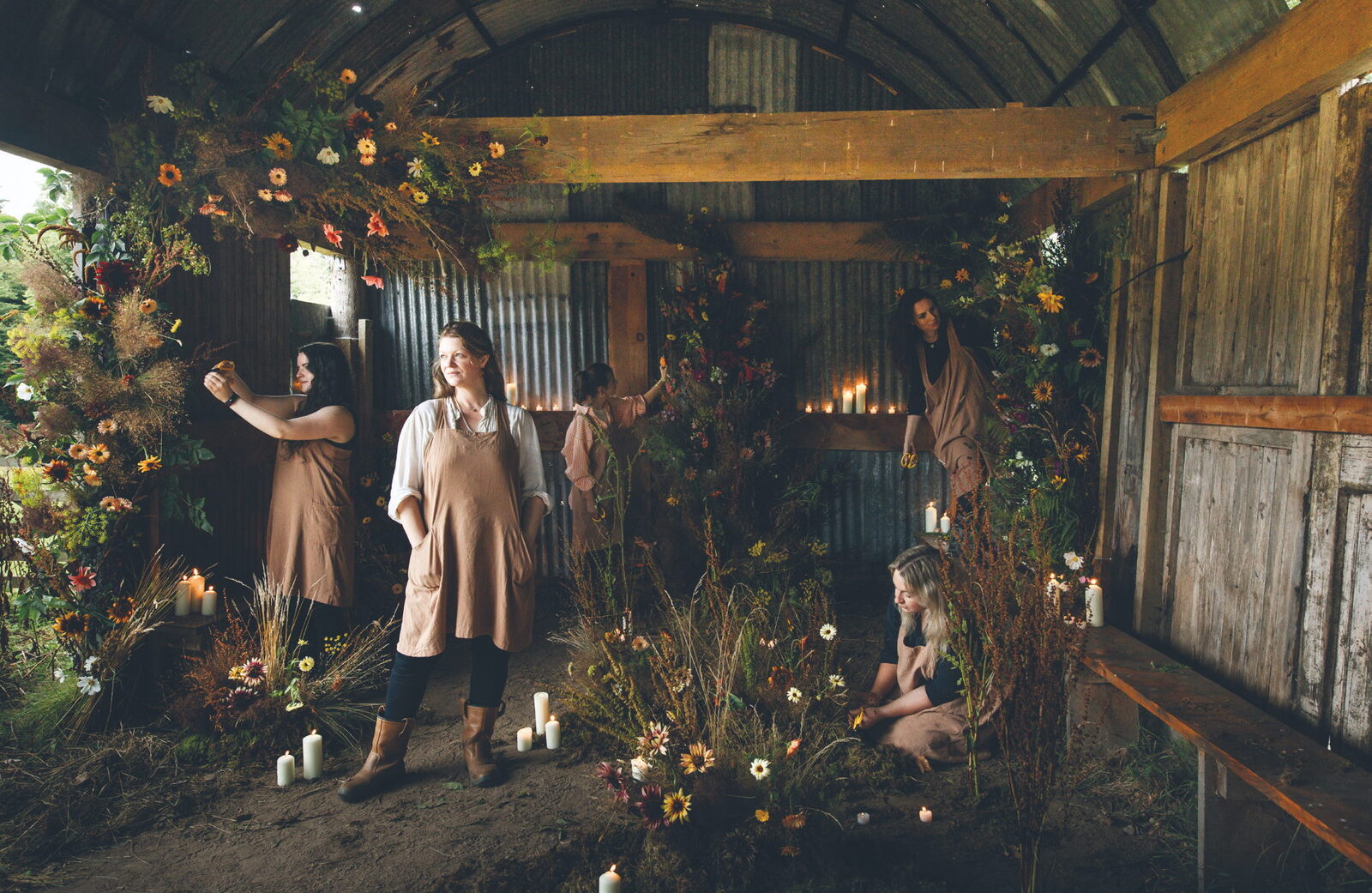
The carefully curated programme of workshops and activities has been put together with the help of innovative floral artist, Julia Kirk, the founder of Wild Gorse.
“We are increasingly disconnected from the natural world,” she tells me as we chat in her studio on the Belladrum estate. “What we need is a rewilding of ourselves. We are not in nature - we are nature.”
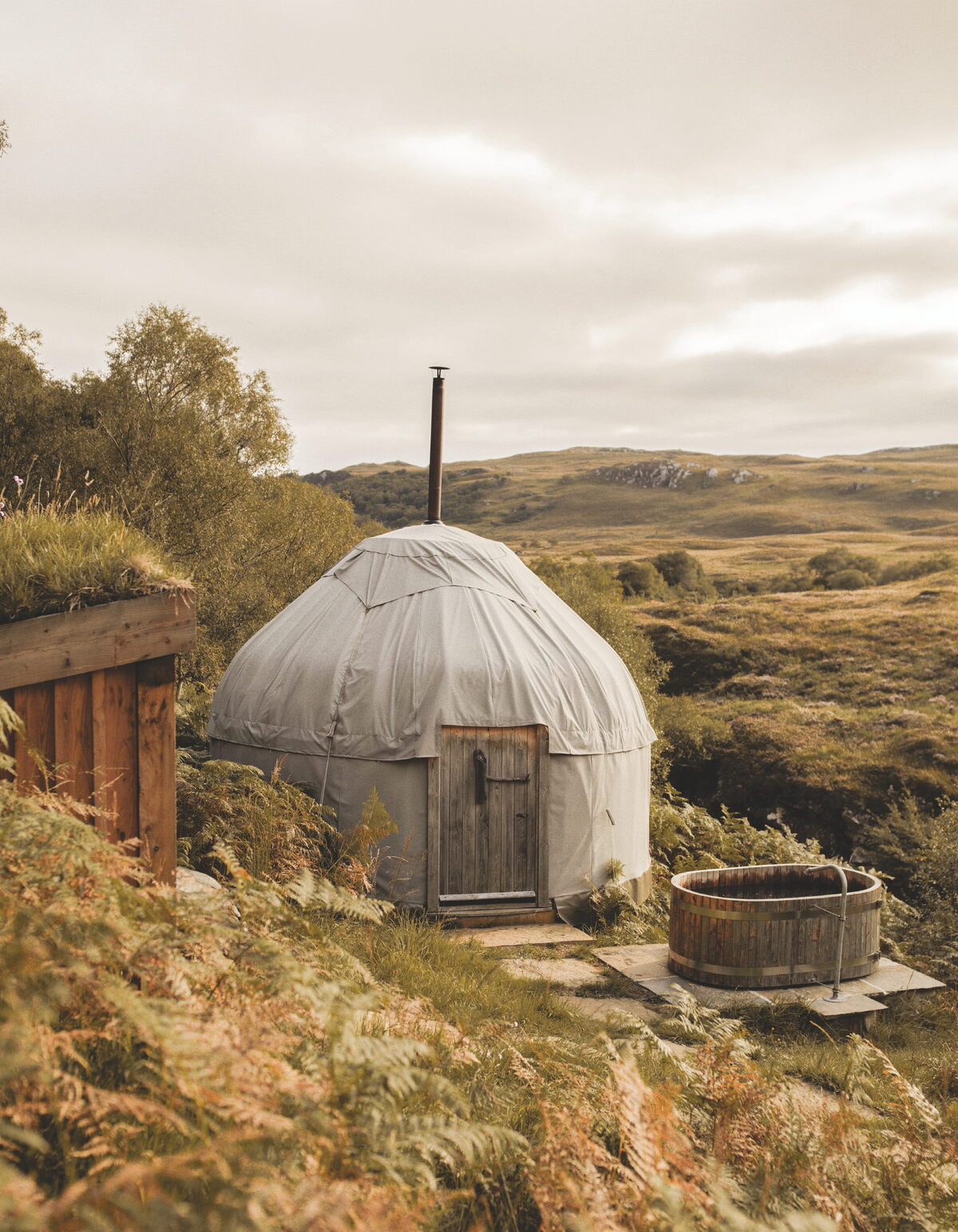
The first retreat is “an earthy exploration and immersion in nature,” the experiences designed to engage all the senses and forge a conscious connection to the natural world, from botanical dyeing to landscape sculpture and fungi foraging. Using natural clay from the estate the group will create a work with a local ceramicist, fired on site, and left to decompose back into the land. Hiking to a remote bothy, foraging for twigs, branches and plants along the way, a botanical installation, an organic work mirroring the forms and movement found in nature, will also be created here. Add yoga, aromatherapy sessions, evenings chatting, singing and dancing around the fire pit, wild swimming in the river which tumbles from the mountains a short scramble through the trees and the sauna yurt on its banks. And quieter moments journaling – each room at the lodge has a desk.
Kinloch is the natural setting for a celebration of the land and the perfect place to rediscover our deep connection to it. The house has old bones, bedded into the ancient landscape, Ben Loyal looming above it. It’s a nurturing environment with a communal, house-party-vibe, log fires crackling in old fireplaces, sheepskins strewn on chairs in the conservatory, a welcoming kitchen and larder. The journey up to the lodge, through the endless flat expanse of the Flow country is, Julia believes, “one of the most underrated. There’s a thinness to the air here, the light is incredible. It’s freeing. As a creative I love empty spaces. There’s something about the nothingness, the stripping back, of not being over-stimulated.”
Wildland is not alone in believing in the healing power of nature. At the Dell of Abernethy in the Cairngorms, Polly and Ross Cameron’s cluster of self-catering cottages circling an old lodge with a huge canvas tipi among the trees (the setting for regular yoga classes, gourmet supper clubs, workshops and live music sessions), they have just created a dedicated wild wellness area with a sauna and cold-water dunking tubs. At the end of November, they are hosting their first ‘Wintering’ wild wellness retreat. The four-day experience will explore how to ‘winter’ well, with slow, candlelit practices, forest walks with sound meditation, fireside Nidra and deeply nourishing ‘soul food’.
On the other side of the Cairngorms, meanwhile, another Highland estate, Glen Dye, has been offering bespoke wild wellness and bushcraft experiences for a while, and in the summer launched a new Discovery and Adventure Centre - a permanent base for their wellness activities. In a picture-perfect woodland setting, a burbling stream running through it, they’ve built a wooden sauna, changing rooms, a cosy, wood-burner-warmed, pop-up restaurant, the Seed Store, and, the star attraction, two tangerinetoned tin baths.
The estate’s ethos is naturally nurturing. Dotted around the 15,000-acre estate there are billboards telling you how wonderful you are. On the banks of the peaty River Dye a large pink sign asks: ‘Why don’t we just love each other?’ It’s mindfulness in motion in an open-air adventure playground. There are hills to climb, hedgerows to forage, rivers to swim and forests to bathe in on the doorstep of the smattering of vintage-chic estate cottages and farmhouses converted into hip holiday lets by owners Charlie and Caroline Gladstone - each with its own bathshaped, wood-fired hot tub.
-full-1741012755.jpg)
Our retreat group was staying in The Coach House, the rooms named after native birds, from lapwing to siskin, curlew to oystercatcher, the walls decked out with vibrant modern artworks. There are books on nature and cookery to browse, board games and a juke box to while away the indoor hours.
Running the activities are Pip Wright, the UK army’s first female commando and now a wild wellness instructor, and her husband Stu, also ex-military and a dab hand with a whittling knife.
Sitting around the table in the Seed Store Pip talks us through the Nordic Cycle or contrast bathing session we’re about to experience, moving between the sauna’s heat and cold bath immersions – three times. As she outlines the science we strip pine needles, which have anti-fungal and anti-microbial properties, from their stalks to infuse in a flask of hot water. Pine needle tea is a good source of vitamin C.
“How cold is cold?” It’s not a rhetorical question. “Cold is what makes you uncomfortable - anything under 15 degrees. Your normal temperature” she reminds us “is 36.5 degrees.” The pods or baths are a chilly 8 degrees this morning. So why would you voluntarily put yourself through the pain?
Cold water immersion is good for your mental health, it helps you sleep, improves cardiovascular health and reduces inflammation. “When you submerge your body in cold water it releases dopamine. It’s more potent than morphine. The euphoria can be almost hallucinogenic.” In short you feel fabulous, the effects lasting from an hour up to a day.
Changing into our swimming costumes we start with 10 minutes in the sauna before padding barefoot over a carpet of pine-needles to the bright orange tanks.
Standing behind the tub, Pip talks us through the breathing techniques that will help us to control our response to the icy water. Breathing, Pip explains, can be divided into water, whisky and coffee. ‘Water’ breathing balances the nervous system. Whisky relaxes you and increases serotonin levels. Breathe in for four counts exhaling, slowly, for eight. Coffee is stimulating, a series of short, sharp breathes. Stepping into the water and gradually submerging our bodies it’s whisky all the way.


It’s a skin-tingling rush, the minimum two-minute dunk feeling like an eternity before we can jump out and race back to the sauna’s warmth. On the second round we brave the full-head immersion, the camaraderie spurring us on. It’s wild - and unexpectedly wonderful.
Nordic Cycle bathing is a two-day detox condensed into a morning, Pip had explained. The sauna replicates exercise, dilating the blood vessels and oxygenating your blood, then the cold immersion constricts the blood vessels. It flushes out your system, expelling toxins.
The cycle ends on a cold dip to make your body work, the shivering helping to speed up the metabolism – the warming mug of pine needle tea a life-saver.
In the afternoon we are back in the forest with Stu huddled around the campfire, the air swirling with woodsmoke as he teaches us how to whittle a hook for our dry robes when we’re wild swimming. We are lost in the task, birds flitting around the branches, relaxed, chatting over the flames – it’s as much a mindfulness practice as bushcraft.
The following day we hike up nearby Clachnaben with its distinctive granite tor, passing another sign outside the gate: “Wake up next to people who make you happy,” more surreptitious life-coaching Glen Dye-style. The path meanders across moorland up through the trees before a calf-busting schlep to the summit and wide-angled views of Aberdeenshire’s rolling countryside.
Hot and dusty after the long climb, a dip in the River Dye on the way back is too tempting. Stripping off on the riverbank we scrabble over the rocks – coffee breathing kicking in as we slip into water the colour of an Americano. The river is an almost balmy 12 degrees, Pip had told us the day before. The cold makes us gasp and laugh as we swim against the current in the tree-dappled gorge. Clambering out we wrap ourselves in the dry robes and hurry back for lunch, the earth beneath our feet, the sun on our faces, feeling wild to our bones.

Promoted Post
Issue 12 is now shipping worldwide from Scotland.


-full-1746451521.jpg)


Sign in with Google
Sign in with Email