Historic Sites to Visit on Skye
With thousands of years of history to its name, Skye’s landscapes are dotted with some incredible remnants of the past, be they crumbling castles, quirky museums or proud old lighthouses.
The Isle of Skye wears its history in plain sight. Its rugged terrain and scattered settlements are edged with reminders of earlier lives—ruined chapels, standing stones, battle sites and clan strongholds that have watched centuries pass. From Iron Age brochs to the scars of the Highland Clearances, Skye’s past is layered, complex, and deeply local. It's not always packaged up for interpretation—often it's just there, at the roadside or beyond a gate, waiting.
What sets Skye apart is not just the breadth of its history, but how physically present it remains. You can walk from a medieval castle to a deserted township in a single morning, passing Norse names carved into the land and listening to stories that still carry weight among locals. History here doesn’t feel remote or overly curated—it feels rooted, carried forward by place and language and memory.
This guide moves through the island region by region, highlighting the most interesting and accessible places to get a sense of Skye’s past. Some are well-known, like Dunvegan Castle or the ruins at Duntulm. Others are quieter—places where little interpretation is offered but much can be felt. You'll find traces of ancient Christian settlements, clan rivalries, Jacobite resistance and the quieter dramas of crofting life.
There’s no single narrative to follow here. Skye’s history resists that. But taken together, these sites form a rough map of the island’s cultural inheritance—one shaped by conflict, resilience, and a deep relationship with the land. Whether you’re walking through the rubble of a township or standing in the doorway of a still-inhabited castle, each stop offers a chance to understand how people have lived, ruled, prayed, and survived here. It’s history, not as display, but as presence.

Duntulm Castle
BROADFORD & SURROUNDS
Caisteal Maol
///treetop.cringes.pioneered
Looming over the coastline east of the road bridge – and walkable from Kyleakin when the tide’s right – these tall fingers of masonry are what remains of a 15thcentury fortress that controlled activity on the strait of Kyle Akin.

DID YOU KNOW?
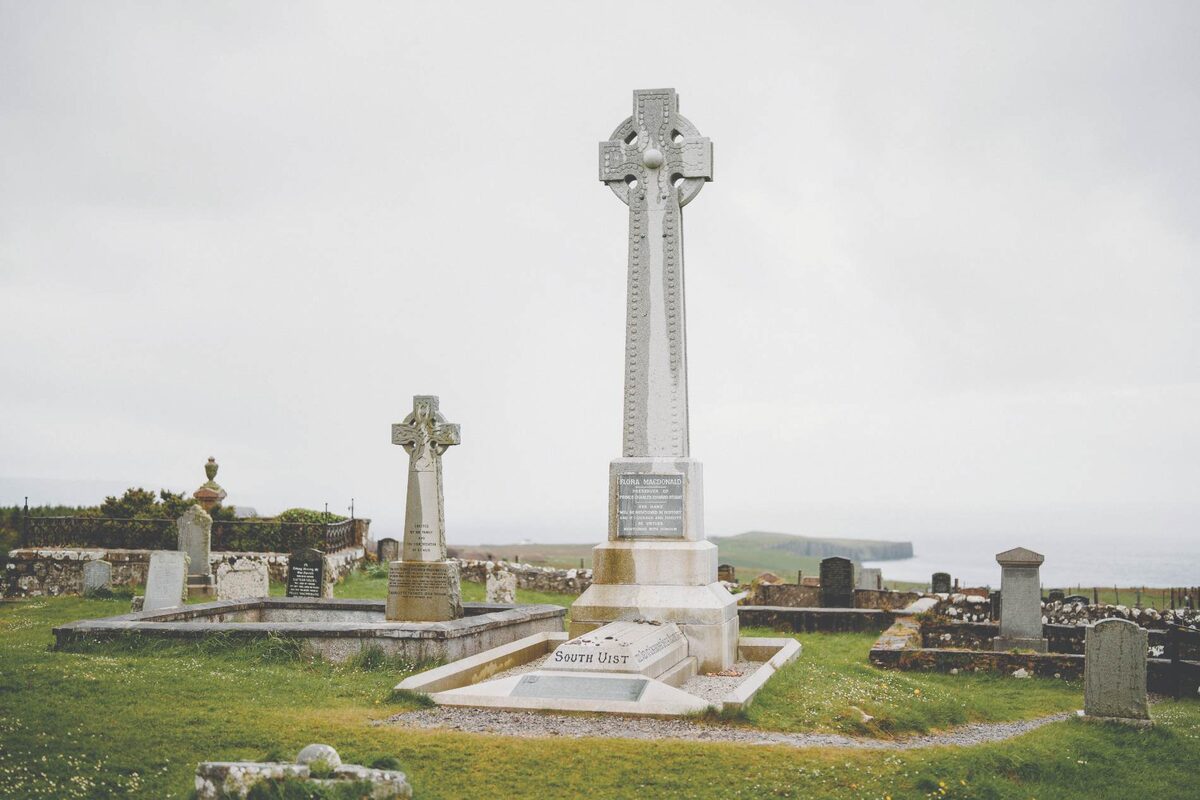
Alongside the monument to Flora MacDonald you’ll also find another famous name, designer Alexander McQueen. The dramatic granite headstone is a stylish memorial to ‘The Bad Boy of Fashion’ who was fiercely proud of his Skye heritage.
PORTREE & CENTRAL SKYE
Somerled Square
///that.dare.overture
Portree’s main square has a poignant war memorial modelled on Edinburgh’s Mercat Cross, its six-sided base inscribed with the names of the hundred-plus locals who lost their lives in the wars of the 20th century.
St. Columba's Isle
///cleansed.jiffy.costumed
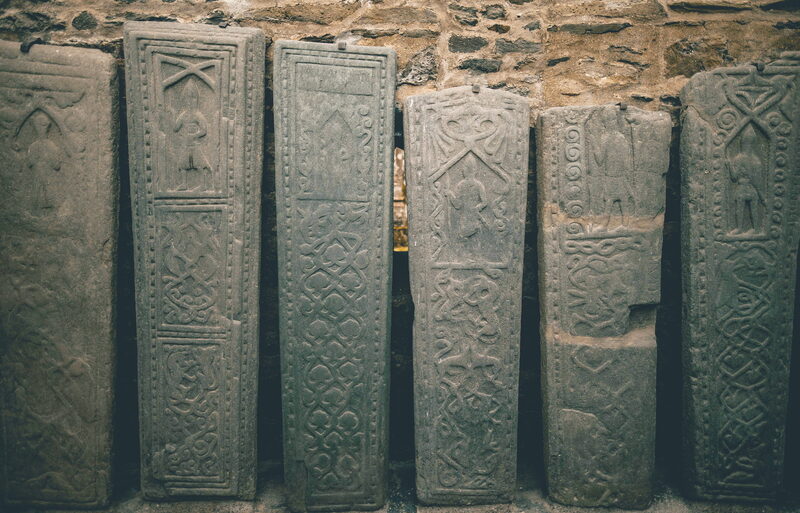
Hidden away near the southwestern corner of the peninsula is an unassuming river island with a remarkable past. St Columba’s Island – reachable by a wooden walkway – is the final resting place of no less than 28 clan chiefs, and spent four centuries as the site of the cathedral church of the Bishop of the Isles.
Sligachan Old Bridge
///unafraid.changed.amber
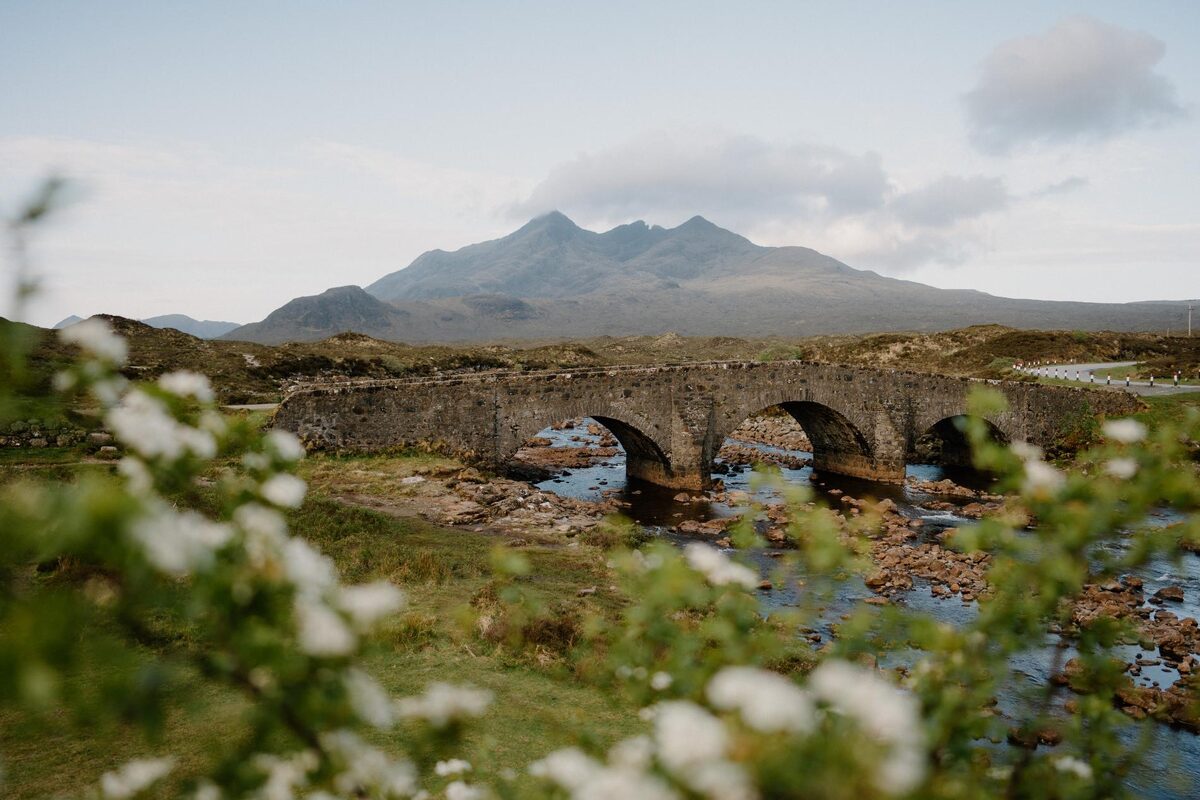
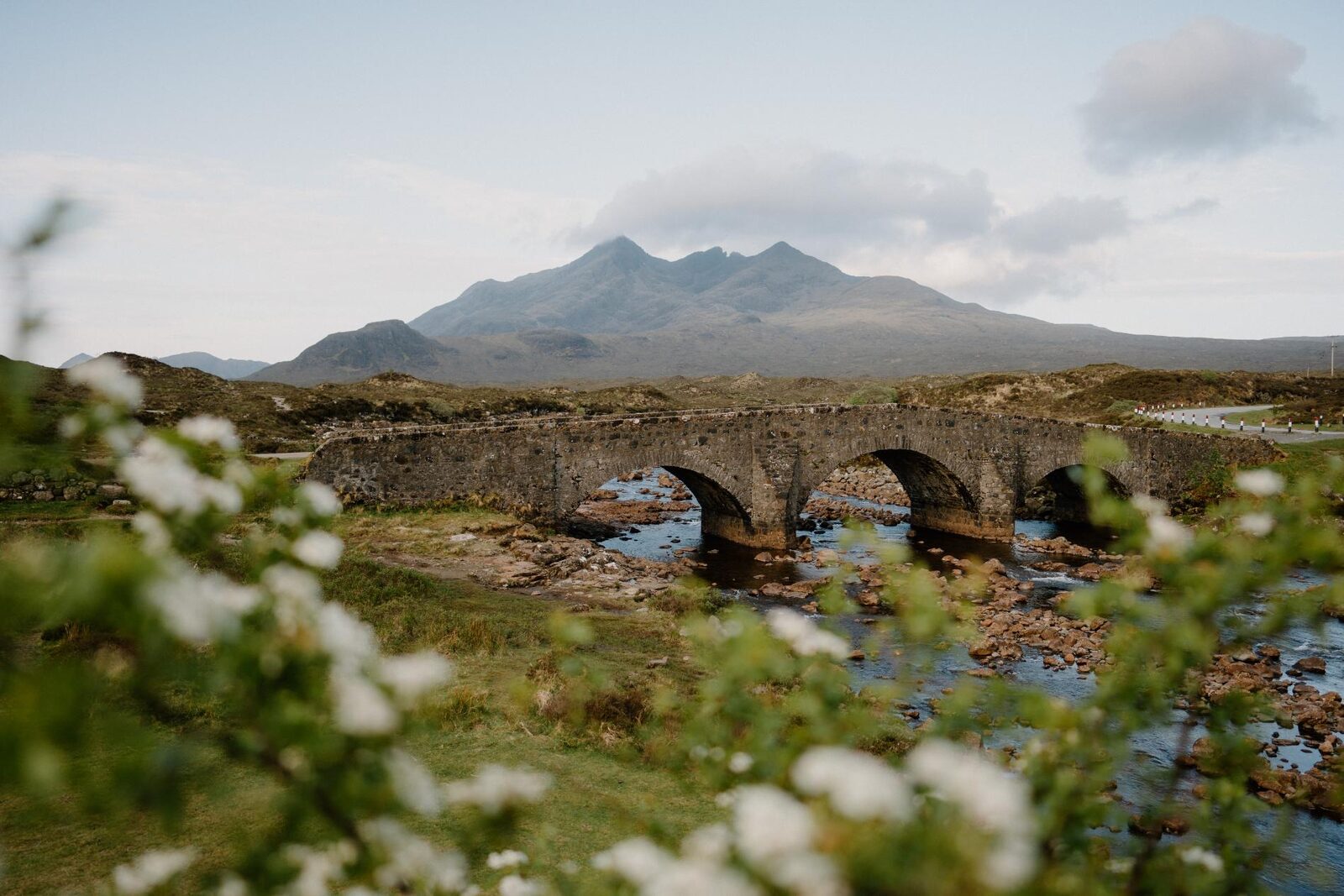
Glance to your left as you pass through the settlement of Sligachan on the A87 and you’ll spy a piece of history: a triplespan stone bridge built by Thomas Telford in the early 19th century. Now disused, the bridge still straddles the river – and it’s said that by washing your face in the waters that flow beneath it, you’ll gain eternal beauty. Gotta be worth a try.

Sligachan Old Bridge
TROTTERNISH
Staffin Dinosaur Museum
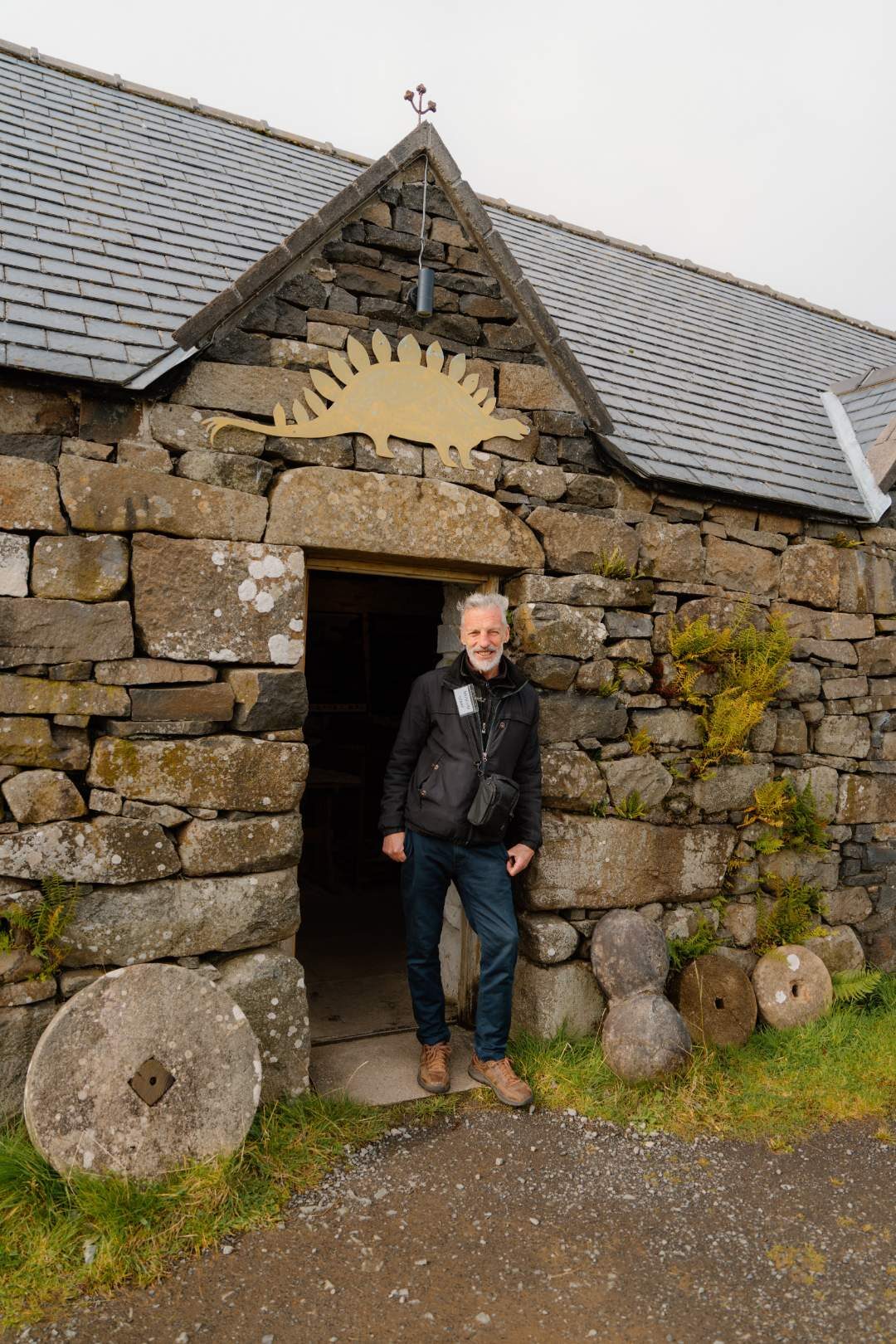
///venues.toolbar.estimated First established by Dugald Ross in 1976, the Staffin Dinosaur Museum is every Jurassic Park fan’s dream. This tiny museum is packed with locally-found dinosaur fossils, casts of their footprints, ancient ammonites and much more to justify the small entry fee.
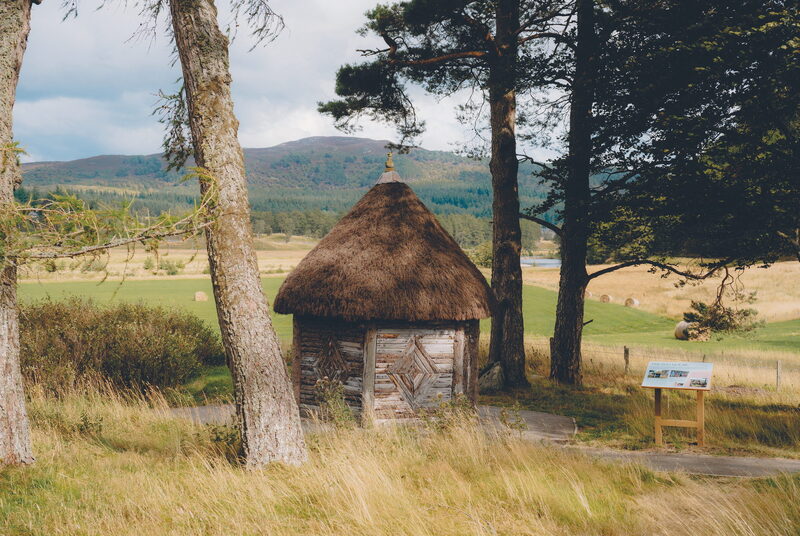
Skye Museum of Island Life
///afflicted.nursery.dilute
Sitting close to the island’s northernmost point is this cluster of traditional thatched cottages, which serve to showcase the realities of 19th century crofting. It’s a fascinating attraction, where old tools, peat fires and oil lamps help conjure a tangible sense of island life as it used to be.
The Grave of Flora MacDonald
///mango.ulterior.operation
On the windswept slopes of Trotternish, less than half a mile from the Skye Museum of Island Life, you’ll find an old burial ground filled with historic graves and memorials, including the final resting place of the Jacobite heroine Flora MacDonald.
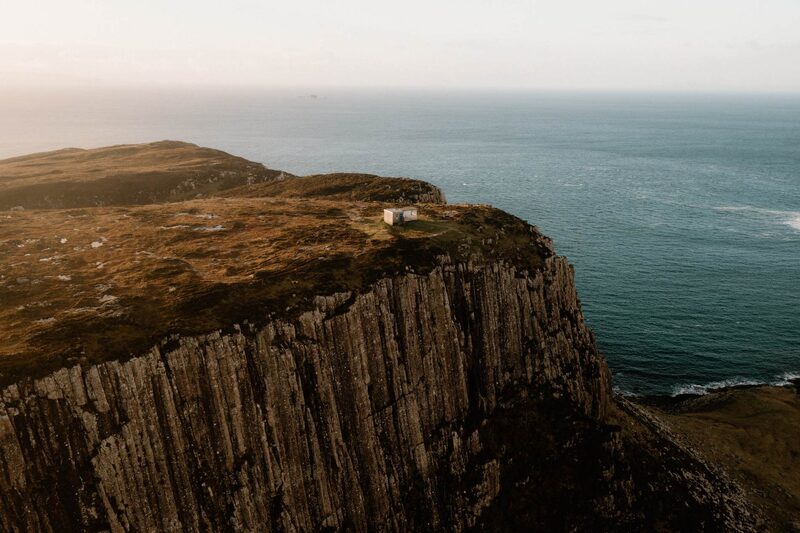
Duntulm Castle
///kicked.awoke.highlighted
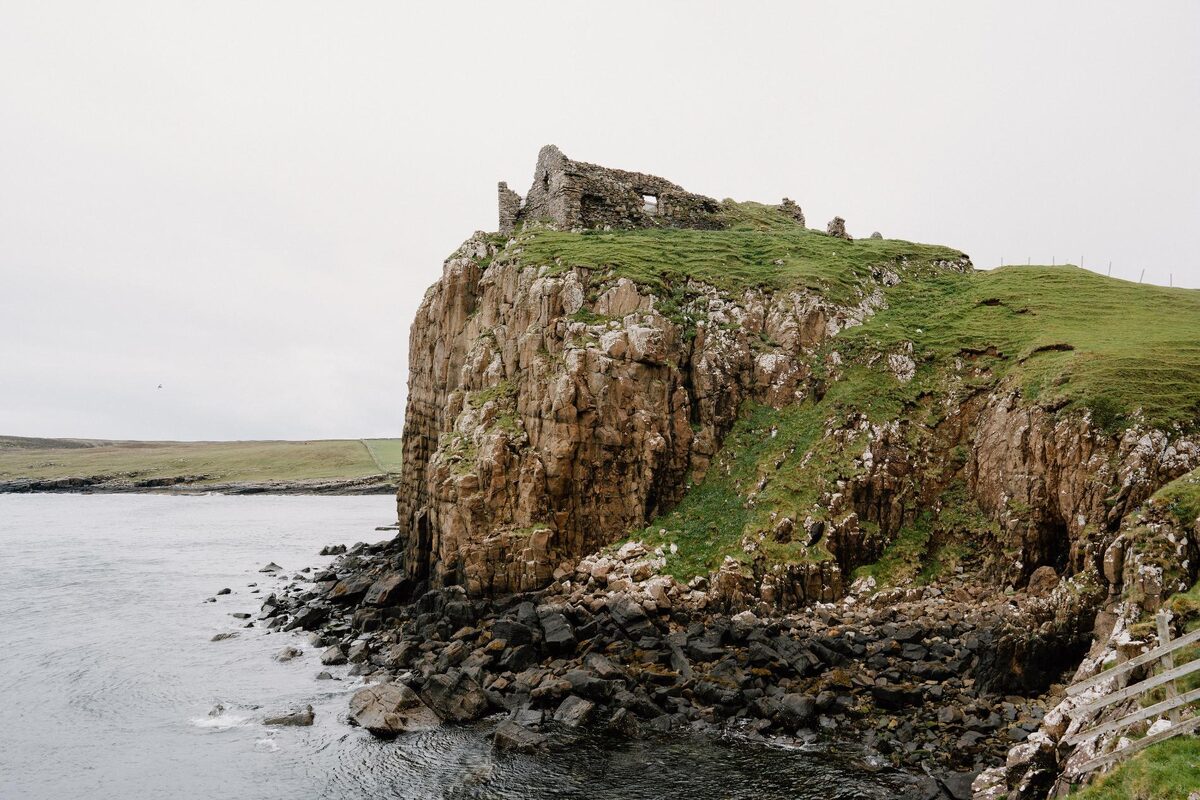
This decaying clifftop stronghold is as atmospheric as they come. First fortified in the Iron Age, it subsequently passed hands between different movers and shakers, with the MacDonalds of Sleat among its later long-term residents. It’s said to be haunted.

Staffin Dinosaur Museum

Skye Museum of Island Life
WATERNISH, DUNVEGAN & DUIRINISH
MacCrimmon Cairn
///cautious.grumble.aced
This giant, beehive-shaped memorial cairn was erected in 1933 to honour the MacCrimmon clan, a family famed for their bagpiping skills. It looks out across Loch Dunvegan.
Giant Macaskill Museum
///kilts.troubled.stockpile
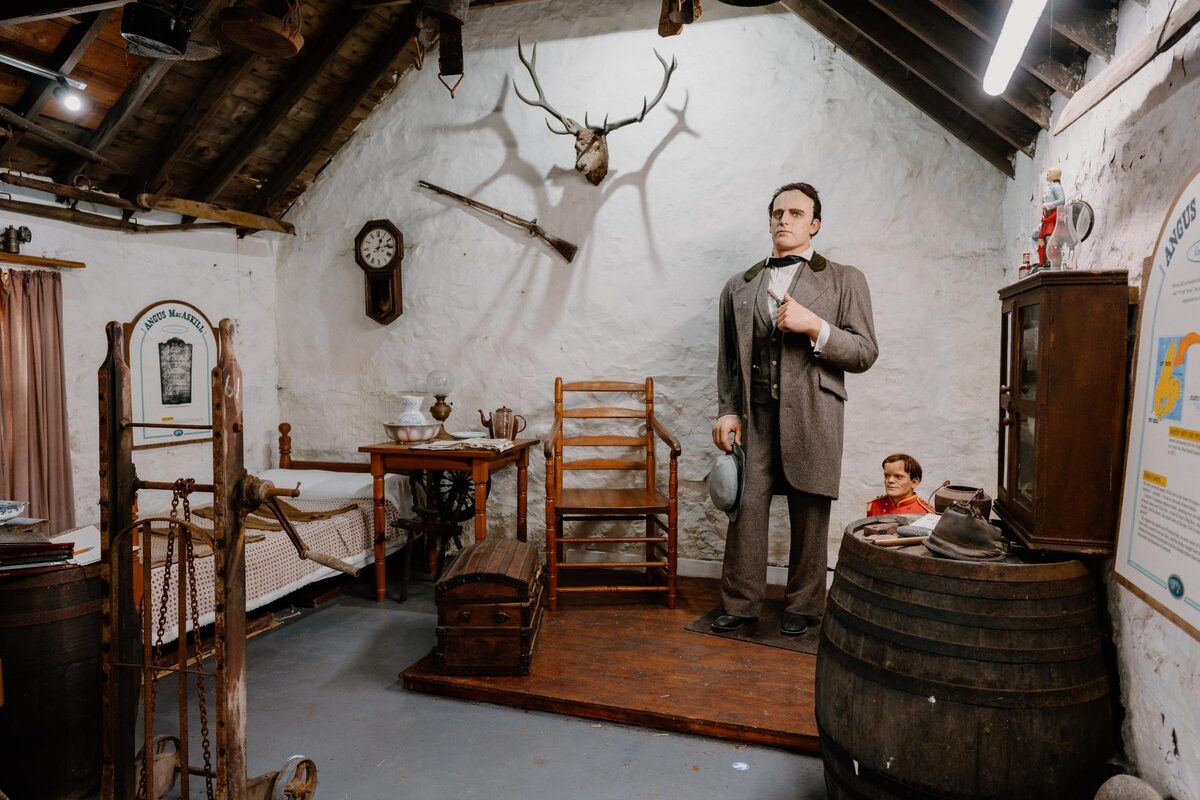
Built inside a former croft, this museum celebrates a real Skye hero. Angus MacAskill, famed ‘true giant’, was awarded a Guinness World Record in 1981 for being the tallest man in the world – despite having been dead for more than 120 years. The museum charts his life and incredible height – a staggering 7 foot nine inches.

Giant Macaskill Museum
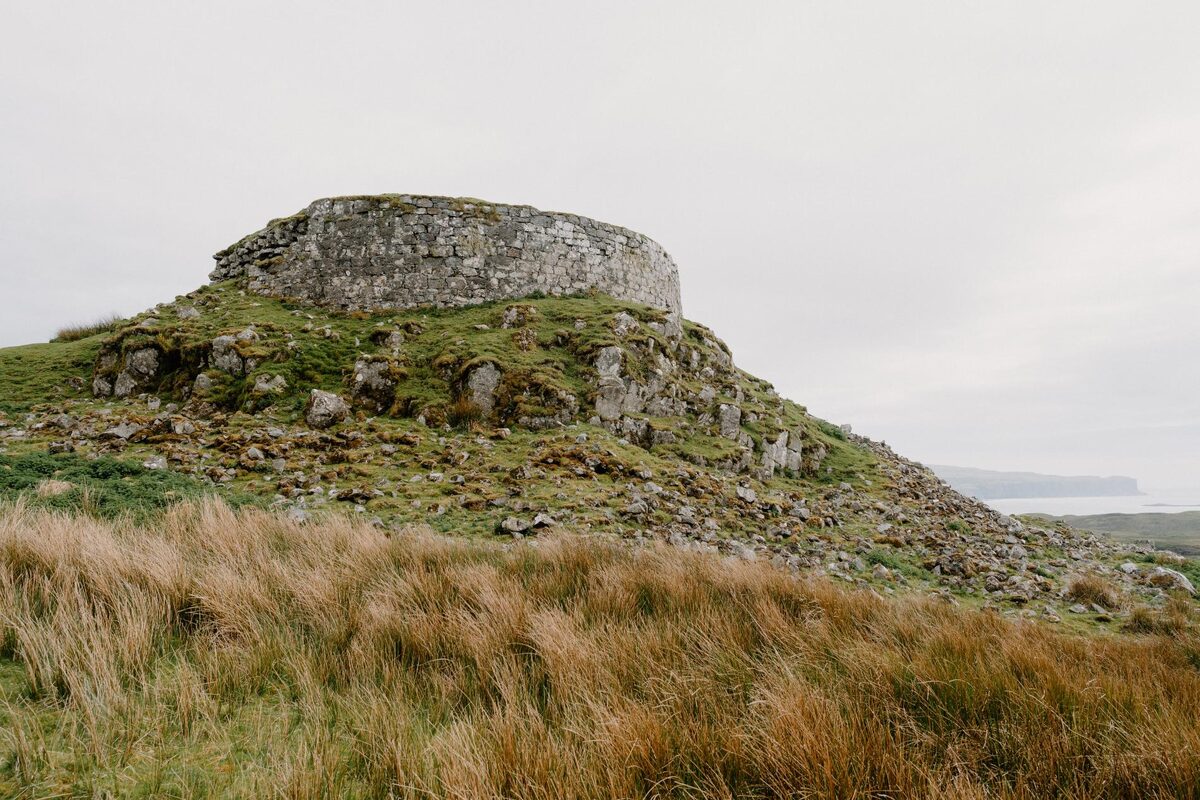
Dun Beag Broch
///sprain.lecturing.remark
This crumbling Iron Age tower, a circular fortification from a long-lost age, looks out across Loch Bracadale and the Cuillin Hills. Despite being built more than 2,000 years ago, excavations have turned up archaeological finds from more recent eras too, showing that this strategic – and dramatic – spot was occupied for many centuries.
Dunvegan Castle & Gardens
///gossiped.jobs.coarser
The seat of the mighty Clan MacLeod since way back in the 13th century, and still slung imposingly across a rocky coastal outcrop, this very much intact fortress is one of Skye’s big historical draws, with decorated interiors, princely gardens and no shortage of stirring stories to tell.

Dun Beag Broch
MINGINISH & THE CUILLINS
Kyle Station Museum
///shipped.stutter.launcher
Based inside the historic station buildings at Kyle of Lochalsh Station on the mainland, this volunteer-run museum tells the tale of the local harbour and its role in West Coast fishing. It’s also the setting-off point for the scenic Kyle of Lochalsh railway line.
SLEAT
Armadale Castle & Gardens
///displays.cube.stirs
A ruined fortress, a coastal location and 40 acres of stately woodland gardens combine to turn Armadale Castle into one of the chief attractions on the Sleat peninsula. The castle dates back to the 19th century and was once the seat of the Macdonald clan; on a fine day it’s mighty picturesque.
Dunscaith Castle
///saga.cookery.wired
Another shattered waterside castle, its ruined remnants deeply evocative of battles past, Dunscaith sits on an offshore crag and was abandoned in the 17th century. If you’re wondering about the preponderance of similarly named fortresses, incidentally, ‘dun’ translates as ‘castle’.
Knock Castle
///ripe.dweller.bandstand
The Skye shoreline isn’t short on crumbling castles. It takes an effort to reach this onetime base of the MacDonalds, but the rewards come in the form of battle-scarred masonry, quiet cliffs, and stirring views from the Sleat coast.

Dunscaith Castle

Knock Castle
LOCHALSH
Eilean Donan Castle
///chap.poetic.worked
Made famous on screen – including in the films Highlander and The World Is Not Enough – this hugely impressive castle stands on the shores of the mainland, a few miles east of the bridge. Dating back to the 13th century, it’s been well restored and offers good tours.
RAASAY
Raasay Battery Cannon & Mermaids
///lifeguard.sticks.shave
One of the first things you’ll see on disembarking the ferry is this old fortification, today flanked by two pasttheir- prime stone mermaids, which were originally created for the mansion behind it, Raasay House. The house is today a hotel, and was where Samuel Johnson and James Boswell stayed in 1773 on their Scottish islands tour.
Calum's Road
///playfully.flotation.priced
Roads don’t normally feature in travel guides, especially when they’re less than two miles of single-track highway, but Calum’s Road is a lasting fixture of local folklore. Fittingly named after the man who single-handedly built it, Calum’s Road was the work of a 56-year-old postman who wanted to reverse the decline of Raasay, as well as providing a way for his daughter to visit at weekends.
St. Maelrubhas' Chapel
///moved.intro.prefect
Well concealed on the roadside above the walled garden are the atmospheric ruins of two small structures – a main chapel and a memorial chapel – on a site believed to have been used for worship as early as the year 500. You’ll find subtle carvings, skilled stonework and still-standing gables.
Pictish Stone
///purse.same.workflow
This hefty carved stone was unearthed near the harbour in 1800 and now stands on a small mound under Temptation Hill. The early Christian carvings on its 1.5-metrehigh face are believed to have been chiselled out more than 1300 years ago.
Ironstone Mine at the Old Pier
///result.fortified.desk
During World War One, a workforce of German prisoners-of-war and men from Belgium, Italy and Lanarkshire built two substantial ironstone mines to help the Allied effort. After several years of high production the works were abandoned, but much of the infrastructure remains as a stirring reminder of the past.
Brochel Castle
///tribune.nicer.sweeter
Few ruins on the Scottish islands can top Brochel Castle for mood and majesty. Located along Calum’s Road as it veers towards Raasay’s east coast, the castle occupies the summit of an improbably tall volcanic crag, from where it once held sway over the comings and goings on the water. Its design, dating back to around 1510, is ingenious.

Promoted Post
The Best of Skye Guidebook
The Isle of Skye is a place of rare wonder, a wildlife-rich spread of bays, peaks, cliffs and ridges. The views are big, but the prospect of adventure is even bigger. We hope this curated Hidden Scotland guide – which takes in everything from the best walks to the finest restaurants – helps you to have your own unforgettable island escape.


Sign in with Google
Sign in with Email