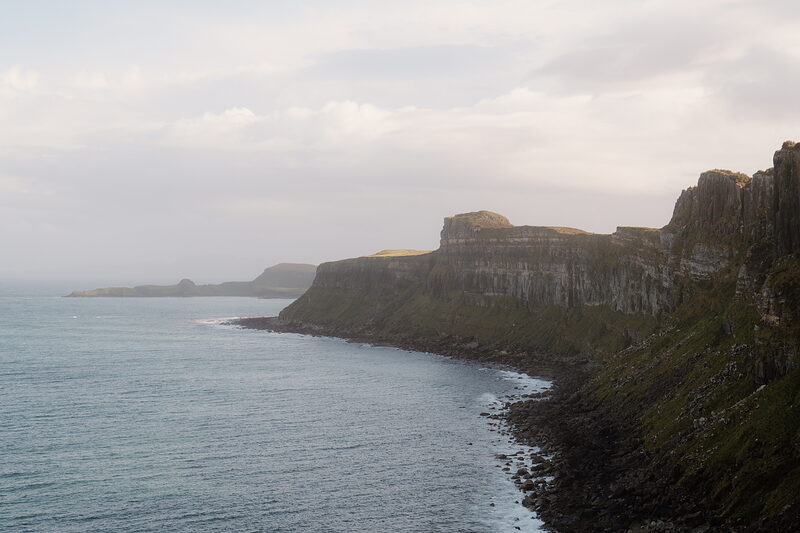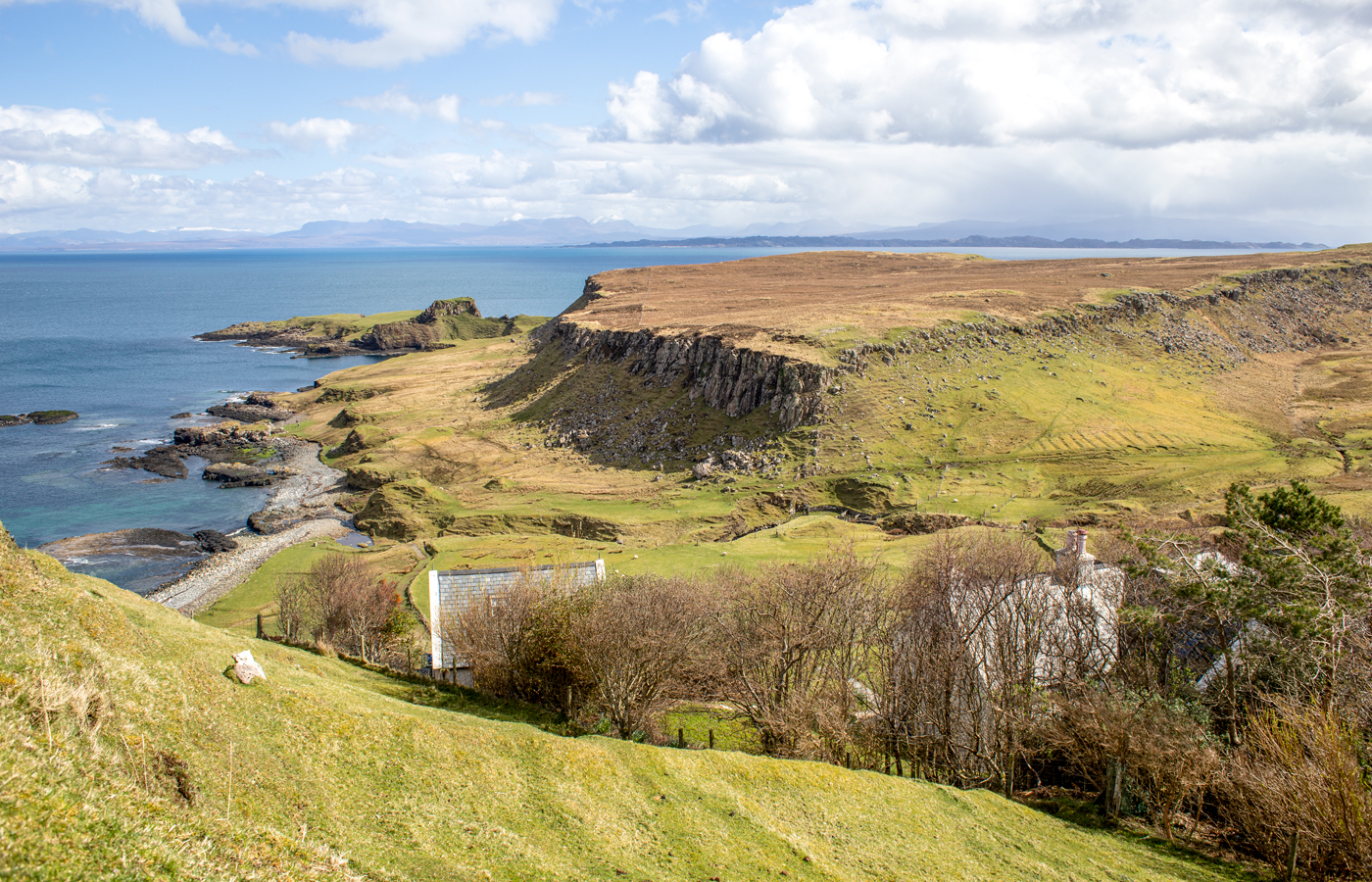
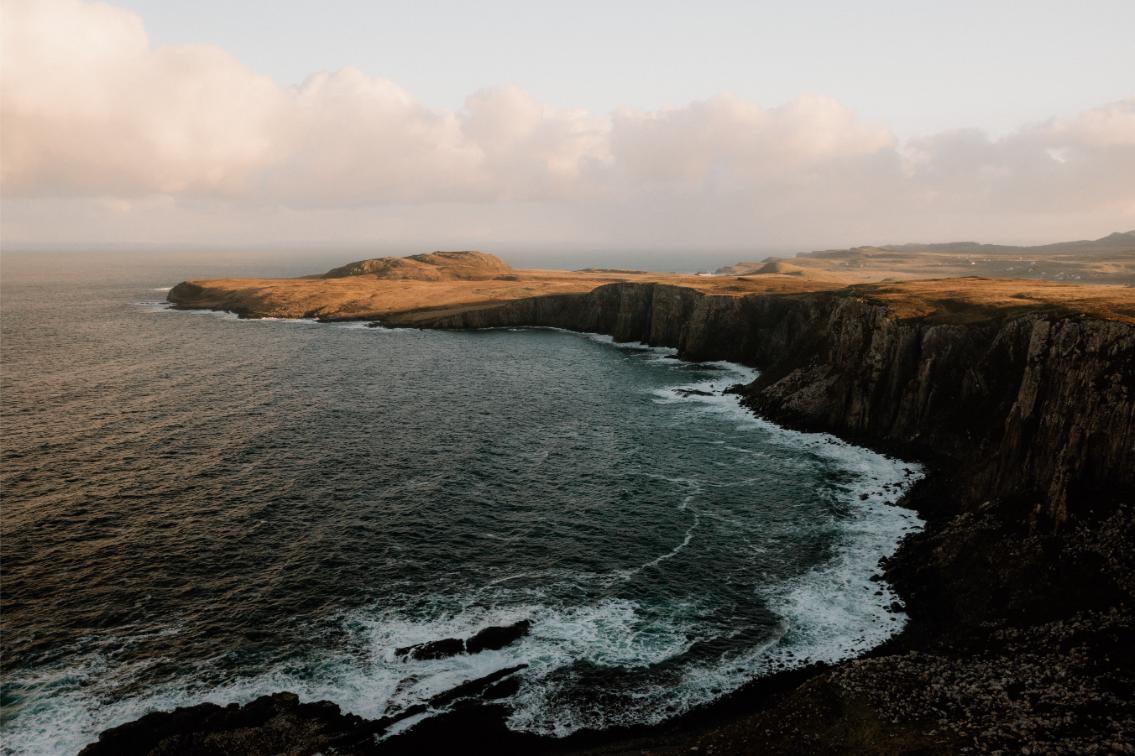
The green headland of Rubha Hunish from the air, its bay curving inside a rim of dark cliffs at the north end of Skye.
Isle of Skye

Rubha Hunish

The northern tip of Skye, reached down a break in the cliffs, with an old coastguard lookout standing above it and whales passing in late summer.

Welcome

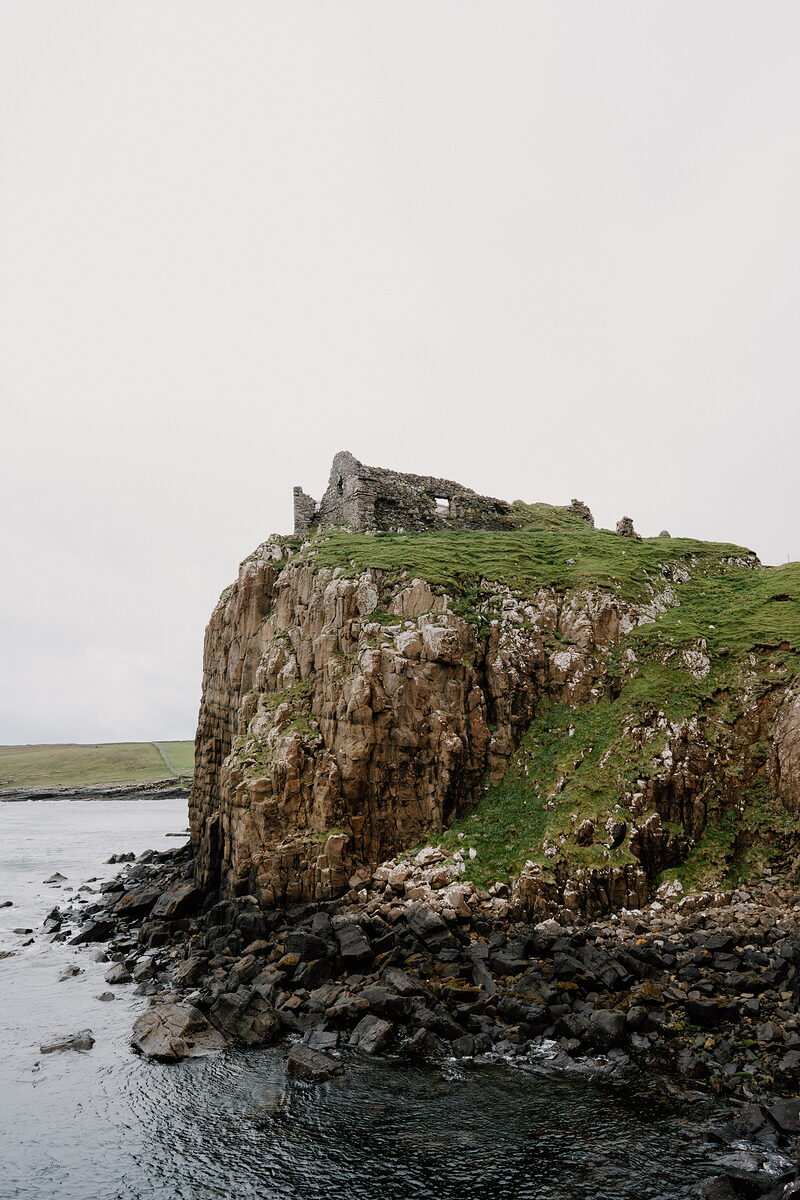
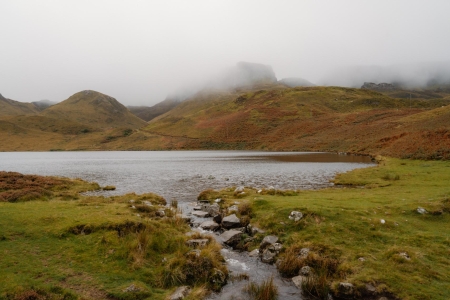
The path north from the Shulista road end runs along the top of a low escarpment, with the ruins of Erisco below it and Duntulm Castle on its crag ahead, and after a mile and a half it reaches a gap between two hills.

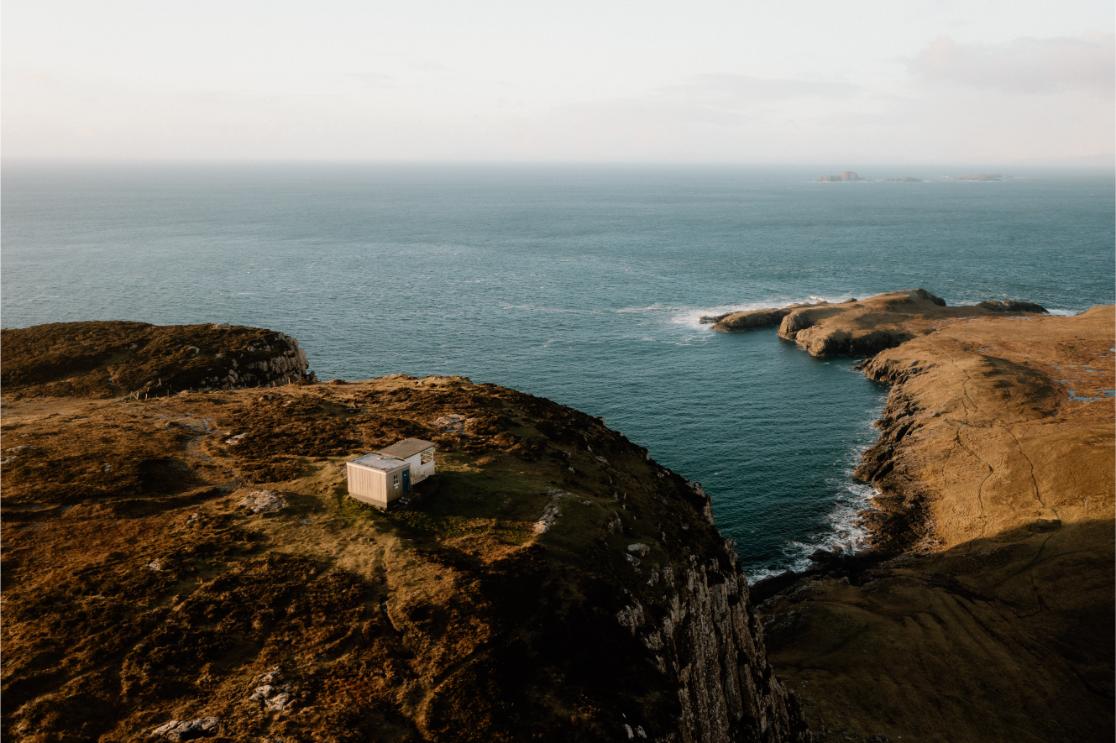
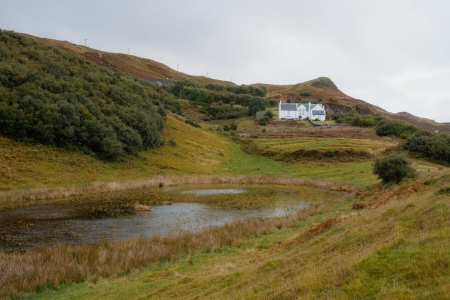
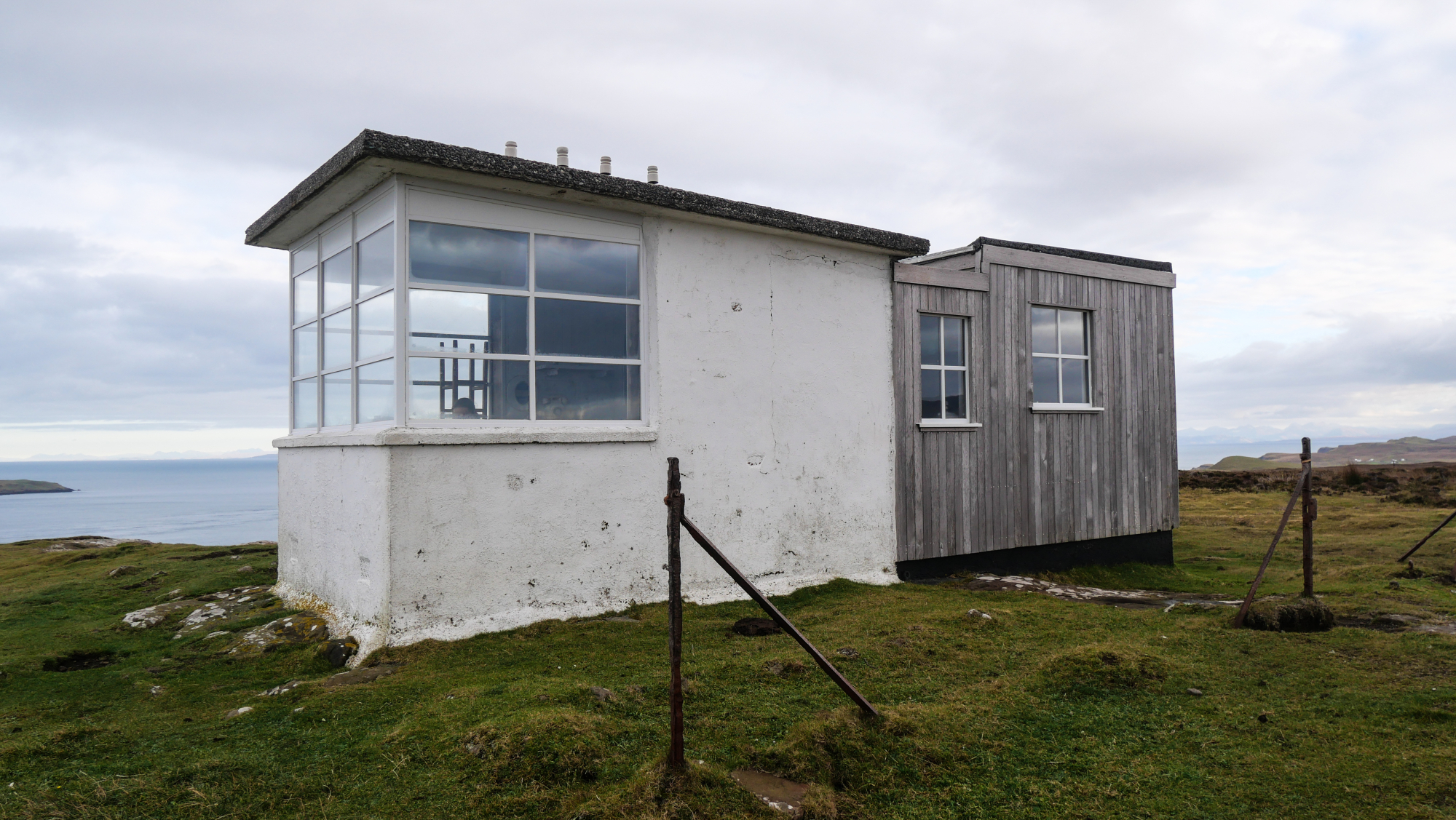
On the right-hand one stands a white hut on the cliff edge: the old coastguard lookout, kept open as a bothy, with a bay window over the Minch to Harris.

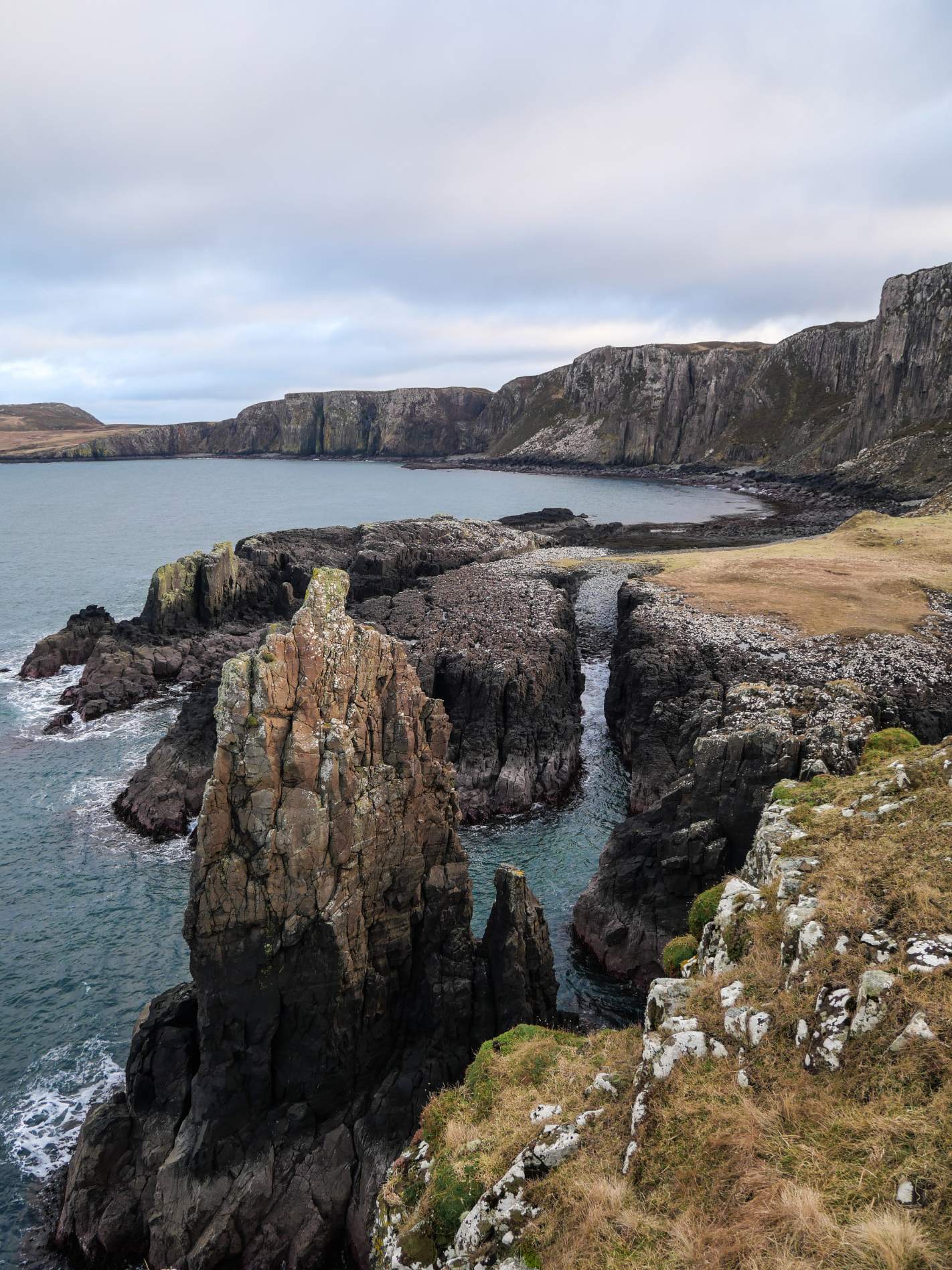
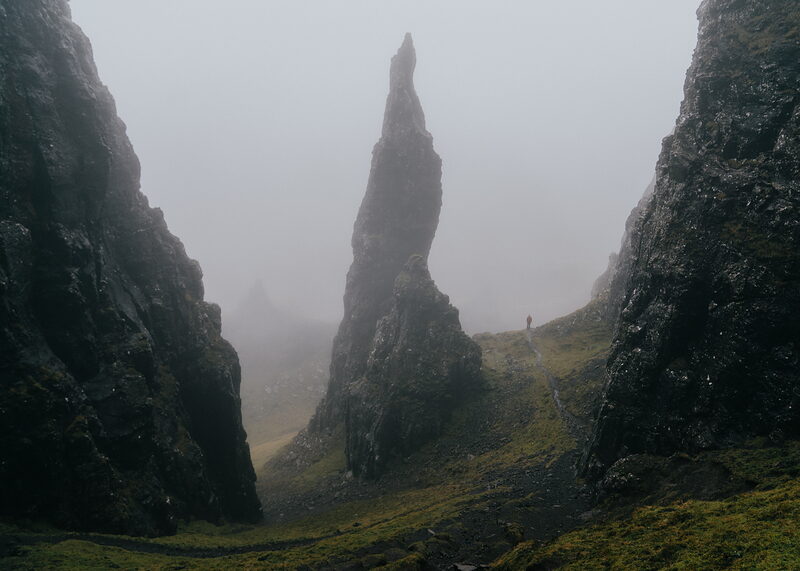
Below it the ground stops. The way down is a break in the cliffs, a staircase of rock that looks worse from the top than it turns out to be, and then a made path under dolerite columns to a flat green headland at the very end of Skye. Two stacks stand off the east side with an arch beyond them.

July and August are the months for whales. The advice is to sit still and listen: people hear them blowing before they see anything at all.

The Daily

Arrives at 5am every day.

A free morning email to see what’s on this week, catch up on what’s happening in Scotland and find somewhere new to go.

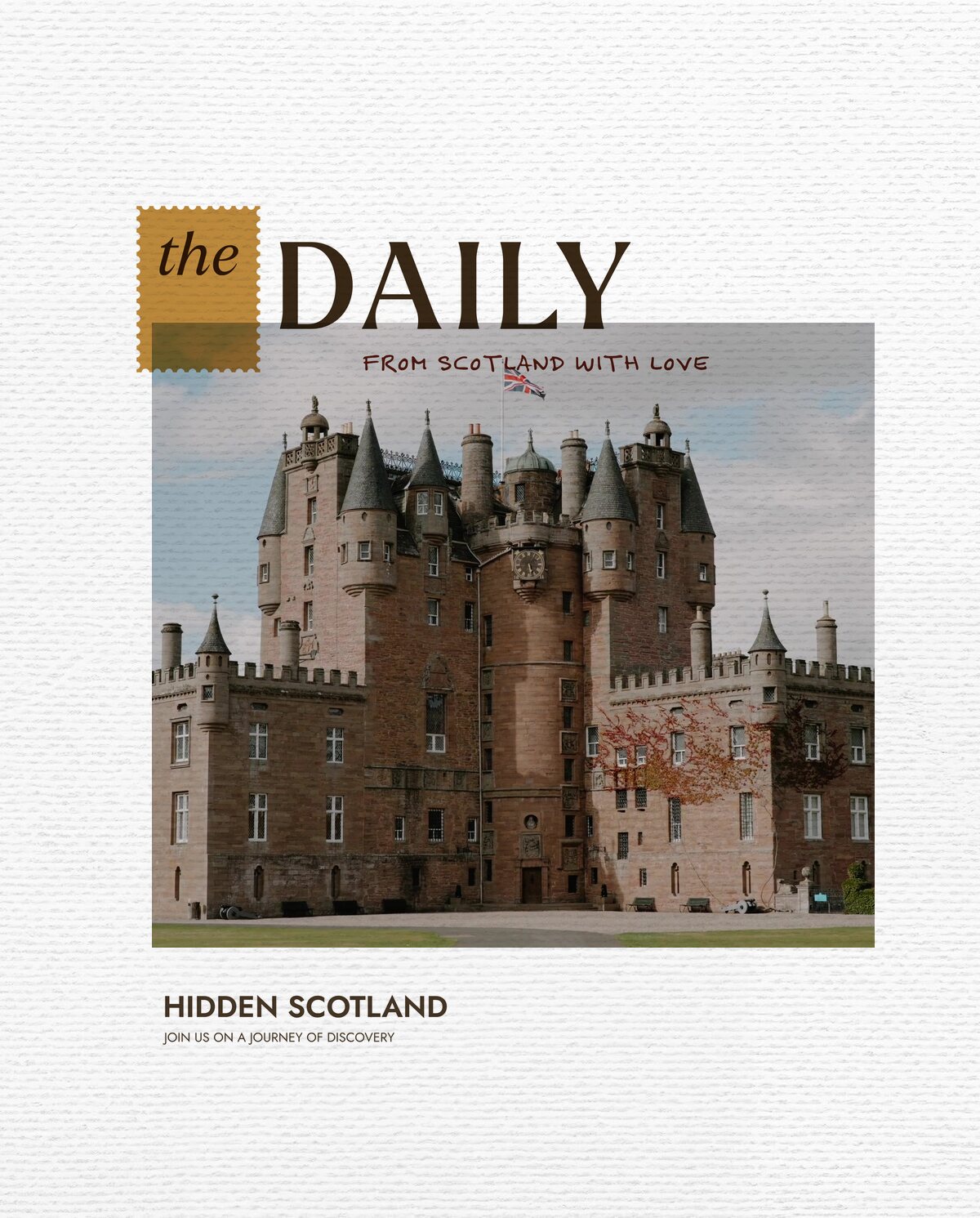
The Daily for 4 November, from Scotland with love. A pink sandstone castle bristling with conical turrets and a Union Jack flag rises above a gravel forecourt, autumn-tinged ivy climbing one wing beside cannon displayed on the lawn.
The walk

Eight and a half kilometres, 340 metres of climb and three to five hours for the whole round, including the drop to the headland and the climb back out of it.

A well made path runs out to the gap between the two hills; the rest is slightly boggy in places. The descent is the part people weigh up: a rocky staircase through a break in the cliffs that looks worse from the top than it turns out to be, with a clear path visible below it. Leaving the headland out makes a 6.2 kilometre round of roughly two hours that still takes in the lookout and the view from the cliff top.

Distance
8.5 km, 5.25 miles round, or 6.2 km if the headland is left out.
Time
Three to five hours for the full round; about two hours for the shorter one.
Climb
340 m.
Ground
A well made path out, boggy in patches, then a rocky scramble down through the cliffs.
The descent
Optional. The cliff-top walk and the lookout can be done without it.
Before you go

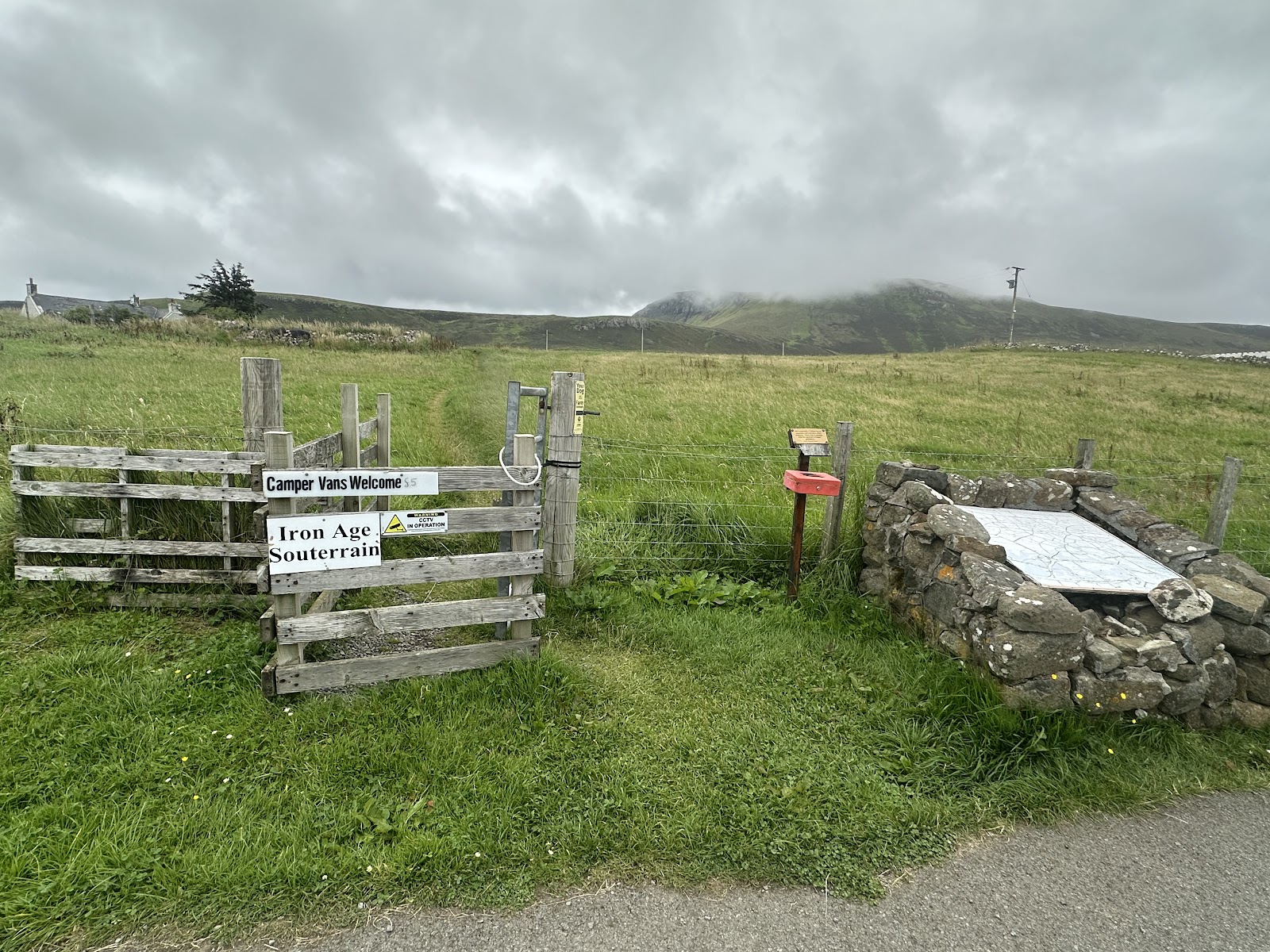
Take the minor road signed for Shulista off the A855 near Kilmaluag, by the old red phone box, and park in the car park above the kiosk by the cattle grid; there is room for about eight cars.

There is nothing at all on the route: no water, no shelter but the lookout, and no food or toilets at either end. The Portree bus will set you down at the Shulista road end if you ask, and can be picked up again at Duntulm.

Start
The car park above the phone box at the Shulista road end. Grid reference NG 422 742.
Parking
Free, about eight cars, above the kiosk by the cattle grid.
Water
None at the bothy or anywhere on the headland. Carry what you need.
Shelter
The old lookout, kept open as a bothy; it sleeps three and has no stove.
By bus
Ask for the Kilmaluag phone box or the Shulista road end; return from Duntulm.

Been here? Tell others what you know, and the best go on this page with your name.

Add your review

Did you know

The old coastguard lookout at Rubha Hunish, a small white hut with a bay window facing the Minch.
Did you know

The watch room went up in 1928.

The front of the white hut, the room with the bay window over the Minch, was built in 1928 by Macleans of Mull to keep an eye on the Little Minch shipping lane. It was once manned around the clock. Radio made it unnecessary, it became a bothy in the mid-1970s, and the Mountain Bothies Association took it on in 2006.
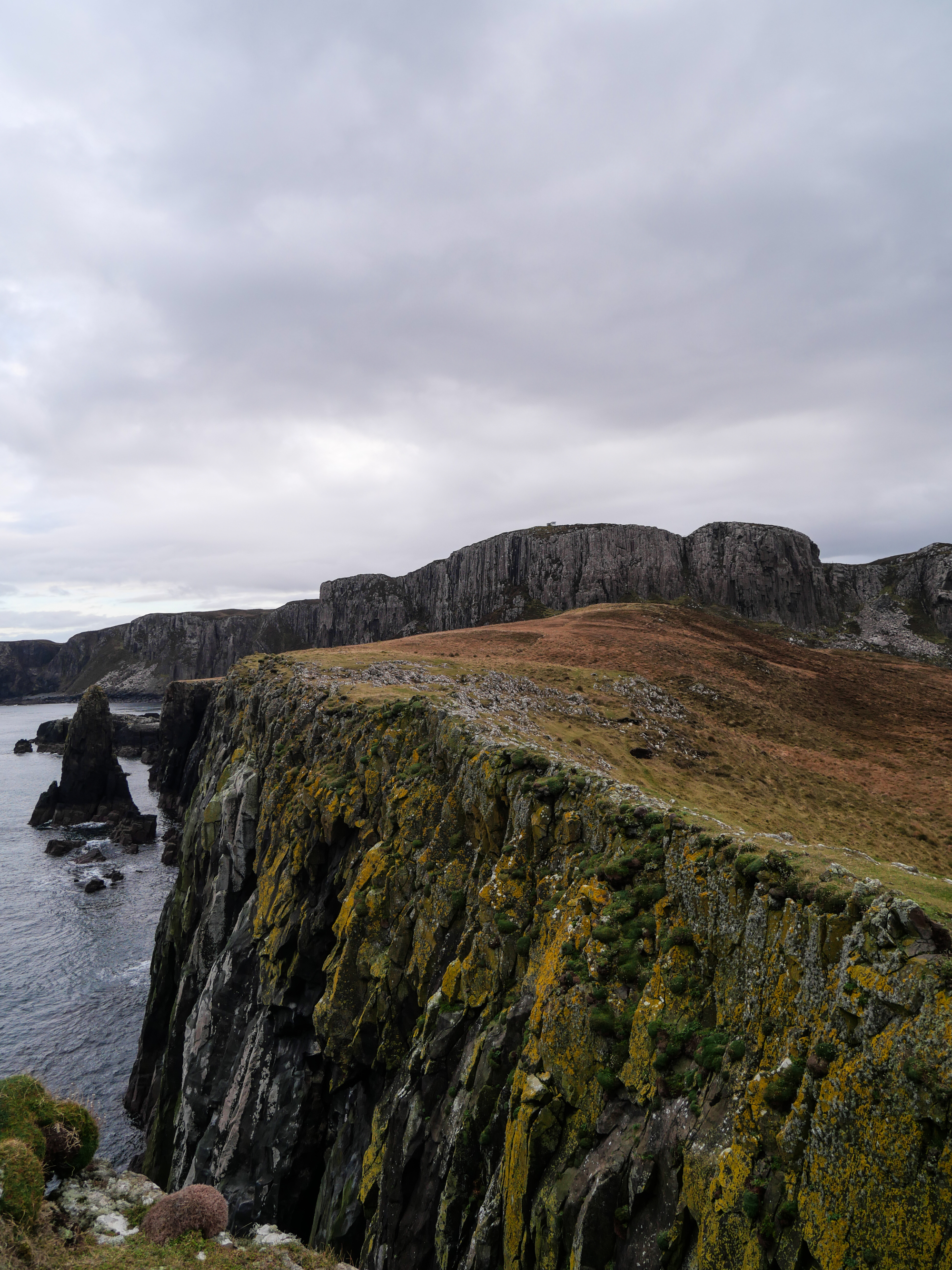
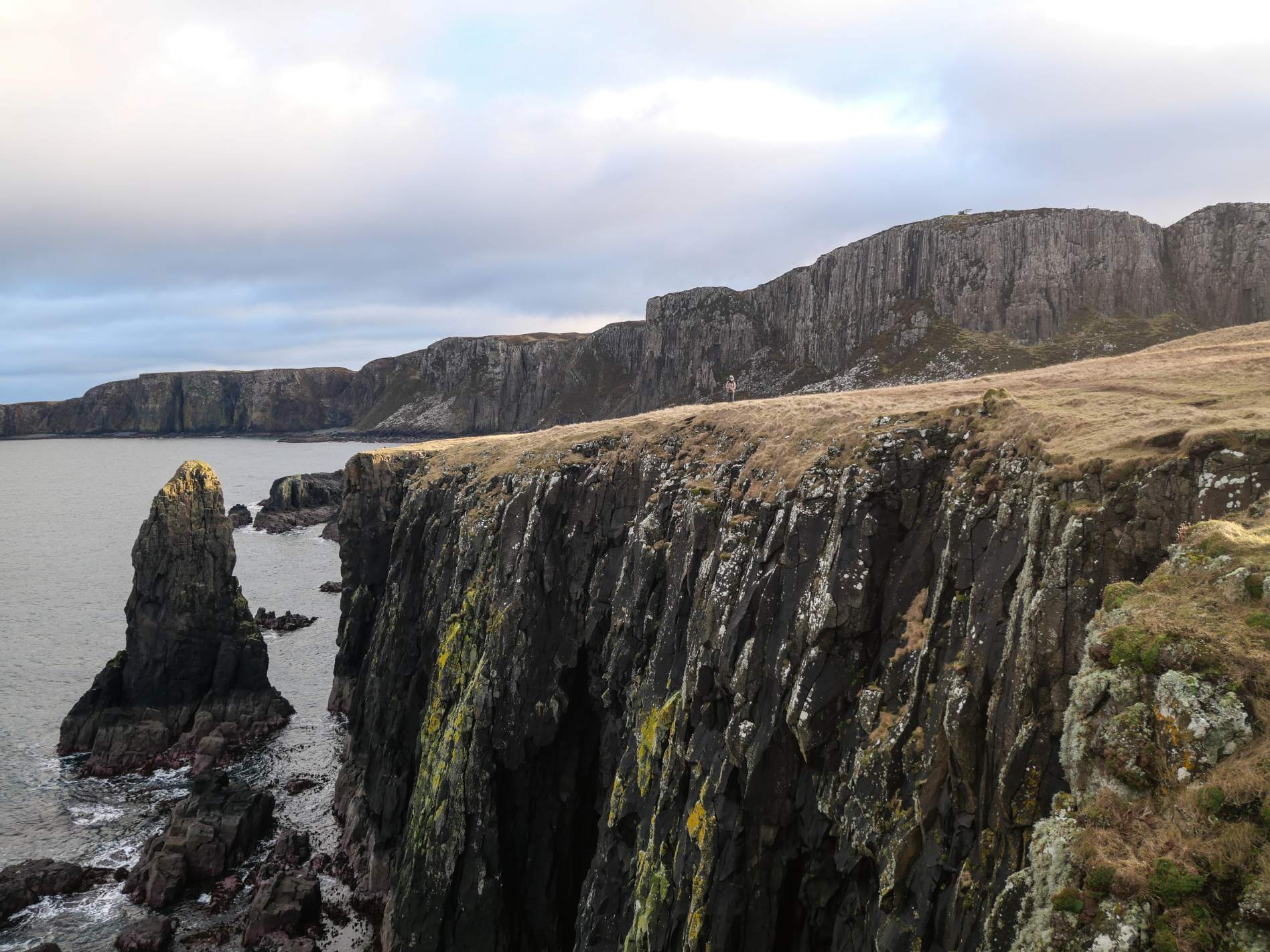
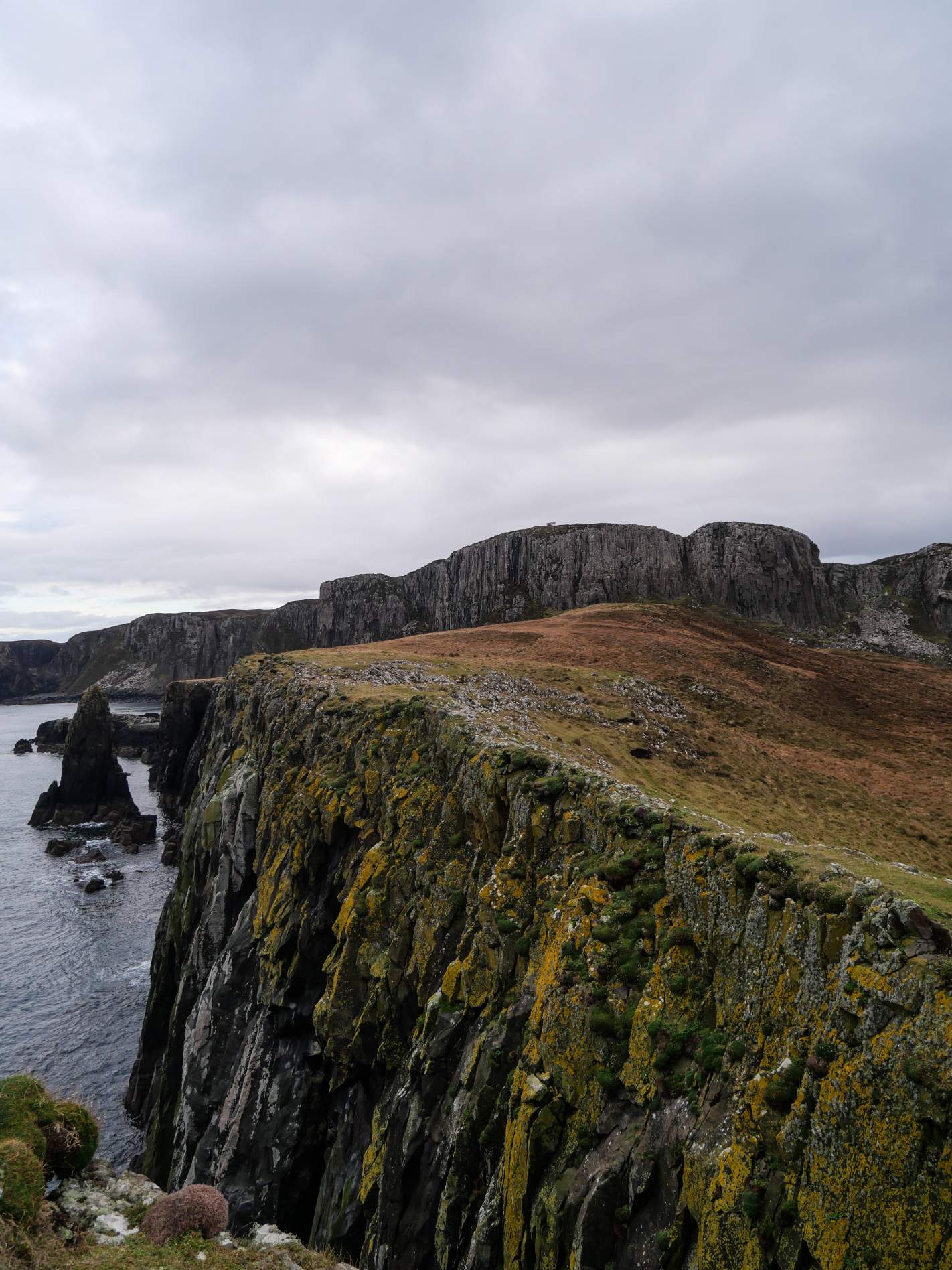
Lichen-streaked basalt cliffs above the sea at Rubha Hunish, a stack standing off the point.
Did you know

A moss here grows no further north on earth.

Under the Meall Tuath cliffs the rock has collapsed into a field of blocks, and heather and bilberry grow over it on a carpet of Atlantic mosses and liverworts. One of them, Campylopus pilifer, has no known locality anywhere further north in the world than this scree.

The cliff line at the north end of Skye falling to the sea, a single stack below it.
Did you know

An Arctic-alpine flower, growing at sea level.

The north-facing cliffs are too steep for sheep to reach, so what grows on them has been left alone. Sea spleenwort and sea campion share the ledges with Scots lovage and with moss campion, an Arctic-alpine plant that is unusual to find growing at sea level at all.

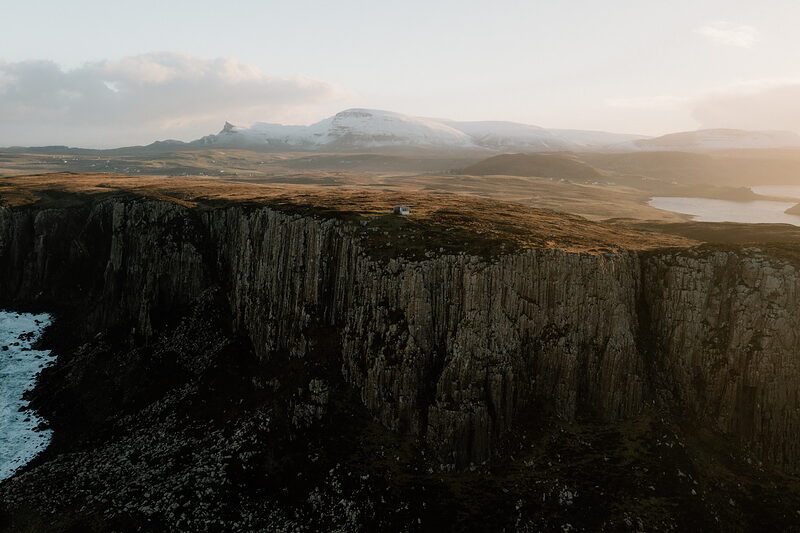
Cliffs of columnar basalt at the north end of Skye, the little white lookout on the skyline above them.
Did you know

A sheet of rock that could rise no further.

The columns are dolerite, squeezed as molten rock between older Jurassic beds sixty million years ago. The sheet splits into leaves that divide and rejoin, yet wherever it is measured they come to much the same 230 metres. The weight of lava above seems to have stopped it rising further.

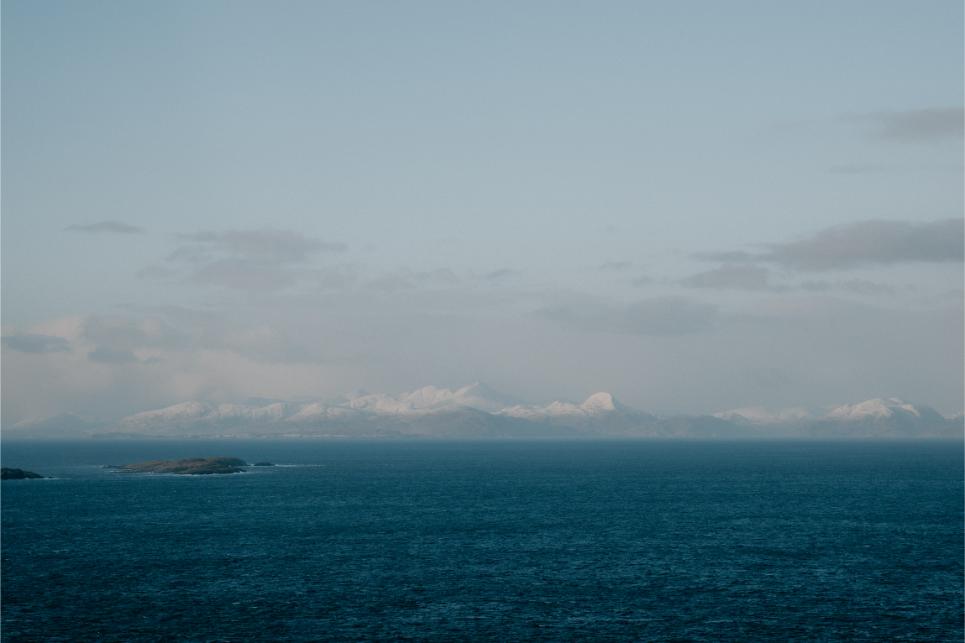
Open water off the north of Skye with low islands on the horizon, the view the lookout faces.
Did you know

The best place on Skye to listen for whales.

The far tip of the headland is where people come to watch the water, and July and August are the months. Minke are seen round the Hebrides from April to October, and dolphins and porpoise pass through all season. The advice from those who do it is to sit still and listen: you hear them blowing before you see them.

Sea stacks and a rock arch in clear green water below the cliffs of Rubha Hunish.
What is on

What is new across Skye, day by day.

New places, news and stories, as we find them.

What is on on Skye
01 / 06

Recommend to a friend

Stay nearby

Places to stay near the headland, and when each is next free.

Hidden Scotland, the magazine

Scotland, in print.

We want to show you the best that Scotland has to offer. The makers and the creatives, the enduring experiences, the evocative tales, the concealed corners. The roads less travelled that take you to places that matter. The adventures that gather you up and sweep you away. The blend of the wild and the artistic that makes Scotland what it is. We’d love for you to join us.

Read on

The collections it is in and more on Skye.

Find out more

For further reading, before you go. The details on this page were checked on .