Did you know
A Viking burial.
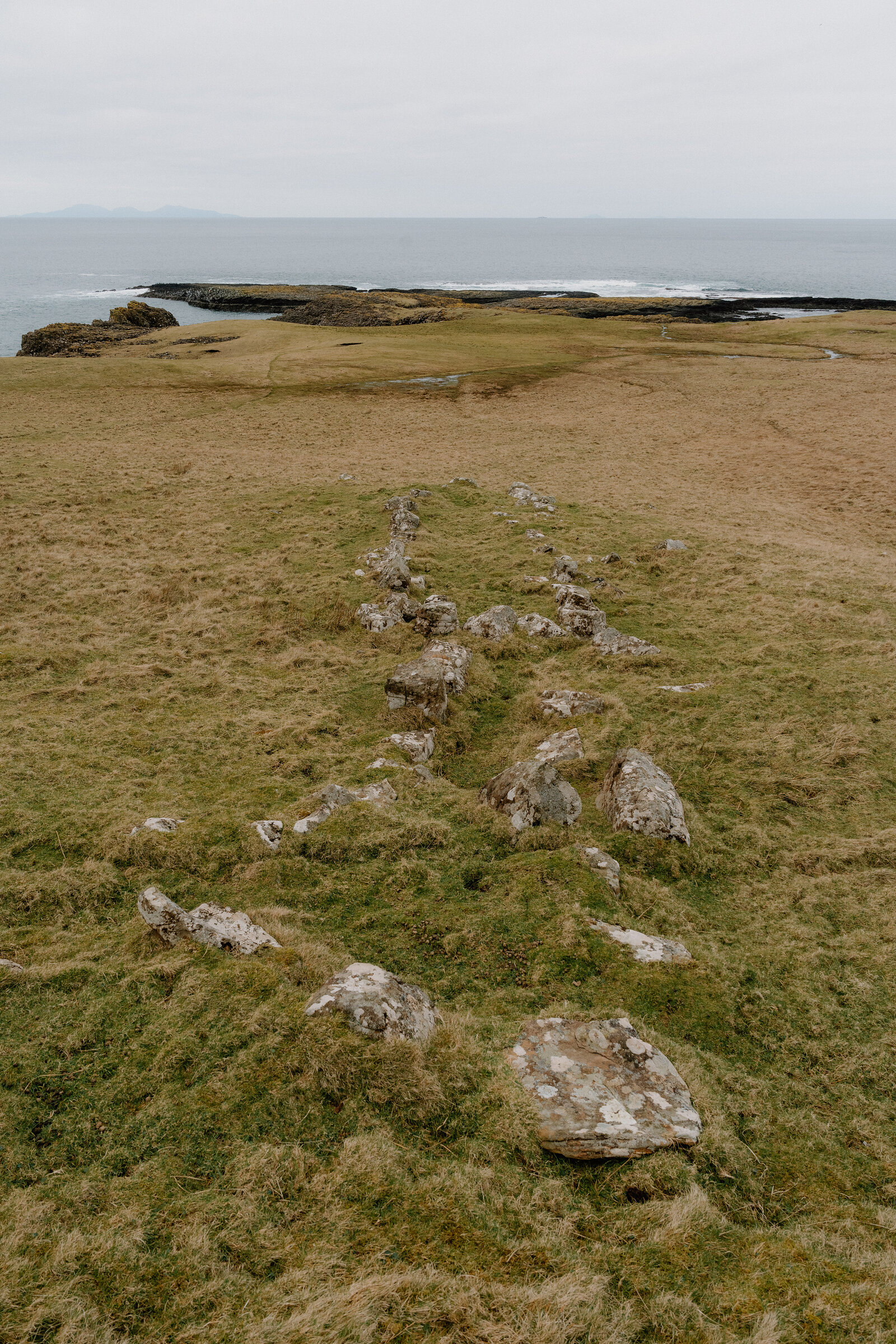
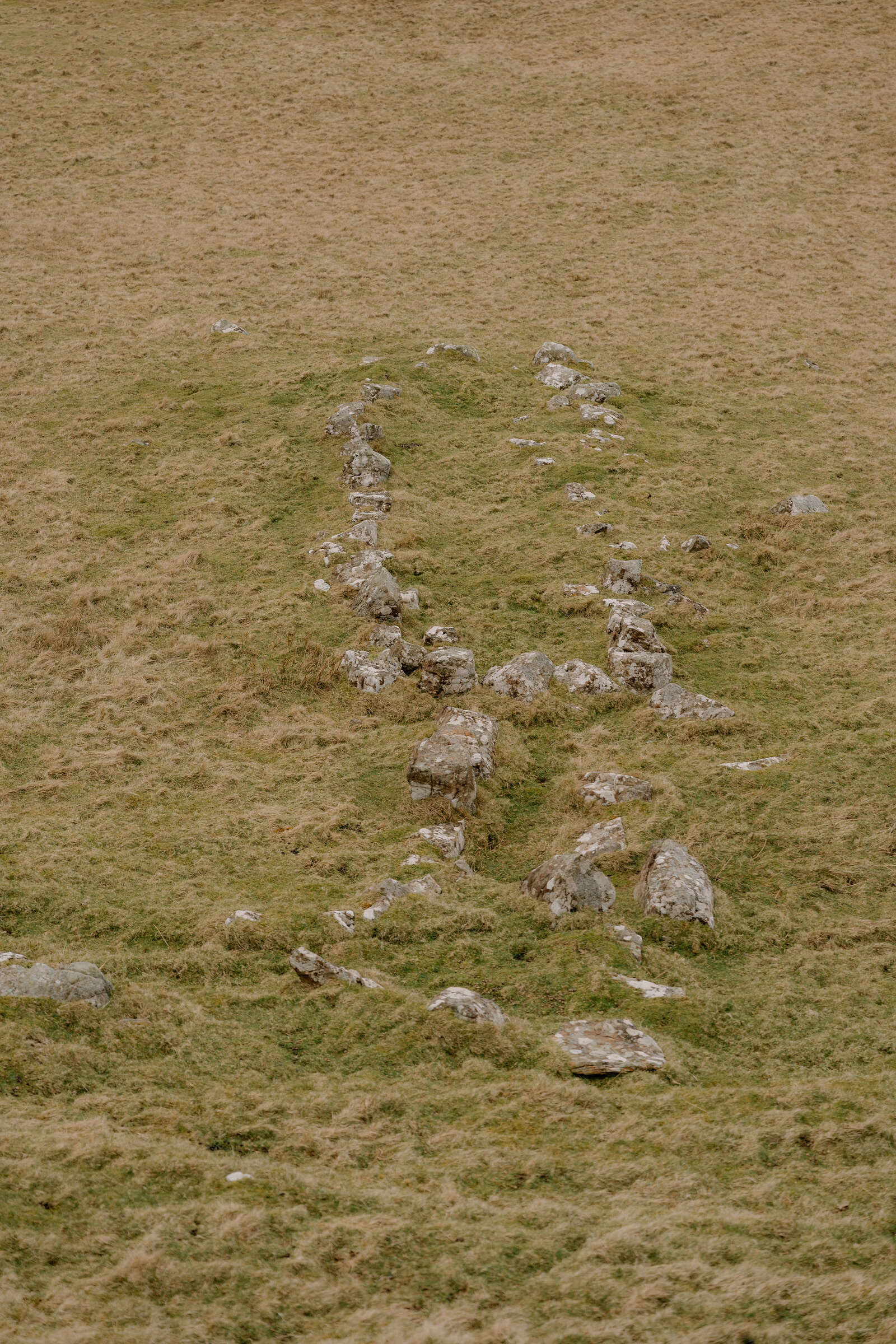
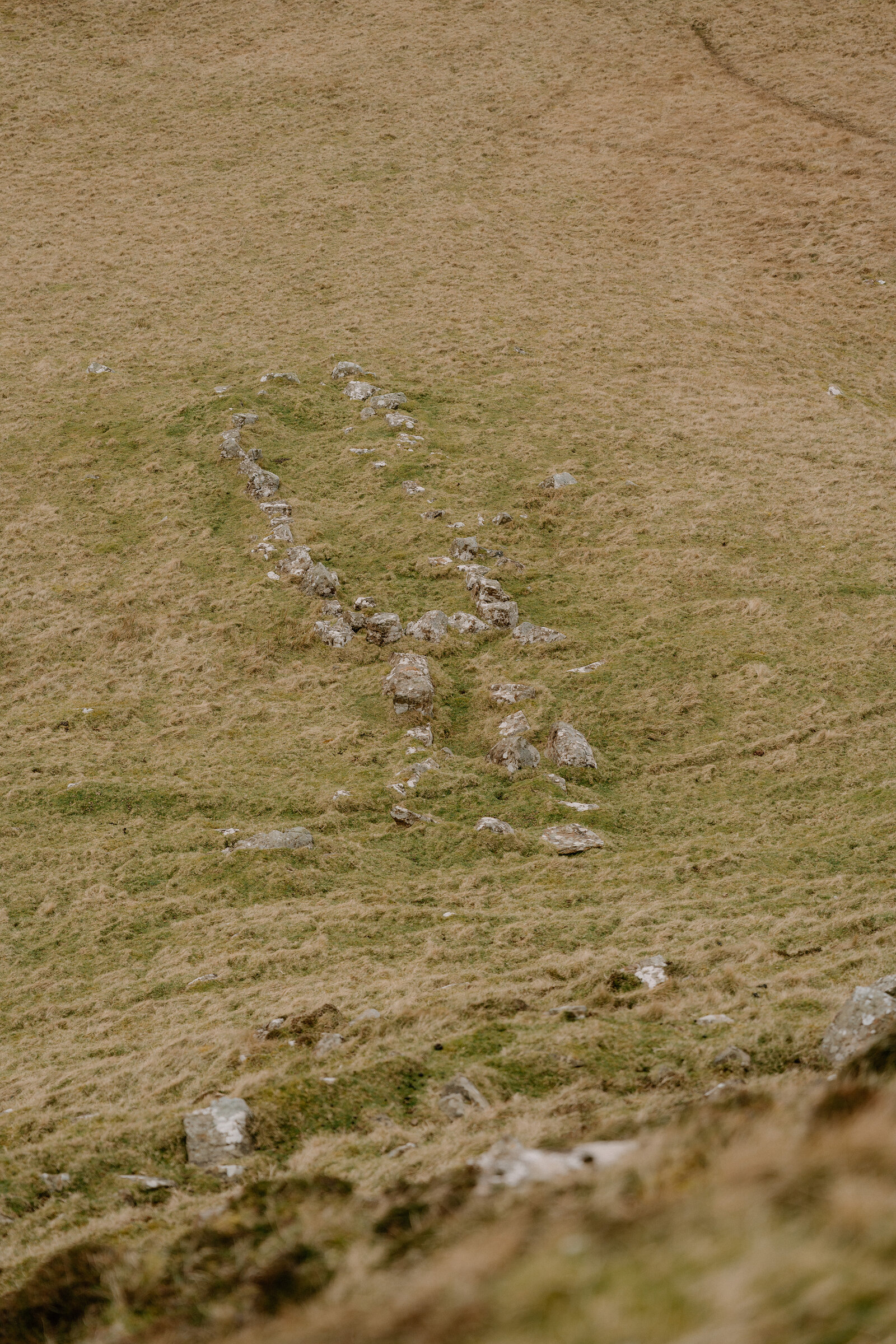
The ring of stones is the kerb of a burial cairn of the Viking period, all that remains of it.
A Viking-age kerb of stones on the machair of Canna's north coast, known as the King of Norway's Grave.
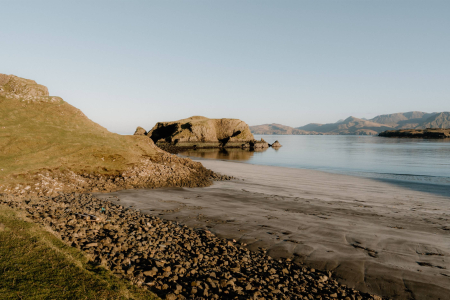
The King of Norway's Grave lies on the north coast of Canna, on a strip of machair below the cliffs on the peninsula of Rubha Langanais: a long, narrow ring of small stones set close together in the grass, about ten metres long and two wide, with the sea breaking on the rocks beyond.
The stones are all that is left of a burial cairn of the Viking age, the kerb that once edged it, and similar burials on Arran and Colonsay have been dated by their coins to the ninth century.
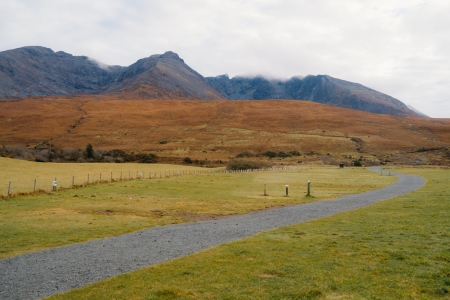
It is a long walk and best on a calm day. The way is waymarked in red from the harbour road: about three kilometres along a track, then over rough ground past the souterrains to the north side of the island, where the grave lies below. Bring waterproofs, food and a map.
A long walk from the harbour, waymarked in red: about 3km along a track, then over rough ground past the souterrains to look down on the grave.
Go in calm weather, with warm waterproof clothes, food and an Ordnance Survey map.
The ring of stones is the kerb of a burial cairn of the Viking period, all that remains of it.
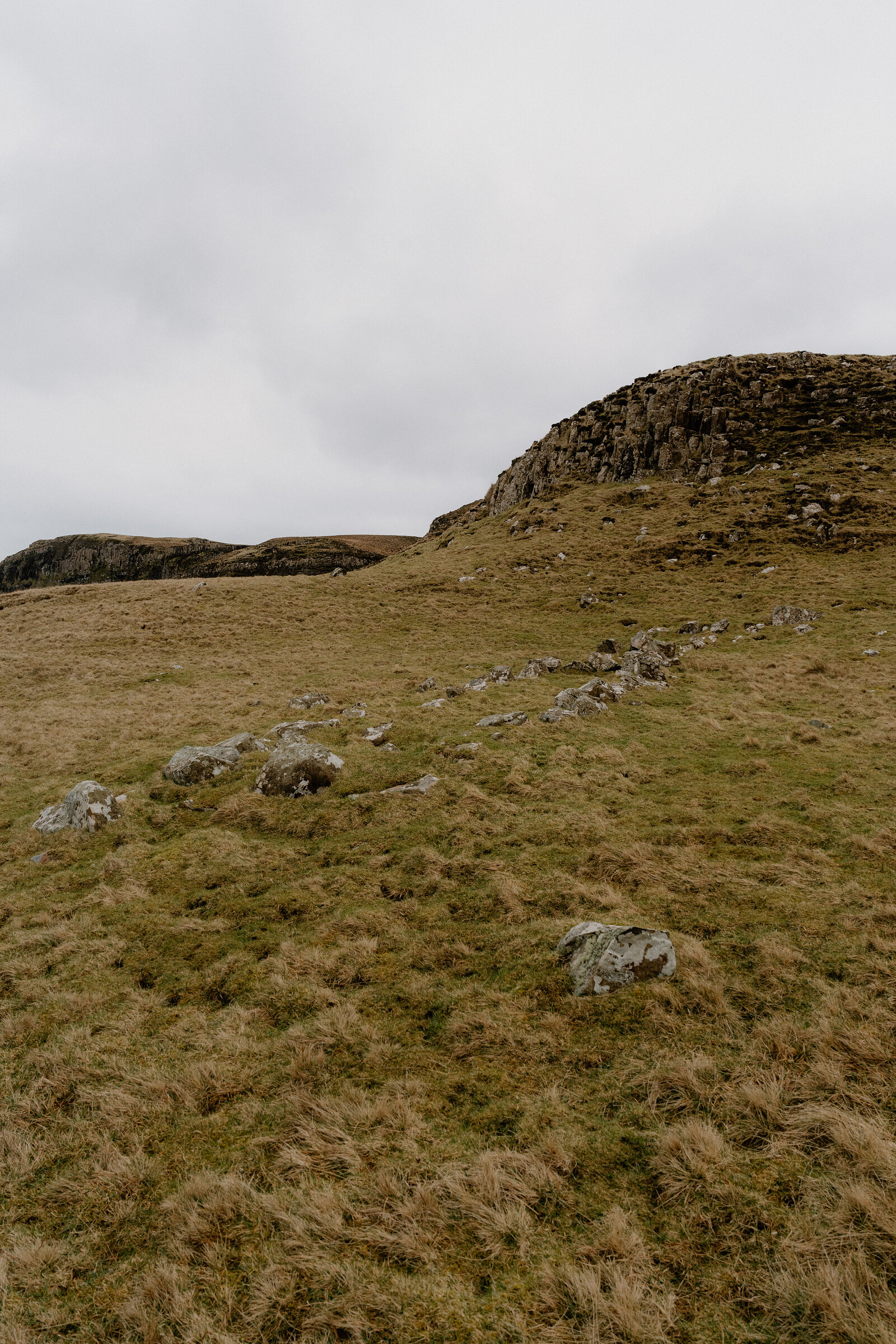
The kerb, of smallish stones set close together, encloses an area 32 feet long and six and a half feet wide.
Two similar burials, on Arran and Colonsay, have been dated by the coins found in them to the ninth century.
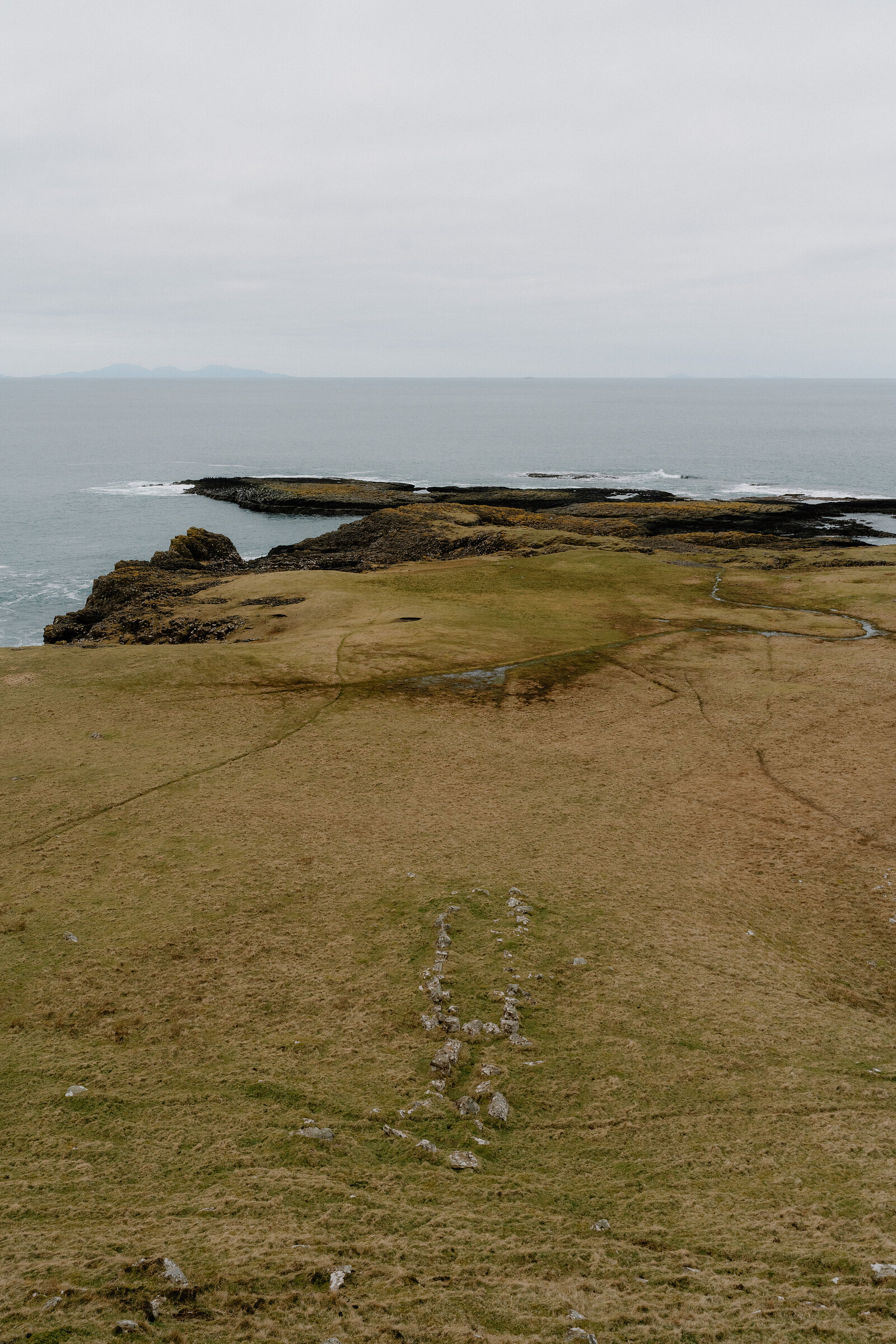
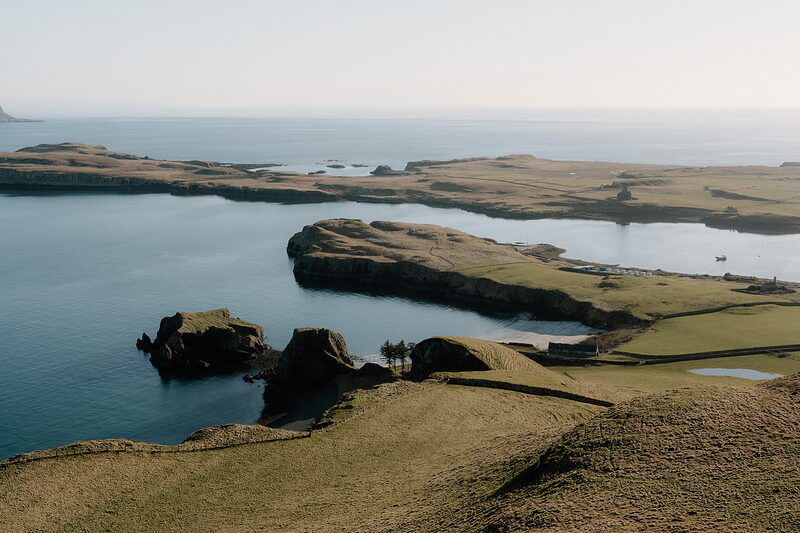
The grave is on the peninsula of Rubha Langanais, a strip of machair below the cliffs of the north coast.
New places, news and stories, as we find them.
What is on on CannaRubha Langanais, the north coast of Canna.
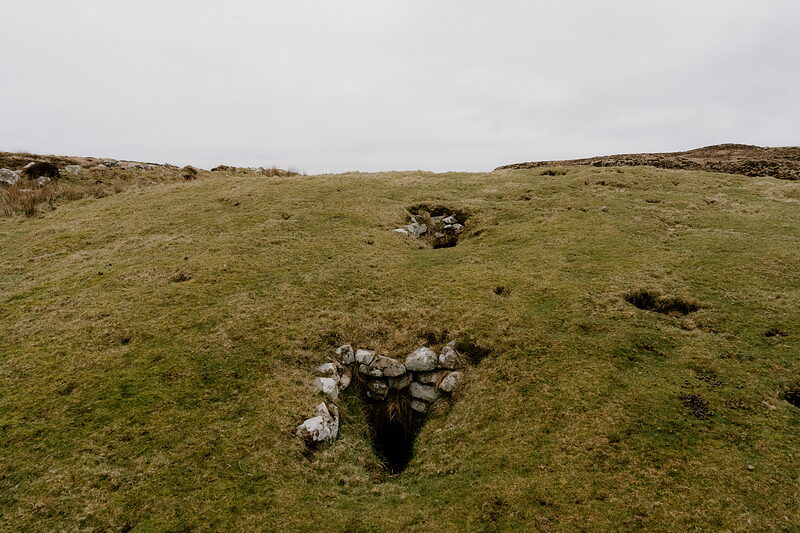 SouterrainsTwo small underground chambers in a green field in the west of Canna, perhaps 2,000 years old.Under a mile1 min by road
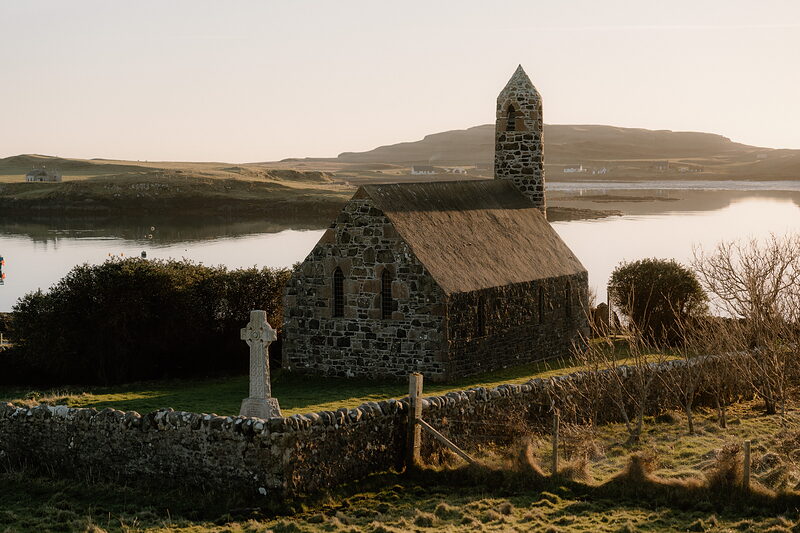
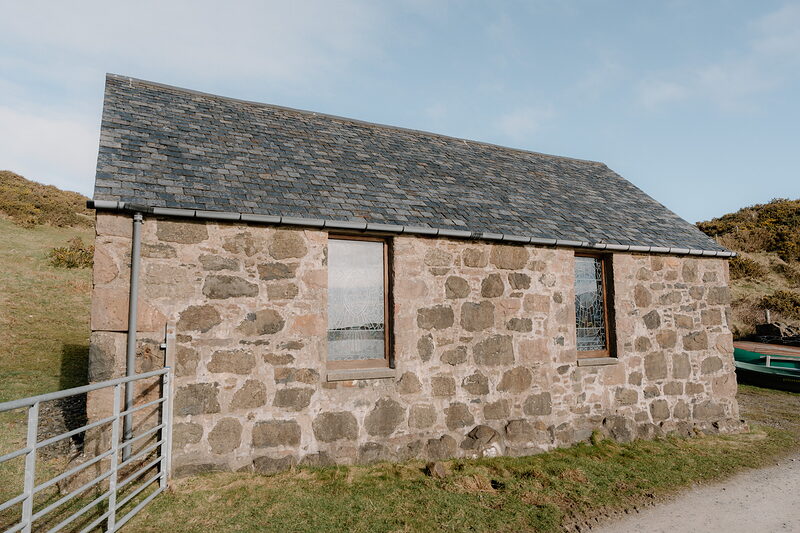 St Columba’s ChurchA small stone chapel on Canna's harbour road, with a white cross on its gable, that served as the shop and post office until 1965.Under a mile1 min by road
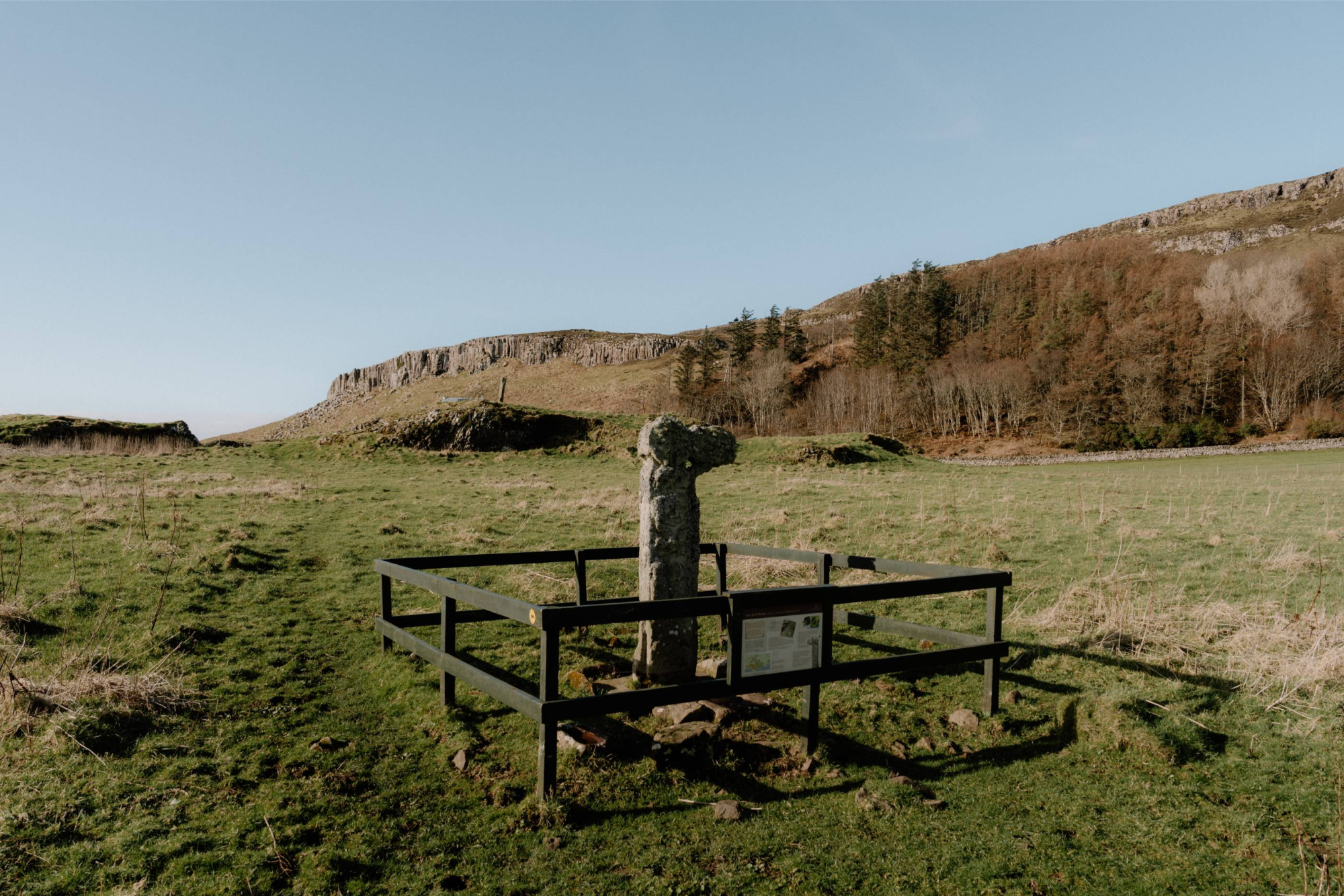 The Sculptured Cross of A’ChillAn early Christian cross of the 7th to 9th century at A'Chill, Canna's old main settlement, missing two arms.Under a mile3 min by road
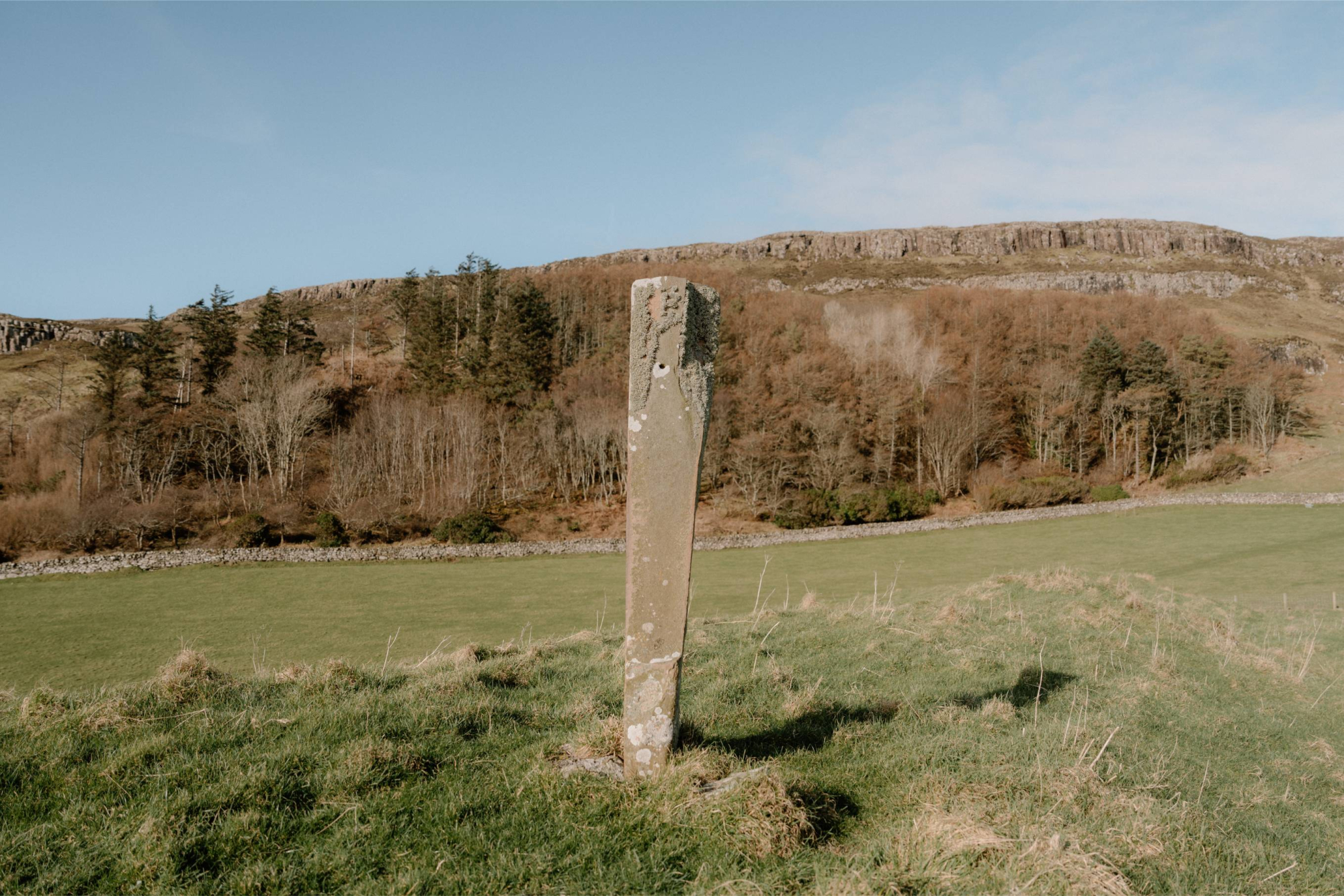 The Punishment StoneA standing stone with a hole in its side at A'Chill on Canna, where offenders were said to be held by the thumb.Under a mile3 min by road
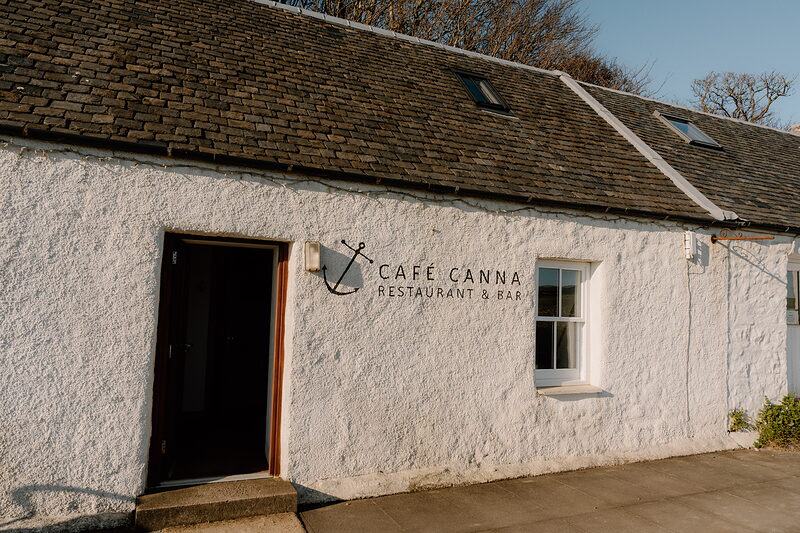 Café CannaAn award-winning little restaurant and bar by Canna harbour, cooking almost entirely from the island and its waters.Under a mile3 min by road
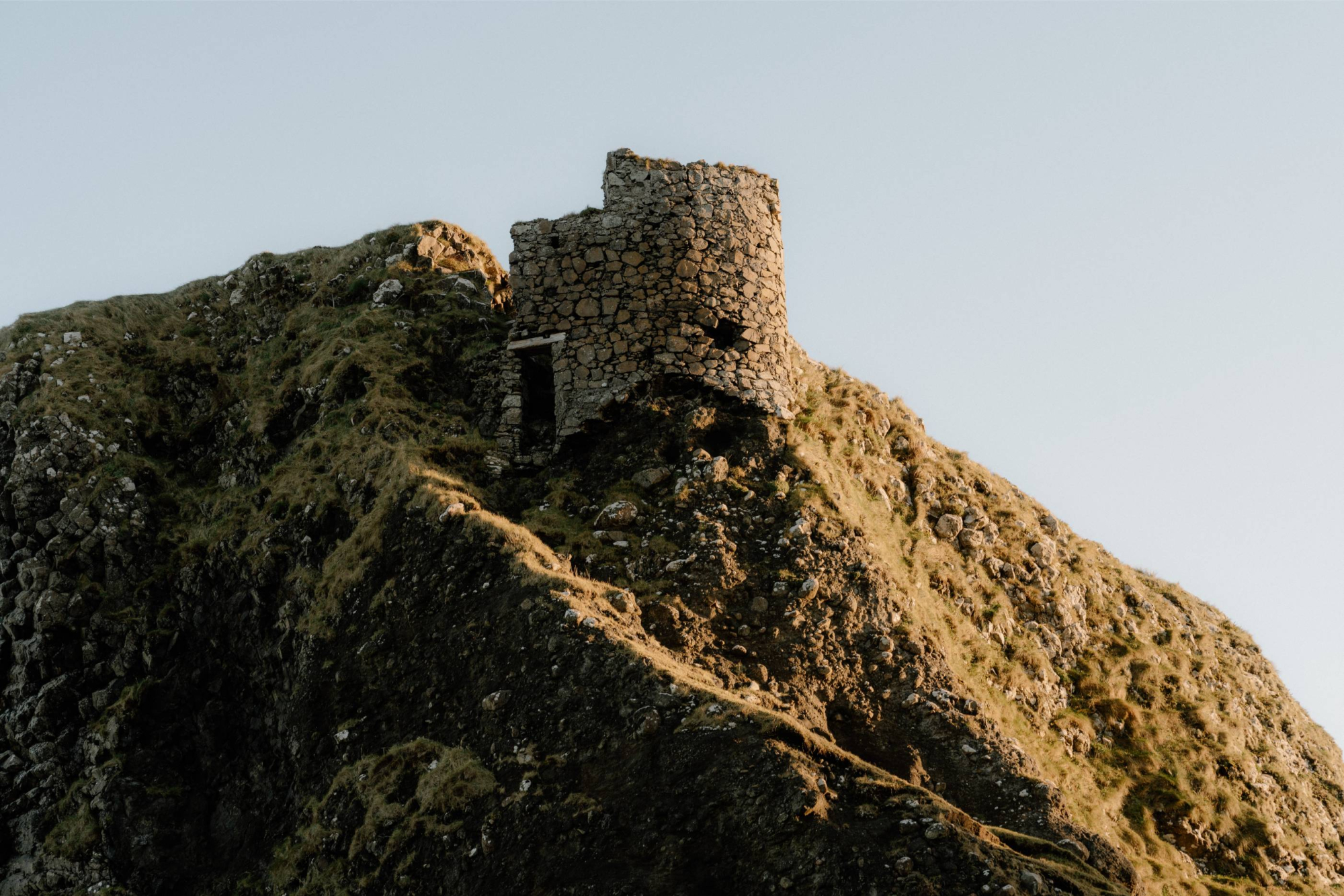 Coroghon CastleA ruined fort on a rock stack above Canna harbour, where Marion MacLeod is said to have been imprisoned.Under a mile4 min by road
Places to stay near the grave, and when each is next free.
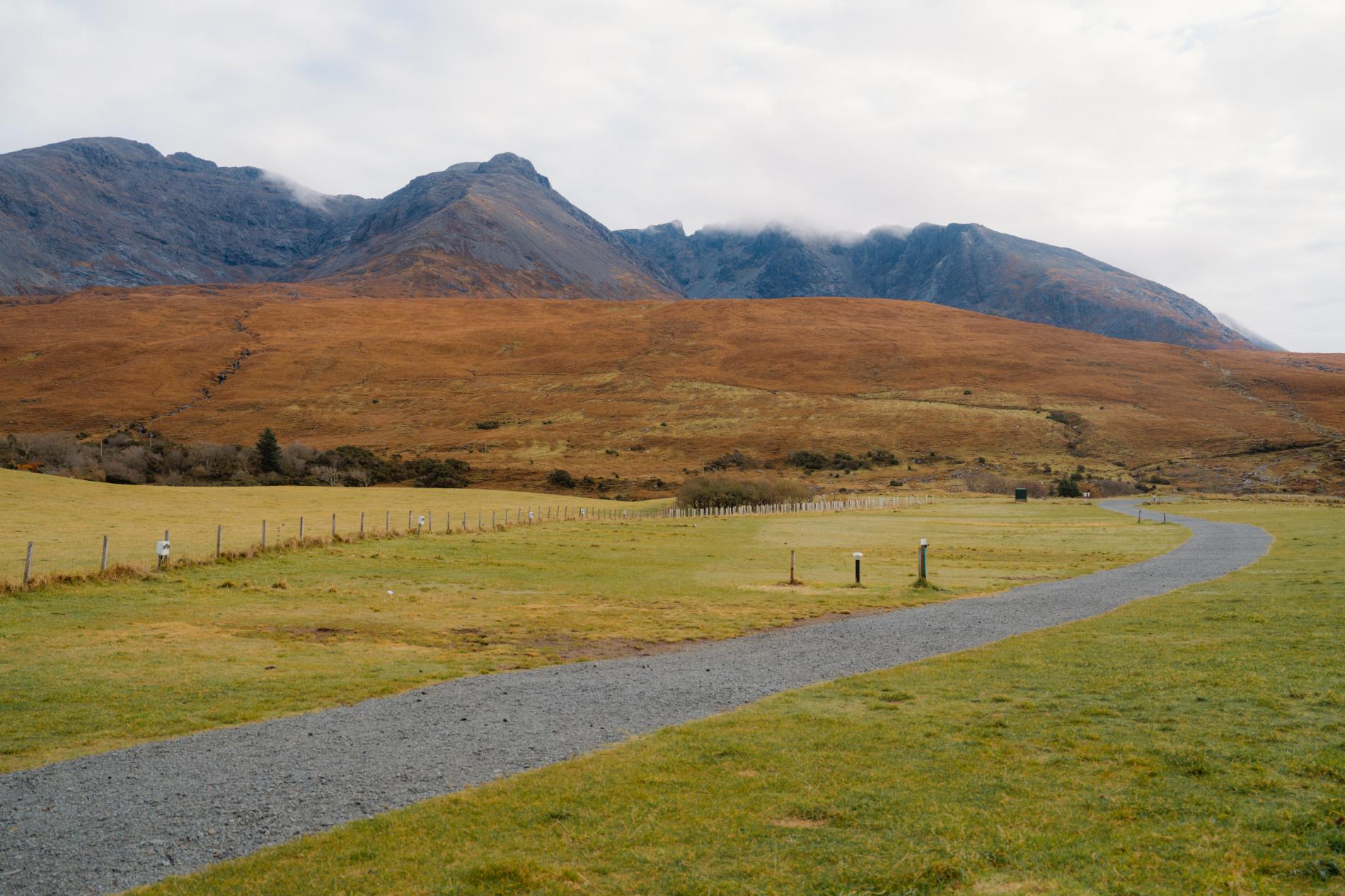 Glenbrittle Campsite
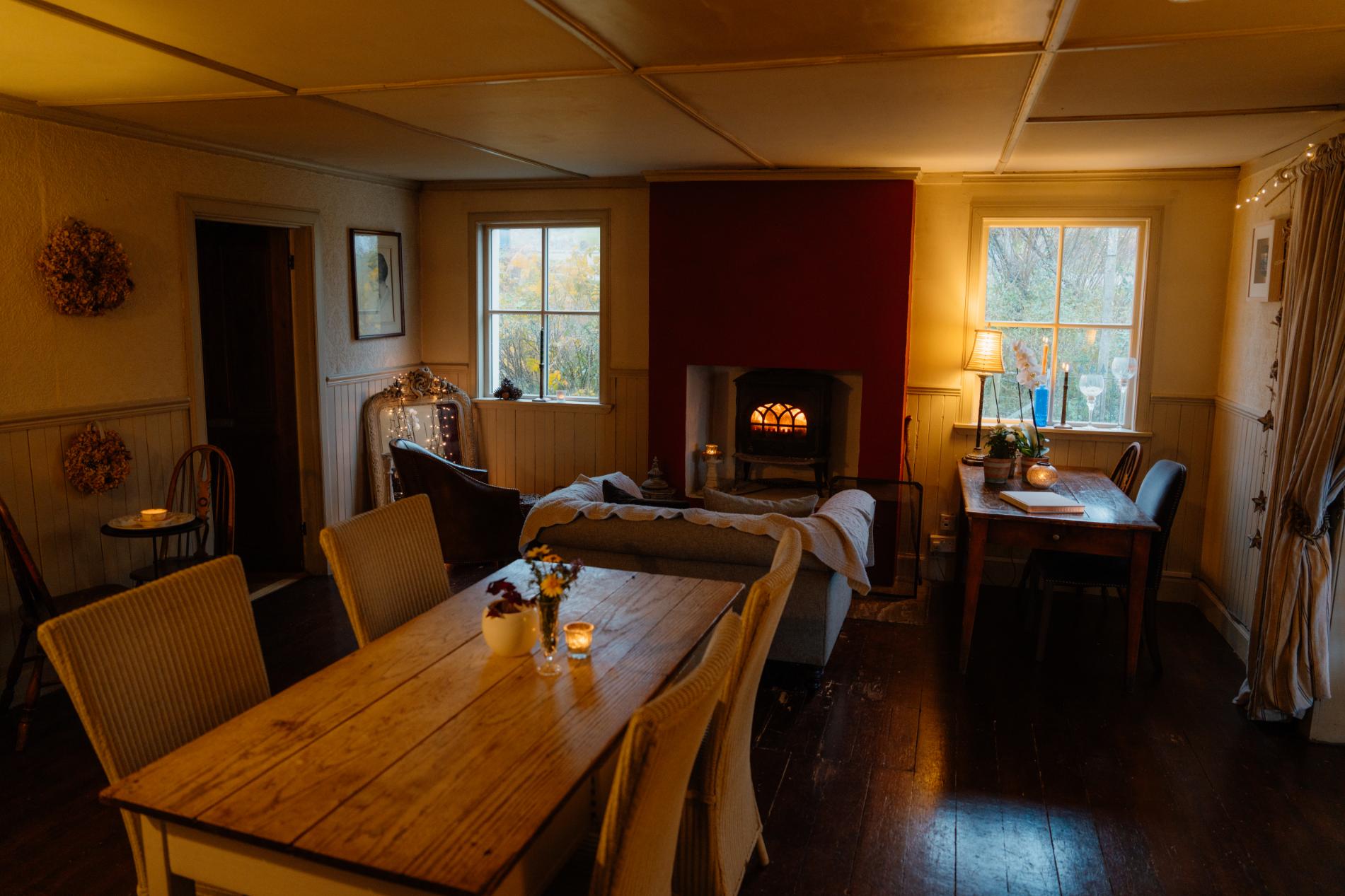 Coruisk House
 Skyewalker Hostel
Every photograph commissioned, every word written by somebody who went. Printed twice a year, made in Scotland.
For further reading, before you go.