
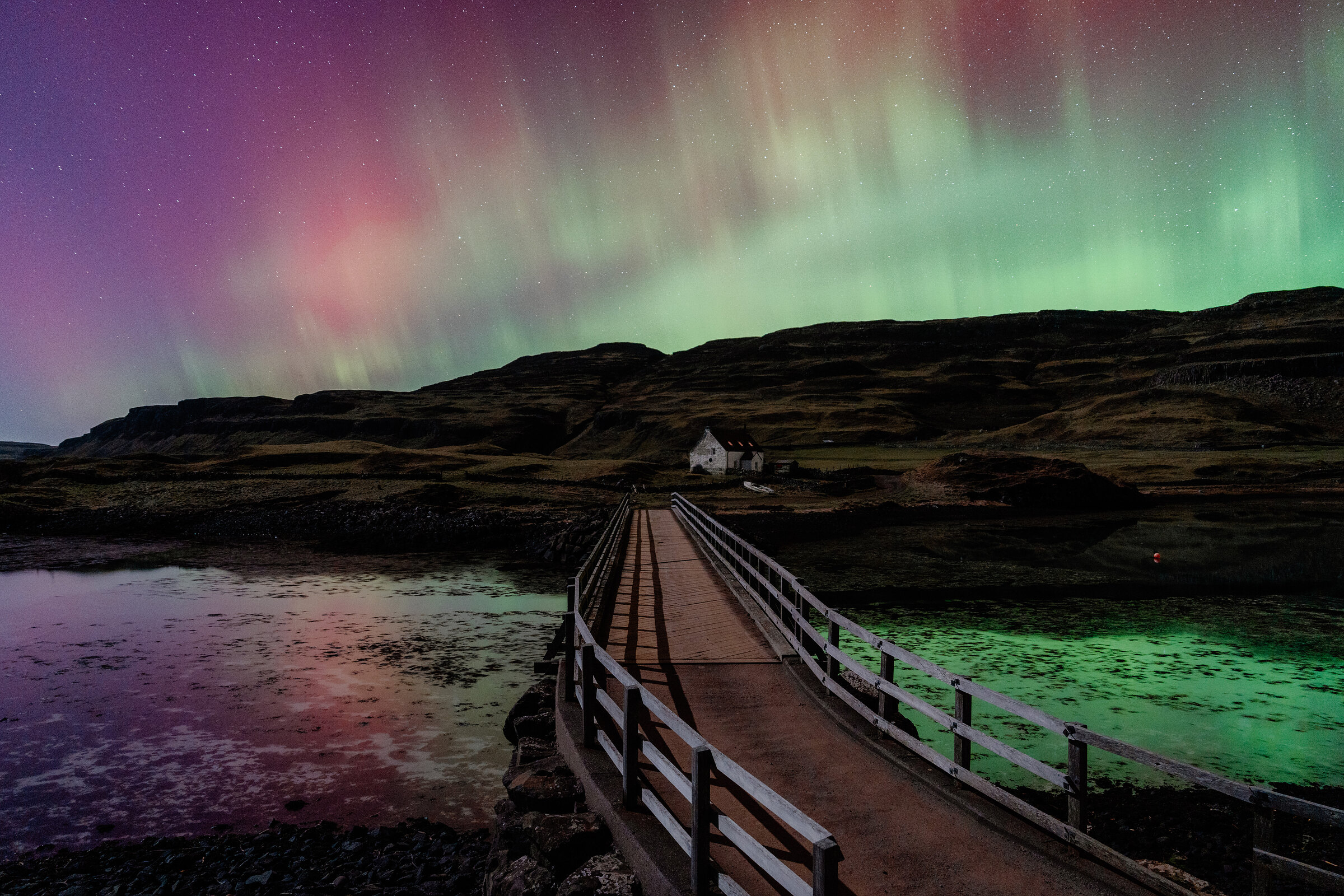
Where to See the Northern Lights in Scotland
From Shetland, Orkney and Caithness to the Dark Sky Parks of the Cairngorms and Galloway: where to see the northern lights in Scotland, when to look and how to read the forecast.
Words by Hidden Scotland
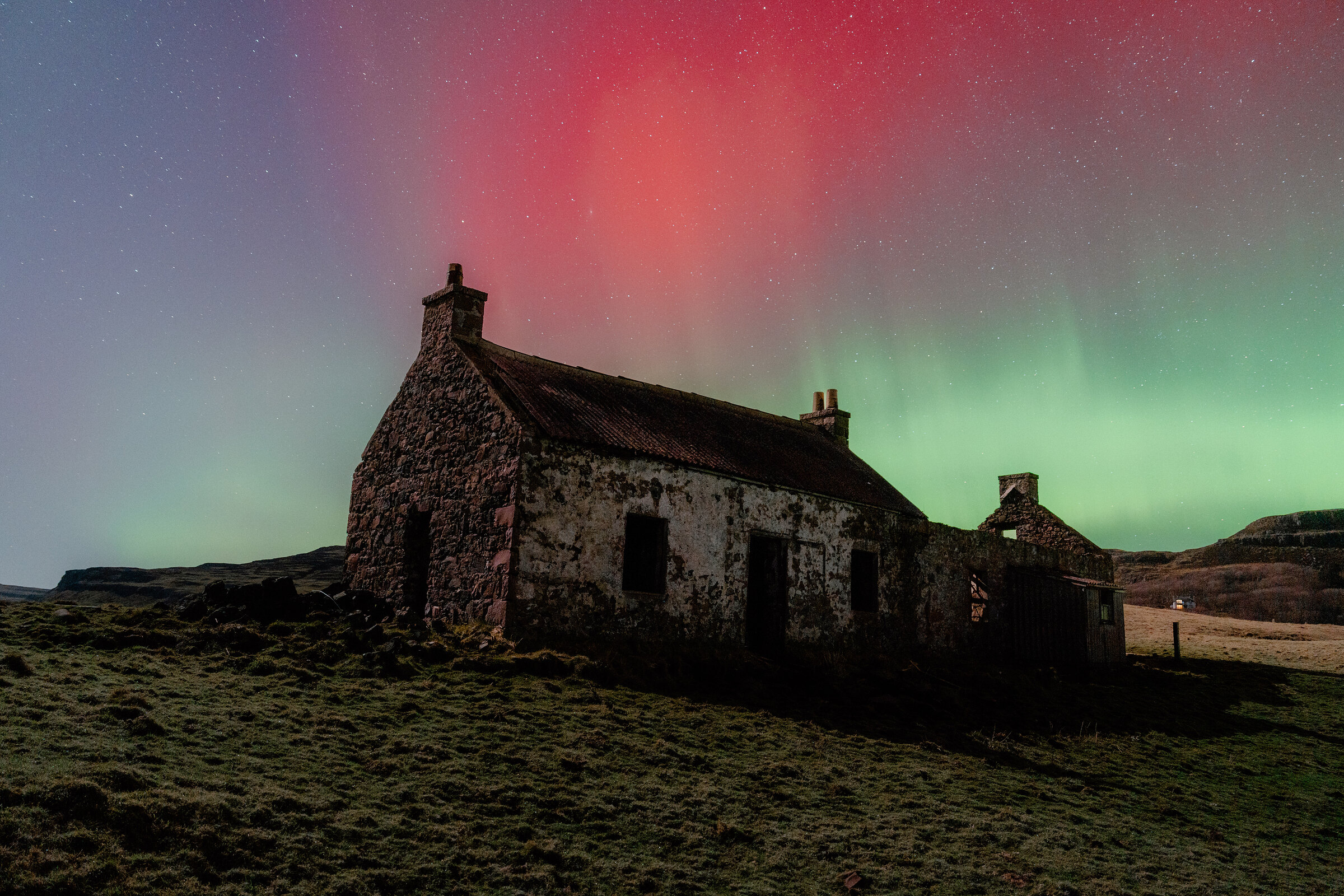
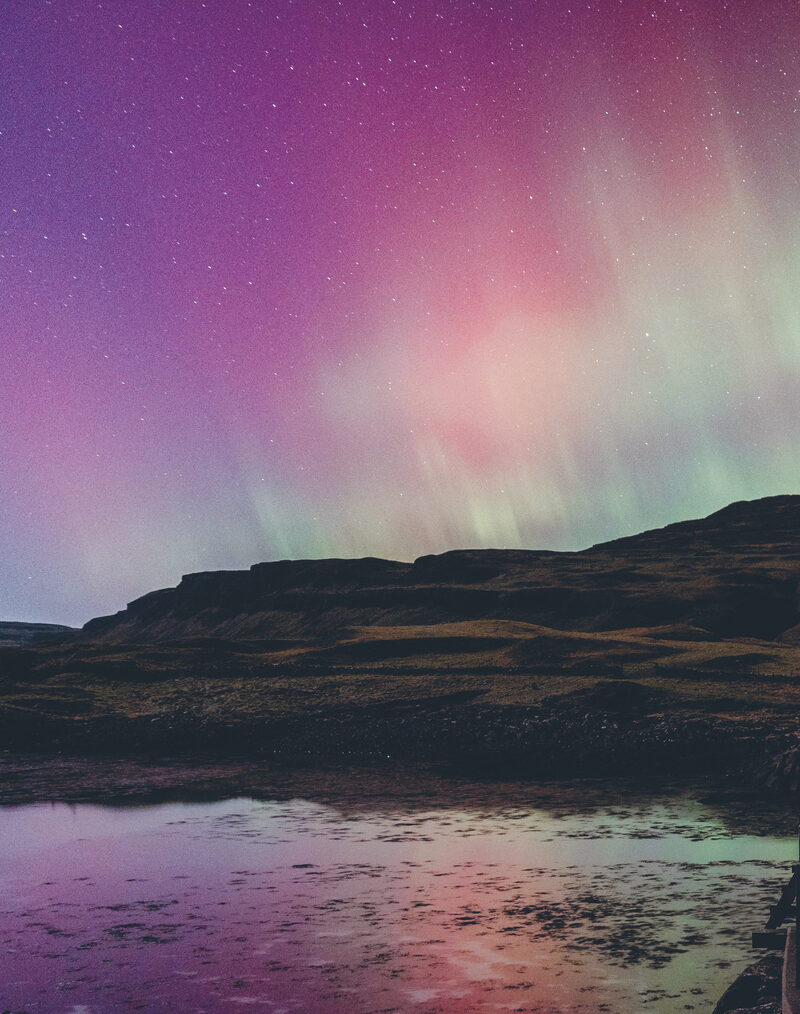
The northern lights are the glow of the solar wind striking the air high above the Earth. Oxygen shines green, and red higher up, while nitrogen gives the blues, pinks and purples. Scotland lies far enough north to see them on a good night, and the further north you go, the better your chances.
There are no tickets and no timetable. All you need is a long dark night, a clear sky and a view to the north with no lights in it. In Shetland they are the mirrie dancers, in Orkney the merry dancers, and in Gaelic na fir-chlis. These are the places known for their dark skies and open northern horizons, and every one of them is worth the trip by day as well.
01 · Shetland
Eshaness
Shetland lies closer to the North Pole than any other part of Britain. At midwinter the sun is up for barely six hours, so the nights are long, and the lights are most often seen between 9pm and 2am. Shetlanders call them the mirrie dancers, from an old word, mirr, to shimmer.
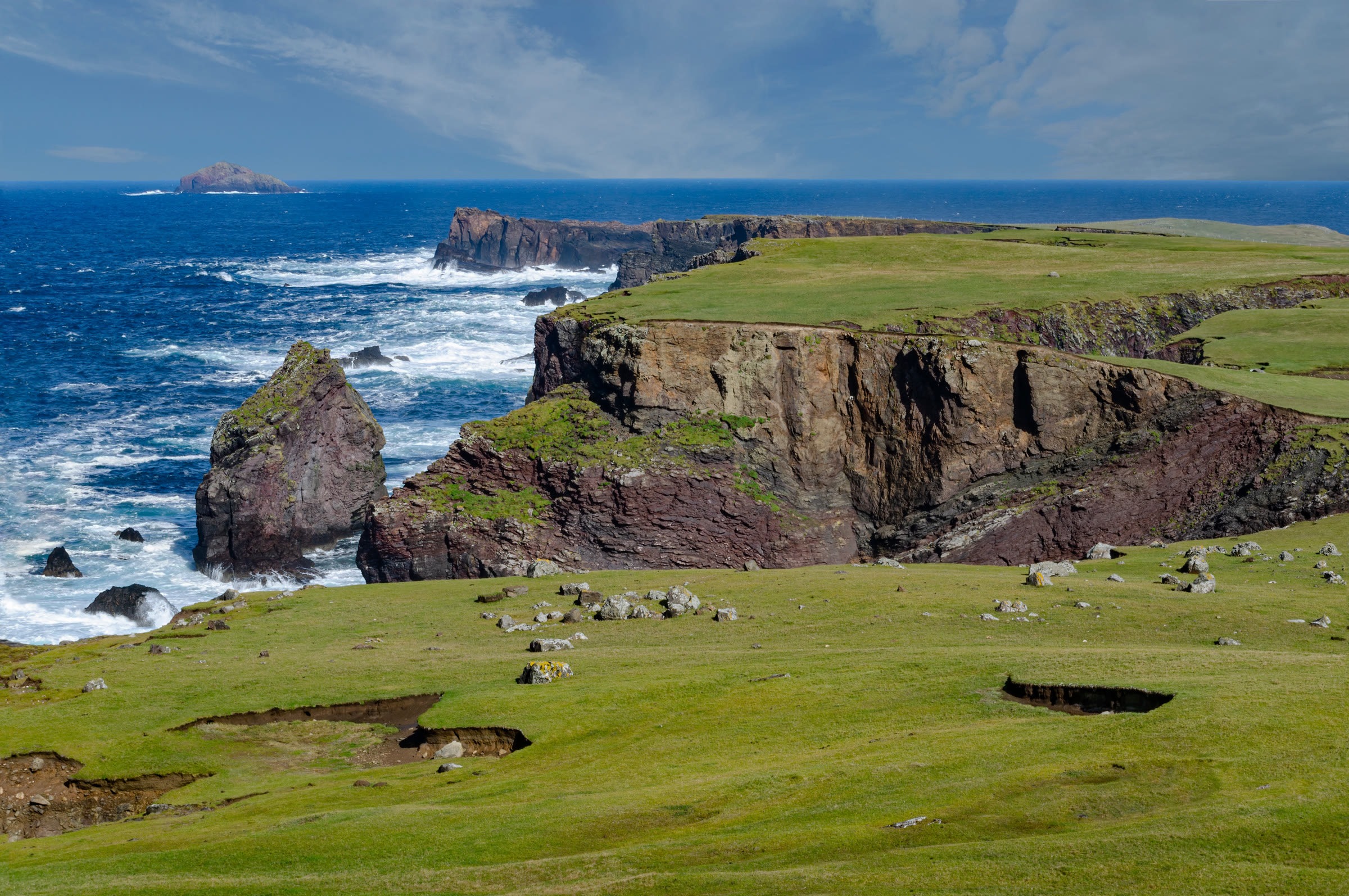
Eshaness is a headland of black and red sea cliffs on the far west of Northmavine, a long way from the lights of Lerwick. Shetland even has aurora alerts of its own, from a magnetometer on the islands run by AuroraWatch UK.
02 · Orkney
Birsay
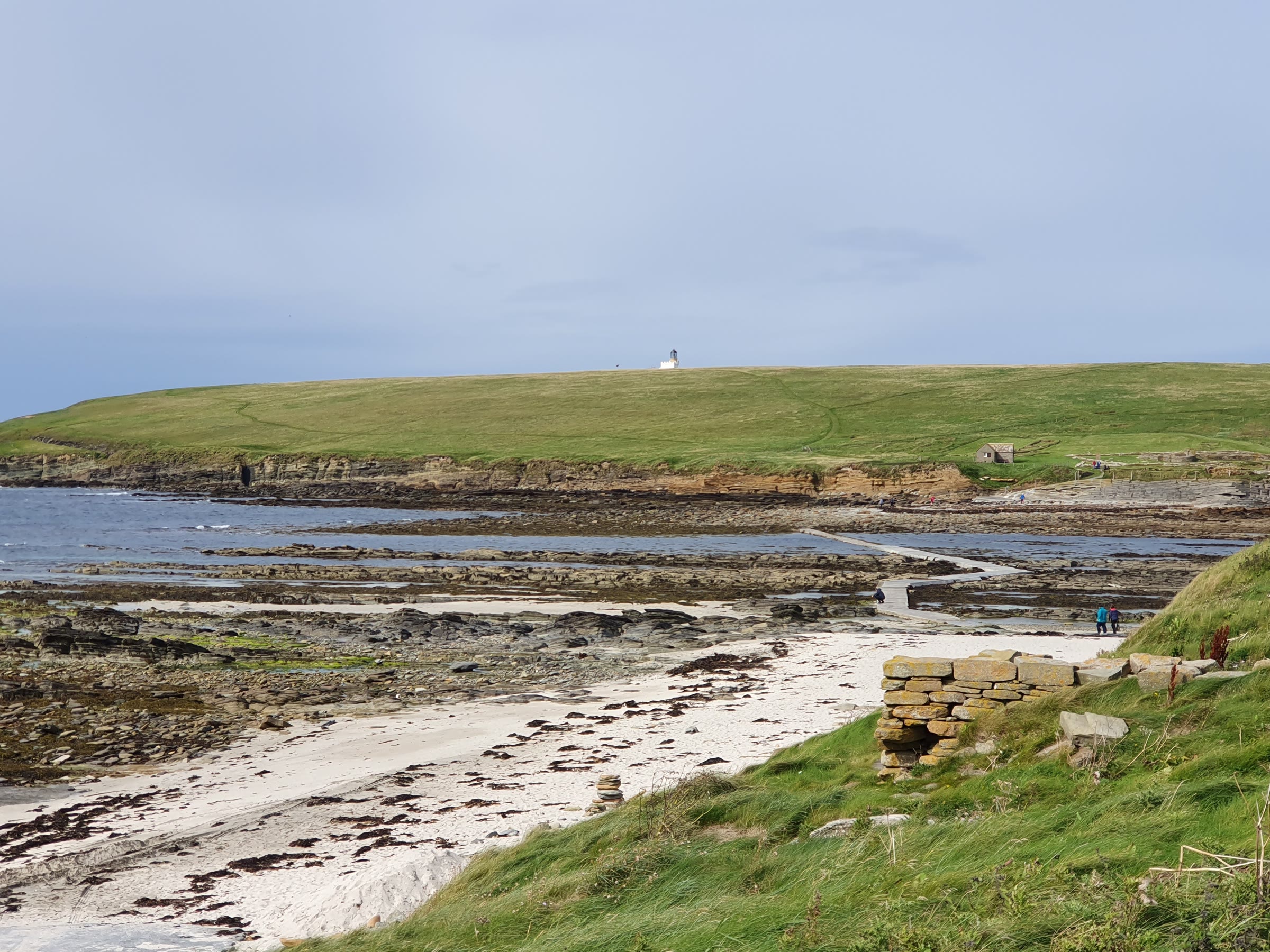
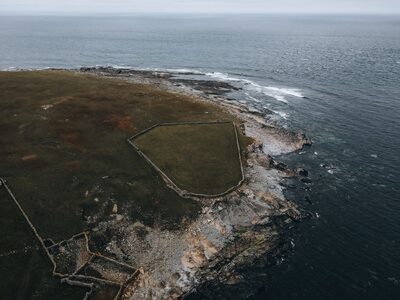
Orkney is so far north that it hardly matters where on the islands you stand. What counts is a clear view north with no lights in it, and the coast at Birsay, at the north-west tip of the Mainland, has just that, looking out past the tidal island of the Brough of Birsay.
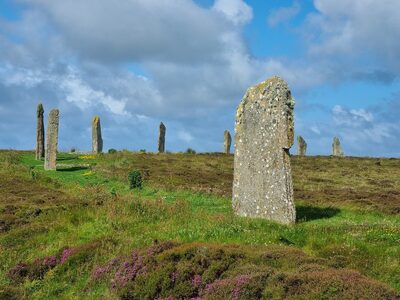
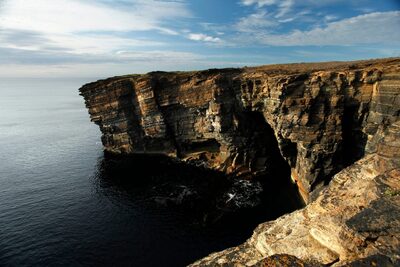
Inganess Bay and the top of Wideford Hill, both just outside Kirkwall, are good spots too, and so are the Ring of Brodgar and the cliffs at Yesnaby. North Ronaldsay, the most northerly of the islands, was named a Dark Sky Island in 2021.
Don’t expect the great shimmering curtains of Iceland or Lapland every time. Some displays are faint and brief, and plenty of people only find out from the photographs the next morning.
03 · Caithness
Dunnet Head and Duncansby Head
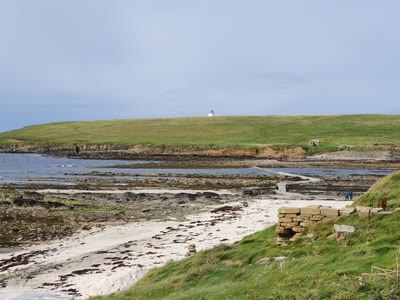
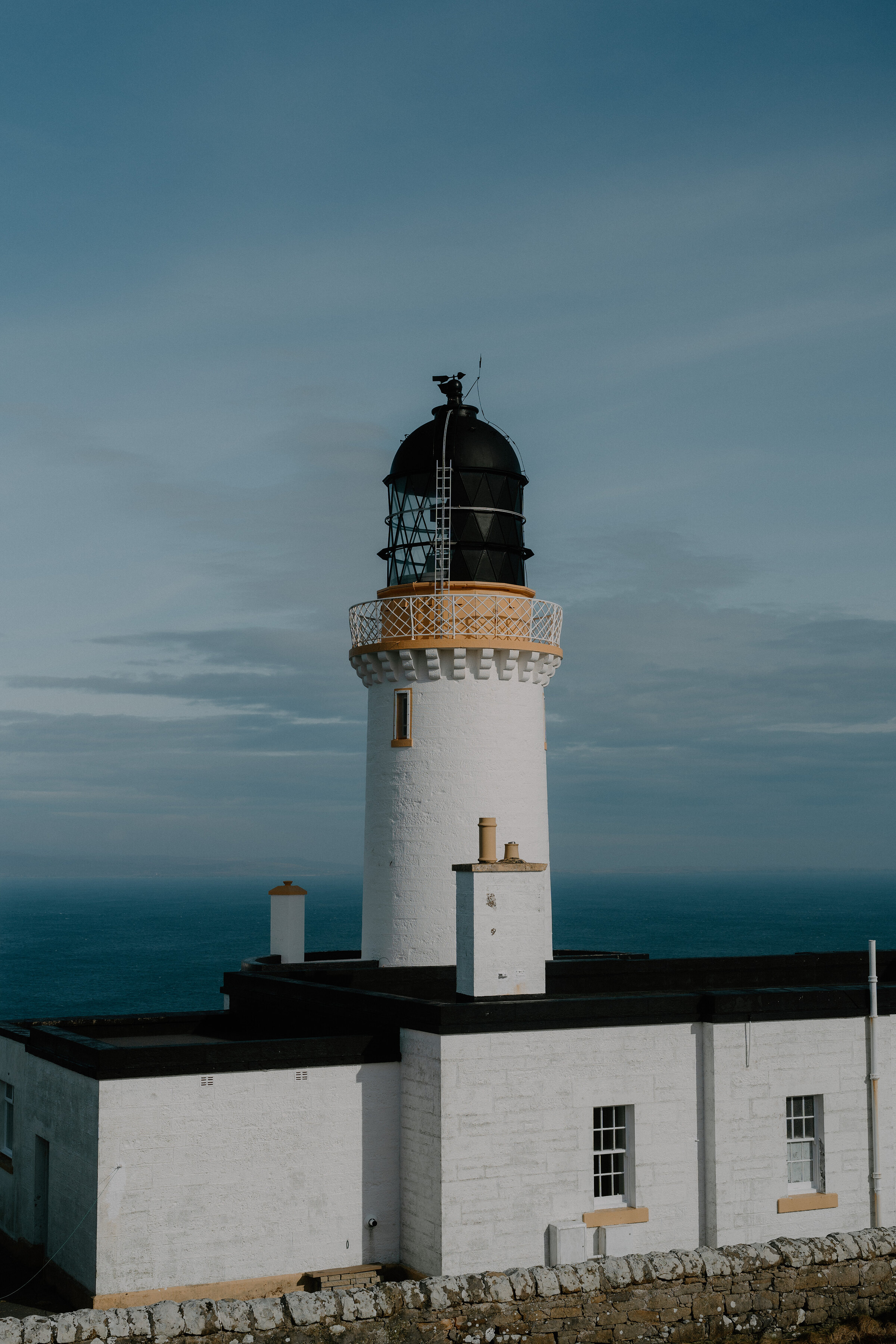
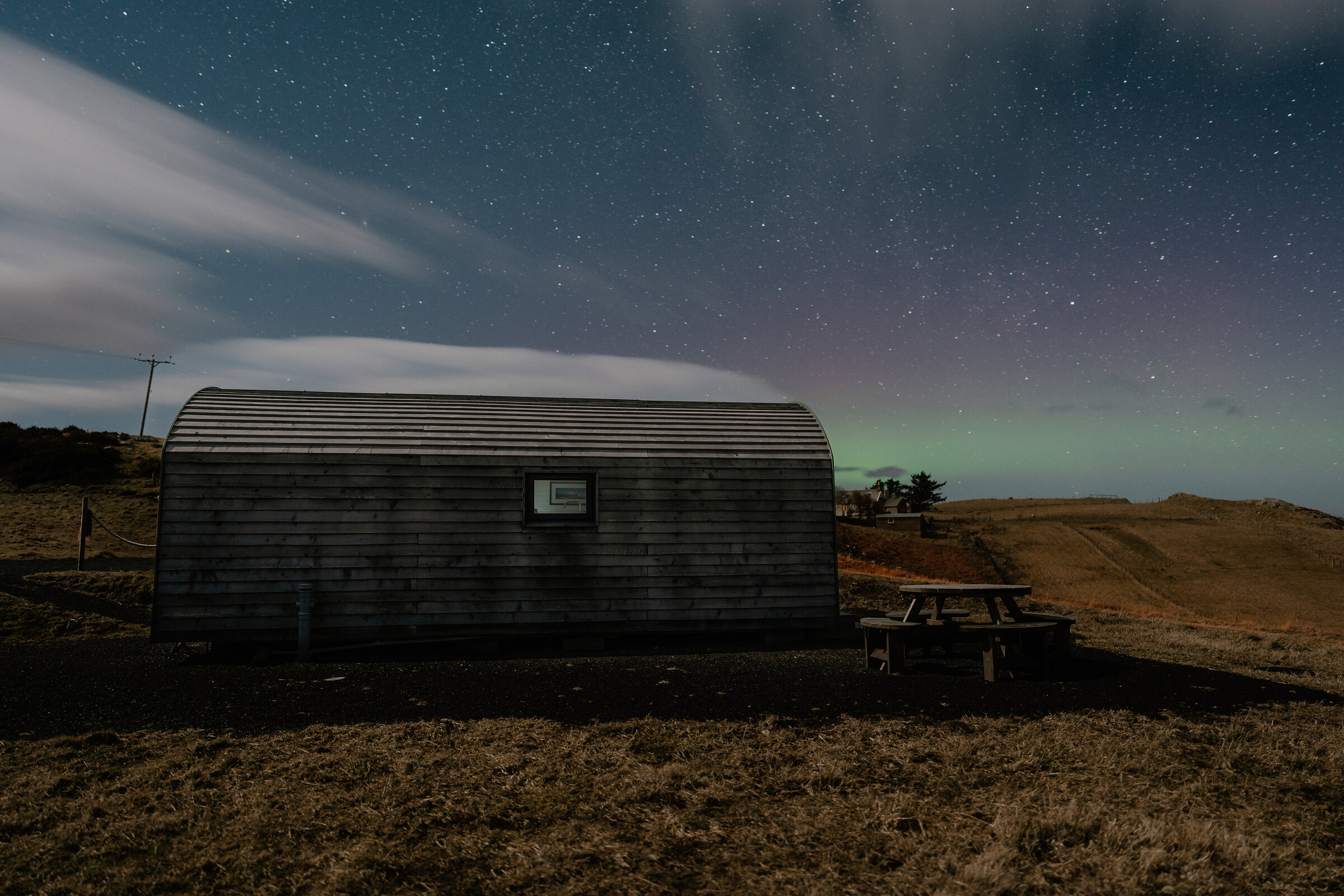
Caithness is as far north as the mainland goes, so there is no ferry to catch. Dunnet Head is the most northerly point of mainland Britain, its lighthouse on the cliffs high above the Pentland Firth, and the view north runs over the water to Orkney.
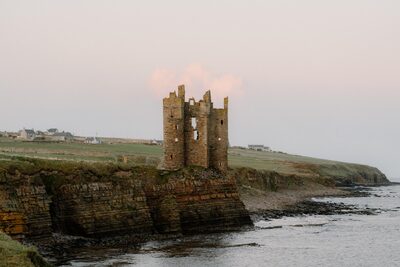
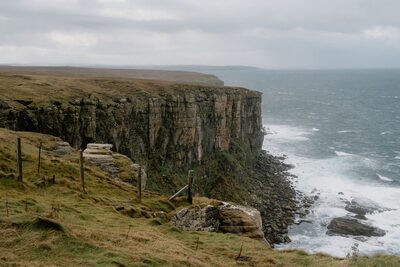
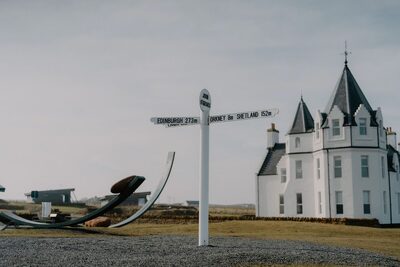
Duncansby Head, the north-east corner of the mainland a couple of miles past John o’ Groats, is the other headland to head for. By day, walk the shore from John o’ Groats to Duncansby Head for the stacks.
04 · Sutherland
Strathy Bay
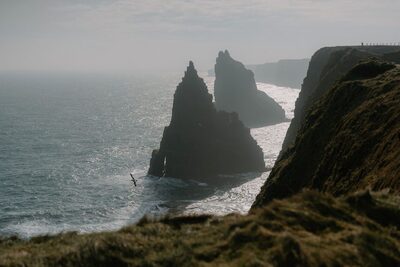
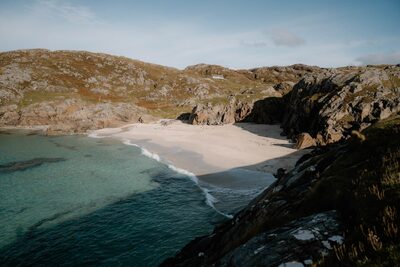
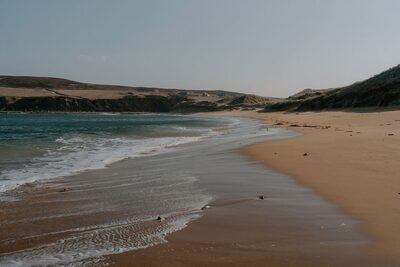
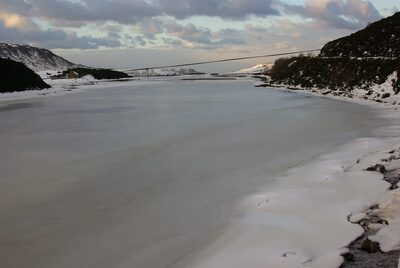
The north coast of Sutherland looks straight out over the sea, and its villages are small and far apart, so there is little light to spoil the northern sky. At Strathy the river comes down through a crofting village to a bay of pale sand, closed in by cliffs and sea stacks on the east side.
In the Mackay Country of north Sutherland the old Gaelic name for the lights was Na Dannsairean, the dancers. Melvich and Bettyhill, either side of Strathy, look north over the sea too.
05 · Small Isles
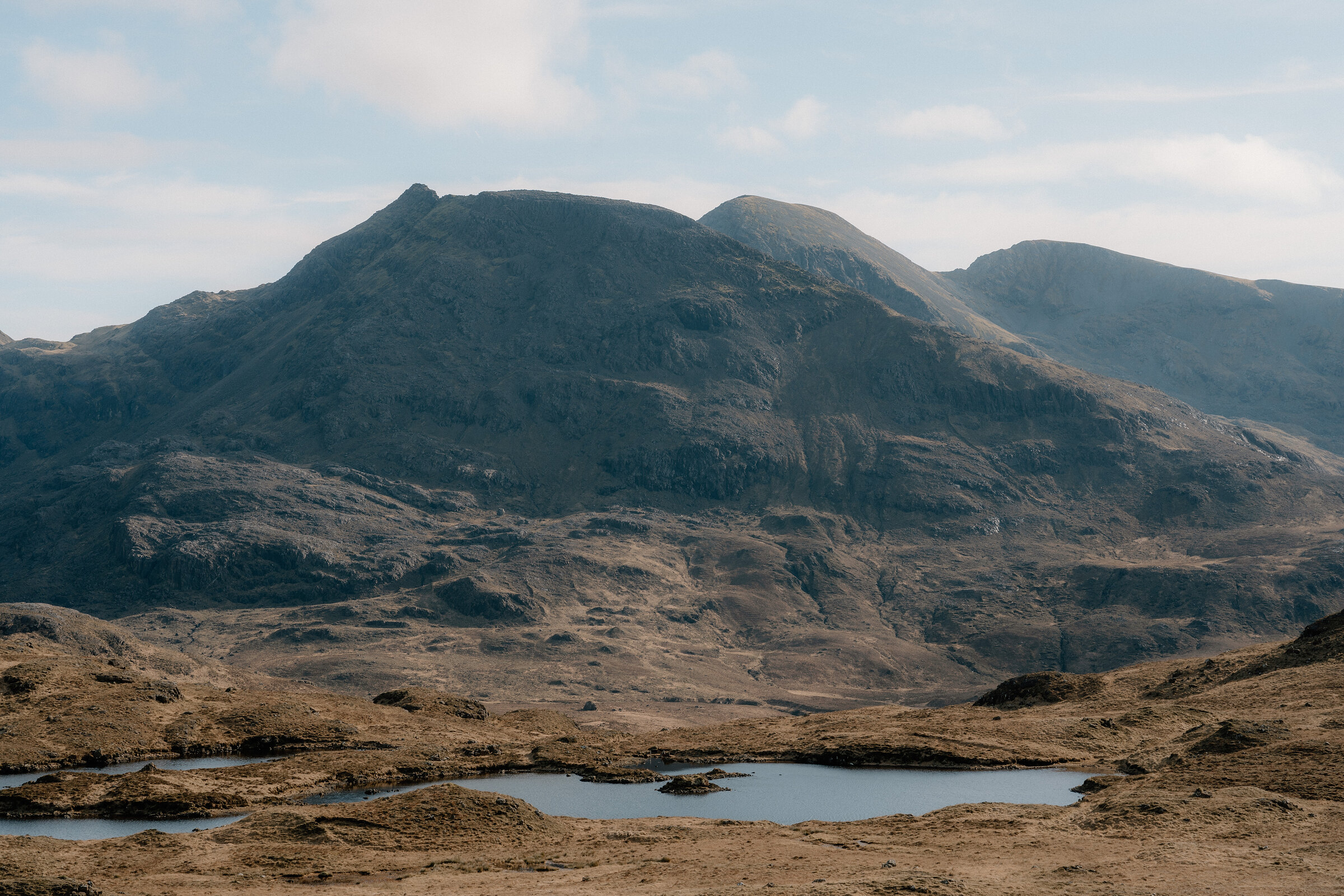
The Isle of Rum
In 2024 Rum became Scotland’s first International Dark Sky Sanctuary, the strictest of the titles given to dark places. Fewer than forty people live on the island, there is no public lighting, and almost all of it is a national nature reserve looked after by NatureScot.
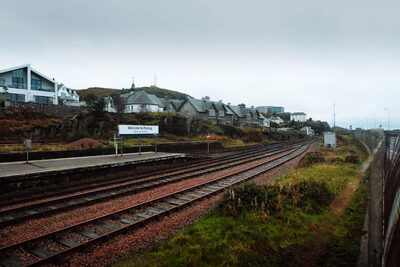
The ferry comes from Mallaig and you get about on foot, so to see the night sky here you need to stay, and there are only a few beds on the island. By day, the otter hide walk makes a good winter day out from Mallaig.
06 · Argyll
The Isle of Coll
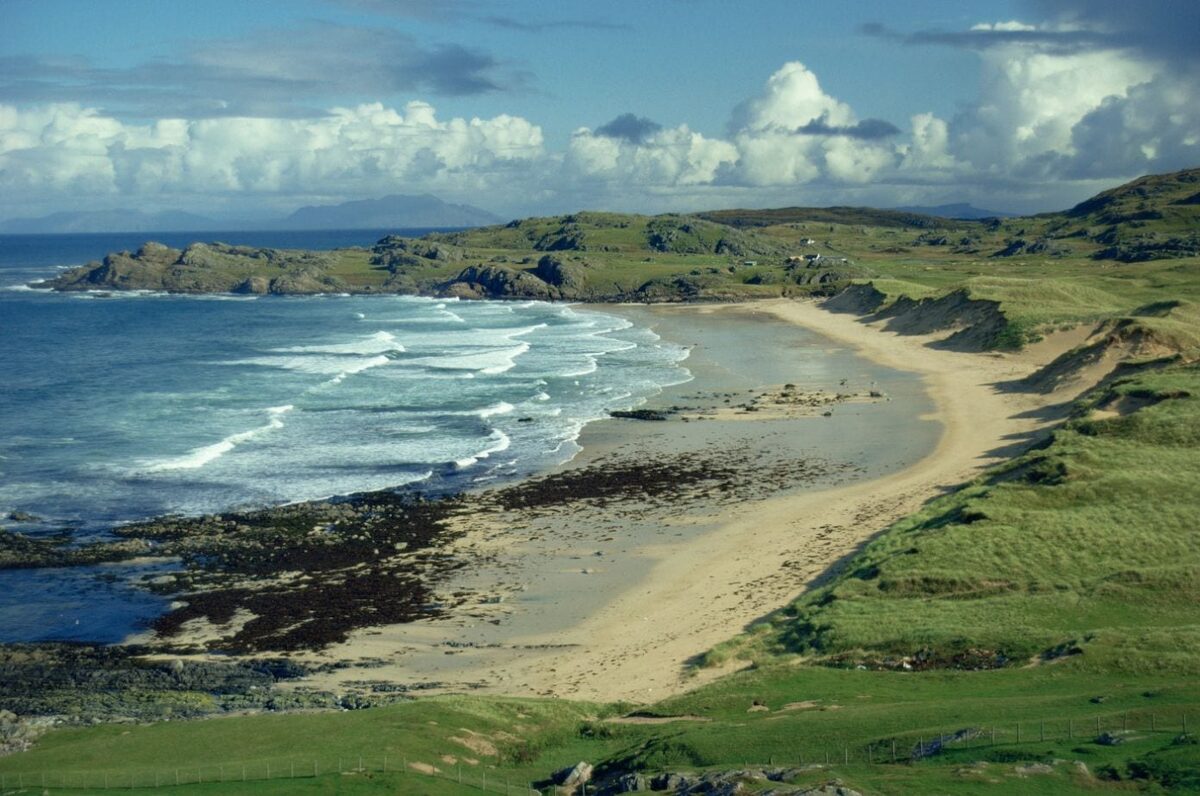
Coll was named a Dark Sky Community in 2013. It is a low, green island west of Mull with one village, Arinagour, and the RSPB reserve at its west end is one of its places for watching the sky. The ferry from Oban takes about two hours and forty-five minutes.
Through the winter the island’s community centre and bunkhouse put on dark-sky weekends, with a planetarium indoors for cloudy nights.
07 · Cairngorms
Tomintoul and Glenlivet
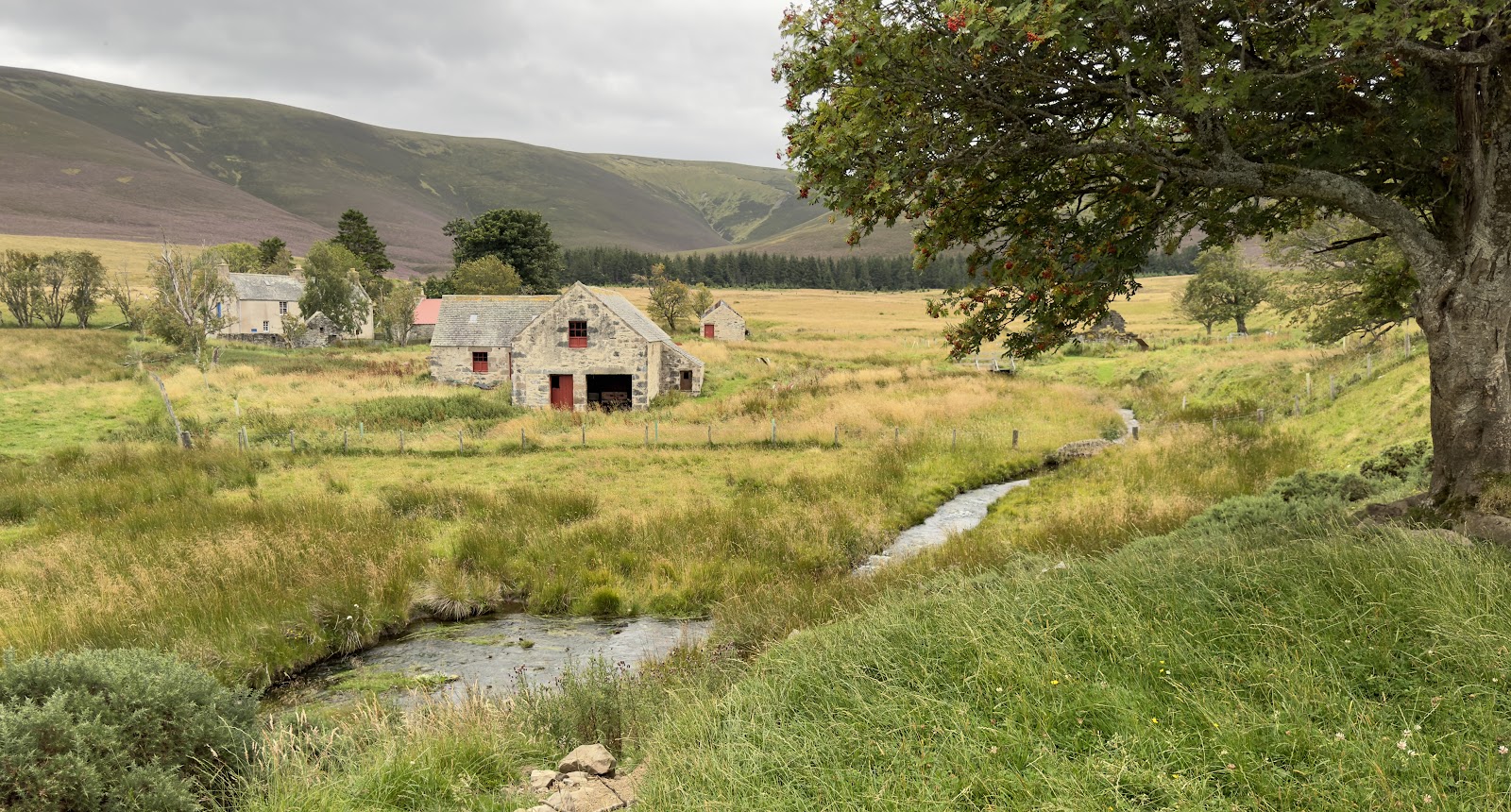
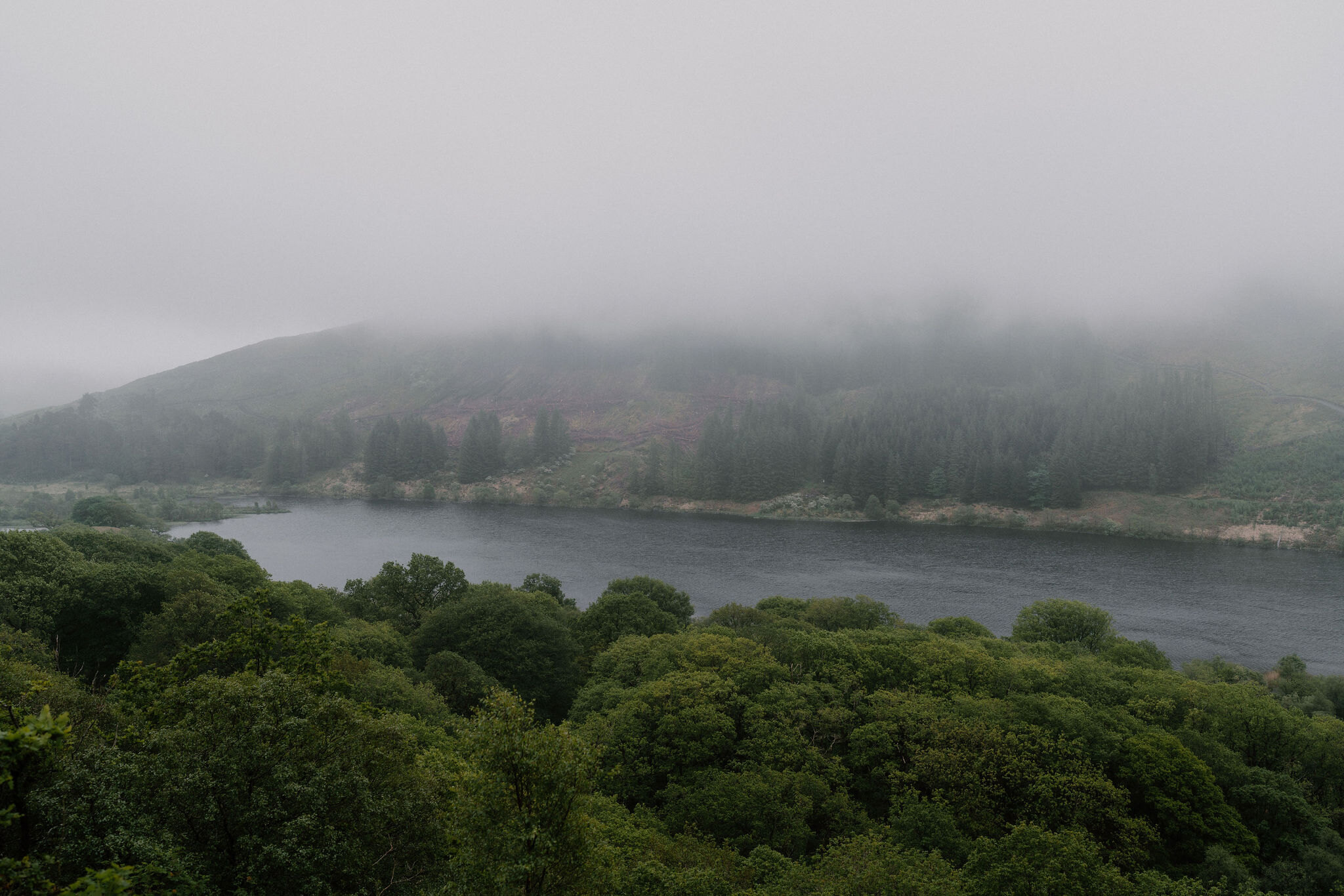
The Tomintoul and Glenlivet Dark Sky Park was named in 2018. It covers the Glenlivet Estate and the land around Tomintoul, on the northern edge of the Cairngorms National Park. It has three stargazing sites, each with a car park and boards about the night sky: the Field of Hope, ten minutes’ walk from the village, the Carrachs in the Braes of Glenlivet, and Blairfindy Moor. One of them has a hide with binoculars.
The Discovery Centre in Tomintoul runs an hour-long Dark Sky Experience, and the Cairngorms Astronomy Group holds regular events. By day, the Scalan Heritage Trail follows the Braes of Glenlivet.
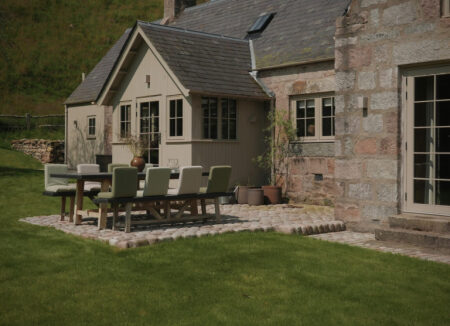
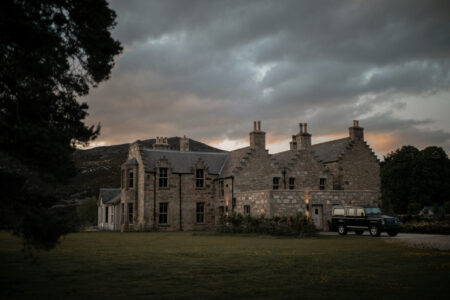
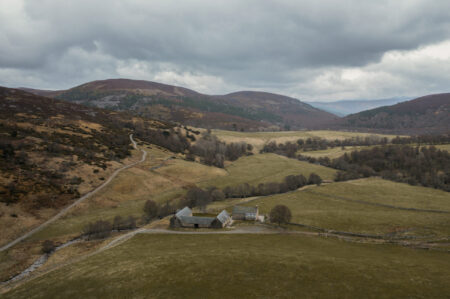
Stay near Tomintoul and Glenlivet
Our places to stay, nearest first
08 · Dumfries and Galloway
Galloway Forest Park
Galloway Forest Park was the first Dark Sky Park in Britain, named in 2009, and on a clear night more than seven thousand stars and planets can be seen from it. This far south the aurora needs a stronger night to show, low on the northern horizon, but the stars alone are worth the trip.
The favourite places to stand are Clatteringshaws Loch, Stroan Loch and Glentrool, and the visitor centre at Kirroughtree has boards on the constellations and planets. By day, walk round Loch Trool to Bruce’s Stone.
09 · Dumfries and Galloway
Moffat
Moffat was named a Dark Sky Community in 2016. The town pressed the council to change its outdoor lighting, and the policy that came of it now protects the night sky over the whole of Dumfries and Galloway.
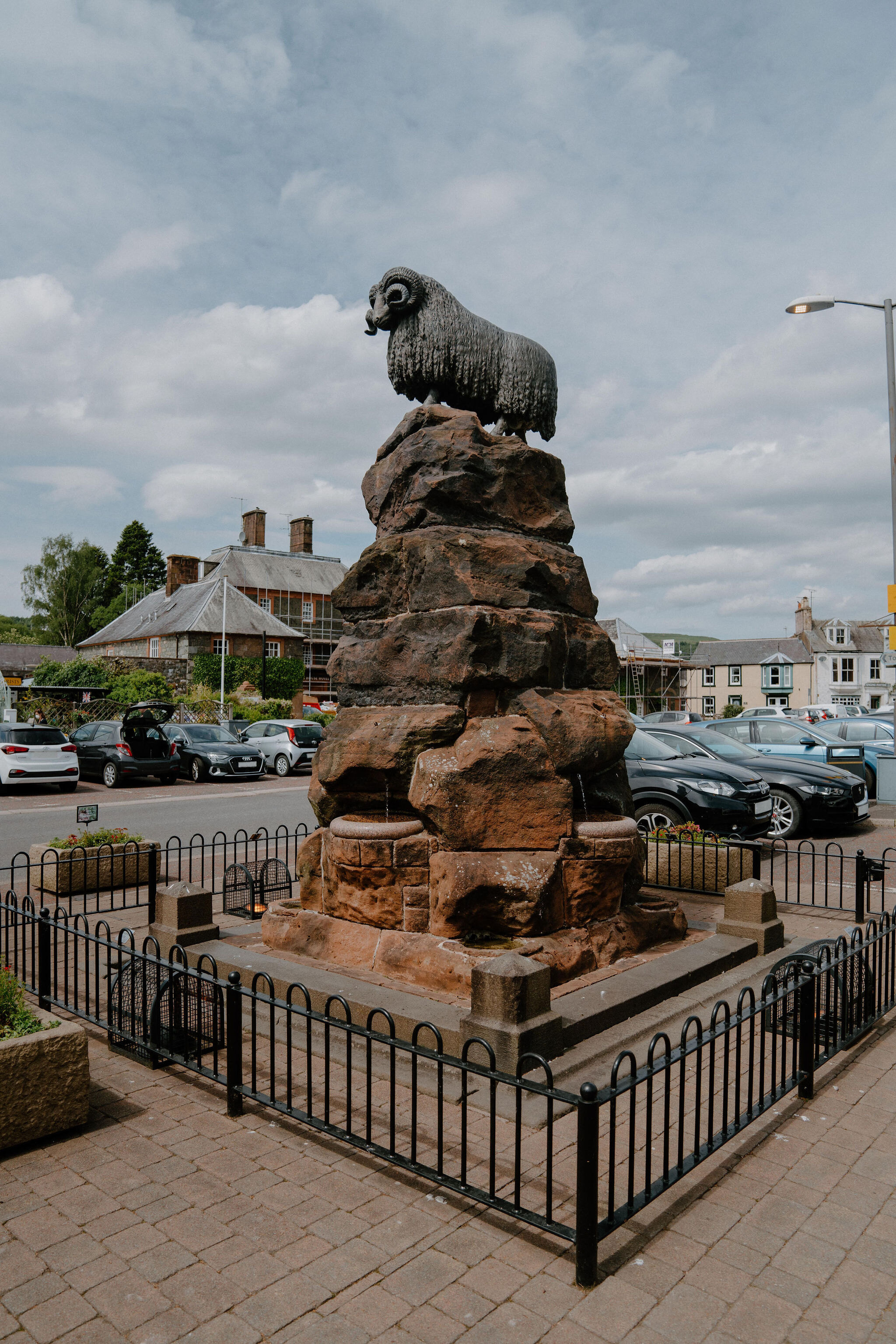
The old spa town sits at the top of Annandale, with its wide high street and its ram on the fountain. By day, walk up the Grey Mare’s Tail to Loch Skeen in the Moffat Hills.
When to look.
The aurora can turn up on any dark night, but the long nights from September to April give it the most chances. In May, June and July the north of Scotland barely gets dark at all. The Met Office says the best months are around the equinoxes, March and April and September and October, when the storms that cause the lights tend to be larger.
The best of it usually comes between about 10pm and 2am, and a display can last a few minutes or hold for hours. A bright moon washes out the fainter ones.
The Sun goes through a cycle of about eleven years. In October 2024 NASA and NOAA said it had reached the busy peak of its present cycle. The years after a peak are quieter, but big storms still come: in January 2026 the lights were seen from the Highlands to the south coast of England.
Reading the forecast.
The alerts to follow come from AuroraWatch UK, run by Lancaster University, which measures the Earth’s magnetic field and sends out an alert when it is disturbed. Green means nothing much is happening. Yellow means the aurora may be visible by eye from Scotland. Amber means it is likely to be seen by eye in Scotland, and red means it is likely to be seen anywhere in the UK.
An alert tells you what is happening now, not what will happen later. A yellow that lasts only an hour rarely comes to anything, but if it holds for several hours, or has just been higher, it is worth going out to look. The alerts come through its Twitter, Facebook and Telegram accounts, and through phone apps that use its readings.
For the nights ahead, the Met Office’s space weather forecast gives the chance of aurora over the UK, and NOAA’s 30-minute forecast shows the ring of light around the pole as it moves. Both use the Kp index, from 0 to 9, and the higher it goes, the further south the lights reach.
When you go out, get away from street lights to somewhere with a clear view north, and give your eyes half an hour to get used to the dark, with a red torch if you need one. To the eye the aurora often starts as a pale glow along the horizon, and a phone or a camera on a tripod will pick up colour the eye cannot see.
 Out now
Twice a year, to your door
One hundred and sixty pages of Scotland, every photograph commissioned, every word written by someone who went. Members get both issues posted and everything on screen.
The Daily
Arrives at 5am every day.
A free morning email to see what’s on this week, catch up on what’s happening in Scotland and find somewhere new to go.
 Chasing the Night
 Beaver, Is That You?