Did you know
The top of Britain.
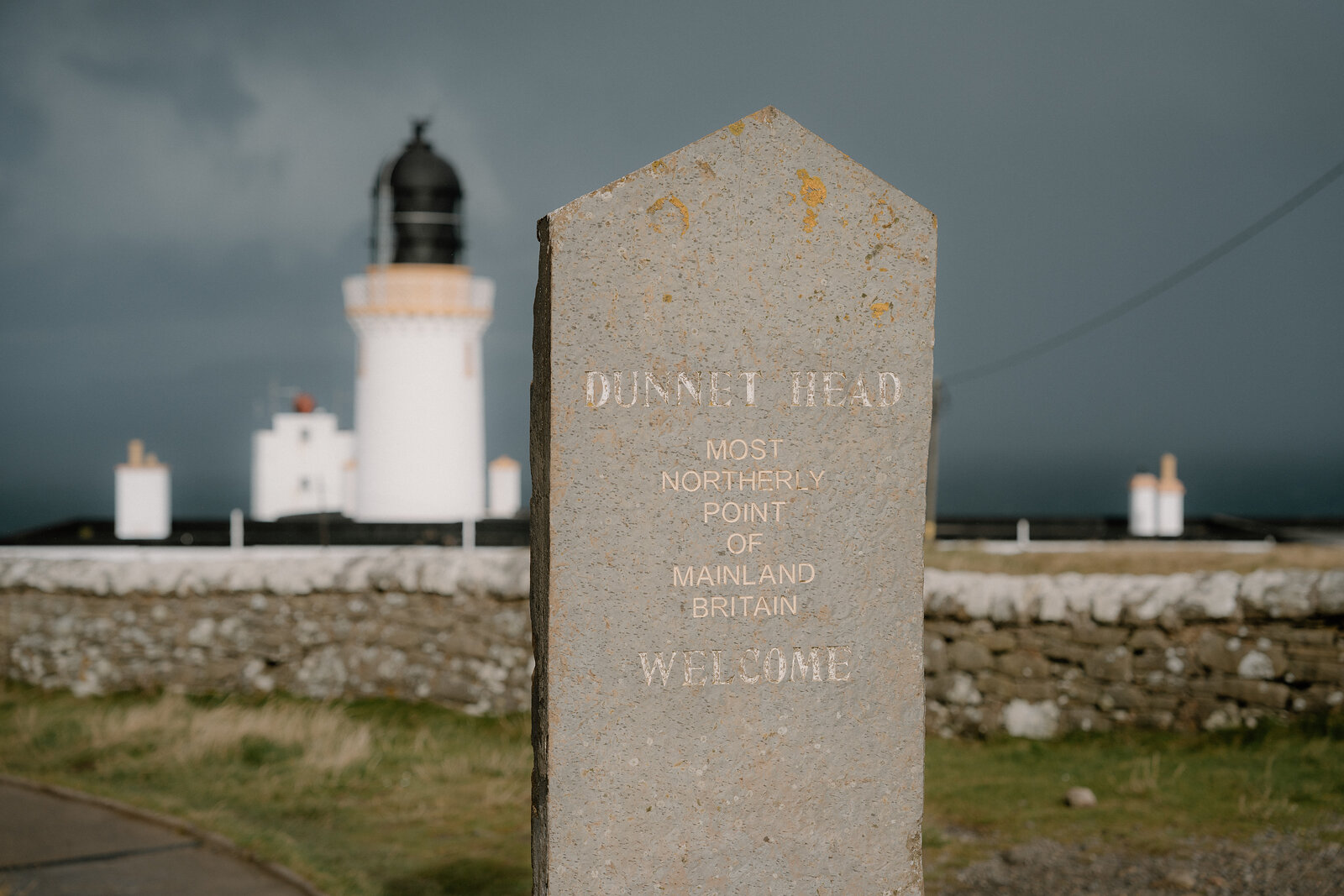
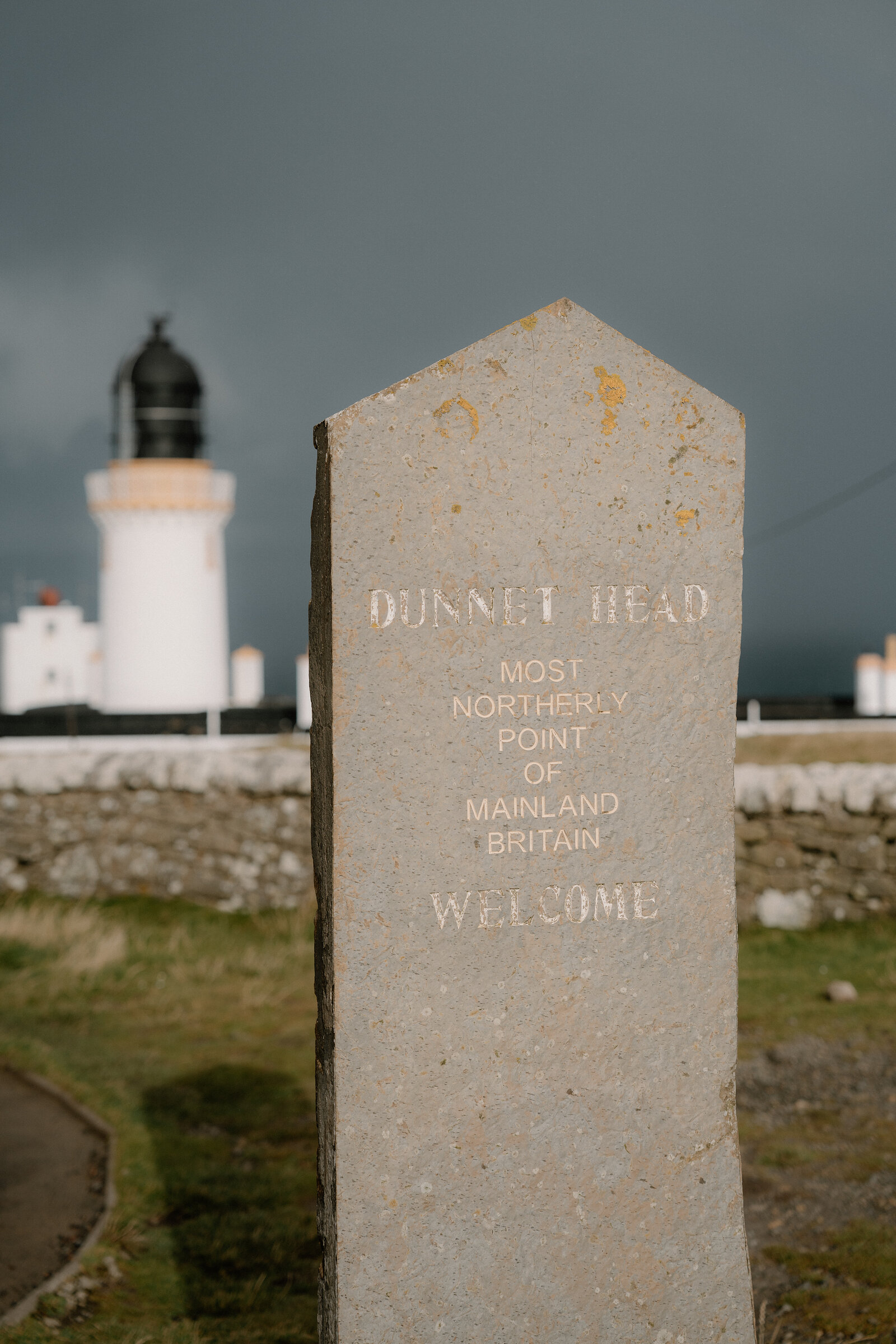
A stone marker at Dunnet Head marks the most northerly point of mainland Britain.
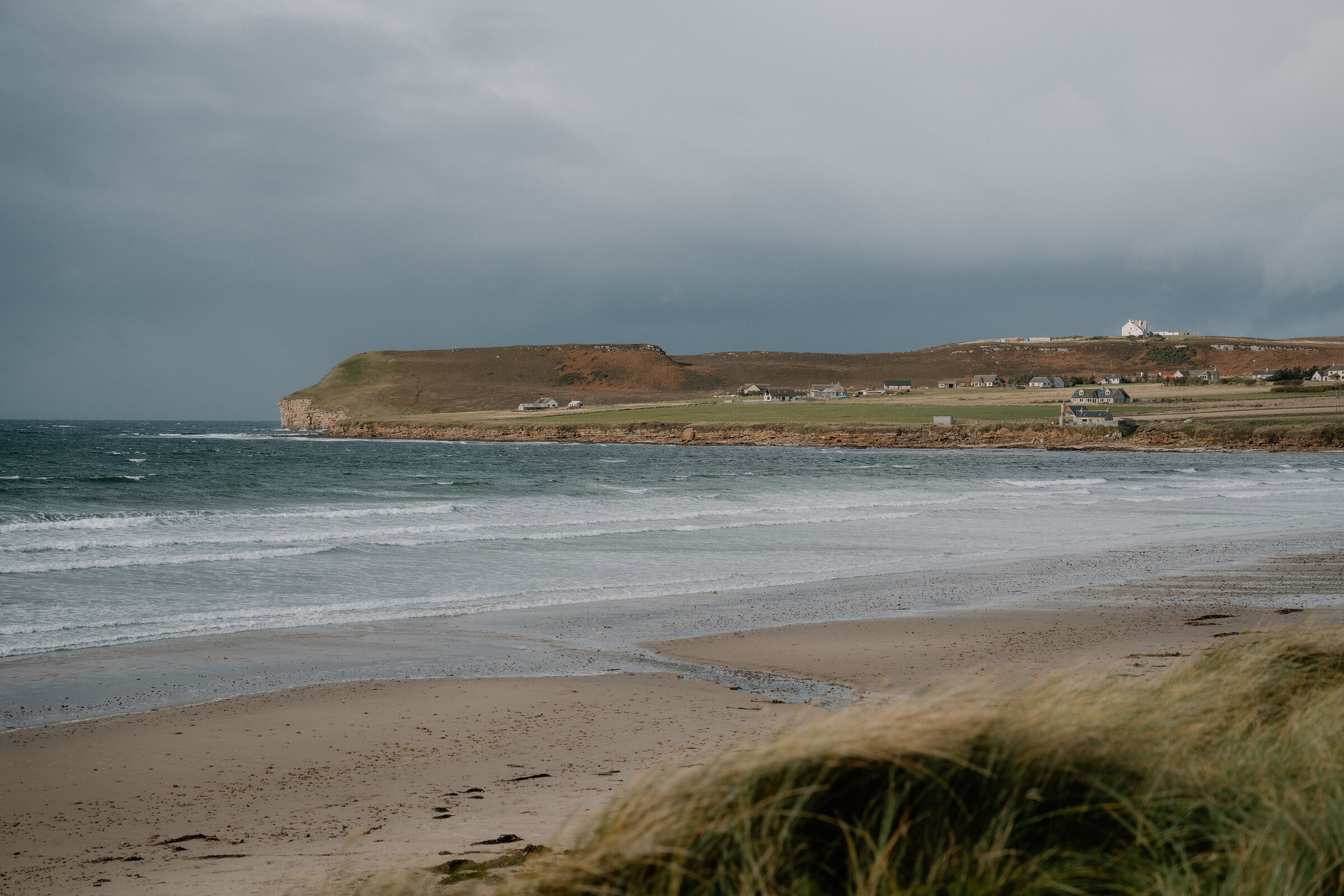
The most northerly point of mainland Britain, a wild headland of sea cliffs and moorland in Caithness, an RSPB reserve with puffins and a lighthouse of 1831.
Not John o' Groats, but Dunnet Head, is the most northerly point of mainland Britain, and a stone at the end of the road says so.
A single-track road runs out across a heather moor scattered with lochans to the white lighthouse on the cliffs, three hundred feet above the Pentland Firth, with Orkney laid out across the water.
The lighthouse was built in 1831 by Robert Stevenson, and keepers lived here until 1989. Around it, the headland is an RSPB reserve. In summer the cliffs are packed with nesting seabirds, guillemots, razorbills, fulmars and kittiwakes, and puffins on the grassy ledges, and in spring the clifftops are bright with thrift and squill. Keep an eye on the sea for porpoises, dolphins and even orcas.
A firm, level path leads from the car park to the clifftop viewpoint, good for wheelchairs and buggies. In the nesting season keep dogs close and on a short lead.
Open headland, there at any time; an RSPB reserve.
From April to mid-August keep dogs close, on a short lead, for the nesting birds.
A stone marker at Dunnet Head marks the most northerly point of mainland Britain.
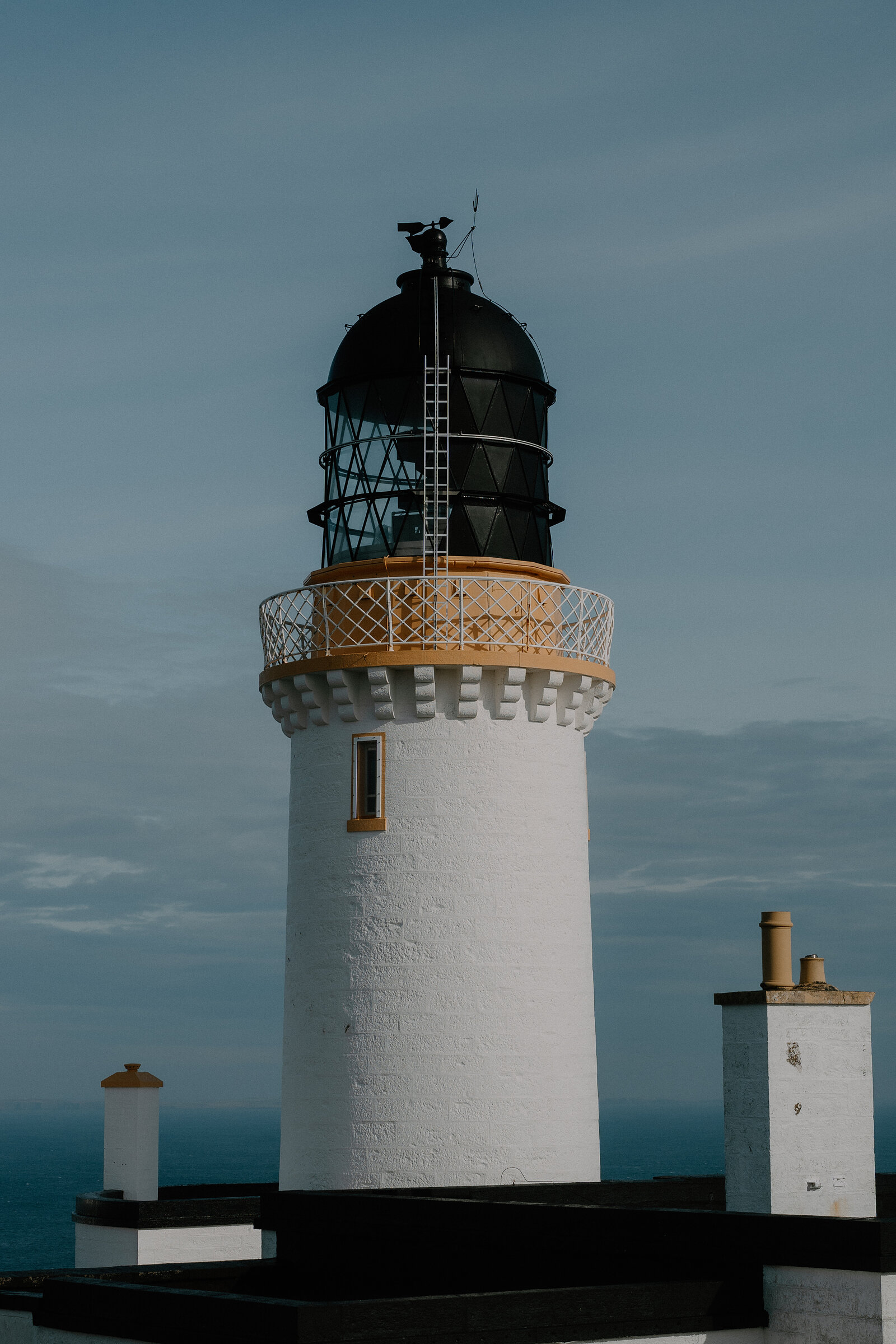
The lighthouse was built in 1831 by Robert Stevenson.
A rewarding place to visit at any time of year, this nature reserve – which occupies the most northerly point of mainland Britain – is a particular joy in the spring and summer, when nesting seabirds turn it into an avian nursery. Puffins, razorbills, guillemots and more all flock to this gloriously windswept peninsula.
Read moreA Caithness mermaid once known for keeping her distance was tempted into friendship by a charming young man — only to discover his true motives ran far shallower than the sea.
Read the storyWhile John O’ Groats is world-famous, Dunnet Head is actually the most northerly point of the British mainland.
Read moreNew places, news and stories, as we find them.
What is on in CaithnessAt the end of the B855, a single-track road across the moor north of Dunnet, KW14 8XS.
 Dunnet Head LighthouseStay in the keepers' cottages.Under a mile 2 min by road
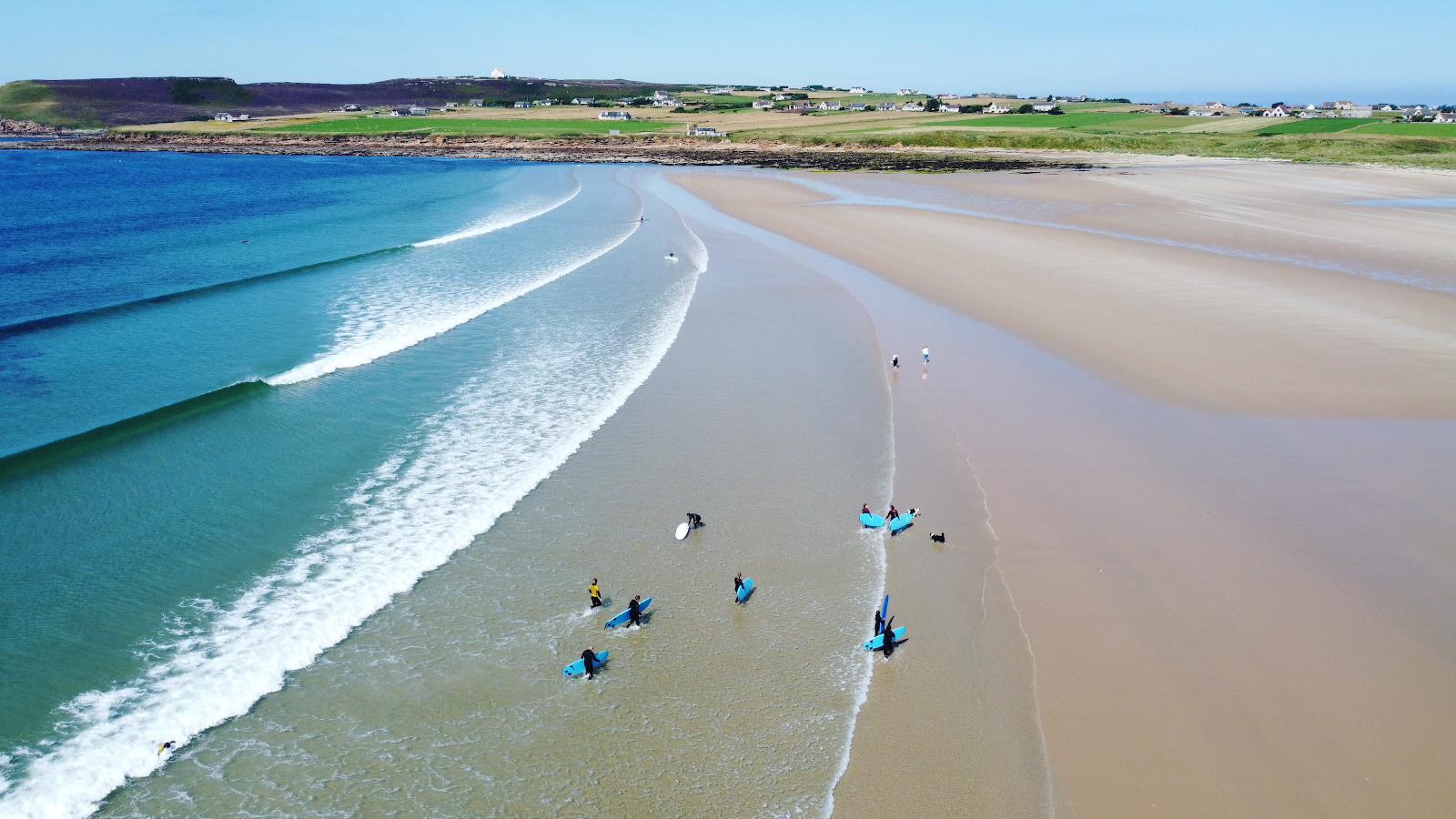 Surfing in Caithness5 miles 12 min by road
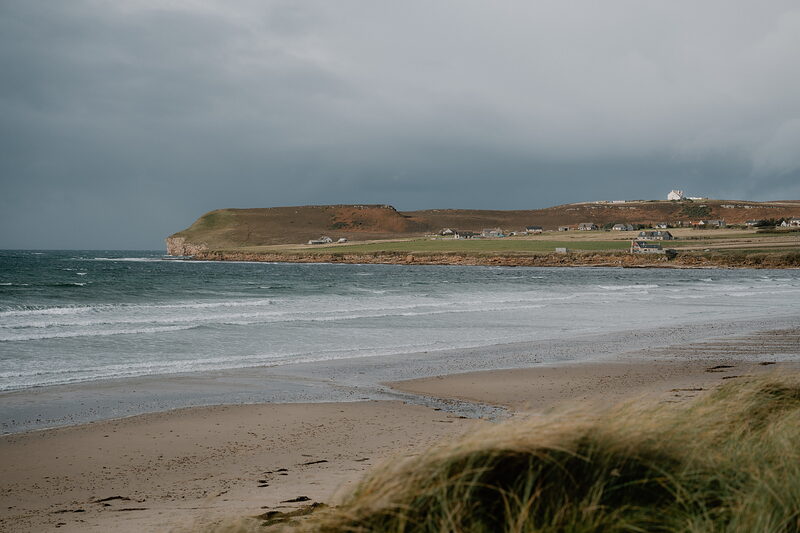 Dunnet BeachTwo miles of sand below the headland.6 miles 9 min by road
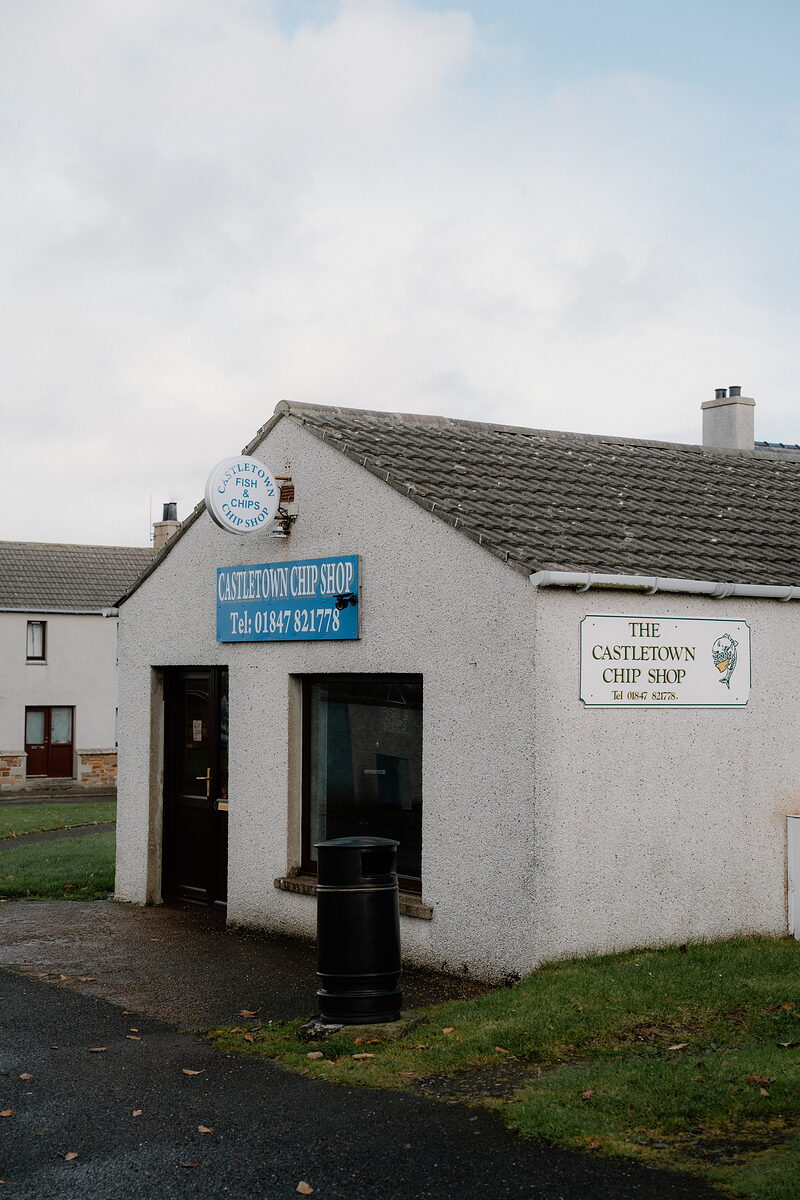 Castletown Chip Shop8 miles 13 min by road
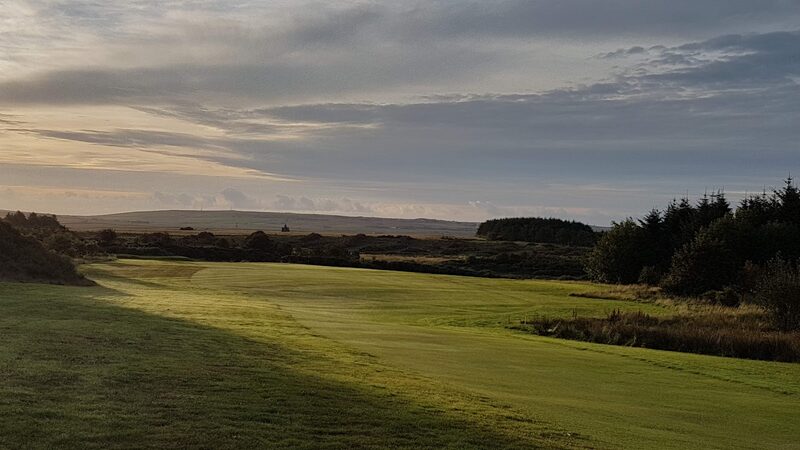 Thurso Golf Club9 miles as the crow flies
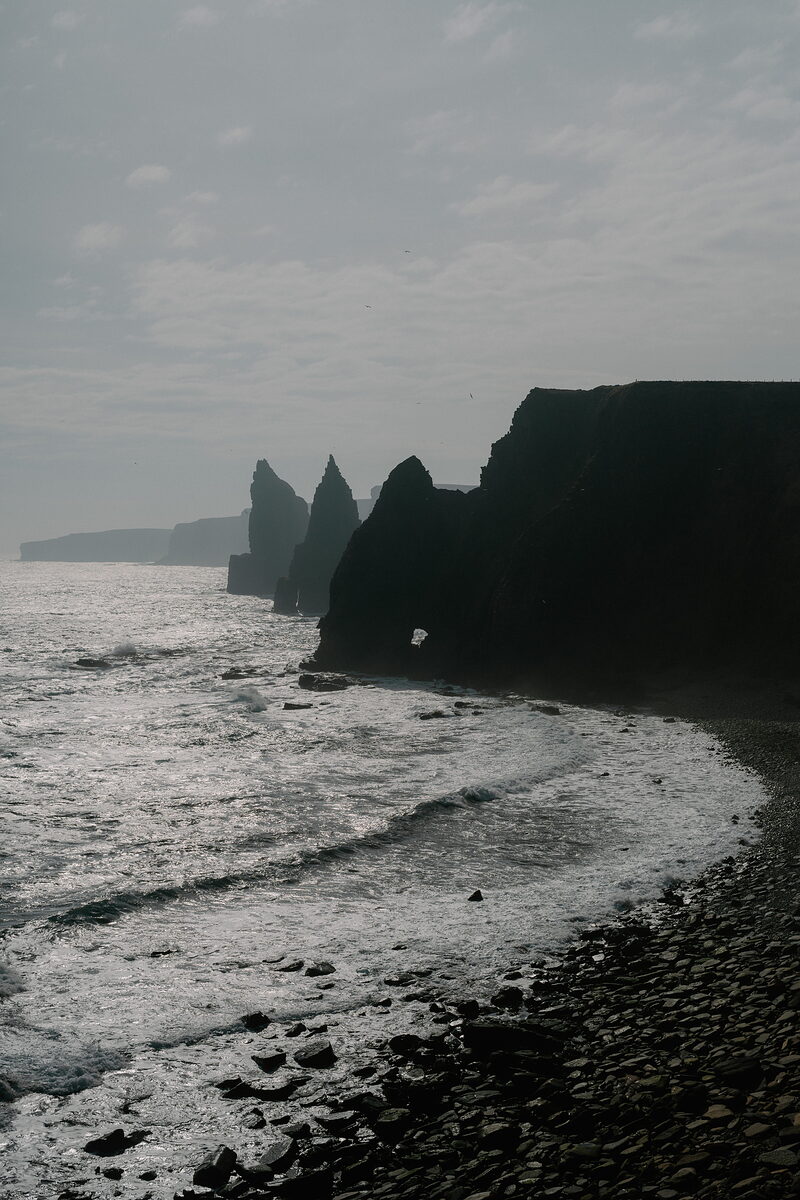 Duncansby HeadThe north-east corner, beyond John o' Groats.17 miles 27 min by road
Arrives at 5am every day.
A free morning email to see what’s on this week, catch up on what’s happening in Scotland and find somewhere new to go.
Places to stay near the headland, and when each is next free.
We want to show you the best that Scotland has to offer. The makers and the creatives, the enduring experiences, the evocative tales, the concealed corners. The roads less travelled that take you to places that matter. The adventures that gather you up and sweep you away. The blend of the wild and the artistic that makes Scotland what it is. We’d love for you to join us.
What we have written about it and more in Caithness.
For further reading, before you go. The details on this page were checked on .