
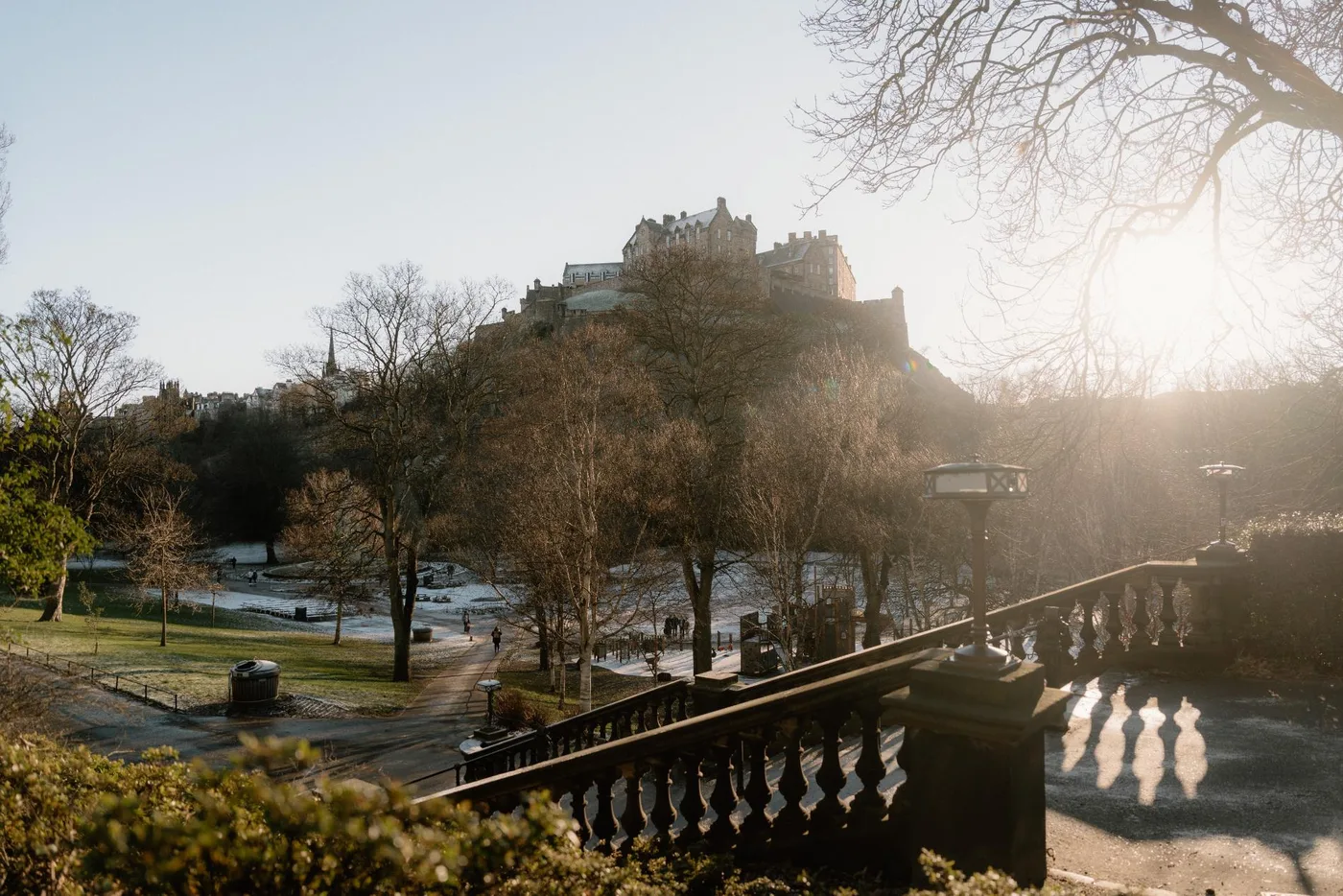
History Of Edinburgh's New Town
James Craig’s winning plan, and the streets named for George III and his family.
Words by Hidden Scotland
Before the mid-18th century, Edinburgh was a cesspit of filth, disease and crime, with tens of thousands of citizens squeezed into cramped living conditions within the city walls of the medieval Old Town. Those who were blessed with the means to escape – an education, wealth and determination – had already fled Scotland for London, now the seat of government for the whole of the United Kingdom following the Act of Union. For those who remained, a deep despondency settled in: the Porteous Riots and Jacobite Rebellion were symptomatic of a lingering discontent with the political and economic state of affairs, so the Town Council knew that action had to be taken.
-full-1749383090.jpg)
The birth of the New Town
In response, the Town Council of Edinburgh launched an architectural competition for a New Town to be designed and constructed outside the medieval city walls. However, the winning proposal was not simply expected to be an antithesis of the Old Town, with wide, symmetrical thoroughfares, open squares and gardens, and large houses, but a reflection of the Scottish Enlightenment in which philosophers and scientists proposed a new approach to learning, relying on direct observation and logical thinking, rather than a bland acceptance of the status quo.
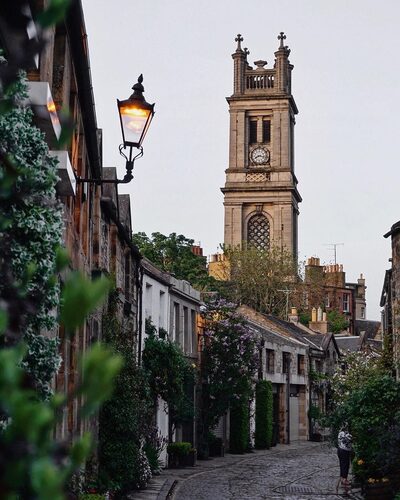
The winning design for Edinburgh’s New Town was expected to be bold and imaginative: in fact, artistically ingenious to tempt the wealthier residents to stay instead of fleeing, and to bring back to the city those who had already left.
The competition to design the New Town was won by a 26-year-old architect, James Craig, who had a specific interest in town planning and urban architecture. His design was notable for its simplicity, with a main street connecting two garden squares, with a series of adjoining perpendicular streets running north to south.
Street names were notably patriotic: George Street and Queen Street were in recognition of the ruling monarch, George III, and his wife, while Princes Street was named after the king’s sons (although the first-choice of St Giles Street was renamed on account of St Giles, the patron saint of the city, also being the patron saint of lepers).
Stay near The New Town
Our places to stay, nearest by road

(1)-listable-card-1778448486.jpg)
 Out now
Twice a year, to your door
One hundred and sixty pages of Scotland, every photograph commissioned, every word written by someone who went. Members get both issues posted and everything on screen.

 The 900th Anniversary of Stirling
 Kilmartin Glen