Edinburgh

Gladstone’s Land

A merchant's tall tenement of 1617 on the Lawnmarket, its rooms furnished as three households lived in them, under painted ceilings of 1620.

Visit website
Welcome

A short walk down from the castle, a tall, narrow grey tenement rises six storeys above the Lawnmarket, with a gilded bird hanging over the door.

It is one of the few houses on the Royal Mile that still looks much as it did when merchants lived above their shops.

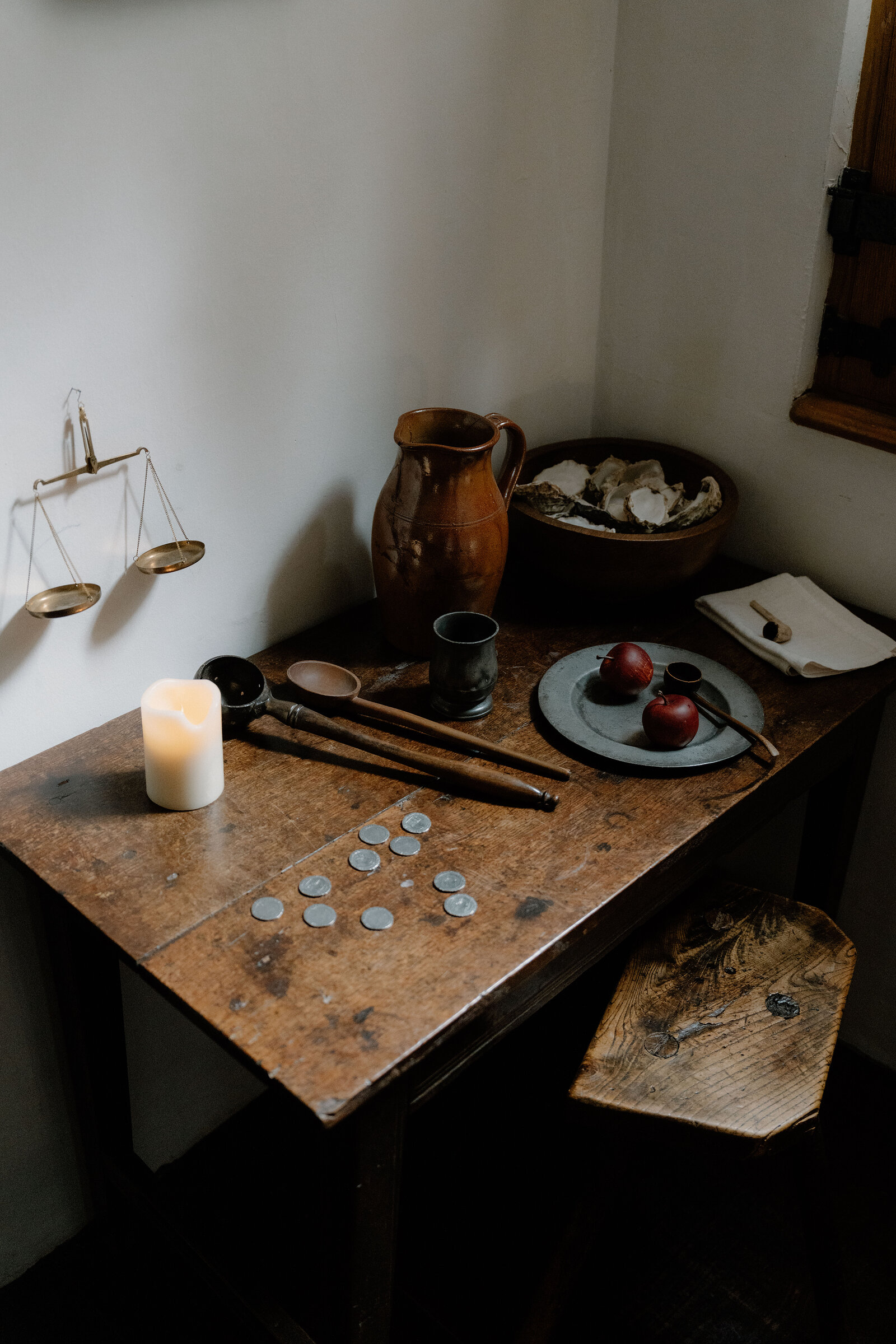
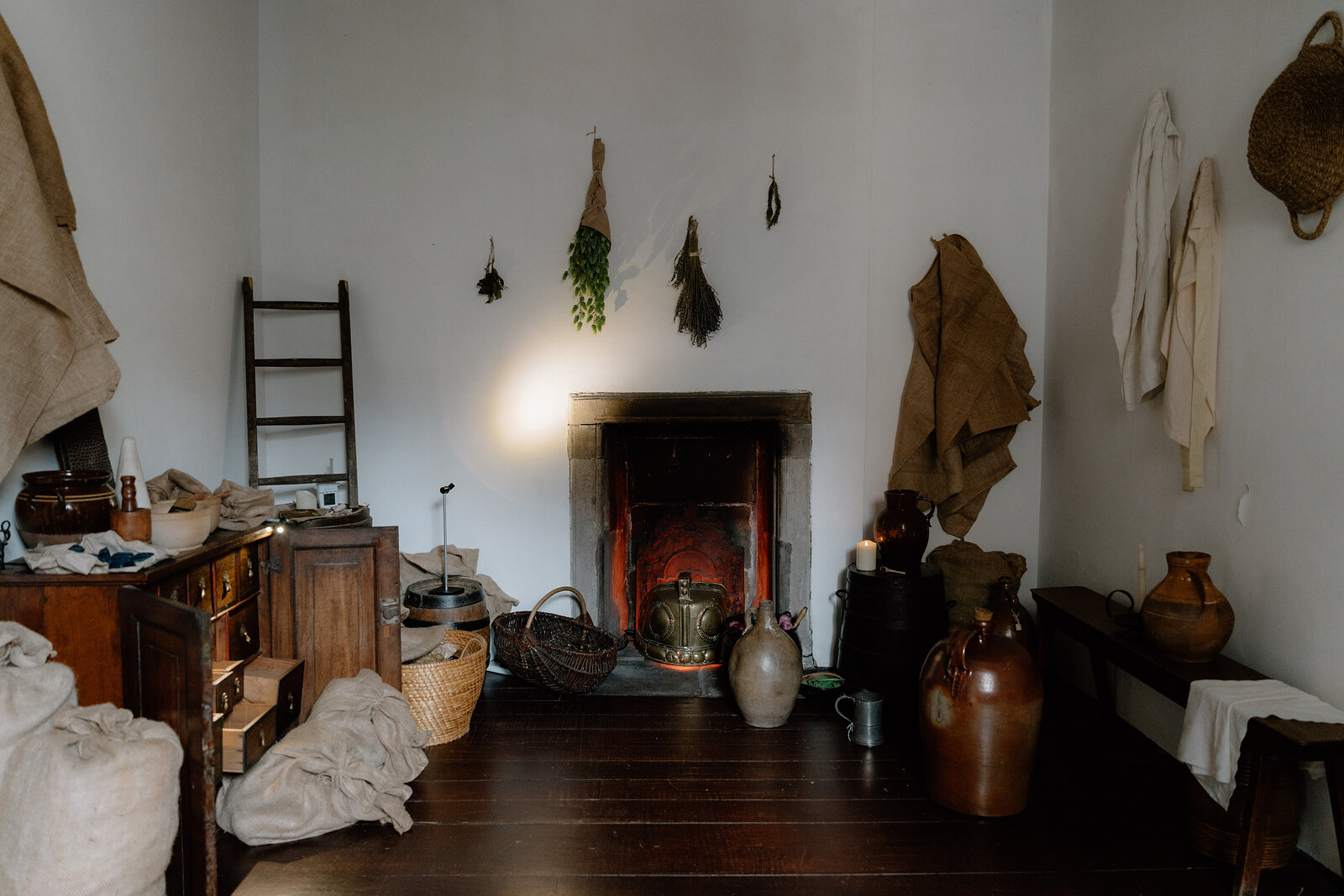
The visit climbs through it floor by floor, and each room is laid out as if its owners had just stepped out. In the kitchen, bunches of dried herbs hang over a lit fire beside stoneware jugs and baskets. In another room a carved oak four-poster with embroidered curtains stands beside a wooden cradle, a merchant's scales sit on a table with a scatter of old coins and a plate of apples, and a writing desk stands open with its quill. In the plainer rooms there are iron beds under low beams, patchwork quilts and a knitted sock left on the linen. Leave time at the end for an ice cream downstairs.

Before you go

The house is the National Trust for Scotland's, and the visit takes you through three storeys of it, each furnished for a merchant household of a different century.

An ice cream parlour and coffee shop sit on the ground floor.

Where
On the north side of the Lawnmarket, at the top of the Royal Mile.
Tours
Specialist tours on parts of Old Town history run alongside the house.

Did you know

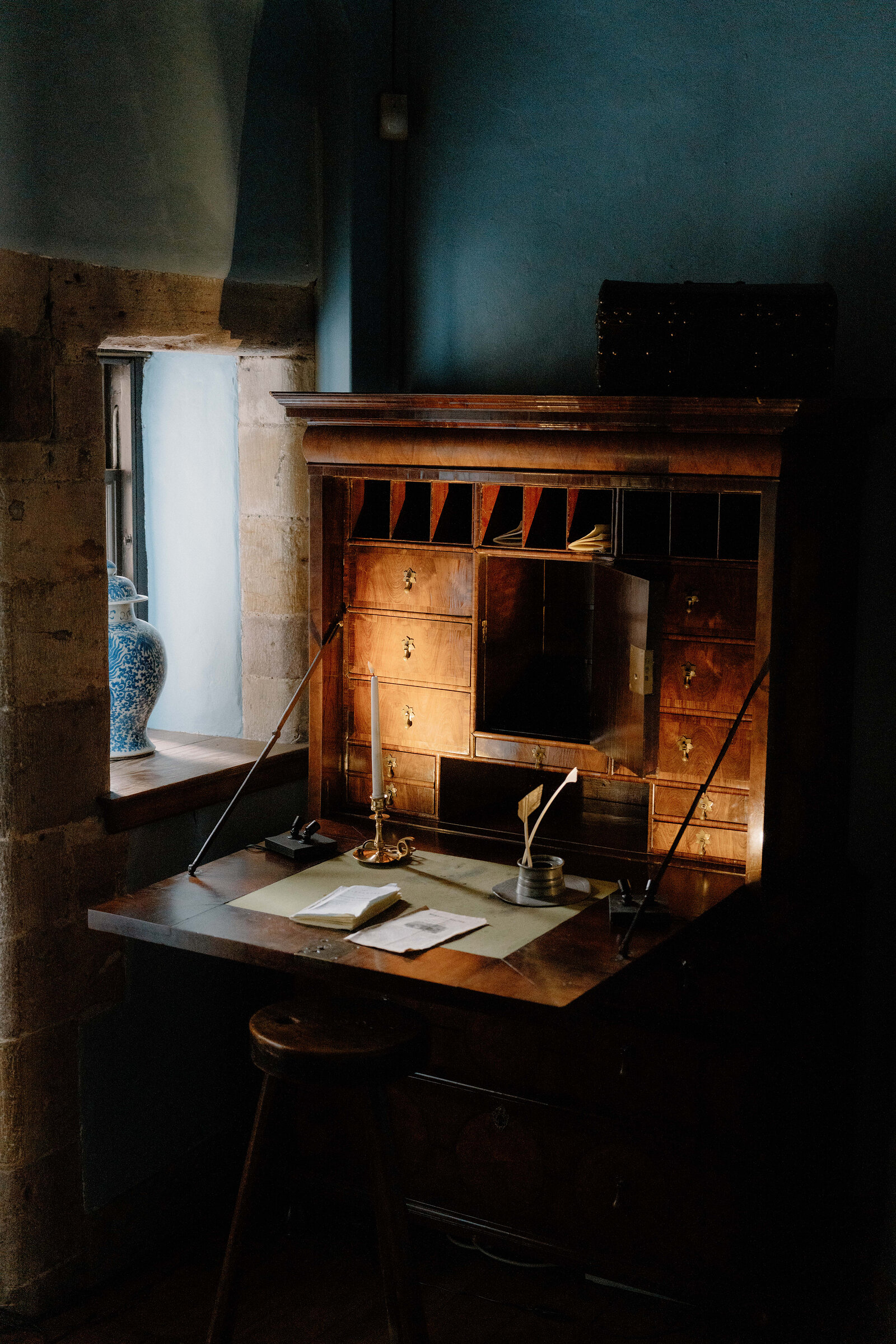
An antique writing bureau with pigeonholes and drawers stands open beside a stone-mullioned window, a candlestick and quill on the desk.
Did you know

Twenty-three feet into the street.

Thomas Gledstanes bought the house on 20 December 1617. Like his neighbours he built out in front, pushing the frontage 23 feet into what became a much narrower street, and a stone face replaced the old timber galleries.

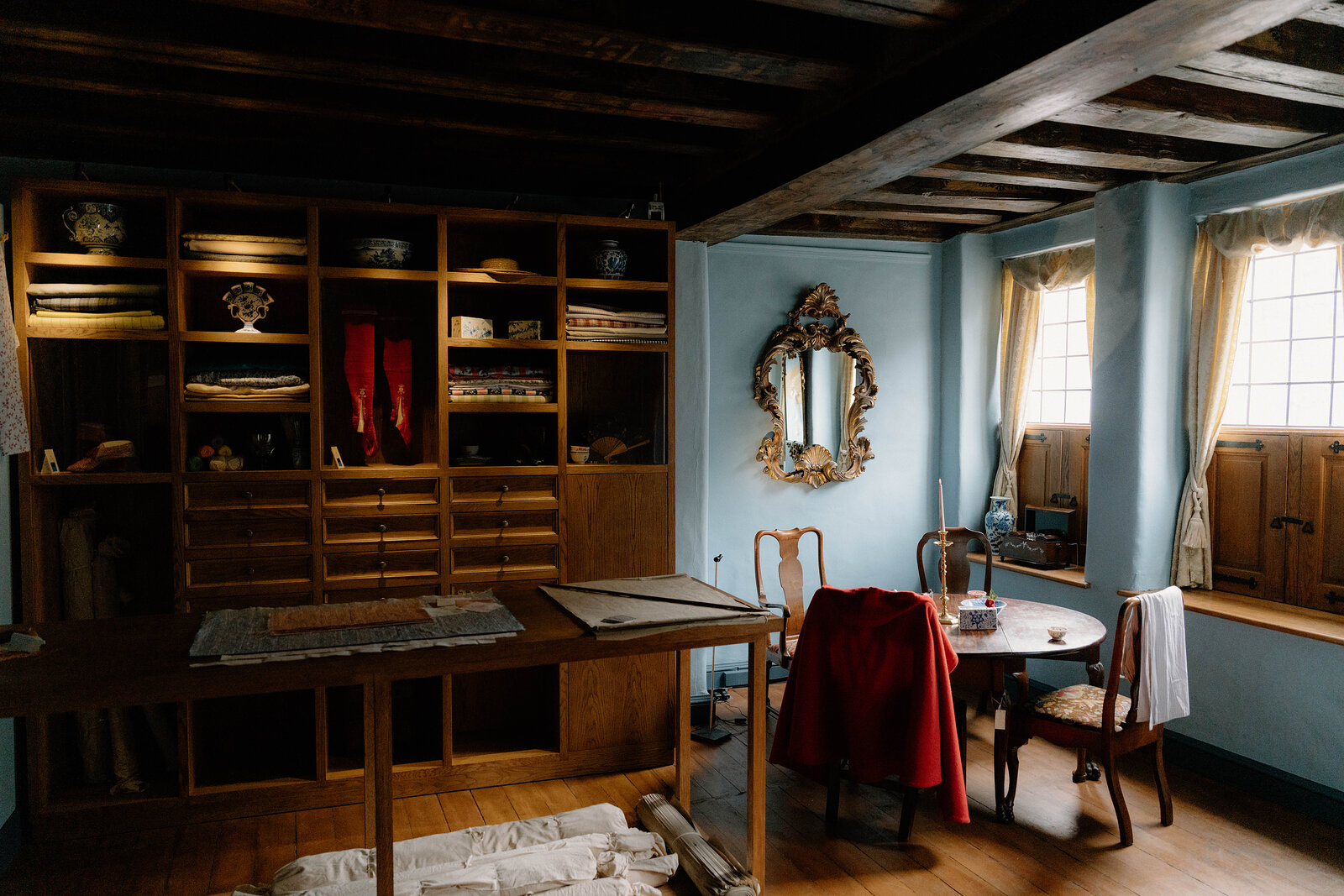
A wooden bureau desk with china ornaments stands beside a red-draped chair in a blue-walled period room with beamed ceilings.
Did you know

His and hers, in stone.

High on the building are the initials TG and BC, for Thomas Gledstanes and his wife Bessie Cunningham, with his merchant's mark, a saltire on an upright stem.

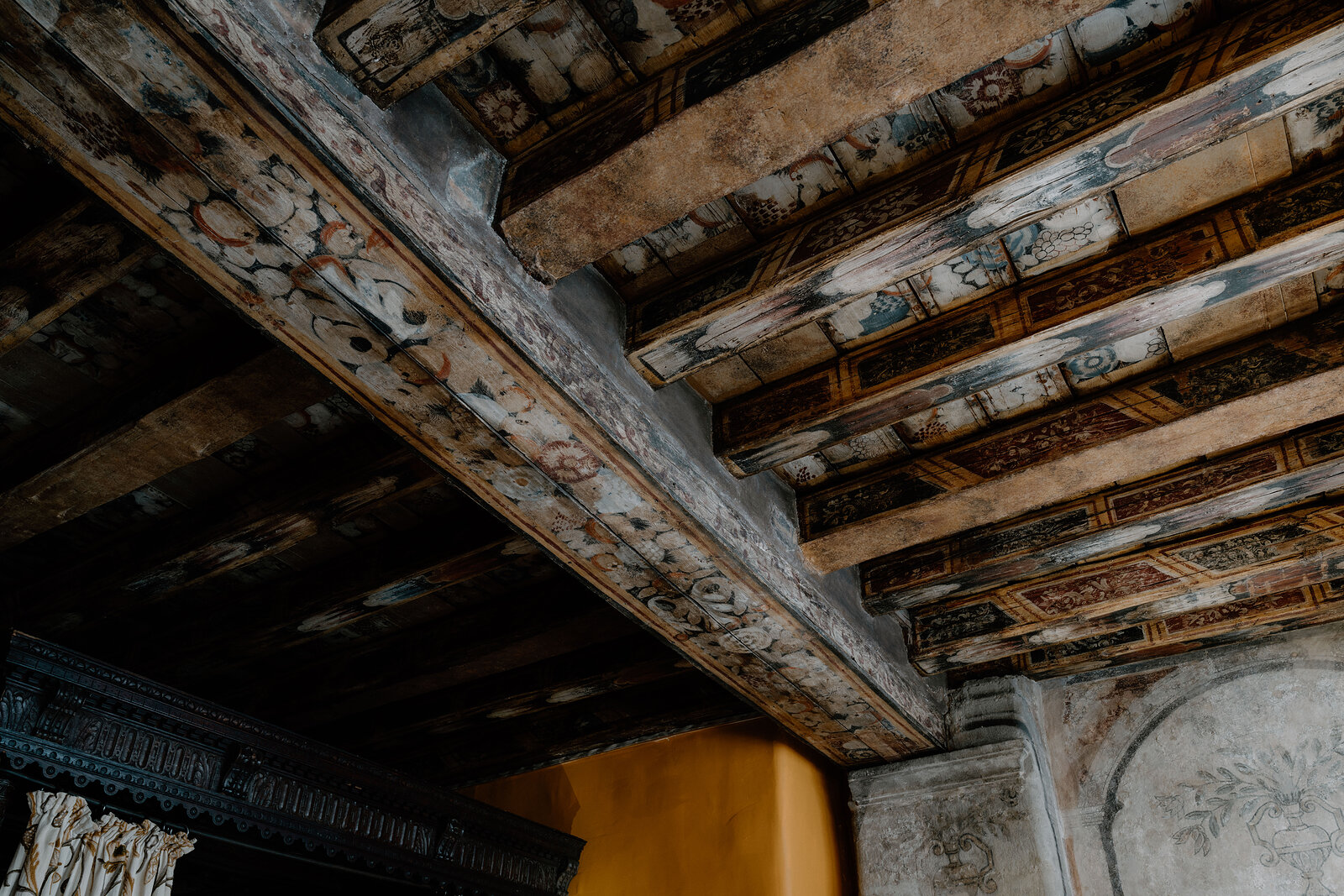
Faded decorative patterns cover a painted timber beam ceiling above a stone fireplace.
Did you know

Find the monkey.

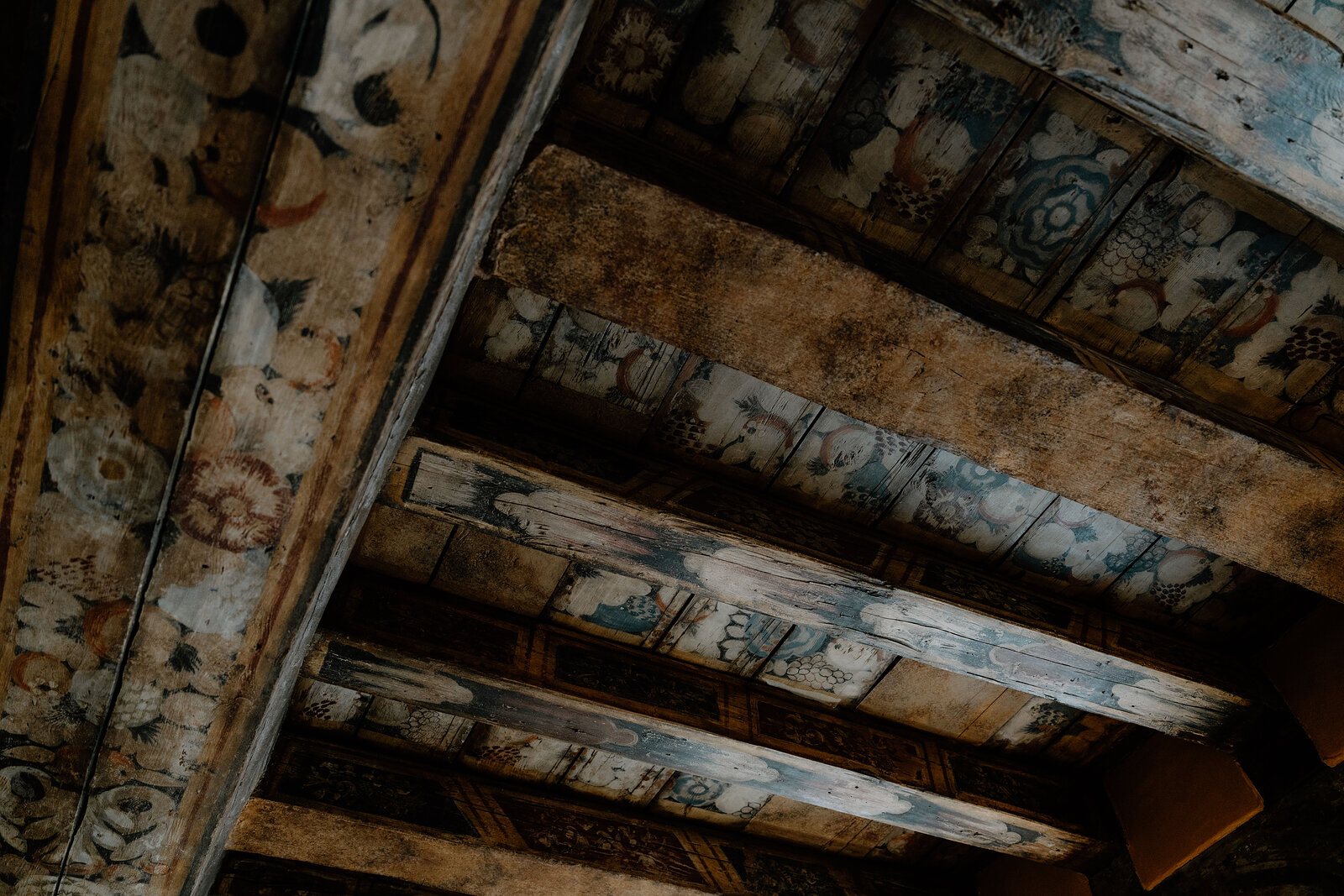
The ceilings upstairs were painted by hand in 1620, and somewhere among the fruit and flowers there is a monkey.

Faded decorative patterns cover a painted timber beam ceiling in a historic room.
Did you know

Fourteen coats of paint.

Restoring the house meant stripping three centuries of change and up to fourteen layers of paint and wall covering, and under them the original painted ceilings were found still in place.

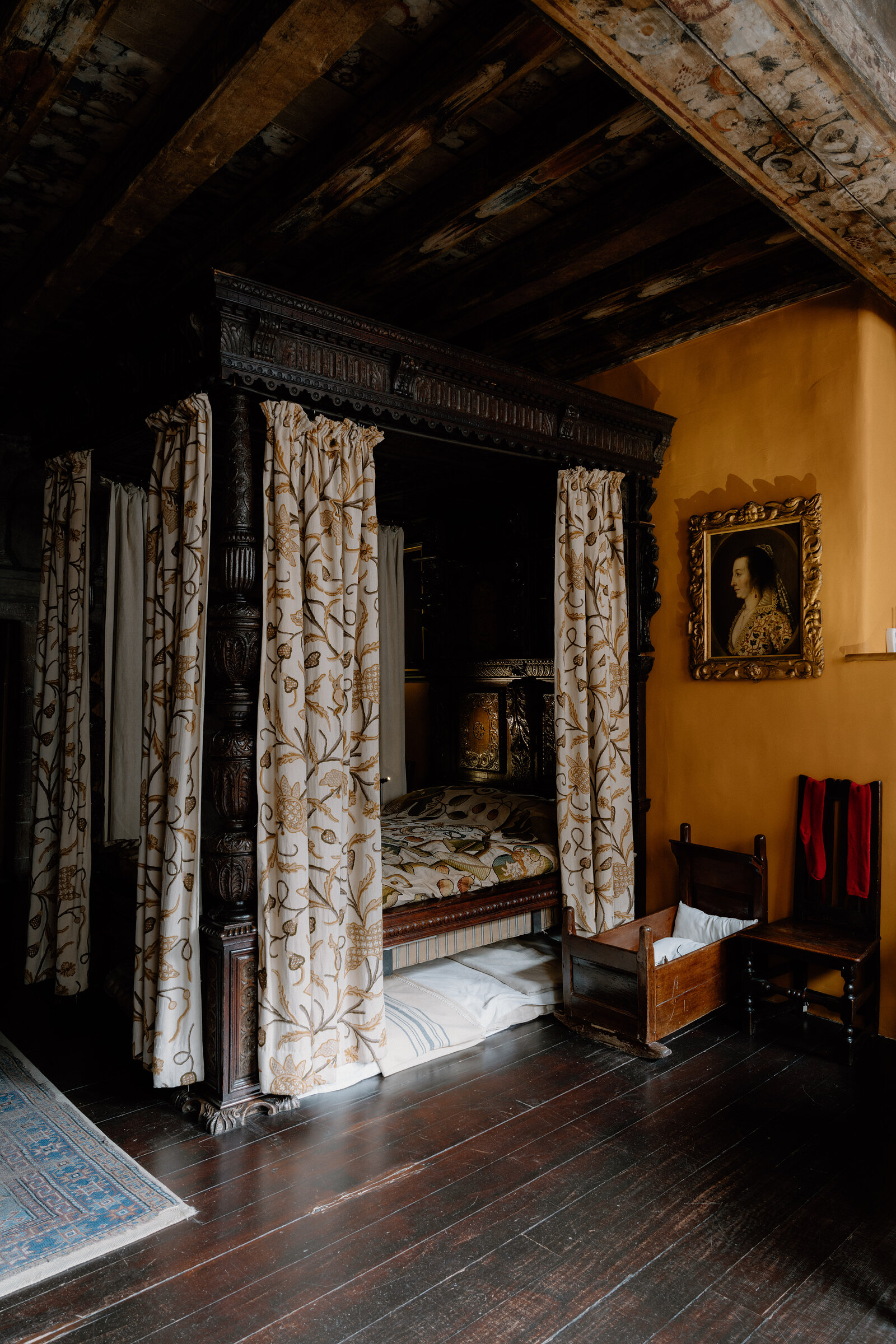
A carved oak four-poster bed with floral curtains stands opposite a wooden cradle and a framed portrait, beneath a painted beam ceiling.
Did you know

Bought for £762.

By 1934 the house was an overcrowded slum due to be pulled down. The National Trust for Scotland bought it piece by piece as parts came up, for £762 in all.

Brass scales, an earthenware jug, old coins and a plate of apples sit on a wooden table beside a lit candle in a historic room.
Did you know

The arcade behind the shop.

The two stone arches at street level had been hidden behind a later shopfront, and only came to light again in the restoration of the 1930s.

Dried herbs hang beside a lit fireplace in a kitchen with stoneware jugs, baskets and folded linen.
What is on

What is new across Edinburgh, day by day.

New places, news and stories, as we find them.

What is on in Edinburgh
01 / 07
Stay nearby

Places to stay near the house, and when each is next free.

Hidden Scotland, the magazine

Scotland, in print.

Every photograph commissioned, every word written by somebody who went. Printed twice a year, made in Scotland.

Find out more

For further reading, before you go.