Neverland Found - Eilean Shona Island
Sometimes, the important thing is the calm. To slow down and let your mind rest, to feel your shoulders unknot, to be in a place where all that matters is NOW and THIS and the touch and sound of the outdoors: the åßthe wild. Farewell WiFi, farewell emails, farewell electricity. You’re in this world now, not that other world, and the important thing is the calm.
We’ve come to the island of Eilean Shona to be somewhere special. There are plenty of special places in Scotland, but there aren’t many quite like this. On the map, trace your finger into the Highlands until you find Fort William. Then go west for 30 miles – not west as the car drives, but west as the eagle flies, over the peaks of Lochaber, over shimmering Loch Shiel, until you reach the mighty inlets of the coast. Then focus in on the fjord-like channel of Loch Moidart, where amid the sky-high slopes and the wooded foreshore there lies an island. This is the calm. This is Eilean Shona.
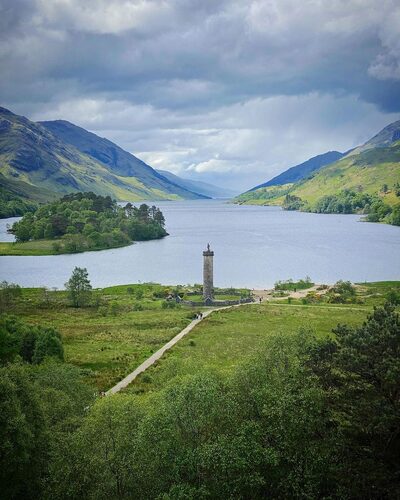
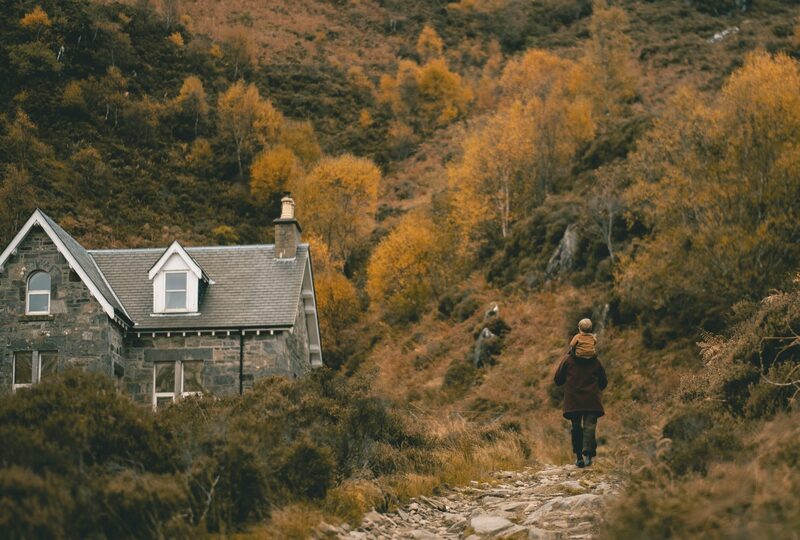
It’s removed from the rest of the world, and not just by a body of water. There are no cars, no roads and no pubs. The entire island – two-and- a-half miles long and one-and-a-half miles wide, comprising 600 acres of woodland and 1,500 acres of hill country – holds one house and a scattering of nine self-catering cottages. The idea of coming here to go back to basics isn’t so much encouraged as inevitable. If you’re looking for bright lights and high-rise hotels, look elsewhere. If you’re looking for the kind of getaway where red deer roam the trees and grey herons stalk the shallows – and hang on, was that a pine marten? – you’re in the right place.
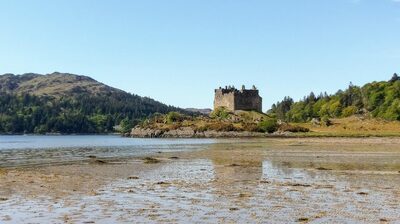
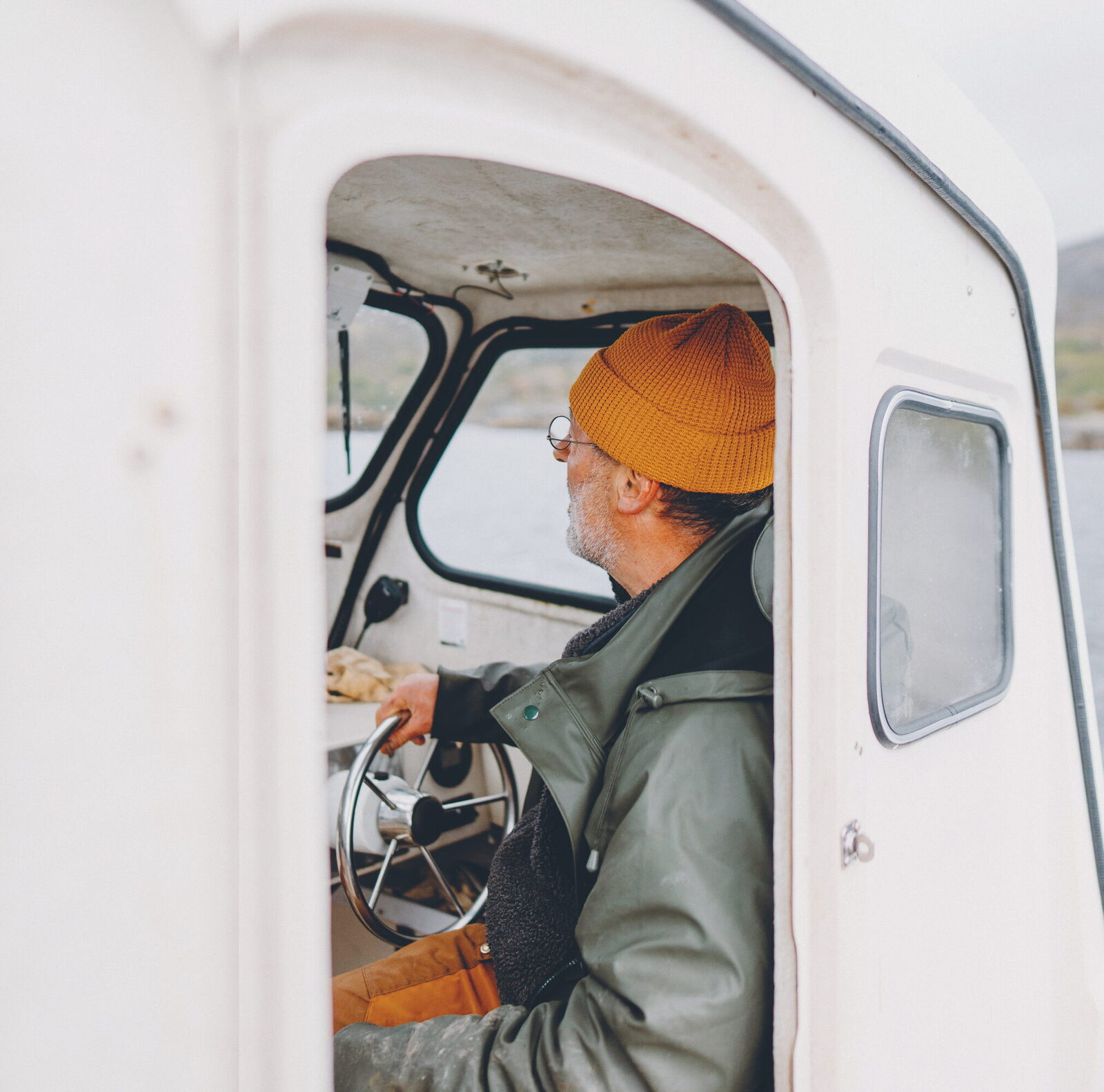
Even before we reach dry land, it’s clear we’re in for a treat. Planning ahead is vital, as once you reach the island pontoon on the once-weekly rib boat, which runs on Wednesdays, you’re here for at least seven days (boat transfers outside these times are possible but carry a surcharge). Trust me when I say that staying for a week is no hardship. Having parked up near Dorlin jetty, beside the moody medieval ruins of Tioram Castle, we’re picked up by Jack, one of the staff working on the island for the season. “Eagle’s nest,” he smiles, pointing to an empty eyrie in the Shona treetops as we dart across the loch. The craggy contours of the island start filling the view.
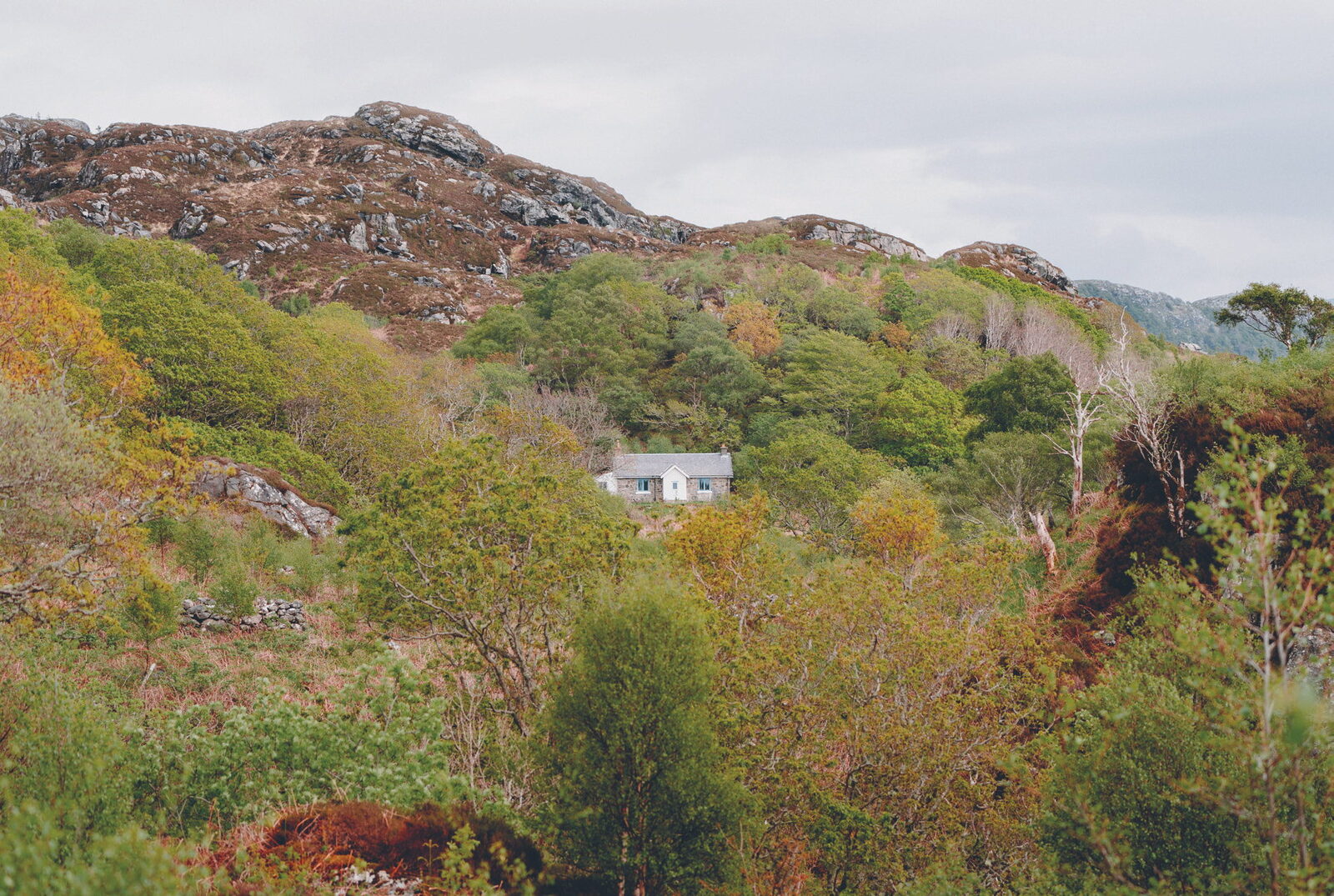
Before long we’ve reached the shore, where we’re welcomed by island managers Jonty and Sarah Watt – with a tail-wagging cameo from Paddy the black Labrador, whose island home must rank him as one of the most content dogs in Scotland. We’re staying in South Shore Cottage, one of three off-grid properties and the most remote of the lot. It is, according to the website, “not for the faint-hearted”. It’s possible to be dropped off at the cottage by boat, with just a rocky shore and a steep path between you and the front door, but on foot it’s a two-hour walk to or from the main pier. The trek involves not only a fair amount of boulder-hopping but also a brief abseil. This is what solitude feels like.
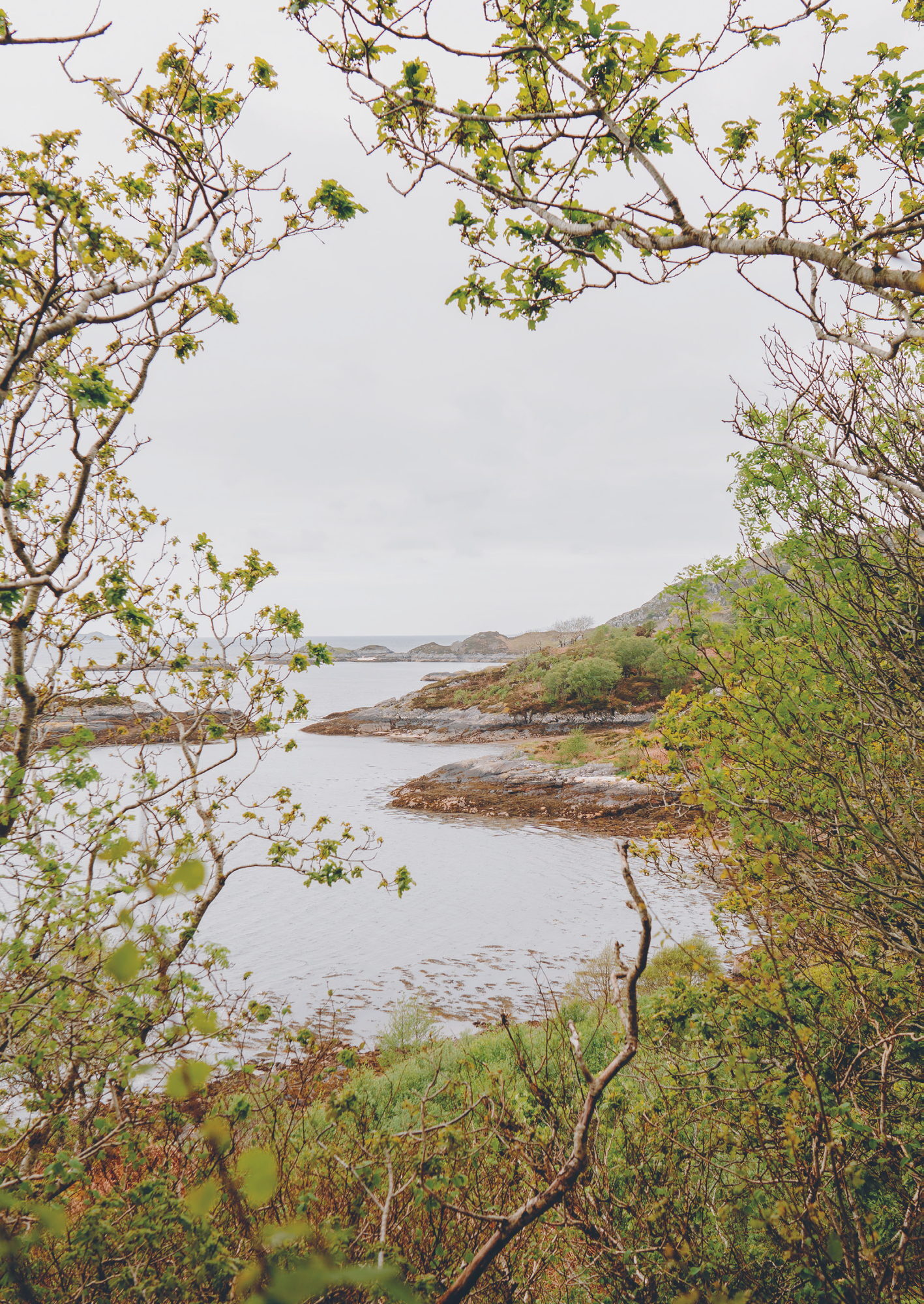
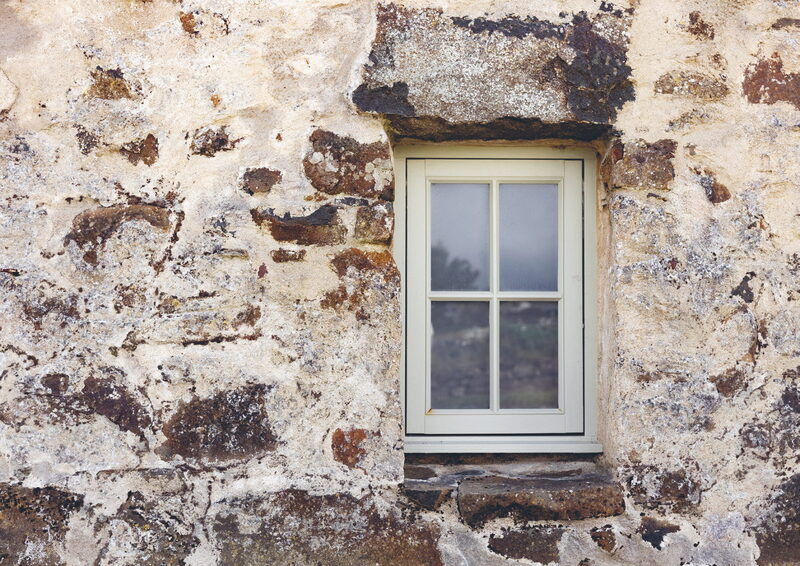
We’ve been advised to bring as much as we need – groceries, luggage, drink, the works – although there’s a small island shop stocking essential items that can be pre-ordered, with an emphasis on locally sourced produce and pre-prepared meals. Well provisioned, we set about settling into our home for the week. It’s a neat whitewashed bungalow with a view to melt the heart: heathery islets, glassy bays, and rumpled headlands stretching out to the horizon. It has a double bed (with Egyptian cotton bedding, no less), gas lamps, a coal fire, and a kitchen with a gas cooker.


Our water supply comes from a private spring. It’s pretty much perfect.
Just over a century ago, in 1920, Scottish novelist JM Barrie spent the summer on Eilean Shona. “A wild rocky romantic island it is too,” he wrote to a friend at the time. “It almost taketh the breath away to find so perfectly appointed a retreat on these wild shores.” The destination became the inspiration for the faraway island haven of Neverland in the screenplay of Barrie’s timeless Peter Pan – and there remains an element of fantasy around the whole experience of being here. At home it can feel as though life is hemmed in by the routines of the working week; on Shona, time expands and becomes more malleable, with mornings morphing into afternoons as you reconnect with the natural rhythms of the great outdoors.
We walk. We read. We lose ourselves in board games and jigsaw puzzles. We have a fire pit outside, a place for sitting under the night skies and watching the world’s greens and blues gradually fade to black. Out here on the west coast, the islands have a habit of putting you under a spell. Some ten miles out to sea from our little cottage the bay is dappled with the so-called Small Isles, the best known of which are Canna, Rum, Eigg, Muck. They have a mood of their own – sedate, secluded, ageless, untamed – and Eilean Shona falls into the same category.
The two-hour walk from our cottage to the main pier is our connection to the rest of the island. Our path hugs the coast, taking in some challenging terrain and leading through a magical moss-draped forest. The island’s native woodlands are ancient and classified as part of the Scottish Rainforest belt, a throwback to the Ice Age. It means the trees and rocks are covered in some of the rarest lichens, liverworts and fungi on the planet – their presence is also a signal that the environment is a healthy one. The red squirrels in the tree canopy, merrily marooned on their island home, seem to agree.
Adjacent to the main pier is the base known as the Village Hall. It has a table-tennis table and other indoor games (and even, whisper it, patchy WiFi), while on Tuesday nights – the evening before the weekly boat comes and goes – it runs a pub session between 6pm and 8pm. Nearby, the main house on the island is a very different proposition to our cottage. It sleeps 18, comes with its own chef, and has a dining room painted by iconic Glaswegian artist Fred Pollock.

The house was originally a small hunting lodge, owned in the 19th century by a seafaring captain who collected pine trees on his travels. Bringing them home, he went on to establish one of the most diverse pinetums (that is, an arboretum dominated by conifers) in Europe. It can still be seen close to the house. The building itself has since been doubled in size, and in the 1930s was gifted to Lady Howard De Walden as a wedding present – well, it beats a new cutlery set.
Since that time, three different families have owned the island. It now belongs to the Devereux-Branson family, following their purchase of the land in 1995. Art dealer and hotelier Vanessa Branson, sister of Sir Richard, is said to have been the main force behind the transformation of the island from a run-down retreat to a covetable wilderness refuge. Certainly, the main house itself can be described as luxurious.
But regardless of where you stay – and frankly, any time on Eilean Shona is time well spent, whether you’re cooking over an outdoor fire or being treated to private dining – the principal attractions remain the same. Exploring the island is a joy. It’s a place for crabbing, cliff-scrabbling, picnicking, painting, photography, and nature-watching. It’s a place for kayaking along the shoreline past seals basking in the sun. It’s a place for swimming in the bracing depths of the loch. It’s a place, really, for doing what you choose. Niamh, also here as a seasonal help, tells us they rarely stray back across to the mainland. “We prefer island life,” she says, simply. And who could blame them?
Somewhere like Eilean Shona gets under your skin. In South Shore Cottage we find a place where political scandals, rolling news feeds and social media all feel part of another universe entirely. To sense the presence of the island around you each morning, with birdsong in the cool dawn air, is a form of detoxification. To say it again – sometimes, the important thing is the calm.
Wednesday rolls around. We pack up, reluctant to leave the cottage and our own little patch of shoreline. Back on the boat across to the mainland, we turn to watch the island. A finger directs our gaze towards the empty eagle’s nest that Jack had pointed out a week ago on our arrival. Only now it’s not empty. Sitting in the treetop perch is a white-tailed sea eagle, the largest bird of prey in the UK, protecting its eggs from any predator foolish enough to come near. The sight of this majestic raptor is our parting gift – a reminder that on Eilean Shona, the truest joys come from taking the time to stop and stare.
words - Karla Hall & photography - Jack Cairney

Promoted Post
Newhall Mains
Newhall Mains on the Black Isle offers cottages and suites in restored farm buildings, plus a restaurant and bar. It is well placed for Cromarty, Fortrose and Chanonry Point, with beaches and coastal walks close by.


Sign in with Google
Sign in with Email