
An autumn family break in rural Perthshire
A three-day family itinerary around Killin and Loch Tay, from Aberfeldy to Killiecrankie.
Words by Laurie Goodlad
Scotland’s ‘tattie holidays’ are the perfect time to enjoy the autumn colours, lush forests and rivers bursting with crystal clear water, with cascading waterfalls tumbling into quiet glens of rural Scotland.
We decided to holiday in rural Perthshire’s beautiful countryside. Perthshire should not be overlooked: it is a gateway to the Highlands and every bit as beautiful. Centrally located around Perth, the area is easily accessible from most parts of Scotland and just a short drive from both Glasgow and Edinburgh.
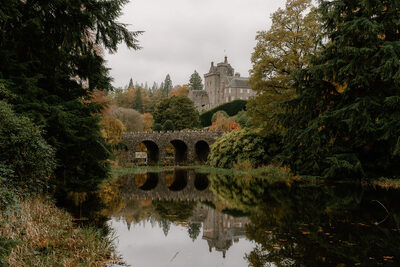
Known as the ‘Big Tree Country’, Perthshire is full of autumn colour at this time of the year, with rich oranges, russet browns, golds and yellows creating a landscape that will take your breath away.
This blog will provide an itinerary for a three-day stay, with plenty of things to do indoors and out – as, let’s face it, Scotland without a drop of rain in autumn would be like whisky without barley.
This piece focuses on the Loch Tay area. With Scotland’s longest river, Perthshire’s highest mountain and what may be the oldest living thing in Europe, there are plenty of reasons to make it your next destination.
For our stay, we based ourselves in the picturesque village of Killin, at the western head of Loch Tay. Killin is probably most famous for its incredible series of rapids known as the Falls of Dochart that pass through the village.
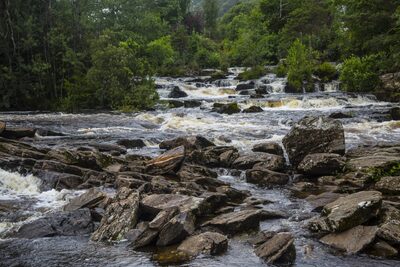
We stayed at The Crannog Cottage, a self-catering lodge named after the prehistoric loch-side roundhouses that were traditional to Scotland in the past. The Crannog is a luxury holiday cottage, complete with a hot tub and picturesque views over the River Lochay. Loch Tay, who own the Crannog, has a range of stunning lodges and cottages throughout the Loch Tay area.
Day one – Aberfeldy
Day one and we were raring to go – travelling with kids means that there must be a balance between indulging in cultural activities and burning off excess energy. Perthshire is perfect for this, with some of the best woodland trails and walking opportunities in Scotland. The trees of Tay Forest Park include some of the country’s tallest – as well as a host of magnificent viewpoints.
We began the day with a walk to the Birks of Aberfeldy; a circular woodland walk upriver towards the famous ‘Birks’ (from the Scots for birch trees) overlooking the impressive Falls of Moness and Moness gorge.
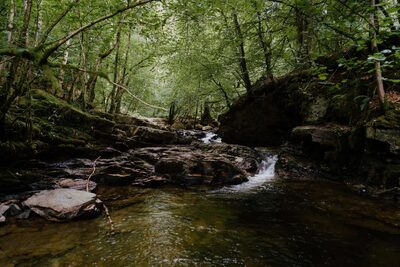
The walk begins on the western outskirts of Aberfeldy and is well signposted, with plenty of space for parking.
The walk itself is 2.3 miles (4.7 km) in total, and we completed it in just over an hour with our nine and five-year-old. The path leads up the Moness burn and is punctuated with several waterfalls and a steep-sided gorge. We did the walk clockwise, crossing the Moness burn by a small bridge.
About halfway along the walk, you reach Burns’ seat – the spot where Robbie Burns was inspired to write the song Birks of Aberfeldy, which popularised the area.
From the Birks, we went back to Aberfeldy for a warming bowl of soup and a pumpkin latte at The Watermill. I had ulterior motives in choosing the cafe here – which serves the best soups, thick-cut sandwiches and a delicious selection of cakes and bakes – as it’s also home to a famous bookshop and gallery.
The bookshop has been crowned UK Independent Bookshop of the Year and, set within the historic Aberfeldy watermill, with scents from the cafe wafting up the stairs, it’s easy to while away an afternoon in this inviting space.
Alas, as much as I could have become lost in the pages of a book for the remainder of the day, we had a pre-booked tour at the Dewars Aberfeldy Distillery – an award-winning whisky distillery and five-star visitor attraction.
Dewars has been producing single malt whisky in this distillery since 1898, and it remains the whisky of choice for export to the American market. Aberfeldy’s water of life has also been granted a Royal Warrant – a mark of the quality of the whisky.
We booked the Connoisseur distillery tour for ‘whisky aficionados’ – or those who want to enjoy more than a little tipple. The tour includes the heritage centre, distillery and warehouse, a dram from the cask, a gift blender’s glass and a tasting tray of 5 x 15ml drams. This was a two-hour tour, although other options are available.
Dewars Aberfeldy was fantastic, and the tour included a look through their museum and a theatre-film experience which all the family enjoyed. The distillery was family-friendly, openly welcoming children, which, as a family who has been turned away from many distilleries, was brilliant.
Rounding off the day, and half a mile up the road from the distillery, is Spirit of Wood, a family-run business, set in the stunning countryside, selling quality furniture and homewares made from British and French oak, with many of the pieces incorporating Harris tweed into the design. The attractive shop is set within a converted barn and oozes style, class and country glamour.
Day two – Highland Safaris
With the weather gods smiling down on us as we began day two, we set off for Kenmore and Highland Safaris & Red Deer Centre for an action-packed day at their five-star award-winning visitor centre.
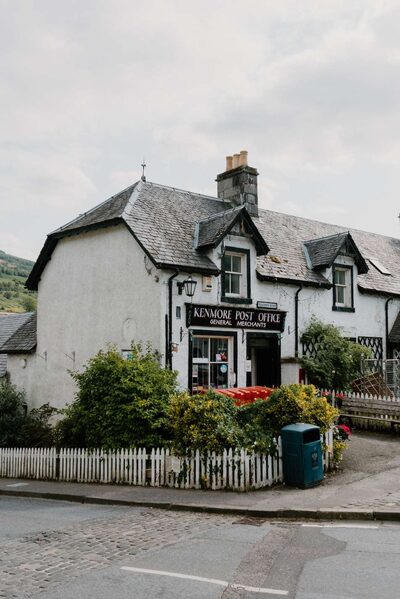
First up was the Red Deer Centre, which we pre-booked before visiting (pre-booking for this experience is essential). We booked this mainly for the children, but we thoroughly enjoyed it ourselves. Andy, our guide, was a natural storyteller and raconteur who kept us all engaged and laughing as he introduced us to Ossian, the barn owl and the herd of deer.
We learned all about Ossian and the feeding habits of these magnificent birds in the cosy Red Deer Barn. Our nine-year-old son’s favourite fact, when asked afterwards, was that owls are fantastic hunters because “they are silent flyers and can twist their heads almost all the way around because their eyes are cone-shaped to allow them to see their prey better.”
After flying demonstrations from Ossian and an informative talk about the deer, we went out to meet them. We visited during rutting season, which begins in September and lasts until early November. The stag, pumped full of testosterone, was very vocal, dominating over his deer and frequently chasing off younger stags.
The children loved having the opportunity to feed and learn about the deer. Colin explained the importance of deer management in the area, particularly to allow other species to thrive.
The UK deer population is thought to be at its highest for about 1,000 years. If deer populations are not managed, they can have a devastating effect on the landscape. Deer cause damage to woodlands – many of which are Sites of Special Scientific Interest (SSSIs), and they are thought to be responsible for a 50 per cent decline in woodland bird populations (where deer are present).
Following the Deer Centre, we booked a session panning for gold. The centre has a fantastic gold-panning station, complete with a sluice station and all the glittering gemstones that any would-be prospector could wish for – we didn’t tell the children the gold they were finding was actually ‘fools gold’.
This area of rural Perthshire is geologically fascinating, and gold has been found in the Dalradian rock within the region. This experience was a fantastic way of making geology accessible and engaging for all the family.
Highland Safaris enjoys the title of ‘Best Visitor Experience in Scotland’, and their cafe lived up to it – the perfect place to enjoy lunch and warm up after a session panning for gold. With a menu serving local produce, including their famous venison burgers, the warm and welcoming atmosphere left no doubt that the coveted title was deserved.
Following lunch, we hired bikes. Highland Safaris has a range of bicycles and tag-along options for younger riders. With plenty of trails to choose from, suitable for all ages, the staff were able to send us off on our merry way, advising us of the best route to choose. We opted for one of the easier options, following the course of the River Tay along a rough footpath through woodland and open farmland. The route was 2.5 miles each way, and, once in Aberfeldy, we treated ourselves to cake and lemonade at the Watermill Cafe before heading back towards Highland Safaris.
On the way back to Killin, we took the longer route back through Glen Lyon [pronounced lion], which is arguably the most beautiful of Scotland’s glens and is often described as the ‘longest, loneliest loveliest glen in Scotland’.
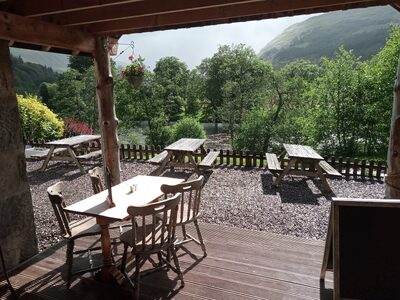
We stopped at the Fortingall Yew, a relict tree thought to be around 5,000 years old and possibly the oldest living thing in Europe. It’s incredible to think of the changes that this tree has witnessed over the years.
Day three – A Highland Safari and Killiecrankie
After such a great day with Highland Safaris, we decided to book on one of their Landrover 4x4 safaris and head into the hills to explore more beautiful countryside. Again, booking is required for these excursions. Colin, our guide, was very knowledgeable about the area and told us all about the geology, wildlife, and the Forestry Commission’s work in the area, reintroducing native Scots pine woodland and gradually removing non-native larch and Douglas fir trees.
It’s always a good idea to book a tour with a local expert as it gives you a much better understanding of the area. We explored Drummond Hill – or the Green Banana, as Colin called it, much to the children’s amusement. The area was shaped by the last Ice Age that passed through about 10,000 years ago, and Drummond Hill itself is an extinct volcano and was the first managed forest in Scotland, planted with native species in the 17th century and taken over by the Forestry Commission when it was formed following the First World War, in 1919.
On the way, we saw deer, crossbills darting around the trees busily feeding, and a buzzard flying overhead. Colin told us that there were also capercaillie – huge woodland grouse – and pine martens in this woodland, although, as in the rest of the country, they are endangered and, as such, are a protected species.
He took us through the forest, showing us the diversity of species that thrived in the native forest, including heathers, fungi, mosses, lichens and a host of other species. Here we enjoyed a hot cup of tea with Kenmore shortbread, washed down with a warming whisky chaser from the Dewars distillery.
Finishing the morning tour in the most beautiful, dappled autumn light, we went to the Black Rock Viewpoint and enjoyed commanding views towards Kenmore and the Scottish Crannog Centre on Loch Tay.
From here, we drove the 22 miles towards Killiecrankie, stopping at the Queen’s View overlooking Loch Tummel. Queen Victoria visited here in 1866 and described it as a ‘spectacular view’. Following this, it shot to fame and has become one of the most photographed places in Scotland, complete with a Visitor Centre, coach parking and a metered car park. Despite the busy car park, the views are stunning – even on a rainy day.
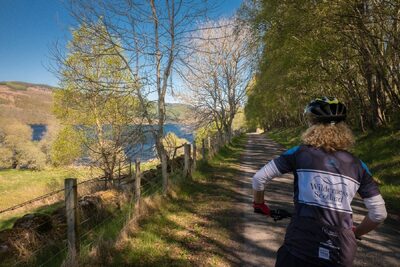
We visited Killiecrankie – meaning the place of the woodpecker, of which we saw none – and parked at the Visitor Centre for another woodland walk.
Killiecrankie is most famous for the Battle of Killiecrankie in 1689, which saw the defeat of government forces by a Jacobite army led by ‘Bonnie Dundee’.
We did the 2.5-mile walk from the Visitor Centre to the Garry Bridge, passing the Soldier’s Leap, where a Redcoat soldier evaded Jacobite forces by jumping the 5.5 metres across the River Garry. This was a tranquil and outstandingly beautiful walk, following the river’s course through the woodland towards the bridge that offers stunning views of the gorge. The forest, much admired by Queen Victoria, is now a Site of Special Scientific Interest for its oak and mixed deciduous woodland.
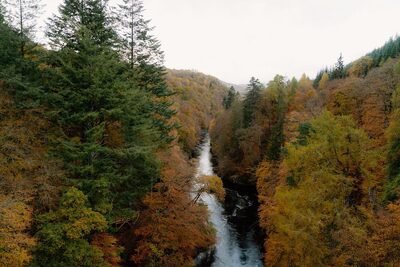
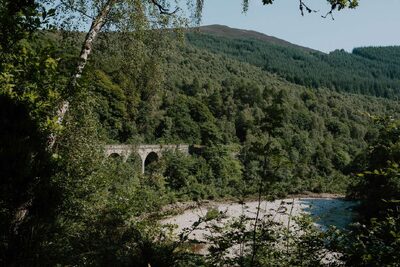
Sir Walter Scott once described Perthshire as “The fairest portion of the northern kingdom”, and it’s easy to see why. We merely scratched the surface during our stay, but it felt good to slow down and immerse ourselves in the landscape. It enjoys all the drama of the Highlands yet is interspersed with fertile, lush glens that you’d expect from the Yorkshire Dales. The Loch Tay area offered a ‘wow’ around every corner.
Top tip: whilst staying in Killin, book a table at the Courie Inn, where you’ll enjoy a warm welcome and delicious food in a beautiful setting.
Other things to do in the area include The Scottish Crannog Centre, a dedicated boat trip of Loch Tay, or any number of watersports from SUP boarding to kayaking. For those with older children, try Go Ape and enjoy the views from the treetops. For those travelling without children – or for those who are already seasoned walkers – try some of the incredible hikes, including Schiehallion – known as the fairy hill – one of Scotland’s best-loved Munros.
Stay near Kenmore
Our places to stay, nearest by road
The House at Dun Aluinn
-listable-card-1774895978.jpg)
Garden Cottage
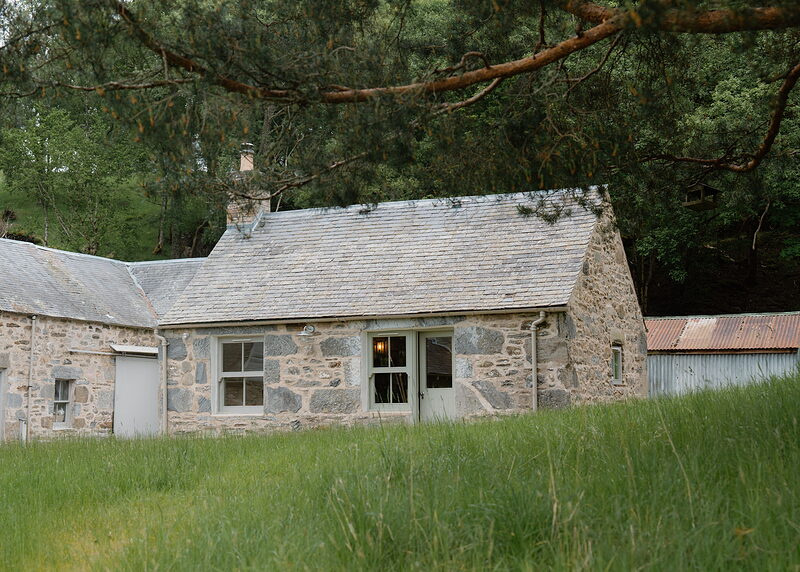
Lassintullich Bothy

Lassintullich House
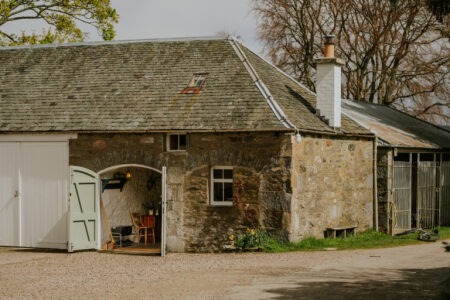
West Tempar Bothy
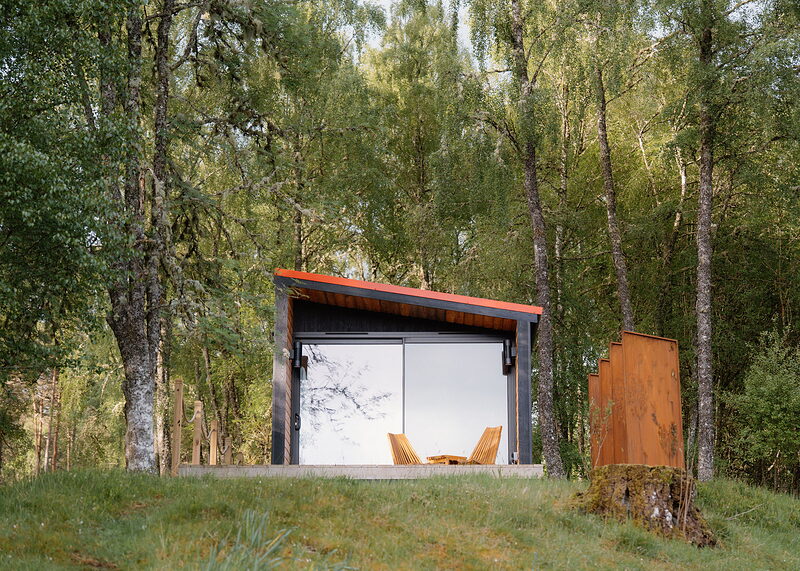
Loch at Redhill Retreat
Kinloch Rannoch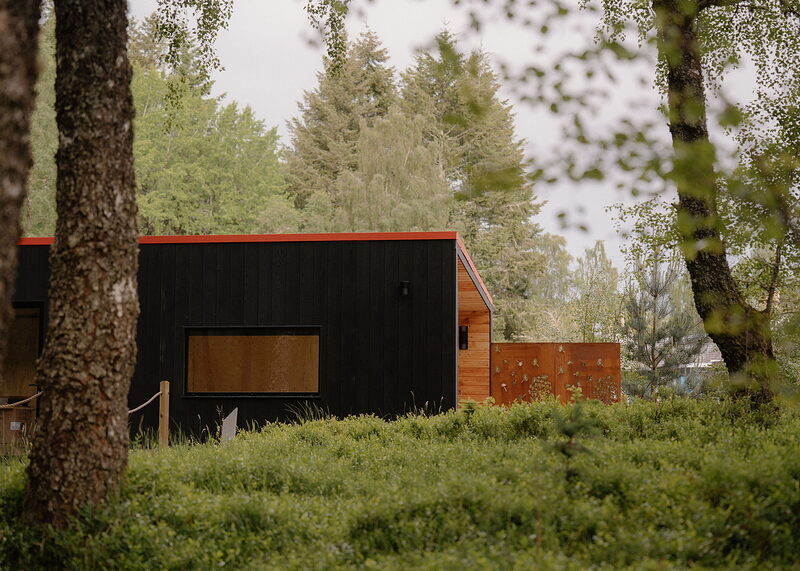
Kin at Redhill Retreat
Kinloch Rannoch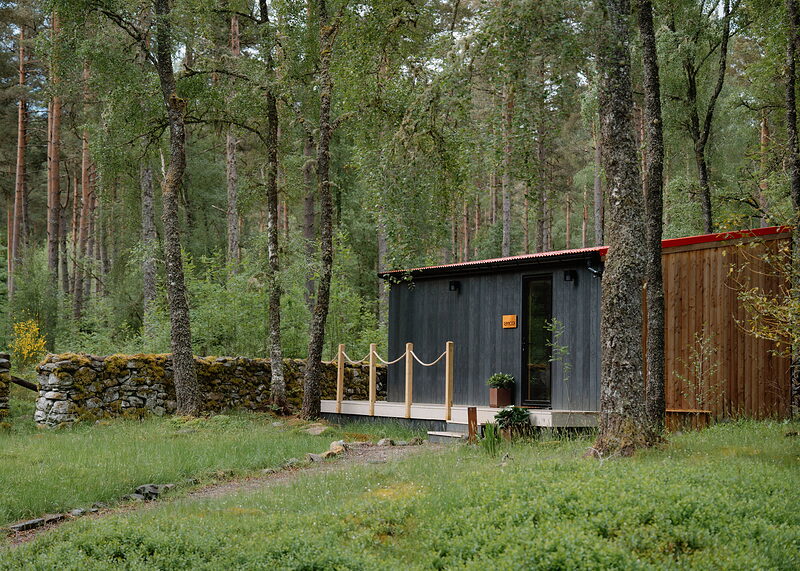
Rannoch at Redhill Retreat
Kinloch Rannoch Out now
Twice a year, to your door
One hundred and sixty pages of Scotland, every photograph commissioned, every word written by someone who went. Members get both issues posted and everything on screen.

 The Last Stop Before Nowhere
 A Weekend Exploring the Isle of Mull
 What's On in Scotland: Autumn and Winter