Walk the Edge of Skye on This 9-Mile Route Through Castles and Crofts
Written by Jack Cairney
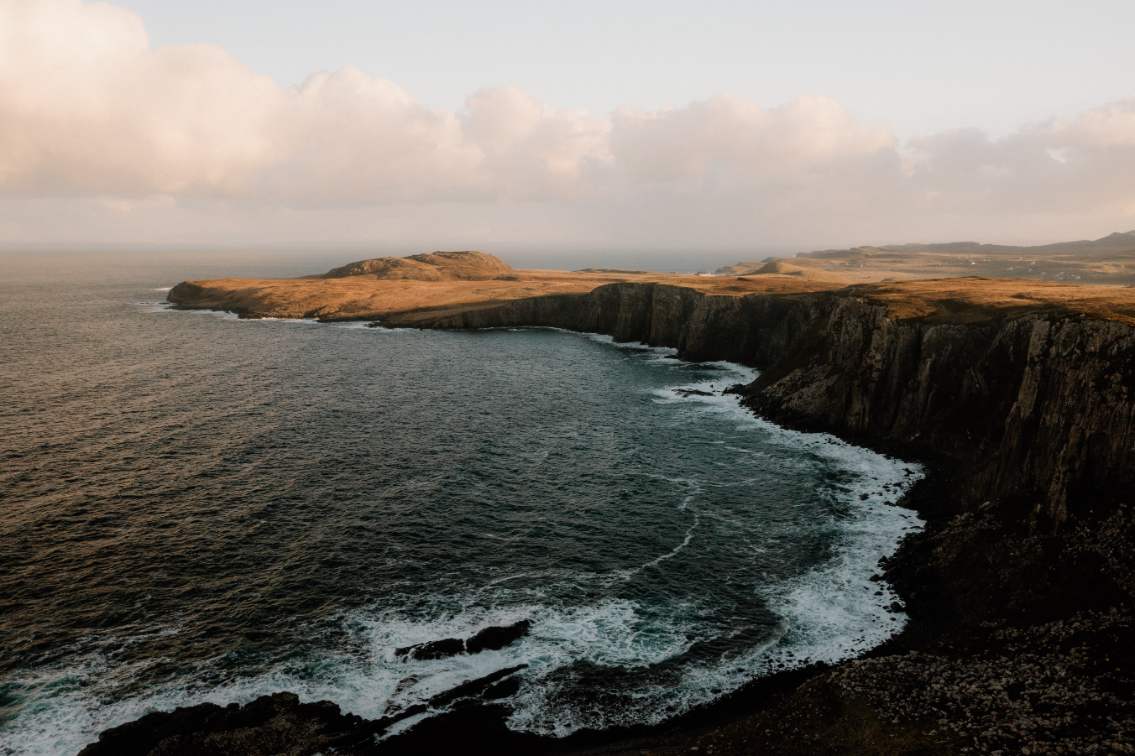
There’s a northern edge to Skye where the map thins and the crowds fall away. This 9-mile stretch near the tip of the Trotternish Peninsula doesn’t announce itself loudly. It isn’t packed with cafés or coach parks, and the route lacks the drama of the Cuillin or the draw of Fairy Pools. But something else lingers here. A kind of spaciousness. A stronger sense of place.
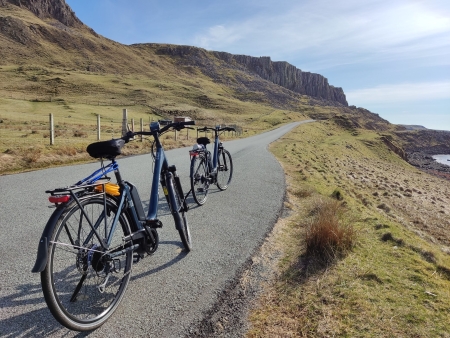
This itinerary follows a rough arc from the crofting settlements around Kilmuir out toward Duntulm and on to Rubha Hunish, the northernmost point of the island. The ground is shaped by weather and time—stone walls lean into the wind, cattle paths twist through grass softened by sea air, and the road itself stays narrow and close to the coast. The scale feels more human. Sites aren’t far apart, and there’s no need to rush between them.
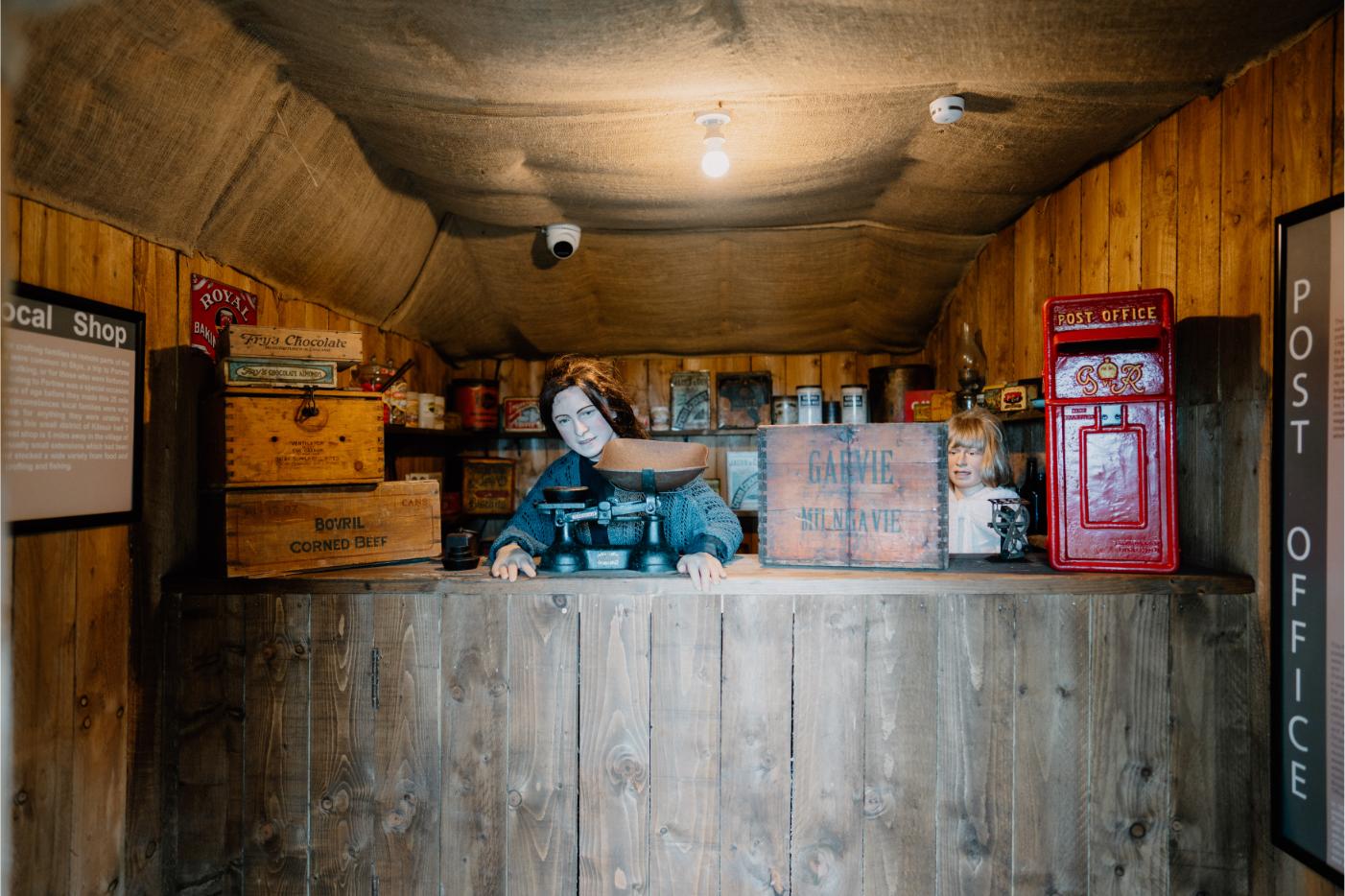
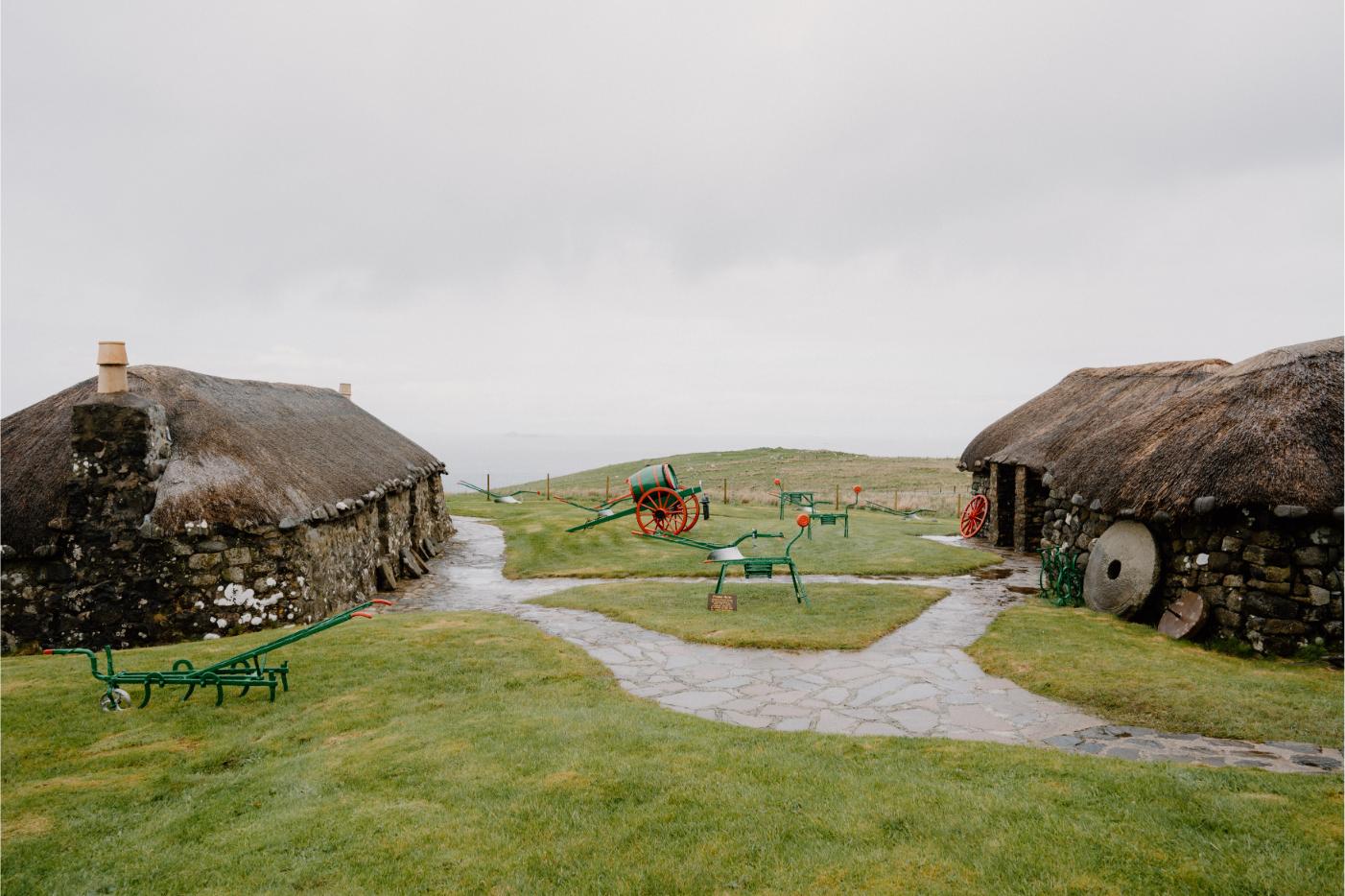
You’ll begin with the past made tangible—thatch, wool, old tools, and photographs at the Museum of Island Life. Then just up the hill, Flora MacDonald’s grave. She’s the woman who smuggled Bonnie Prince Charlie across the sea, her story long folded into the romance of Jacobite myth but rooted here in the physical ground of Skye. A few miles on, Kilvaxter Souterrain sinks you further back, into Iron Age hands and hollowed earth. The entrance feels casual—a farm gate, a short path—and then suddenly you’re underground, surrounded by dry stone and cold air.
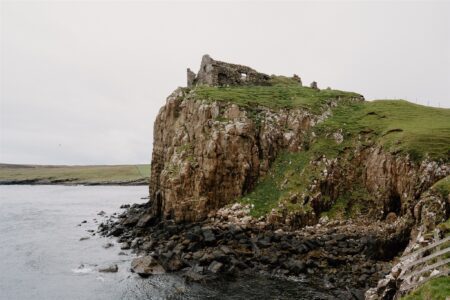
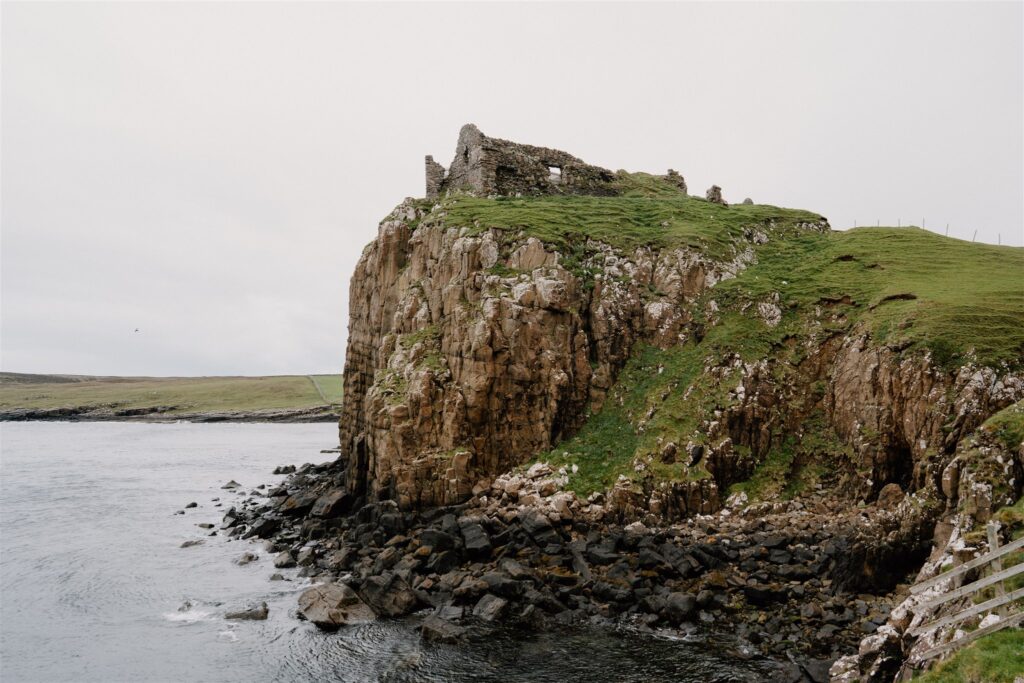
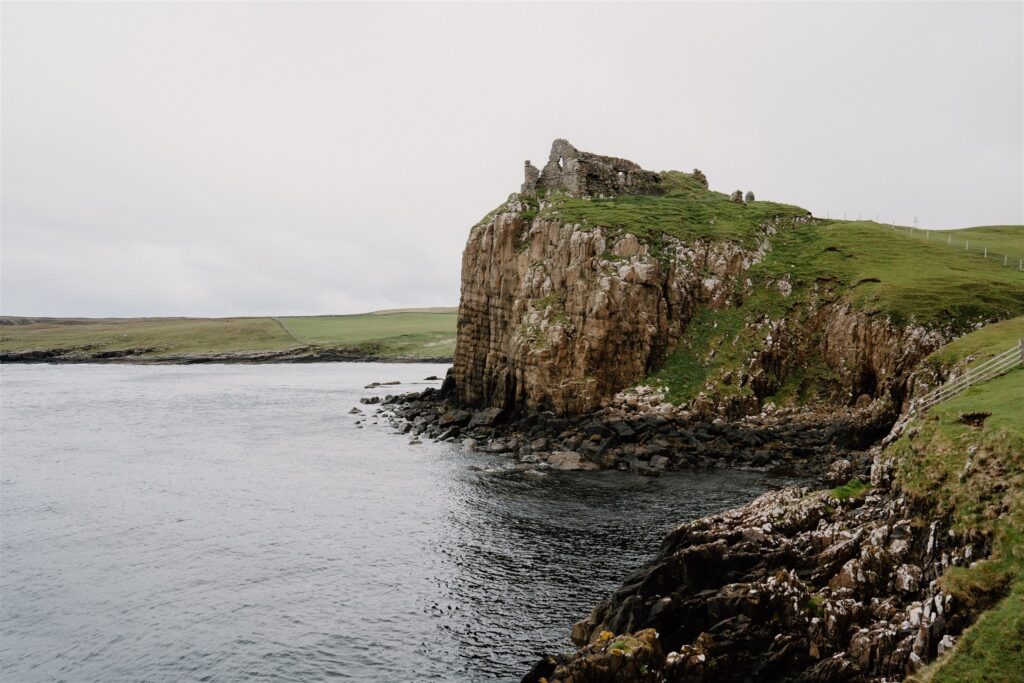
From there, Duntulm. The ruins of the MacDonald stronghold perch on a headland that drops steeply into the sea. There’s little signage, just stone and sea and wind. It’s stark, but never bleak.
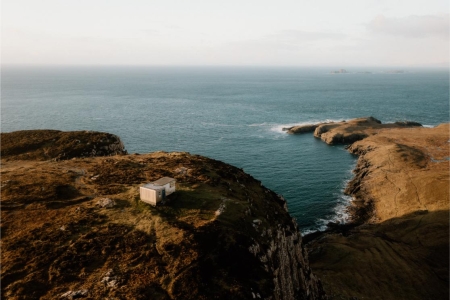
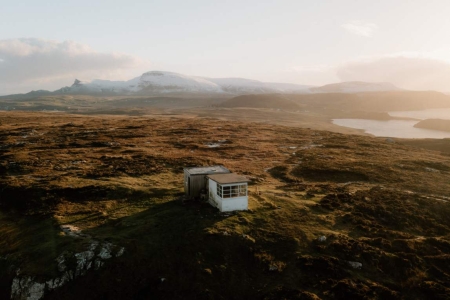
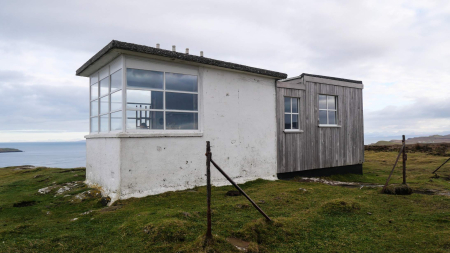
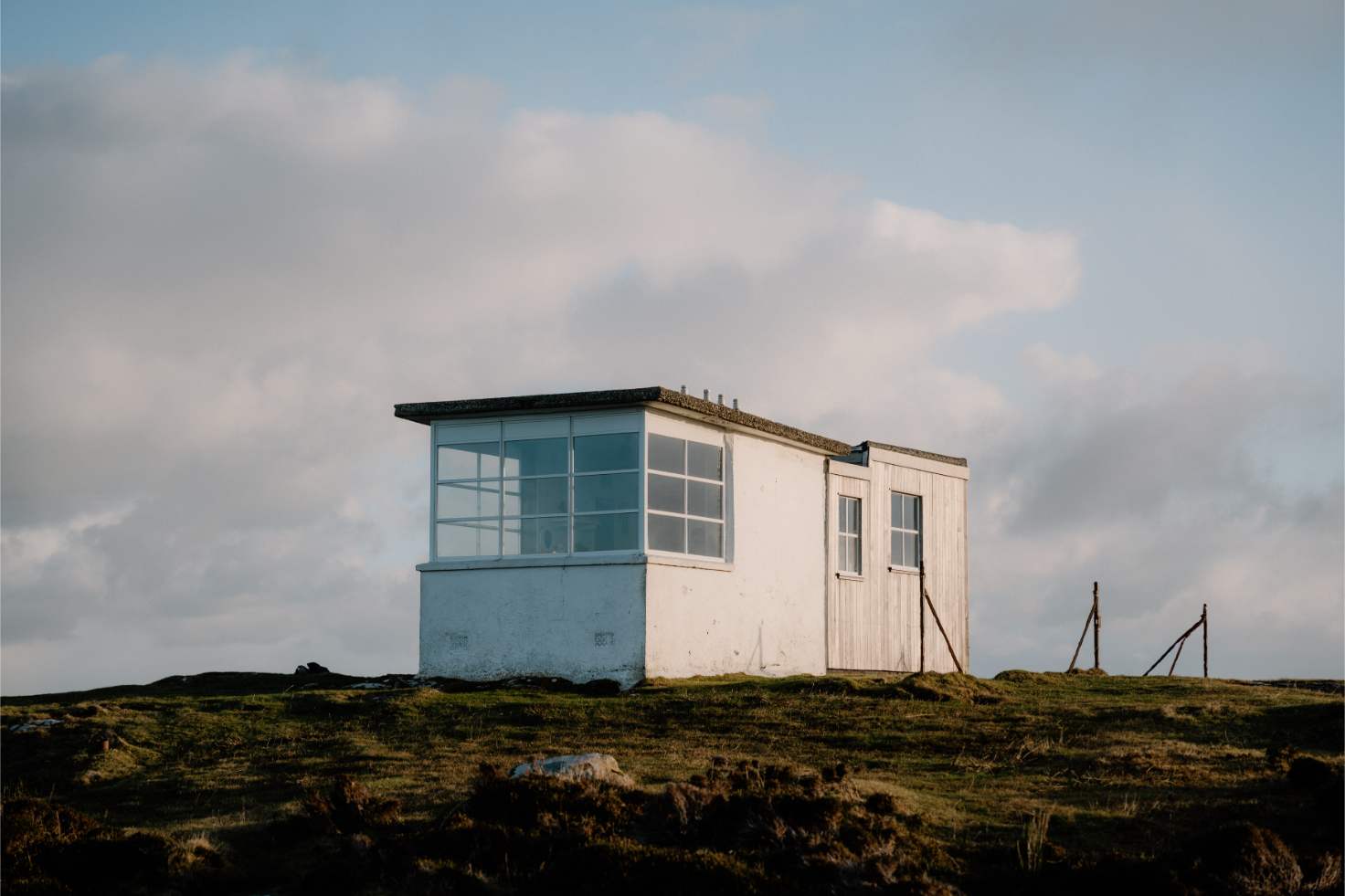
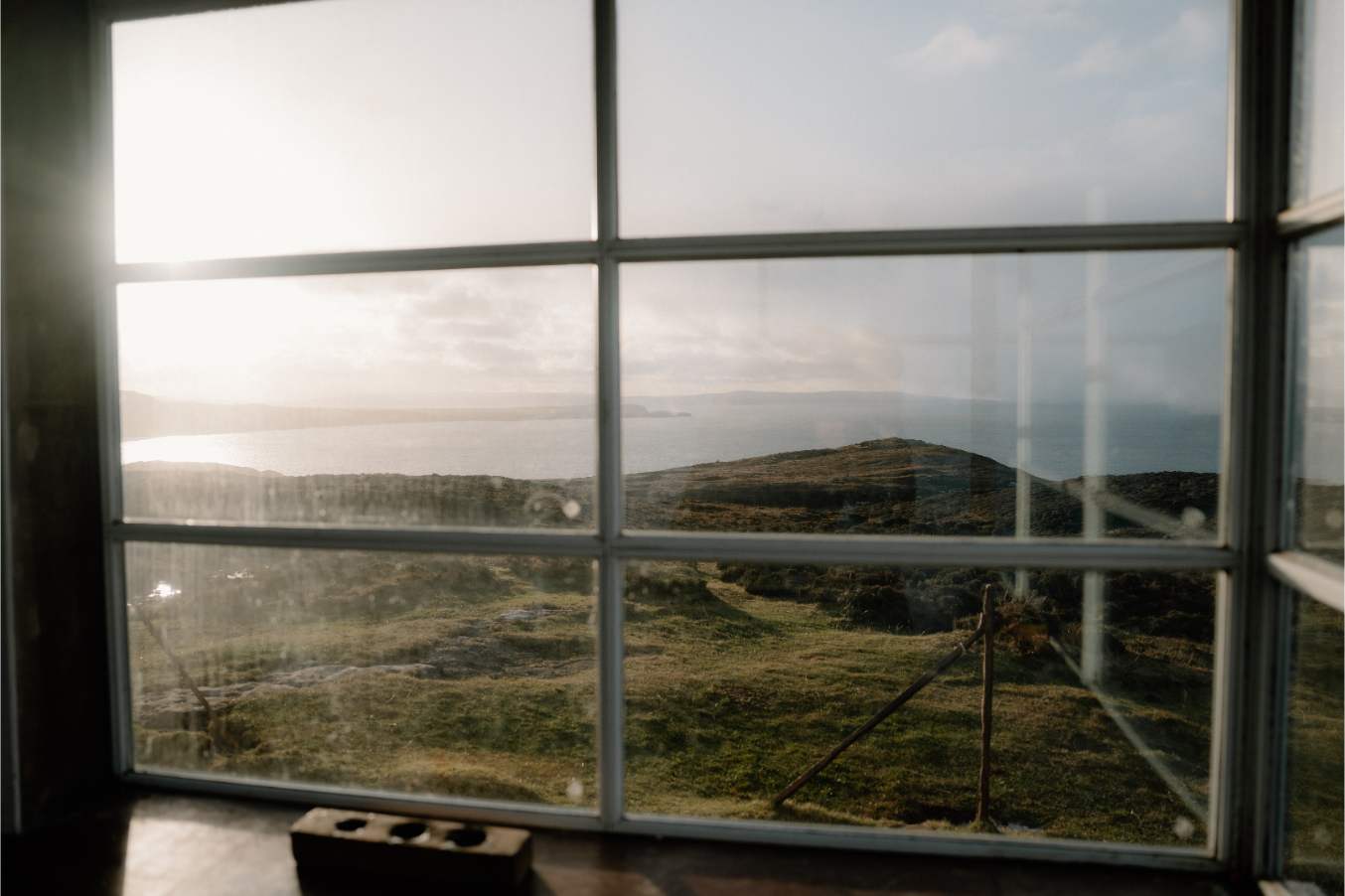
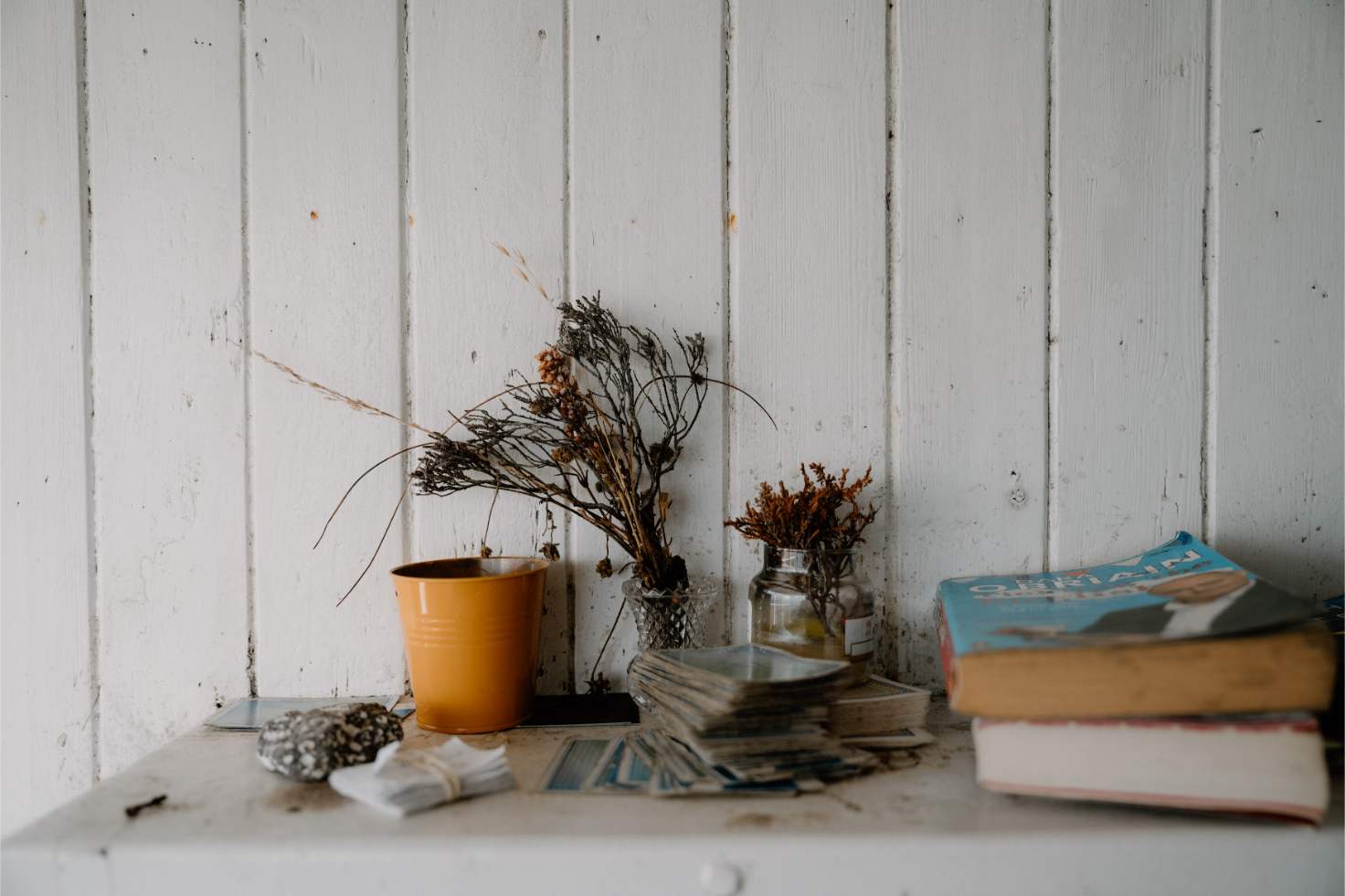
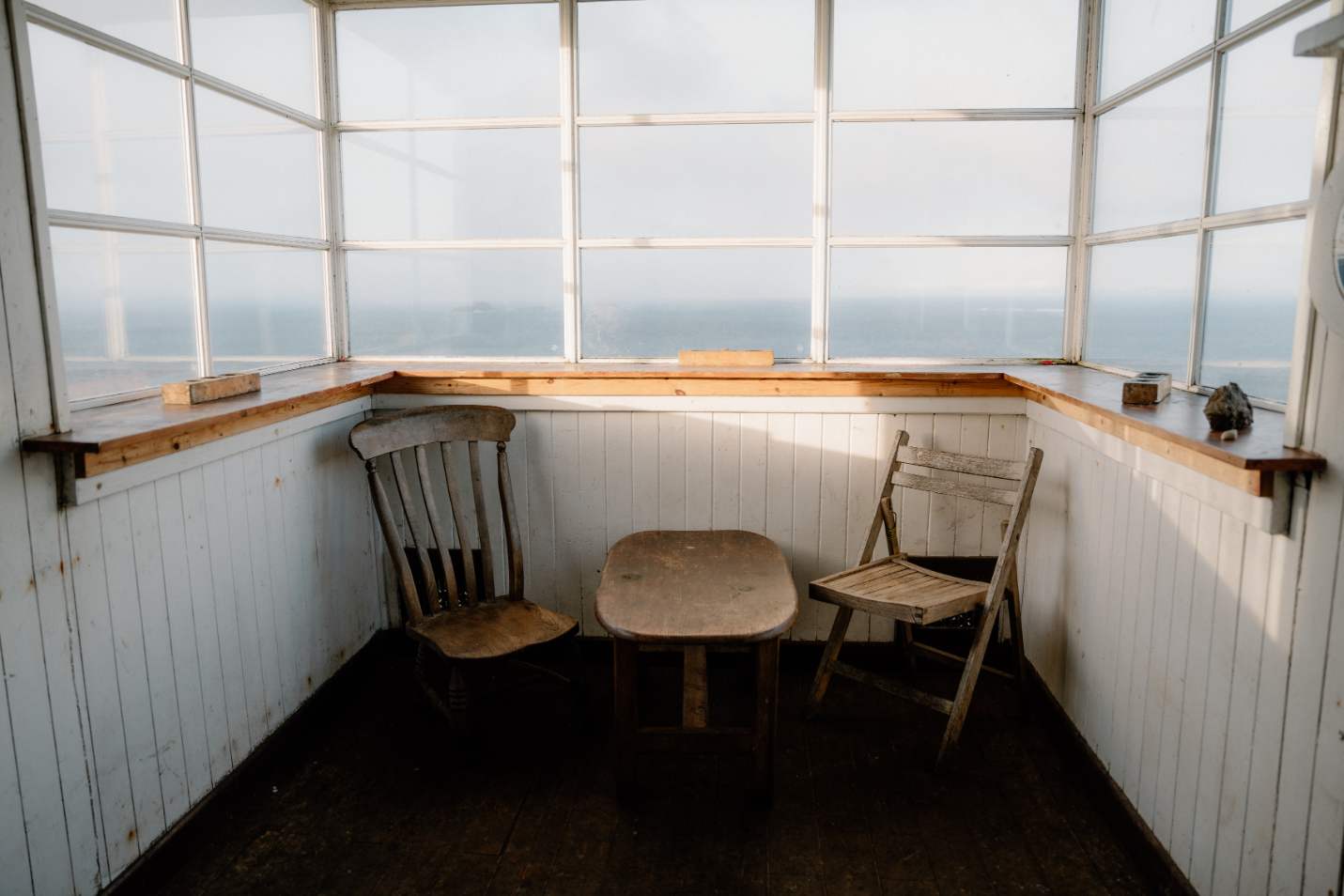
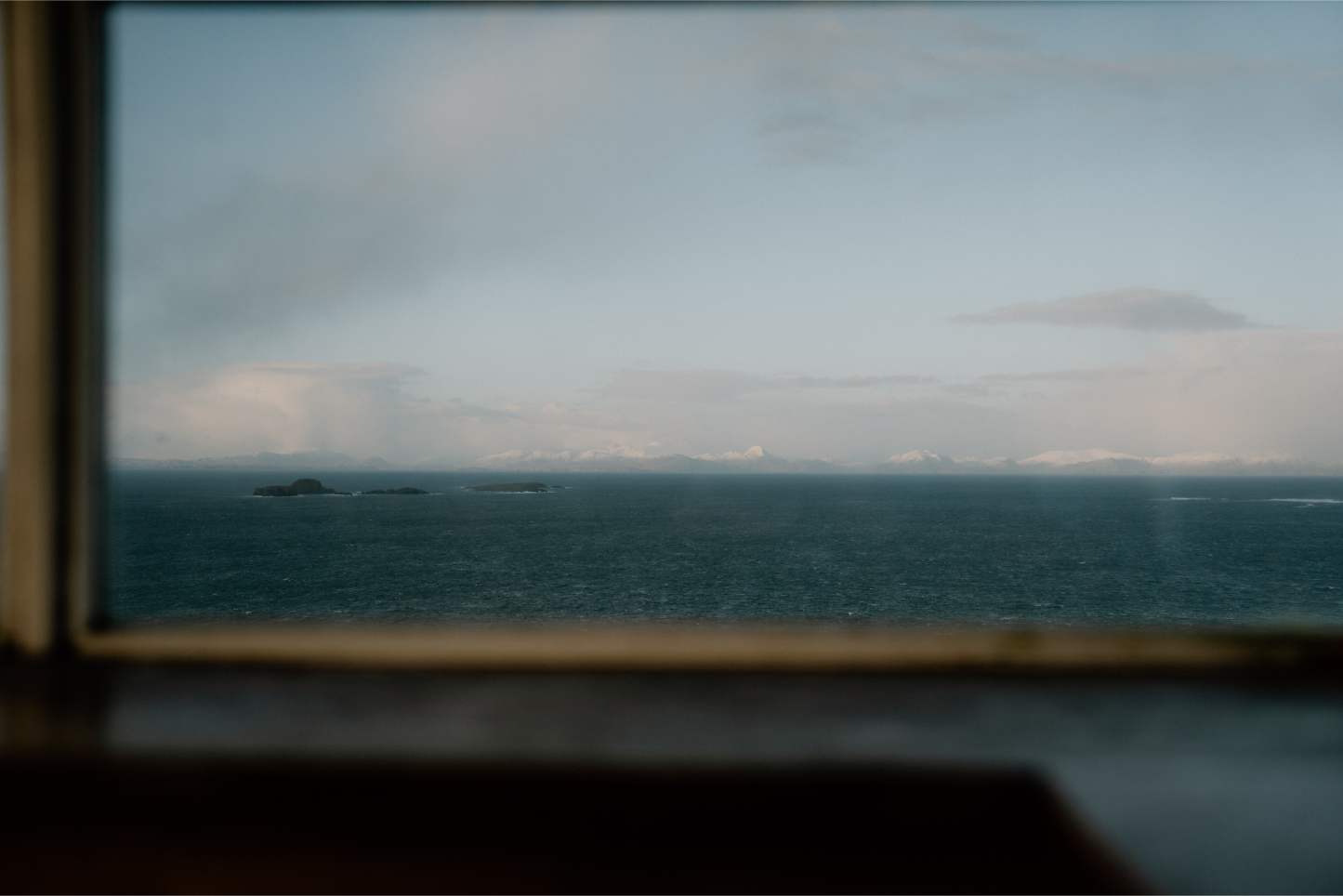
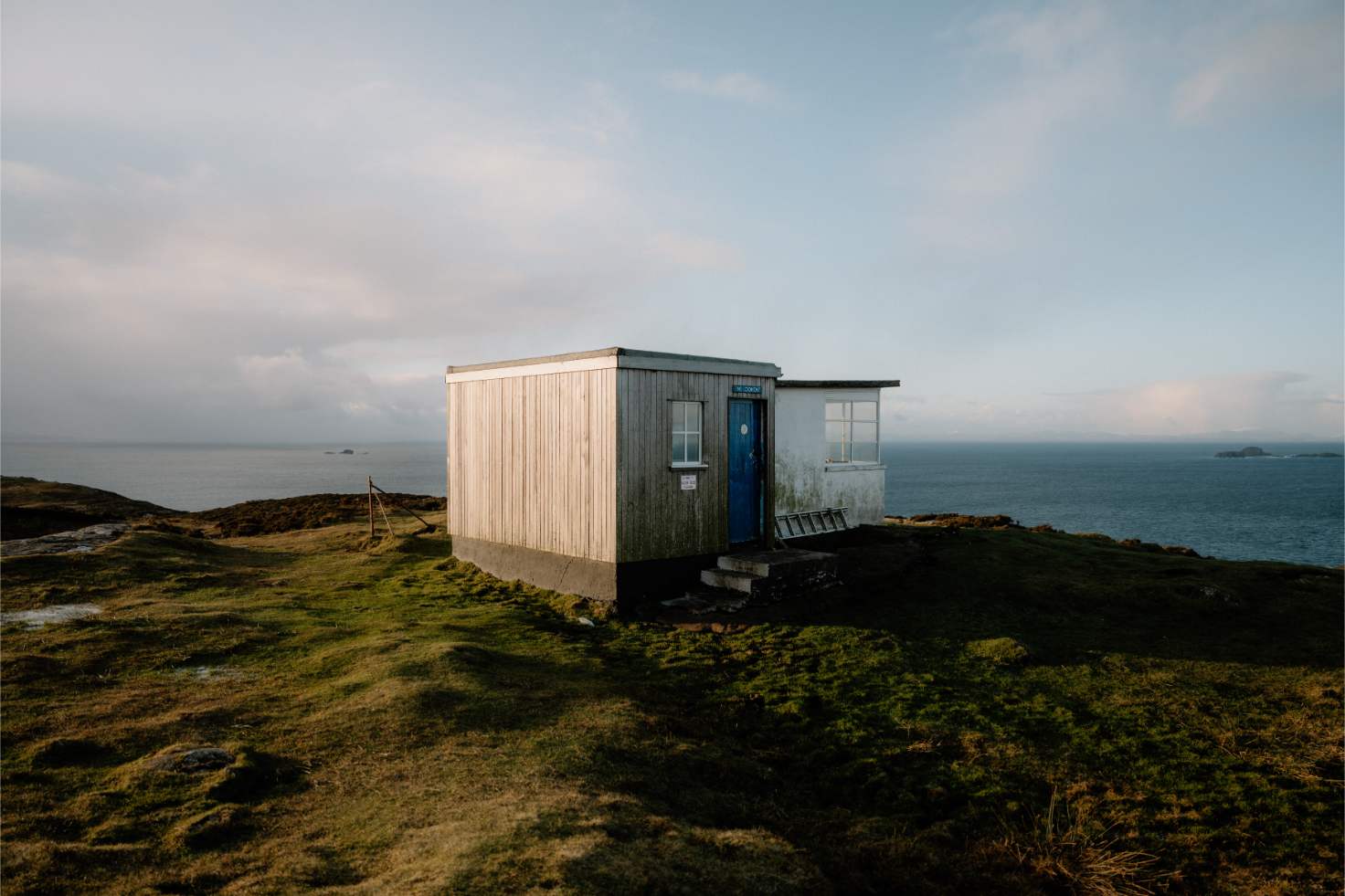
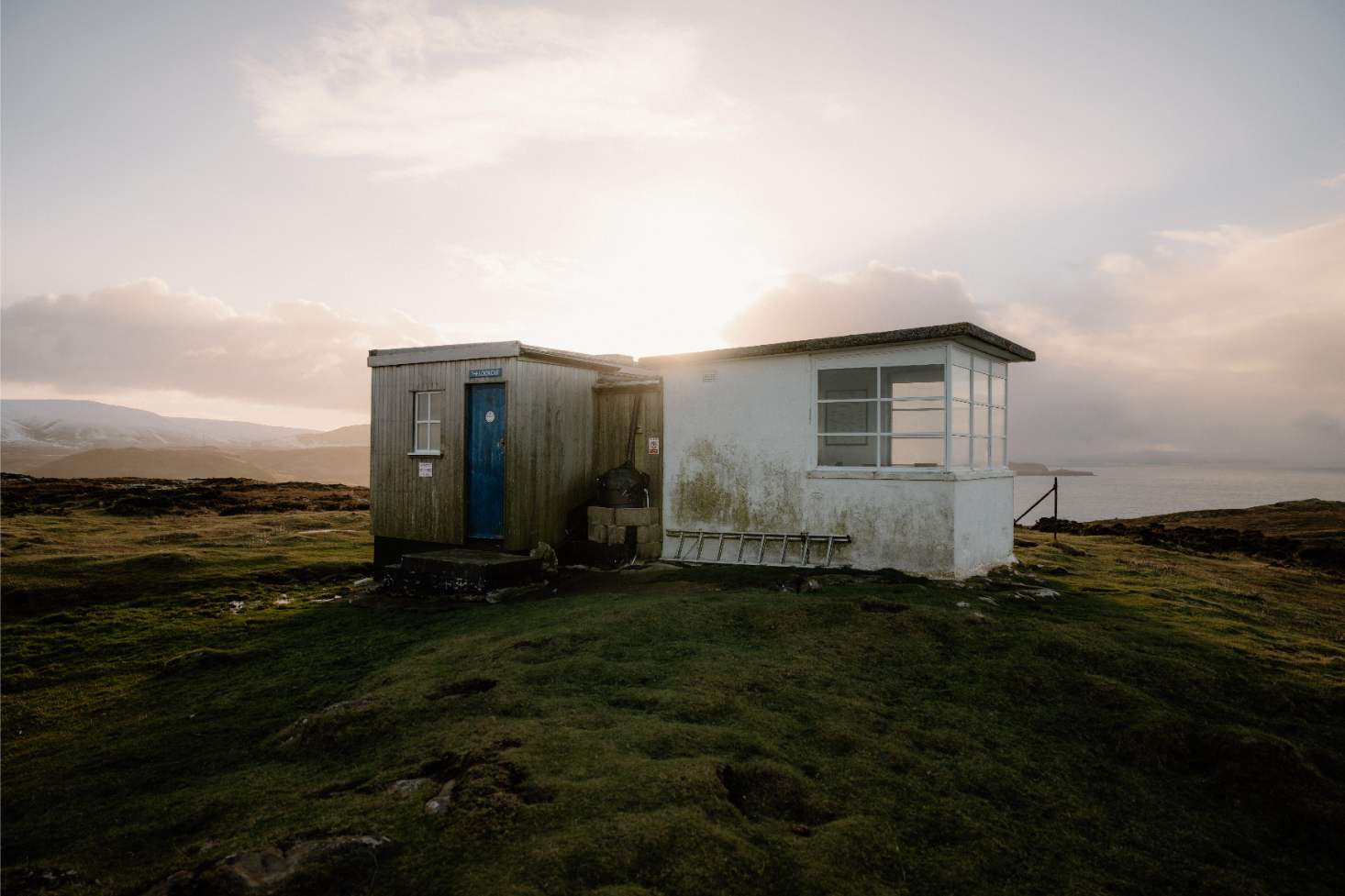
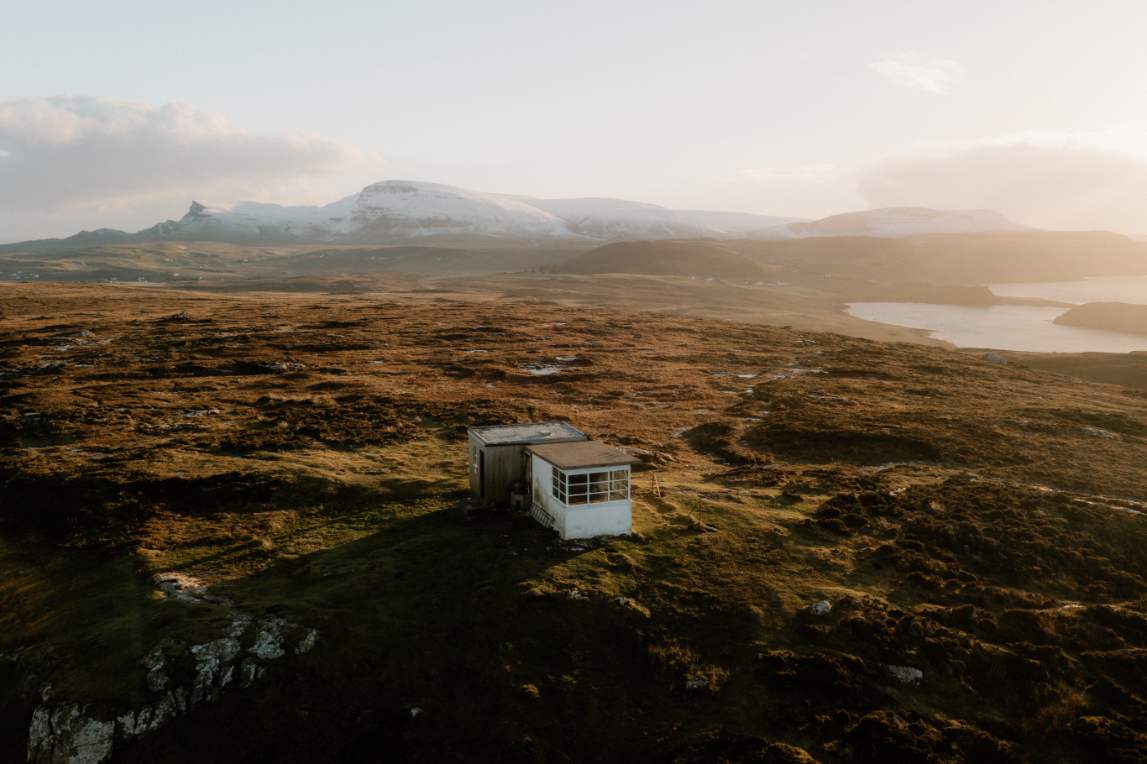
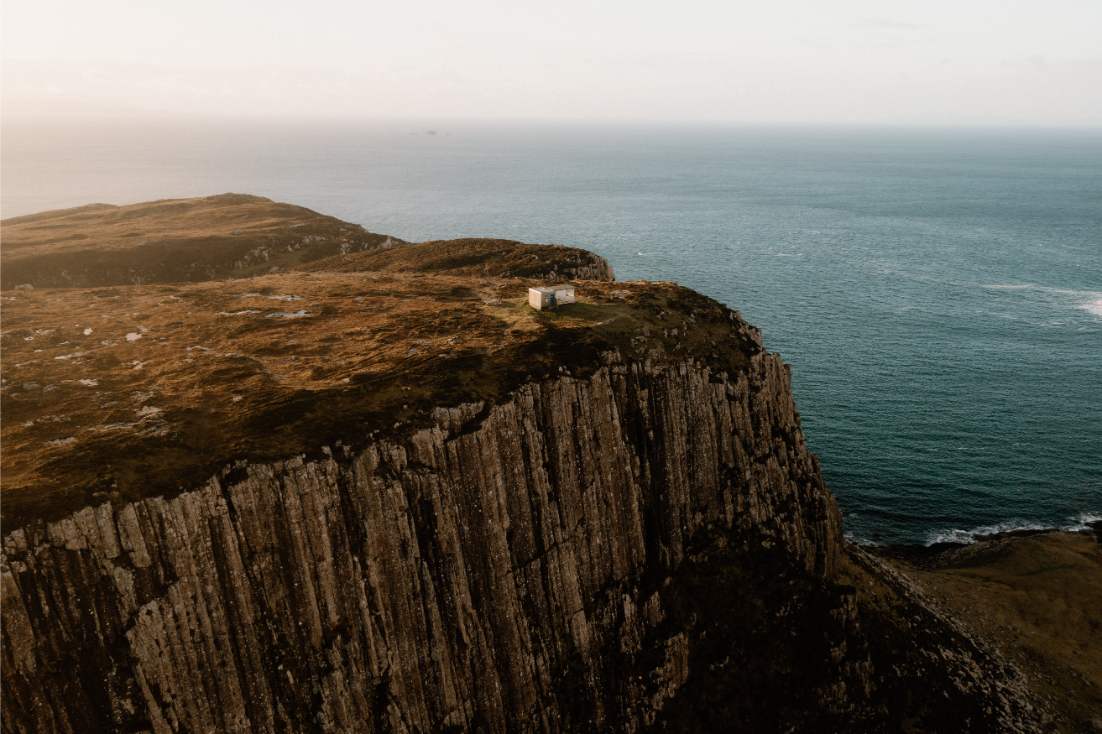
The final stop takes a little more effort. A short drive north leads to a small car park above Rubha Hunish. From here, a 2.25-mile round-trip walk (around 45 minutes each way) takes you out along a grassy path to the Lookout Bothy, perched on the very tip of the island. The trail is manageable for most, though uneven in parts and exposed to the elements. It’s not technical, but best done in boots—and in good weather. The bothy itself is simple, wooden, with panoramic windows looking across the Minch to the Outer Hebrides. No ticket, no barriers, just the sea and a quiet place to sit with it.
This isn’t about ticking off sights. It’s about walking—or slowly driving—through a pocket of the island that still feels held together by weather, story, and stone. It ends not with a grand finale, but with a view that stretches far beyond Skye.
Skye Museum of Island Life
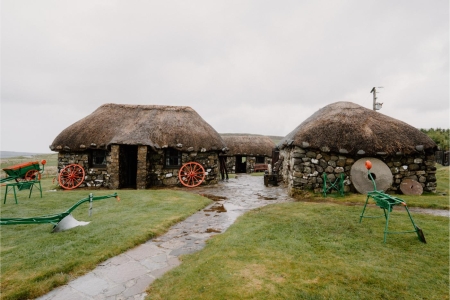
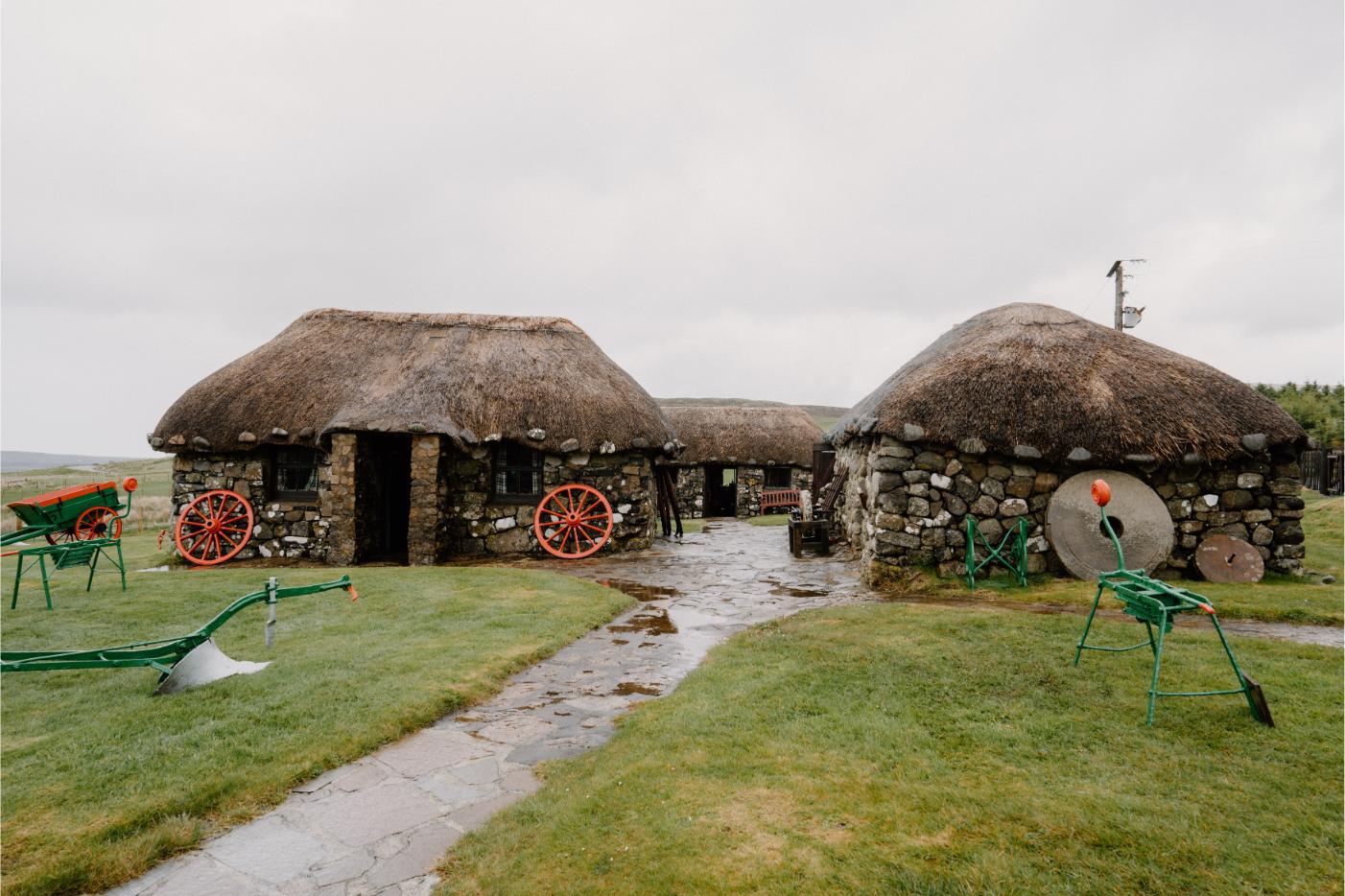
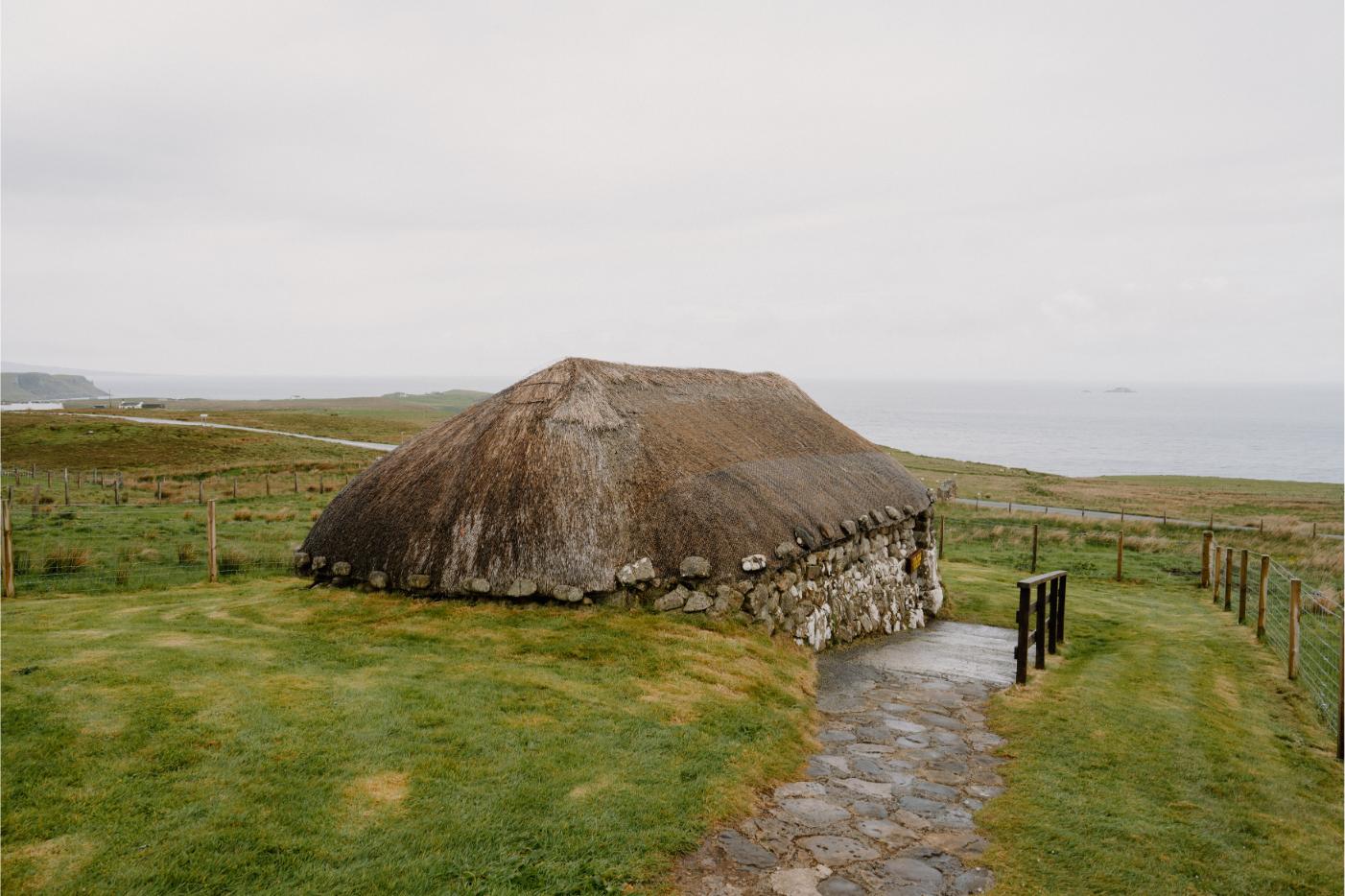
Set just off the single-track road near Kilmuir, the Skye Museum of Island Life feels quietly self-contained. A group of restored thatched cottages set against open moorland, it offers a clear-eyed glimpse into how people lived here just a few generations ago. Crofting wasn’t a relic; it was a way...
The Grave of Flora McDonald
Just uphill from the Skye Museum of Island Life lies Kilmuir Cemetery, marked by a low stone wall and a gate that rarely shuts properly. At the far end stands a tall Celtic cross, visible from the road. This is the grave of Flora MacDonald—one of Skye’s most enduring historical...
Kilvaxter Souterrain
A few miles south of Kilmuir, just off the A855, a discreet turning leads to one of Skye’s lesser-known ancient sites. Kilvaxter Souterrain doesn’t draw crowds or headlines, but for those with an interest in the island’s deeper past, it offers something quite rare—an underground structure left behind by Iron...
Duntulm Castle
From Kilvaxter, it’s a short drive north to Duntulm, where the road ends in a wide arc of tarmac and a scattering of cars, usually facing the sea. There’s no formal visitor centre, just a gate and a grassy path leading out along the headland. What’s left of Duntulm Castle...
Rubha Hunish and The Lookout Bothy
At the very tip of Skye’s north end, Rubha Hunish offers one of the island’s most striking and isolated viewpoints. The walk begins just off the A855, where a small car park at Kilmaluag marks the start of a 1.5-mile route to the headland. The trail starts gently, crossing open...
Accommodation nearby
Attraction nearby
Skye Museum of Island Life


Set just off the single-track road near Kilmuir, the Skye Museum of Island Life feels quietly self-contained. A group of restored thatched cottages set against open moorland, it offers a clear-eyed glimpse into how people lived here just a few generations ago. Crofting wasn’t a relic; it was a way of life that remained central on Skye well into the 20th century, and this small collection gives a sense of that continuity.
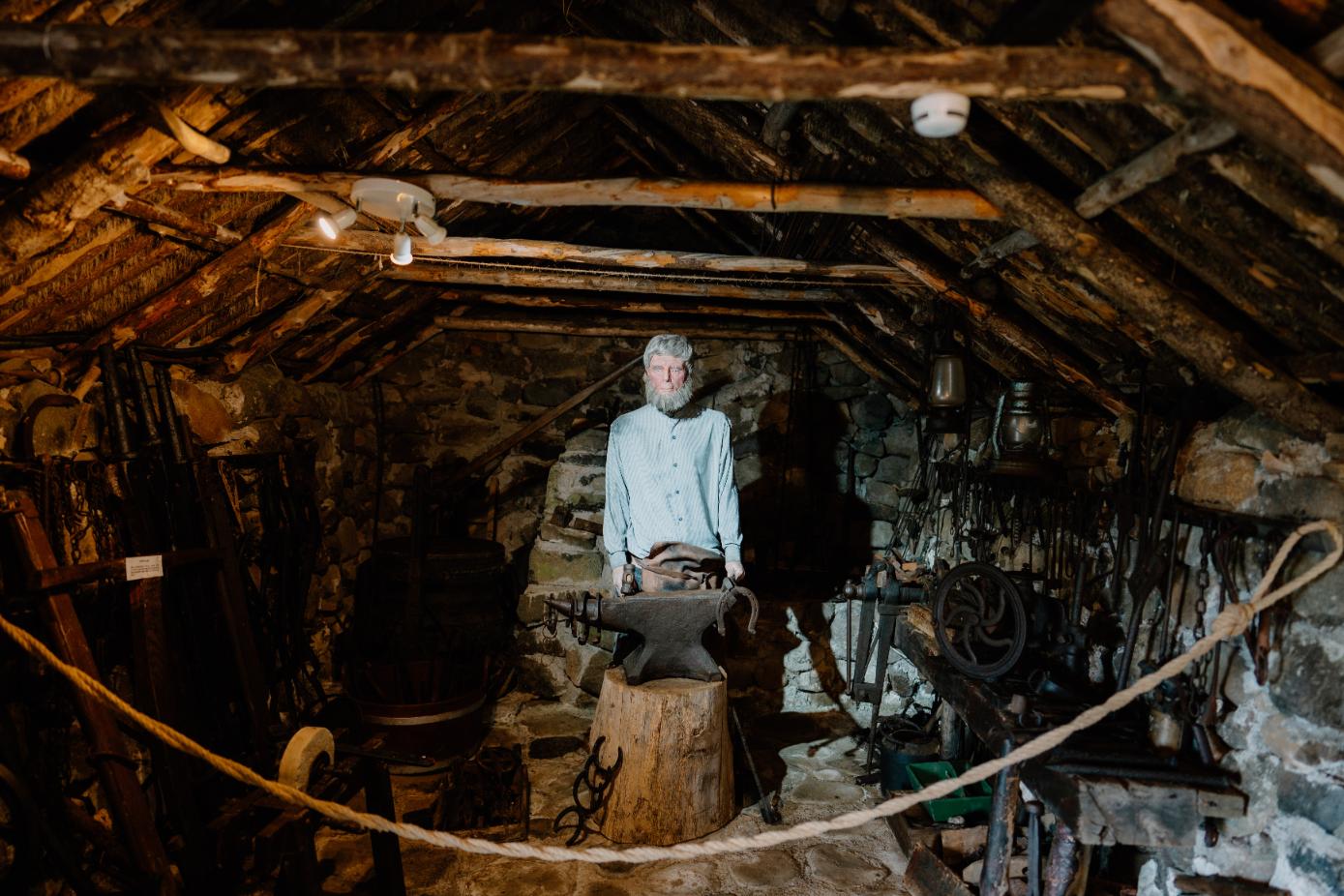
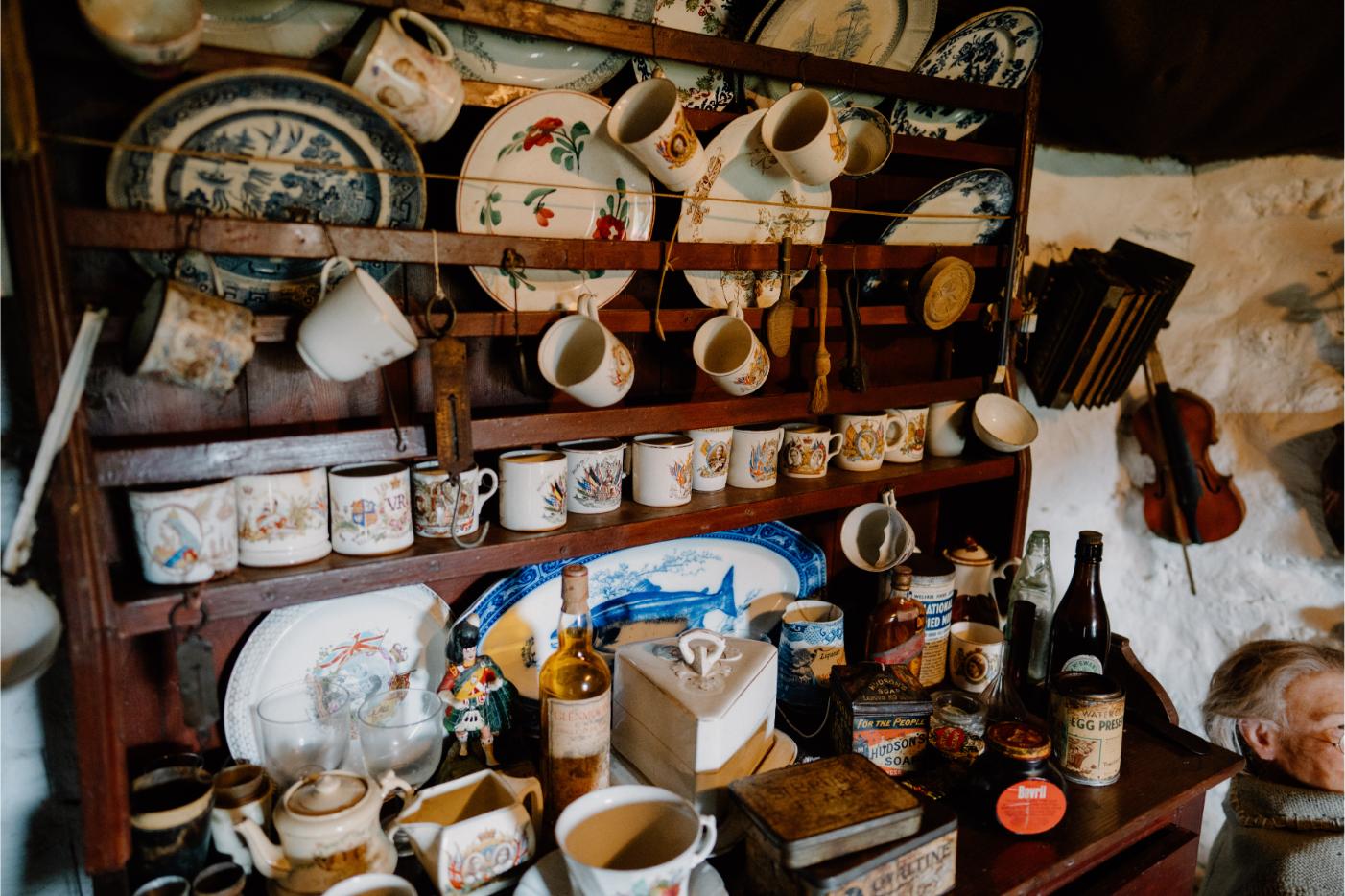
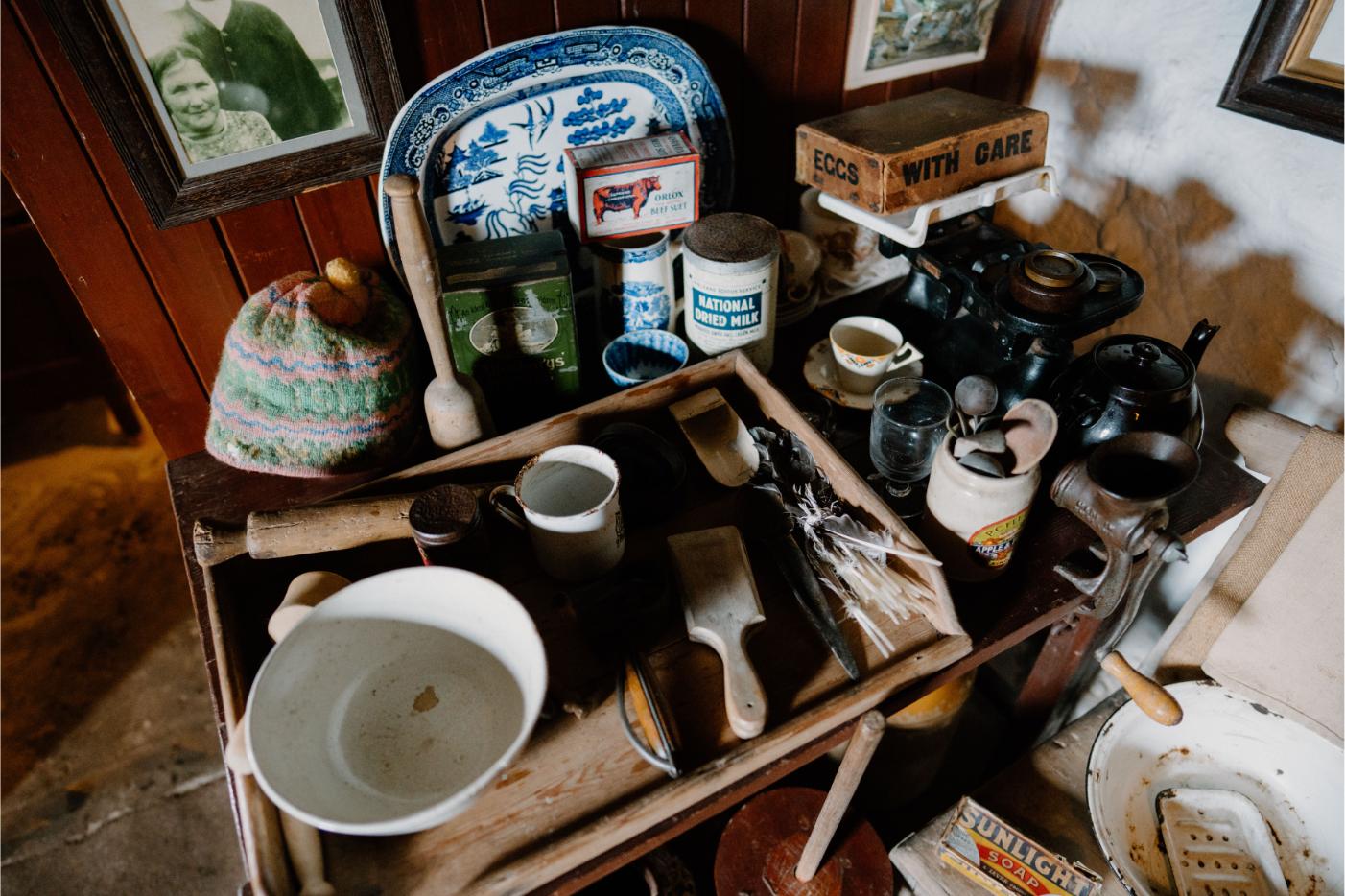
Each cottage is dedicated to a different part of daily life—home, school, work. Inside the croft house, you’ll find cast-iron pots hung over a blackened hearth, with box beds tucked into panelled corners and thick woollen blankets folded on top. The layout is compact and practical, designed for warmth and survival more than comfort. Elsewhere, tools are set out plainly: scythes, spades, spinning wheels, and looms, many of which were made or repaired by hand. A simple schoolroom with long benches and slate boards adds a quieter detail to the picture, offering a sense of what early education looked like in remote communities.
There’s no audio guide, no touchscreen, and no performance. The museum doesn’t try to dramatise hardship or impose nostalgia. It just presents what was, plainly and with care. Much of the written material comes from the people who lived it—family names you’ll still find in the area.
Outside, sheep graze quietly on the edge of the site, and the view down toward the sea feels unchanged. There’s an honesty box at the gate and a small shop with local books and handmade items. It’s not large, but the detail is precise and the atmosphere understated. You come away with a clearer sense of what life on Skye once demanded—resourcefulness, resilience, and an understanding of the land that shaped every decision.


The Grave of Flora McDonald


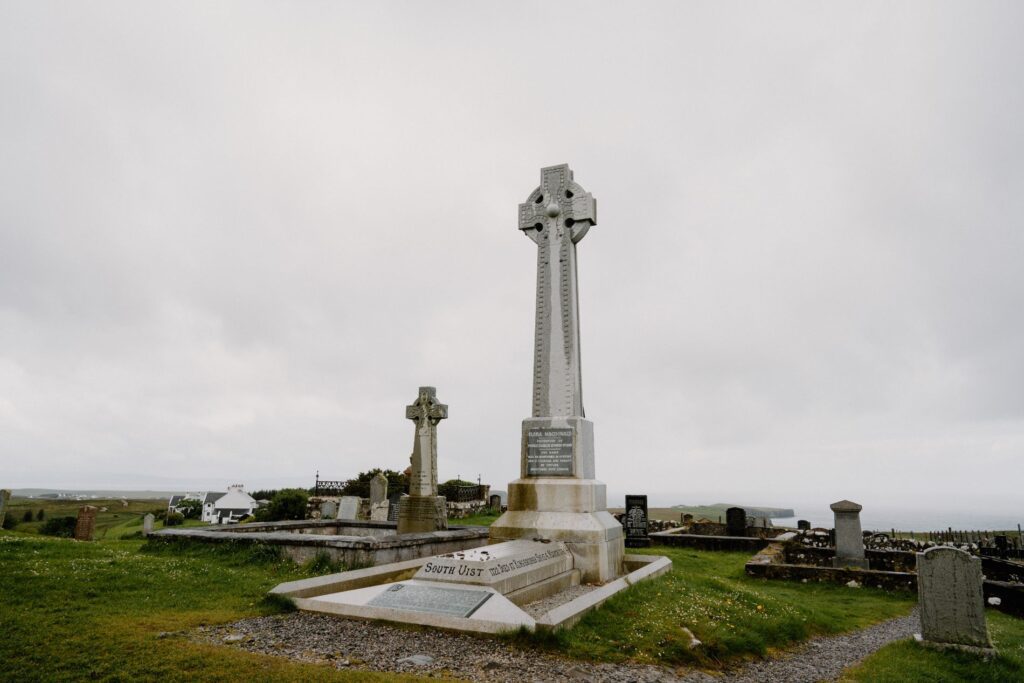
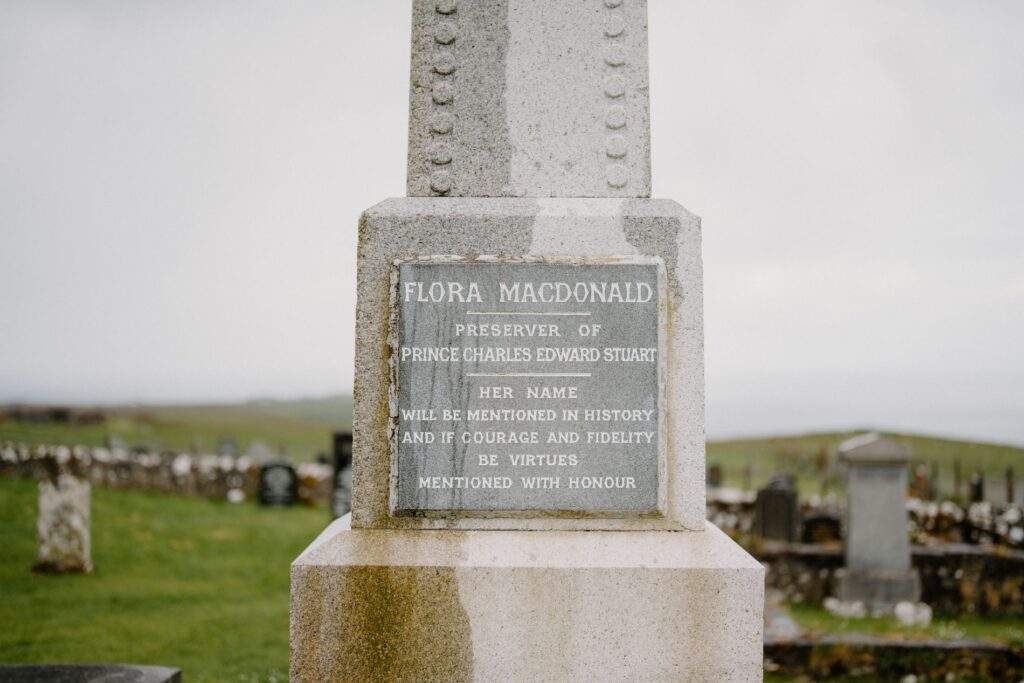
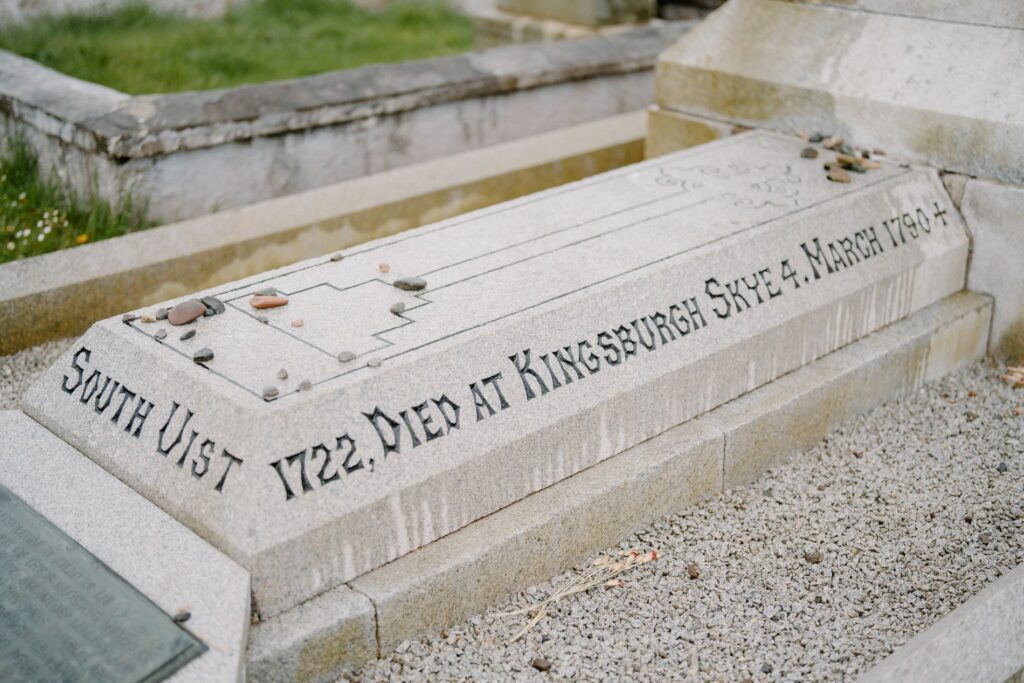
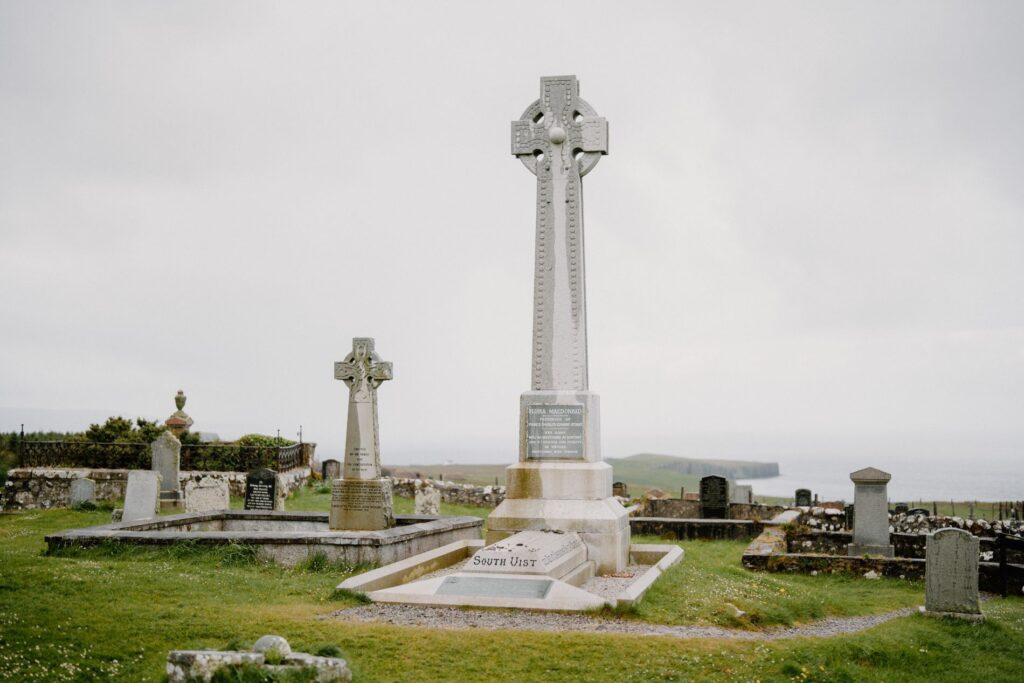
Just uphill from the Skye Museum of Island Life lies Kilmuir Cemetery, marked by a low stone wall and a gate that rarely shuts properly. At the far end stands a tall Celtic cross, visible from the road. This is the grave of Flora MacDonald—one of Skye’s most enduring historical figures.
She’s remembered for her role in helping Bonnie Prince Charlie evade capture following the failed Jacobite uprising of 1745. Disguised as her maid, he escaped from Benbecula to Skye under her care. Flora was later arrested and imprisoned in the Tower of London, before eventually returning to Skye in her later years. Her decision carried real risk, but her reasons—often described as compassion rather than politics—earned lasting respect.
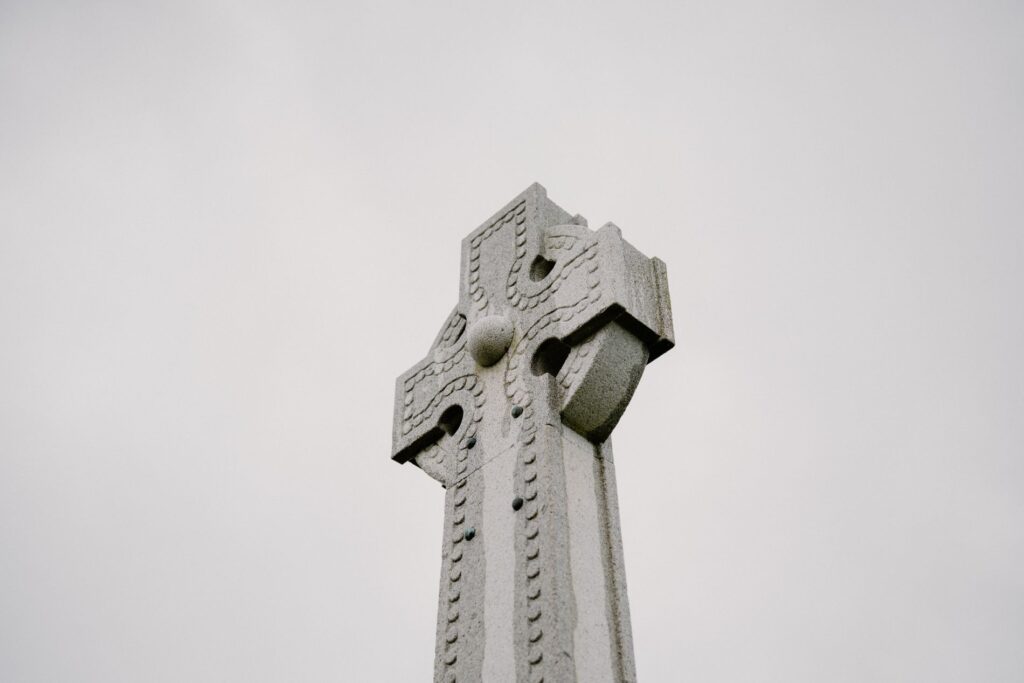
The grave itself is modestly grand. A white cross rises from the turf, inscribed with her name and story, and topped with a carved urn. Nearby lies the Gaelic poet Angus MacDonald, and in more recent years, a quietly placed memorial marks the resting place of fashion designer Alexander McQueen. His ashes were scattered here in 2011, close to the MacDonald family roots he referenced often. It’s a quiet convergence of stories—royalist defiance, poetic voice, and creative legacy.
From the hillside, you can see out across the Minch to the Western Isles, with wind almost always pressing through the grass. There are no audio guides or visitor panels. Just stone, lichen, and names. Some visitors stay only briefly, pausing to read the inscriptions. Others linger, placing small stones or flowers, letting the setting take hold.
Kilmuir Cemetery isn’t well-signposted, and it rarely feels curated. But it holds more than one notable life—and in its quiet way, gives each one room to remain present.


Kilvaxter Souterrain
A few miles south of Kilmuir, just off the A855, a discreet turning leads to one of Skye’s lesser-known ancient sites. Kilvaxter Souterrain doesn’t draw crowds or headlines, but for those with an interest in the island’s deeper past, it offers something quite rare—an underground structure left behind by Iron Age settlers more than 2,000 years ago.
The site was uncovered in the 1990s when a farmer’s tractor fell through the roof of what turned out to be a curved, stone-lined passage. What followed was a careful excavation and preservation, revealing a remarkably intact souterrain—a kind of underground chamber, likely used for storage, and possibly shelter or ritual. It now has a reinforced roof and stair access, with an information board near the small car park giving basic context.
It’s a short, grassy walk to the entrance. You descend a series of metal steps, stepping into the cool, dim corridor. The walls close in quickly, and the air shifts—still, damp, and quiet. There’s no lighting beyond the daylight you carry in, and no modern signage cluttering the experience. Just roughly laid stones and the sense of being briefly removed from the present.
The exact function of souterrains is still debated. Most agree they were used to store food, possibly grain or cheese, kept cool in the stable underground temperatures. But there’s also something ceremonial about the design—deliberately hidden, carefully shaped, and built to last.
What makes Kilvaxter special is how intact it feels. Many souterrains in Scotland are collapsed or filled in. Here, you can still walk through the full length, tracing the arc of the chamber by torchlight or phone screen. It's not dramatic or stylised—but it’s real, and the age of it settles in quickly once you're inside. A small site, but one that stays with you.
Duntulm Castle


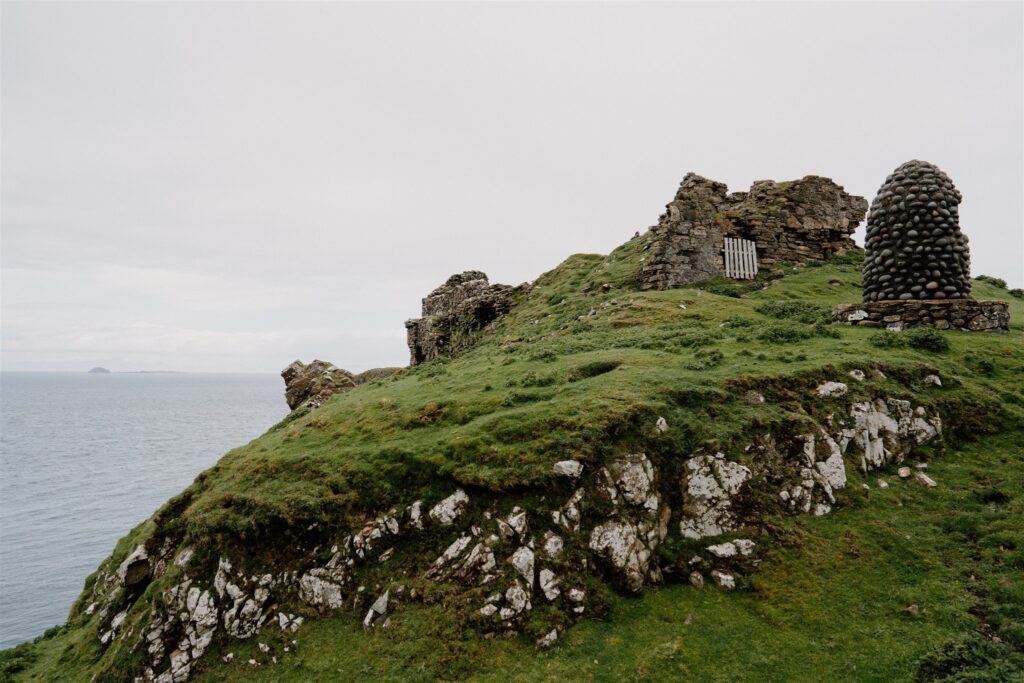
From Kilvaxter, it’s a short drive north to Duntulm, where the road ends in a wide arc of tarmac and a scattering of cars, usually facing the sea. There’s no formal visitor centre, just a gate and a grassy path leading out along the headland. What’s left of Duntulm Castle sits at the far point, crumbling into the sea, lashed by wind and weather.
The ruins are fragile now—cordoned off for safety, with visible warnings to keep to the worn track—but the sense of place remains strong. This was once the seat of the MacDonalds of Sleat, built on the site of an earlier Norse fort. At its height in the 17th century, it commanded the waters between Skye and the Outer Hebrides, and served as both stronghold and symbol of clan authority. The name is thought to come from the Gaelic “Dùn Thuilm,” possibly referencing a fort on a green hill or mound.
Duntulm was abandoned in the 18th century when the clan moved to Monkstadt House, reportedly taking much of the stone with them. Local tradition adds more colour: a nursemaid dropped an infant from one of the windows and was banished to sea without oars. Whether myth or memory, it adds to the mood here—weathered, isolated, half-erased.
What remains is a rectangle of stone walls, shaped by time and the Atlantic. You can’t enter the structure, but you can walk the perimeter, peer through gaps, and watch the sea crashing into the rocks below. On clear days, the Isle of Lewis rises across the Minch; in mist, the view fades to the immediate—the heather, the wind, and the sharp edge of the headland.
There are no plaques or crowds, just the sound of gulls and the constant sea. The castle may be ruined, but its setting still does most of the work. This is a stop that gives more the longer you stay—less about interpretation, more about standing still in a place that once held power, and now offers something quieter.


Rubha Hunish and The Lookout Bothy


At the very tip of Skye’s north end, Rubha Hunish offers one of the island’s most striking and isolated viewpoints. The walk begins just off the A855, where a small car park at Kilmaluag marks the start of a 1.5-mile route to the headland. The trail starts gently, crossing open croftland before narrowing as it skirts down through a shallow gully. It’s not technical, but the ground can be uneven and wet underfoot—sturdy boots and care with the descent are sensible.
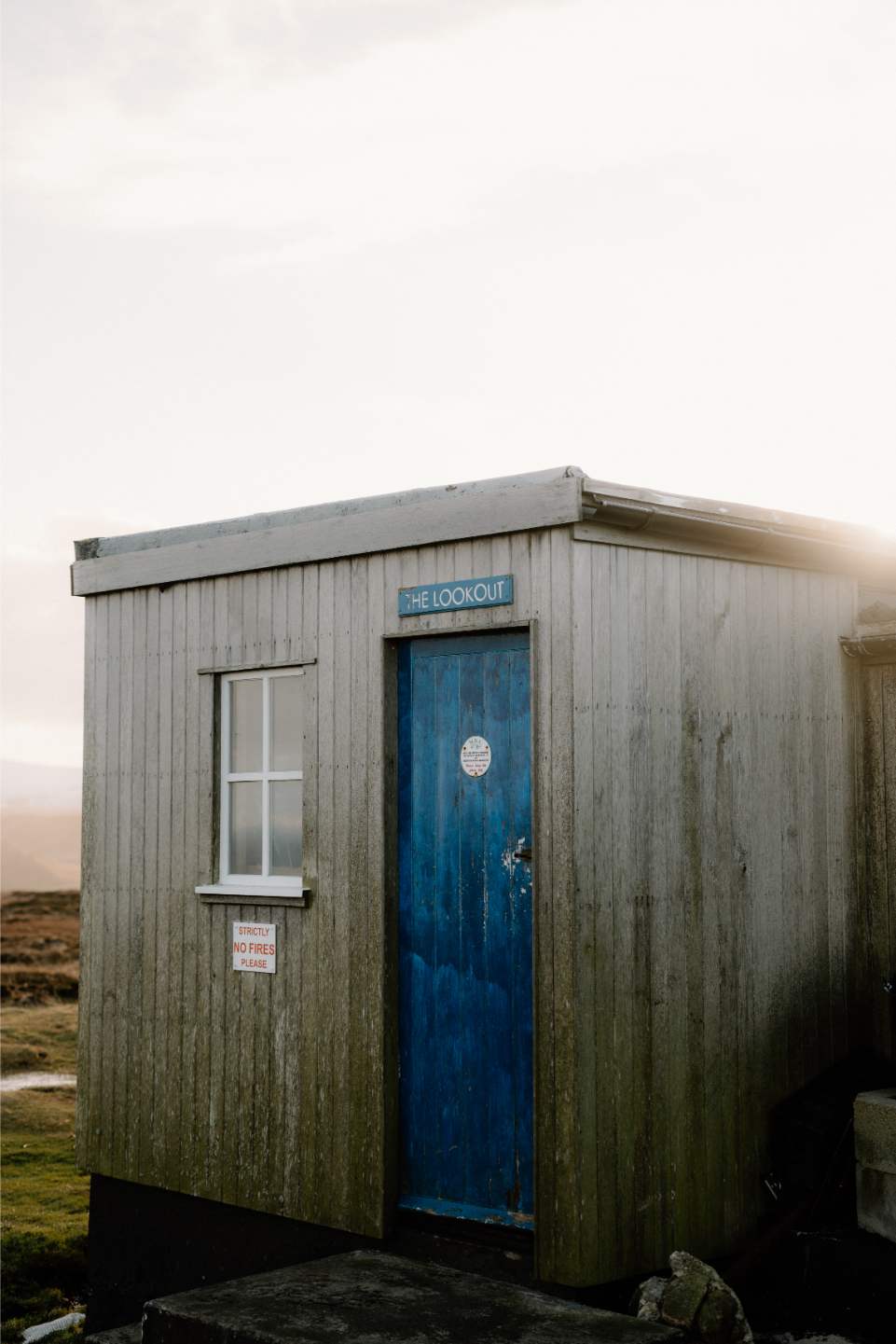
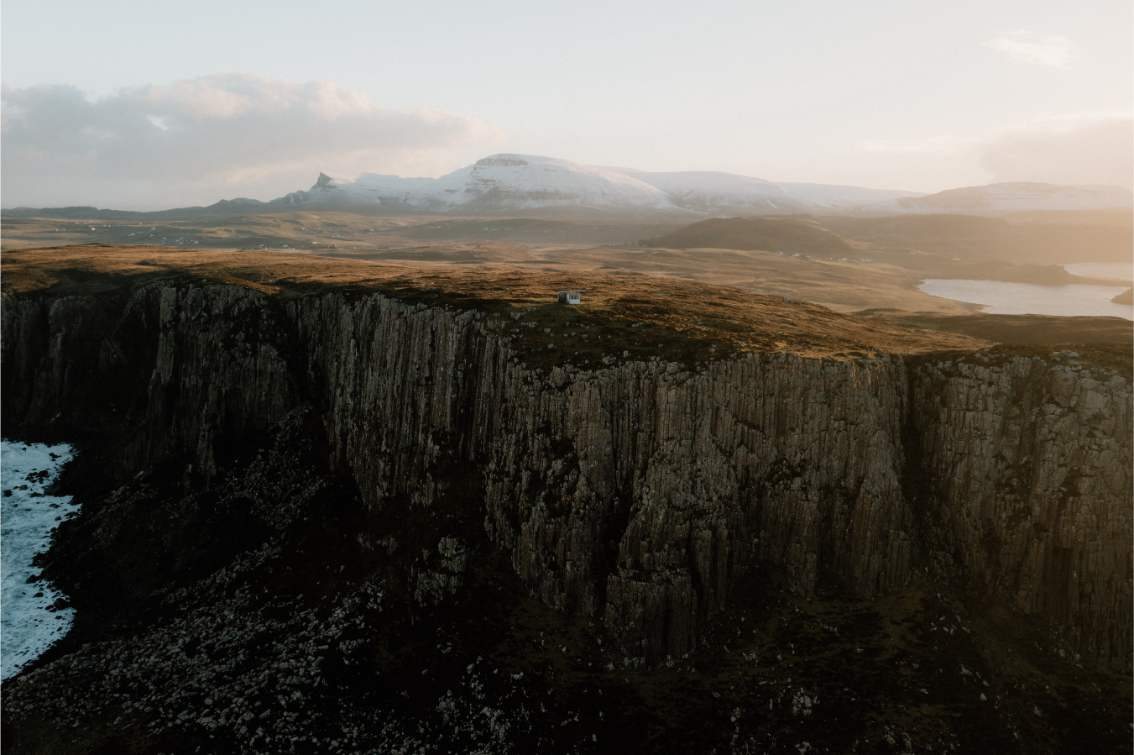
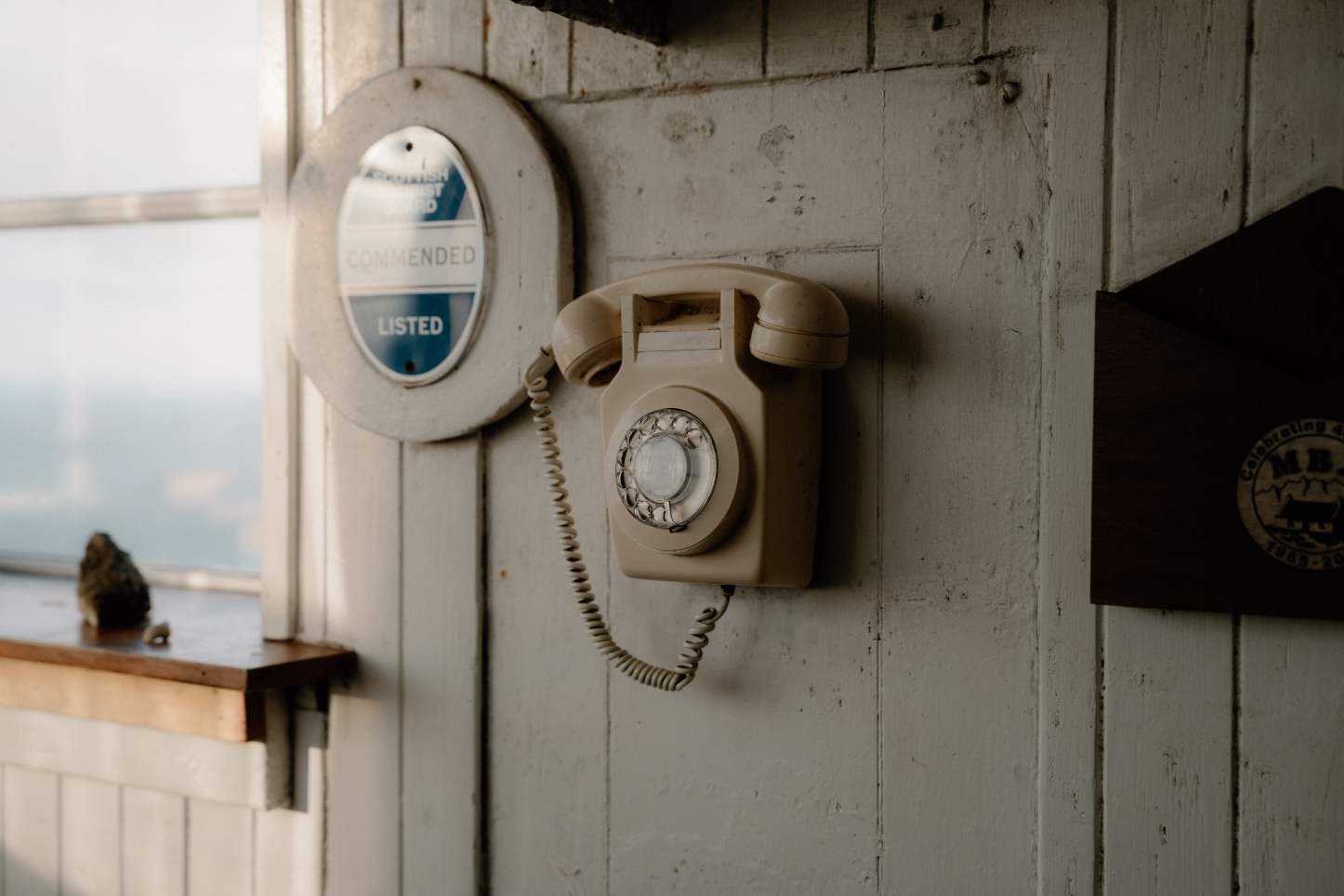
Once past the final rise, the headland opens out into a wide expanse of grass, edged by sheer cliffs and sharp drops to the sea. At its end sits the Lookout—an old coastguard hut now kept as a bothy. It’s unstaffed, open to all, and stripped of anything but the essentials: a bench, a logbook, a view. Inside, it’s quiet. Outside, the sense of exposure is immediate. You can see all the way to Lewis and Harris across the water, and on the clearest days, the mainland hills behind them.
This is one of Skye’s best places to watch for marine life. Gannets and guillemots pass close to the cliffs, and in calmer conditions, you might spot dolphins or even the curved fin of a minke whale offshore. There are no barriers, no signs, no routes marked in bold. Just the drop, the sea, and whatever the weather decides to bring with it.
The return walk is the same way back, uphill this time, but the route feels different with the sea now behind you. There’s a small satisfaction in seeing the car again. Even more in knowing few take the time to reach this far.
This short journey through the north of Skye is shaped by distance, yes—but more so by texture, silence, and the feeling of being slightly removed from the usual track. From reconstructed crofts to abandoned castles, and from sheltered museums to a solitary hut above the sea, each stop tells its story in fragments. There’s history here, but it isn’t polished. What stands out is what’s left behind—stone, sea, memory—and how close you can still get to it.


Add to a List
Name your list
Add to a trip
By continuing, you agree to our Terms of Service Read our Privacy Policy
Sign in
By continuing, you agree to our Terms of Service Read our Privacy Policy
Reset Password
By continuing, you agree to our Terms of Service Read our Privacy Policy


Sign in with Google
Sign in with Email