
Kilmartin Glen and Dunadd – Cairns, Temple Wood and Crinan
A day by car, from Oban and back.
The route
Kilmartin Glen, less than an hour south of Oban, holds what its museum calls one of Scotland's richest prehistoric landscapes, with more than 800 monuments within six miles of the village.
Burial cairns stand in a line along the floor of the glen, with a stone circle and a row of standing stones beyond them. At the glen's foot the rock of Dunadd rises out of the Great Moss, a wide flat bog, and the first kings of Dál Riata, an early Gaelic kingdom, are said to have been inaugurated there. This is a day from Oban, with the glen explored on foot and Crinan and its canal basin in the middle.
Before you go
Book lunch at the Crinan Hotel's Seafood Bar
Ring the hotel on 01546 830261 to book a table, and ask that the Seafood Bar is serving on your day; the Crinan Coffee Shop beside the basin, open daily from March to October, needs no booking.
The day
Kilmartin
The day starts with the drive south from Oban, and the morning is spent at Kilmartin, mostly on foot, among cairns and stones raised thousands of years ago. The afternoon brings lunch beside a canal and a short, steep climb to a hilltop fort with the Great Moss spread out below, then the road home.
2 hr 22 min at the wheelAbout 76 miles by carAbout 3 miles on foot
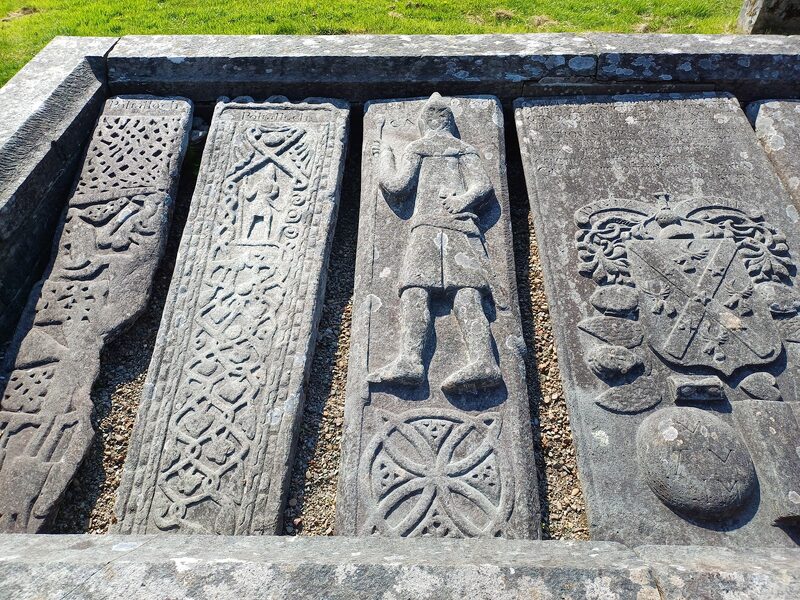
Kilmartin Stones
An attraction
It's 50 minutes' drive south from Oban on the A816 to Kilmartin, so leave at nine. The road can be delayed or closed south of Kintraw, so check Argyll and Bute Council's A816 page before setting off. Leave the car at the museum and begin in the churchyard next door, open at any time. Most of its medieval West Highland grave slabs are kept in a small shelter: look for the warriors, swords and knotwork cut into them. Ten minutes is enough here before the museum.
3 min on foot
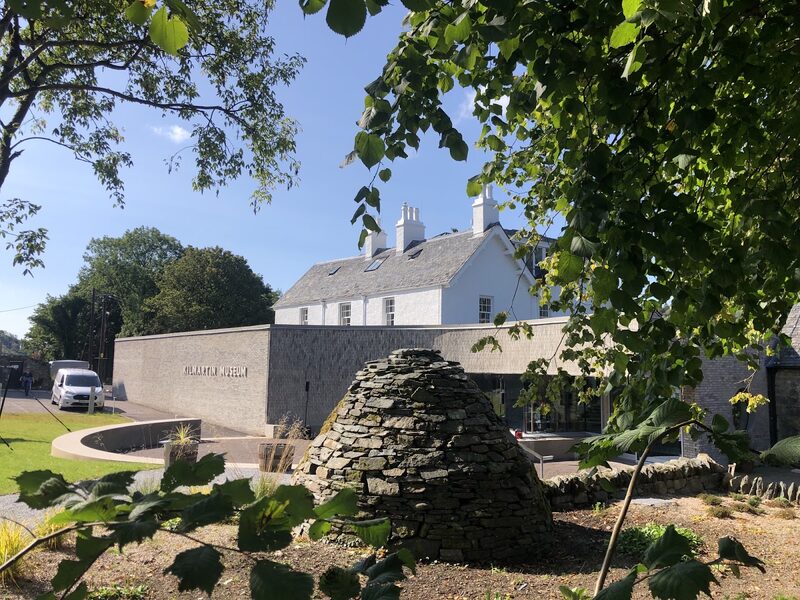
Kilmartin Museum
An attraction
It's 3 minutes' walk to Kilmartin Museum, where an hour shows what the glen's ground has given up: early pottery and metalwork. From March to October it opens daily at 10am. On the third Saturday of the month, and Wednesday to Sunday from November to February, it opens to general visitors at 11am: walk the glen first and be back by noon. It shuts for some midwinter weeks, and in winter Crinan's lunch places may be shut: ring the Crinan Hotel first, or eat in Lochgilphead, 12 minutes beyond Dunadd.
25 min on foot
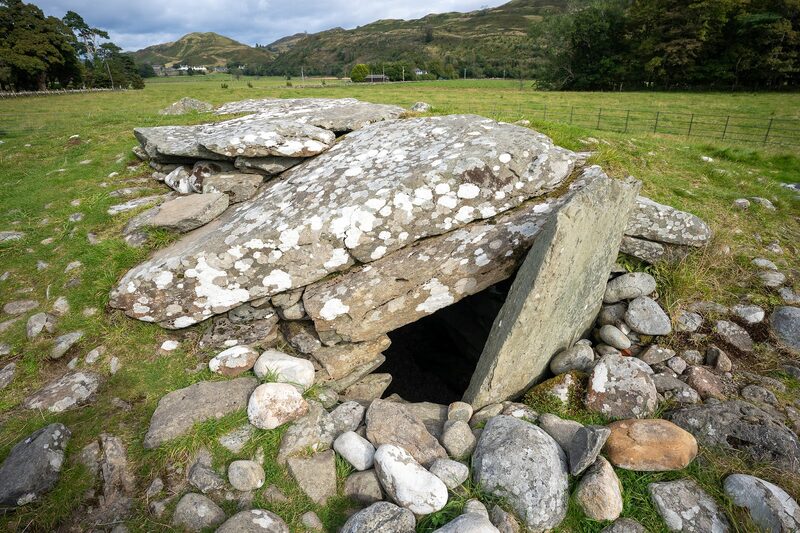
Nether Largie South Cairn
It's about 25 minutes' walk down the glen to the South Cairn, by a field path past Glebe Cairn, a hard track shared with bicycles past the Nether Largie North and Mid cairns, and a quiet tarmac lane. The museum dates the South Cairn, with its long stone chamber, to more than 5,000 years ago. Sheep and cattle graze here: dogs on leads, gates closed.
4 min on foot
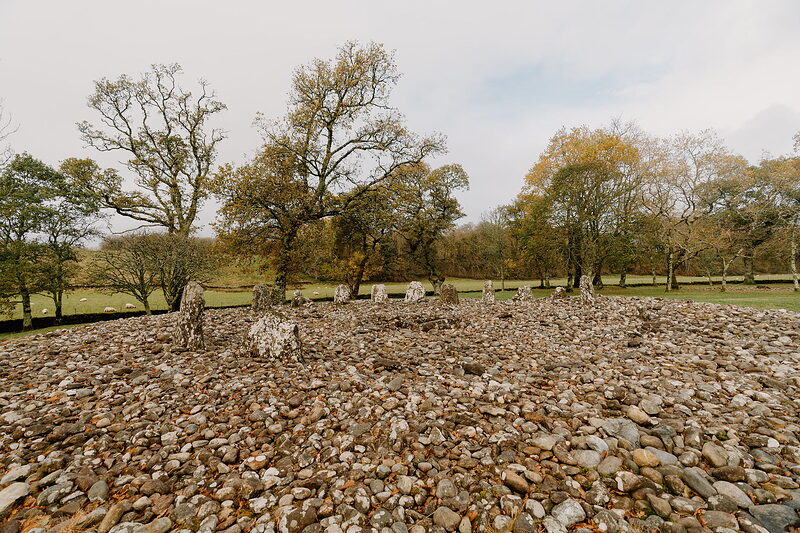
Temple Wood Stone Circle
Walk 4 minutes along the lane to Temple Wood, where upright stones ring a low cairn of cobbles. This is the south circle, built in stone and altered over two thousand years; two of its stones carry faint carvings, one of them a spiral. Beside it, concrete markers show where the posts and stones of the smaller north circle once stood. That one was begun in timber about 5,000 years ago. The stones are slippery when wet.
5 min on foot
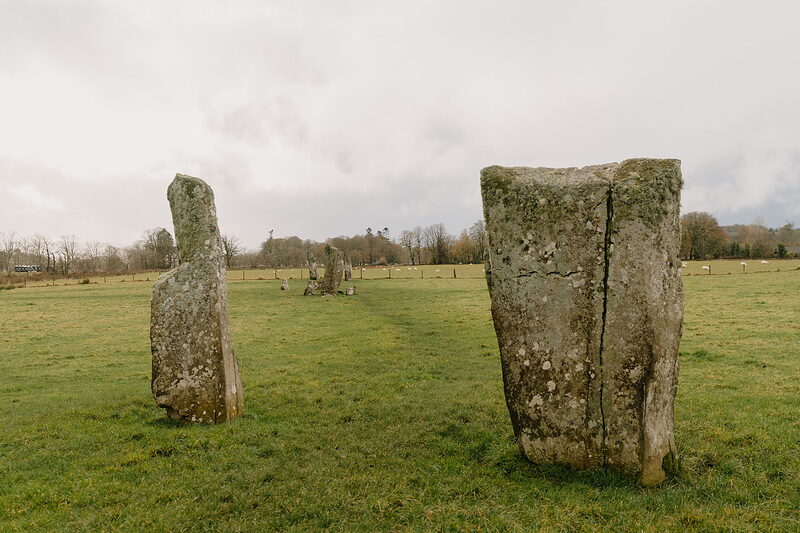
Nether Largie Standing Stones
An attraction
It's 5 minutes' walk across the field to the Nether Largie standing stones, tall and grey with lichen. The grass can be muddy: wear boots. The museum says they may have been raised about 3,000 years ago, and that nobody knows why. Some carry cup marks, small hollows pecked into the rock. Then walk back by the lane and the track, about 25 minutes without the stops and about three miles in all. Turn back by 1pm to keep lunch at Crinan.
25 min on foot back to the car, then 15 min by car
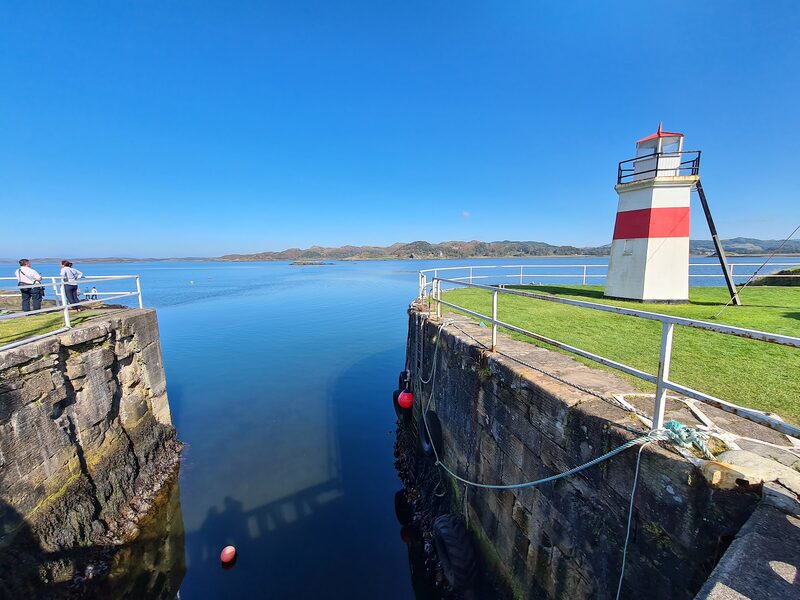
Crinan Basin
Drive 15 minutes on across the Moine Mhor, the Great Moss, to Crinan, where the Crinan Canal meets the sea. Park by the basin. Lunch is at the Crinan Hotel's Seafood Bar, served from 12 to 2.30pm: ring the hotel first to be sure of a table. The Crinan Coffee Shop beside the basin, open daily from March to October, does light lunches. Afterwards walk to the sea lock, the gated chamber that lifts boats between canal and sea. Do not count on boats: the canal is quiet outside summer.
18 min by car
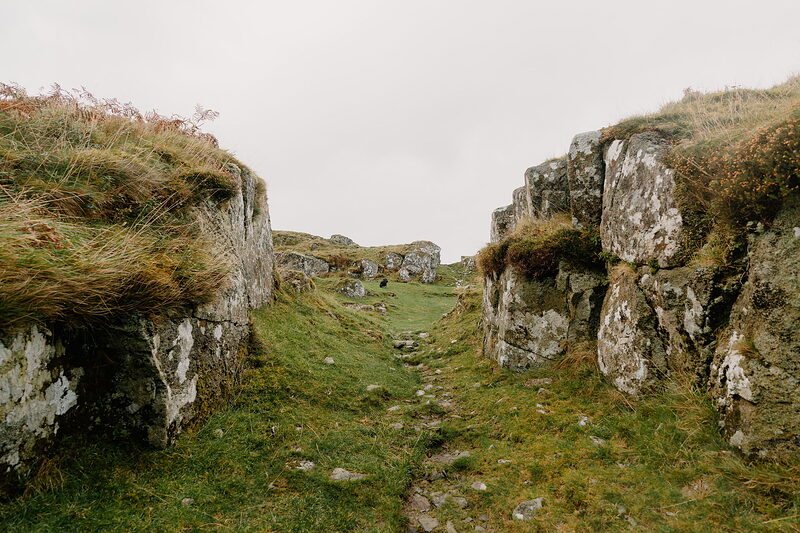
Dunadd Fort
An attraction
It's 18 minutes' drive back along the canal and up the A816 to Dunadd, a rocky hill. Fortified about 2,400 years ago, it was the seat of Dál Riata's kings from around AD 600. The climb is short but steep, over rough rock that needs care in the wet: allow 45 minutes. On a terrace below the top are a carved footprint, a basin and a boar; the first kings are said to have been inaugurated there. Be down before dusk: Oban and dinner are an hour's drive home.
If it rains
The museum is the day's shelter, with a covered picnic area outside as well: stay longer than the hour if the rain is heavy. The glen walk is open ground with no cover. In heavy rain shorten it: drive 2 minutes south from the museum to Lady Glassary Wood car park, from where the standing stones, Temple Wood and the South Cairn make a loop of about a mile on foot. Lunch at Crinan is indoors, and it is the shelter on a day the museum is shut. Take care on Dunadd's bare rock when it is wet: if it is pouring, look up at the fort from its car park and keep the climb for a dry day.
Worth a detour
- Carnasserie Castle
Carnasserie Castle is 3 minutes' drive north of the museum on the A816, then about 8 minutes' walk up a moderately steep path from its car park. The roofless tower house was built in the 1560s for John Carswell, whose translation of 1567 was the first book printed in Scottish Gaelic. There is no ticket and nothing to book; Historic Environment Scotland looks after it, and any closure is posted on its own page. Allow 40 minutes. The day from Oban has no room for it without cutting the glen walk short, so it suits anyone who starts the day at Kilmartin.
- Moine Mhor, the Tileworks Trail
The car park is 5 minutes' drive from the museum, on the left of the B8025 as it crosses the moss. A short trail leads through oak and birch to a boardwalk and a wooden viewing platform over the Moine Mhor, the Great Moss. Kilmartin Museum dates the bog to about 5,000 years ago; it is a National Nature Reserve. Crinan is 11 minutes' drive on. Take it only if the morning has run early: lunch at Crinan is served until 2.30pm.
- Dunchraigaig Cairn and the Ballymeanoch stones
7 minutes' drive north of Dunadd, beside the A816 on the road back to Oban, a car park serves Dunchraigaig Cairn. This burial cairn is about 4,000 years old and stands apart from the line in the glen. It is open at any time and free. From it, a short walk across the field, on paths between fences, leads to the Ballymeanoch standing stones, in two rows of four stones and two. The tallest is about 4 metres high, two are thick with cup and ring marks, and a henge lies close by. They stand on a sheep farm, so dogs go on leads. Allow half an hour, and go only with daylight to spare.
- Achnabreck Rock Art
7 minutes' drive south of Dunadd on the A816, a forest road leads to Forestry and Land Scotland's car park at Achnabreck, which it spells Achnabreac and which charges for parking. From there it is about 10 minutes' walk each way, uphill on a wide gravel path, to rock outcrops covered in cup and ring marks carved some 4,000 to 5,000 years ago. The main outcrop is seen from behind a fence. Allow 40 minutes. Oban is then about an hour's drive, as it is from Dunadd, so when the days are short go only if you are down from Dunadd by half past three.
Where to eat

The Waterfront Fishouse, Oban, a restaurant in Oban.
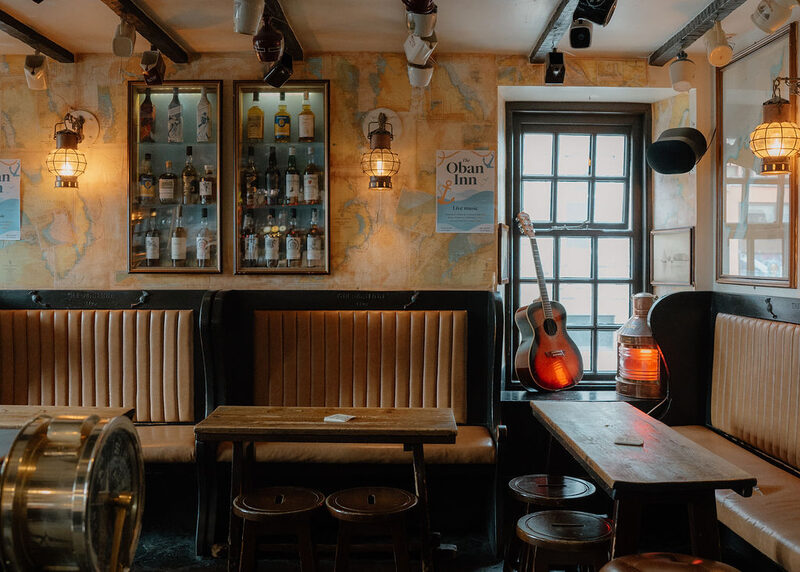
The Oban Inn, a restaurant in Oban.
Photographs by Christine Van Vlaenderen, Kilmartin Museum, Christopher Mckay and Steve Guy via Google