
Not Quite Pictish, Not Quite Viking: The Puzzle of Sueno’s Stone
Carved in the chaos of a changing kingdom, Sueno’s Stone stands alone in Forres—part warning, part enigma, and still one of Scotland’s most unsettling medieval monuments.

Written by Jack Cairney
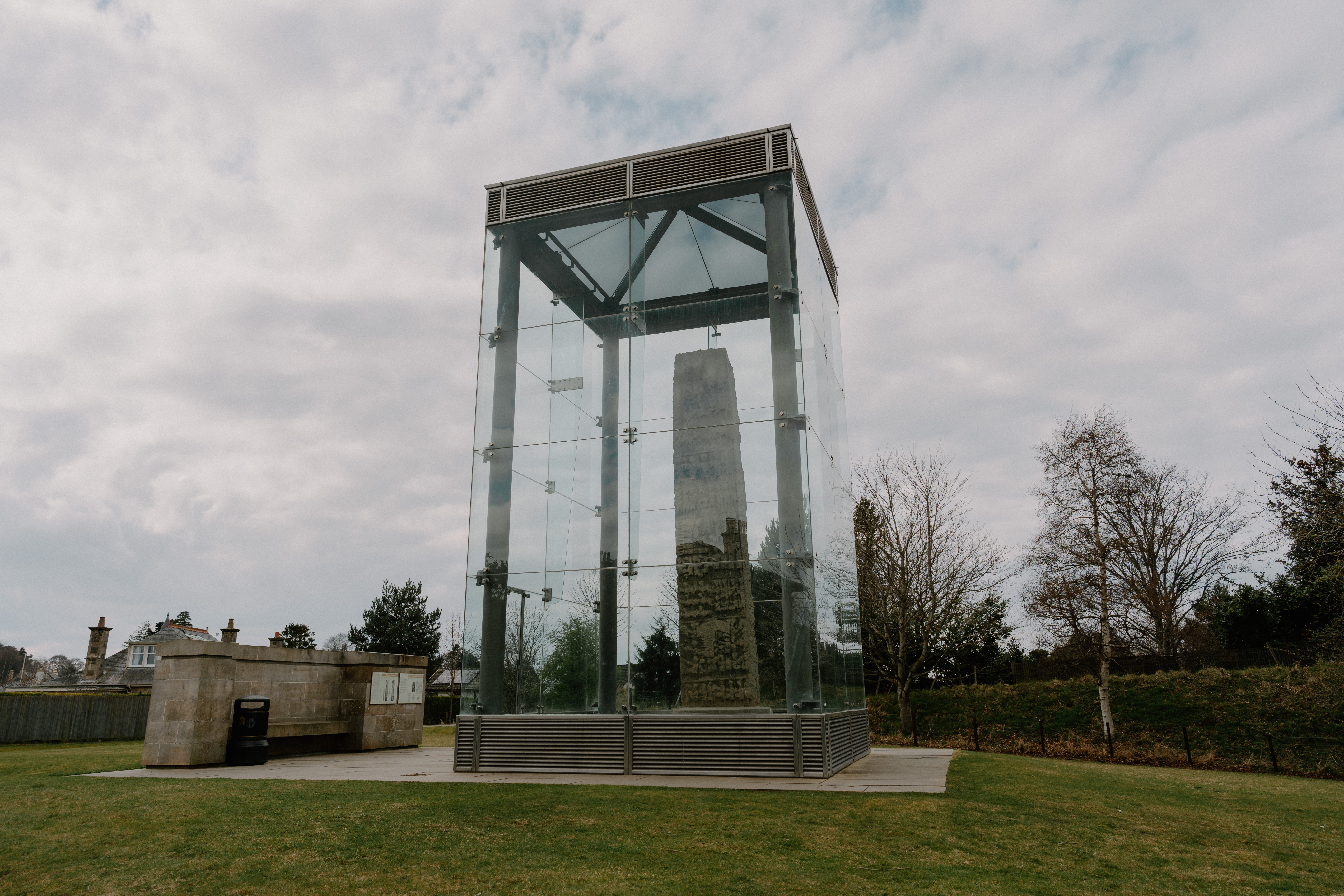
I visited on a grey morning in early spring—mist lifting off the grass, the roads quiet. The stone caught me off guard. Taller than expected. I remember circling the glass box twice before even reading the plaque. No one else around. Just the sound of tyres on wet tarmac and the click of a magpie hopping the fence.
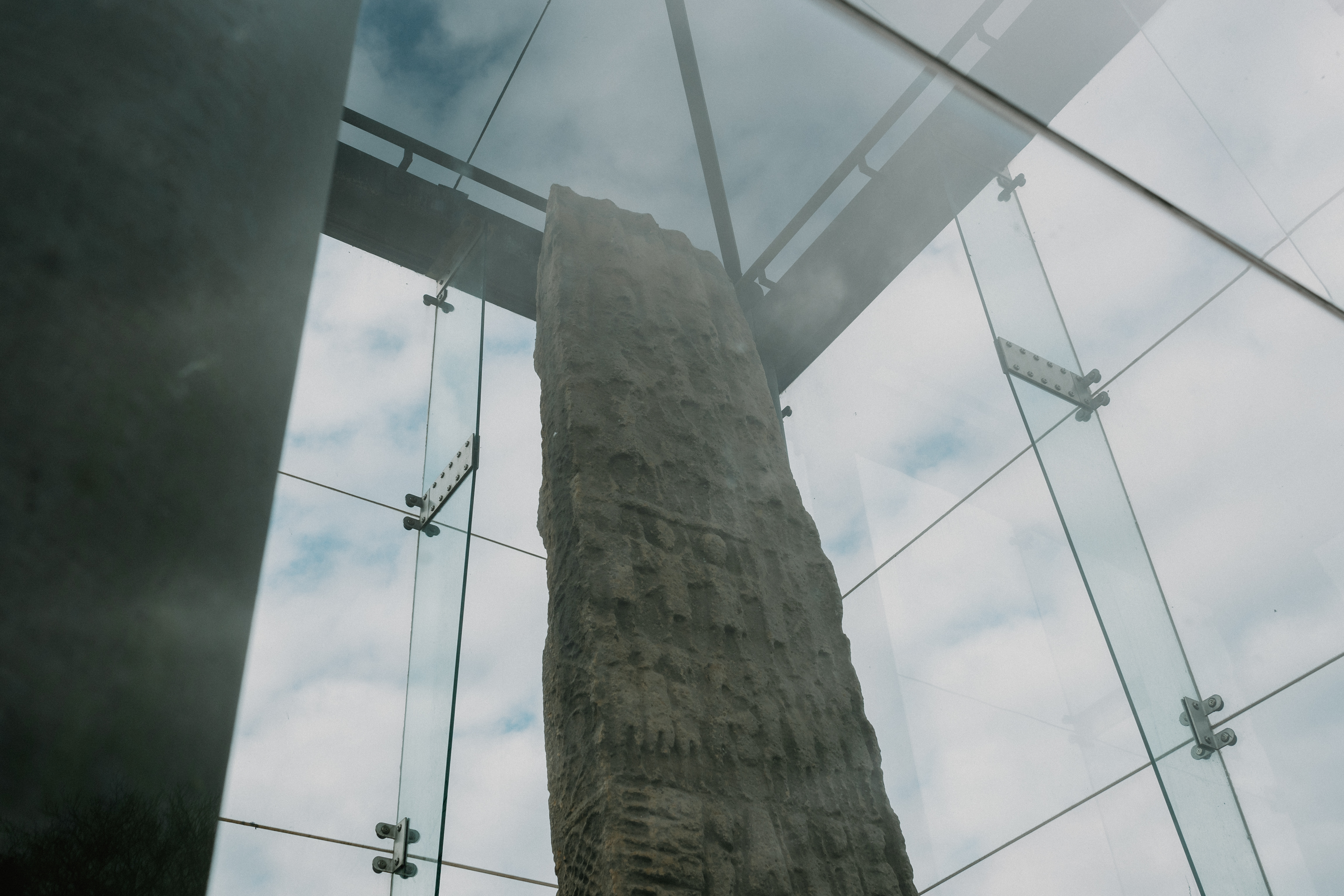
You see it before you expect to. A six-metre slab of carved sandstone behind glass, set back from the A96 in a narrow strip of grass near Forres. One side is bordered by houses, the other by a cemetery. The glass structure looks unremarkable at first—like a bus shelter—but from up close, the detail and scale take over.
This is Sueno’s Stone. The tallest surviving carved stone in Scotland. It's covered on all sides with intricate imagery: knotwork, a ringed cross, rows of warriors, a tall tower with bodies stacked inside. It’s extraordinary—and frustrating. Nobody knows exactly who made it, or why.
The name “Sueno” appears on a 17th-century map, probably a misreading of an older place-name. Early antiquarians thought it marked a Norse defeat. Others tied it to Malcolm II and the final collapse of Pictish power. None of these theories have stuck completely. What’s clearer is the time period: probably carved between the late 9th and early 11th century—after the Viking incursions, during the slow fade of the Picts, and as the Gaelic Scots were consolidating control.
One face of the stone is packed with four stacked panels. You see battle scenes—marching lines, armed horsemen, piles of the dead. A tower looms near the top, with figures inside. The meaning is hard to pin down. It might depict a real event, or a legendary one. Some say it shows the triumph of Christianity over older ways. Others argue it’s a dynastic statement—a show of force, carved to last.
The reverse is calmer. A cross fills most of the face, flanked by robed figures. The carving is fine, even delicate in places, though weathering has smoothed some of the detail. The sides of the slab carry knotwork panels—less narrative, more ornamental.
In the 1990s, a glass enclosure was added to protect it from weathering and air pollution. It helps, but it makes photography difficult. If you’re trying for clean images, visit on an overcast day when reflections are low, and stand close to the glass to avoid catching the sky. A polarising lens helps. Bring a notebook too—it’s the kind of place where drawing or noting detail gives more than photos do.
There’s no visitor centre here. No signage from the main road. Just a simple panel beside the path and a locked gate around the base. You can walk right up to it, though you won’t get inside the enclosure. It’s better that way. The carvings are shallow and already wearing thin.
Behind the stone, a path curves up to the cemetery. From there, you can see how the monument stands between places: old and new, sacred and domestic, halfway between past and present. That feels right. The stone doesn’t resolve into a single identity. It isn’t quite Pictish, though its style borrows from Pictish tradition. It isn’t Norse, either—not in language, material, or form.
It belongs to a blurred century. A time when kingdoms shifted, stories hardened into claims, and someone decided to record theirs in stone. It’s not clear who they were. But they carved enough to make you stop on the roadside, step through the wet grass, and look up.
Promoted Post
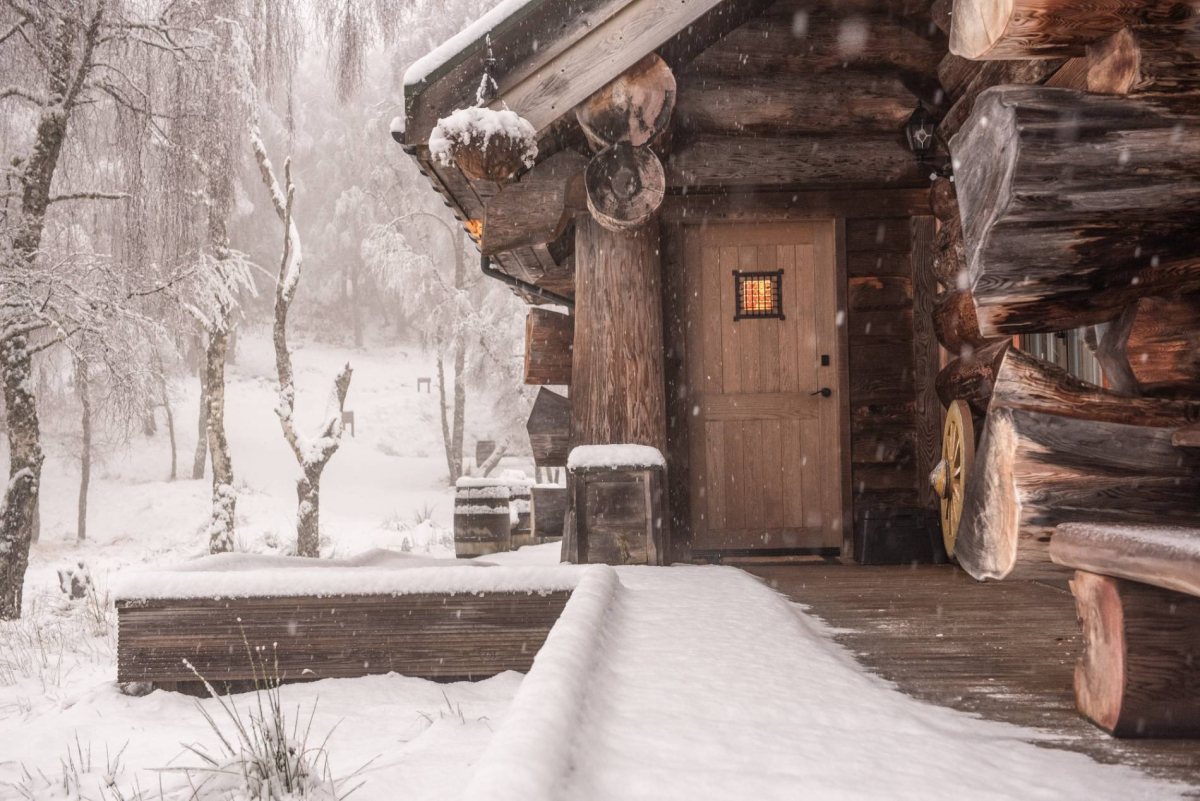
Eagle Brae
Escape to Eagle Brae, a secluded collection of Highland log cabins near Beauly. Handcrafted cedar, big skies, and deer on the hillside, with a fireside welcome that makes it easy to slow down.
-full-1741120632.jpg)






 Sign in with Google
 Sign in with Email