Loader

MORAY - Discovering the nooks and crannies

Picture a land of clear rivers and ancient forests. A place with dolphins in the bay and red squirrels in the trees, where historical towns dot the map and centuries-old distilleries produce world-class whisky. Somewhere to stop, look, listen, and breathe.

Profile

Introduction to Moray 

You’d think such a region would be heaving with tour buses, but despite being a wedge of prime-grade Scottish countryside – with the Moray Firth to the north and the Cairngorms to the south – the Moray Speyside area often gets overlooked. A quick tip: don’t do the same. 

Travellers who make the journey have serious rewards in store. As well as its celebrated whisky, it has a stunner of a coastline, lined with pale sandy beaches, rampant cliffs and characterful little fishing villages, while the mighty River Spey is an attraction in its own right, flowing and frothing its way from the mountains to the coast, where it empties into the sea-life-rich Spey Bay. Elsewhere you’ll find – among many other things – the farmland plains of the Laich of Moray, the peaks and valleys of the northern Cairngorms, and one of the best Dark Sky Parks in the UK. 

This is also an area thick with tradition. Highland Games have had a prominent role in local culture since the days of the clan system, and the local Scots dialect known as Doric – while not in wide use – still has a part to play in Moray’s overall personality. Indeed, when the local MSP was sworn into the Scottish Parliament in 2021, he took his oath in both English and Doric.

Image One

History 

Archaeological remains hint at a fairly large local population in the Stone and Bronze Ages, although the region’s more tangible history kicks off in the 4th century, when the Picts occupied the area. It spent several hundred years under Pictish rule until Kenneth I united the region with the lands of the Scots in the 9th century, and after several bloody battles against Vikings, the ancient province subsequently provided two 11th-century kings (including Macbeth) to the Scottish throne. 

Later, Robert the Bruce designated the county of Moray as an earldom, gifting it to his nephew in the early 14th century. The rippling unrest of the English Civil Wars saw many local villages decimated, but by the 1700s, the Scottish Enlightenment witnessed a rise in living standards, with new harbours and fertile farmland. 

The Highland Clearances had their own impact on the region, with many displaced locals emigrating across the Atlantic. On a more positive note, the arrival of the railways in 1850s helped transport fresh seafood to market, boosting the Moray fishing industry. Today, the region’s main sources of income lie in timber, whisky, and livestock. 

What it’s best known for 

It’s said that more than half of all distilleries in Scotland are based here in Moray Speyside, meaning that when many people think of the region, they do so through the golden hue of a whisky optic. But a wee (or not so wee) dram is just one part of Moray’s rich appeal, which blends rugged scenery and coastal drama with riverside walks, fishing villages and age-old customs – not to mention a lively contemporary cultural scene.

Image One

See & Do

Whether you’re here for the whisky, the walking, the history, the wildlife or the culture – or perhaps best of all, a mix of all of the above – you’ll find this diverse swathe of Scotland a deeply appealing one. It’s an area conducive to the good life, so the best approach is to take your time and enjoy each attraction to the full.

Towns

Aberlour

Food and drink lovers, pay attention. Sitting on the banks of the Spey, the village of Aberlour (officially Charlestown of Aberlour) is home not just to a renowned distillery but also the Walkers Shortbread factory. Does shortbread go well with whisky? Pay a visit to find out for yourself and you’ll also be able to enjoy the churches, pubs and delis that give the village ample character. 

Craigellachie 

Where the Spey meets the Fiddich, you’ll find the pretty village of Craigellachie, a centuries-old settlement famed for its pubs, its cast-iron bridge (the oldest of its kind in Scotland) and its whisky heritage. Two single malt distilleries are found here, as is the Speyside Cooperage. As a village in which to sip a dram and watch the water flow past in the dusk, it’s hard to beat. 

Cullen 

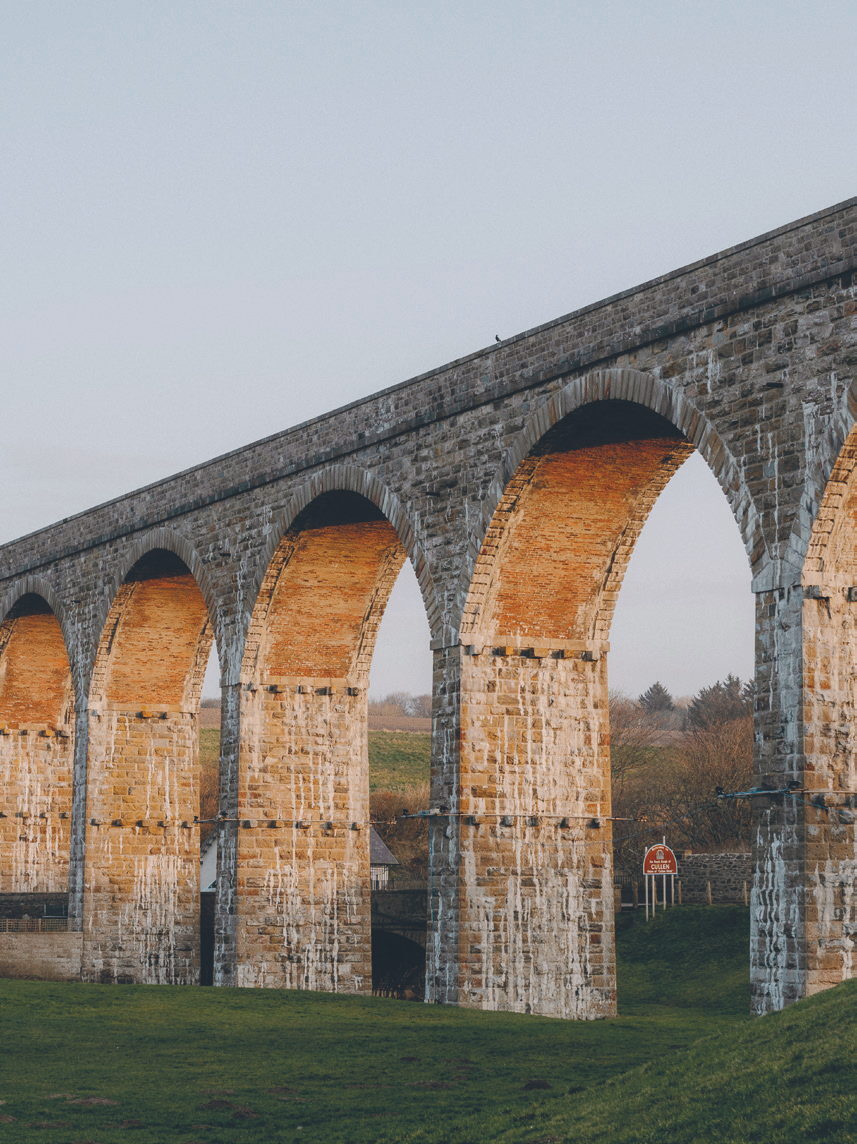
As the town that gave its name to Cullen Skink, the thick smoked-haddock soup now found far and wide, this former royal burgh has long lodged its place in national consciousness. A handsome coastal location and the looming presence of an eight-arched viaduct – as well as a rich local history (the country residence of Cullen House dates back to the early 1600s, while Cullen Old Kirk is even older) – make it a place well worthy of a visit. 

Dufftown 

Often described as “the malt whisky capital of the world”,Dufftown was founded in 1817 by James Duff, the 4th Earl of Fife. Now a busy little market town, it’s home to various notable sights and attractions, including the much older Balvenie Castle, the world-famous Glenfiddich Distillery, and the end-point of the Keith & Dufftown Heritage Railway. Highland Games have been held in the town since 1892, on the last weekend in July.

Land of whisky

Land of whisky

Why, you might ask, does Speyside have so many distilleries? The simple answer is: the Spey! More than half of Scotland’s malt whisky distilleries are found in the region, and this is largely thanks to the quality and volume of water that passes down the river. The water contains less dissolved minerals than other parts of the country, which goes towards producing a gentler, fruitier malt. To be classified as a Speyside whisky, a distillery needs to be on or near the banks of the river, sourcing its H2O either from the river itself or the springs and streams that flow into it. Glenfiddich and Glenlivet are the best known of the local producers, but you can have a heck of a nice time getting your palate around the likes of Glenrothes, Aberlour and Balvenie. 

On which note, a quick tip: every Spey distillery takes time off each year for maintenance and downtime. Known as ‘silent season’, and often in July, it generally lasts a few weeks, during which time tours are still offered, but the distillery itself won’t be up and running. On the plus side, distilleries often compensate by offering extra tastings, or reduced prices.

Image One
Image Two

Findhorn 

This historic fishing village on the Moray Firth is a gem of a traditional settlement with a long, unspoilt stretch of sandy beach, but is these days best known for the eco-village community on its outskirts. The internationally renowned Findhorn Foundation was founded back in the 1960s and has since welcomed tens of thousands of guests with its focus on kindness, joy, and spirituality. 

Portknockie 

Set on a ravishingly lovely stretch of the Moray Coast, the village of Portknockie was founded back in 1677 and went on to become an important fishing port. This air of heritage and tradition still hangs over the place, with its streets and buildings huddled on a cliff above the harbour. Just offshore is the iconic Bow Fiddle Rock, an improbably steep natural sea arch. 

Tomintoul 

Basking in the title of the highest village in the Highlands, the lofty settlement of Tomintoul – perched along an old military road some 355 metres above sea level, on the northern slopes of the Cairngorms – is a neatly laid-out, stone-built village with a good selection of places to eat, drink, and stay. The surrounding Glenlivet Estate is prime territory for walkers and mountain-bikers, while art fans should go out of their way to visit Angus Ritchie’s nearby ‘Still’ sculpture: an outdoor installation with mirrored walls, providing spectacularly unusual mountain views. 

Elgin 

As the hub of regional affairs, the town of Elgin offers plenty in the way of top-notch Morayshire attractions, including several distilleries, dramatic scenery, and a ruined cathedral once considered one of the finest in Scotland. Dig into the town’s long history with a visit to the longstanding Elgin Museum, in situ since 1843.

Image One

Beach

Walks, Nature & Wildlife

Bow Fiddle Rock, Portknockie 

This geological – and highly photogenic – offshore oddity takes its name from its similarity to the tip of a fiddle bow. If that sounds like an odd comparison to make with a natural sea arch, then the reality is just as eyebrow-raising: a limb of rock slanting steeply out of the waves, looking ready to snap at any moment. An iconic sight along the Moray coastline.

Spey Bay, Near Elgin 

This glorious coastal reserve packs in plenty, from the longest shingle beach in Scotland to wildlife that includes ospreys, butterflies, and bottlenose dolphins. You’ll find it where the River Spey meets the Moray Firth – call in at the Scottish Dolphin Centre to find out more about the area’s remarkable fauna.

The Speyside Way, From Buckie to Newtonmore 

If you like the sound of a weeklong river walk that takes in distilleries, historical towns, birdlife, pubs and ancient woodlands, pull on your boots and head for the Speyside Way, one of Scotland’s most celebrated long-distance trails. It starts in Buckie, on the coast, and heads inland to the Cairngorms.

Lossie Forest, Lossiemouth 

Sprawling eastwards from Lossiemouth, this forest is part natural wonder – being dense with pine trees and attendant wildlife – and part historical attraction, with WWII pillboxes and anti-tank defences studding the woodland floor. The tracks that wind through the trees are popular with cyclists, hikers and horse-riders.

Hopeman East, Beach Hopeman 

One village, two beaches. The harbour headland at Hopeman separates its sands into the West Beach and the East Beach: both have their selling points, but the latter is the largest, drawing everyone from surfers and rockpoolers to dolphin-watchers.

Moray Coast Trail From Findhorn to Cullen 

Snaking along the shoreline from Findhorn to Cullen, the 50-mile Moray Coast Trail is a long-distance walk that takes in cliffs, beaches, caves, coves and fishing villages, providing the perfect showcase for why this stretch of coast was once named among the world’s most beautiful by National Geographic.

Randolph’s Leap, Near Forres 

Legend has it that in the 14th century, the Earl of Moray was pursuing a Comyn clansman along the shore of the River Findhorn, only to see him leap across the water where the rocky banks were closest. Today it’s a beauty spot known for its cliffs, pinewoods, waterfalls and walking trails.

Clashach Cove, Near Hopeman 

A favourite with photographers, the exquisitely pretty Clashach Cove – sometimes called Cove Bay – is renowned not just for the caves and arches that flank its beach but for the area’s geology. It’s considered one of the best places in the country to see faults in layers of sandstone.

Watch the seals at Portgordon 

Scottish marine life comes in many shapes and sizes, but there’s nothing quite like the speckled heft of a fully-grown seal to stop you in your tracks. The rocks and sands around Portgordon are renowned for their grey and common seals. They make for a remarkable sight, but take care not to approach them, especially in pupping season.

Linn Falls, Aberlour 

An easy woodland walk from Aberlour Distillery takes you to these picturesque falls. The path leads uphill, though not steeply, and is well marked. It makes for a cracking stroll – allow about an hour. 

Millbuies Country Park, Near Fogwatt 

A few miles south of Elgin is this modestly sized but rather lovely country park, which centres on a manmade fishing loch. The loch can be circled on a walking path, and its steep banks are covered in larch and pine – very picturesque when seen reflected in the water.

Image One

History

Elgin Cathedral, Elgin 

The cathedral’s historic nickname, the Lantern of the North, says it all. Once a vision of stained glass and intricate stone carvings – so impressive that a former bishop called it “the glory of the kingdom” – the building is now a ruin but retains a genuine air of grandeur, thanks in particular to its soaring west front. It dates back to 1224 and had the misfortune to twice suffer fire damage. A fascinating place to visit for history fans.

Duff House, Banff 

Technically across the border in Aberdeenshire, but also just a 20-minute drive east along the coast from Cullen, Duff House sits on the outskirts of the town of Banff. The elaborate early-Georgian mansion – think cornices, finials and soaring chimneys – is now a country house gallery, showcasing collections from the National Galleries of Scotland.

Nelson’s Tower, Forres 

Standing high above the rooftops of Forres, this threestorey tower was built between 1806 and 1812, as a memorial to Admiral Nelson in the aftermath of the Battle of Trafalgar. The four-pounder cannons that were fired to mark its opening still stand at the entrance door, and visitors can also admire show-stopping 360-degree views from the top deck.

Pluscarden Abbey, Near Elgin 

It was the thirteenth century when a community of monks first came to this quiet glen, and the historic Pluscarden Abbey now stands as the only medieval British monastery still being used for its original purpose. Its monks still use Gregorian chant at Mass every day in the abbey church, and guests are welcome to experience its unique atmosphere on retreats or shorter visits.

Sueno’s Stone, Forres 

Now here’s something you don’t see every day. This vast, seven-metre tall Pictish cross-slab is the largest surviving stone of its kind, and notable not just for its size but its detailed sandstone carvings of knotwork and human figures. Dating back to the early medieval period, it’s now housed in a clear protective shelter.

Image One

Brodie Castle, Near Forres 

A pink exterior and pointy turrets give Brodie Castle a fairy-tale feel, and the building has some 400 years of tales to add to the storyline. The Brodie family that once lived here departed in the early 2000s, but the interior still has a superb range of art, furniture and antiques. The castle gardens are an attraction in themselves, with a woodland loch, a wide tree-lined avenue and – if you’re here in spring – a collection of 400 (yes, 400) varieties of daffodils.

Findlater Castle, Near Cullen 

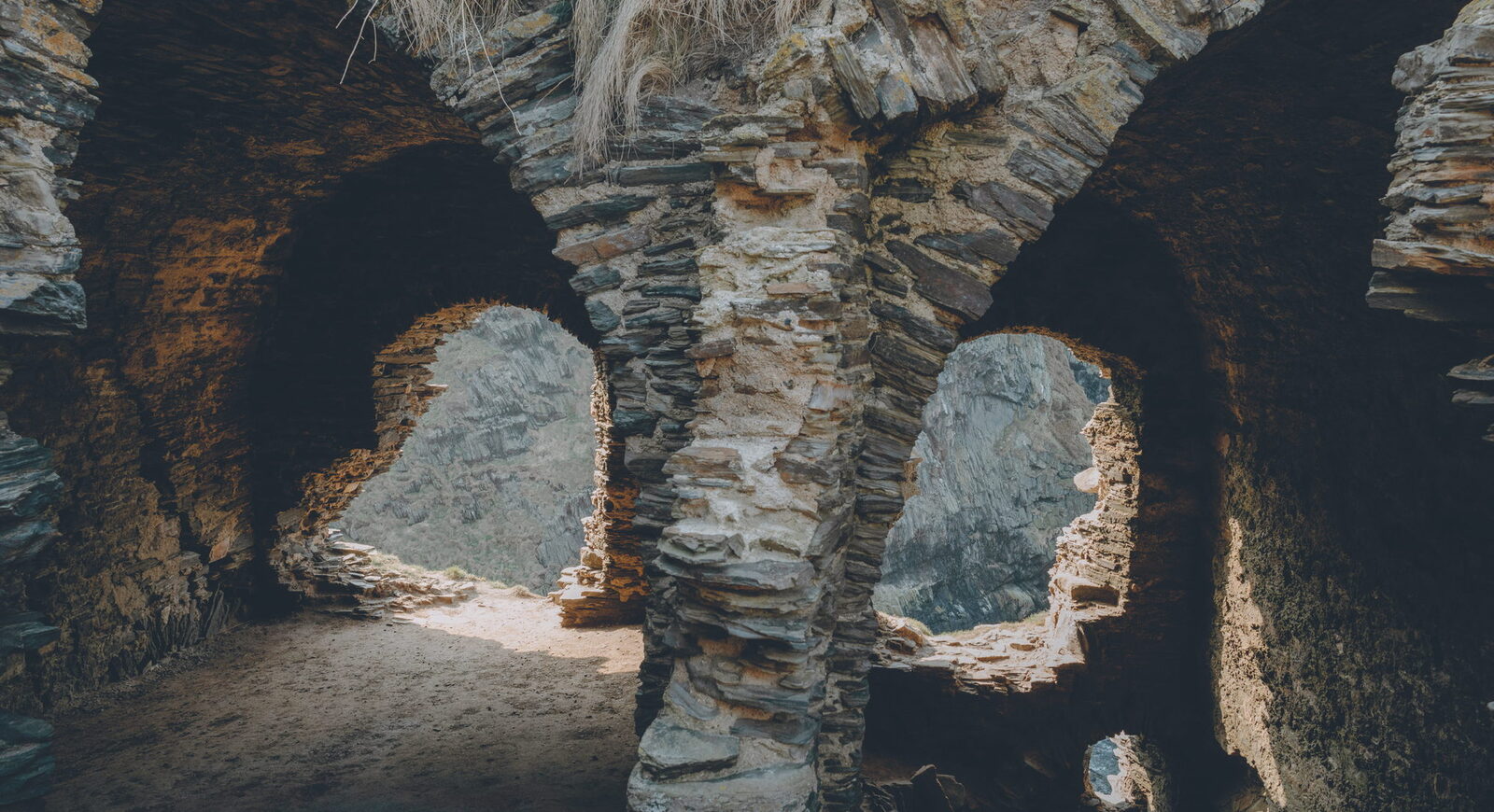
Standing a short way along the coast from Cullen, this ruined clifftop castle dates back to at least the 13th century and still exudes an air of craggy drama. Its grassed-over masonry once witnessed sieges, occupations and the vicissitudes of medieval power-mongering – stirring to imagine today as the sea crashes below.

Lochindorb Castle, Near Grantown-on-Spey 

It’s hard to imagine a more atmospheric historical sight than a ruined Scottish fortress on an island in moorland loch. Accordingly, Lochindorb Castle – which sits on the loch of the same name, some 20 minutes north of Grantown-on- Spey – is quite the spectacle, its pale, crumbling stonework offset by the metallic waters of the lake and the deep green of the hills.

Duffus Castle, Near Elgin 

Now in a state of decay – albeit a visually impressive one – this medieval stronghold spent more than half a millennium as a fortress-residence, becoming the ancestral seat of the earls of Moray. The building has today been empty for more than 300 years, but still gives off an aura of importance.

The Keith & Dufftown Railway 

Also known as the Whisky Line, Britain’s most northerly heritage railway winds for 11 miles between Keith and Dufftown (via Drummuir and Auchindachy), climbing through pine forests and skirting a loch. Most of the line was opened back in 1862, seeing service until as recently as 1991. Today you’ll make the journey in period carriages, many of them more than 70 years old, decorated in green and yellow livery.

Spynie Palace, Near Elgin 

For 500 years, this imposing building was the residence of the bishops of Moray, its colossal tower house reaching into the sky and its great hall suitably embellished. Today it’s been unoccupied for more than four centuries but remains a fascinating place to visit – and the views from the top of David’s Tower are worth the trip alone.

Elgin Museum

This princely local museum is actually the oldest independent museum in Scotland, and while the focus is largely on Moray – its history, its people, its geology, its archaeology, and even its Victorian curiosities – the scope is also broad enough to include exhibits from around the world.

Ballindalloch Castle and Gardens 

Home to the Macpherson-Grants – some families get all the luck – since being founded in the 1540s, Ballindalloch Castle has been fine-tuned and enlarged over the centuries to become an opulent country estate. The outdoors is a treat, too, with the Rivers Spey and Avon both flowing through the grounds, and neatly tended walled and rock gardens adding to the spectacle.

Deskford Kirk

It might not have a roof these days, but the modest ruin of Deskford Kirk plays home to an intricately carved Gothic sacrament house, dating back to 1551. The surrounding churchyard has a number of intriguing gravestones and memorials.

Hidden College of Scalan, Near Tomintoul 

Founded in secret by Catholic bishops in the early 18th century – at a time when their religion was outlawed – this clandestine seminary is a fascinating remnant of another era. Some 100 priests were trained here, helping to keep the faith alive.

Image One

Activities

Speyside Cooperage, Craigellachie 

Whisky wouldn’t be whisky without the oak casks it matures in, and the age-old art of coopering (or cask-making) is alive and well at the Speyside Cooperage. Take a tour to watch the practitioners at work – shaping, shaving and charring their barrels – while learning about the skills that go into the trade. Recommended.

Mountain biking at Glenlivet Estate 

Glenlivet’s singletrack mountain-bike trails provide the perfect opportunity to see this majestic estate in the way the adrenaline gods intended: namely at speed, and in the saddle. There’s a blue trail for beginners and families, an enjoyably flowy red trail for those in search of more of a challenge, and a free-ride orange trail packed with jumps and berms.

ACE Adventures & Hideaways, Near Forres 

If your pulse needs quickening, steer a course for this highly rated adventure operator in the countryside south of Forres. It offers the likes of river tubing, canyoning, woodland paintball, cliff-jumping and white water rafting, helping to turn a rural jaunt into something altogether more adrenaline-filled.

Benromach Distillery, Near Forres 

Benromach won two gold medals at the International Spirits Challenge in May 2022 (for its 15 and 21-year-old whiskies, if you’re asking) – proof that the distillery hasn’t let standards slip one jot since its founding in 1898. It’s the smallest distillery in Speyside, but its traditional by-hand approach has won it generations of fans. Tours last an hour.

Glenlivet Distillery, Near Tomintoul 

You’ll find various tour options at this well-known distillery on the fringe of the Cairngorms. ‘The Original’ gives an overview of the whisky-making process, with a guided tasting; ‘The Single Casks’ takes you through a tutored tasting of exclusive single-cask editions; ‘The Archives’ is an exclusive visit to the distillery’s traditional bonded warehouses, with old and rare whiskies included; and ‘The Cellar Collection’ - £350 a pop at the last count – goes a step further with a focus on drink matured for between 30 and 40 years.

The Macallan Estate, Craigellachie 

A rare cask of Macallan whisky sold for a cool £1m in early 2022, which speaks volumes about the reputation of this Speyside distillery. It’s been doing its thing with wood and spirit since back in 1824, and taking a tour gives you insight into what makes it so special.

Speyside Whisky Experience, Tours throughout Speyside 

Not many people know their way around a dram quite like Derek Hancock, a four-decade veteran of the whisky industry, now offering bespoke private tours around the Speyside region. You’ll visit various distilleries, not just in comfort (his smart vehicle accommodates up to six) but in the company of an expert.

Glenfiddich Distillery, Near Dufftown 

One of the granddaddies of the whisky world, Glenfiddich bills itself as ‘the world’s most awarded single malt Scotch whisky’. What’s all the fuss about? See for yourself on a trip to the visitor centre, where you’ll learn the full story and round things off with a tasting.

Moray Firth Fishing Charters, Burghead 

Some fishers prefer the salmon-rich waters of the Spey, others prefer the open sea. If you’re one of the latter, try joining this 38ft vessel as it heads out into the blue. And if you’re more comfortable sitting back and watching the world go by, opt for the wildlife-watching pleasure trip instead. The boat takes up to 12 passengers.

North 58° Sea Adventures, Findhorn/Lossiemouth 

If you want to really experience the Moray Firth, you need salt spray and a sea breeze. Hop aboard one of North 58°’s nimble vessels for a fresh take on the coastal scenery and an up-close look at the area’s remarkable wildlife. Adventure trips begin from both Findhorn and Lossiemouth.

Image One

Family

Moray Motor Museum, Elgin 

Occupying what was once an Elgin grain mill, this absorbing museum now houses an eye-widening collection of vintage and veteran cars and motorbikes. Its many highlights include a 1929 Rolls Royce Phantom I and a 1936 Jaguar SS100. Makes for a great stop-off at any time, but particularly if you’re driving the North East 250.

Speyside Falconry, Near Mulben 

Specialising in private, pre-booked, hands-on experiences with owls and hawks, this family business hand-rears its birds of prey to give visitors an introduction to the ancient art of falconry. Young kids will enjoy the ‘Meet the Owls’ sessions.

The Playful Garden, Brodie Castle 

Unicorn sculptures, spinning zoetropes, and a table and chairs big enough for giants. The features at Brodie Castle’s Playful Garden are a far cry from your bog-standard playground equipment – and that’s before we get to Brodie the Bunny, a reclining white rabbit measuring 6.5 metres from tip to toe. 

Gordon Castle Walled Garden & Nature Play Area

Nature always does it best. Gordon Castle’s play area is formed almost entirely using god-given gifts, from stormblown logs to locally quarried rocks, and encourages kids to engage with the natural environment – exploring, learning and creating. The walled garden, meanwhile, dates back more than 200 years and still produces a bounty of fruit and veg. 

Byres Farm, Fochabers 

This working farm on the banks of the Spey is an authentic, muddy-booted cog in the workings of the region, growing malting barley for distilleries and keeping livestock for beef and lamb. Unusually, the resident Smith family also offer themed visits, with experiences ranging from tractordriving and whisky tours to general show-rounds. 

Moray Art Centre, Findhorn 

This eco-building hosts local and international art exhibitions, as well as laying on classes and workshops for those keen to further their own skills.

Burghead Visitor Centre, Burghead 

Sitting in what was once a coastguard lookout, the whitewashed Burghead Visitor Centre takes you through the history of the area, from the misty tales of 400AD through to the present day. Unsurprisingly, the sea views are a bit special. 

Dufftown Fairy Village

Free to visit, this handmade collection of miniature wooden houses sits on the riverside south of Dufftown, near the rock feature known as the Giant’s Chair. It’s the work of craftsman Dave Brown and his daughter, and is every bit as enchanting as it sounds.

Image One

Eat, Drink & Shop

Whether you’re after a seafood slap-up, world-class whisky, artisan produce, afternoon tea, craft beer and gin, or just a lovingly made souvenir of your time in Moray Speyside, this is a region that has you well covered for eating, drinking and shopping.

Sidings Café, Dufftown 

This memorable café occupies a pair of period railway carriages, now permanently parked at Dufftown station. Expect a relaxed atmosphere in keeping with the 1950s, as well as breakfast rolls, home-bakes, light lunches and afternoon tea. 

Portknockie Fish & Chip Shop

Now here’s an oddity. This popular joint serves up haddock and chips to a predictably high standard but is perhaps best known for its Crunchy Fried Pop Pop Chicken, developed by the owner back in 1996. The ingredients? Secret. But tasty. 

The Bothy Bistro, Burghead 

They do things the right way at this laid-back independent bistro, where the coffee’s freshly ground, the bread’s baked in-house and the seafood comes from local fishers. There’s even a (dog-friendly) courtyard garden – ideal for a bottle of wine when the sun’s out. 

The Drouthy Cobbler, Elgin 

Tucked away in a medieval close in Elgin, The Drouthy Cobbler offers a blend of superb food, masterfully crafted cocktails, and a welcoming atmosphere. Known for its fresh, locally sourced ingredients and daily specials, this bar and restaurant is a popular spot for brunch, evening meals, and drinks. With heated outdoor seating and regular arts events, it’s a vibrant hub for dining and entertainment in Speyside.

Mike McEwan - The Humble Burger

Mike McEwan - The Humble Burger

Where would you recommend visiting after enjoying a burger from your burger bar?

My wife and I love eating out - it’s always been one of our favourite things to do and the drive behind starting our own food business. For a feast with a view, we always head to the Bootleggers Bothy on the beach in Hopeman. From slowly smoked local meats to fresh caught seafood the flavours are incredible. Now we have a young family of our own, the Mosset Tavern in Forres is a firm favourite. Classic pub dishes in a friendly and welcoming environment. The Capercaillie in Dufftown is new to the food scene and well worth a visit serving up Scottish style tapas. For a dog walking coffee stop, we love the Lossie Coffee Cart found at the end of the caravan park East Beach in Lossiemouth (a wee hidden gem).

Find out more about The Humble Burger here.

Image One

Rockpool Cullen 

If you’re going to try Cullen’s most famous dish anywhere, there are few better places than this seafood-focused restaurant, a stone(fish)’s throw from the harbour. You’ll find various sandwiches and snacks on offer, but the classics are the fish and chips and the signature Cullen Skink. 

Wendy’s Hooose, Nairn 

Anywhere with three consecutive ‘o’s in its name is likely to have plenty of character, and Wendy’s Hooose doesn’t disappoint – this quirky Nairn coffee house produces bakes and cakes well worth travelling for. 

The Old Mill Inn, Forres 

Sitting in what was once a Victorian corn mill, this AA rosettewinning restaurant specialises in what it calls ‘Scottish food reinterpreted’ or, in layman’s terms, top-notch local dishes. An example of its creativity? Try char-roast harissa rump of Fearn lamb with haggis bon bons and a mint, pistachio and feta dressing. Best loosen your belt. And if you need extra enticement, the wine list’s a winner too. 

The Mosset Tavern, Forres 

Overlooking the Burn of Mosset, this traditional tavern has been pulling in visitors to its former mill building since the 1970s. The food is hearty pub fare rather than anything overly fancy (think roast fillet of salmon, or Highland venison burger), but the setting’s enjoyable and there are five real ale taps. 

Whisky Shop Dufftown 

A choice of more than 600 whiskies in the heart of Speyside, you say? Little wonder that this Dufftown outlet makes thirsty travellers weak at the knees. The selection on the shelves is suitably strong, and you’ll also find plenty of gins and craft beers.

Findhorn Pottery 

This charming pottery had already been running for 25 years when Belia Biesheuvel moved to the area in 1996, to train as an apprentice potter. Fast forward to today and she’s now the owner (and potter!) of the small business, still renowned for its high quality stoneware. 

Brodie Countryfare

Just minutes from Brodie Castle, Brodie Countryfare offers a delightful day out in a serene rural setting. This unique country store features a variety of departments, including fashion, gifts, toys, and a well-stocked delicatessen. Enjoy freshly prepared meals in the on-site restaurant, showcasing the finest ingredients from Scotland’s northeast.

Knockando Woolmill Near Knockando 

Established in 1784 and still going strong, this traditional woollen mill produces everything from classic tweeds and blankets to modern throws, scarves and accessories. It also sells stylish local gifts such as hand-poured candles and flat caps. 

Kula Coffee Hut, Elgin 

A beautiful Shepherds Hut located at Duffus Castle, serving artisan barista coffee, specialty tea, hot chocolate, and treats from local Scottish suppliers. Enjoy refreshments while exploring the historic castle ruins. Open seasonally; be sure to check social media for hours before visiting. 

Orrin Restaurant & Bar, Elgin 

Diners can enjoy a contemporary Scottish dining experience with a choice between a sophisticated à la carte menu and an eight-course tasting menu. The restaurant emphasises seasonal ingredients, quality produce, and innovative cooking creating a memorable meal. 

The Croft Inn, Glenlivet 

Fondly known as 'The Highland Thai Kitchen', The Croft Inn offers an intimate dining experience with authentic Thai cuisine crafted by Chef Nat, set inside a Scottish pub with views of Glenlivet countryside. FEAST at Tulchan Grantown-on-Spey Guests enjoy a surprise menu, with estate-sourced ingredients and large sharing plates, in an outdoor setting with beautiful views or indoors in the cosy Schoolhouse. The menu changes weekly. 

Logie Steading, Forres 

Set in the scenic Findhorn Valley, this visitor center and shopping village features independent shops, a café, and outdoor activities. Explore gardens, enjoy riverside walks, or visit the playpark. It’s a perfect destination for a day out, offering a mix of relaxation and unique shopping experiences. 

The Classroom Bistro, Nairn 

Known for its friendly atmosphere, seasonal dishes, and locally sourced ingredients, this popular Highland restaurant features a diverse menu, alongside a modern bar with premium spirits and craft cocktails. Enjoy a unique dining experience loved by both locals and visitors. 

The Humble Burger, Elgin 

Inspired by the street food scene of Seattle, The Humble Burger serves simple, wholesome fare made with the finest local ingredients. Launched in 2021, it specialises in Scotch beef burgers and loaded fries, offering feelgood street food crafted from topquality, locally sourced produce. 

The Bonnie Beastie, Forres 

A lovingly restored former brander's inn, now a welcoming spot for dining, drinks, and live music. Enjoy traditional pub classics made with care in a relaxed bar setting or a more formal dining room. With live music on Fridays and Sundays and a dog-friendly bar area, it's perfect for any occasion. 

The Captain’s Table, Fraserburgh 

Set on the edge of Findhorn village, the Captain's Table and Captain's Parlour offer stunning views of Findhorn Bay, with indoor and outdoor seating. Enjoy fresh, local dishes made from scratch, including gluten-free and vegan options. Sip on a variety of drinks, from their own coffee blend to local gins and creative cocktails. Dog-friendly with a menu for canine guests, it's a welcoming spot for all. 

The Fiddichside Inn, Aberlour 

Nestled by the River Fiddich near Craigellachie, offers a warm, welcoming atmosphere with a rich history dating back to 1842. Visitors enjoy fishing, whisky, and mingling with locals in this charming, unspoiled riverside pub. Stay in the attached cottage, unwind with a drink, or enjoy the beautiful Speyside scenery.

Image One

Stay

Discover your perfect retreat in Moray, where charming hotels, historic estates, and scenic bays offer a blend of heritage and modern comfort.

Boath House Restaurant & Rooms, Nairn 

This historic Georgian estate, featuring 10 bedrooms, a fourbedroom lodge, and a 400-year-old walled garden, offers a cafe, store, studio, and sauna. With its creative residency program and beautifully restored grounds, Boath House invites guests to explore its rich history and vibrant landscapes, blending traditional Scottish charm with a contemporary approach to gardening and hospitality. 

The Dowans Hotel, Aberlour 

Perched above the Spey Valley, the Dowans Hotel in Aberlour combines Victorian charm with modern comforts. Owned by the Murray family since 2012, the hotel offers 16 ensuite rooms, a fine dining restaurant, and two characterful bars, including one stocked with over 500 single malts. It's an ideal base for exploring Speyside, with a warm welcome and genuine Highland hospitality awaiting every guest. 

Macbeth’s Hillock, Forres 

It’s fair to call this site a unique proposition: five luxury glamping pods on the hillock where Macbeth is said to have met the three witches that foretold his future. 

Cullen Bay Hotel 

This boutique hotel has a dreamy bay location, 14 comfortable rooms, award-winning food and nearby golf courses. What more do you need? 

Craigellachie Hotel 

Described by Vogue as "the centre of Speyside action," this boutique hotel offers 26 elegant rooms, some with views of the River Spey and Craigellachie Bridge. Guests can enjoy the historic Spey Inn and the renowned Quaich Bar, featuring over 1,000 single-malt whiskies. Experience a blend of timeless style and modern comfort in the heart of whisky country.

Other articles you may like