
Inside Eagle Brae: The Quiet Highland Stay That Keeps Drawing People Back
Set on a hillside above Glen Strathfarrar, Eagle Brae is a collection of handcrafted log cabins where deer wander freely and silence stretches long into the evening. In May, I spent a few days there, surrounded by stillness, wildlife, and a feeling I’ve carried since, wondering when I’ll be back.
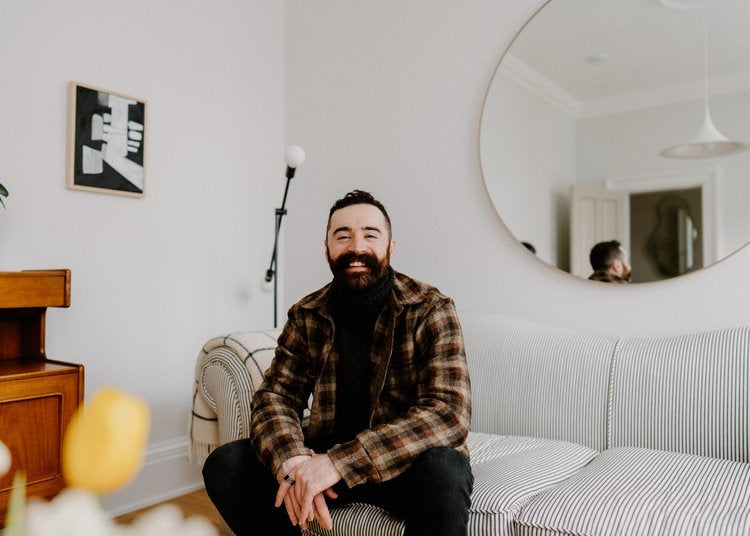
Written by Jack Cairney
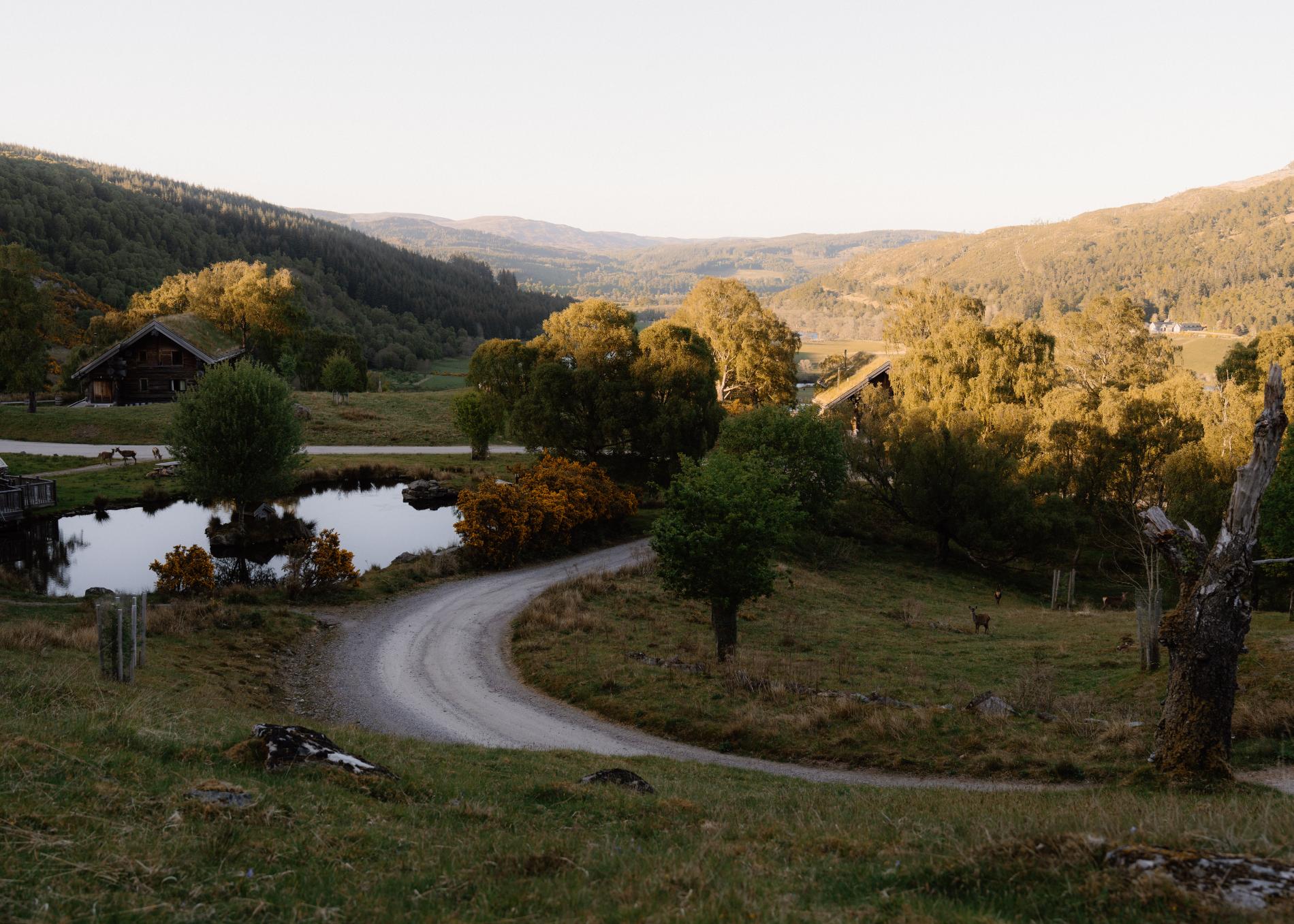
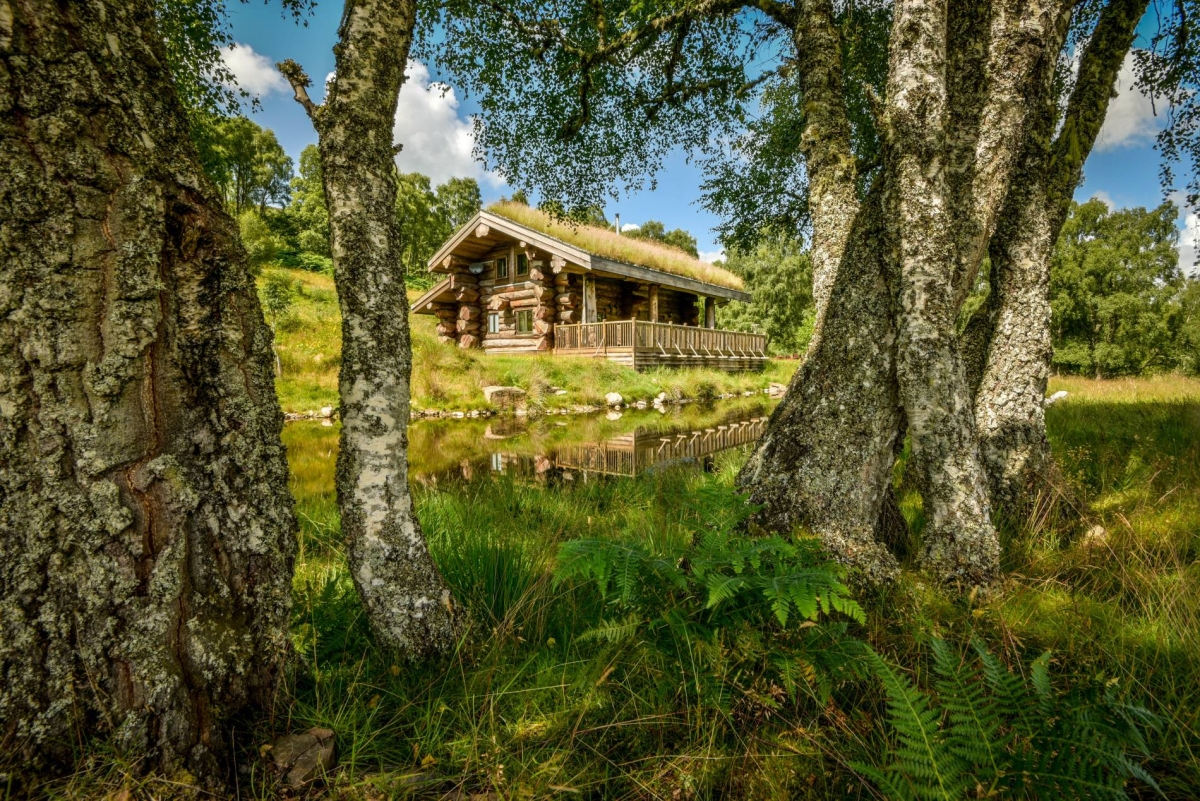
I arrived at Eagle Brae in May, as the Highlands started tipping into summer. The hills were full of colour—bracken pushing through, gorse still bright yellow, and barely a cloud in sight. The drive from Inverness was easy enough, the road quiet and gradually more remote as forest and glen took over. After the turn near Struy, the final stretch climbed gently through the trees. Cabins began to appear one by one—broad-roofed, low-slung, built from thick cedar logs that looked like they’d always been there.
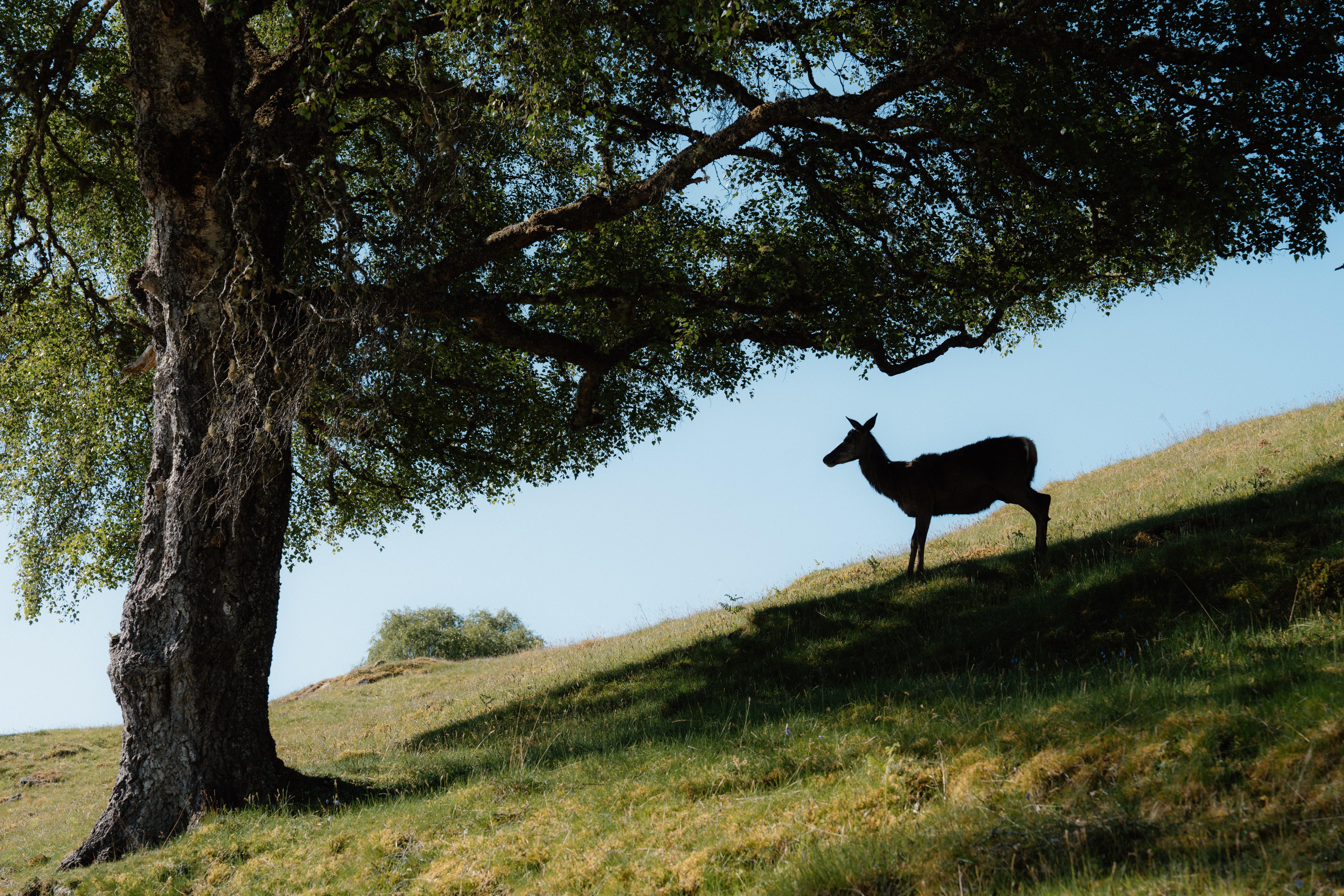
I unpacked quickly. Inside, the cabin felt grounding. Long beams stretched across the ceiling, bannisters carved with quiet intricacy, furniture solid enough to lean into. It wasn’t just well made—it felt steady. I walked through slowly, noticing how much had been shaped by hand. When I came back down the stairs, a red deer was standing on the porch. It was close enough to touch, watching me through the glass. My phone was upstairs. After a few minutes, it turned and wandered off towards the pond.
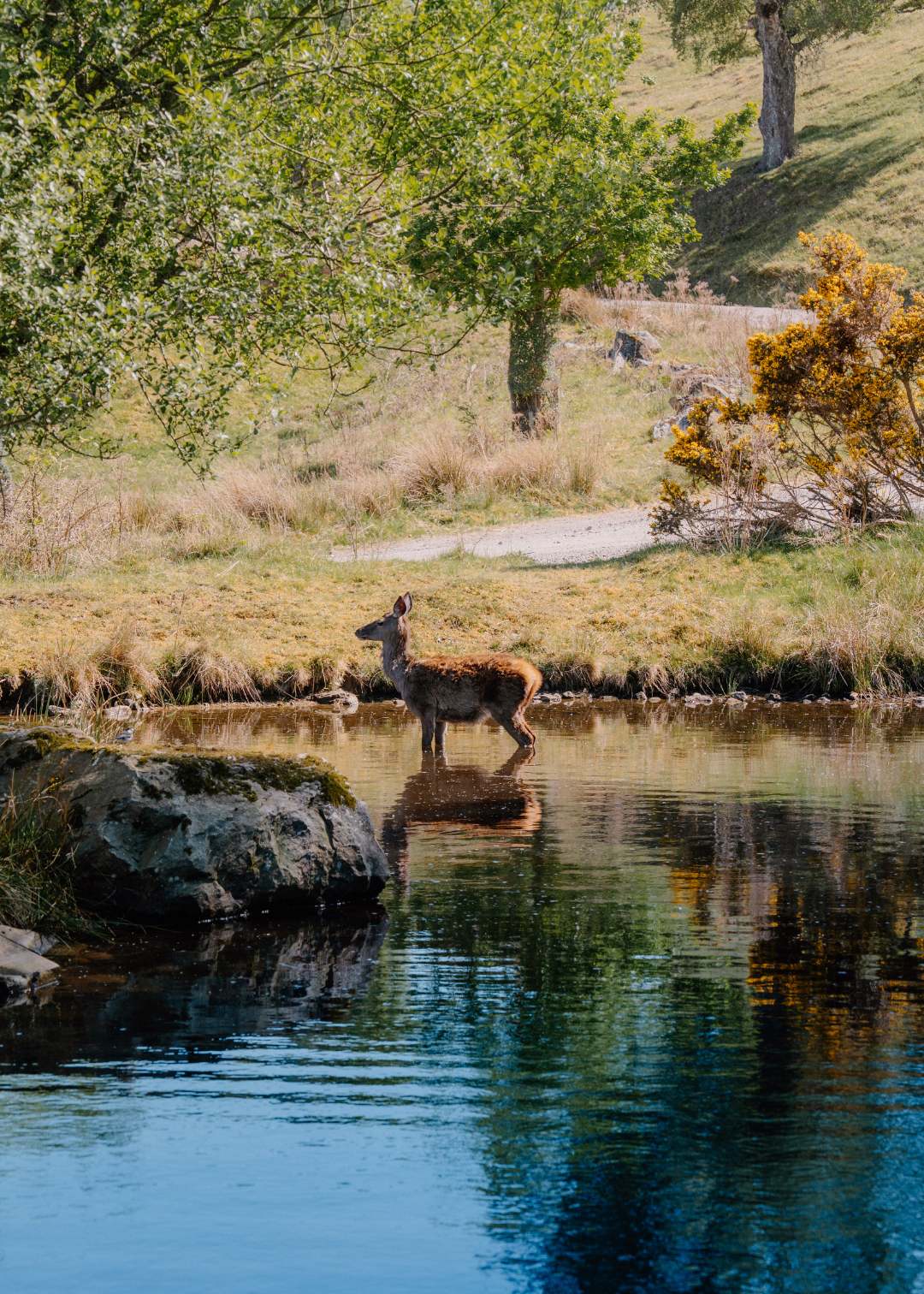
The pond sits beside the reception lodge and, over the next few days, became its own small world. That first afternoon was warm—T-shirt weather, rare for May—and a group of deer had stepped right into the water. They stood chest-deep in the shallows, cooling off, unbothered. Later that evening, well past ten, I saw a pine marten slip along the edge of the path. It was the first I’d ever seen in the wild. They keep to themselves. You don’t often see them. But this felt like the kind of place where you might.
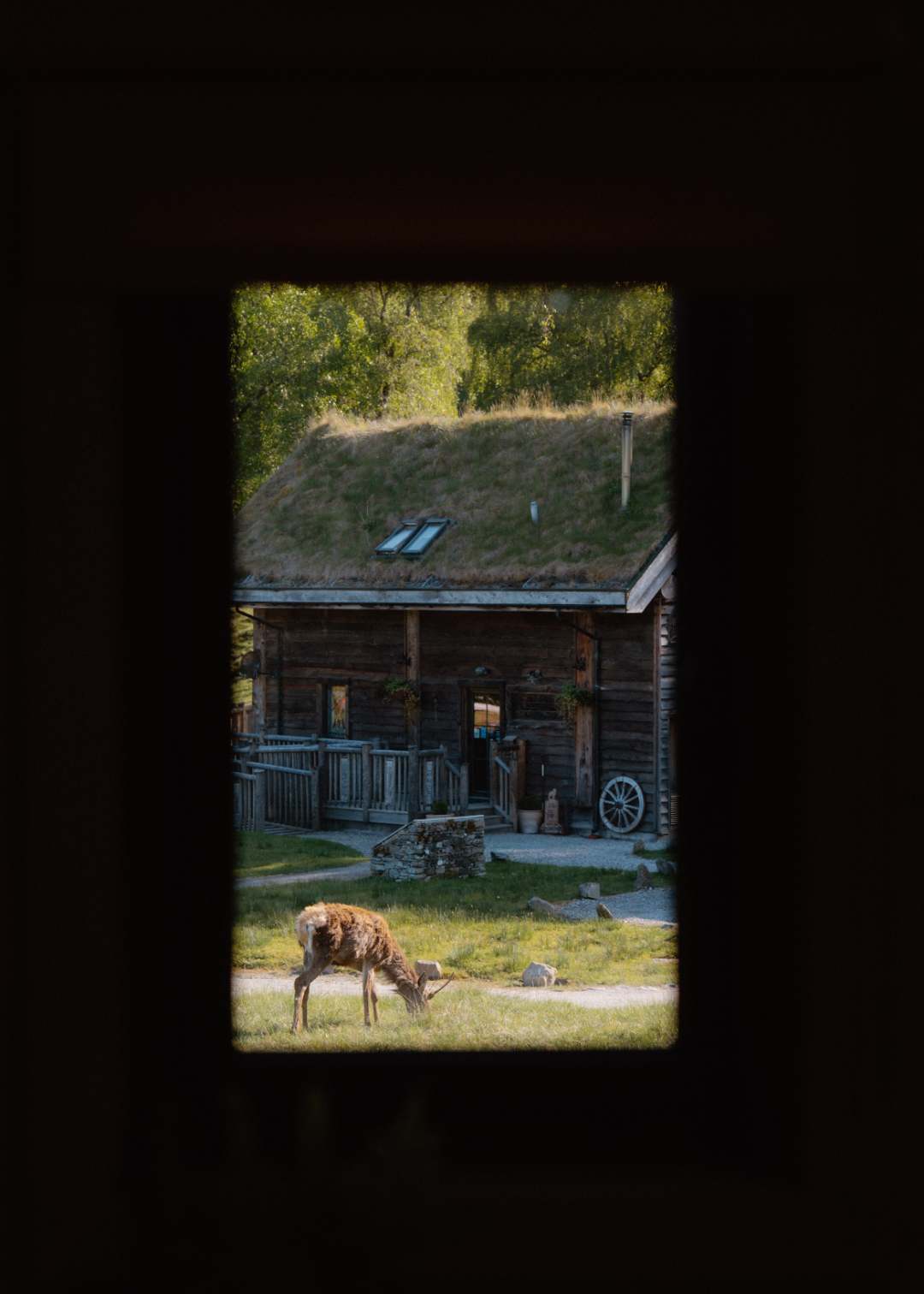
There’s something about Eagle Brae that makes these moments feel expected. The cabins are spaced across the hillside, each tucked between trees and angled towards different views. But the estate feels shaped by more than design. The wildlife doesn’t pass through—it shares the space.
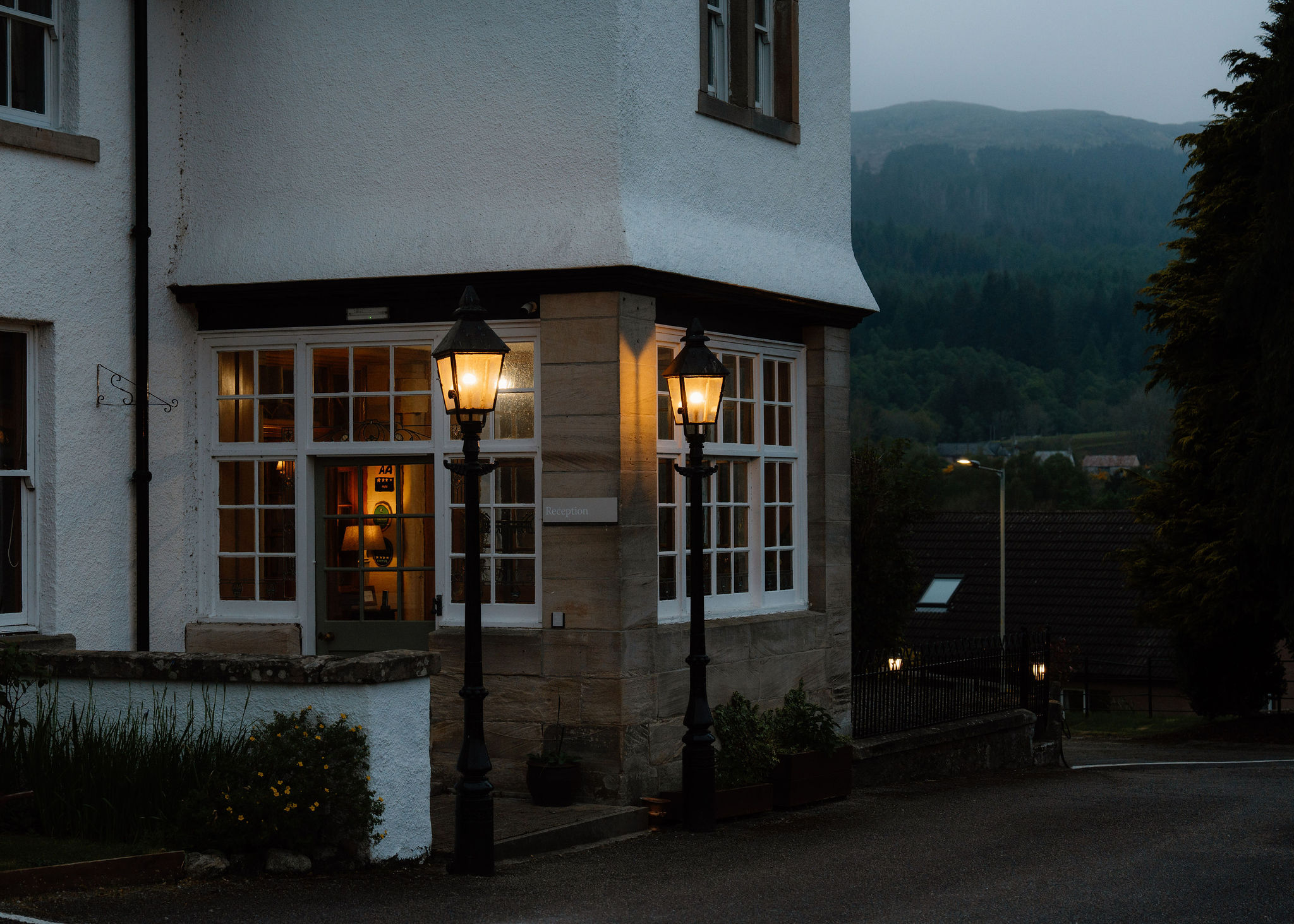
Mike Spencer-Nairn, who built the place with his wife Pawana, was around while I was there. We spoke in the reception bothy. He told me how the logs were brought from British Columbia, and how each cabin had been assembled by hand, locked into place with no nails, just time and precision. He talked about building something that would last—not just physically, but in how it worked with the land. A place that would sit quietly in its surroundings, where the natural setting wouldn’t need to be altered to make it feel like home. He mentioned the short trail up to the hydro weir, where they generate electricity from the burn above the cabins. I followed it the next morning—through larch and birch, past a bench overlooking the glen, then back down the same way. For a moment, the trees thinned just enough to see how far I’d come from the main road.
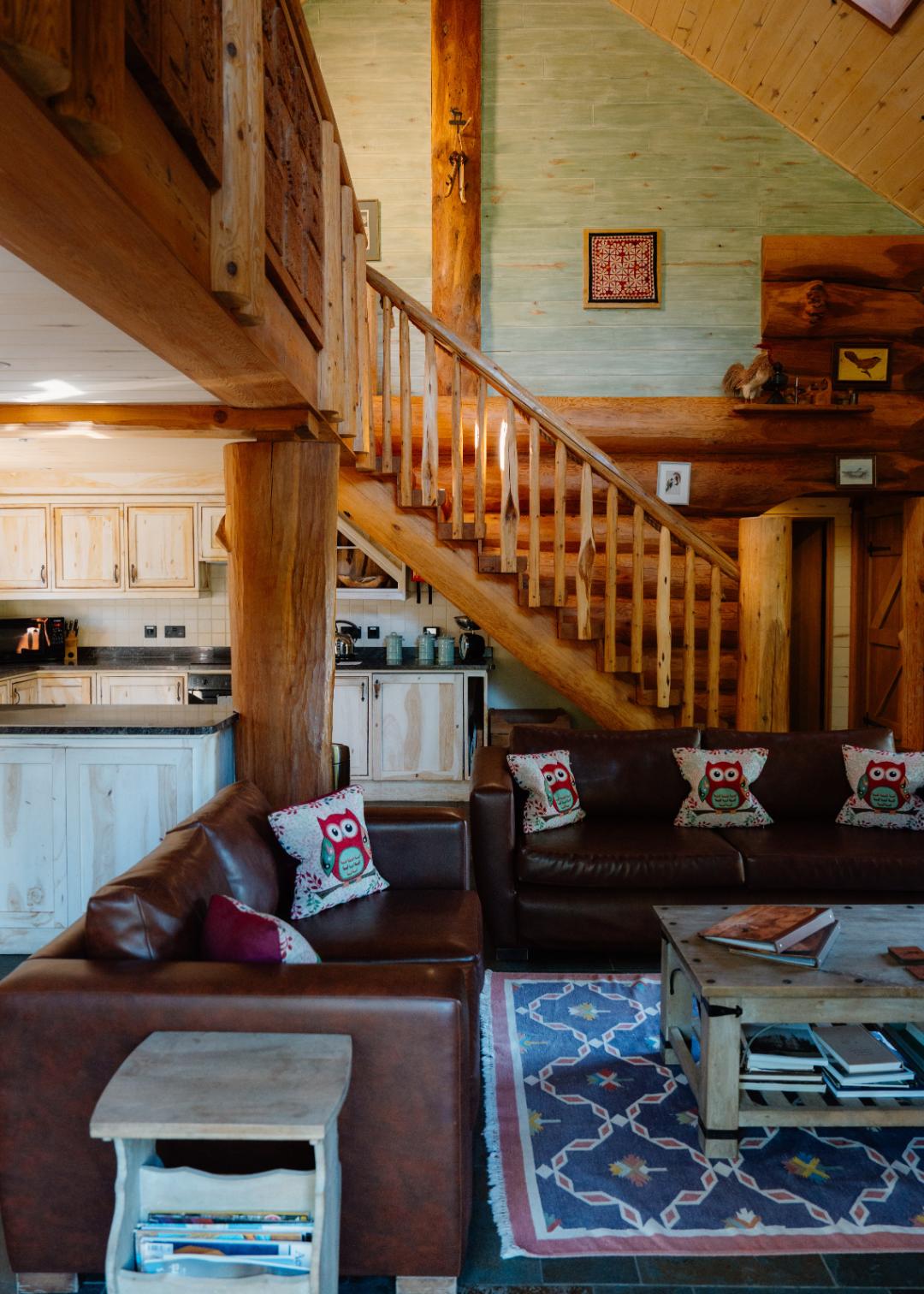
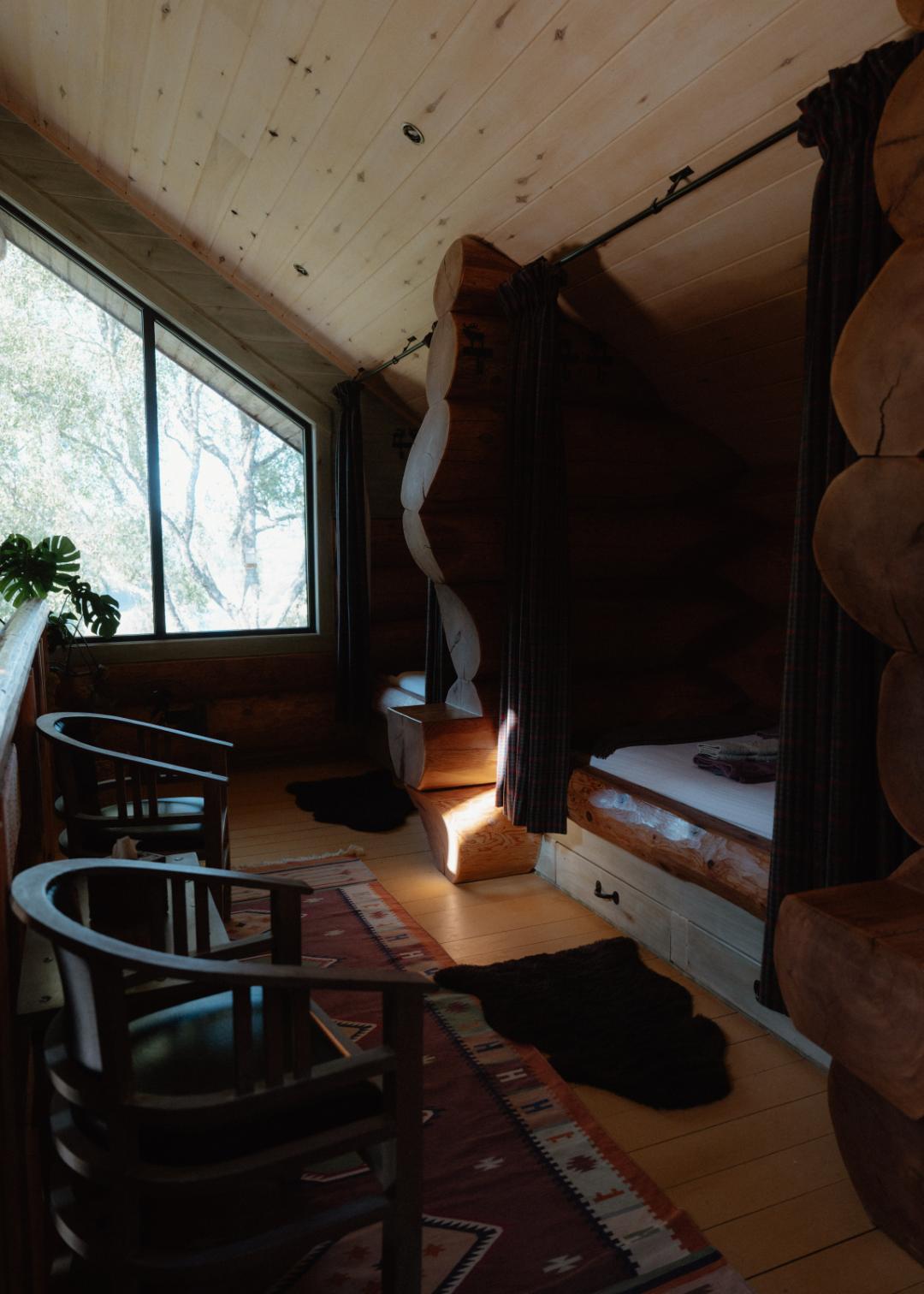
Back in the cabin, everything felt carefully thought through. There was a basket waiting—soft bread, oatcakes, jam, and a bottle of beer from a nearby brewery. I recognised some of Pawana’s cooking too. She makes the preserves by hand. One morning I poured her elderflower cordial over ice and sat out on the deck, watching deer step between the trees. The air didn’t move. Now and then, I caught the smell of warm cedar or heard the trickle from the burn above. No traffic. No hum. Just the woods.
I didn’t make a plan. Just read. Wrote. Sat outside. Let the day drift.
No single detail stood out. It was the feeling of the place. The steadiness of the cabins, the care in how they were made, the sense that nothing had been rushed.
On my final morning, I walked past the pond again. The ducks had taken it over. The deer had moved further into the trees. I packed slowly, finished the elderflower, and stepped onto the porch where that red deer had stood days before. It already felt distant. I drove out the way I came, past the same trees and that small wooden sign, thinking about when I might return.
To find out more about Eagle Brae, including availability, cabin details, and optional extras, click here.
Words and Photography by Jack Cairney.
Promoted Post
Eagle Brae
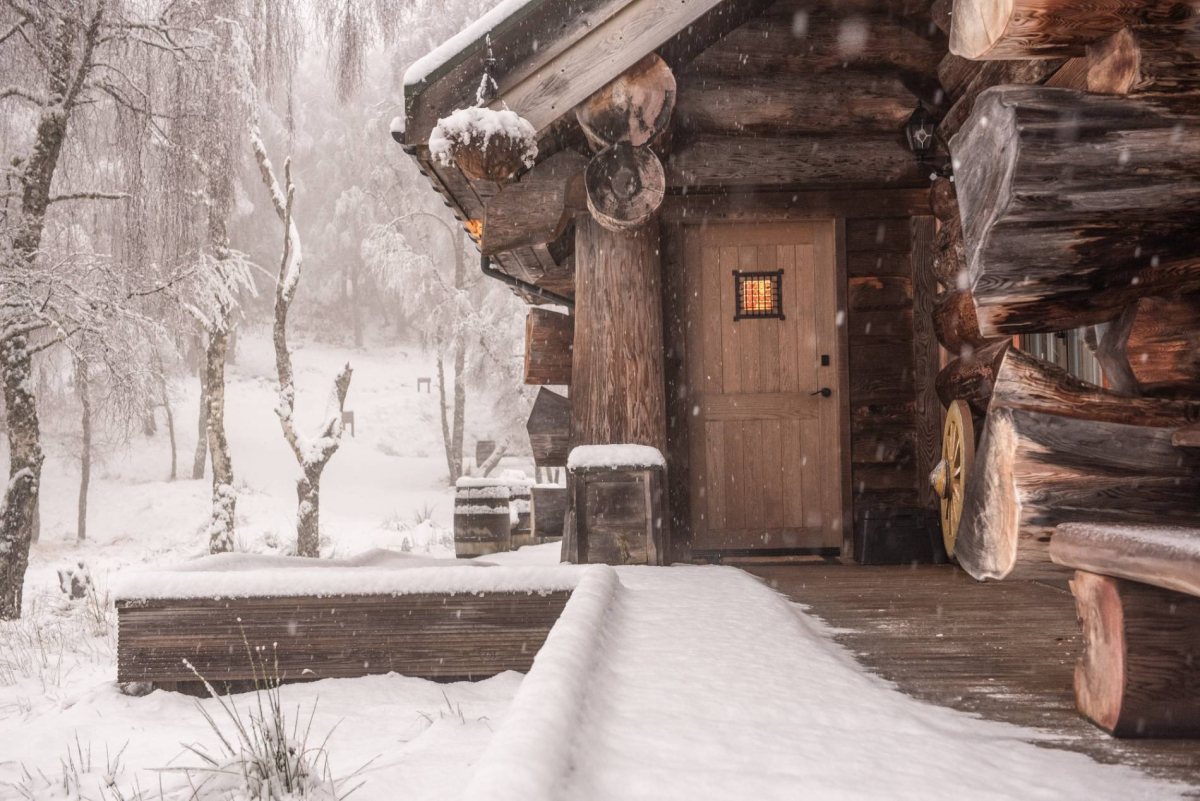
Escape to Eagle Brae, a secluded collection of Highland log cabins near Beauly. Handcrafted cedar, big skies, and deer on the hillside, with a fireside welcome that makes it easy to slow down.






 Sign in with Google
 Sign in with Email