
Wildlife on Skye
Give a cursory glance around the landscape and you could be forgiven for thinking Skye’s animal population amounts to little more than a few herds of sheep. The truth, of course, is radically different. When you spend time here adjusting to island pace – and taking the time to sit and watch – you’ll soon realise it’s home to a veritable menagerie of finned, feathered and furred wildlife.
The Isle of Skye, with its fractured coastline and quiet, wide skies, is one of the few places in Britain where the wild still feels within reach. Though the island draws visitors for its peaks and peninsulas, it’s the wildlife—untamed, unscheduled—that often lingers longest in the memory. Here, the sea carries more than light; it moves with porpoises and minke whales. On the cliffs above, birds of prey ride thermals with a slow, scanning intent. To stop, listen, and wait on Skye is to put yourself in the path of something rarely seen.
While sightings aren’t guaranteed, this is part of the experience. You’re not visiting a sanctuary or an enclosure; the animals here are entirely on their own terms. The best chance of success is to know where to look, and when, and to let the island’s unhurried pace lead the way. A good pair of binoculars helps. So does patience.
This guide highlights some of Skye’s most notable wild residents—from the high ridges that carry golden eagles, to the shallow coastal waters where otters hunt. It’s not exhaustive, but it’s built on places where encounters are more likely. Many are easily reached by car or short walk, making them practical for day trips. Others call for quieter exploration—a stop at a layby, or a pause along a cliffside path.
In all cases, the best approach is a respectful one. Stay back, stay quiet, and give the wildlife the room it needs. Skye will never guarantee a sighting. But when it offers one, even briefly, it has a way of resetting your sense of scale.
Minke Whales
Among the most commonly spotted cetaceans off Skye’s coast, minke whales are often seen breaking the surface in summer, their distinctive dark backs arching in slow motion, followed by that sharply curved dorsal fin. Reaching up to 10 metres in length, these solitary baleen whales are relatively shy compared to their more demonstrative cousins, but if you're watching carefully from a headland, you may spot their low, bushy blow and the smooth rise of the back before a dive. They feed on small fish and krill, often near the surface, making them easier to glimpse on calm days. Neist Point remains one of the best places on the island to look for them, particularly in the early mornings or late afternoons between June and September, when the light flattens the water and movement becomes easier to detect. Patient watchers may be rewarded with a slow glide past the cliffs, sometimes close to shore. Unlike dolphins, minke whales don’t tend to leap, but there’s a quiet satisfaction in the encounter—a dark shape on a bright sea, moving with purpose then disappearing just as calmly.
White-Tailed Eagles
With a wingspan that can stretch beyond 2.4 metres, the white-tailed eagle remains one of the island’s most dramatic sights. Once extinct in Britain, they were reintroduced in the 1970s and have since re-established territories across the Inner and Outer Hebrides, including Skye. Locally, they are often seen circling over cliffs near Portree or soaring above lochs, scanning for fish and carrion. Sometimes mistaken for a large buzzard at a distance, closer views reveal a broader, heavier profile, with pale feathered heads and wedge-shaped tails giving away their identity. The nickname ‘flying barn door’ isn’t exaggerated—their bulk is unmistakeable in flight. They often nest on sea cliffs or in remote wooded glens, returning to the same site year after year. Observing one gliding along the cliff edge or dropping suddenly to snatch a fish from the water’s surface is an experience that stays with you. Boat trips from Portree and Elgol sometimes pass beneath their flight paths, but they can also be spotted from quiet coastal laybys if you know where to look—and have the patience to wait.
Porpoises
Smaller and more discreet than dolphins, harbour porpoises are one of the most frequently sighted marine mammals around Skye’s shoreline. Their triangular dorsal fins break the surface in brief, regular arcs, often in groups of two or three, though they rarely put on a show. Loch Pooltiel, up on the north-west coast near Glendale, is a good place to spot them from land, particularly in calm conditions when their movements are easier to trace. Unlike dolphins, they avoid boats and rarely breach, making them trickier to detect unless you’re scanning the waterline carefully. Their presence is often announced not by sight but by the soft puff of their breath as they surface. These porpoises feed on small fish and tend to favour tidal currents where prey is abundant, so headlands and narrow sea channels are promising. Though shy, there’s something rewarding about watching these elusive swimmers, especially if you catch them in the late afternoon when the light drops low and the sea quietens.
Golden Eagles
If the white-tailed eagle is about power, the golden eagle is about poise. With wingspans up to 2.2 metres, these raptors command the upland skies of Skye, preferring remote cliffs, moorland plateaus and ridgelines across the Cuillin and Trotternish. Their golden-brown plumage glints in certain lights, especially around the nape and head, which gives them their name. Unlike the more coastal habits of white-tailed eagles, golden eagles favour inland haunts and are often seen soaring on thermals, patrolling vast territories for mountain hares, rabbits and even young deer. From a distance, many mistake the common buzzard for a golden eagle—but size, wing shape, and flight pattern help distinguish them. Buzzards flap more; golden eagles glide, holding their wings in a shallow ‘V’. Sightings are far from guaranteed, but your best chance is to find a quiet spot overlooking high ground—such as the Quiraing or Glen Brittle—and wait. When one appears, it’s often sudden and unmistakable. Their presence doesn’t demand attention; it earns it.
Red Deer
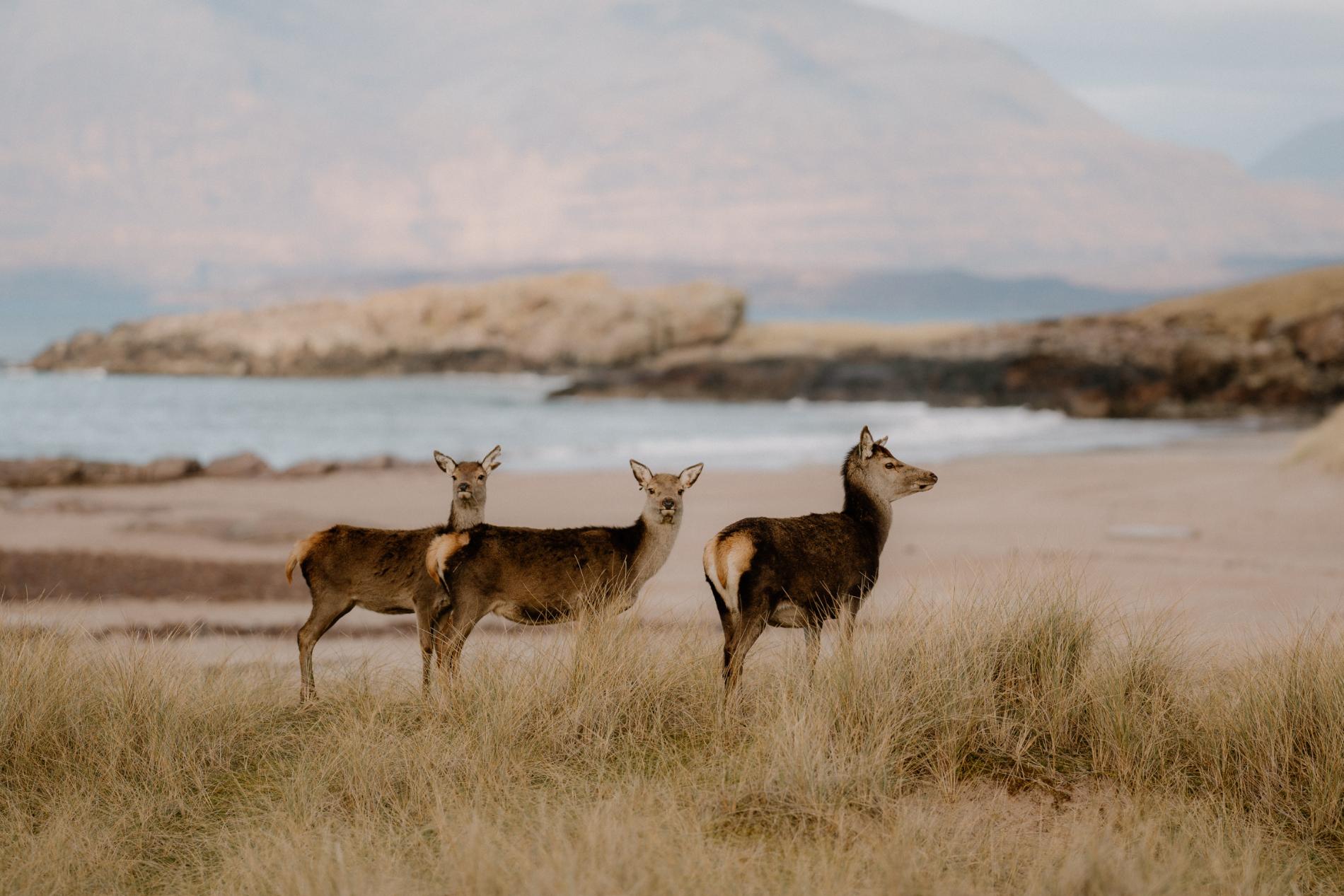
Scotland’s largest land mammal is a familiar sight on Skye, particularly in autumn and winter when they come down from the high moors to lower slopes and roadsides. In the rutting season, from late September into October, males gather harems and clash antlers in dramatic displays of strength and dominance. Their calls echo through glens and can sound almost otherworldly. During the rest of the year, hinds and younger stags graze quietly on the open hillsides, often blending into the heather. Their reddish coats darken in winter, but their size and antlers make them unmistakable. The road to Elgol and the Glen Brittle area offer good chances for sightings, particularly at dawn and dusk. In colder months, they may appear close to villages, even lingering near laybys. It’s tempting to approach, but they are still wild animals—observing from a respectful distance is safest. For many visitors, seeing red deer against the backdrop of Skye’s stark hills is a moment that stays long after the journey ends.
Otters
Among Skye’s most elusive residents, otters require patience and luck to spot. They are mainly active at dawn and dusk, hunting fish, crabs and molluscs in the sea lochs and quiet inlets that fringe the island. Kylerhea Otter Haven on the southern coast is one of the best managed spots to wait and watch. With binoculars trained on the shoreline, visitors may see an otter slipping into the water or crunching through a crab on a favourite rock. Otters are surprisingly small up close, with dense, waterproof fur and powerful tails. They can remain underwater for several minutes, so keeping your gaze fixed on a likely patch of coast is important. Unlike seals, otters move with a sleek, low body and tend to travel in zigzag patterns close to the edge. They often use the same feeding spots and leave behind telltale signs—fish bones, flattened seaweed, and spraints. For many, catching even a glimpse is a highlight of a trip to Skye, not for its grandeur but for the quiet magic of the moment.
Dolphins
The waters around Skye are home to several dolphin species, including common, bottlenose, Risso’s, and the less frequently spotted striped dolphin. These social and acrobatic animals are often seen in groups, leaping and spinning through the waves, especially when sea conditions are calm. Neist Point and Rubha Hunish are two excellent vantage points from land, offering wide sea views and relatively low light pollution in the evenings. Bottlenose dolphins are the most likely to be seen close to shore, while Risso’s prefer deeper water. Their presence is unpredictable but always energising. They often follow boats, sometimes riding the bow wave, and commercial wildlife cruises departing from Elgol or Portree regularly encounter pods. Their movements are dictated by the presence of fish shoals, so sightings tend to spike in warmer months. On a quiet day by the coast, it’s worth scanning the horizon—what at first seems like a breaking wave might become a dorsal fin, followed by a leap that leaves little doubt.
Seals
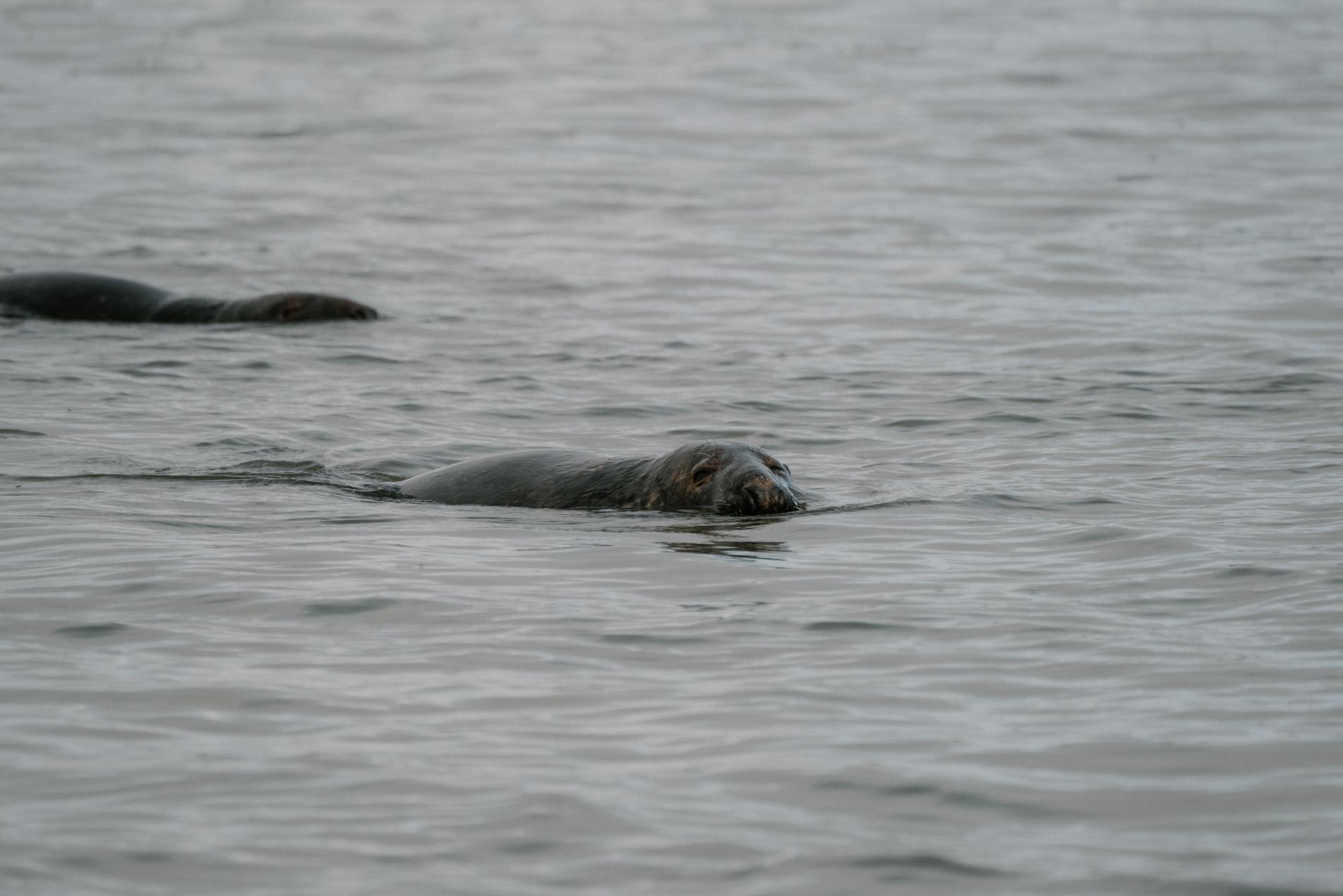
Skye’s rocky coastline and quiet sea lochs provide ideal conditions for both common and grey seals, which can be seen year-round. Common seals, despite the name, are typically more elusive and smaller than their grey counterparts. Greys are the larger of the two species, with long Roman noses and darker mottled coats. Common seals have more rounded faces, and their spotted coats often appear lighter. Both species haul out on intertidal rocks to rest, warm themselves, or rear pups. Loch Dunvegan is among the most reliable places to observe them—particularly from the water on one of the local boat trips, where colonies gather undisturbed on offshore skerries.
In quieter areas such as Loch Scavaig and Broadford Bay, it’s not uncommon to spot a single seal watching from the water, its head turning slowly, eyes fixed. While they may seem sluggish on land, seals are graceful underwater and expert fishers. Pupping seasons differ—common seals give birth in early summer, while grey seals pup later in the year—so any close encounters should be done with care to avoid stress. At low tide, look for dark shapes stretched out on rocks, or scan calm water for a slick head between the waves, quietly watching back.
Promoted Post
Stormhouse
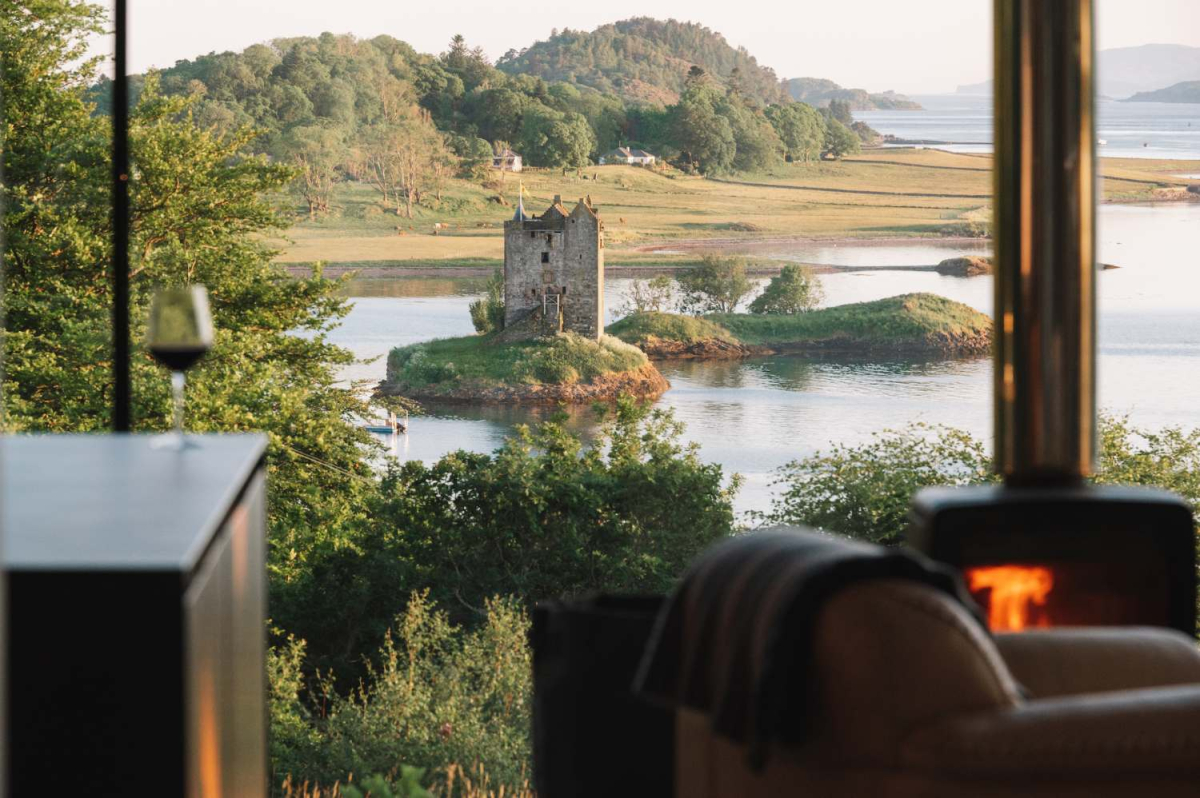
Escape to the wild, rugged landscape of Scotland’s west coast, perfectly located between mountain and sea









 Sign in with Google
 Sign in with Email