
The Most Beautiful Waterfalls in Scotland
Scotland’s most beautiful waterfalls.
Words by Hidden Scotland · Photographs by @preston_tan
Scotland is home to some of the world’s most beautiful natural wonders, from loch to heath to wildlife. But its collection of naturally made waterfalls are not just stunning – they’ve offered divine inspiration in the works of writers, conservationists and painters. Up and down the country, tucked into grand landscapes of wilderness, you’ll find some of the most beautiful waterfalls in Scotland, and these are the ones worth the journey.
Plodda Falls
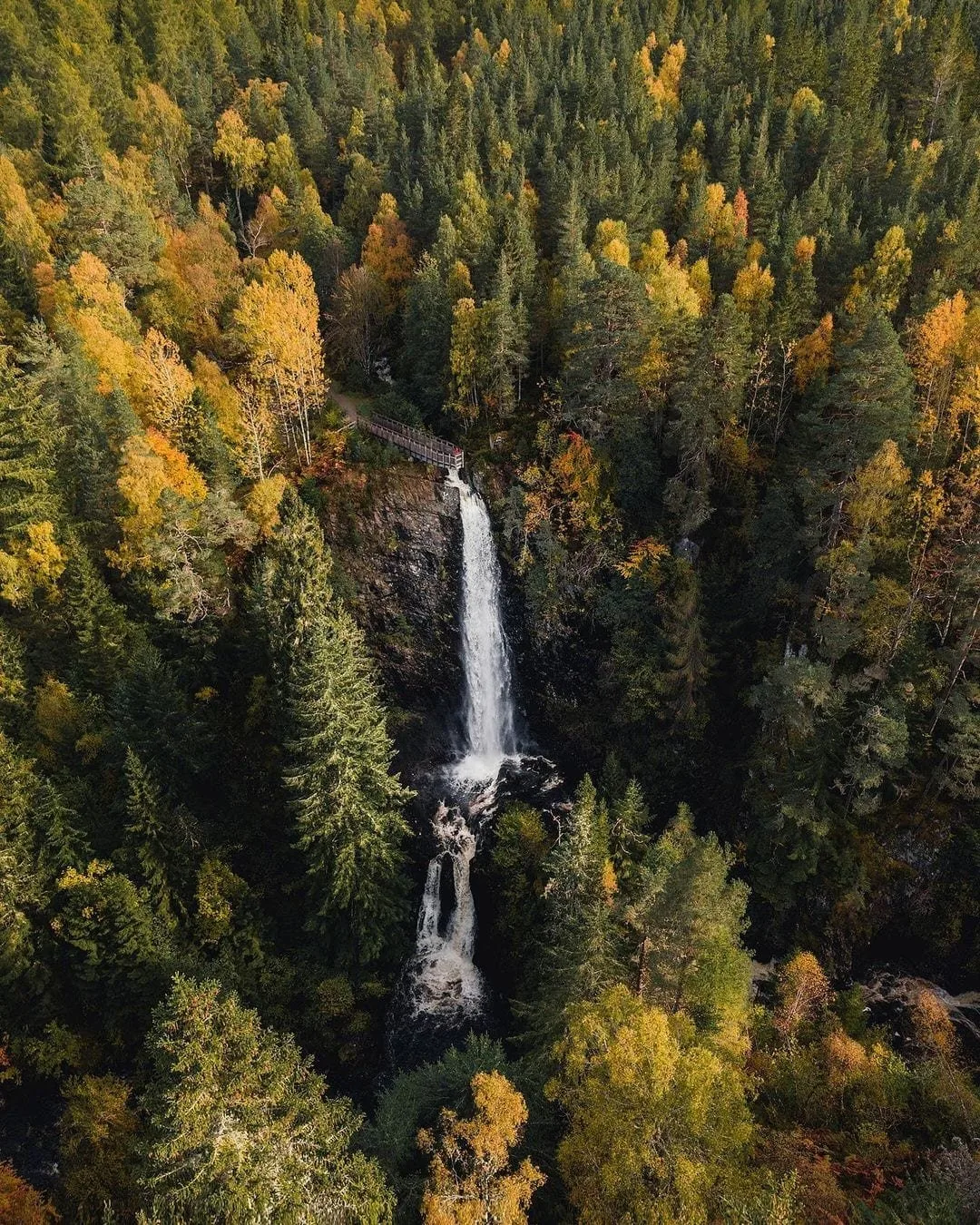
Found near the quaint Victorian village of Tomich, Plodda Falls is a spectacular 151 feet plunge of water. Hidden amongst a forest of fir trees, the water cascades past the treetops from a nearby loch. The falls can be viewed from a viewing platform, giving incredible views not just of the waterfall, but of the surrounding forest too.
Wailing Widow Falls
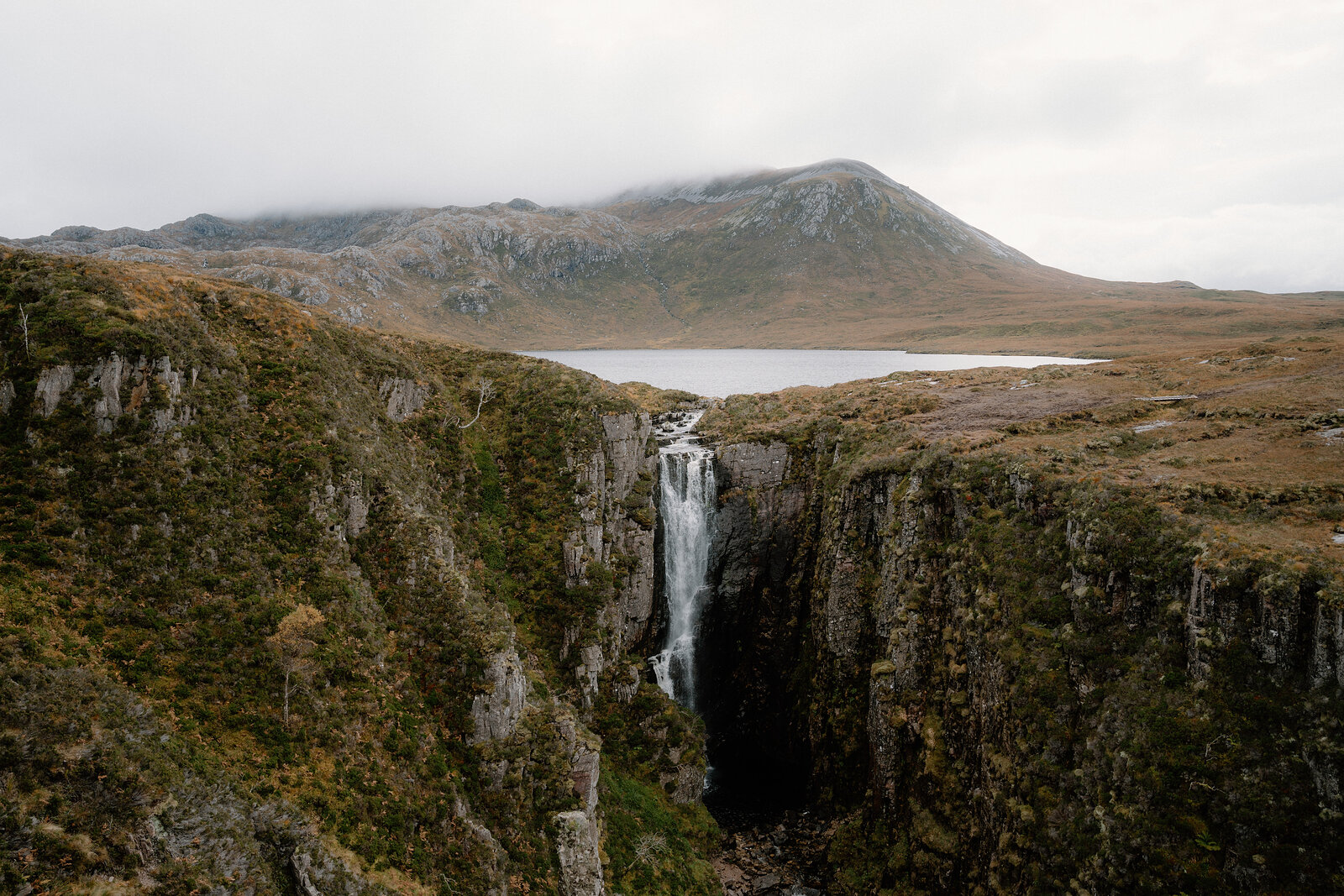
Accessible by a short ten-minute walk, the Wailing Widow Falls is a 50-foot drop of water, spilling out from Loch na Gainmhich, over a cliff edge and into a nearby canyon below. According to legend, the waterfall got its mysterious name from the tale of a deer hunter who plunged to his death whilst hunting centuries ago. His mother, wracked with grief over her son’s untimely death, promptly threw herself over the falls the very next day. Top tip: make sure to wear your wellington boots to this one – to access it, you might have to walk through some watery and wet areas of land.
More about Wailing Widow Falls
Mealt Falls, Isle of Skye
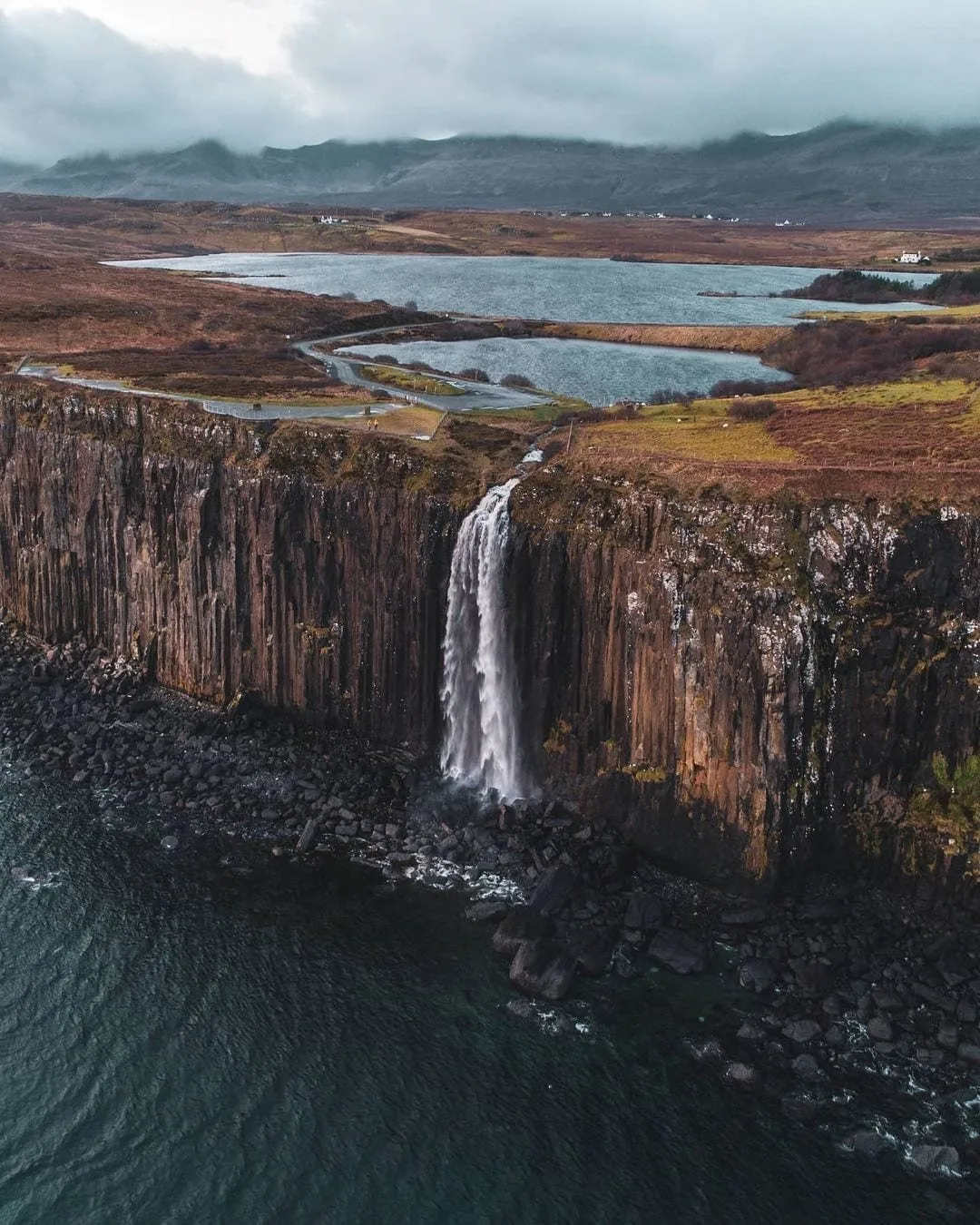
On the dramatic edge of the Isle of Skye coastline, this 180-foot drop spills water directly into the Atlantic Ocean. It gets its name from Loch Mealt, where the water is directly fed from. For optimal viewing, head to the lookout area that has been specially built a little away from the Falls to not just get the best view of the waterfall, but views of the coastline as well.
-full-1750069865.jpg)
Linn of Quoich, Braemar
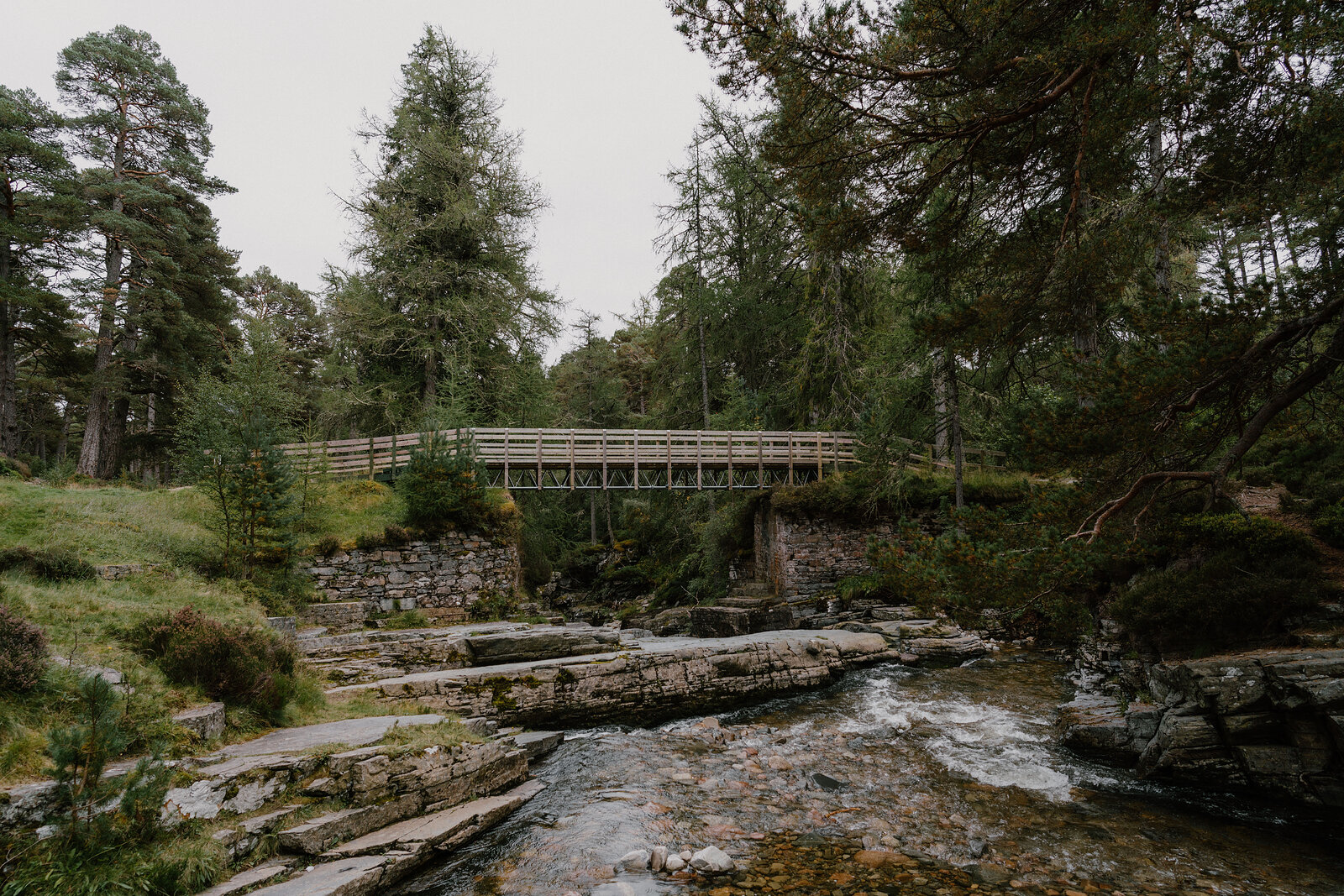
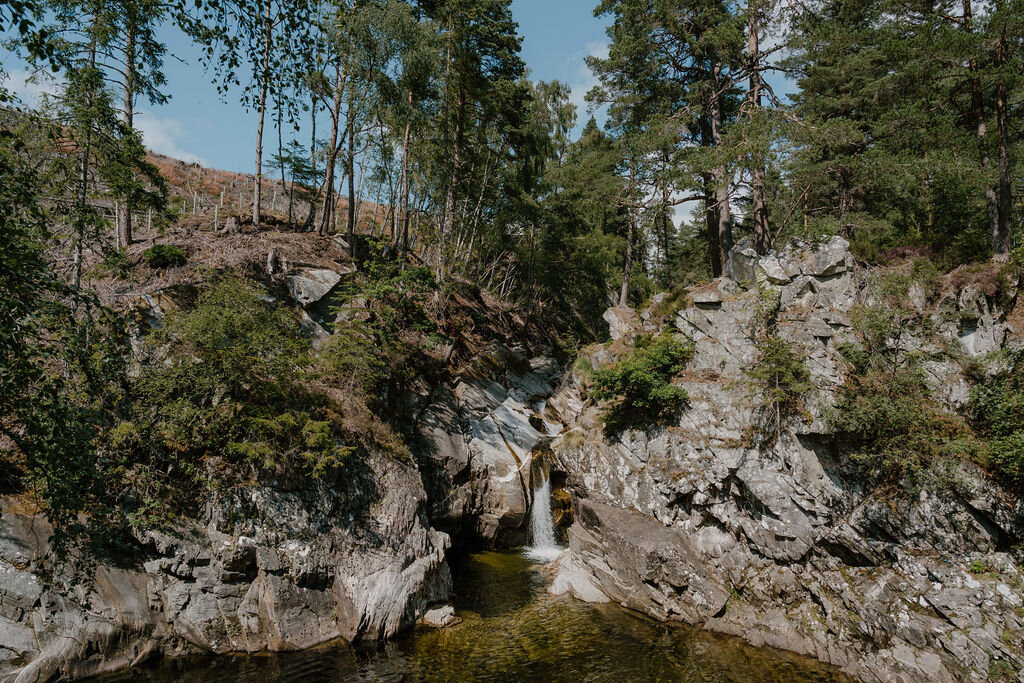
A waterfall with its very own ‘punchbowl’, the Linn of Quoich is actually a gorge with a narrow waterfall running through it. The ‘punchbowl’ is carved by the Water of Quoich, creating a naturally formed hole in the rocks. Surrounded by peaceful pine trees, Queen Victoria herself was fond of visiting this tranquil spot, causing it to become a favourite attraction for visiting tourists.
Falls of Glomach
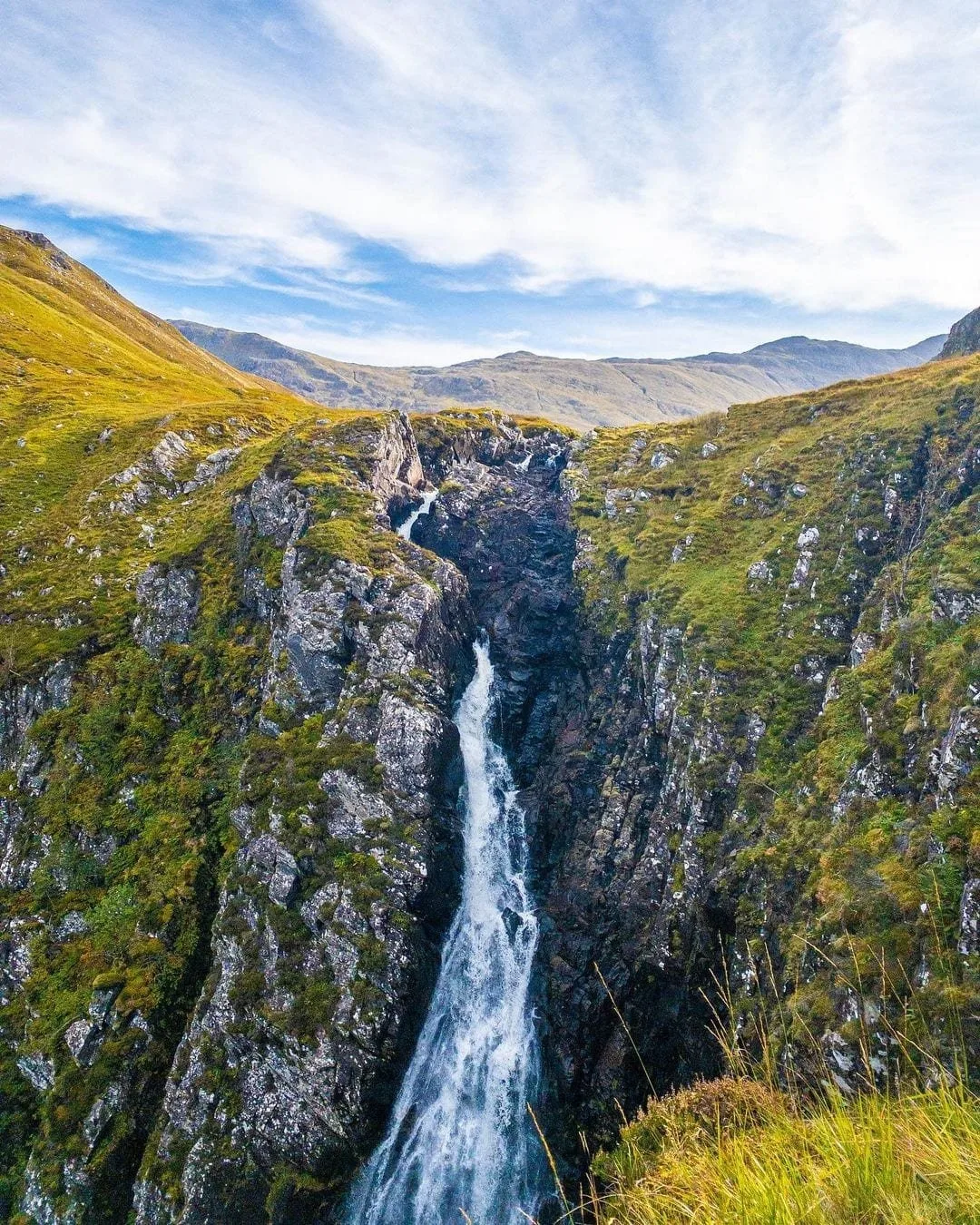
With a drop of 370 feet, the Falls of Glomach is one of the tallest waterfalls in Britain and borders Kintail, a mountain area in the Northwest Highlands that is operated and looked after by the National Trust for Scotland. Though not easily accessible – it’s an 8km trek through remote countryside – it’s well worth the visit. The falls get their name from the Scottish Gaelic word ‘Glomach’, which translates to ‘hazy’, said to describe the appearance of the heavy waters in the mist.
Grey Mare’s Tail
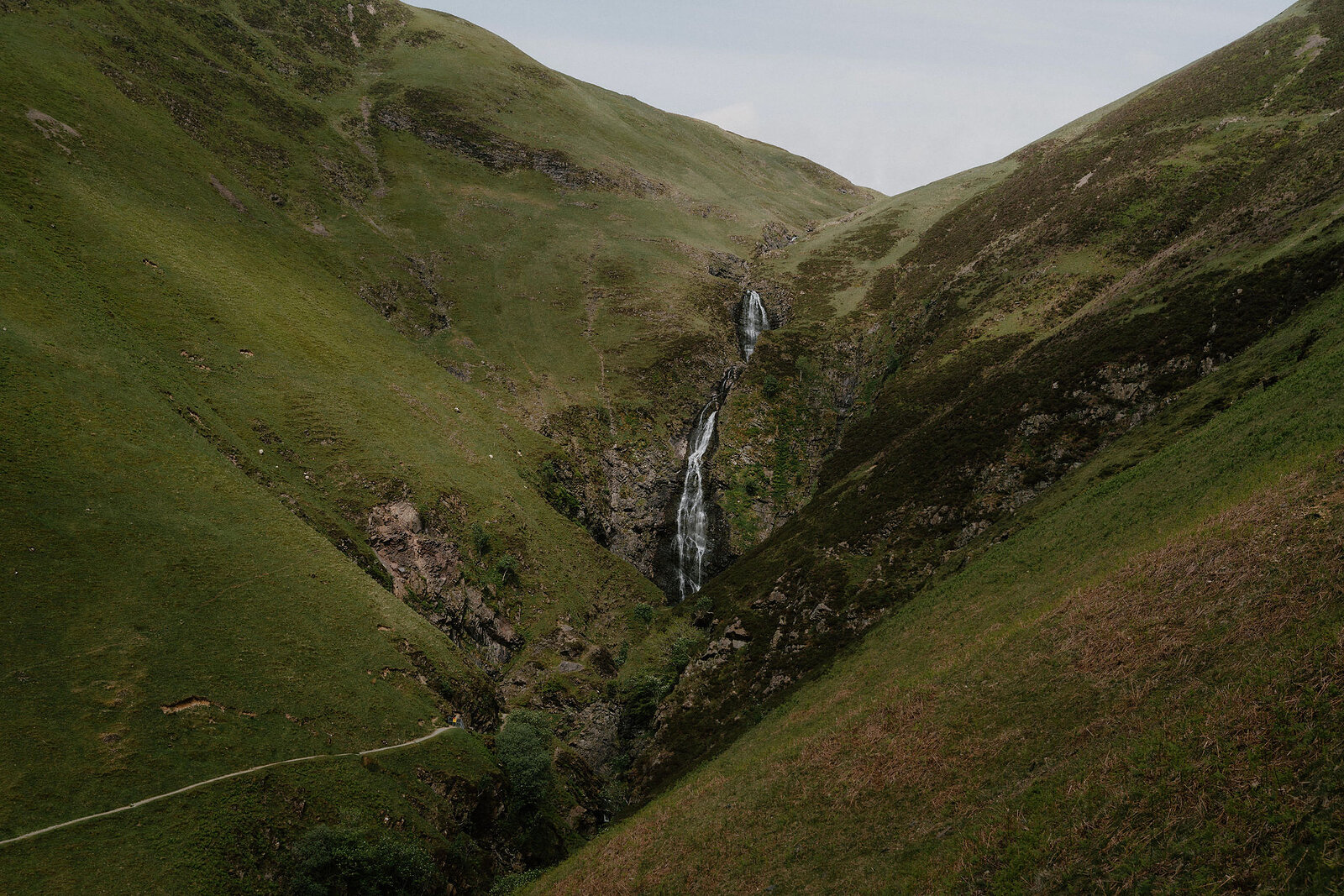
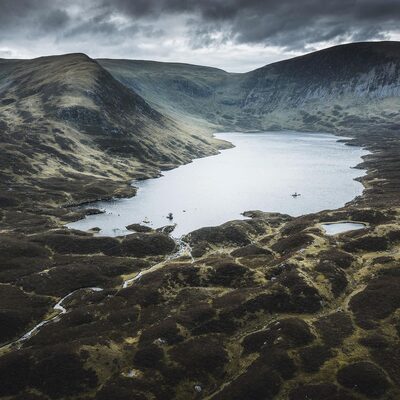
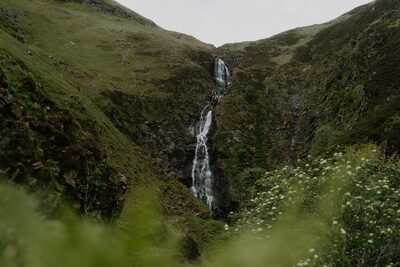
A part of the Grey Mare’s Tail Nature Reserve, this 200 feet hanging valley waterfall is fed its crystal clear waters from the nearby Loch Skeen. Grey Mare’s Tail is the fifth tallest waterfall in Britain and has been noted by the European Union and the British Government as a place of significant natural and botanical importance, particularly as the home for a variety of rare flowers. Cared for as a Special Area of Conservation, there’s even historical evidence that suggests Iron Age settlers actually lived on the Moffat Hills beside the waterfall centuries ago.
Fairy Glen, Rosemarkie
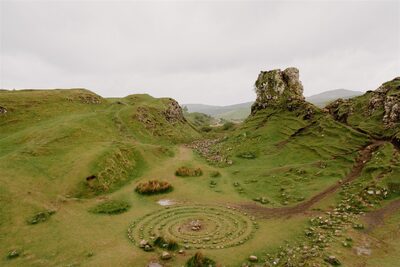
Home to not one but two waterfalls, the aptly named Fairy Glen is reached by a delightful woodland walk, which culminates in the beautiful rushing waters of the falls. Fairy Glen gets its namesake from a well-dressing ceremony undertaken centuries ago, where children of the local village decorated a pool with flowers to ensure that the fairies kept the water supply clean for the village’s inhabitants. The Glen is now associated with Scottish geologist and author Hugh Miller, whose writings on geological formation specific to the falls attracted many tourists.
More about Fairy Glen, Rosemarkie
Corrieshalloch Gorge
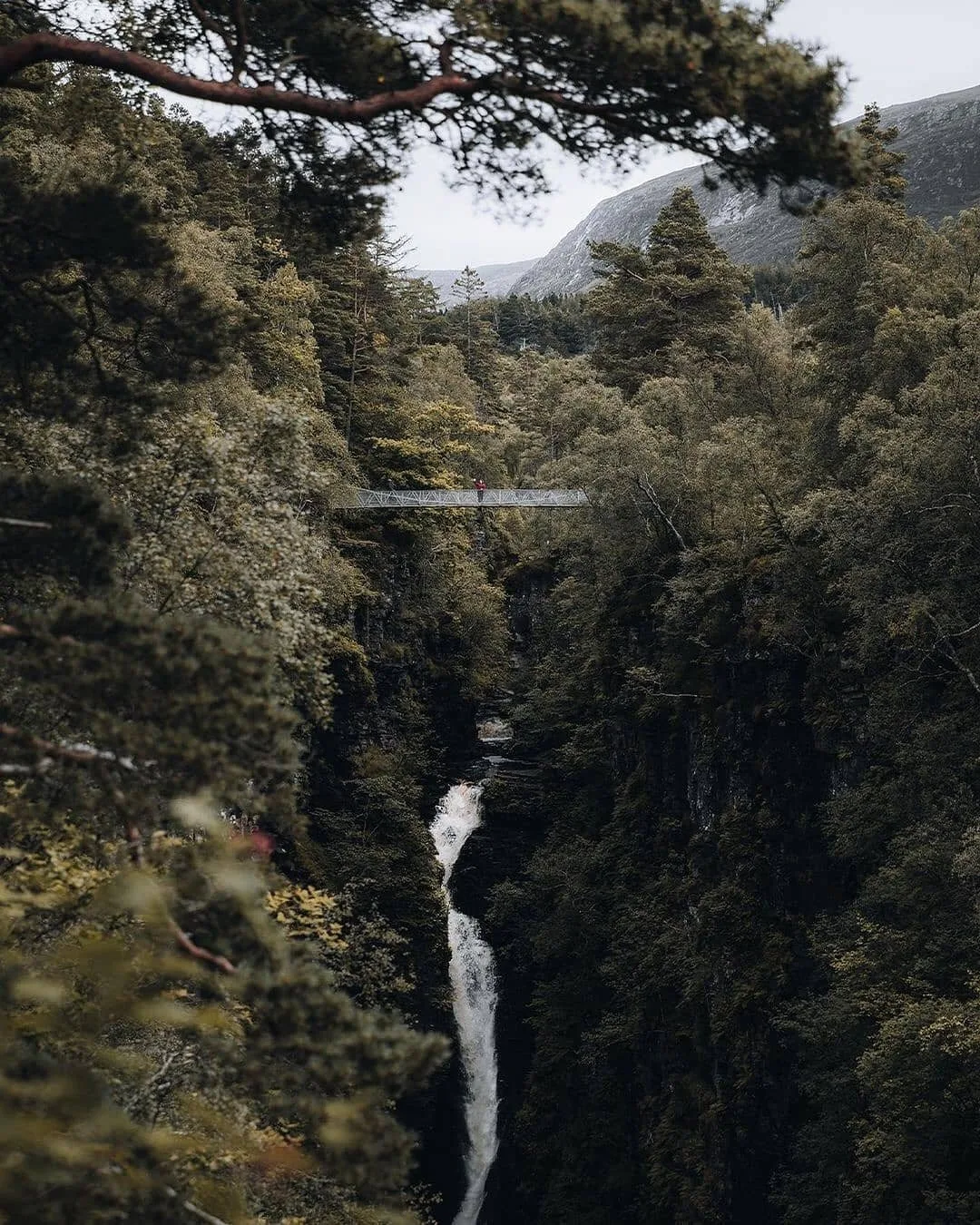
Formed by glacial meltwaters which carved out the unique rock formations following the Quaternary Ice Age over 2.5 million years ago, the Gorge is now a Category II Protected Area by the International Union for the Conservation of Nature. Its name translates, in Gaelic, to ‘ugly hollow’, though don’t let the name convince you to ignore this treasure. Those looking for adventure can cross the Victorian suspension bridge and look directly down over the Falls of Measach below.
More about Corrieshalloch Gorge
Dollar Glen, Clackmannanshire
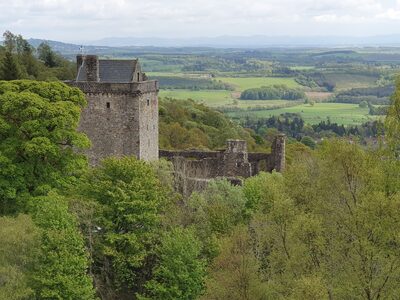
Found as part of a connection of woodland walks in the beautiful Ochil Hills, two concurrent streams known as the Burns of Care and Sorrow plunge down into the waterfall at the Dollar Glen. The area is also home to the ruins of Castle Campbell as well as over 190 species of Lichen and 100 different moss types. Just East of Stirling, the lush, woodland glen is also home to many rare types of wildlife – particularly birds.
Falls of Kirkaig, Assynt
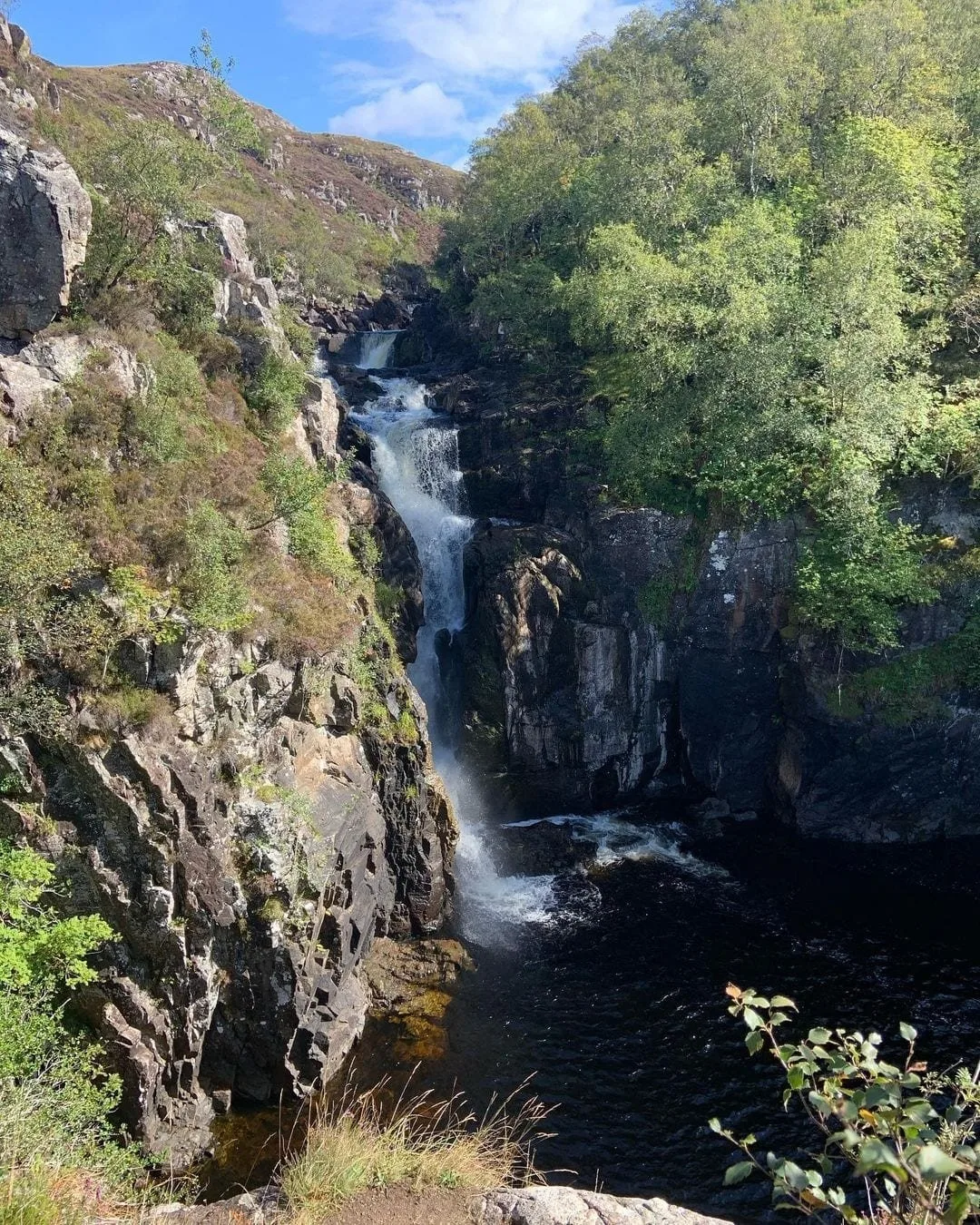
A popular spot with birdwatchers, the Falls of Kirkaig is a 60-foot powerful waterfall. Accessible through a nearby woodland walk and glen, the falls gets its name from the old Norwegian word, meaning ‘place where church is’.
The Daily
Arrives at 5am every day.
A free morning email to see what’s on this week, catch up on what’s happening in Scotland and find somewhere new to go.
Inchree Falls, Onich
With a drop of over 100 feet, dropping into the nearby gorge, Inchree Falls is entwined with Scottish history. The falls form part of a forest walk that is built along an ancient military road, which was built after the first Jacobite Uprising in the early 18th century, allowing quick movement of troops in more desolate areas. Along with the falls, you’ll get superb views of Loch Linnhe, as well as getting to see many beautiful species of plants and wildlife – especially red squirrels.
Steall Falls, Glen Nevis
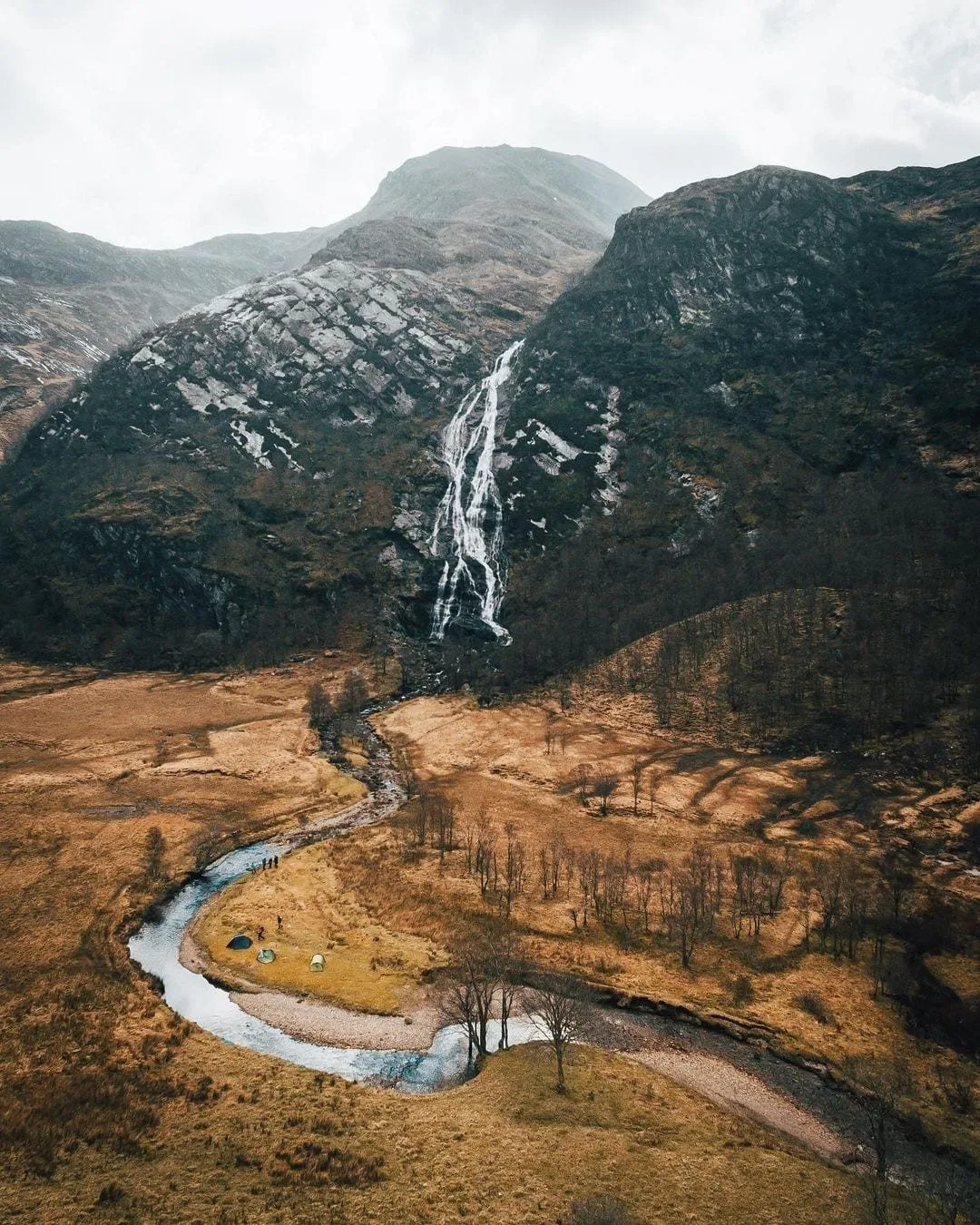
Scotland’s second-highest waterfall at 390 feet, Steall Falls runs through Nevis Gorge, an area of natural beauty owned by the John Muir Trust. It was previously known by its Scottish Gaelic name, An Steall Bàn, roughly translating to ‘the white spout’. Not only will the falls give you a brilliant view of Ben Nevis, Britain’s tallest mountain, but you can also access the base via a three-wire crossing over the waters – perfect for thrill-seekers. The falls have also made a cameo appearance in two of the Harry Potter films.
Falls of Bruar, Near Blair Atholl
A series of waterfalls on the Bruar Water, this waterfall has been a popular tourist attraction since the 18th century. Largely believed to have been formed after the last Ice Age, the waterfall drops at around 196 feet and is best viewed after heavy rainfall. The falls were immortalised in the poem ‘The Humble Petition of the Bruar Water to the Noble Duke of Atholl’ by Robert Burns. Anthropomorphising the water, it begged the owner to plant more trees around the falls after Burns left the site feeling unimpressed by the lack of surrounding vegetation.
Falls of Foyers, Loch Ness
With a fall of 165 feet, the Falls of Foyers is something of an influential waterfall in Scottish history. Its name comes from the Gaelic meaning ‘smoking waters’, feeding into the famous Loch Ness. The falls inspired Robert Addams to write a paper on motion aftereffect in the 19th century, as well as the painter and conservationist Mary Rose Hill to immortalise the falls on canvas. Surrounded by woodland, there are two viewpoints to see the true beauty of the waterfall.
Black Spout, Pitlochry
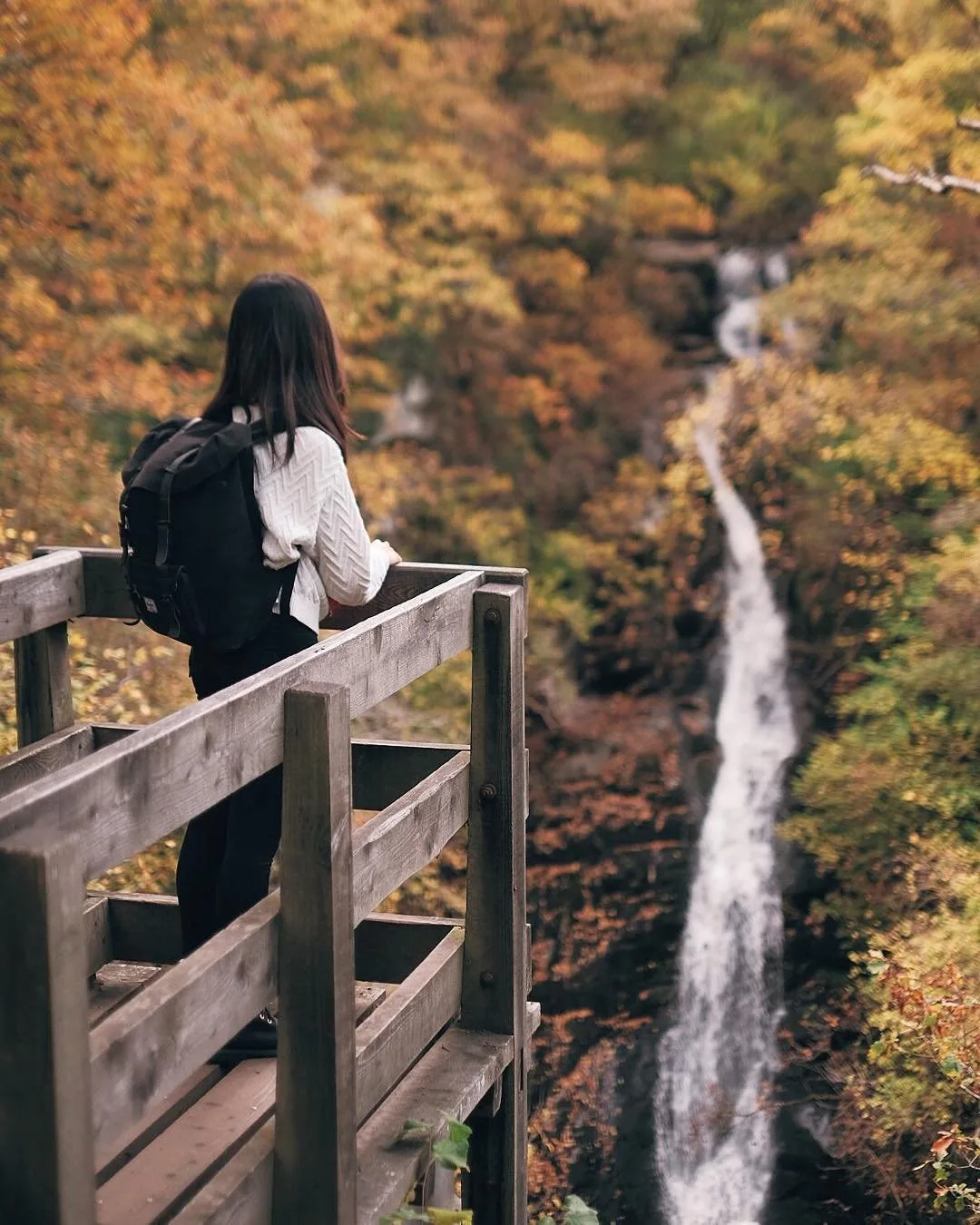
Found in the beautiful Black Spout Wood, this waterfall’s dramatic tumble has a viewing platform to look out over the waters. Led to by a series of connected footbridges, this 196 feet drop is very close to the charming town of Pitlochry. In fact, you can walk directly from the town up to the waterfall without any need for extra transport.

 Out now
Twice a year, to your door
One hundred and sixty pages of Scotland, every photograph commissioned, every word written by someone who went. Members get both issues posted and everything on screen.

 The Last Stop Before Nowhere
 A Weekend Exploring the Isle of Mull
 What's On in Scotland: Autumn and Winter