The Growing Community of Glenelg
Meet the people returning to a more sustainable relationship with the land they call home.

The Scottish Highlands always evoke strong feelings of nostalgia. This sentimentality, whose Latin roots allude to our longing to return home, has become the foundation upon which so many of us travel or seek to build our futures. Memories of pitching tents on mountainside adventures or snuggling by open fires on rainy days linger on into dreams of where to make our homes and how they ought to feel. Such longings are hard to wriggle free from.
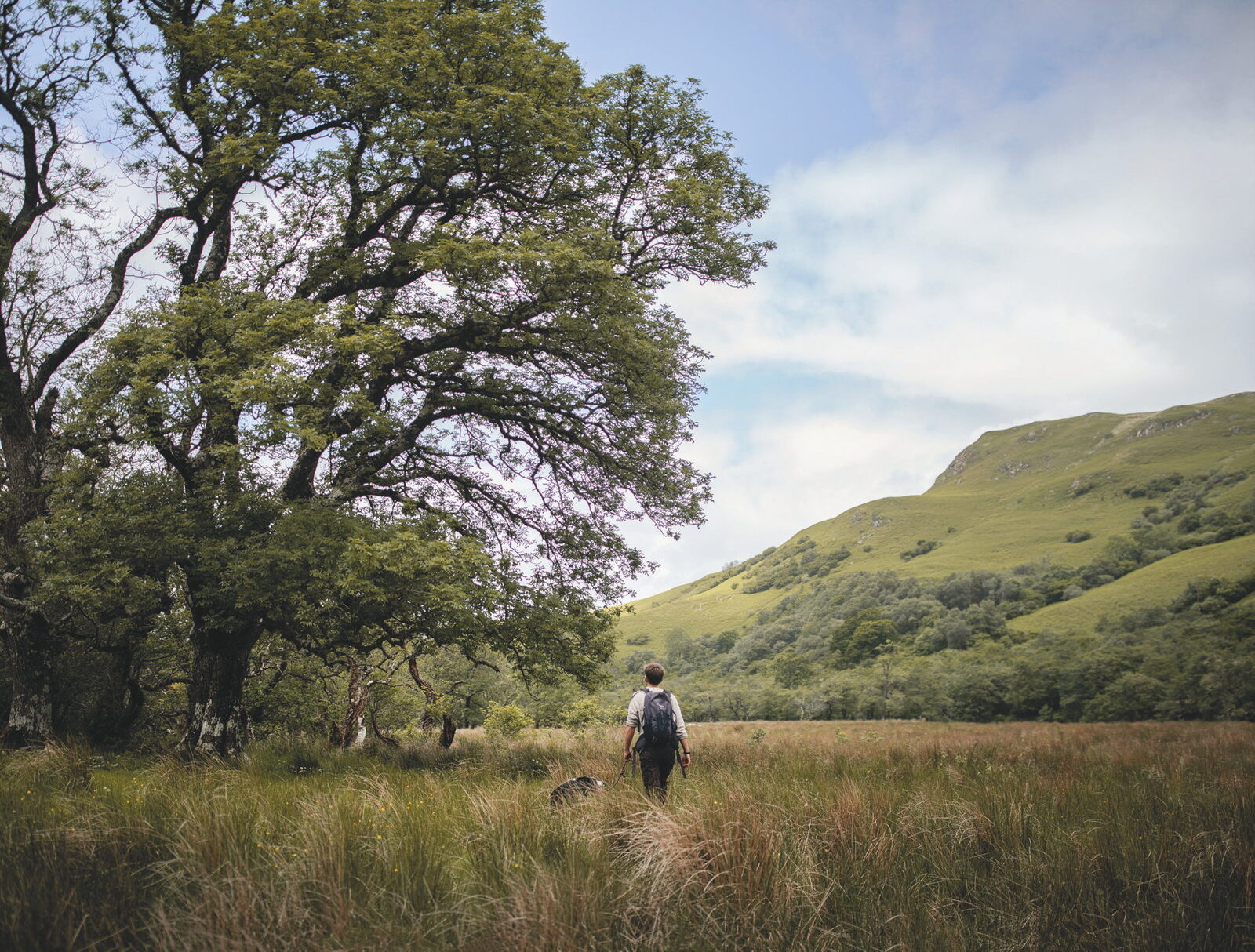
When our friends, Ana and Rowan, told us they were moving to Glenelg, they spoke with their own nostalgic excitement about returning to a life more connected to the land. Having left the Scottish Highlands in search of some idyllic patch of foreign soil a year before, they were coming back to Rowan’s childhood summers picking berries from hedgerows and climbing trees below the craggy slopes of Beinn Sgritheall.

“There’s always been a warm comfort about Glenelg, like a big embrace that envelops you the moment you come over The Mam and stays with you long after you leave.”
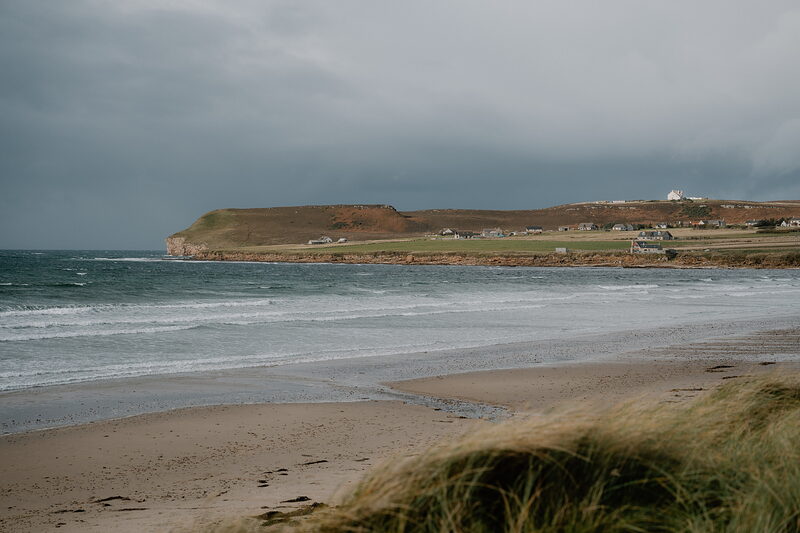
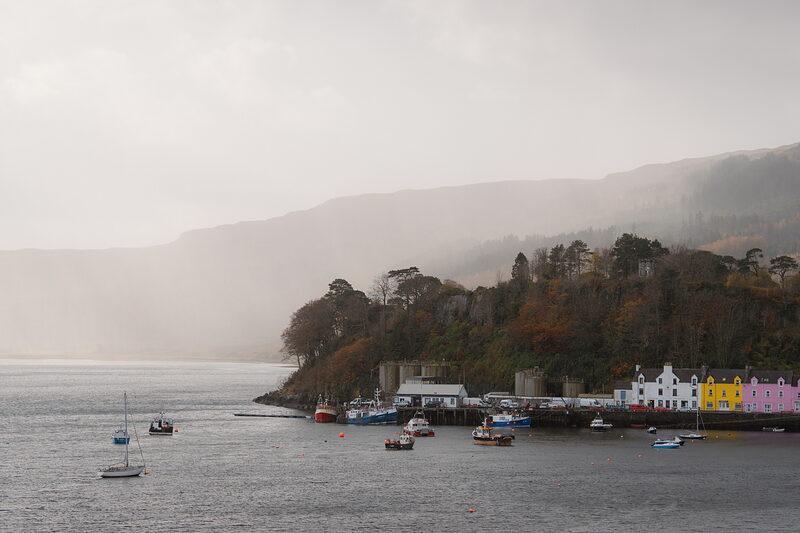
Glenelg, however, is not idly come by. Nestled between the three lochs of Duich, Alsh and Hourn, its singletrack road meanders down from Mam Ratagan Pass to the Kyle Rhea straits, where the Isle of Skye sits just a stone’s throw away. Seemingly cut off from the rest of the mainland, Glenelg can feel more like an island than the one across from which it sits. But perhaps this is exactly where its charm lies. “There’s always been a warm comfort about Glenelg,” Rowan recalls, “like a big embrace that envelops you the moment you come over The Mam and stays with you long after you leave.”
Many of Glenelg’s one-time interlopers have found themselves drawn back to the glens and coastline that is home to these 240-something folk. The prevailing thought, perhaps of those who have been here awhile, is that few will settle beyond their sentimental sojourn to establish themselves in this remote peninsula. A new generation, however, now seems ready to put down deeper roots and, when Ana and Rowan invited us to visit them in Glenelg, there was a curiosity to discover what it is about this growing community that is sustaining them beyond the nostalgia that may have first enticed them there.
Cycling into Glenelg to volunteer as a farmhand, Kate Wiesteka knew very little about growing vegetables, let alone what she really might be getting herself into. But as always, after spending just a few weeks around Glenelg, Kate was heartbroken to leave somewhere that had so palpably connected her a simpler way of life. Resolving to return the following year, she dragged her boyfriend along, suggesting (with some uncanny foresight) to “just come for a week and see what you think.” One week turned into seven months and now, nearly ten years later, Kate and Jake not only sell their produce, they’re teaching others how to grow their own.

Rowan
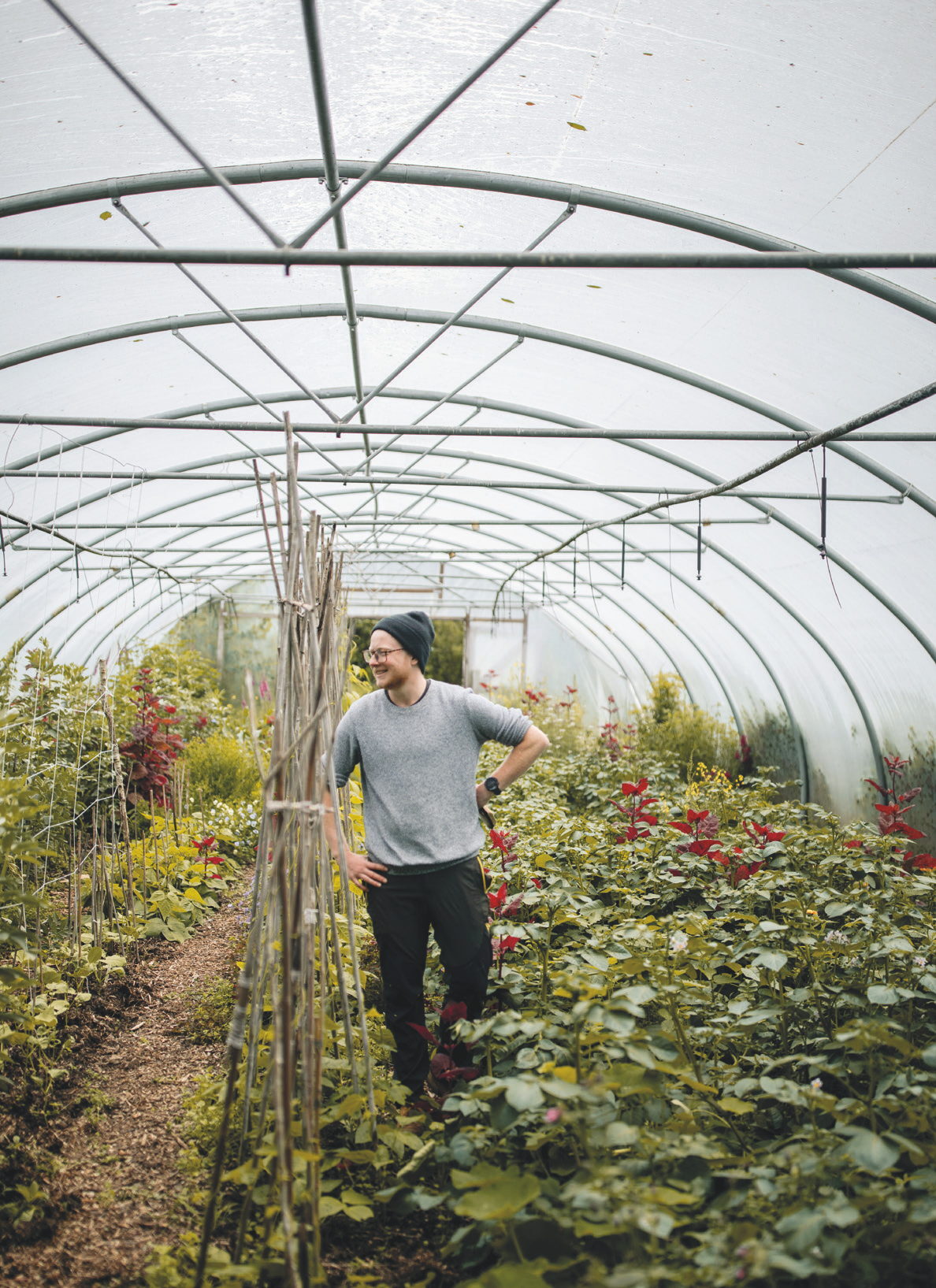
“Jake has a background in growing but I knew nothing,” explained Kate from their traditional crofter’s cottage. “So we observed our new patch with both excitement and fear.” Starting out with a small, flat area of bog and rushes on marginal land sold as ‘unimproved grazing’, Kate and Jake have worked hard to incorporate hillside terraces that now support blueberries, blackcurrants, apples, plums and over 50 beds that grow an impressive variety of vegetables. “We’ve had to wheelbarrow a lot of manure and seaweed about,” they joke.
The ethos behind Kate and Jake’s market garden, Cosaig Growers, is based on the organic principles of permaculture, supporting soil health through ‘no dig’ techniques that maintain its structure, drainage and nutrients. “It makes a really excellent bed,” Kate explains, “and after a few years, you’ve got this beautiful soil you just wouldn’t imagine was what you originally put on there.”
Kate and Jake’s approach to their land use - “we only add, we don’t take away” - seems both incredibly simple and powerfully stirring in its recognition that contributing rather than simply relying on what’s already there has helped nourish and sustain many more people than just themselves.
Verity Hurding spent her childhood roaming Glenelg’s hills, chasing crabs around rock pools, and nibbling on sorrel from the local football pitch. Later, she focused more on exploring kitchens, some Michelin-starred, but always felt drawn back to the idea of rediscovering uses for those same ingredients from the hills, rock pools and football pitches she once roamed. Eventually returning to Glenelg, Verity met her wife, Jenny - another interloper who fell in love with more than just the landscape - and together they now run Eòlach, offering locally sourced and foraged fine dining from the house Verity grew up in.
Eòlach in Gaelic means ‘familiar’ - the sense of knowing that only comes from being around something, or someone, for some time. This is clearly present in everything Verity and Jenny do - from their family home and gardens to the foraged ingredients that go into each dish, there’s a deep sense of familiarity that feels warmly welcoming. As Jenny explains, “We like our guests to fully relax and be absorbed in their senses; to let in the flavours, sights, sounds, smells, and people around them. Less like going to a restaurant and more how it is when you’re at a good friend’s house for dinner.”

Verity and Jenny
In the beginning, Eòlach wasn’t publicised - people just stumbled across it, as if it was there to be foraged itself. It’s this unexpected element of being known that heightens the culinary experience: caramelised beech leaves conjure up a childhood of melt-in-the mouth toffee apples, while sipping spruce tip and sorrel lemonade feels reminiscent of a time sat by a shady stream on a warm summer’s day. Yet Verity and Jenny’s ability to rekindle diners’ bygone memories has as much to do with the meaning behind the experience as it does with the herbs and plants themselves. As Verity suggests, “Foraging brings me back to feeling like I belong.”
The idea of contributing and belonging allows both these couples to establish a meaningful connection within this community. By maintaining a connection to the land, they recognise its place in sustaining those who call it home while respecting its need to be offered the same duty of care. This relationship, however, has not always been so thoughtfully appreciated in these parts.
During the 18th and 19th centuries, in what is now known as the Highland Clearances, whole communities were evicted to create open pastures, dispersing entire farming families to reclaim arable land for the more profitable practice of large-scale sheep farming. What resulted was not only the collapse of these communities through famine and emigration, but also the desolation of the land, stripped of its resources by ravenous livestock and their owners.

Neil in the brewery
Today, at least 50 per cent of rural Scottish land is owned by fewer than 500 private landowners, many of whom don’t reside there and much of which is maintained solely for deer stalking and hunting wild game. Coupled with a boom in second homes and holiday lets, rural communities, such as those around Glenelg and neighbouring Arnisdale, are struggling to offer affordable housing and non-seasonal employment as a result of insufficient development of sustainable land use. Happily, new approaches to land ownership are allowing people like our friends, Ana and Rowan, to move back into and enrich these rural communities.
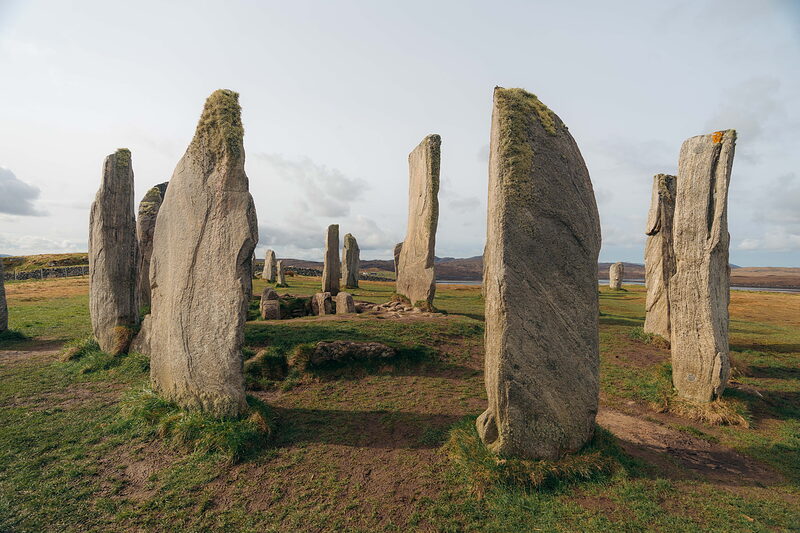
“You’d have to be stupid to start a business here.” Neil Hammond, of course, says this with a wry smile on his face since we’re sat, sipping beer, outside one of his own. Dun Brewing, named in accordance with the ironage stone brochs of Dun Telve and Dun Trodden between which it sits, was built in 2018 on land that once housed Neil’s former business manufacturing wind turbines. Yet brewing organic beer, Neil will admit, is probably more of a hobby since what he and his wife, Amy, are really doing is sustainably investing in the 500 hectares of hill and forestry land, known as Corrary Farm, which they have owned for the past 25 years.
Somewhat reluctant to be singled out for doing anything other than what feels natural to them, Neil and Amy’s approach is more than noteworthy in its goegraphy, enterprise and ability to cut through the bureaucracy that sometimes hinders progress here. Having already planted 35 hectares of native, upland woodland, five years ago they negotiated the purchase of a further 150 hectares of neighbouring forestry land, establishing a tree nursery in order to repopulate the commercial spruce with native Scots pine, birch, ash and beech, among others. Through their enterprise, they continue to create jobs - Rowan is overseeing the tree nursery and Ana manages the brewery, while Corrary Farm continues to supply local businesses with organic salads and vegetables.
When people are given the opportunity to contribute something much more than just a sentimental idea, communities grow. The nostalgia that once began the journey for each of these newcomers is not so much a longing to feel at home in some bygone memory than it is a very present desire to belong in the home they’ve now made for themselves. Of course, this type of community doesn’t just appear; it takes time to grow and long before it does, someone needs to have planted the seeds.
Donna Stiven came to Glenelg in 1973 to visit a friend and quickly decided she wouldn’t leave. After spells working in the pub, the tearoom, and as a painterdecorator, Donna realised, “If I want to stay here, I’m going to have to do something out of my own head.” And so, after coming to the end of a rather odd list of suggested entrepreneurial jobs in a government pamphlet, Donna set herself up making candles in a small village where she was already regarded a ‘hippie’ simply for wearing jeans.
Following on from this success, Donna decided to continue the ‘hippie’ trend and turned her attention to regenerative agriculture. She now runs an organic walled garden and orchard alongside her husband, Eddie, from their home, Balcraggie, hosting volunteers from all over the world who are passionate about doing the same. Glenelg’s inhabitants have no shortage of organic produce, it would seem.
If the similarities between growing vegetables and growing communities are not already apparent, then Donna’s part in Glenelg’s growth serves to make them so. One of the first people to volunteer with Donna at Balcraggie was Amy, who, years later, offered the same opportunity to Kate and Jake at Corrary Farm. Now they all supply produce to Verity and Jenny. Meanwhile Neil, who only came to Glenelg to help in the build of Donna’s candle-making workshop, now employs Rowan, who first arrived in Glenelg all those summers ago with his family to visit (yes, that’s right) Donna. Unsurprisingly, Donna regards her role in all of this with less significance. “I just want this community to become as resilient as it can.”
Resilience can be measured in many ways but perhaps in a growing, rural community like Glenelg it may simply be understood as togetherness. As Ana, reflects, “There’s something very primitive when people come together in search of a more meaningful life. What makes Glenelg so special, more than the other beautiful places I’ve lived, is that people are willing to do this together.” In our current climate, perhaps there is nothing more simple and necessary.
In 1773, an unlikely pair of writers, Dr Samuel Johnson and James Boswell, embarked on an ambitious tour to the Western Isles. Their resultant travelogues, documenting a journey across wild reaches of Scottish landscape, were perhaps precursors to our modern day TripAdvisor. After their one-star stay at what was then Glenelg’s inn (the current one is infinitely more highly rated), Samuel Johnson continued, “In the morning, September the second, we found ourselves on the edge of the sea. Having procured a boat, we dismissed our Highlanders, whom I would recommend to the service of any future travellers, and were ferried over to the Isle of Skye.”
Today, you’ll still find Highlanders just as helpful, but the bonnie boat that takes you over the sea to Skye is undoubtedly different to the one encountered 250 years ago. The Glenachullish, Scotland’s last remaining hand-operated, turntable ferry, navigates the 500 metres and nine-knot currents stretching between Kyle Rhea and Skye’s closest mainland neighbour, Glenelg, with an elegance that belies its 62 years. But the story of this little ferry is far from plain sailing.
When tolls were lifted from the Skye Bridge in 2004, the Glenachullish faced the dry dock as many doubted the long way round would entice enough tourists away from the cheaper and quicker route driven by most to and from the island. There were still some, however, who continued to believe Glenelg’s charm and beauty would always attract those who knew the unexpected rewards of slow travel. And so, when the community raised the necessary funds, the ferry remained afloat and she continues to enrich the journeys of all who sail on her.
Of course, the ferry is a wonderful spot to hang out, watching the wee boat go back and forth, looking out for whichever particular wildlife shows up on the day,” says Jo Crawford, general manager of the Skye Ferry Community Interest Group, as she points out the ‘sightings board’ outside the ferry’s Shore Station. This week it lists sea otters, porpoise, dolphins, seals, minke whales and, of course, the majestic sea eagles which have become synonymous with the area. “Visitors’ excitement upon finding such gems is infectiously reassuring.”
Jo also cites tales of fortuitous encounters between visitors and locals, who just happen to meet over a coffee served from the station’s Way Out West Cafe, leading to impromptu tours and storytelling that would otherwise never have happened. “Honestly, Glenelg has an enchantment to it that heralds all sorts of wonderful things,” Jo continues. “The more you explore, the less you’ll be surprised by all kinds of unlikely coincidences.”
When James Boswell wrote all those years before of his crossing at Glenelg that “a mile at land was two miles at sea,” he may have been referring to the time taken to get to where he was going. But in so doing, he was perhaps also implying that seafaring adventures offer twice the richness of the equivalent journey over land. This is, of course, the rewards of taking the long way round; stumbling upon hidden treasures and unexpected encounters that would otherwise pass by unbeknown. So next time you’re heading to Skye, perhaps take the ferry and allow yourself the time to discover more along the way.
words // Dave Pascoe - photography // Fran Mart


Donna and Eddie
Promoted Post
RSPB Scotland’s 77 nature reserves
This family-friendly reserve, set among the rolling moorland of Lomond Hills Regional Park in Perth & Kinross, is a fantastic place to get youngsters engaged in the joys of nature.


Sign in with Google
Sign in with Email