
Skye’s Smallest Museum Honours Its Tallest Highlander
In a modest white croft on Skye, a small museum holds the story of one of Scotland’s most extraordinary figures. Run by Peter MacAskill, it quietly honours his ancestor Angus—Highland giant, circus performer, and legend passed down through generations. Step inside and the past begins to feel close.
Written by Jack Cairney
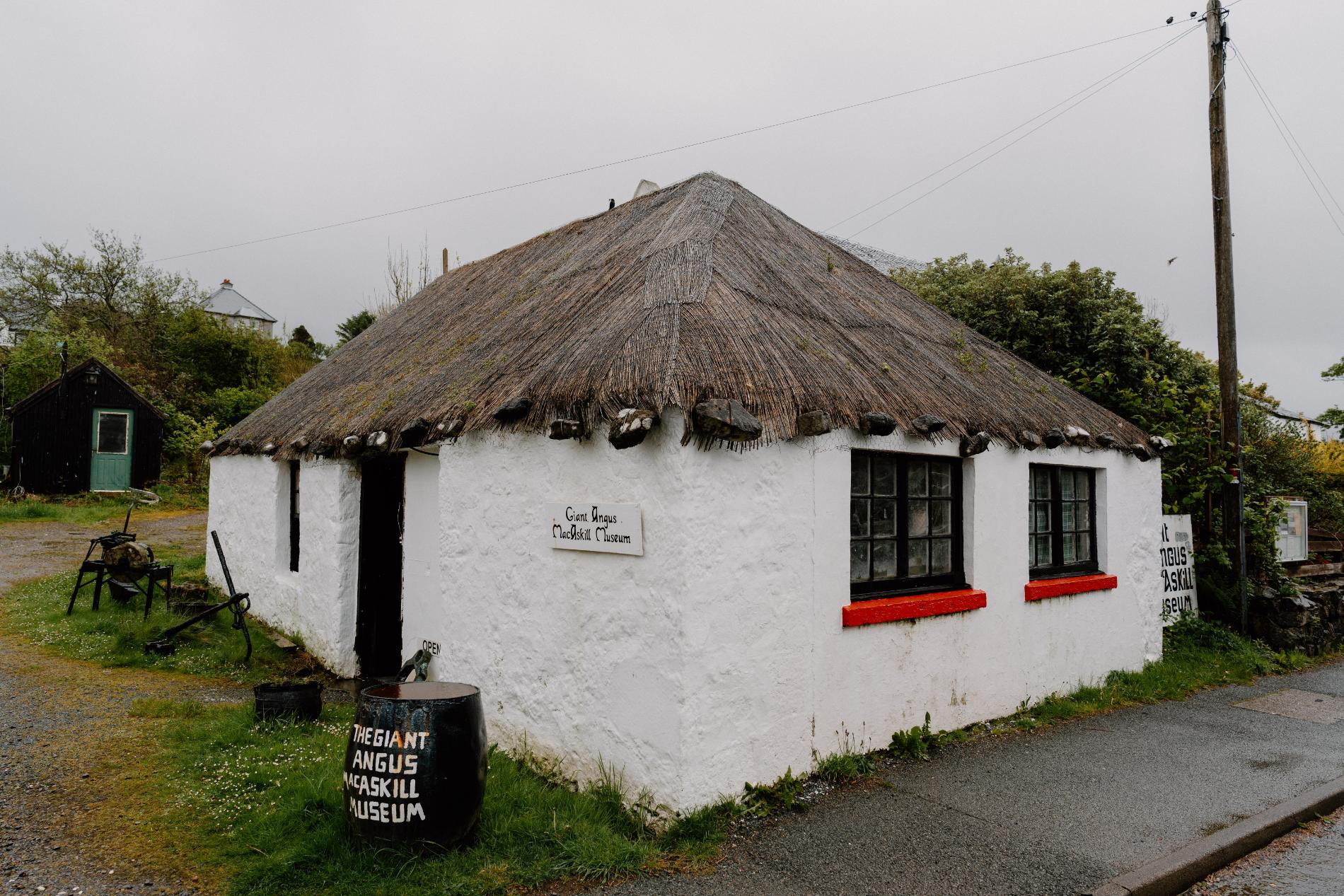
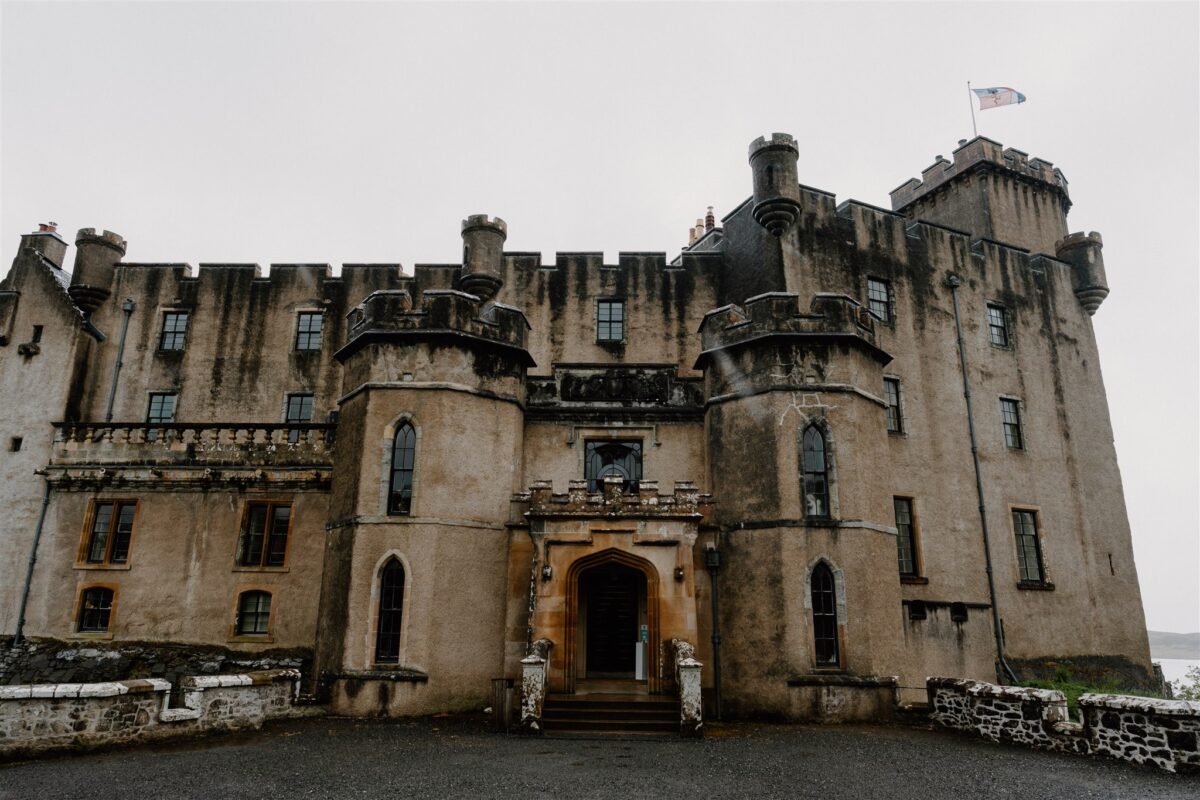
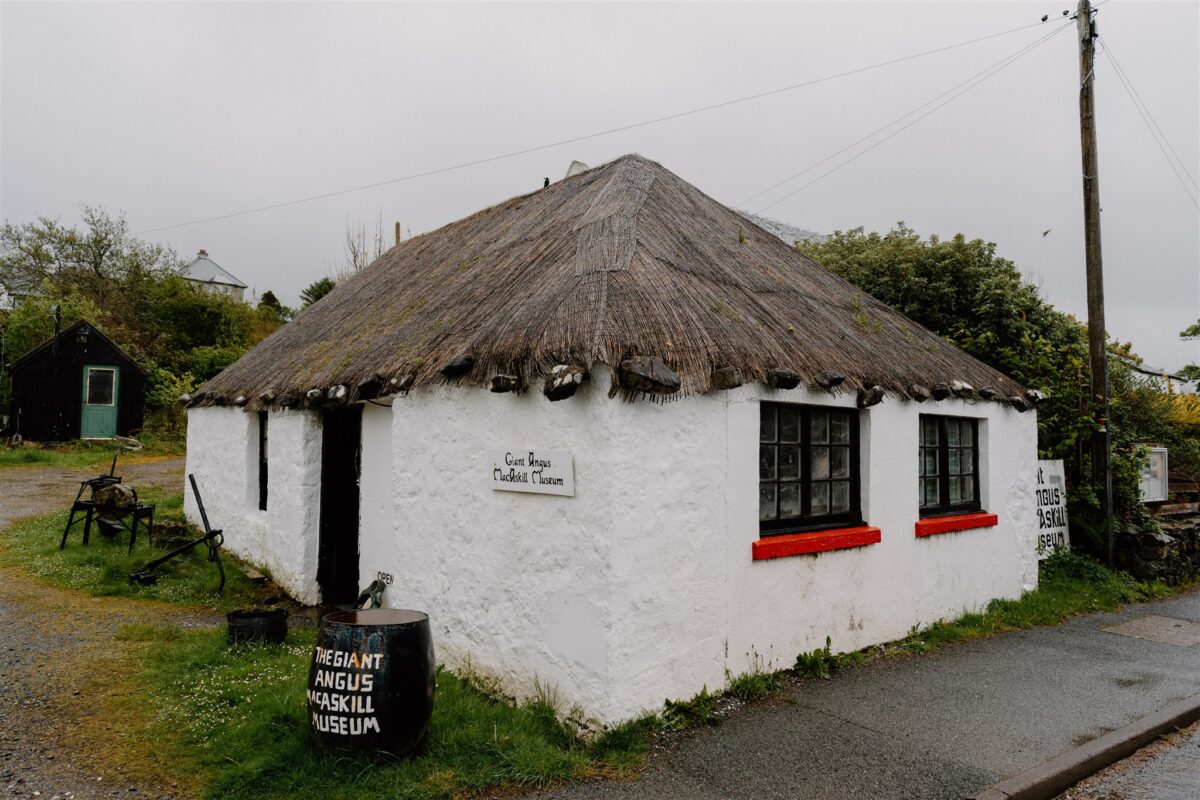
Did you know the world’s tallest true-born Highlander came from the Hebrides? Not from folklore or fable, but from documented, measurable fact. That’s what you’ll discover at one of Scotland’s most quietly remarkable museums, tucked away in the village of Dunvegan, not far from the castle. The Giant Angus MacAskill Museum doesn’t announce itself with much ceremony. There’s no turnstile or ticket desk. It’s not even behind a gate. In our case, the small whitewashed building was open and unmanned when we arrived. A few moments later, Peter MacAskill appeared, walking over from nearby. He lives close, and it shows in the familiarity and warmth with which he welcomes visitors.
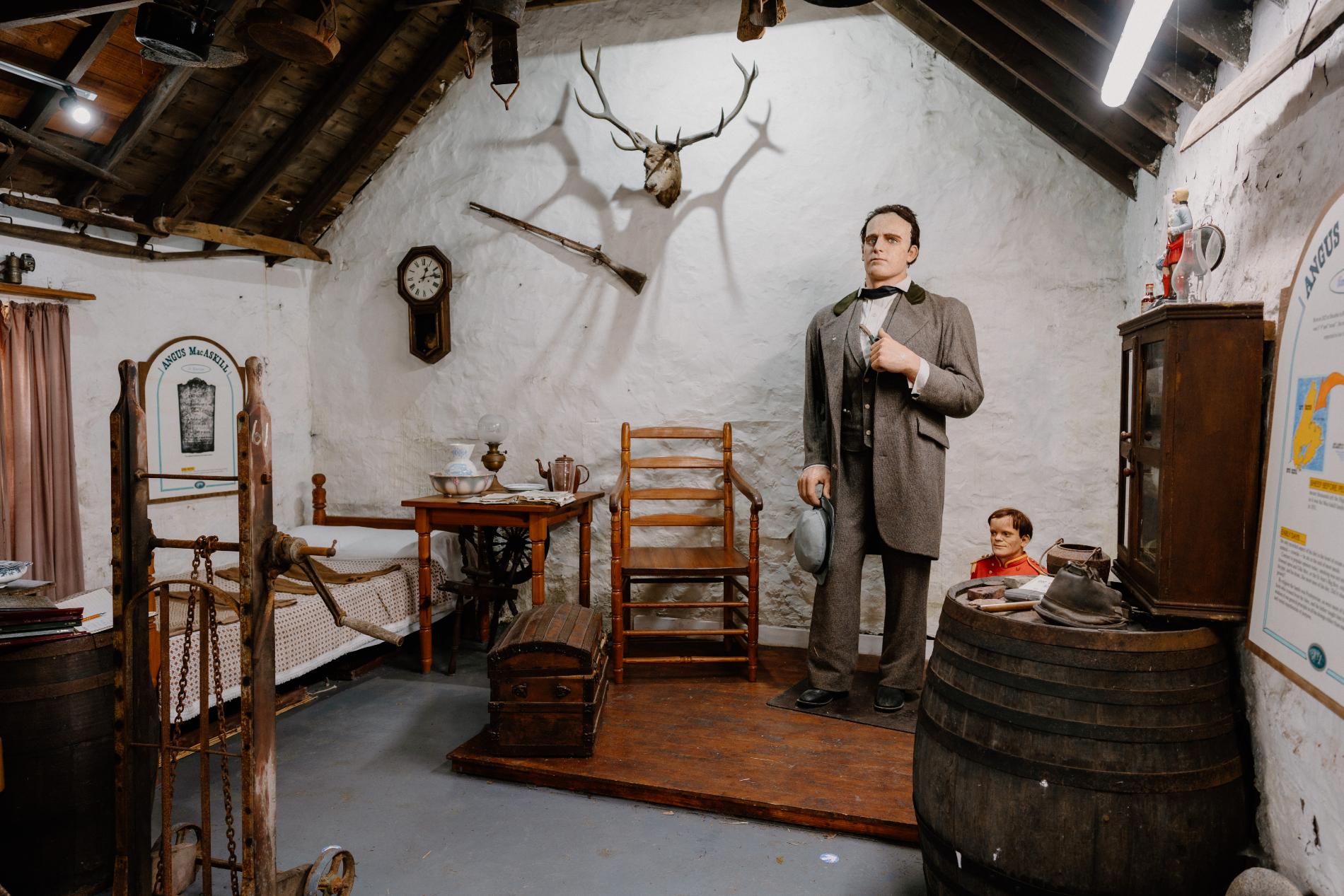
Peter told us that Angus MacAskill was his “great, great, great uncle, I think.” That’s how he puts it. There’s something in the modesty of that phrase that sums up the whole place. There’s no branding, no performance. Just a small croft packed with details, stories, replicas and keepsakes from the life of a man who stood 7 foot 9 inches tall, and who travelled with Barnum’s circus alongside General Tom Thumb. Angus was born in 1825 to Scottish parents who had moved to the Isle of Berneray, later emigrating to Nova Scotia, where he would die in 1863. His story is split between the Hebrides and Canada, but it’s here on Skye where you get a true sense of his origins.
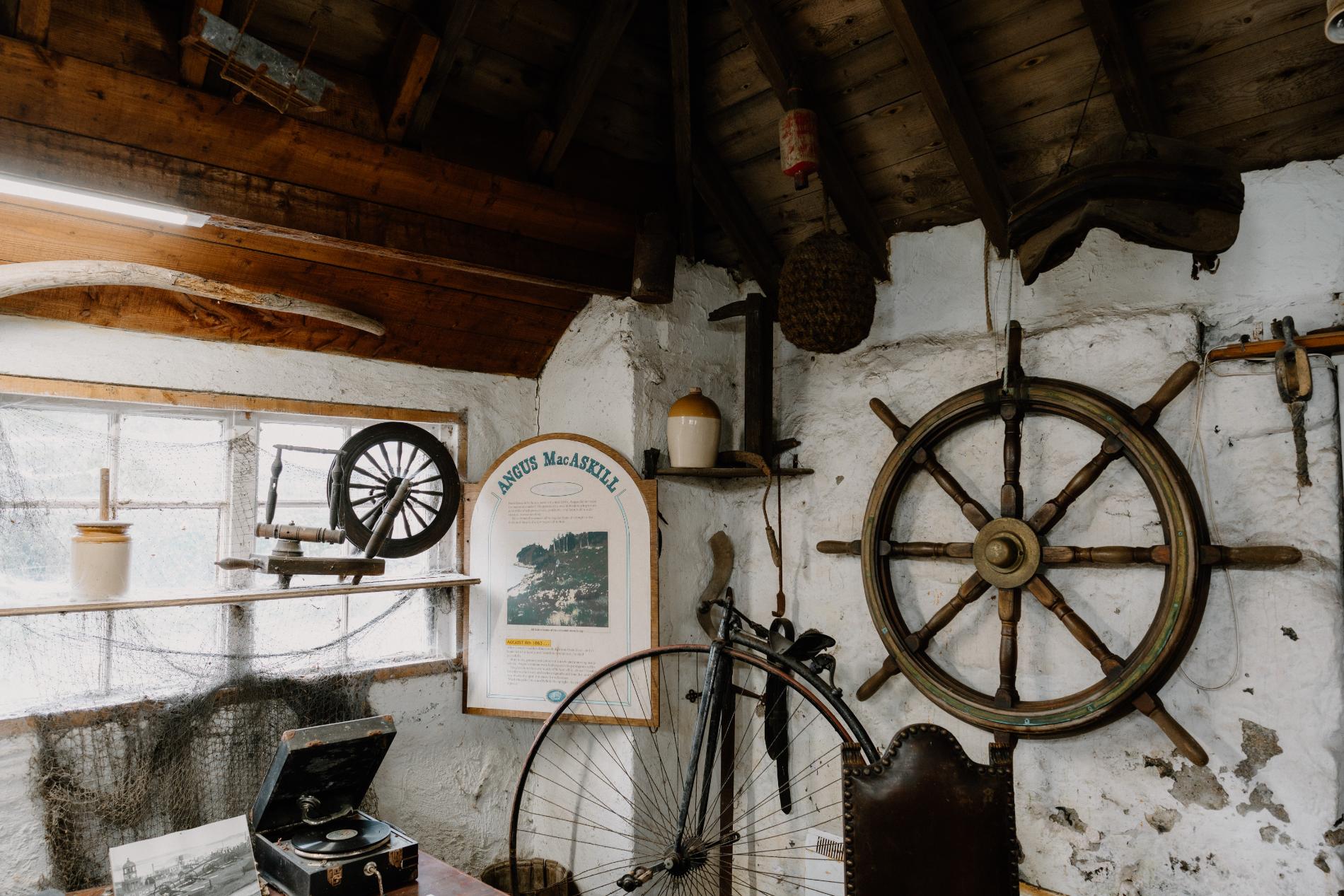
Step inside and you’re greeted by a handmade wooden chair built to his dimensions, a bed frame scaled to his height, and exhibits charting his career and travels. There’s even a print of Queen Victoria’s reported remarks—she described Angus as the “strongest, stoutest and tallest man to ever enter the palace.”
Peter brings the story alive. During our visit, he sang a Gaelic song for us—Morag of Dunvegan—which echoed gently across the tiny room. The song is one of longing and memory, describing a figure named Morag who is no longer present. It’s become associated with Dunvegan over the years, a kind of local lament. When Peter sings it, the space feels charged in a way that’s hard to explain. He gave our son postcards of Skye and pointed out the exhibits one by one, speaking with the kind of detail that only comes from decades of sharing the same story. He’s been running the museum since 1989. He’s now in his eighties and, as far as we can tell, he’s missed very few days since it opened.
There’s a reason we come back every time we’re in the area. You could pass the place entirely if you weren’t looking for it. But that would be a mistake. It’s hard to say what makes it so memorable—it could be the rare combination of quietness and depth, the way the museum doesn’t try to impress but somehow does. It could also be Peter himself. He’s the reason many people keep returning. He told us he still hopes to write a book one day about Angus and the MacAskills of Skye. His first language is Gaelic, and the way he moves between English and song is effortless.
What’s striking is how personal it all feels. The museum isn’t curated in the modern sense. It’s not slick. It’s cared for. You’re shown the life of a man whose physical presence was extraordinary, but who lived with kindness and strength rather than showmanship. Angus MacAskill was known not only for his height but for his gentleness—he could lift a full-grown horse, but he was said to speak softly and move with care.
There is a second museum about Angus in Nova Scotia, where he’s buried. But this one, on Skye, is where his family came from, where the stories began. The exhibits are replicas, but the telling is more powerful for it. You’re not seeing rare artefacts under glass—you’re hearing a story passed from one MacAskill to another. You’re being invited in, not simply shown around.
It’s hard not to think about what happens when Peter one day stops running the museum. He mentioned that moment, briefly. “One day soon the end will be nigh for me and the museum,” he said. But there was no trace of sadness in his voice. Just a sense of practicality. For now, though, he’s still there, opening the door to anyone who steps inside.
There’s something about places like this that lingers. It’s not just the subject matter, or even the setting. It’s the way the museum holds a story with care and lets it stay simple. No touchscreen displays, no digital tour guides. Just a wooden door, a warm greeting, and a Highland giant remembered by someone who knew how to tell it straight.
Promoted Post
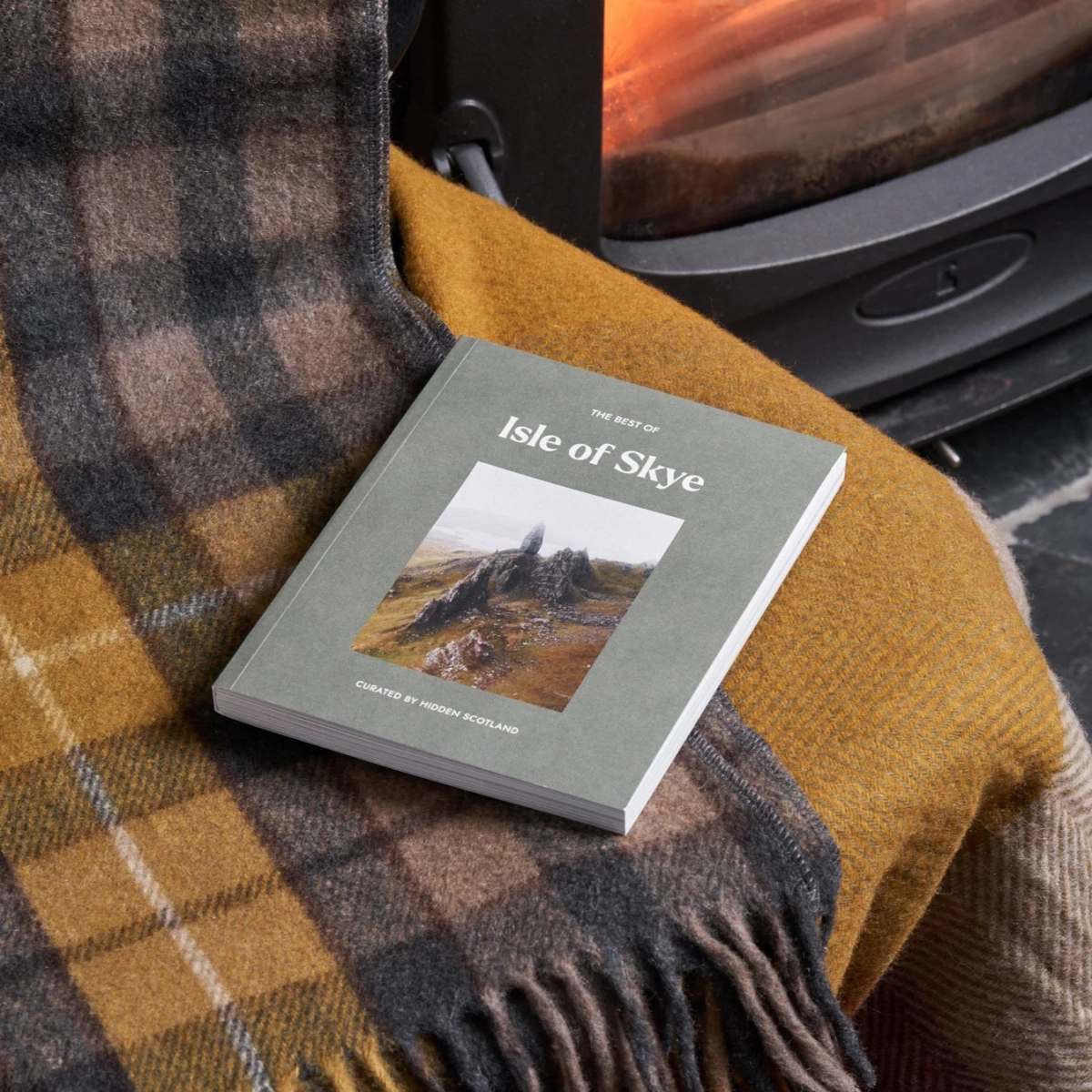
The Best of Skye Guidebook
The Isle of Skye is a place of rare wonder, a wildlife-rich spread of bays, peaks, cliffs and ridges. The views are big, but the prospect of adventure is even bigger. We hope this curated Hidden Scotland guide – which takes in everything from the best walks to the finest restaurants – helps you to have your own unforgettable island escape.







 Sign in with Google
 Sign in with Email